





























The new AI mega-billionaires are already rewriting the rules of luxury But will the AI effect be able to capture the attention of consumers who are becoming increasingly disengaged?
Every time a new industry emerges, new rich people emerge with it. These new classes of millionaires are “new” not only because they are of relatively recent origin, but because they represent new tastes and a new culture and, therefore, new forms of consumption. Today, this new industry is that of artificial intelligence, which has already contributed to the creation of a new economic elite, that of the American tech barons, who could alter the way the ultra-rich conceive of and consume luxury.
And, as MF Fashion also explained in recent days, the growth of this industry is about to accelerate enormously. The biggest tech companies, in fact, including SpaceX, OpenAI and Anthropic, all want to go public now, and so many high-profile stock market debuts could represent one of the most important financial events of this decade. Taken together, the three IPOs could represent a real capital bomb worth 4 trillion dollars. MF Fashion speaks of «a wave of rich people with a spending potential of 200 billion».
If the private valuations attributed to the tech mega-companies were confirmed at the time of the IPO, the overall value generated could reach levels comparable to those seen during the great technological revolutions of the past. And while for some the risk of an AI bubble looms, for the more optimistic this boom in new wealth could revitalize global demand for exclusive products, personalized services and high-value experiences. But will that really be the case?
From Silicon Valley to fashion
@britneyfan Painted for a couple who said their spirited animals were a dolphin and a monkey #fyp #artist #louisvuitton original sound - http.jxson
The name Silicon Valley is famous all over the world, but its global fame is perhaps no more than a decade old. And if years ago the rise of giants such as Microsoft, Amazon, Google and Meta generated thousands of millionaires and numerous billionaires, today the phenomenon could repeat itself with the world of AI industries. Managers, founders, researchers and engineers who own equity stakes in the most promising companies in the sector - a common practice for many tech companies - could become rich very quickly when their companies go public.
But the point, just as MF Fashion explains in its analysis, is that the new rich of technology are less interested in classic status symbols than in services based on exclusivity, authenticity and personalization. Beyond the productive and rhetorical push that fashion brands have made in celebrating their most precious, most sustainable and hardest-to-find materials compared with the rest of the world, these new rich are looking for concrete value in the luxury they consume and, therefore, rather than buying a product straight off the rack, they seek greater authenticity and, in some ways, authority from brands, as well as unique or personalized products. In short, they want luxury to become special again.
And the fever for custom-made products - which are also more expensive and therefore more exclusive - is spreading almost everywhere: from the transport industry on wheels or in the air, with car, yacht and private jet interiors created ad hoc, to the jewelry category, which many brands such as Louis Vuitton, Chanel or Dior are in fact strengthening with new creative directors and new collections presented with great fanfare. And in a dark period for luxury in general, an Italian company such as Damiani, which even delisted from the stock exchange years ago, has exceeded 400 million euros in revenue and presented a high jewelry collection with pieces costing from 100,000 euros upward. And it is no coincidence that fashion is not only looking to America, but is also investing heavily in the business of personalization.
A return to made-to-measure fashion?
Given that the Italian manufacturing system is already tied to those values of craftsmanship and personalization that the new luxury will end up seeking, on many different levels and through many different ramifications, it is no mystery that European fashion - which mostly produces in Italy - has been so present in the United States in the latest season. Chanel, Louis Vuitton and Gucci in New York, albeit in different seasons, and then Zegna, Hermès and Dior in Los Angeles, as well as the growing fashion scene in Miami, clearly speak to how much attention luxury is paying to the USA and its new rich while Chinese demand slows, albeit amid moments of apparent recovery.
Perhaps no brand, however, has captured this new audience need like Zegna, which not only has been strengthening its made-to-order services for three years with the Zegna X service, which facilitates the made-to-measure service for clients on all fronts, including logistics, but also with the invitation-only Villa Zegna format, which, on the occasion of the brand’s latest show, was brought to the Chateau Marmont, where clients were able to buy pieces fresh from the runway or order garments made especially for them. And the group will open two new stores in California after the one recently inaugurated in Scottsdale.
A new gold rush
All these developments are taking place in California precisely because the speed with which wealth can be accumulated in the United States also helps to constantly renew luxury’s customer base. New professional figures reach high income levels as early as their thirties and forties, fueling demand characterized by greater experimentation and less brand loyalty than previous generations. These new clients, in short, need to be won over, and luxury does not intend to rest on its laurels.
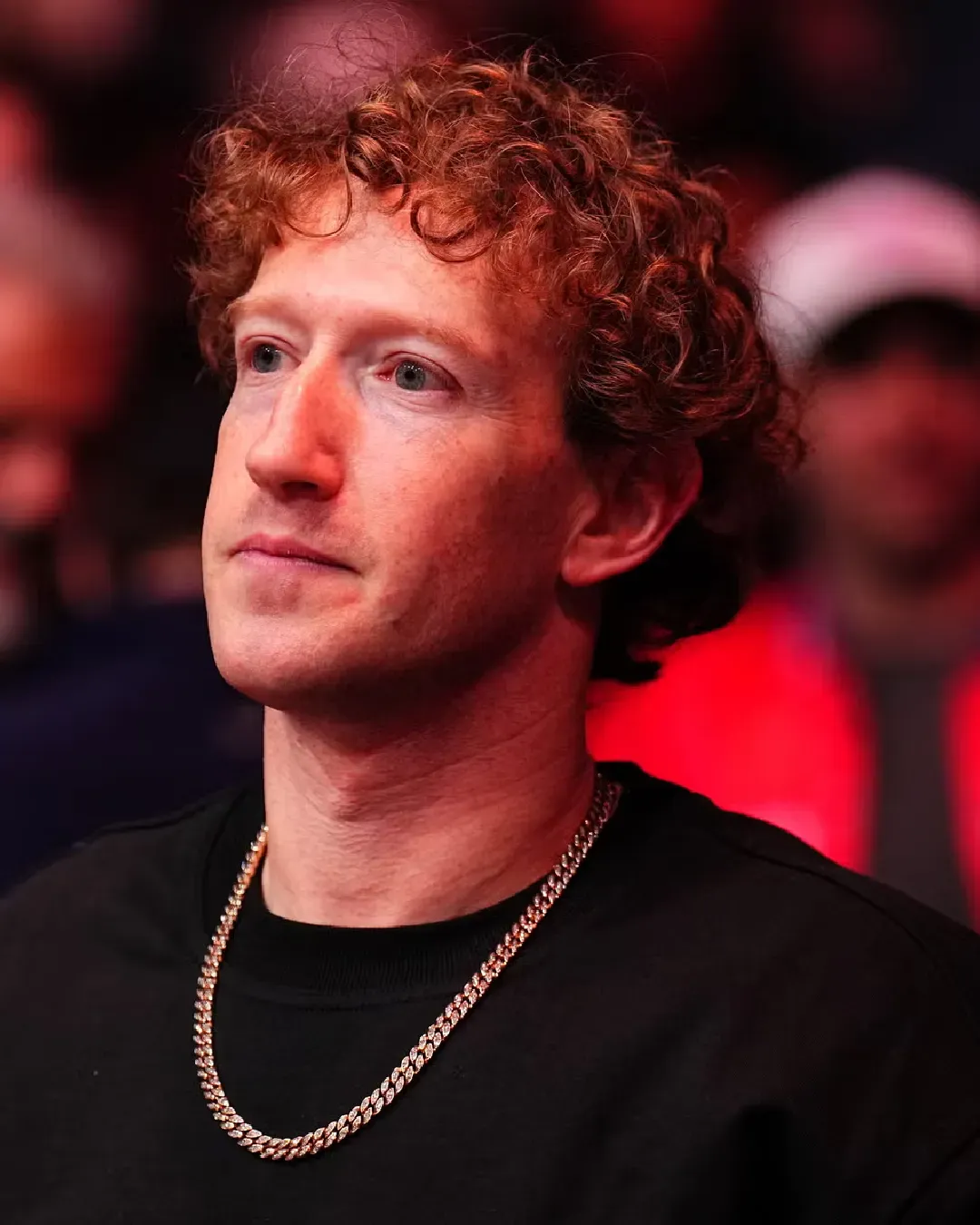
A particularly interesting aspect concerns the cultural influence exerted by the major entrepreneurs of the AI world, who are changing Silicon Valley’s “uniform” just as Mark Zuckerberg did almost twenty years ago. Sam Altman, Dario Amodei, Peter Thiel and Elon Musk are more polished than the image of the genius nerd in a hoodie and flip-flops made famous by The Social Network, and their style remains functional but is far less sloppy. In short, they no longer dress like scruffy college students, but neither do they dress like Wall Street managers. We could define their style, with a term we invented, as luxury basicness.
In reality, Mark Zuckerberg himself has recently adopted a similar style after a brief, out-of-season streetwear phase. The most famous anecdote about him is that his gray T-shirts are made to measure by Brunello Cucinelli. An anecdote that shows how, even in their basicness, these billionaires want the special experience of fitting and personalized products. According to MF Fashion, the goal of the new tech aristocracy is to demonstrate belonging to a restricted community of informed, competent and culturally sophisticated individuals who do not advertise themselves too much to the outside world. This point is perhaps the result of the intense hatred that online audiences around the world reserve for these figures, as was seen during Jeff Bezos’ wedding in Venice.
But will European luxury manage, as bears do in certain cases, to position itself upstream of this river and catch the masses of rich people swimming against the current? The issue seems to be less and less about pure rhetoric and style, and increasingly about the ability to capture this new audience by making it feel “at home” but above all by proving to it concretely, beyond any trick, that the excellence on offer is absolutely concrete and all-round. At stake is the trust of a generation of consumers destined to influence the global market over the next ten years.