

















Are cummerbunds the new Belts? The history and runway comeback of the cummerbund
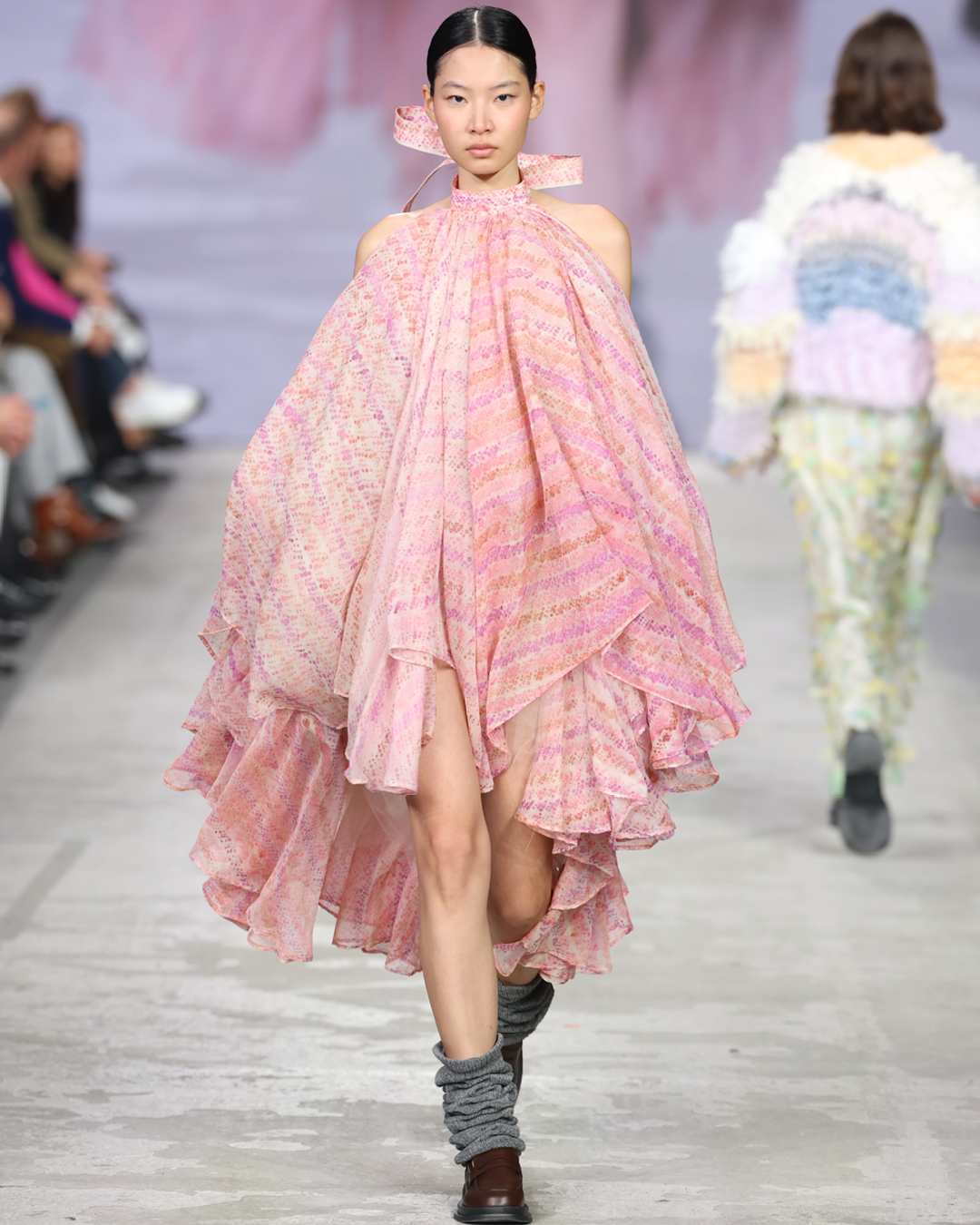
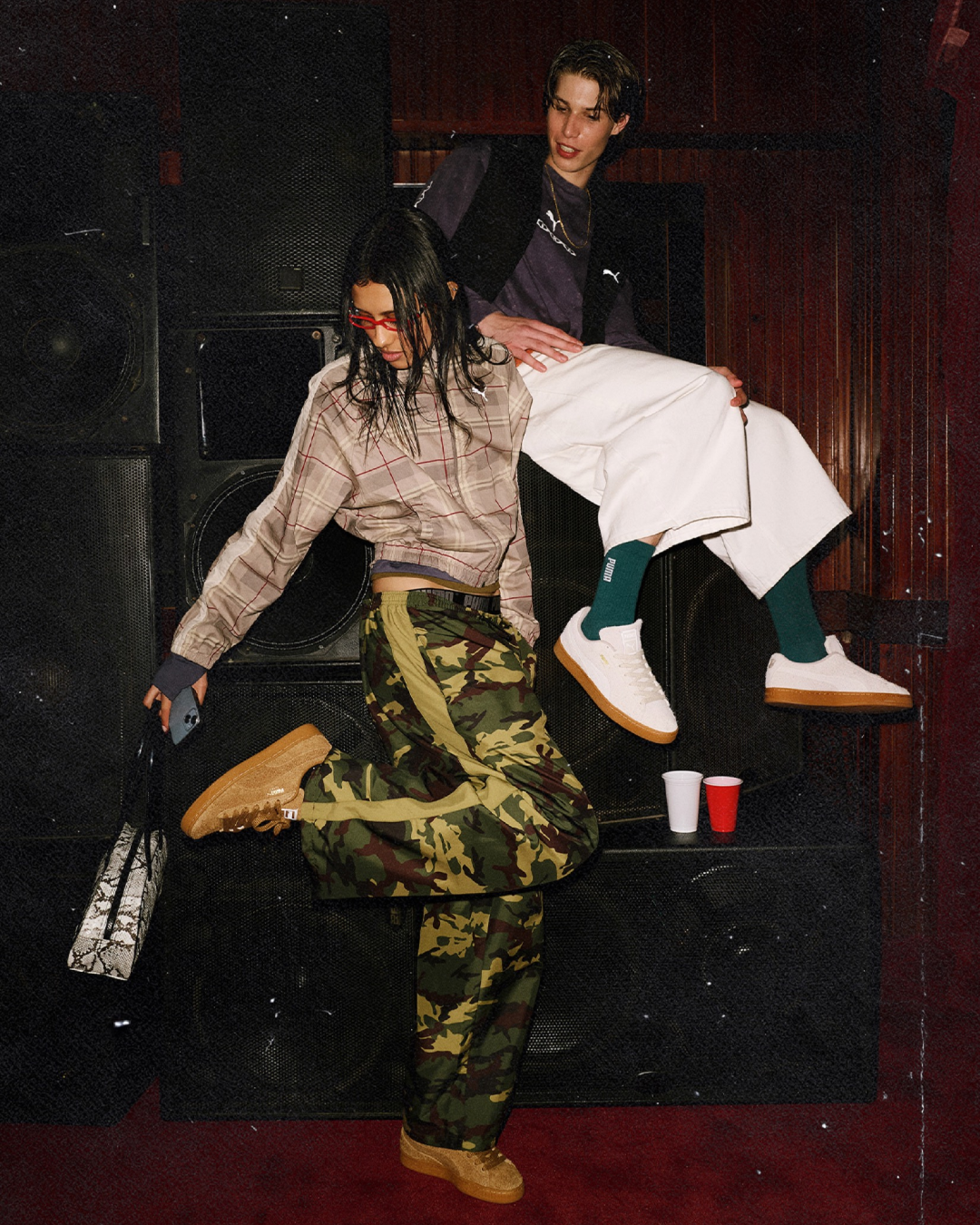
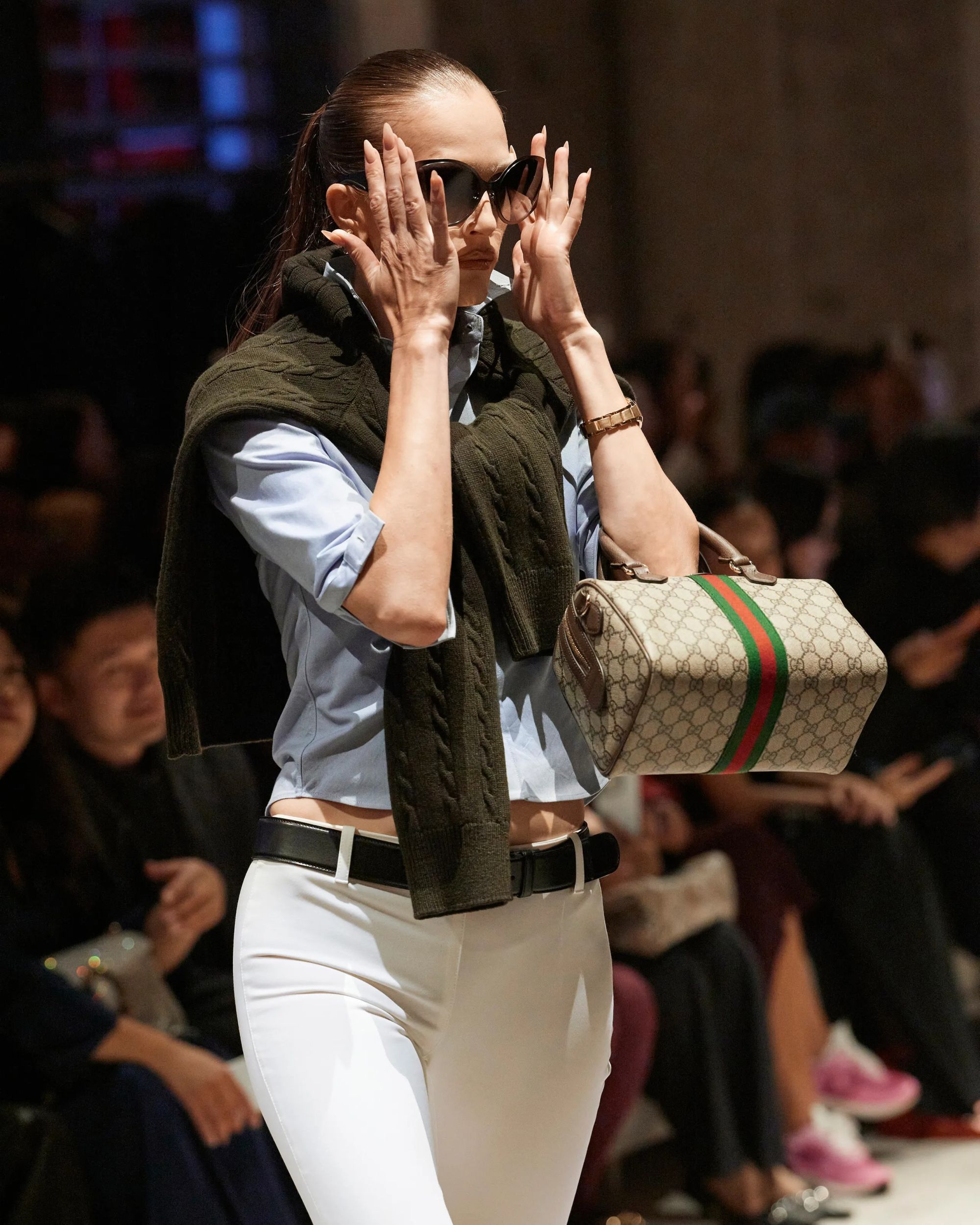
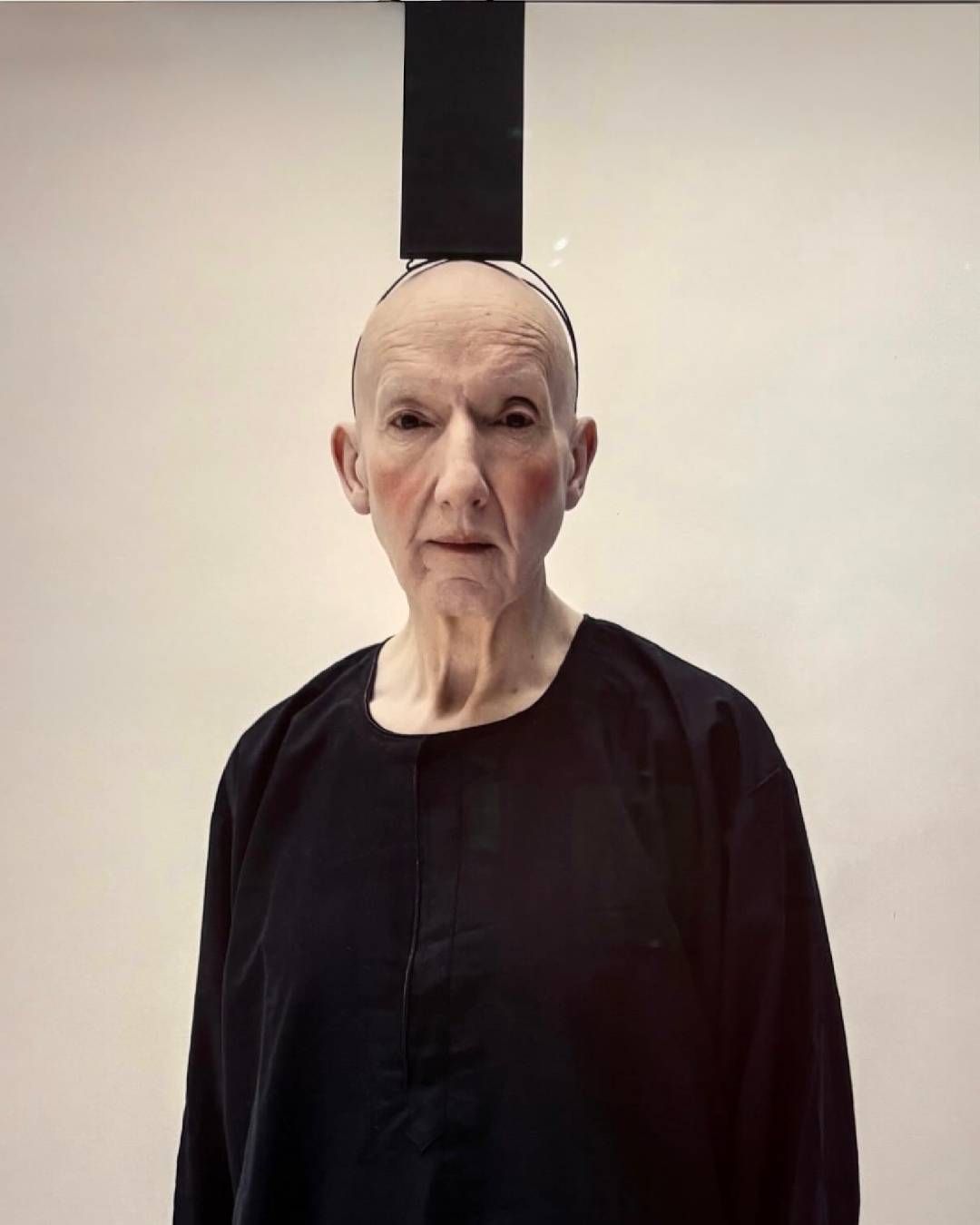
In the latest menswear shows, one archival detail has quietly stolen the scene from everything else: the cummerbund. At a moment of profound redefinition of masculine silhouette volumes and proportions, both the runways and FashionTok are rediscovering the potential of this century-old accessory. Between new layering possibilities and chromatic experimentation, the cummerbund is returning today in its historical variants, asserting itself not only as an elegant fetish object, but as a strategic sartorial element capable of deconstructing the rigidity of formal looks. But what is its historical arc, and how are designers reinterpreting it?
Origins
To tell the story of the cummerbund, let's start with its name. The English term cummerbund, which denotes the formal waist sash, is the phonetic transliteration of the Persian and Urdu words kamar (waist) and band (fastening or tie). In its original form, the kamarband was a long scarf of lightweight fabric that men across South Asia and the Middle East traditionally wrapped around their waists, over their tunics.
Beyond its aesthetic function, the sash often served as a pocket for carrying coins or daggers. It was during the 19th century, at the height of British colonial expansion in India, that British officers seeking to escape the sweltering heat without breaching the etiquette of regimental dinners replaced the heavy woollen waistcoat with the cool, practical sashes worn by local populations. Toward the end of the Victorian era, high-ranking British men began importing this colonial novelty back home, laying the groundwork for its debut in society.
The transition from the military world to civilian life was facilitated by the birth of the dinner suit around 1886: the accessory was worn beneath the classic dinner jacket by English gentlemen and subsequently by Americans. In this journey from East to West, the garment definitively shed the vivid colours and patterns of its origins, standardising into its modern form: a strictly black sash, woven in satin silk to coordinate perfectly with the jacket's lapels and the bow tie.
The rules of the cummerbund
As prescribed by the grammar of Black Tie the twentieth-century gentleman's manual of elegance the cummerbund answers to a precise dogma: the geometric transition between the white of the shirt and the black of the trousers must never be exposed, especially when seated, when the fabric inevitably tends to gap. In this sense, the cummerbund acts as a kind of deconstructed masculine corset: it cinches the waist, conceals abdominal imperfections and elongates the torso, restoring a sculptural and rigorous silhouette.
Then there is the celebrated pleating. By fixed rule, the horizontal folds of the fabric must always face upward, since in the first half of the twentieth century, aristocrats attending the opera, theatres or casinos used these channels as micro-pockets to slip in entrance tickets and gaming chips. While on the silver screen the accessory had graced the waists of iconic spies and gentlemen, becoming the epitome of masculine elegance, in the 1980s the cummerbund blazed with neon hues and damask patterns as a new must-have for American proms, reaching its commercial peak while inevitably sliding into kitsch.
The cummerbund in fashion's archives
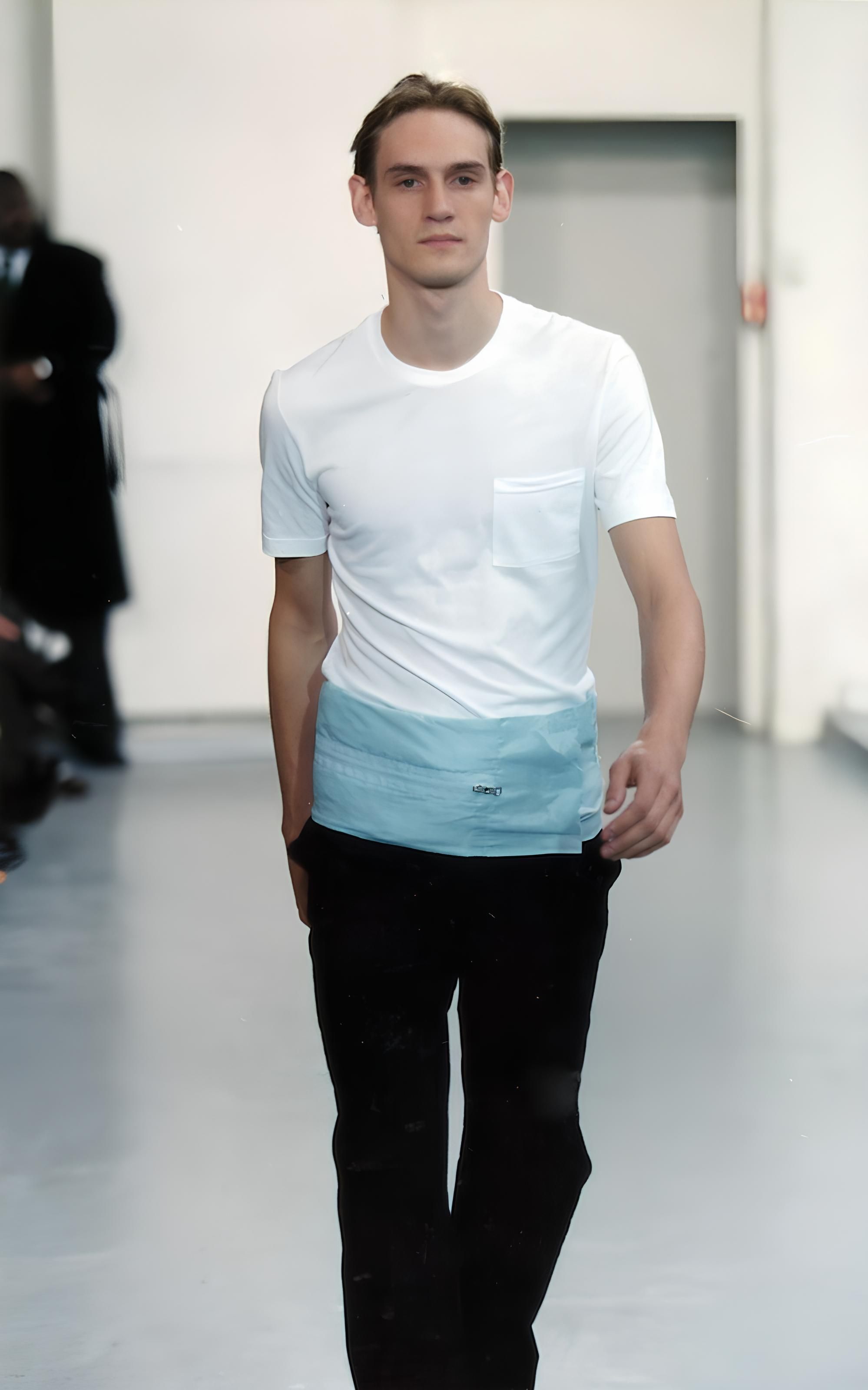
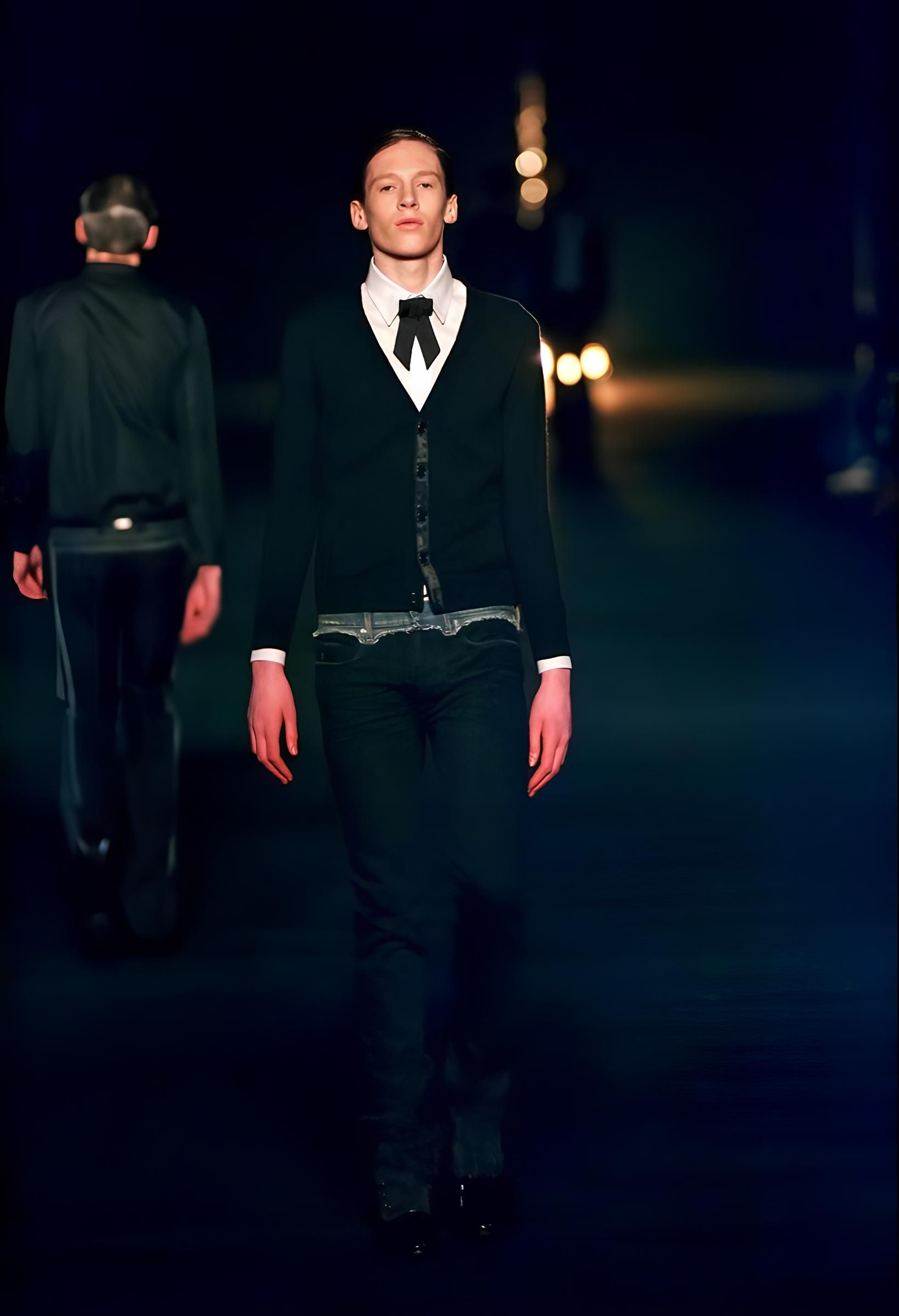
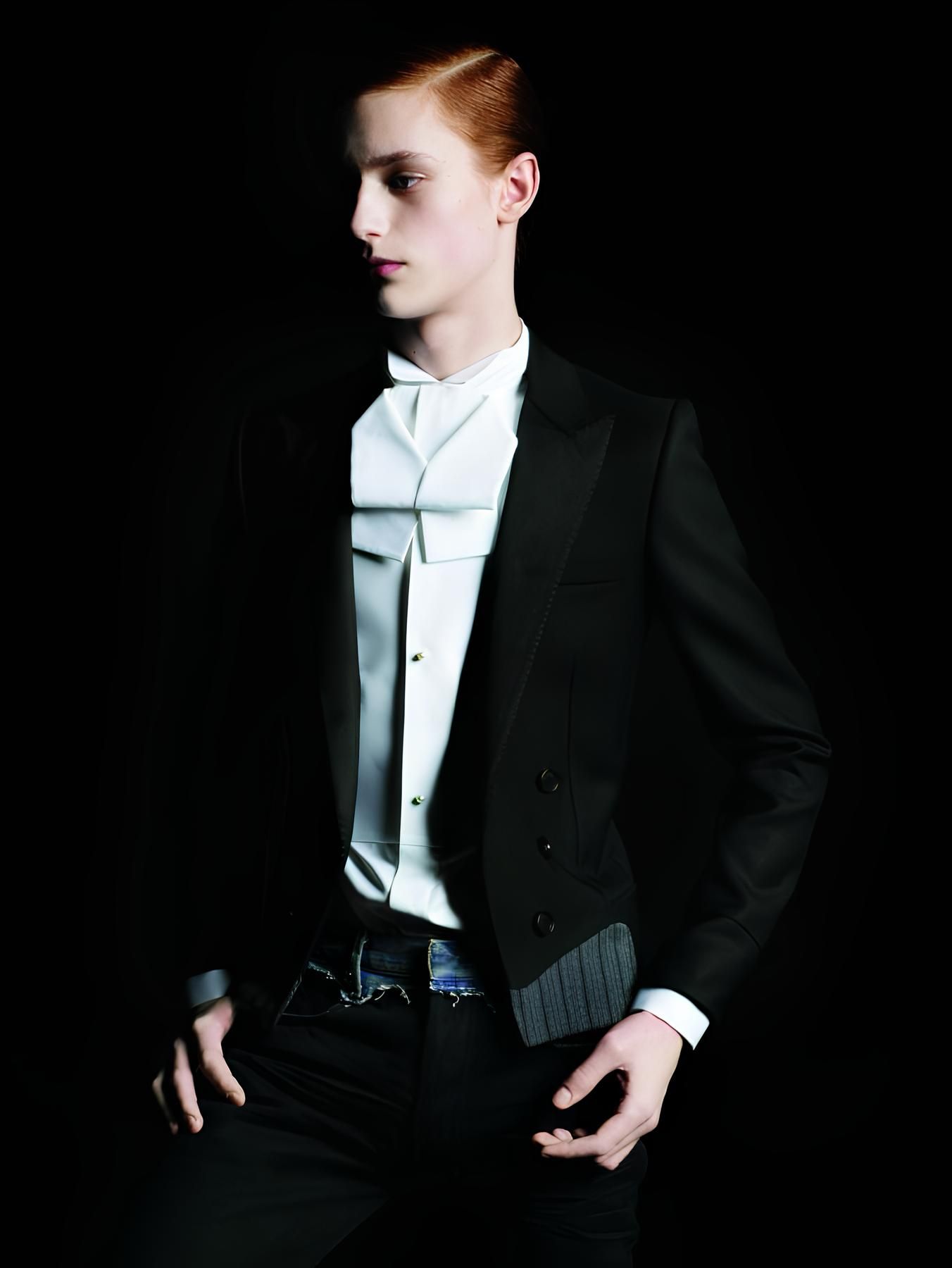
Far from being a nostalgic sartorial relic, the cummerbund has proven throughout fashion history to be a blank canvas extraordinarily receptive to the intuitions of great designers. In Helmut Lang's SS98 show, for instance, the accessory sheds all formalism to embrace a minimalist, urban rigour: the silhouette remains intact, but the use of zips and pockets redefines its function in a utility key.
Hedi Slimane took a more iconoclastic approach to the accessory's classicism, rendering it punk in his FW06 collection for Dior Homme with his "cummerbund jeans" a skinny trouser featuring an integrated sash-like band crafted in contrasting denim with raw-cut edges. A few years later, for Prada's FW08 menswear, Miuccia Prada deconstructs the rigidities of the male wardrobe, using the cummerbund to sculpt bodily proportions: here the cummerbunds are not sashes but rather evoke masculine underwear spilling out above the trousers, adding a hint of perversion to the formal look.
The cummerbund from the carpet to the runway
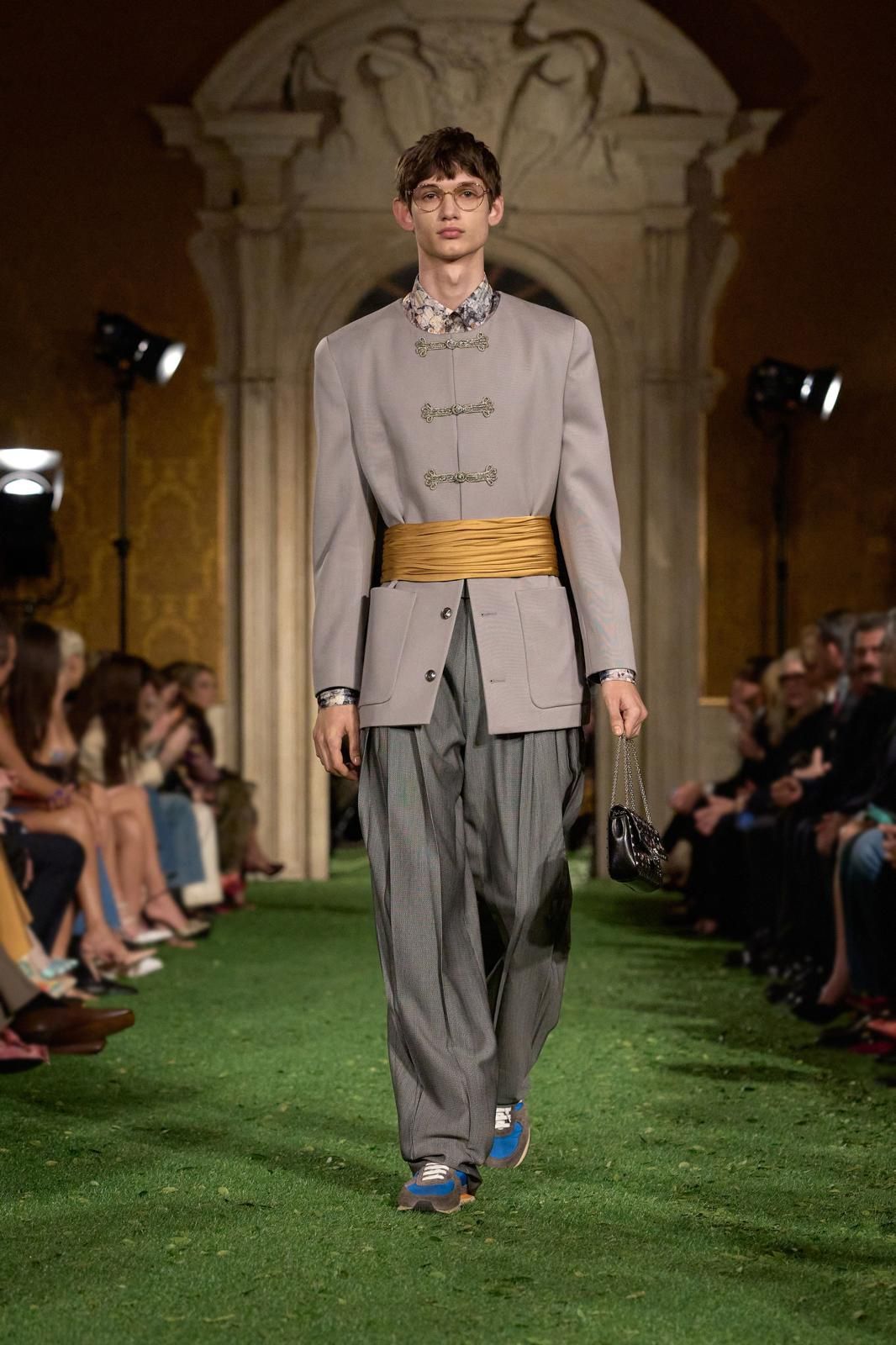
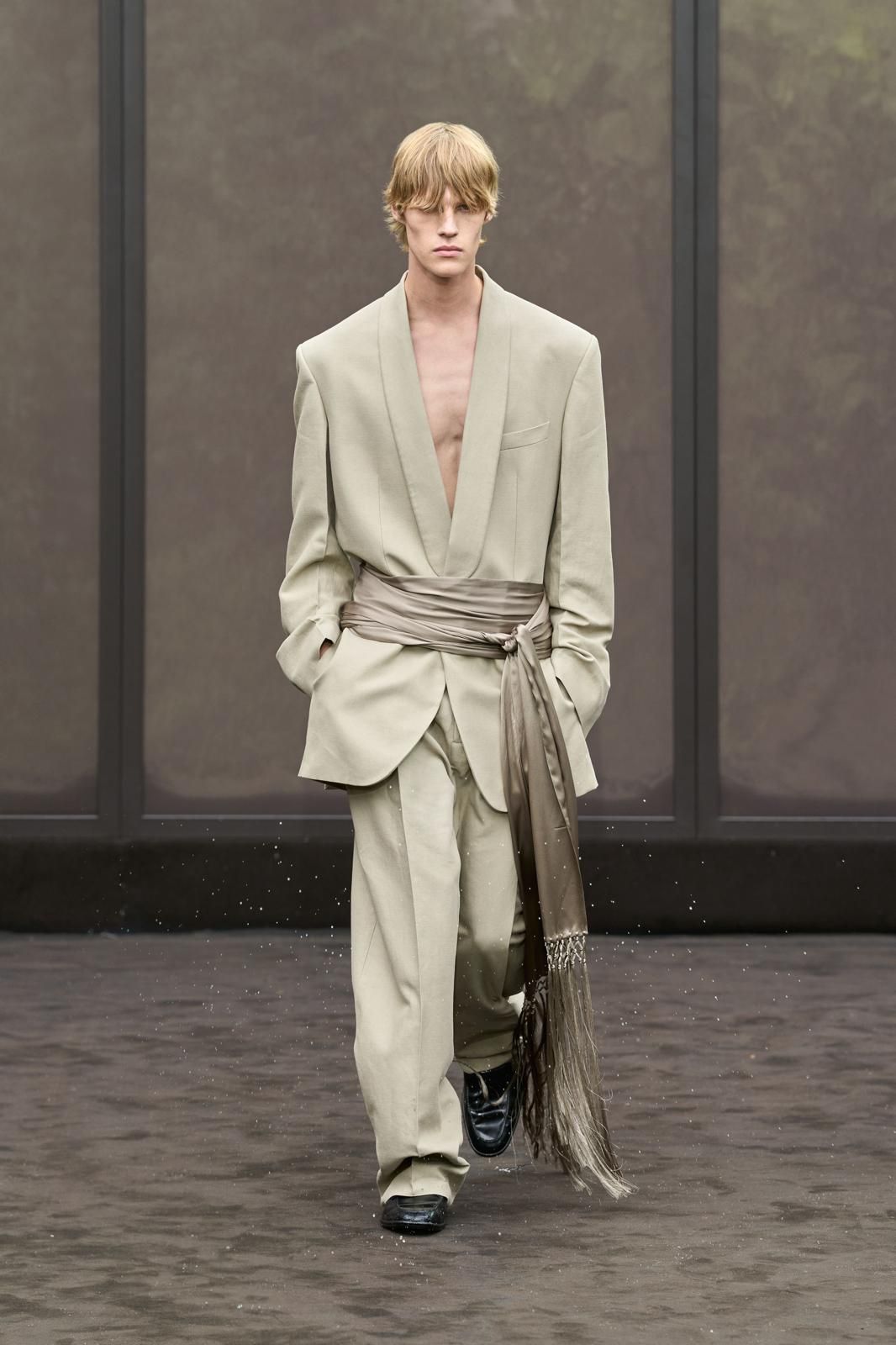
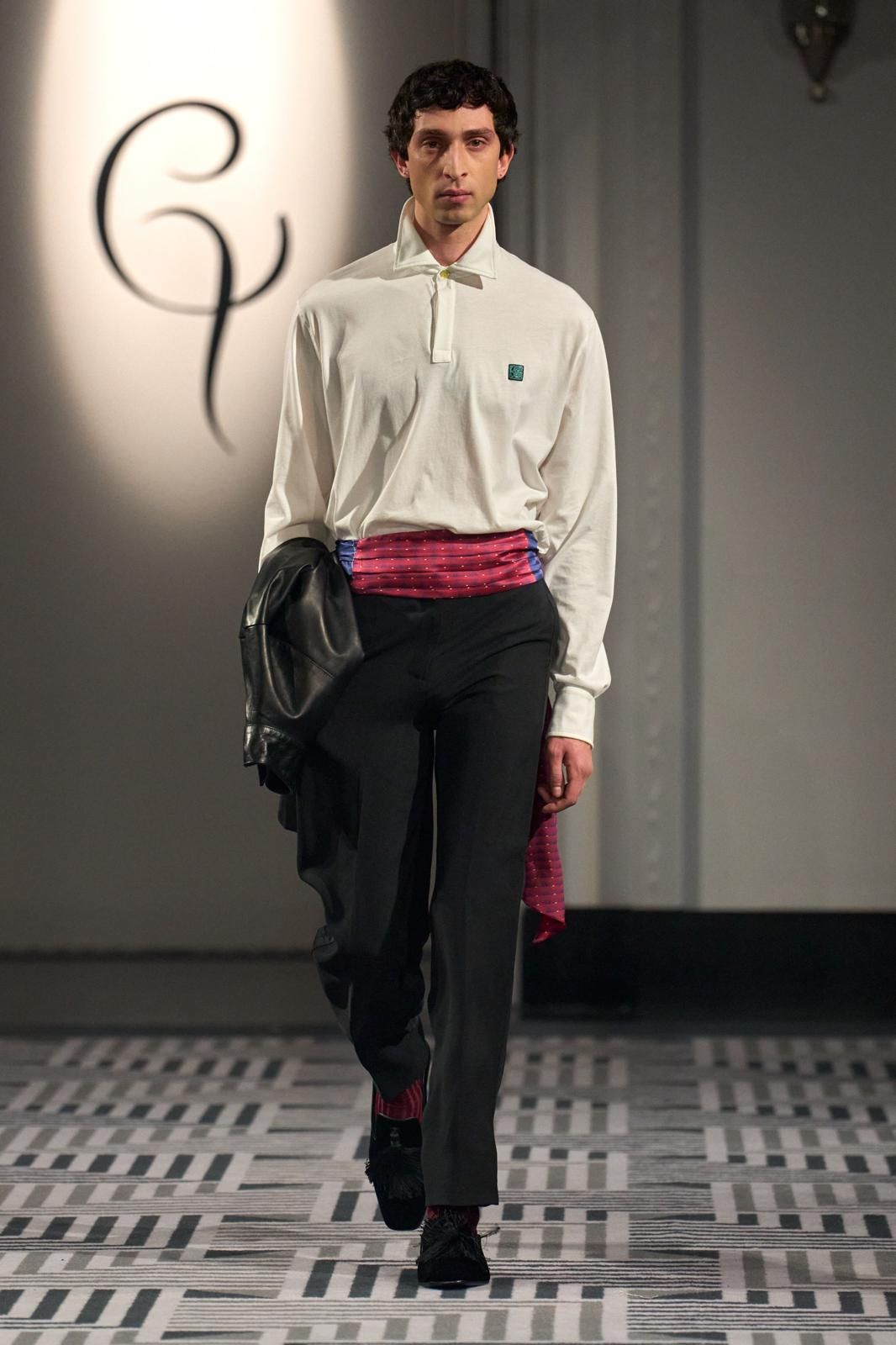
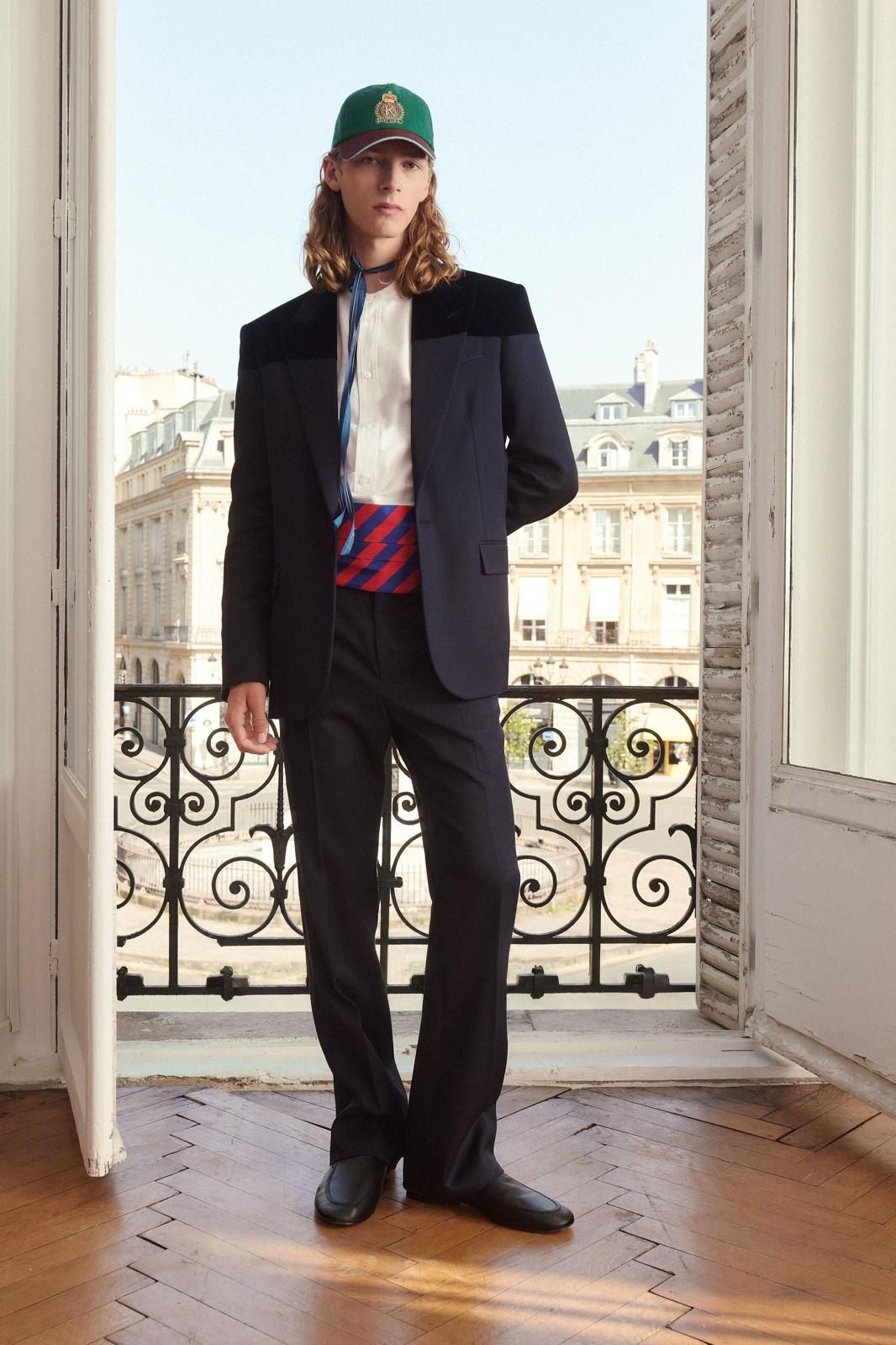
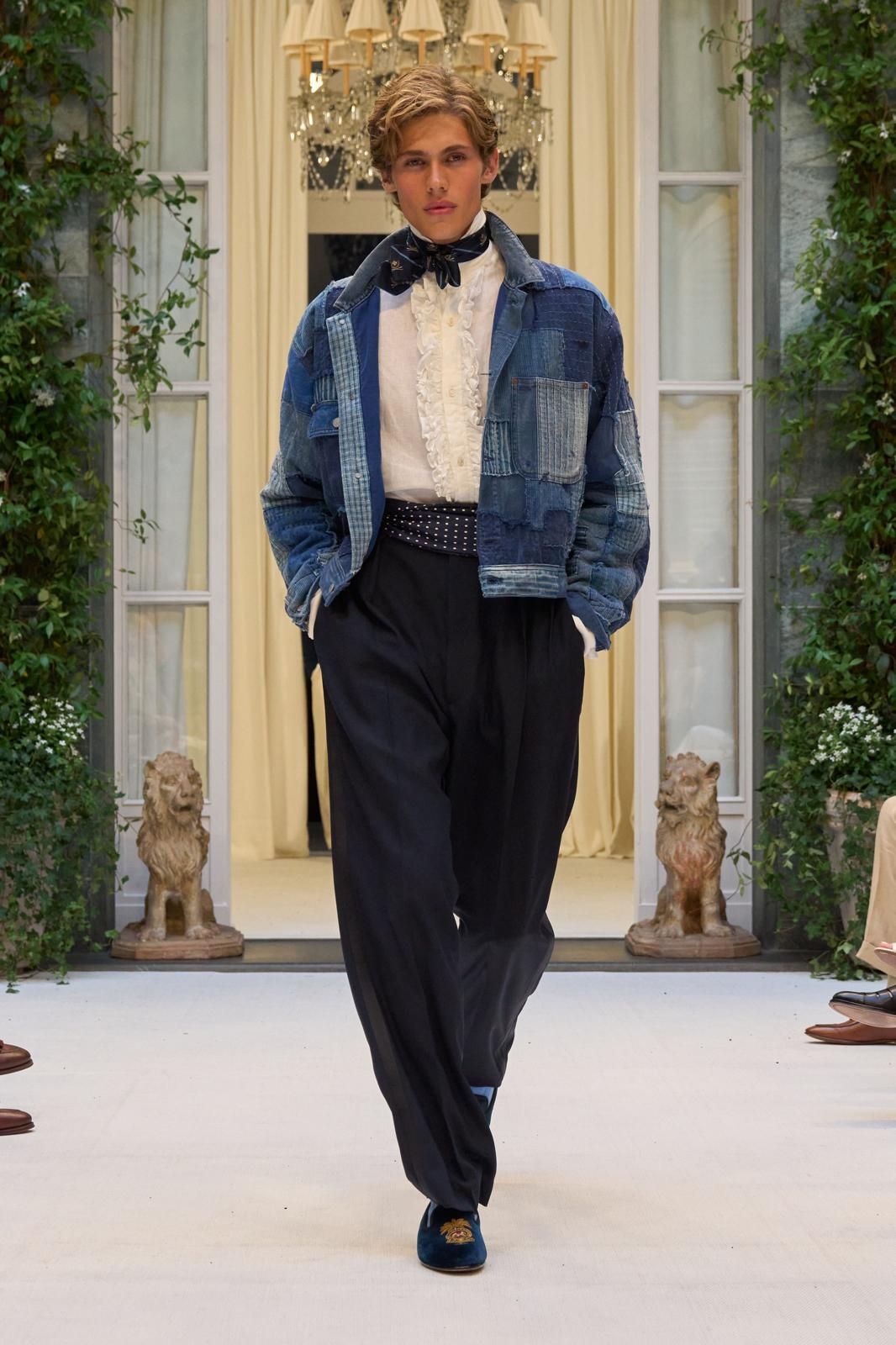
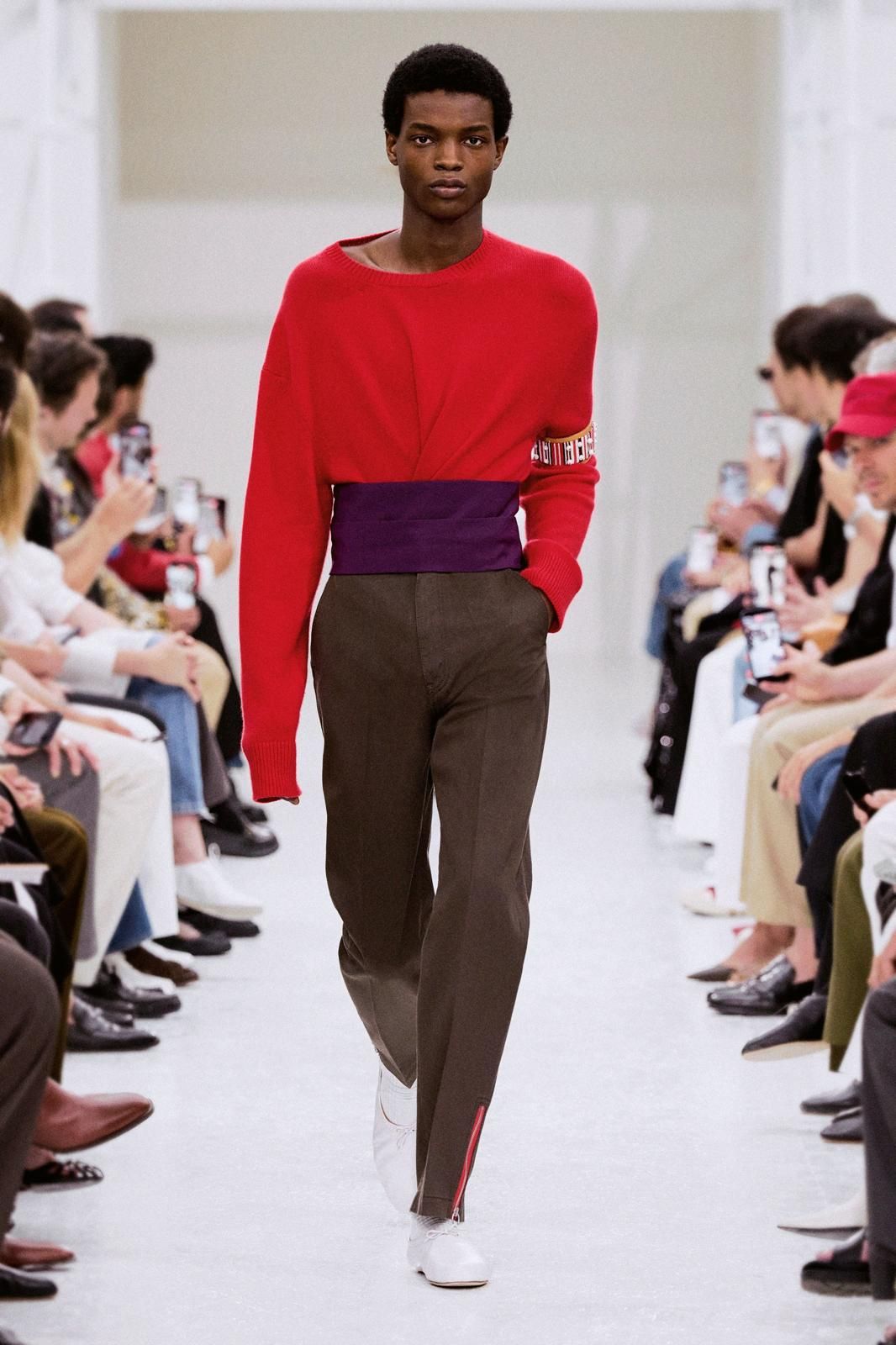
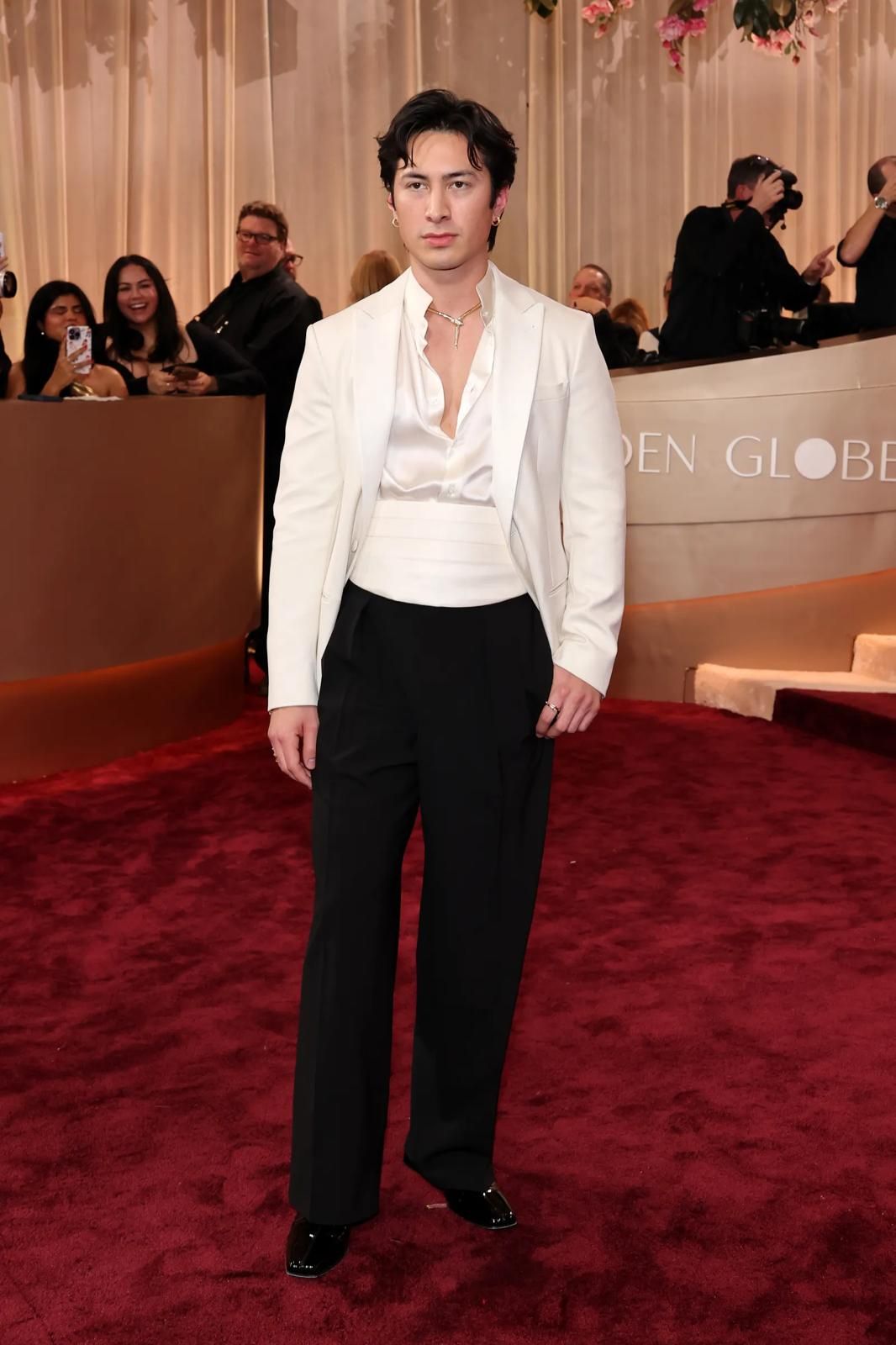
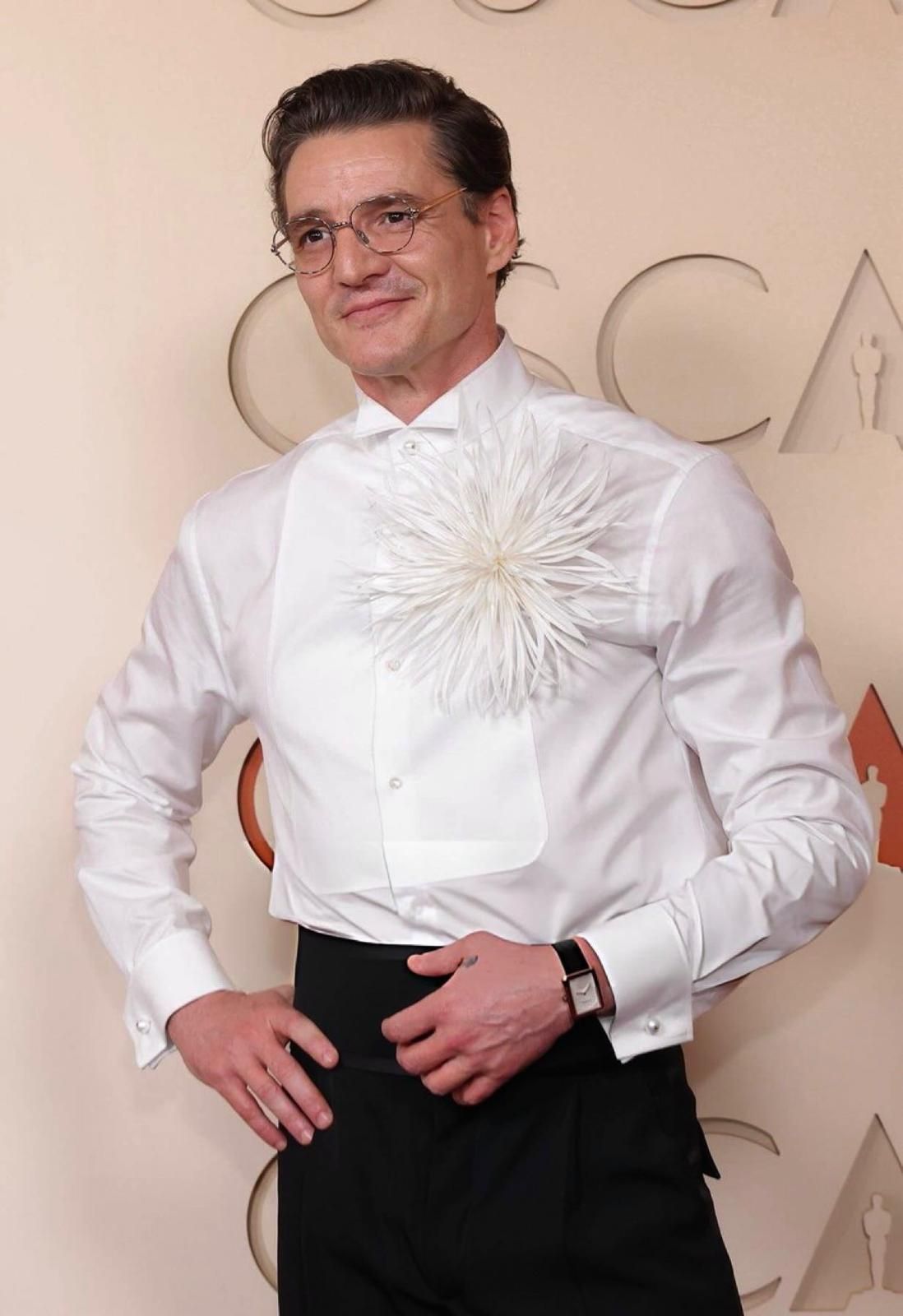
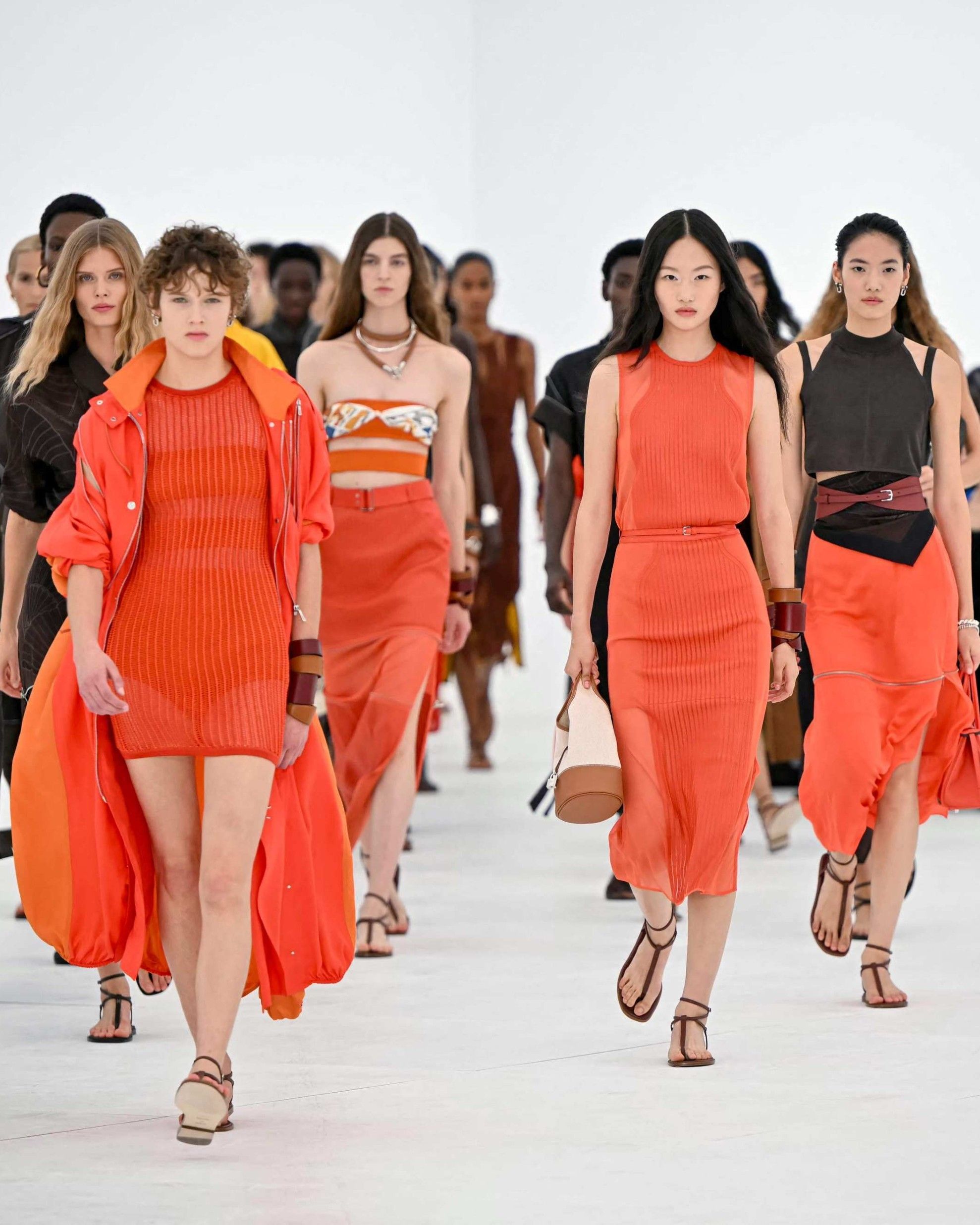
Beyond the cummerbunds seen on red carpets, think of Hudson Williams at the Golden Globes or Pedro Pascal on the Oscars carpet, it is on the runway that the cummerbund is undergoing its true conceptual revolution. A perfect example is the work of Michael Rider, who at Celine uses glossy satin cummerbunds as the pivot around which the silhouette revolves, subject to a chaotic tension of volumes, lengths and layering. Alessandro Michele at Valentino, meanwhile, through a vibrant maximalist lens, wraps glittering cummerbunds around voluminous jackets and fluid Eighties-style blouses.
While at Dolce & Gabbana and Ralph Lauren the piece evokes an old money aesthetic, at Sacai we find the sash paired with a skirt-trouser. In Kenzo's SS27, the fabric belt appears to be fashioned from several regimental ties wound around the waist, and in the latest menswear show from Prada, the sash transforms into a foulard with geometric prints that slots seamlessly into a kind of unsettling game of ugly-patterned garments.
In some cases, the accessory makes a genuine return to its roots: in recent collections by Conner Ives, Ferragamo and Kartik Research, the cummerbund sheds its Western rigidity to rediscover itself as a long, fluid scarf. Knotted above or below jackets, it lengthens until it becomes a light trailing train, reclaiming that soft movement and textile nature that had originally brought it into being centuries ago.
What to read next

adidas Originals opens a new store in Rome on Via del Babuino
Here's what went down at the opening event
Miu Miu's commercial boom is coming to a halt
The rest of the Prada Group, however, is holding up well
5 Style Lessons We Can Learn from Jeff Goldblum
How to put together a look inspired by the iconic actor