

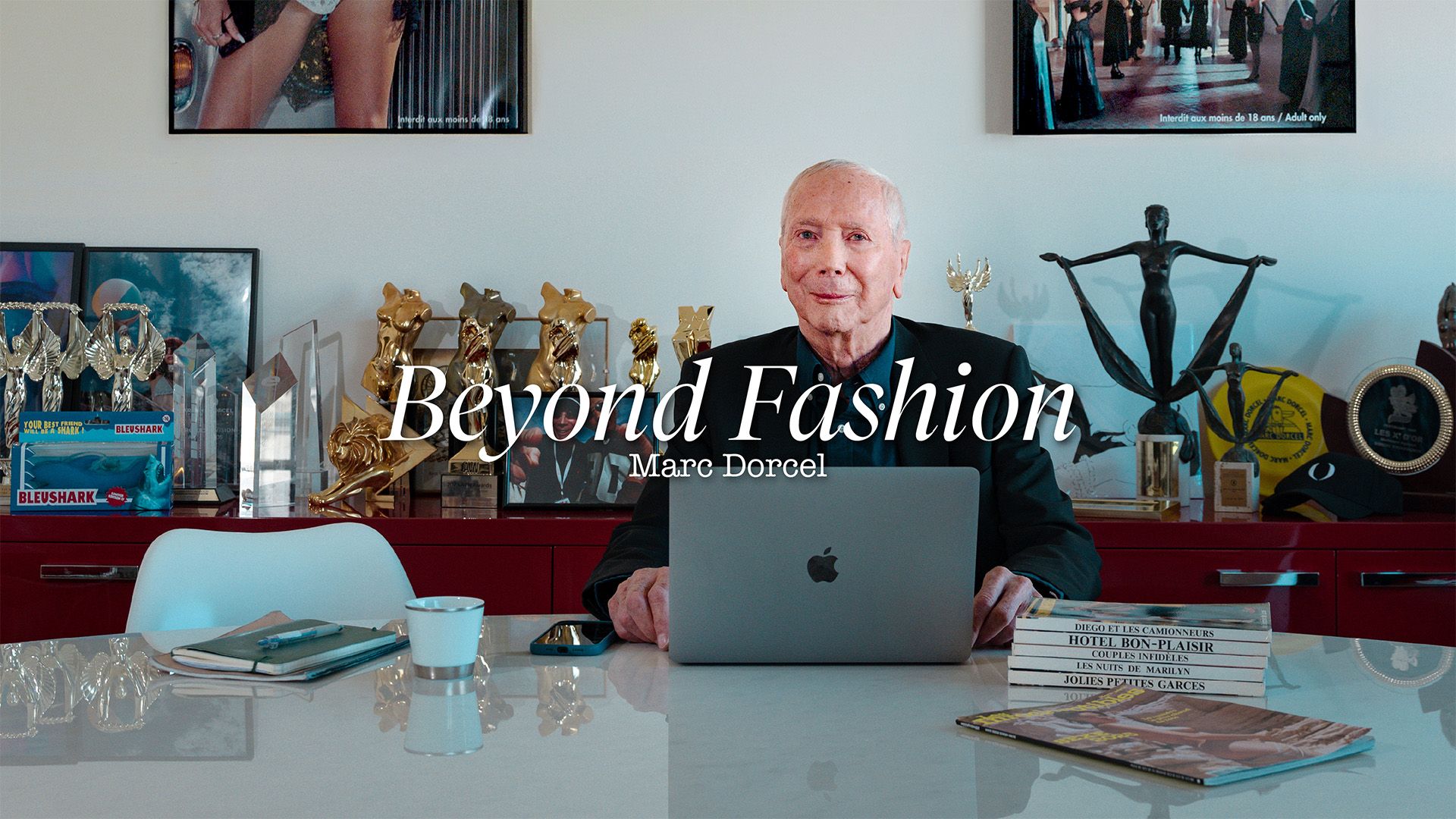
There are very few names capable, on their own, of encapsulating an entire collective imagination. For decades, Dorcel helped shape a certain fantasy world, built on glamour, freedom, endless nights and sophisticated desire. Behind the brand that became a symbol of French eroticism stands Marc Dorcel, born in Paris in 1934, a privileged witness to the transformations of desire and the cultural upheavals of the second half of the twentieth century.
Far from the fantasies attached to his name, Marc Dorcel’s story is above all one about images, staging and aesthetics. From the jazz cellars of Saint Germain des Prés to the porno chic era of the 1990s, his journey also traces a broader history of changing morals, shifting relationships to the body and desire, and the production and consumption of images. We met with him to talk about Paris, fantasy, glamour, memory and what becomes of eroticism in a world where everything now seems instantly visible.
You once said that in people’s minds you are surrounded by beautiful women in stockings. Is that far from reality?
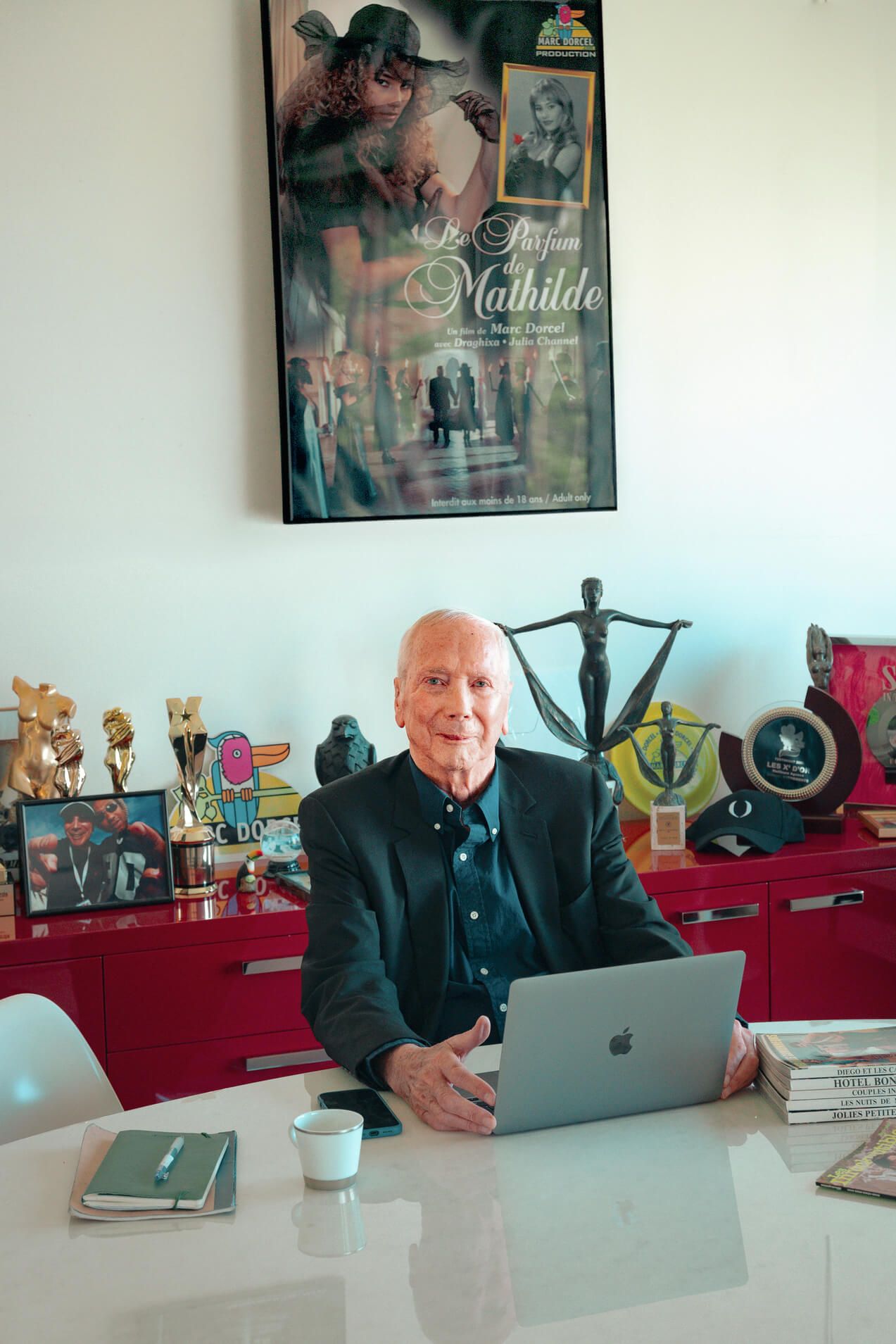
There are many fantasies surrounding this world. People imagine a playboy lifestyle, whereas my daily life was above all that of an entrepreneur and a demanding craftsman. On film sets as in the offices, the atmosphere was always extremely focused and professional. We were, and still are, above all concentrated on the work itself, on the quality of the images, the sets, the lighting, on attention to detail and a job well done. What has always fascinated me was never provocation, but rather a taste for beauty, quality and aesthetic research.
Between the 60s, 70s, 80s and 90s, when did sexual life feel the freest to you, and when did it begin to close up (if it did)?
I come from the 1970s, a time when many taboos disappeared. There was a very strong sense of freedom, sexually but also politically and culturally. That atmosphere of liberalization, curiosity and exploration obviously played an important role in my journey and in the freedom I had to create and build projects within this world. The 1980s then brought a more aesthetic sophistication, while the 1990s introduced something more media driven and commercial.
And paradoxically, even though people today are often freer and more open in their intimate lives than in past decades, institutional, cultural and political discourse has become more conservative again on these issues.
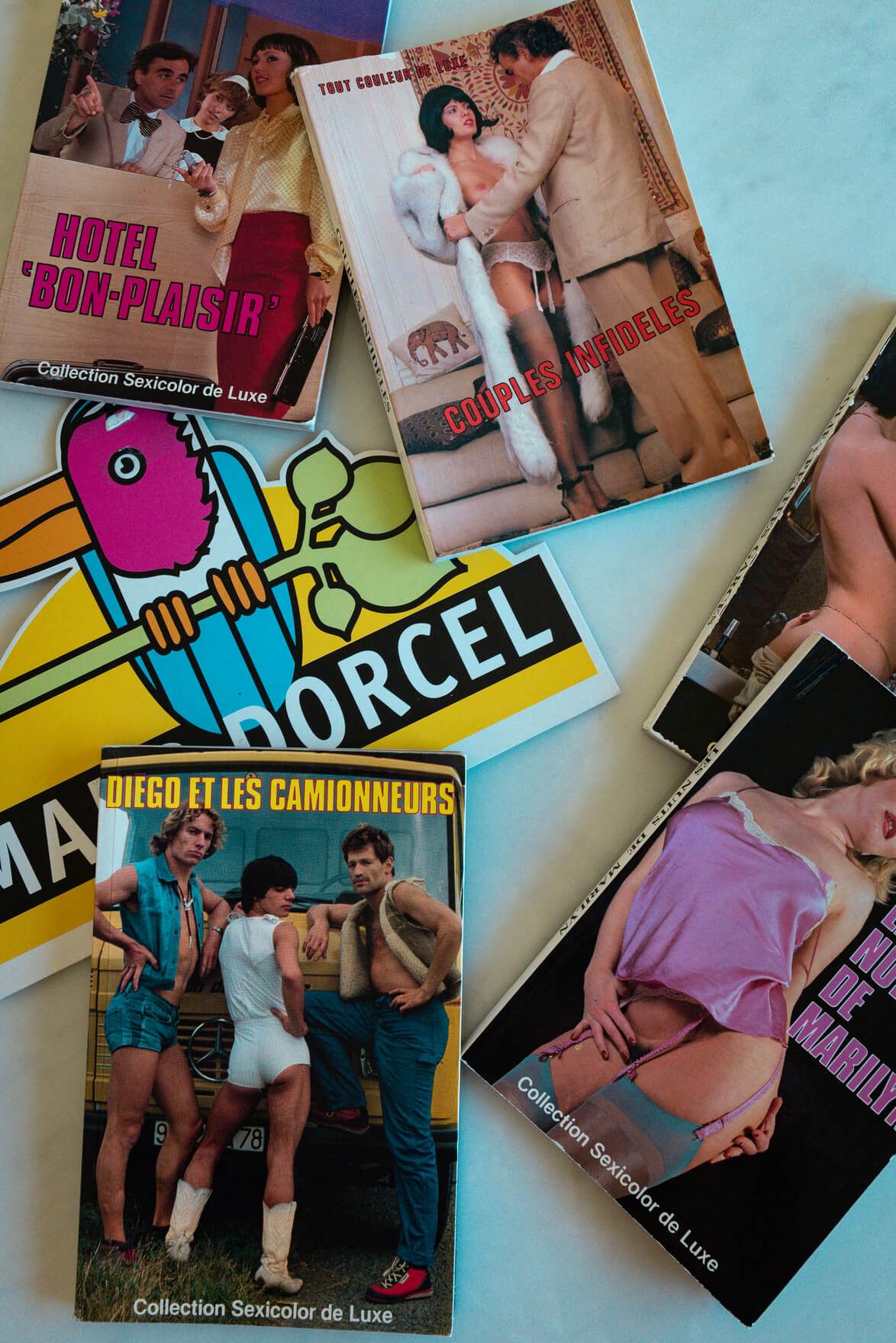
In fashion, people often talk about the porno chic of the 90s and 2000s. Did you feel that fashion was observing you, copying you, or appropriating your world?
In the 1990s, there was indeed a real dialogue between fashion and the world of eroticism. Designers like Tom Ford at Gucci borrowed many codes inspired by pornography, sexual glamour and sophisticated provocation.
But the influence went both ways. Pornography, whether people like it or not, is also a visual and aesthetic language that interacts with its time, just like fashion or cinema. Each one inspires the other, feeds on the spirit of the moment and reacts to cultural evolutions.
At Dorcel, this period allowed us to affirm our aesthetic identity even more strongly through “Porno Chic”, which we actually registered as a trademark. The idea was precisely to combine a certain visual sophistication with eroticism, bringing together glamour, sensuality and a form of elegant transgression.
Are there things you used to do that would be impossible today, not legally but culturally?
Obviously. Sensibilities and cultural norms have evolved enormously. Certain representations or fantasies that once seemed relatively common have become unacceptable today, even unthinkable, whether regarding hierarchical relationships, non consent or certain family taboos.
But this goes far beyond pornography. For a long time, these imaginaries also existed in mainstream cinema, literature and popular culture. Pornography remains above all a cultural and commercial product, designed to be watched and distributed, and therefore evolves with the expectations and sensibilities of its time. Like all cultural industries, there are more provocative works and others aimed at a broader audience. It is actually fascinating to observe these evolutions sociologically, because they show how pornography often acts as a mirror of broader social transformations.
When you look at contemporary pornography, do you still recognize yourself in it, or does it feel like a completely different world?
Dorcel’s DNA is still there, despite technological, aesthetic and cultural evolutions. That DNA is based on aesthetic research, sophistication and even a certain elegance in the service of explicit and unapologetic sexuality.
Dorcel has existed for almost fifty years. In order to endure, a vision of pornography cannot remain frozen in time. That is why Dorcel has always made a point of producing films by directors with different aesthetics, sensibilities and national backgrounds.
The strength of a brand like Dorcel lies precisely in its ability to maintain a recognizable identity while evolving alongside society, fantasies and changing social norms. In that sense, it is perhaps similar to what certain great fashion houses also manage to do: preserve a signature while constantly reinventing themselves with their era.

Today everything is accessible immediate and free do you think that has killed fantasy or made it more radical?
First of all, I think the idea that everything is truly accessible for free needs to be nuanced. The major free content platforms were mostly built to generate audience traffic and then direct users toward paid services or premium content. What is distributed for free is often either low quality material or very short excerpts designed simply to attract attention.
However, these platforms have profoundly transformed the circulation of content. They have enabled an extremely wide diffusion, sometimes without real filters or protections, including highly provocative or purely clickbait content that would probably never have been so exposed in the past.
Fantasy still exists, but it is now constructed differently, within an overabundance of images and content that can sometimes blur the line between immediate curiosity and deeper fantasy. Much of this content aims more at capturing attention than nurturing imagination.
You were born in Paris in 1934. If you close your eyes, what is the first Paris you see, a street, a smell, a light?
When I close my eyes, I mostly see a very lively Paris, a Paris of friends. We did everything together. One was never alone. The street itself was a real place of encounters, connection and spontaneity. There was a simplicity in human relationships. Friendships formed very easily between people from very different backgrounds, with spontaneity and lightness.
In the 50s and 60s, when you were young, where did people really go out in Paris, not necessarily the official places, but the ones where things actually happened?
At that time, I spent a lot of time around Saint Germain des Prés. There were the jazz cellars, like Le Caveau de la Huchette, Le Club Saint Germain, Le Vieux Colombier or Le Tabou, where people went to listen to music and dance to bebop. And the entire neighborhood also revolved around cafés and brasseries: Café de Flore, Les Deux Magots, Café Saint Germain. We would spend hours sitting on terraces talking about everything and nothing, about where the night might end, about fashion, about music.
There was not necessarily much money, but there was a real sense of excitement. These were above all places of encounters, filled with young people trying to assert their personality, style and allure. I myself was swept along by this very Saint Germain atmosphere: velvet trousers, rock jewelry, skull necklaces… everyone was trying in some way to invent their own identity.
Is there a place that has disappeared that you truly miss?
There was one place I absolutely loved: the Pub Renault, which opened in the early 1960s. The restaurant was designed like a train, with padded compartments where people would dine. It was actually there that I discovered avocado for the first time. It may sound trivial today, but at the time it was a completely new fruit in France and still rather rare in restaurants. I loved the atmosphere of the place, its décor, and I went back there very often.

Parisian nights are often built around circles and groups. What did yours look like, more artists, night owls, outsiders, or a mix of all that? And what held you together, work, pleasure, transgression?
They were mostly groups of close friends who were all somewhat similar: students, young people going out together without really questioning what everyone did in life. We did not talk about careers or social status. We simply gathered to go out, dance and meet people.
I lived in the Marais, a neighborhood that has changed enormously since then, but I spent much of my time in Saint Germain des Prés, where I would meet friends before continuing the night elsewhere, toward République or Saint Lazare. We gathered in brasseries like La Chope or Le Snack Saint Lazare, hoping to hear about some house party organized somewhere. Many people still lived with their parents and invitations spread by word of mouth. You had to be in the right place at the right time to hear about them.
Did Paris shape your erotic imagination? Do you see it as a sensual city, or more as a city of staging?
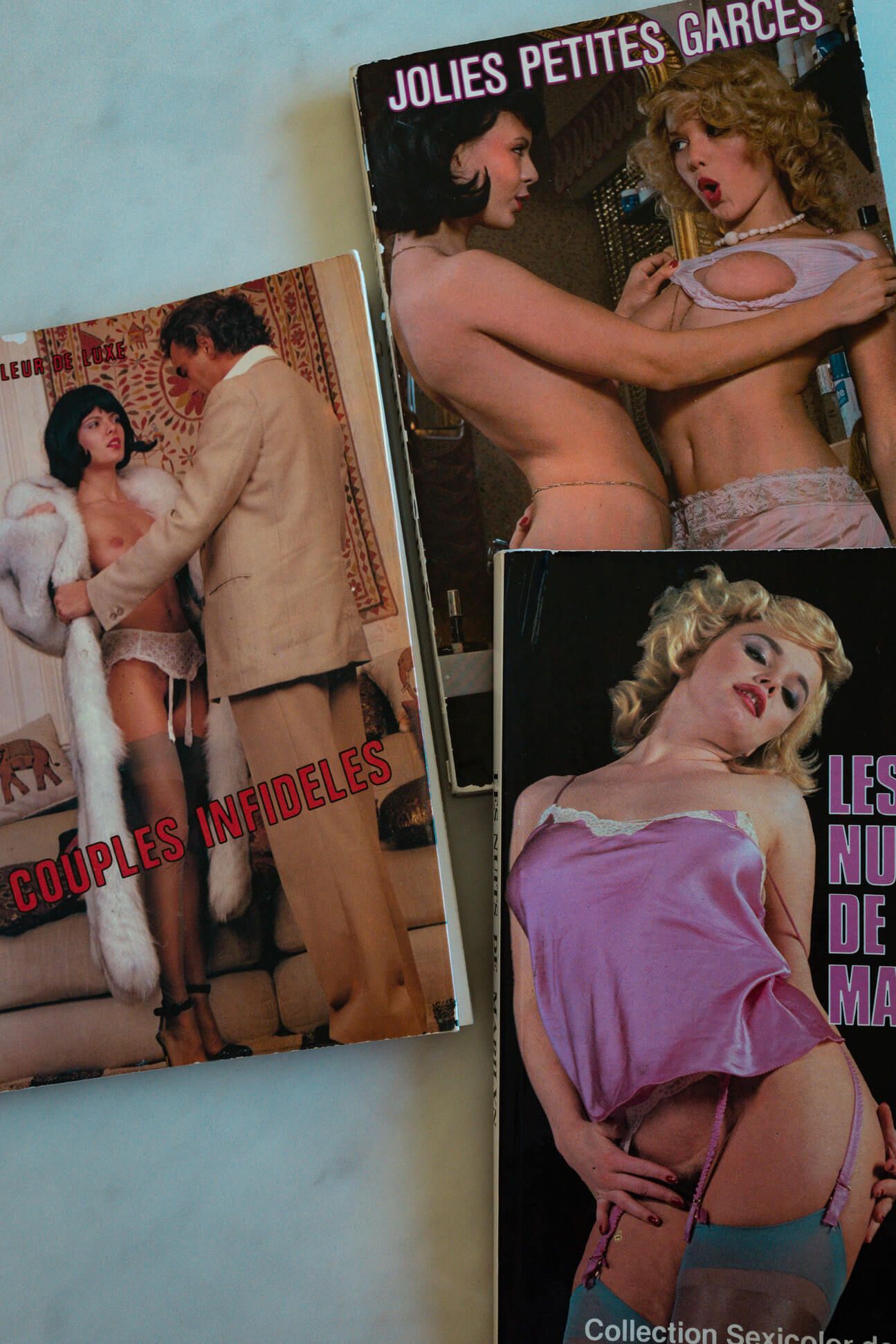
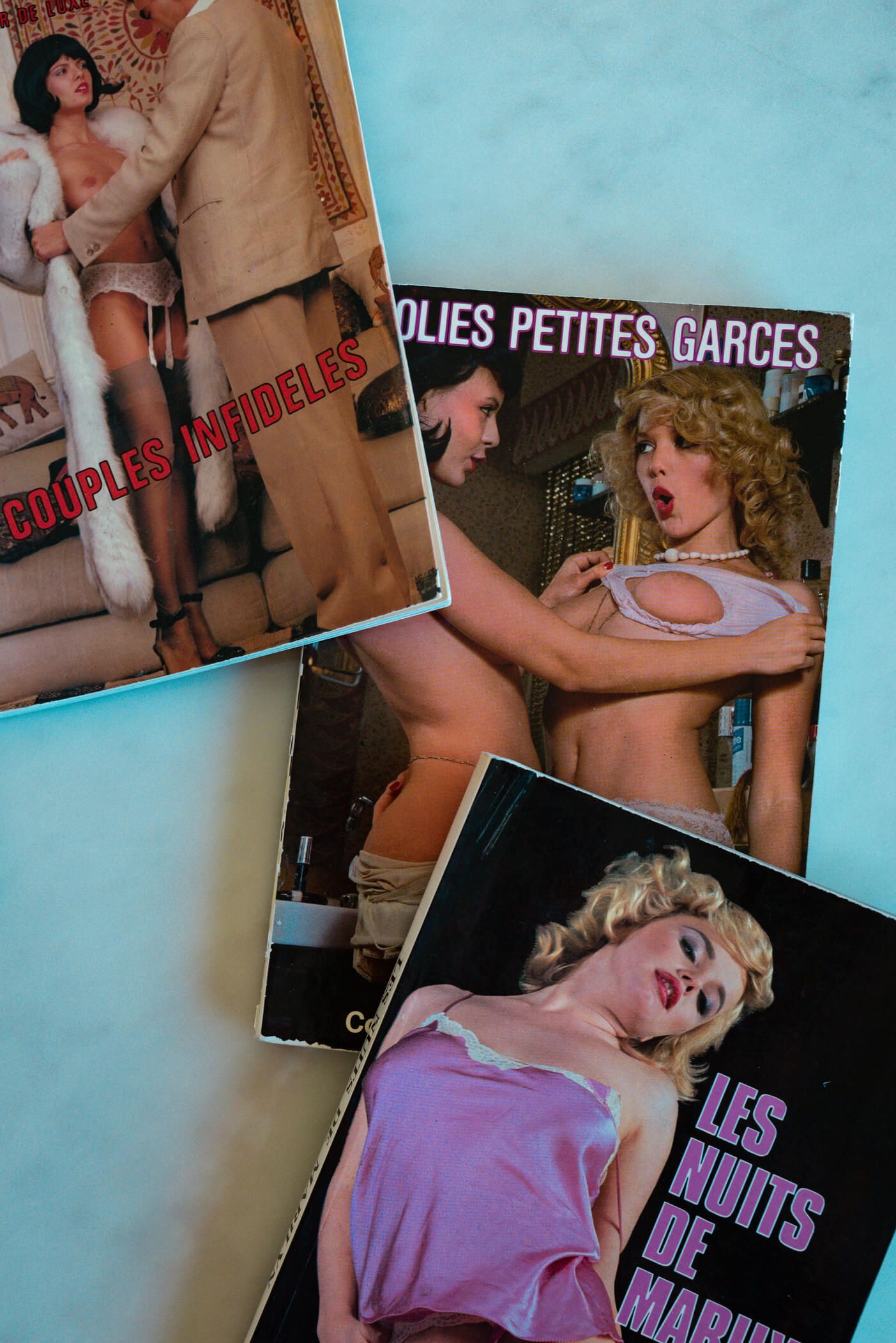
My erotic imagination was built within a romantic vision of Paris. What I remember first are the elegant and sophisticated women I saw in fashion magazines or luxury publications, especially magazines I would leaf through in my dentist’s waiting room. What fascinated me most were their legs, the slightly shiny stockings they wore, that very feminine sophistication. For the young teenager I was just after the war, discovering that elegance and refinement was something deeply striking. It was of course extremely innocent, but it was already enough to spark fantasy.
Later, I discovered American pin ups through publications such as Paris Hollywood, which circulated at the time. It was a more glamorous, spectacular and directly sensual world. But I already found there the same attraction toward imagery, sophistication and staging.