




















«This collection doesn't look for answers, but lives with the fact of not having them», an interview with Emilie Wenckstern Winner of Polimoda's Best Collection 2026 with "No Longer Human"
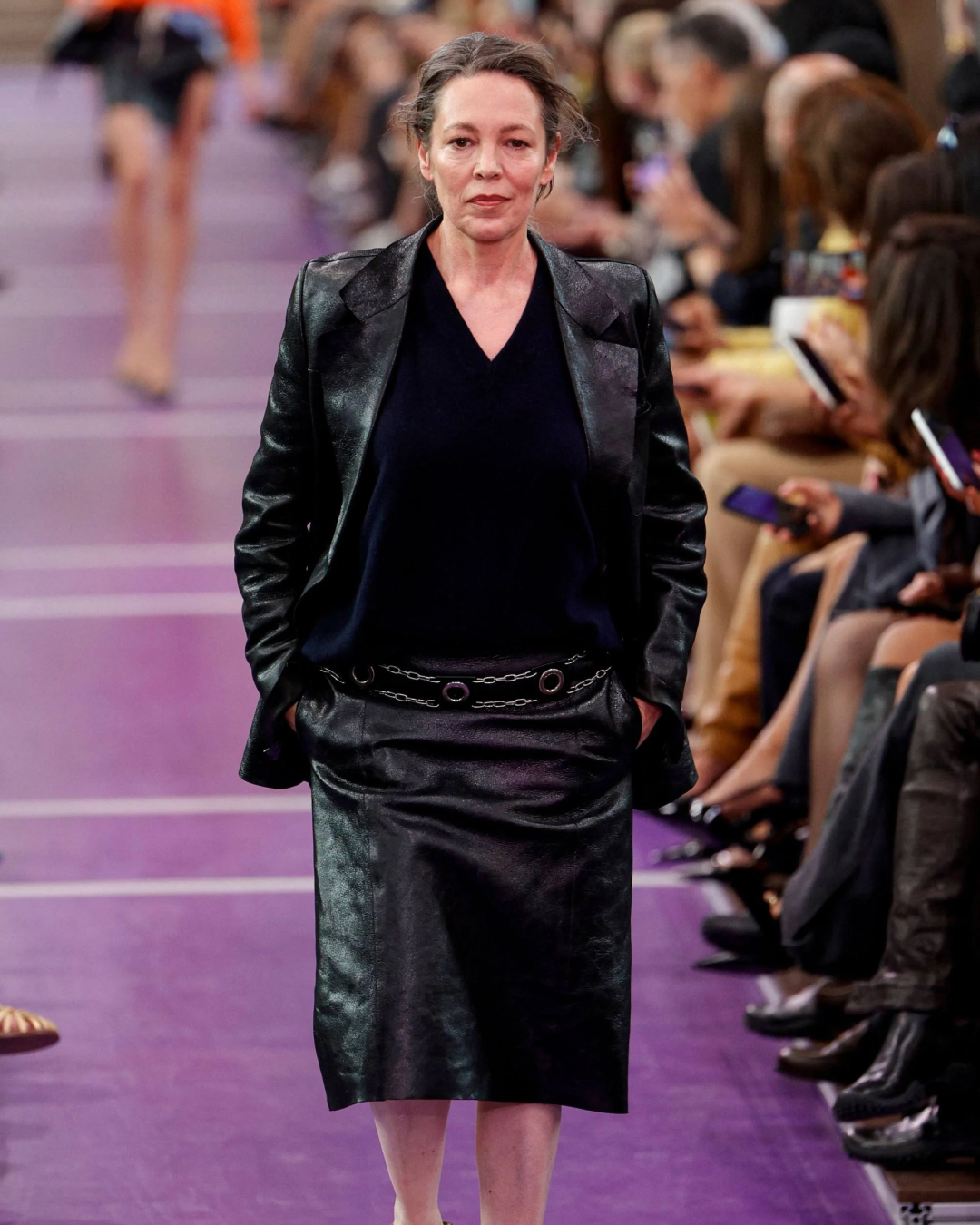
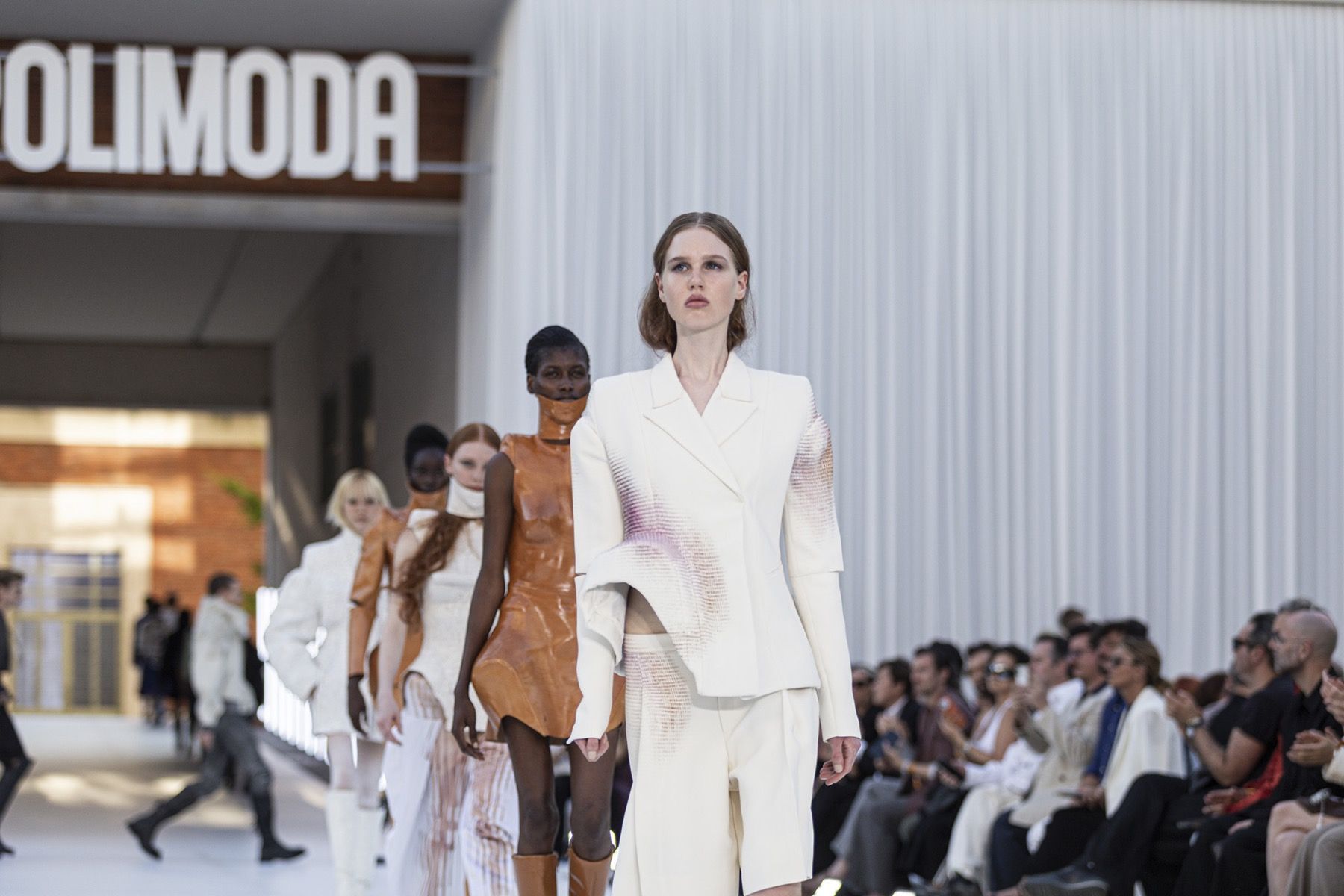
The week of Pitti Uomo 110 opened with one of the most anticipated events on the Florentine calendar: the Polimoda Graduate Show 2026. To mark the school's fortieth anniversary, the show took place in the piazza of the Manifattura Tabacchi, where the iconic clock building served as a backdrop for over a hundred looks created by twenty emerging designers.
The Graduate Show represents the culmination of four years of training and tells the story of students from around the world who chose Florence to develop a personal creative language with which to present themselves to the industry. All the garments were made in the workshops of the Manifattura Campus with the support of the faculty and industry professionals. Among the new features of the 2026 edition was the mentorship of Luke and Lucie Meier, alongside director Massimiliano Giornetti and An Vandevorst. The Best Collection 2026 was decided by a jury composed of Eva Cavalli, Tuomas A. Laitinen, Danae Mercer, Eugene Rabkin, and Simona Tabasco.
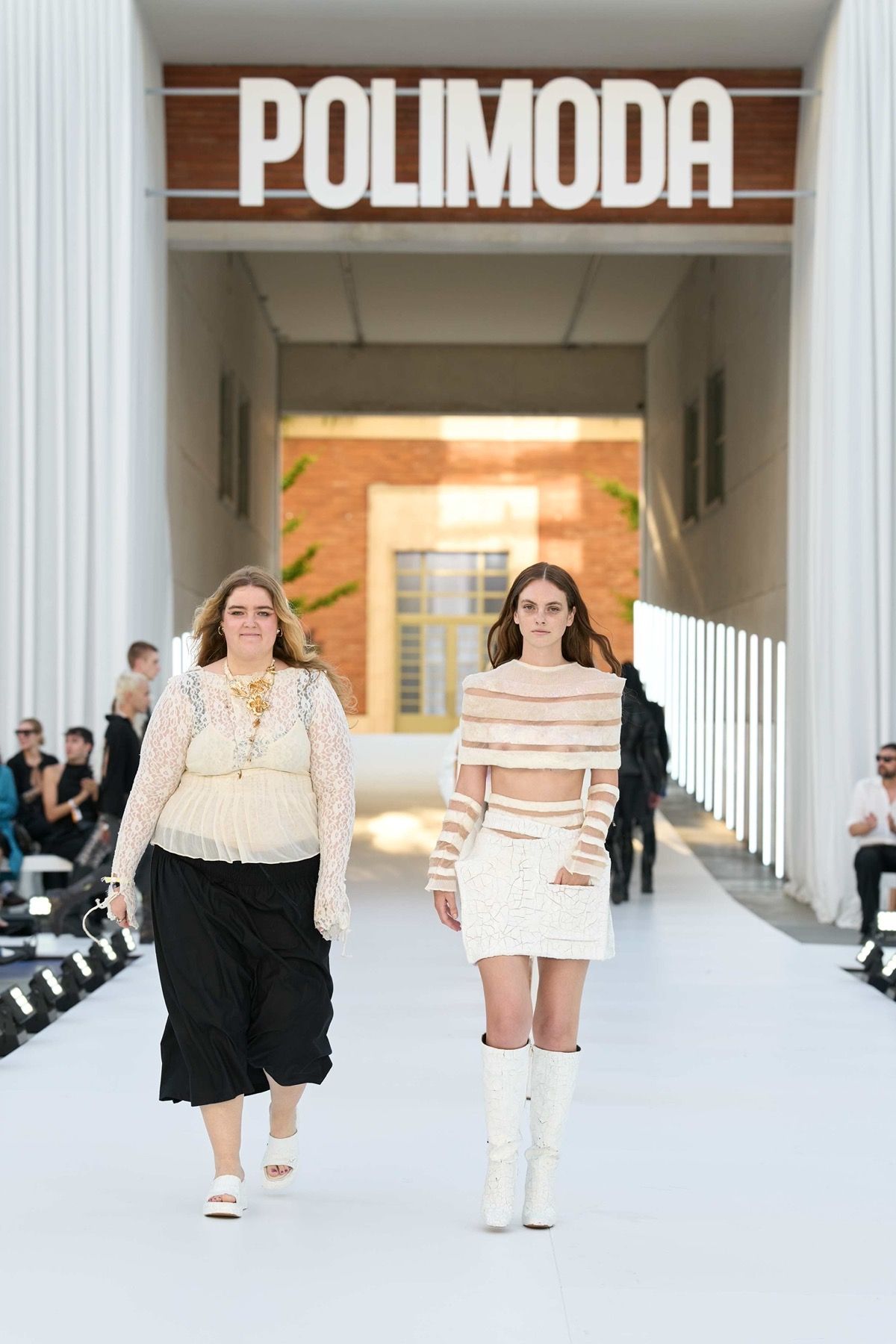
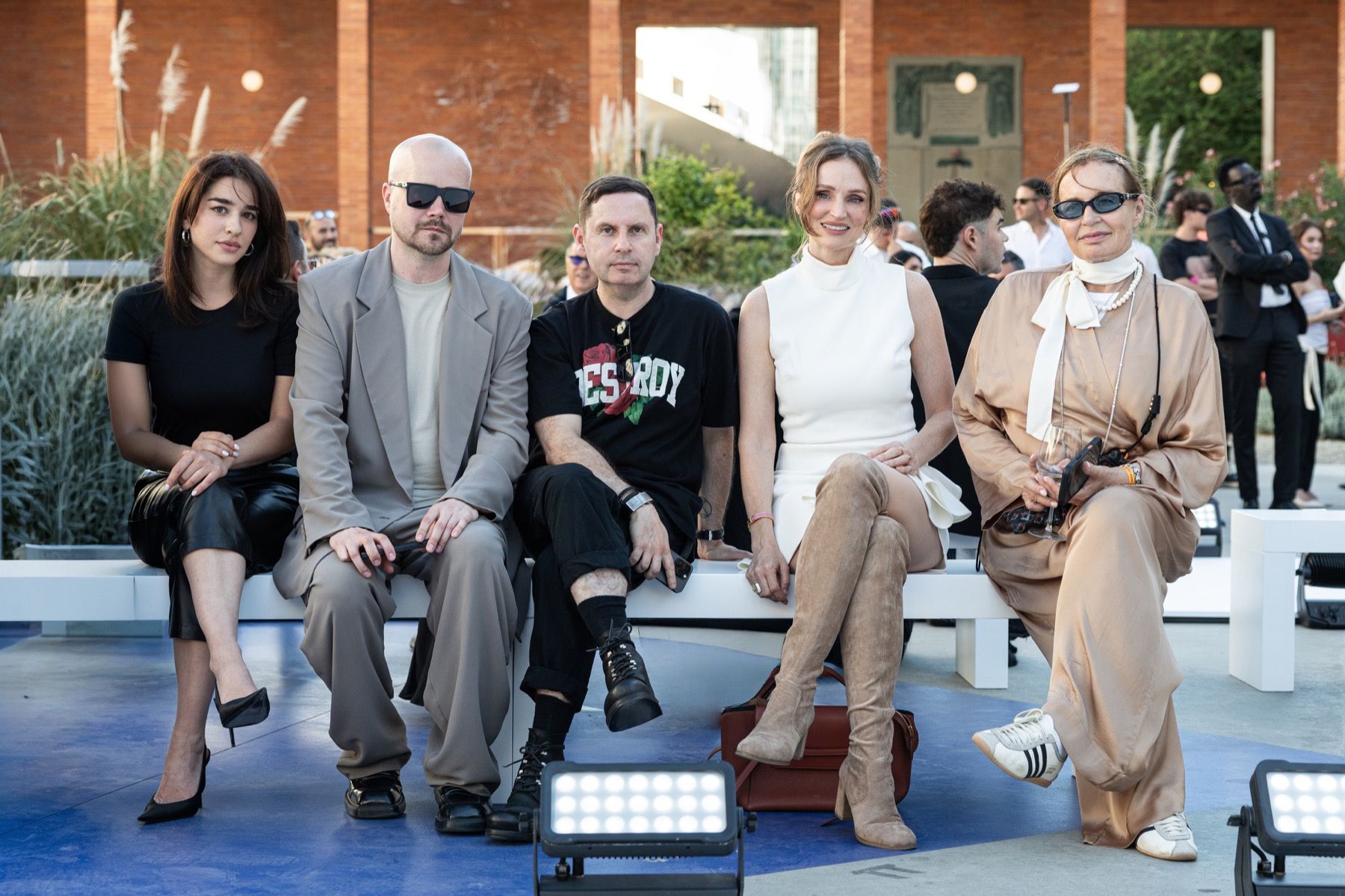
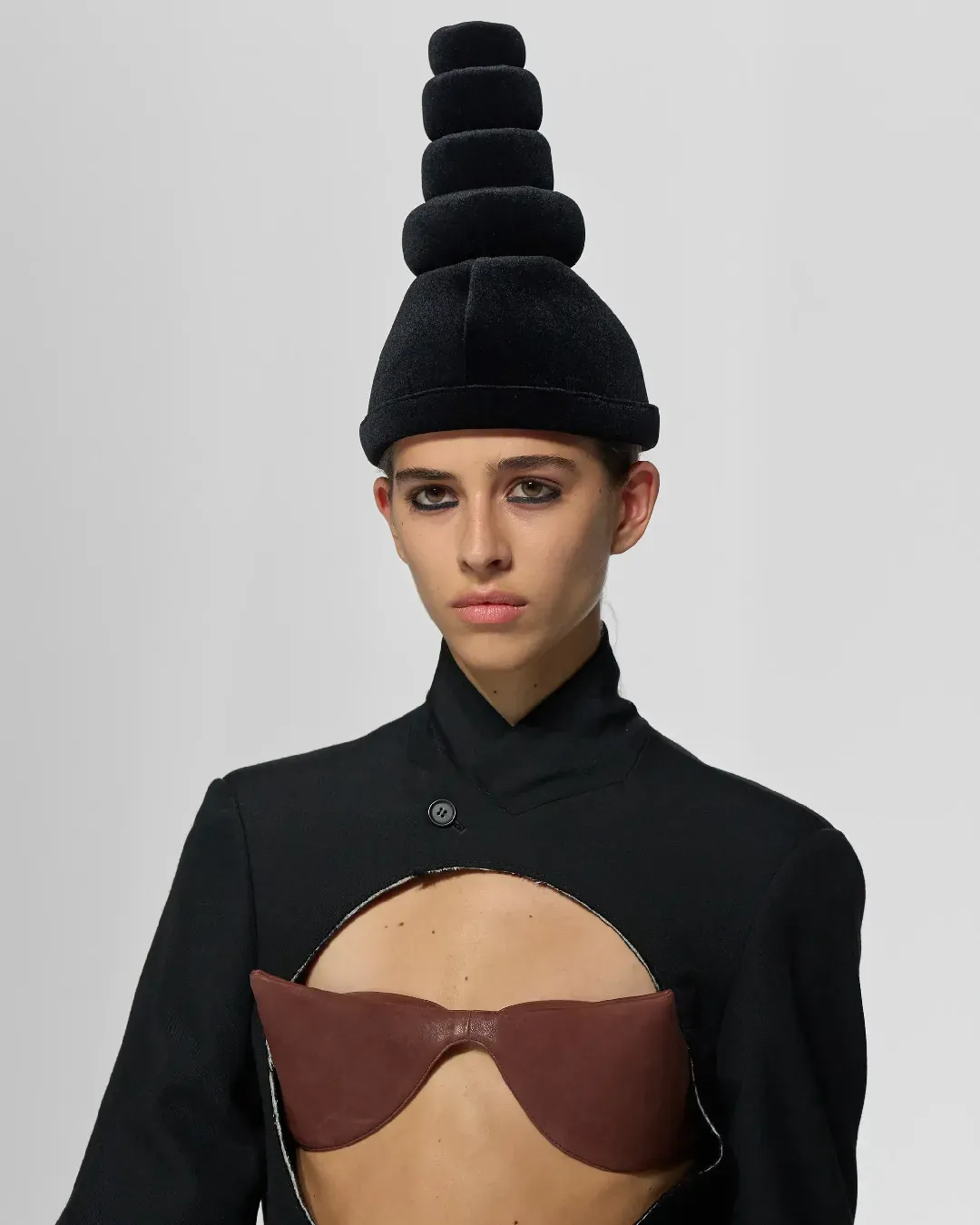
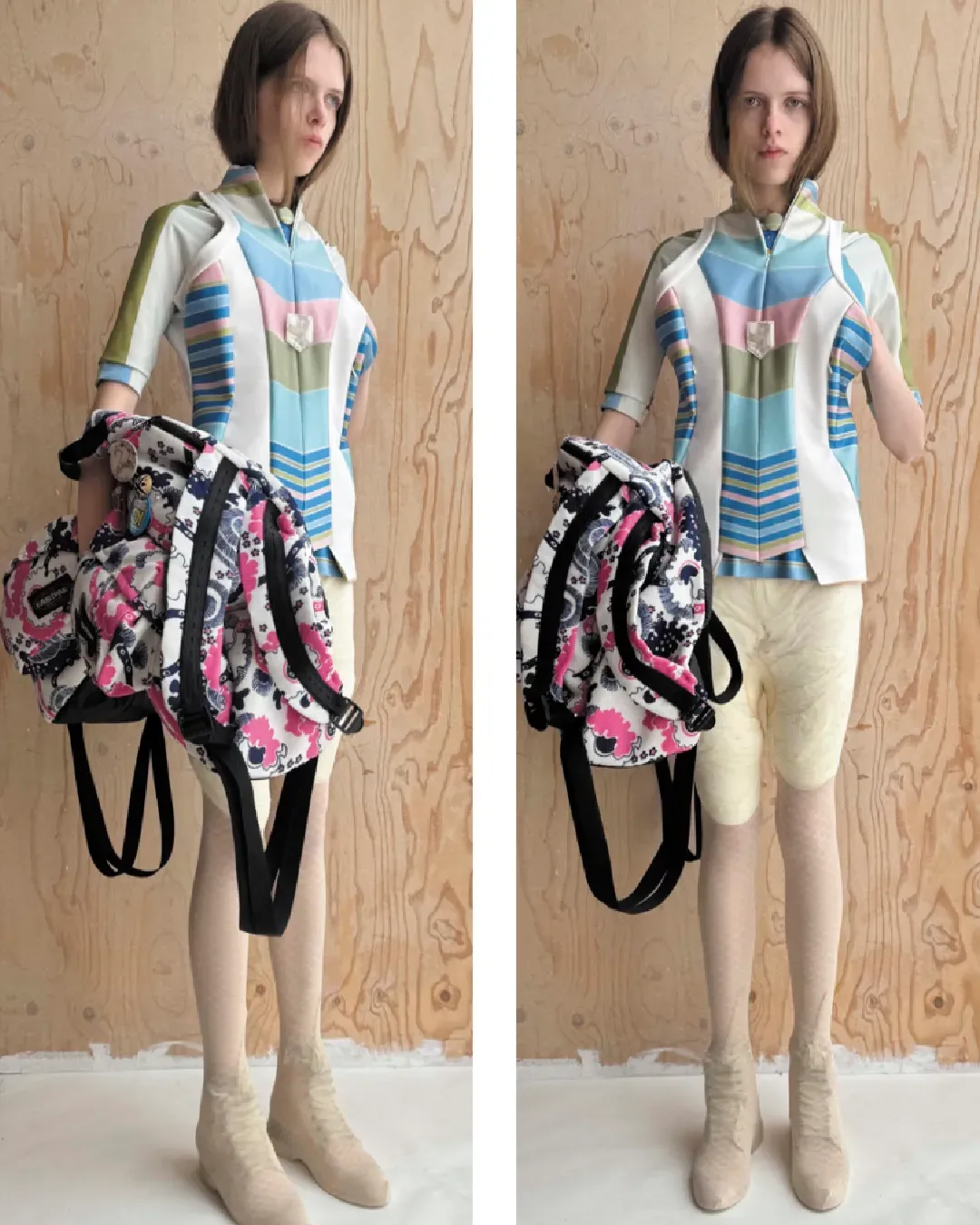
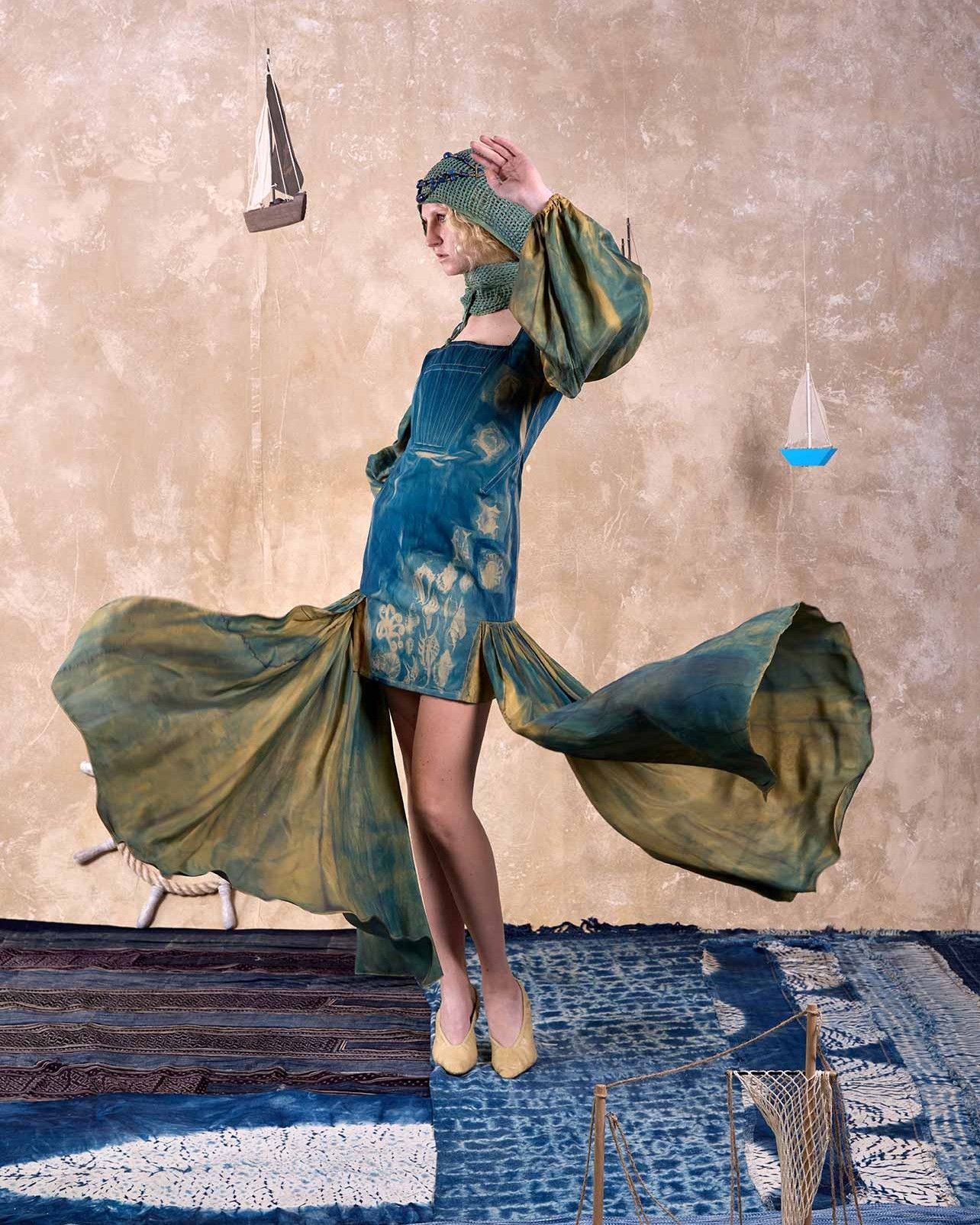
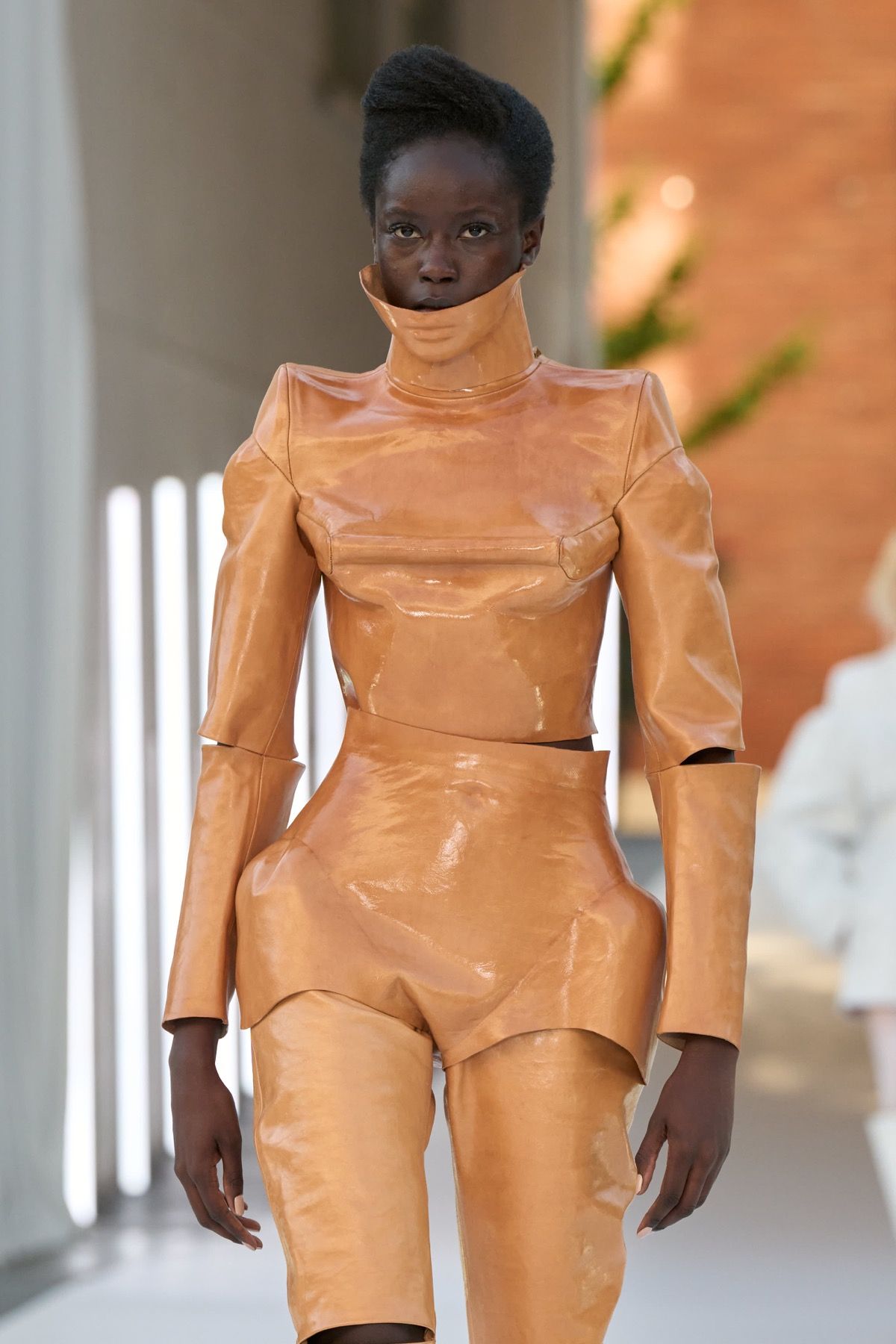
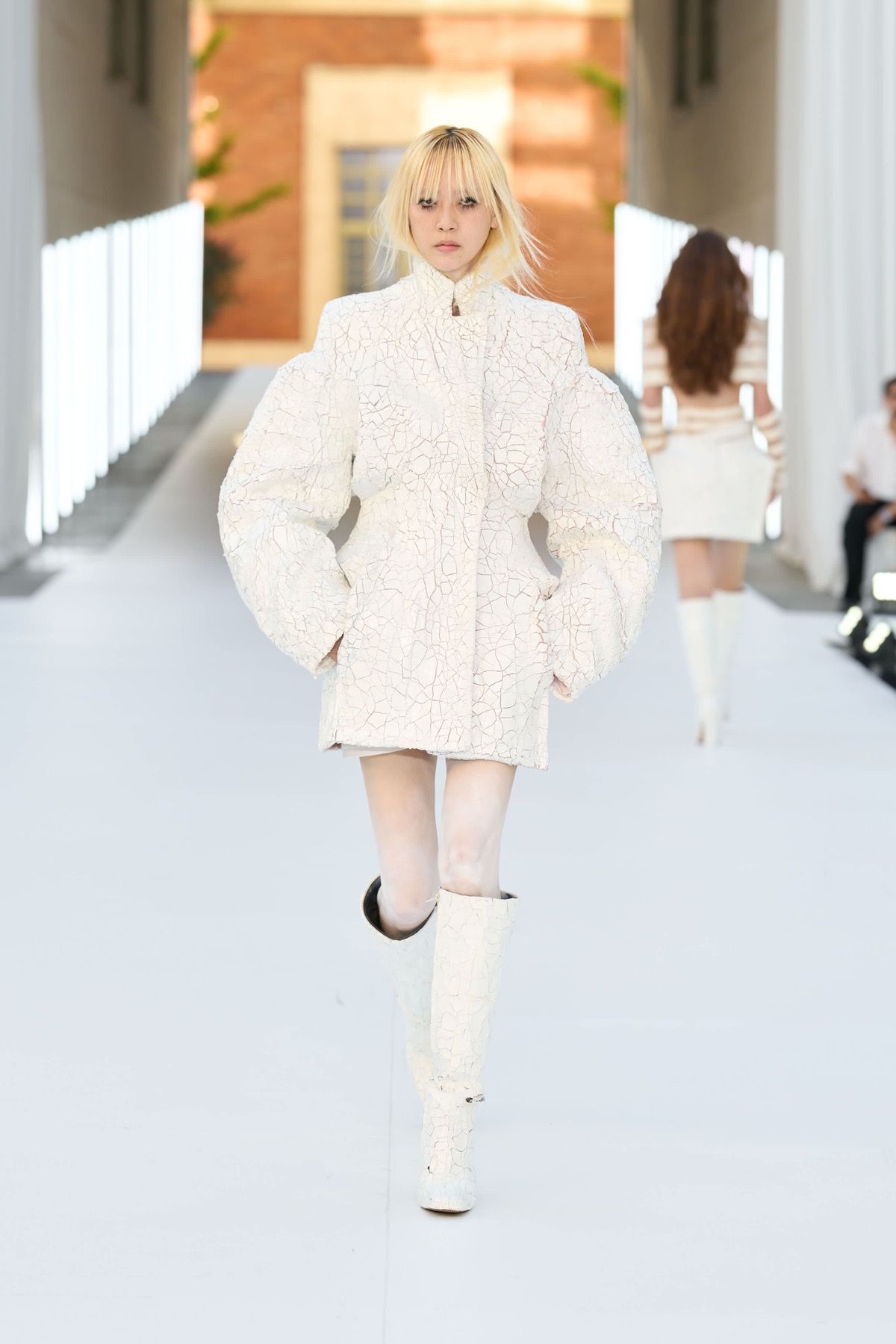
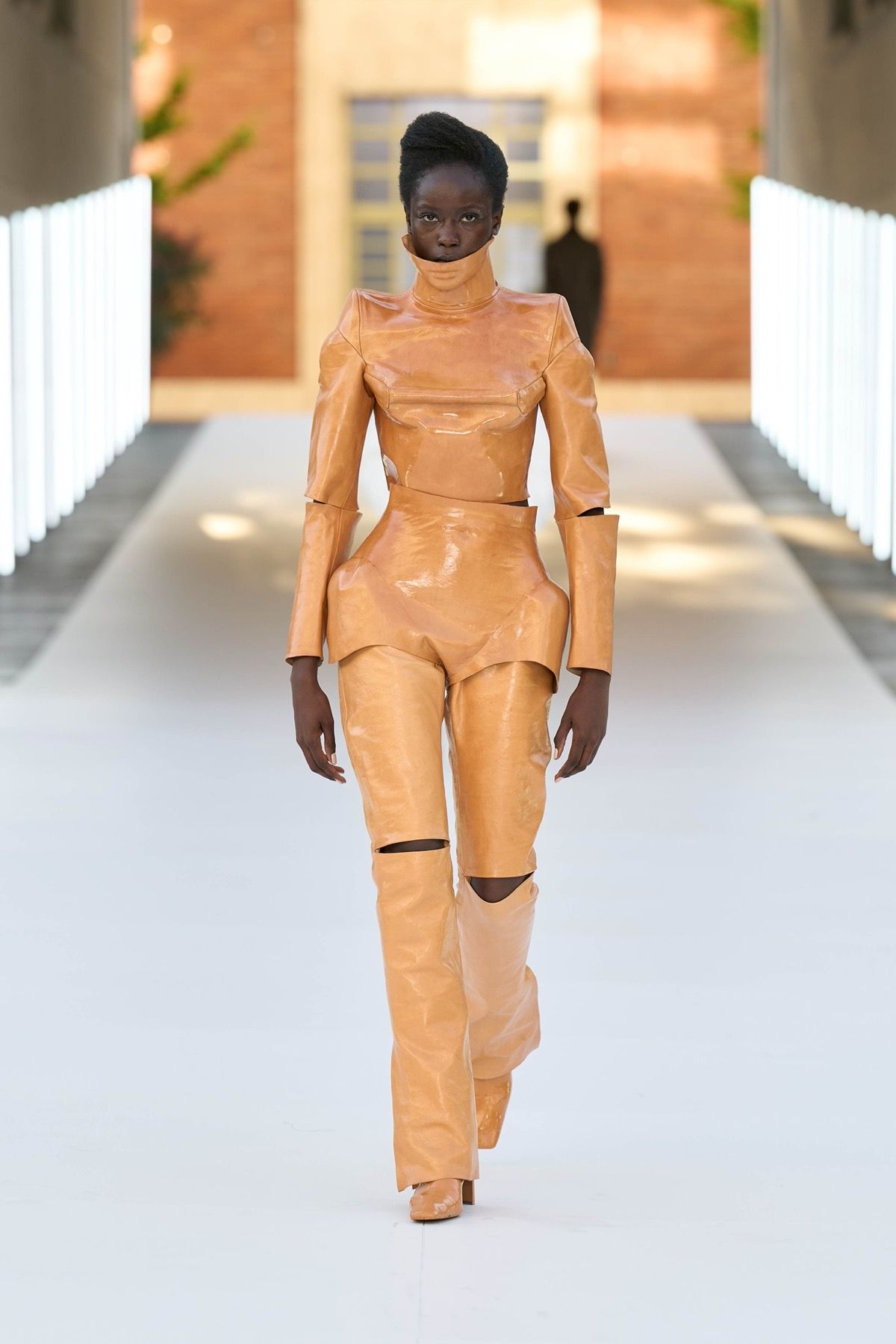
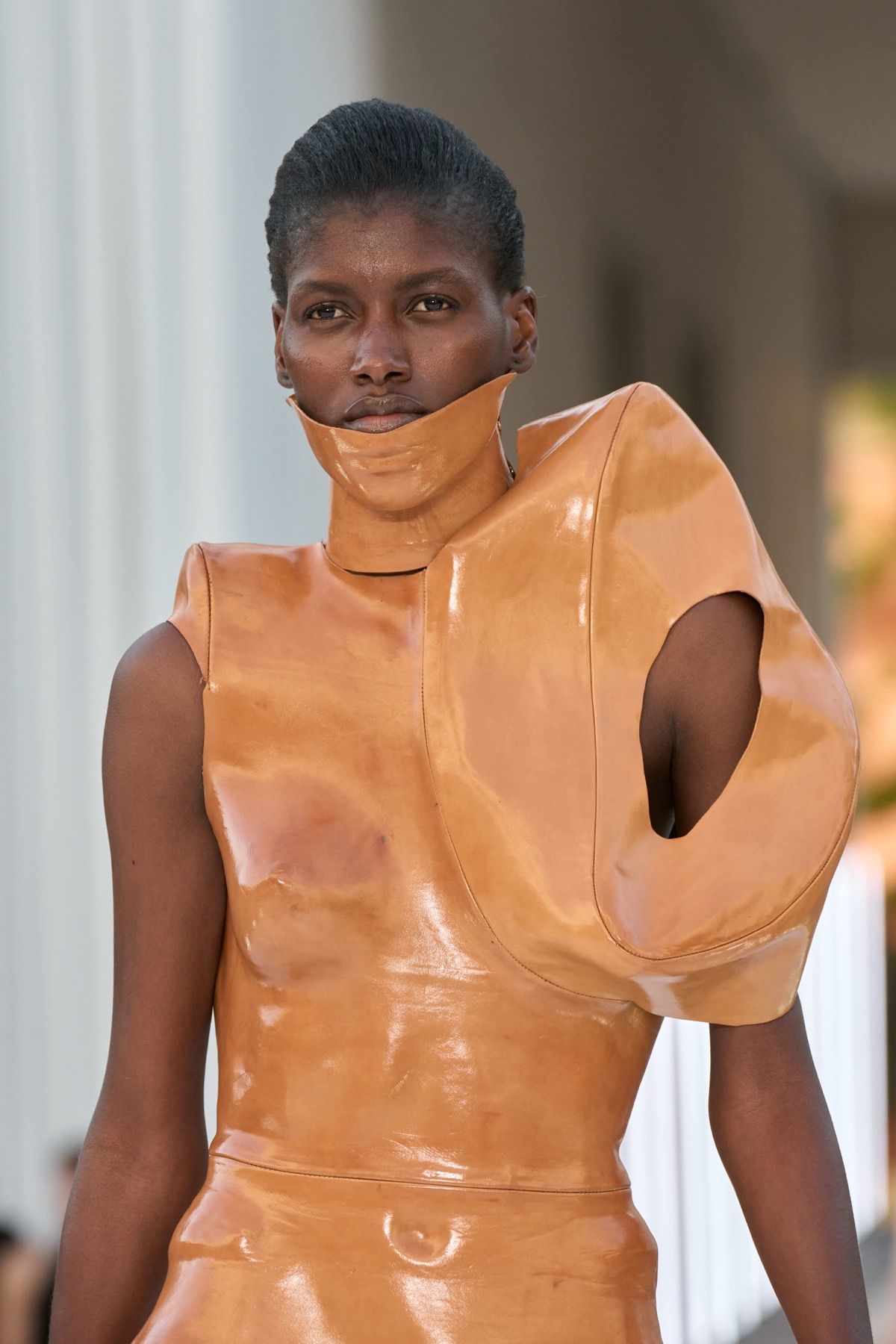
This year the Best Collection 2026 award went to young German designer Emilie Wenckstern, a recent Fashion Design graduate, recognised for her collection No Longer Human. A deeply personal project that addresses one of the most urgent and debated topics of our time: the body. With sensitivity and a critical eye, Emilie Wenckstern explores the boundaries between the human and the artificial, questioning the concept of identity through a considered design approach. The result is a body of work in which the materiality of fabrics engages in dialogue with sinuous, ever-transforming silhouettes, giving shape to an aesthetic language with a distinctly contemporary sensibility.
We met with Emilie Wenckstern to hear about her collection, winner of the Best Collection 2026 award, and the journey that brought her to the Polimoda Graduate Show 2026.
The Polimoda Graduate Show 2026 coincided with Pitti Uomo 110 and the school's 40th anniversary. What did it mean to you to receive the Best Collection award on such a special occasion?
Receiving the Best Collection award during Polimoda's fortieth anniversary, with the Graduate Show taking place alongside Pitti Uomo, made this moment even more meaningful. I had the feeling that it wasn't just a personal milestone, but also the privilege of being part of an important moment in the school's history.
On a personal level, this recognition gave me confidence precisely when I needed it most. Throughout the process I questioned myself many times — not because I doubted the idea behind the project, but because giving shape to a creative vision often means believing in it long before others are able to see it. Receiving this award confirmed that trusting my instincts was the right choice. I think that is one of the most valuable lessons I will carry with me as I begin the next chapter of my journey.
"No Longer Human" is a deeply personal collection. What story did you want to tell, and what did creating it mean to you?
More than telling a story, No Longer Human was born from a desire to ask questions. We live in an age where bodies are constantly being generated, modified, and can even exist before they have any real physical presence. We are increasingly confronted with representations that, in reality, have never existed. This led me to wonder about how the body manifests itself today and what it truly means to be human.
Creating this collection became my way of reflecting on these questions. Every material, every silhouette, and every experiment represented a further attempt to investigate the body and challenge my own perception of it. For me, creating this collection was not about finding answers, but about learning to live with not having them. I came to understand that a designer's role is not to explain the world, but to question it and invite others to do the same. That is precisely what I hope fashion can do: not offer certainties, but leave people with enough curiosity to keep questioning the world around them.
Your collection stands out for its bold use of volume, silhouette, and material manipulation. Where does this approach come from, and what role does experimentation play in your work?
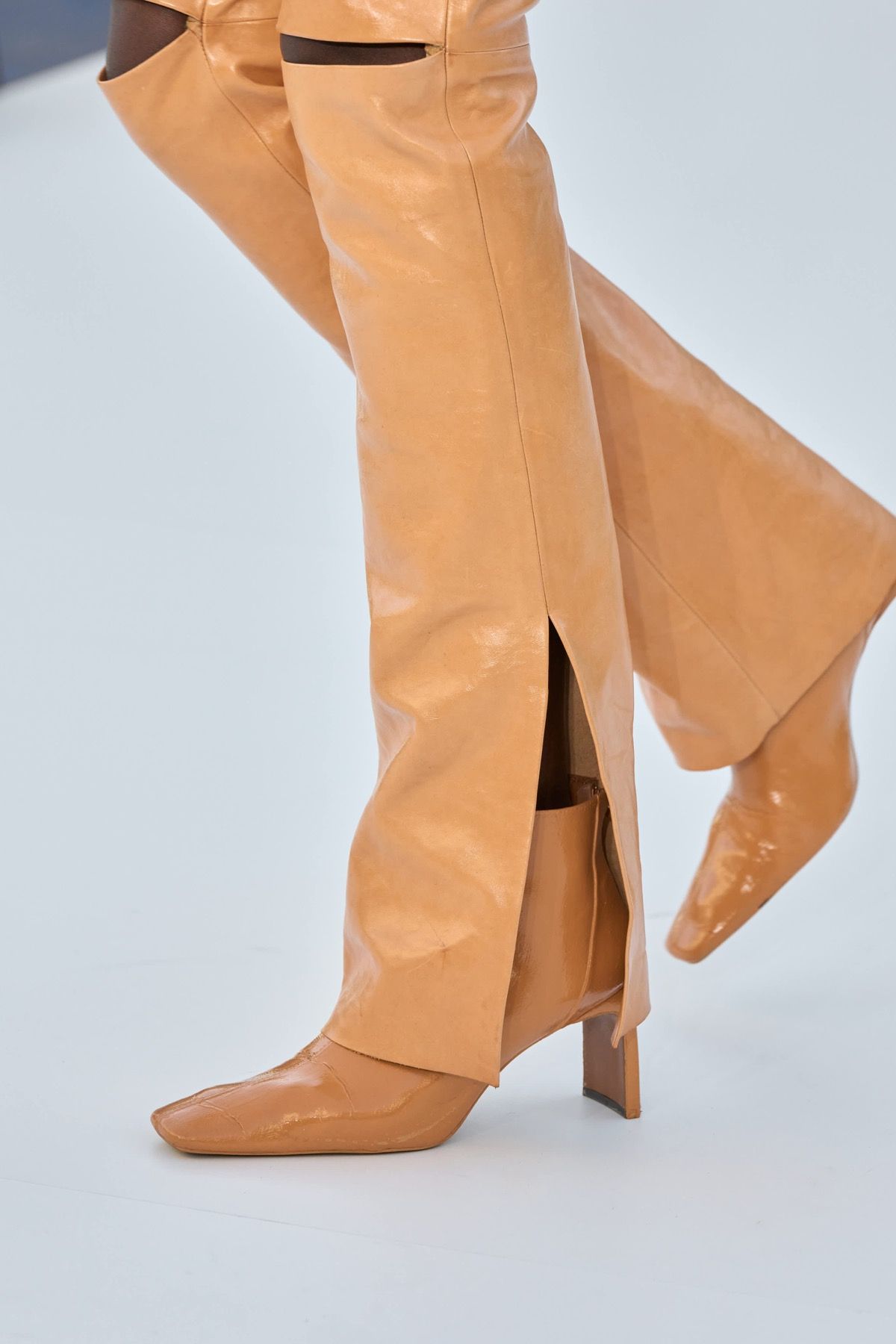
I think this approach stems as much from my background as from the collection itself. Before studying fashion I worked in an artist's studio, making sculptures and paintings. It was an experience that profoundly shaped the way I think about design. Even now I tend to approach garments as sculptural objects, paying close attention to form, volume, and materials. Experimentation is probably the most important part of my creative process. It is the way I think.
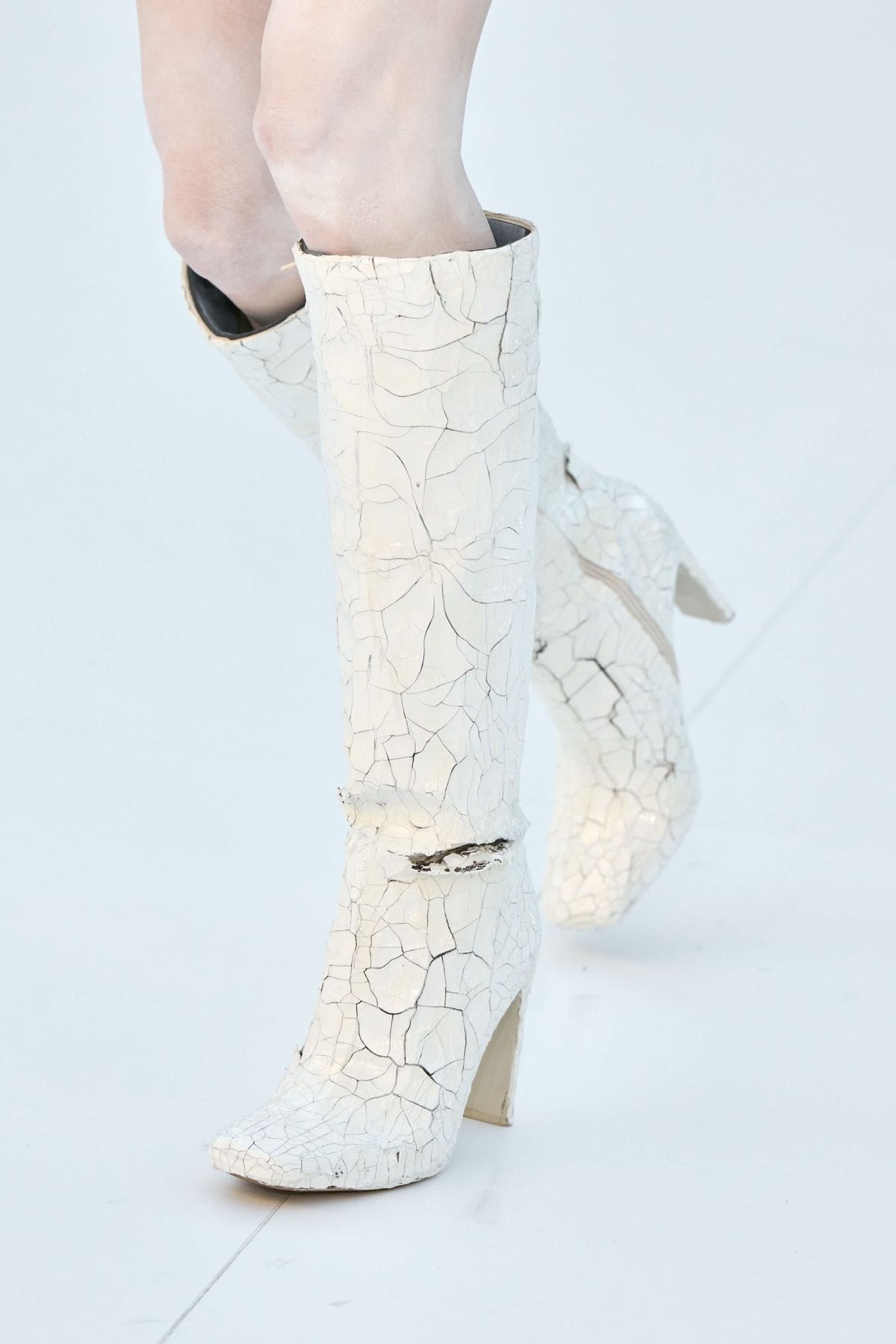
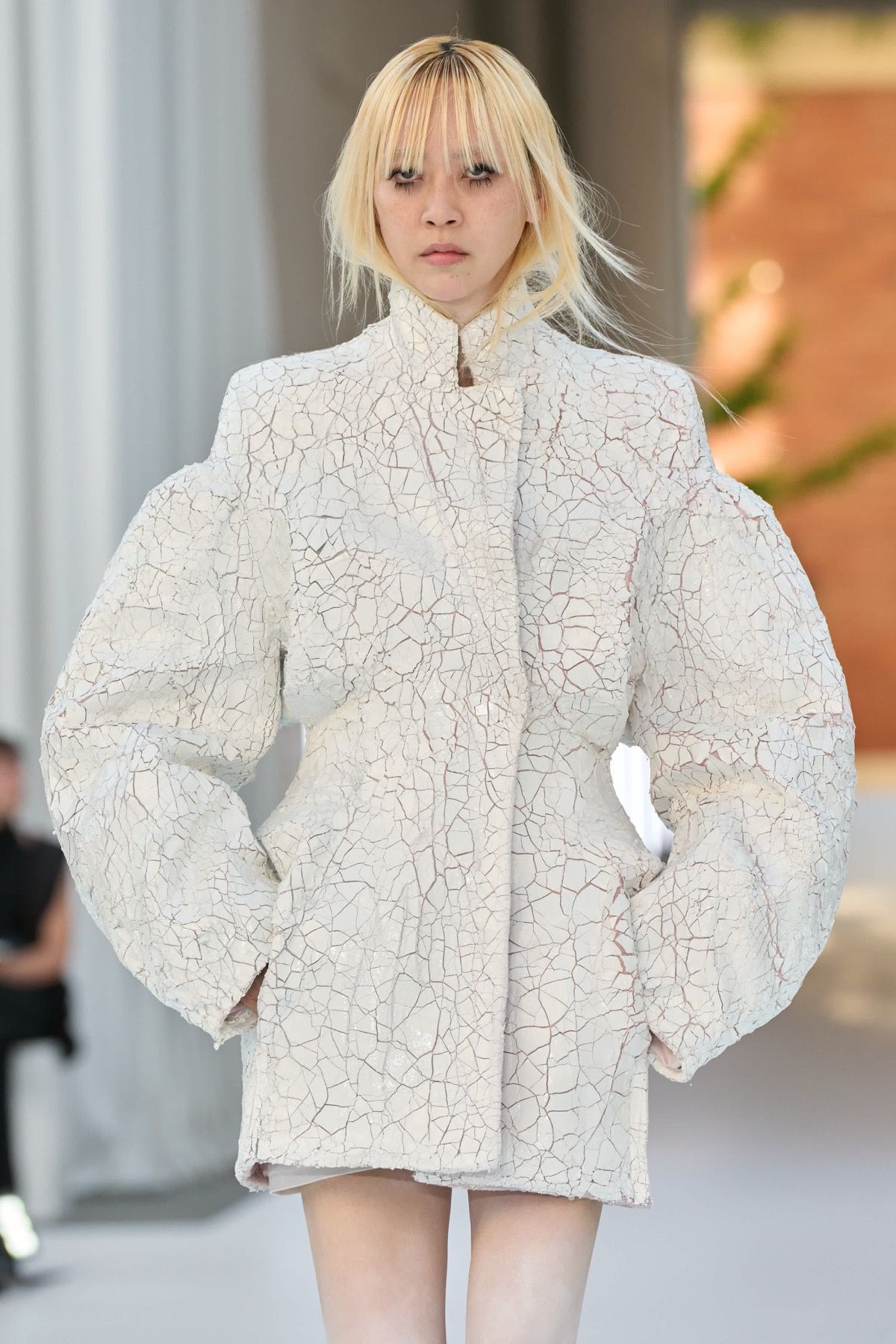
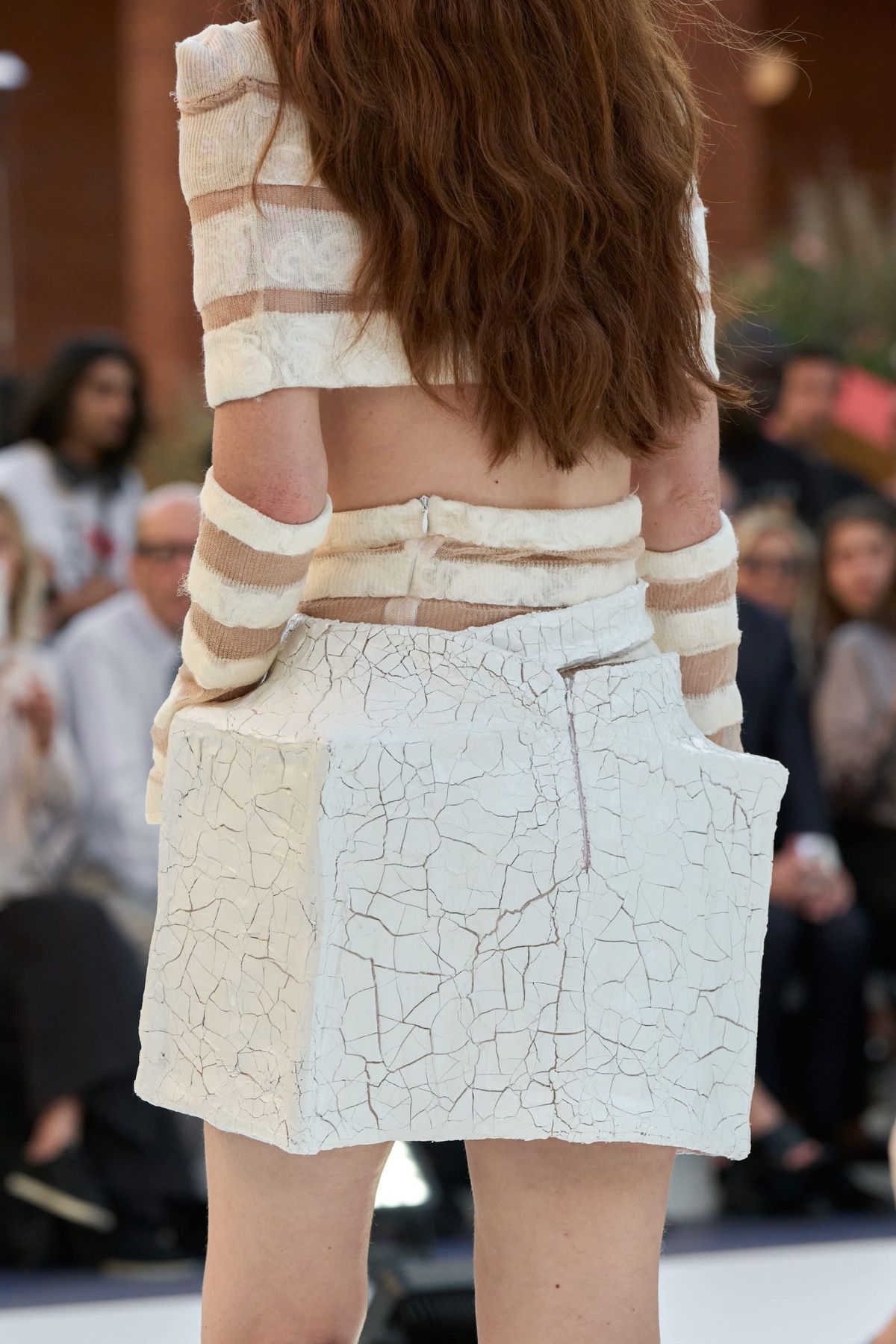
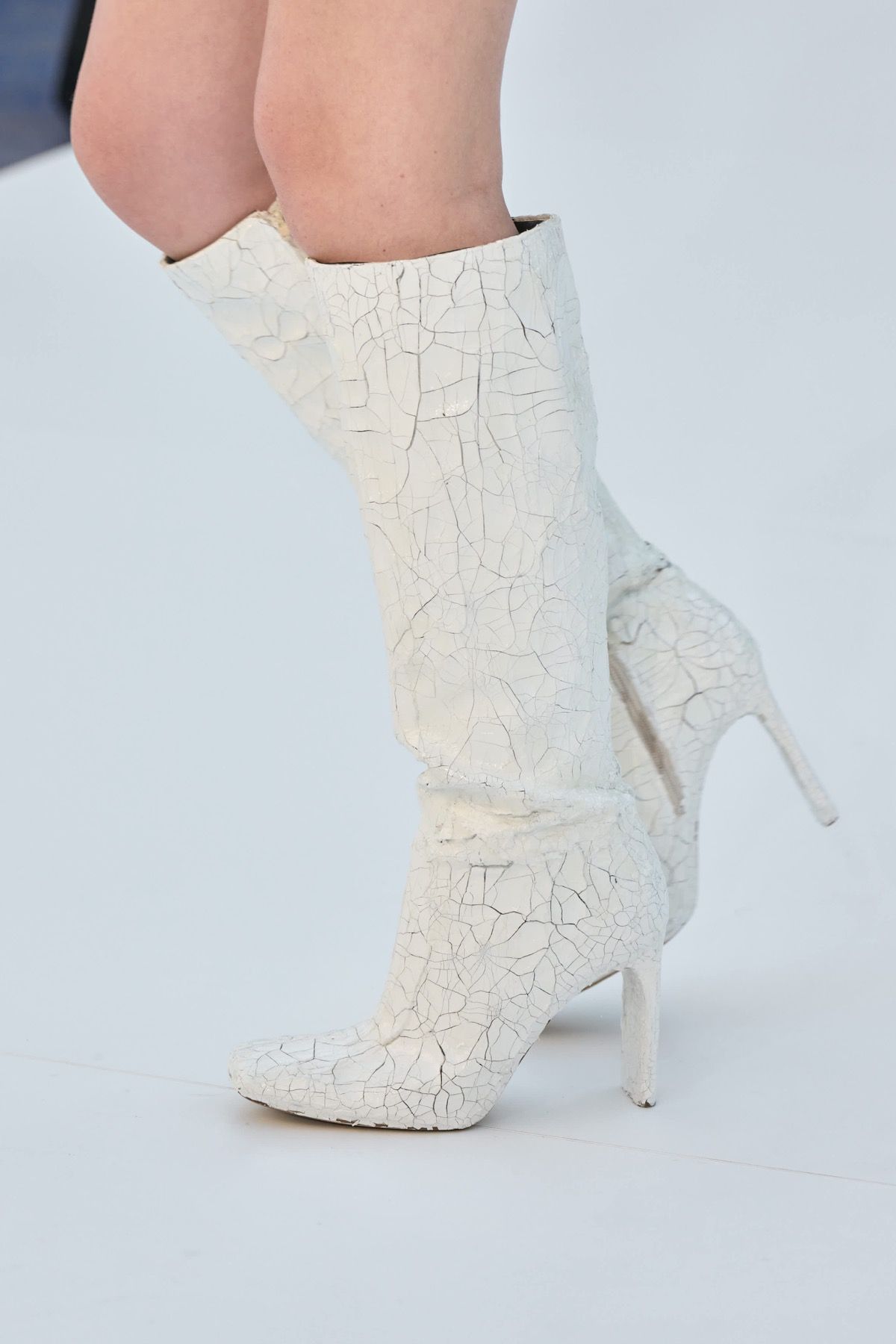
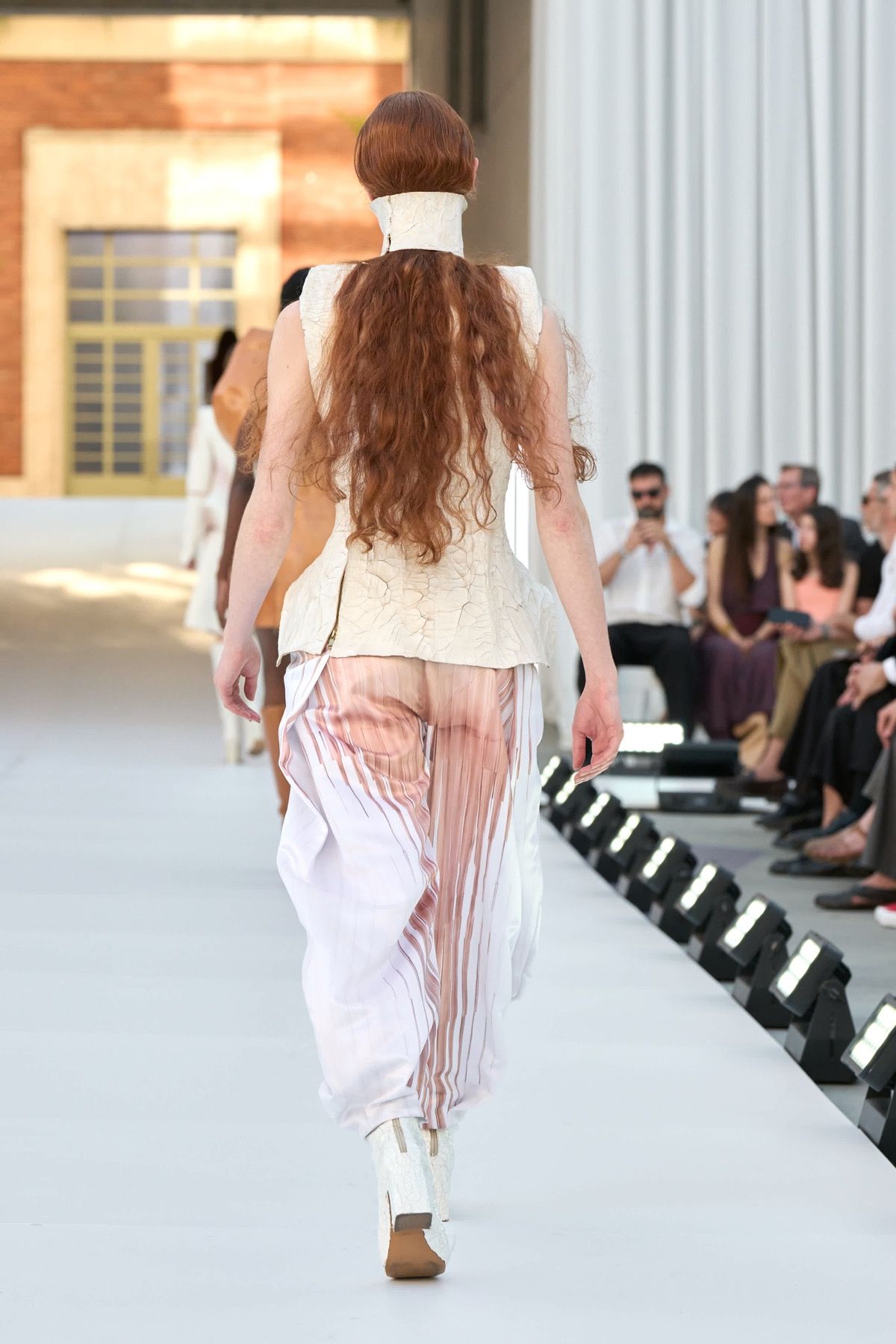
I rarely start from a predetermined solution; I prefer to begin by working directly with materials and letting them influence the final outcome. Some of the most important decisions in this collection emerged while working the leather, experimenting with cracked surfaces, or developing prints and knitwear — moments I could never have planned. For me, experimenting means allowing the process to transform the initial idea. That, I believe, is where the most interesting work is born. I have always thought a little more with my hands than with my mind.
Where does the inspiration for "No Longer Human" come from? What are the main sources that feed your research and creative practice?
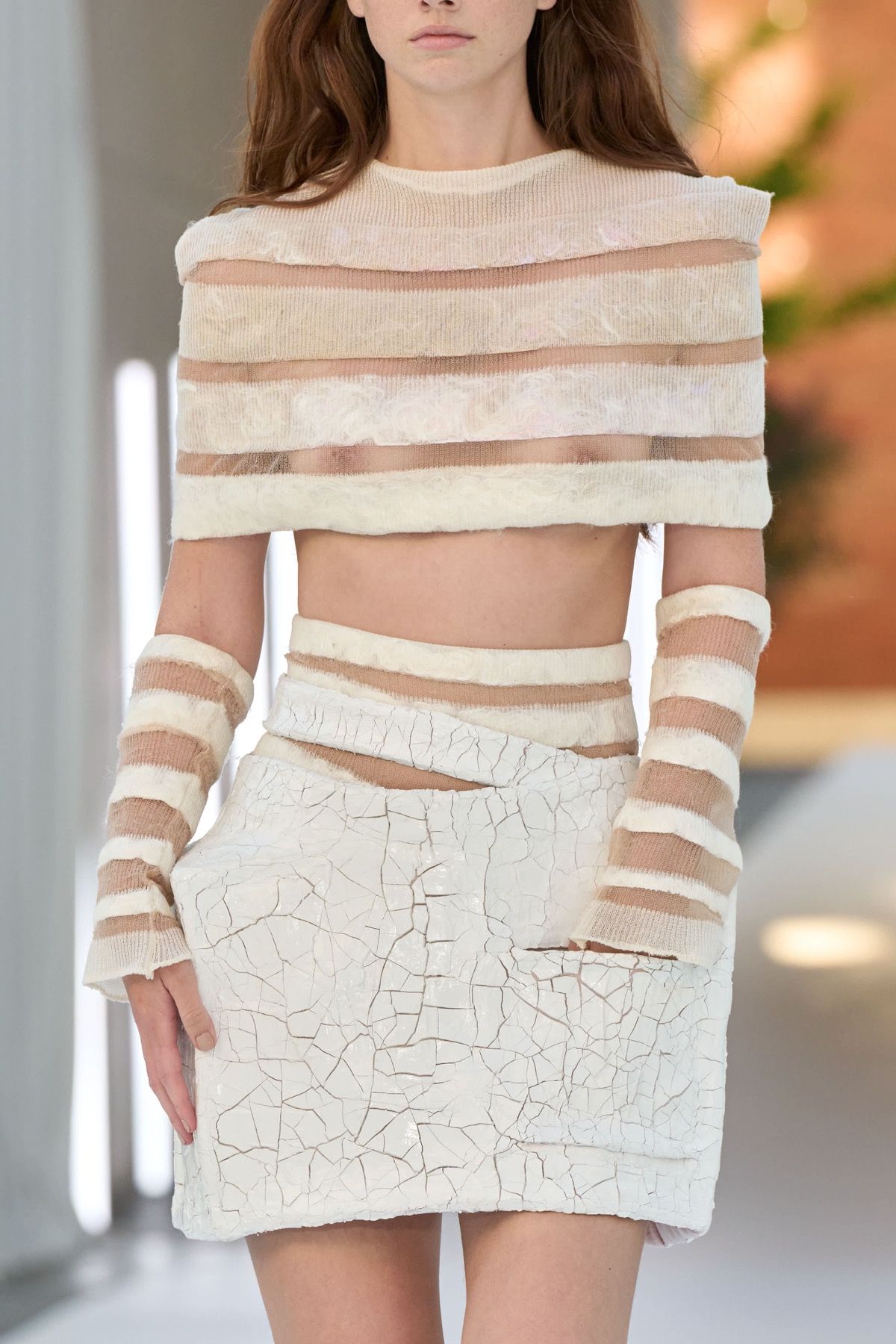
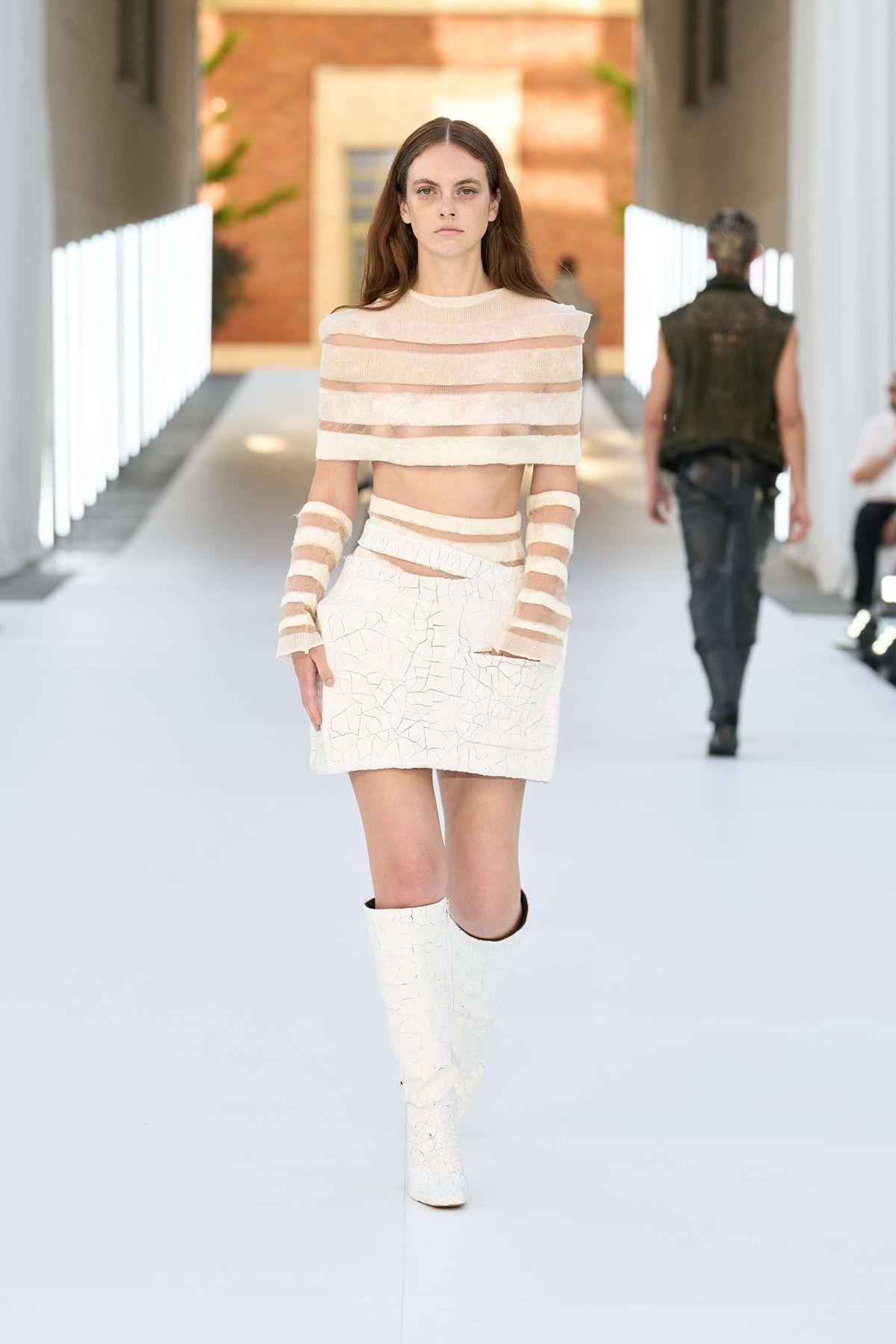
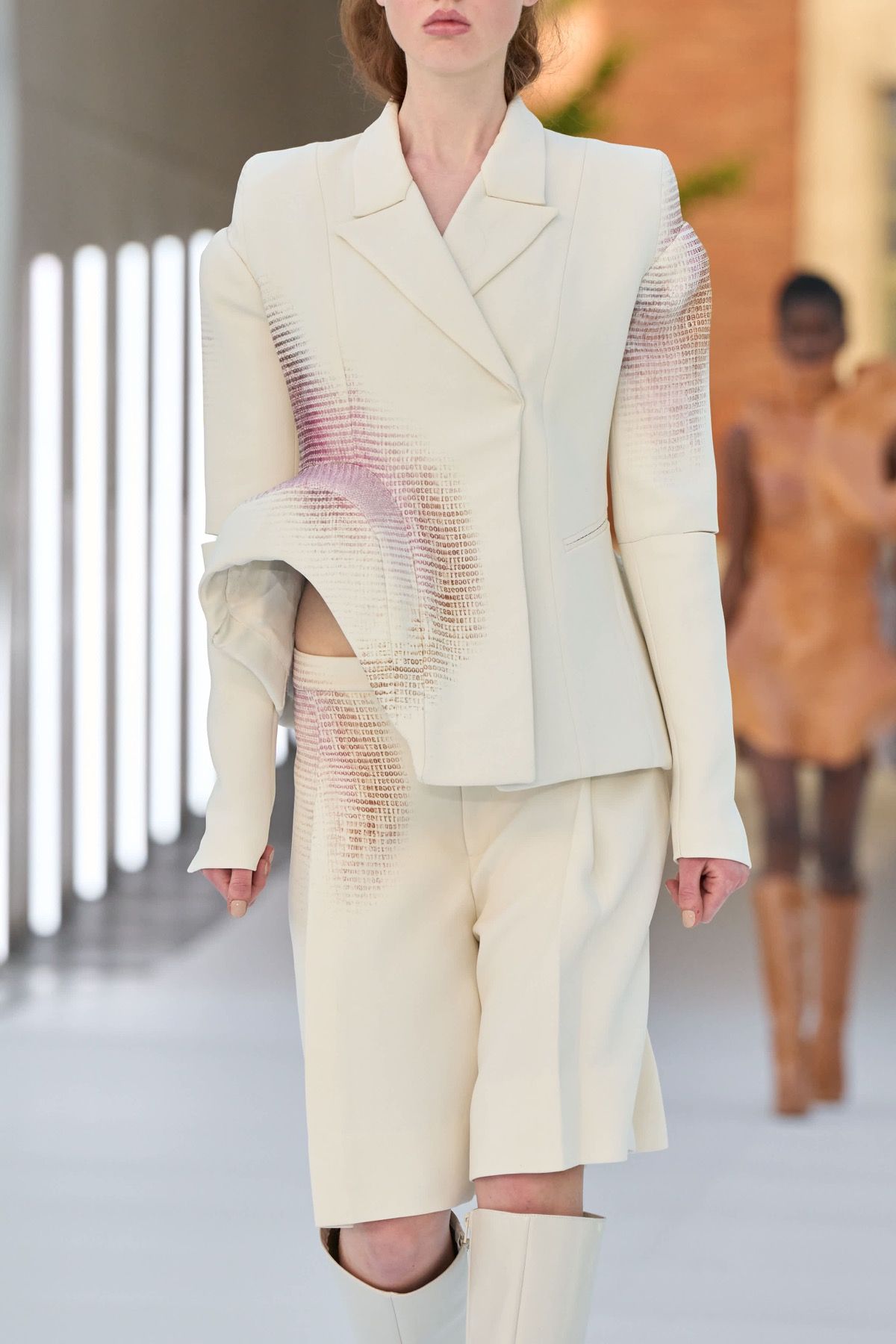
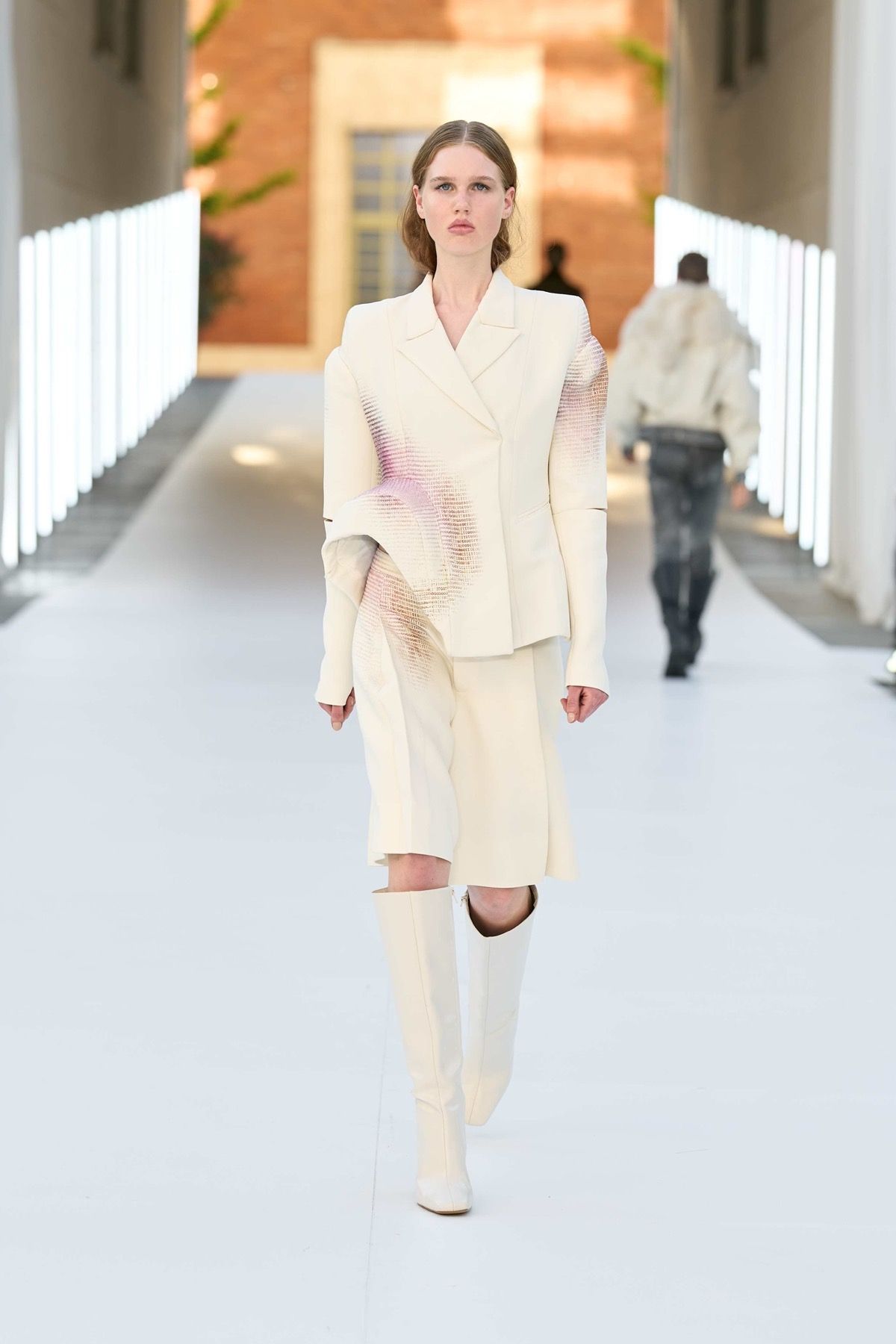
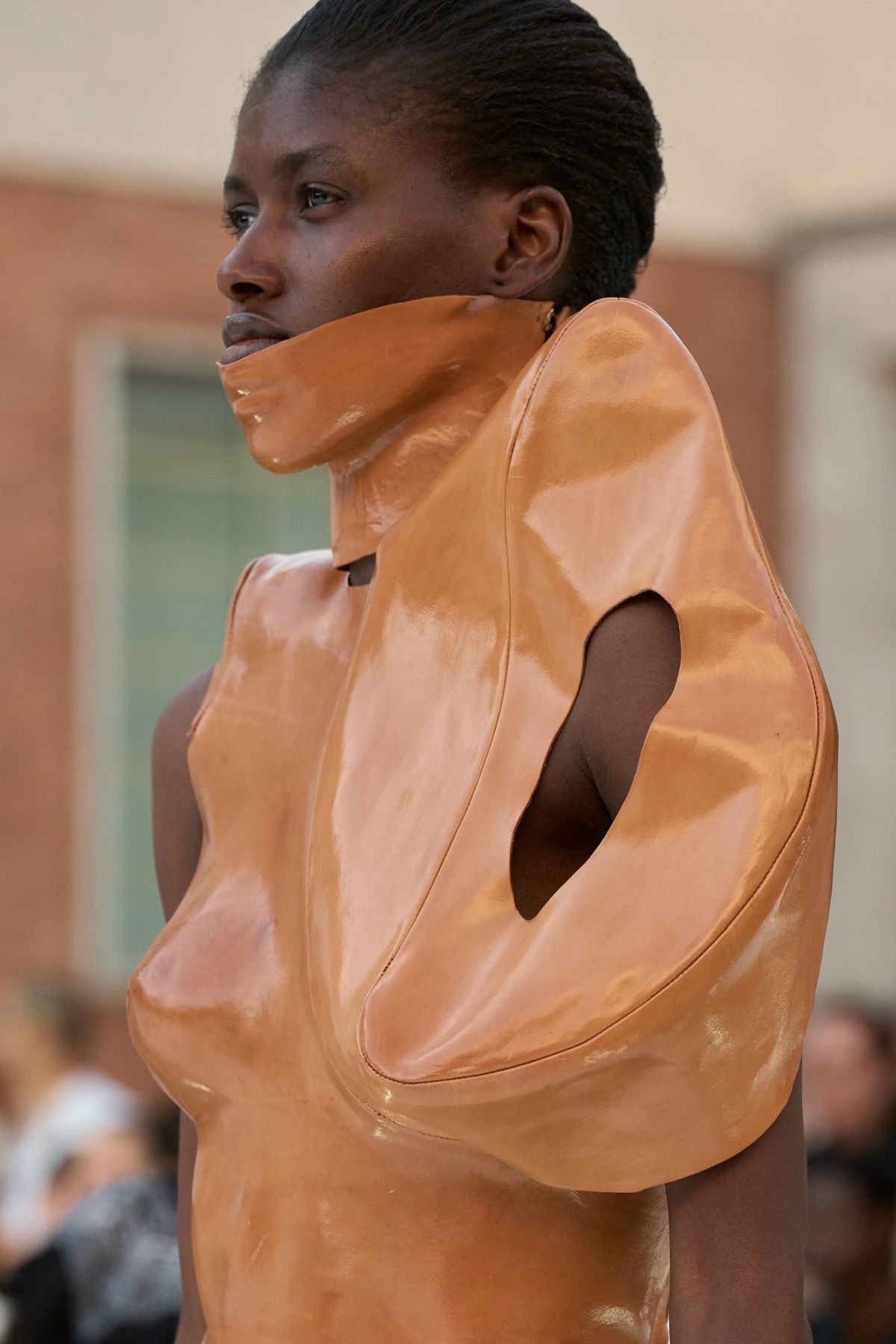
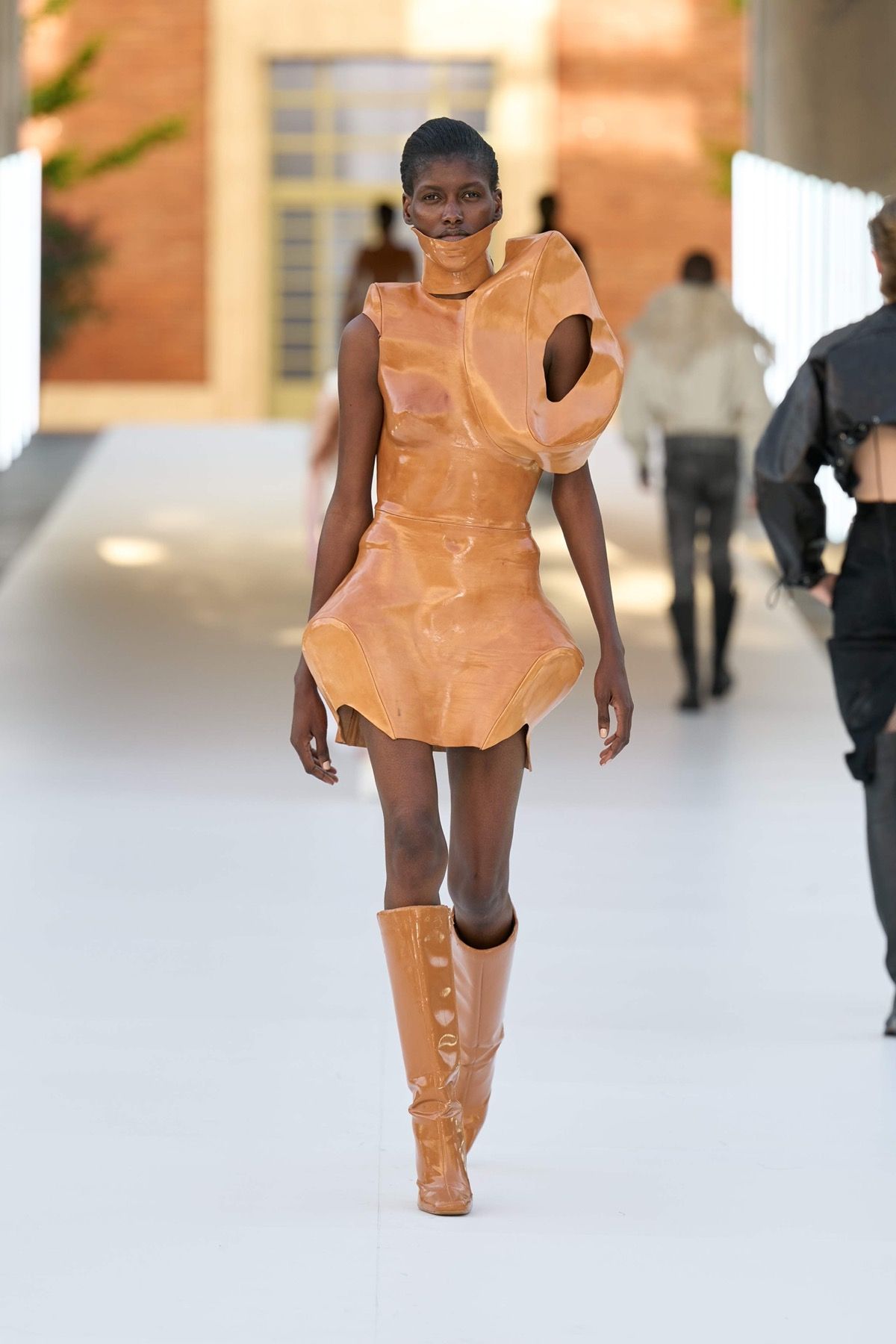
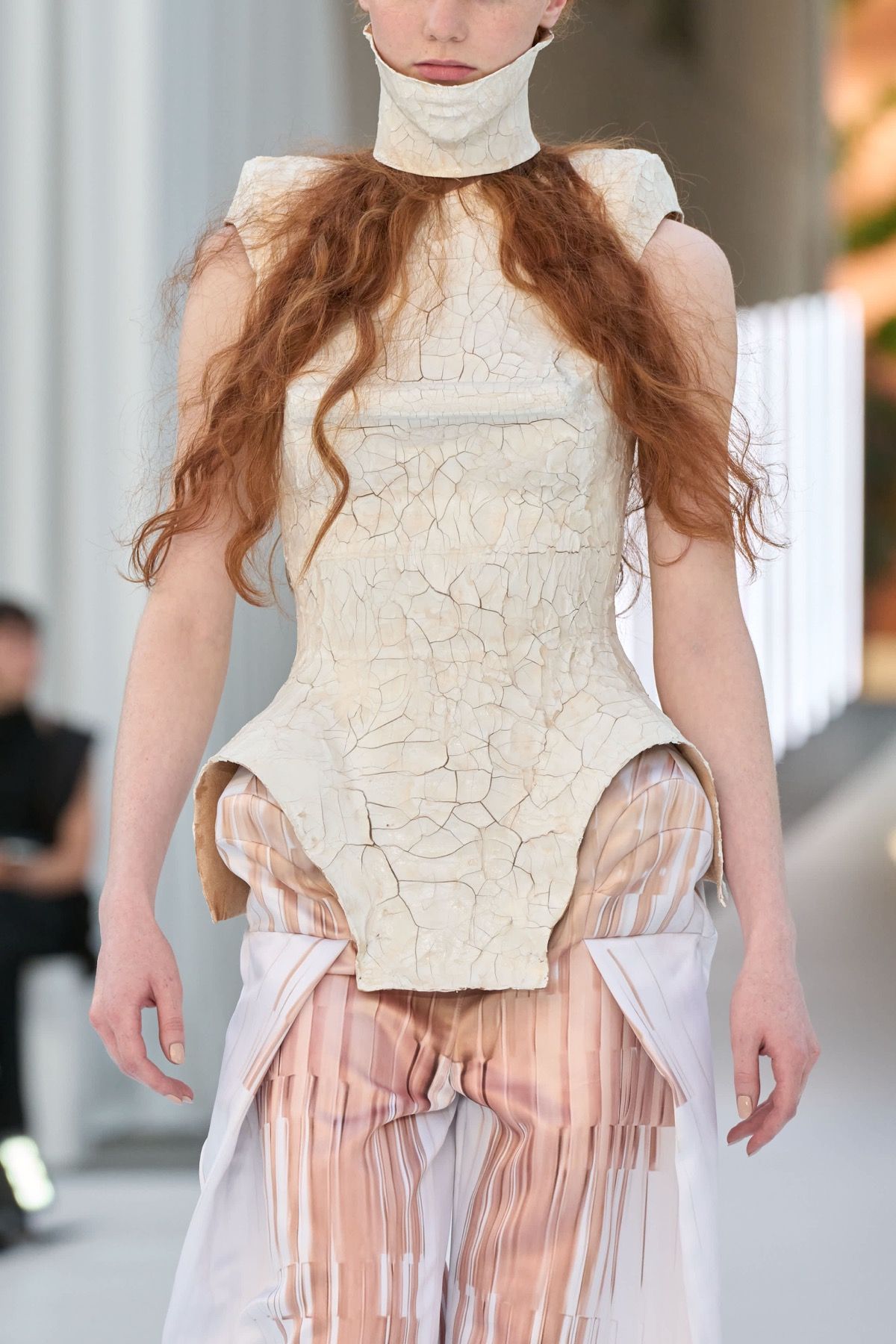
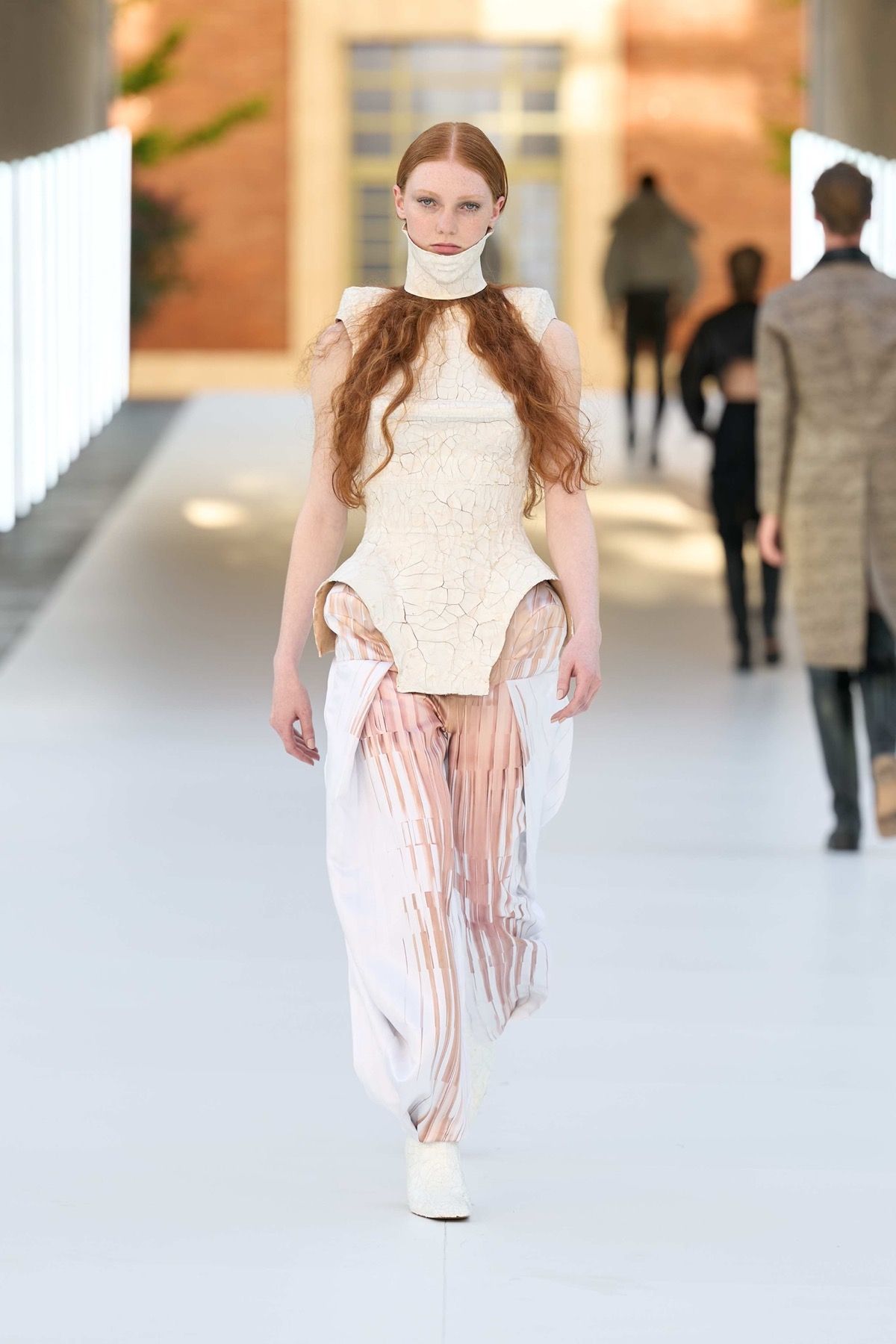
My research often begins outside of fashion. I am particularly drawn to art, psychology, and the way people perceive themselves and the world around them. Whether ancient or contemporary art, it is almost always the starting point of my creative process, because it allows me to observe familiar ideas from unexpected perspectives. For No Longer Human, the artist Hans Bellmer was a fundamental reference for his way of deconstructing dolls. The photographer Paul Kooiker also influenced my research through his sometimes unsettling representations of the body.
I was fascinated by the Renaissance paintings of Cranach, particularly the practice of women shaving their hairline to achieve a high forehead, considered at the time an ideal of beauty. Viewed today, those figures appear almost artificial. They reminded me that aesthetic standards have always altered our perception of the body, taking different forms throughout history. It is not perfection that interests me, but what happens when it begins to deteriorate. Cracks become an integral part of the image, revealing a hidden vulnerability beneath an idealised surface. This idea runs throughout the entire collection.
Alongside these historical references, I spent a great deal of time experimenting with artificial intelligence. I was not merely interested in generating images: I was fascinated by the way AI imagines the human body. At one point I asked ChatGPT: "If you had a body, what would it look like? And would it still be human?" I was not so much looking for an answer as for the dialogue itself. It made me reflect on how artificial intelligence constructs the image of the human being, and how much this is influencing the way we perceive ourselves.
Beyond this, I find inspiration in constantly observing people and the world around me. I read a great deal, particularly about psychology and human behaviour, and travelling has always been a fundamental source of inspiration. Coming into contact with different cultures and seeing how people live and interpret the world continually shifts my own perspective as well. I think I am driven more by curiosity than by certainty. That is probably the thread that connects all my sources of inspiration.
"No Longer Human" offers a profound reflection on the body. How do you perceive it today, and do you think fashion can still generate meaningful change?
I think the body today is increasingly perceived as something constructed, rather than as something we are born with. But I don't necessarily see this as a negative thing. After all, we have always constructed ourselves through clothing, hairstyles, or the way we choose to present ourselves. Fashion has always been part of this process. Today, however, technology has taken all of this to an entirely new level. That is why I believe fashion can still generate meaningful change. Not because it changes the world overnight, but because it can change what we choose to value.
Unfortunately, fashion sometimes seems more focused on attracting attention or provoking shock than on encouraging reflection. For me, its true value lies in its ability to shift perspective — whether in the way we look at the body, a material, or even our idea of beauty. With No Longer Human I became increasingly drawn to imperfections rather than perfection. The cracks in paintings, the anomalies of AI-generated bodies, or the disturbing proportions of Hans Bellmer's works reminded me that what we perceive as imperfect is often also what strikes us as most human.
If fashion could push us to recognise beauty in these very imperfections, or simply to question what we consider beautiful, it would already have achieved something significant. Meaningful change does not necessarily mean changing the world: it can also mean changing what we choose to admire.
Your time at Polimoda was clearly as demanding as it was rewarding. What is the most important lesson you are taking away with you?
Of course, Polimoda taught me technical skills, craftsmanship, and how to develop a collection. But I don't think that is the most valuable thing I am taking away. The most important lesson was learning to develop my own way of thinking and to have the confidence to follow it. Polimoda constantly pushes you to question your ideas, defend them, and refine them. It is a process that shapes not only the designer, but the person.
During my studies there was a moment when I questioned whether this was truly the path I wanted to take. Looking back, I realised that choosing to become a designer means, above all, choosing the dedication that this path demands. It has far more to do with mindset than with talent. It means staying curious, continuing to question yourself, and showing up every day with commitment, even when the process is hard. I believe that is the most precious lesson I will carry with me.
After this important milestone, what are your next steps? How do you envision the evolution of your creative practice in the years ahead?
Right now I am looking for an internship that will allow me to deepen my interest in textiles, material manipulation, and craftsmanship, ideally within a major fashion house. After spending the past few years developing my own personal projects, I am eager to experience the creative process within a team and to keep learning from people with different skills, perspectives, and ways of working.
At the same time, I am looking forward to presenting No Longer Human at an upcoming exhibition and seeing the collection come alive in a context completely different from the runway. I hope this is only the beginning of a journey that allows my work to keep existing well beyond a single fashion show. Looking ahead, I want my creative practice to continue evolving with each new project. I would like to expand my research into materials, engage with new creative environments, and discover new ways of communicating ideas through fashion. More than anything, I hope that every project teaches me something I did not know before I began it.