




































What cities should learn from extreme architecture How to become more resilient and prepare for the climate challenges of the future
There are places where architecture cannot afford to make mistakes. In a city, a design error might produce a room that is too hot, an uncomfortable corridor, or a building that consumes more energy than expected. In Antarctica, the same mistake can cause a structure to be buried by snow, damaged by wind, or left stranded on a section of ice that is breaking away from the continent.
Perhaps that is why so many Antarctic bases look as though they came straight out of a science fiction film. Colourful modules, rounded shapes, tunnel-like corridors, and buildings raised off the ground. But what we see does not stem from a desire to imagine the future: it stems from the necessity of survival.
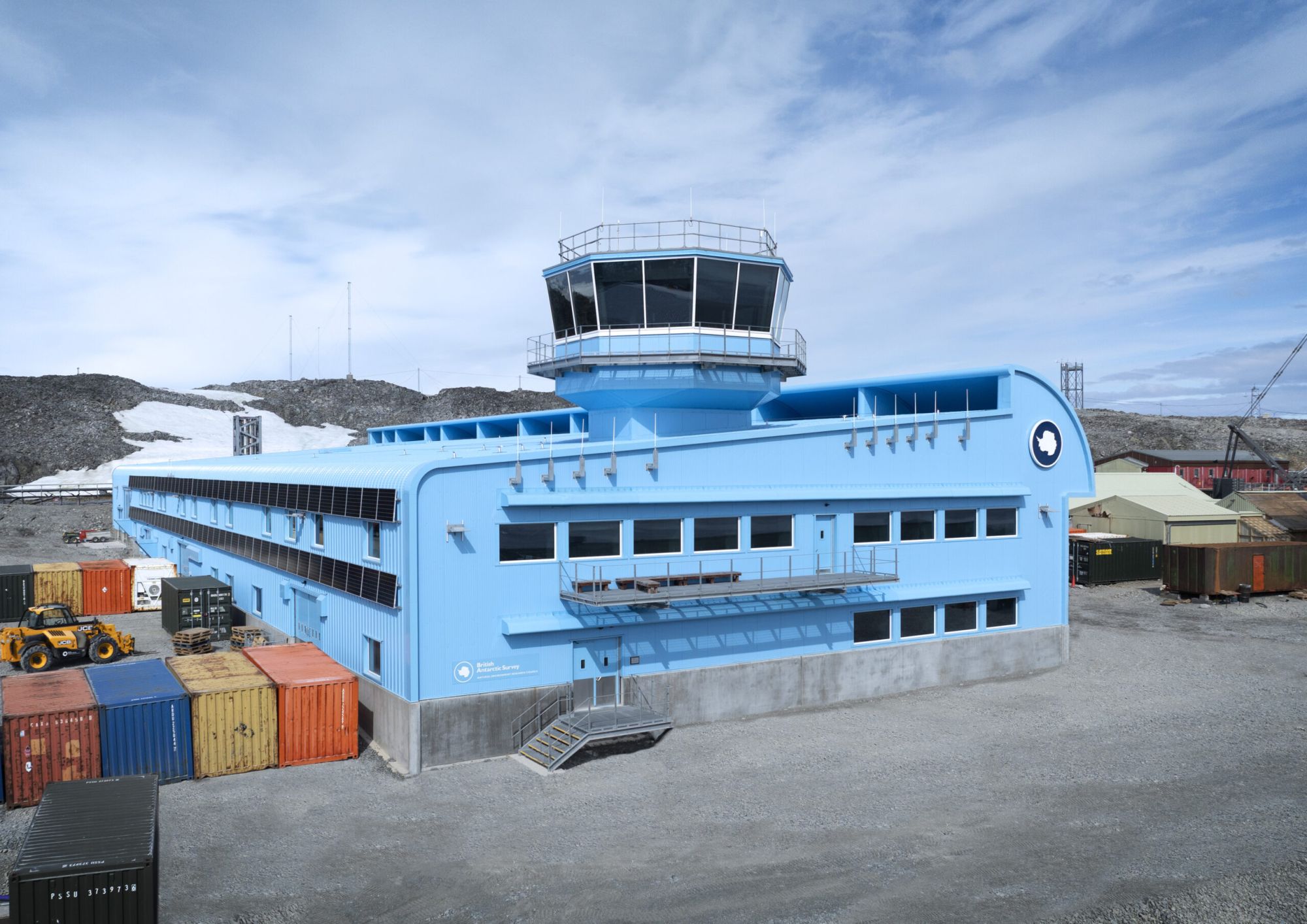
The Halley VI Research Station in Antarctica
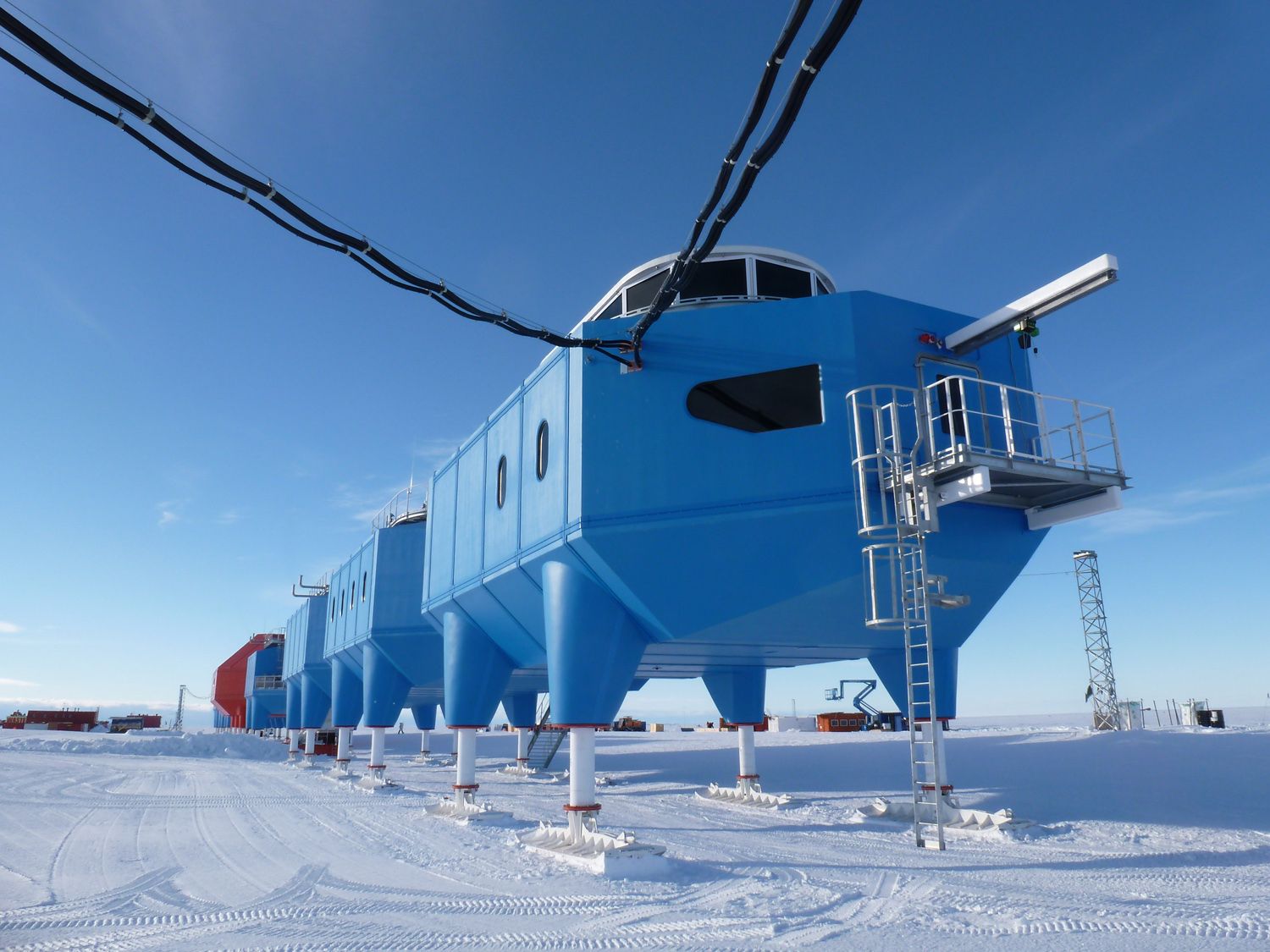
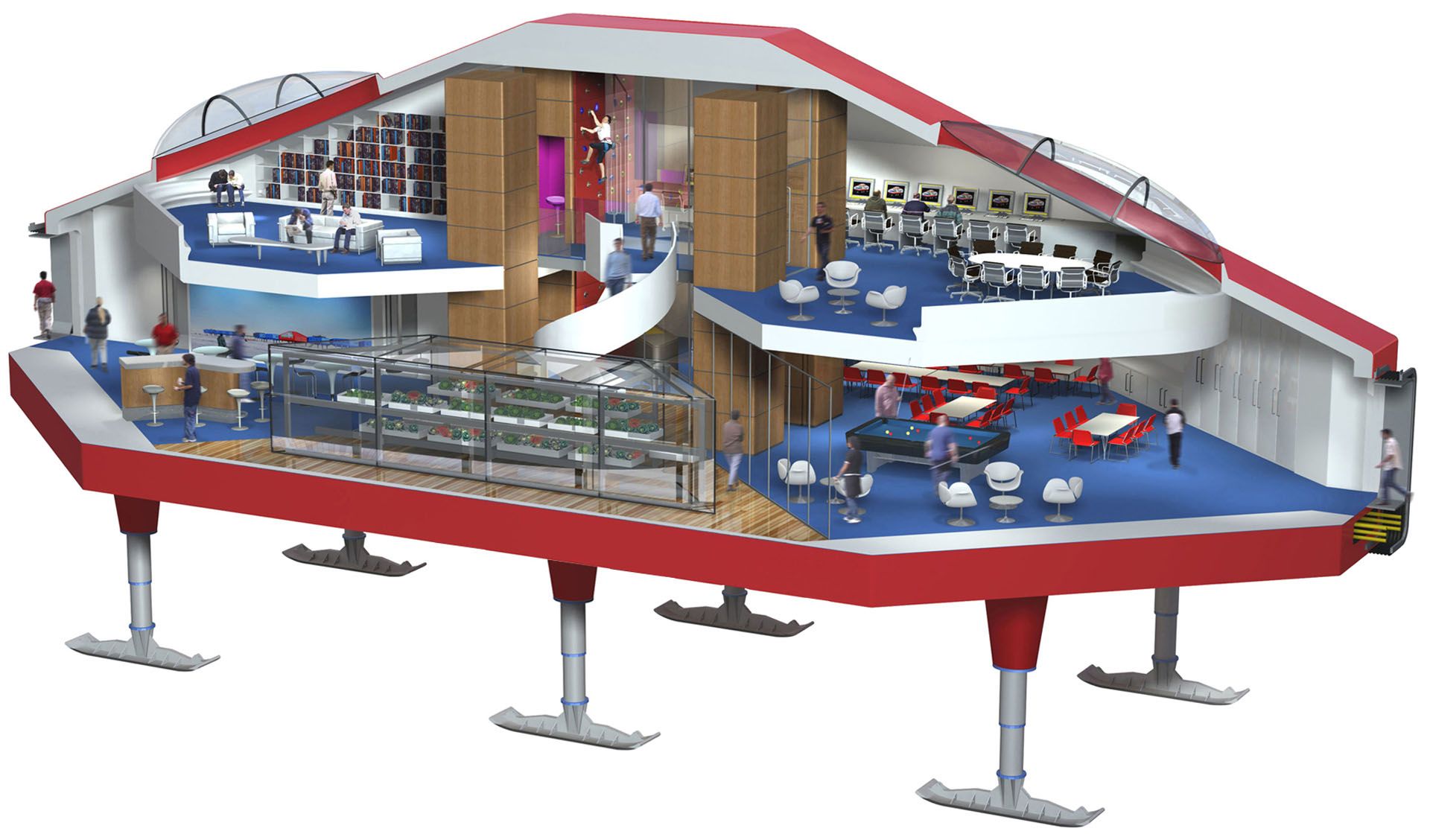
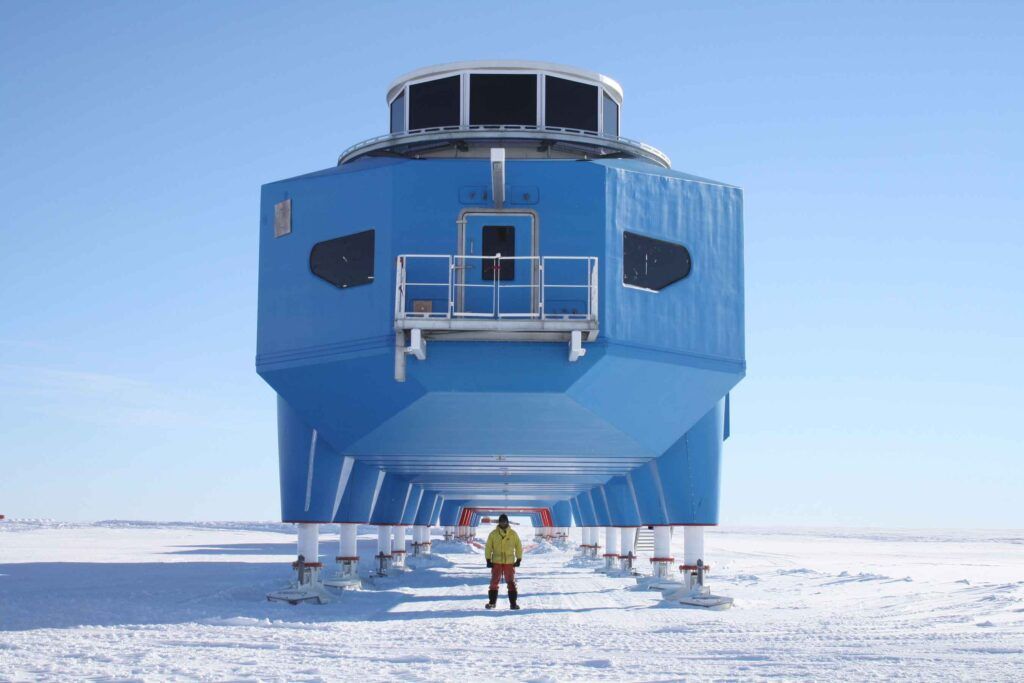
Halley VI, the British research station designed by Hugh Broughton Architects on the Brunt Ice Shelf, is probably the most striking example. Made up of eight modules mounted on hydraulic legs and large skis, it rests on special "legs" that allow the structure to be raised as snow levels increase; the skis make it possible to separate the various elements and tow them to a safer location. That is exactly what happened in 2017, when the station was moved away from a growing crack in the ice shelf.
The most interesting aspect of Halley VI is not the fact that it can move, but the reason it was designed to do so. Halley VI does not try to stabilise terrain that is inherently unstable: it accepts that the ground may shift, crack, and suddenly become dangerous. Rather than resisting uncertainty, it incorporates it into the design, overturning one of architecture's most deep-rooted principles.
The design that fights loneliness
For centuries we have associated the value of a building with its permanence — its ability to stand firm and withstand the test of time. In Antarctica, what survives is what can adapt. The most resilient architecture is not necessarily the heaviest, but the kind that can be dismantled, repaired, raised, or relocated before it is too late.
Resilience, however, is not only about structure. Living for months in an isolated place with very little natural light, extreme temperatures, and a small number of people means subjecting the mind to an extraordinary set of conditions as well. NASA describes these contexts as "isolated, confined and extreme environments" and regards prolonged isolation as a real risk to the wellbeing and performance of those who inhabit them. This is why new polar bases are no longer designed solely as efficient machines. The colour of the interiors, the presence of windows, and the division between private and communal spaces become part of the infrastructure.
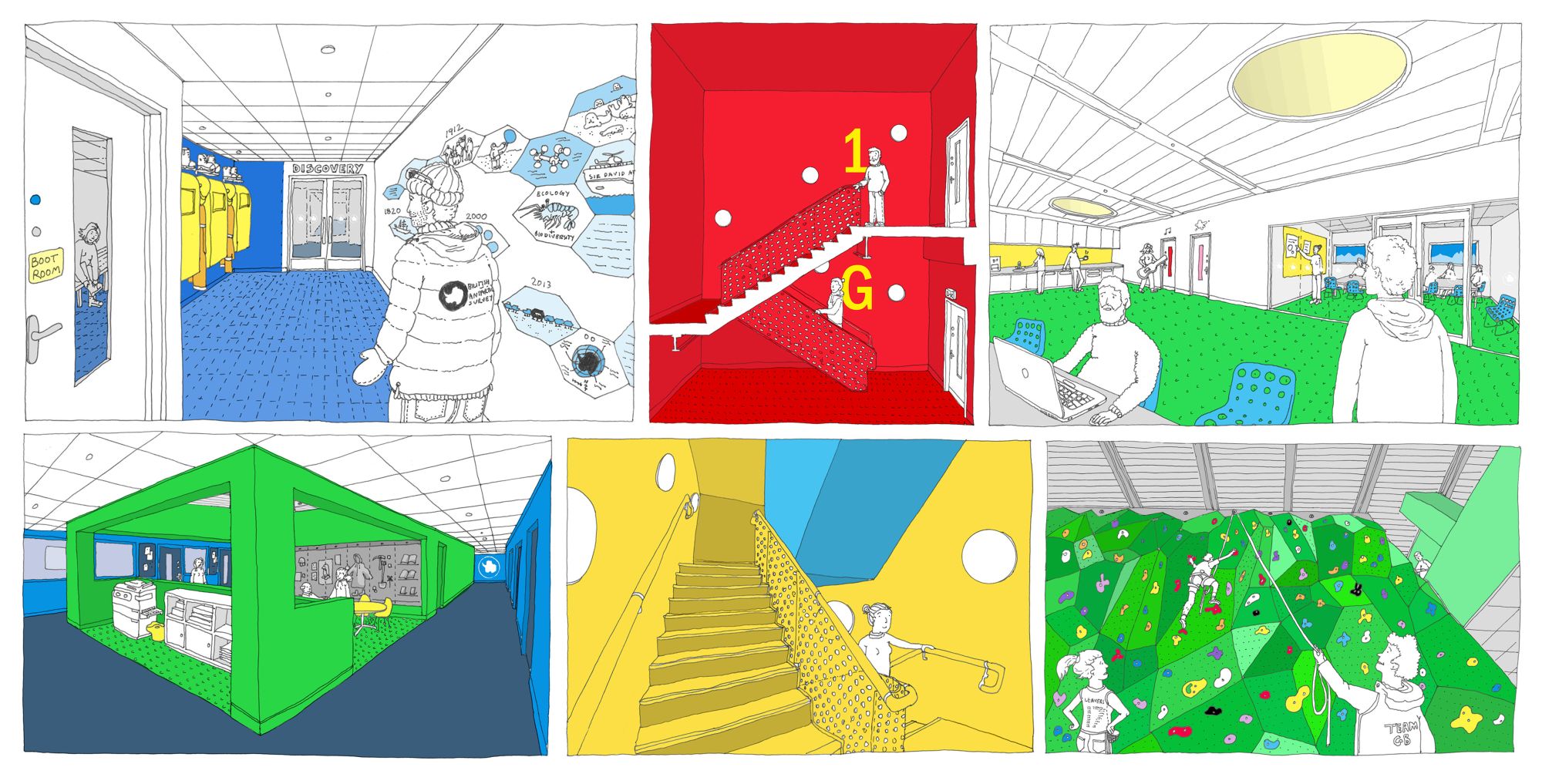
The Discovery Building at Rothera in Antarctica
In the Discovery Building at the British station of Rothera, formally inaugurated in 2025, workspaces and facilities have been brought together in a single building designed in part through consultation with the people who would actually use it.
Under these conditions, a well-lit room is not an aesthetic indulgence. A warm material, a communal area, or a vantage point from which to look outside can become tools of psychological protection. Extreme architecture makes plain something that in ordinary buildings we tend to forget: inhabiting a space does not simply mean having a roof and a controlled temperature, but creating an environment in which a person can continue to feel at home.
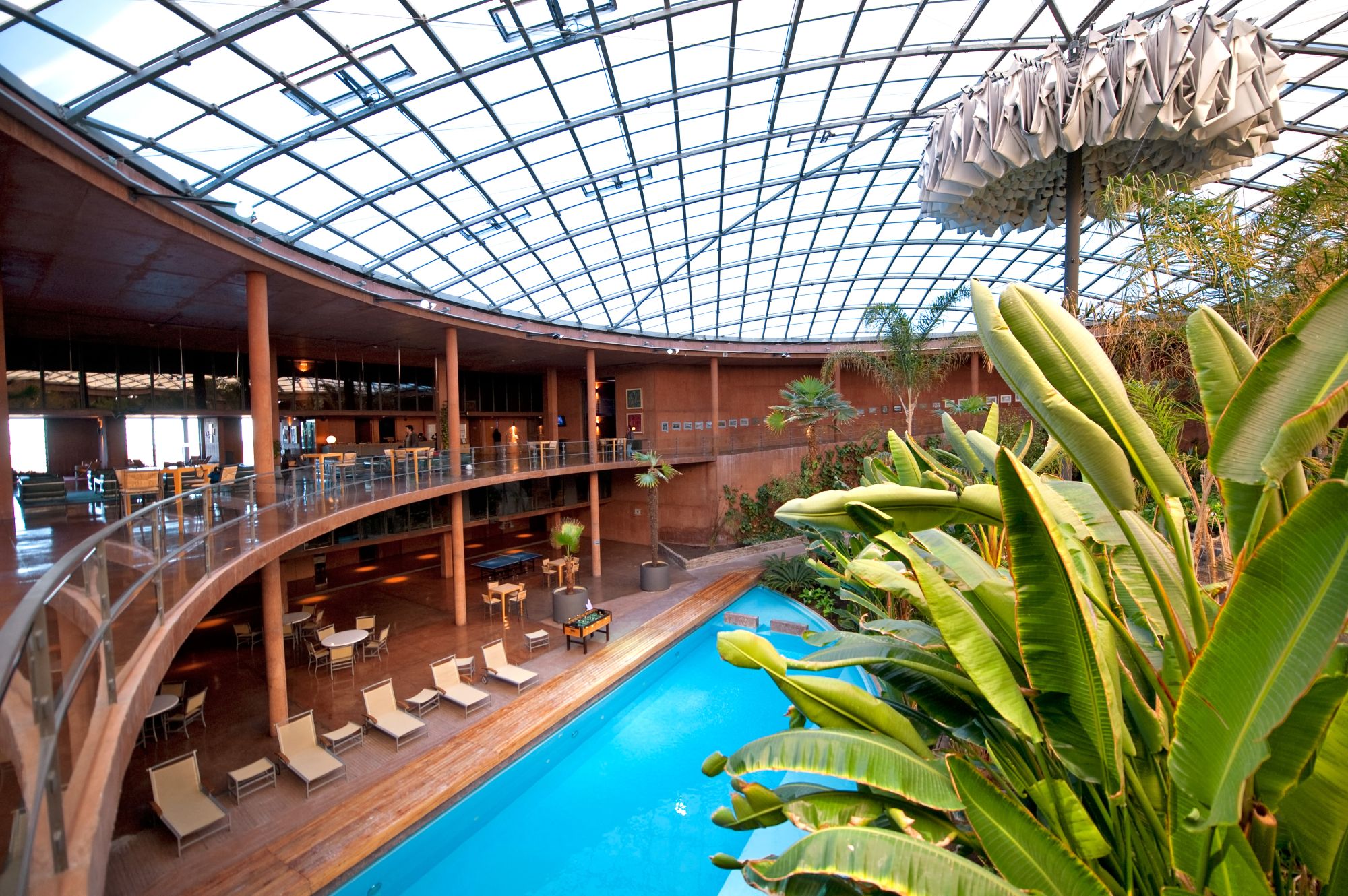
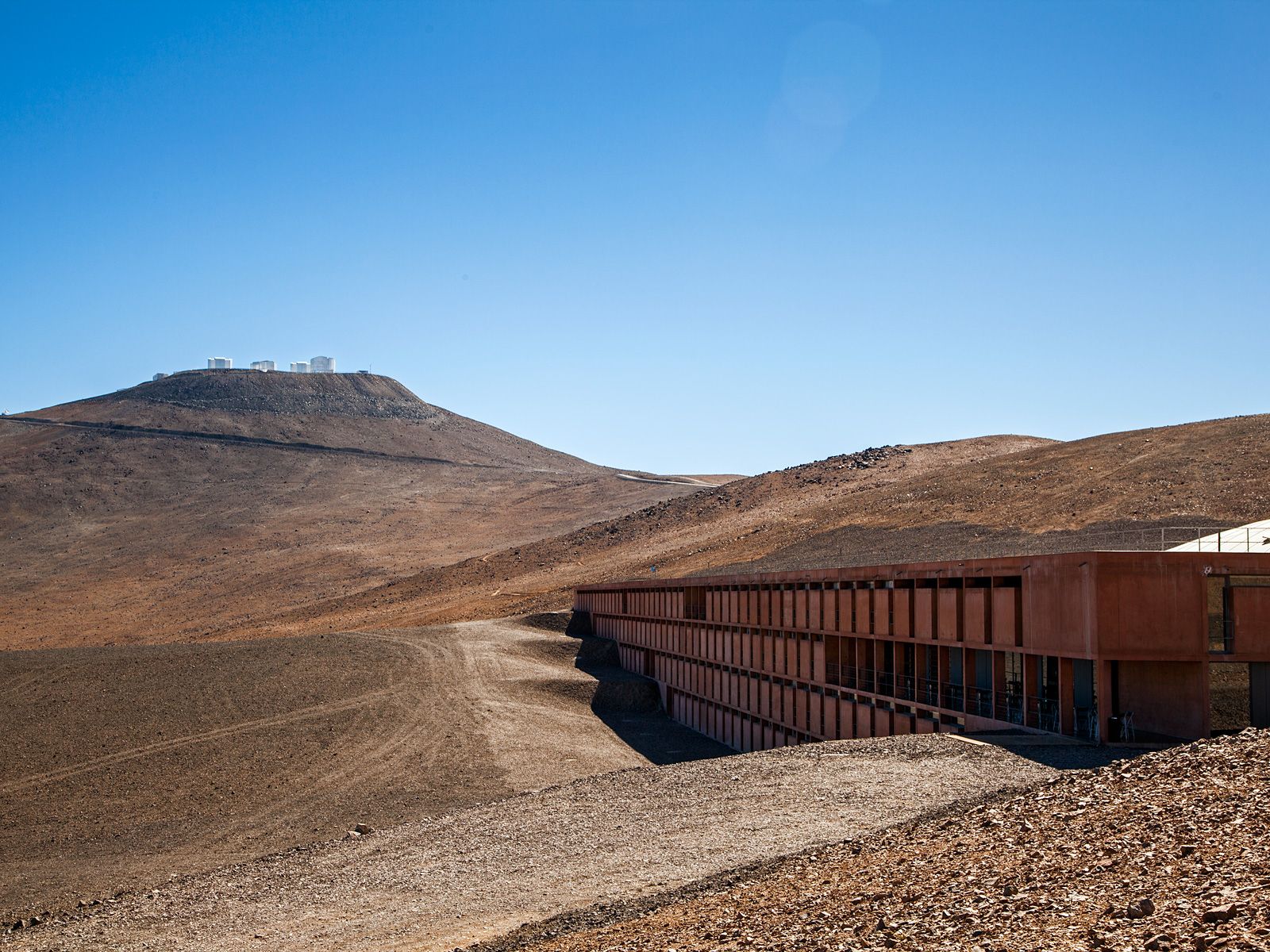
The Residencia at the Paranal Observatory in Chile
Antarctic cold is only one of many possible extreme conditions. In the Atacama Desert in Chile, the Residencia at the Paranal Observatory faces the opposite problem. It sits at over 2,600 metres above sea level, in an exceptionally dry and isolated landscape. Designed by Auer Weber, the building is largely set into the ground and organised around a sheltered garden covered by a large roof. Inside are plants, communal areas, and a swimming pool: a small artificial oasis built to allow astronomers to recover between shifts at the observatory.
Here the architecture does not rise above the landscape, as Halley VI does, but almost disappears into it. The strategy changes because the problem changes. In Antarctica, the challenge is to prevent snow from engulfing the building; in the desert, the aim is to shield it from the sun, from drought, and from extreme temperature swings. In both cases, the final form does not arise from a style imposed on the project, but from a precise reading of the place.
The Monte Rosa Hut in the Swiss Alps
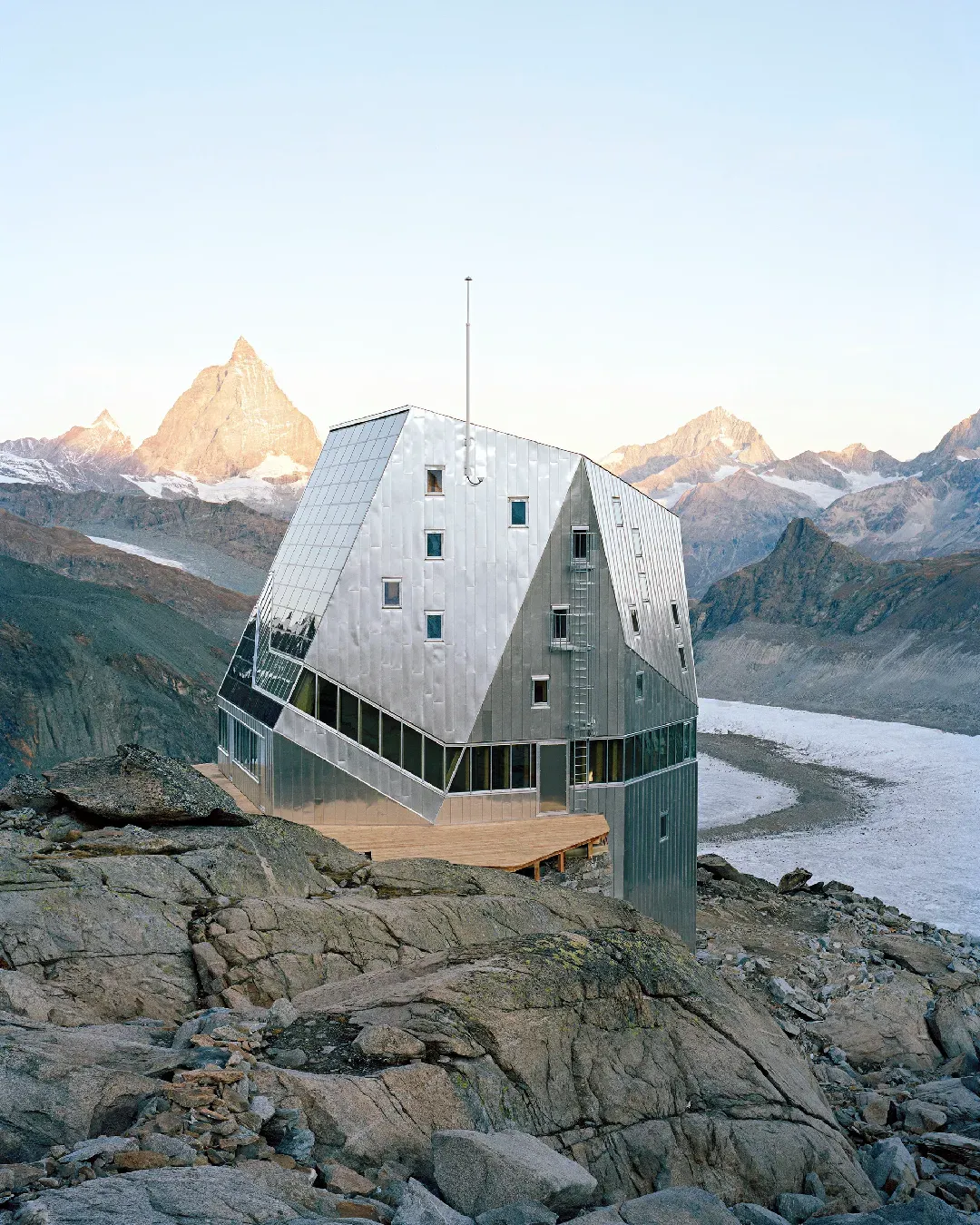
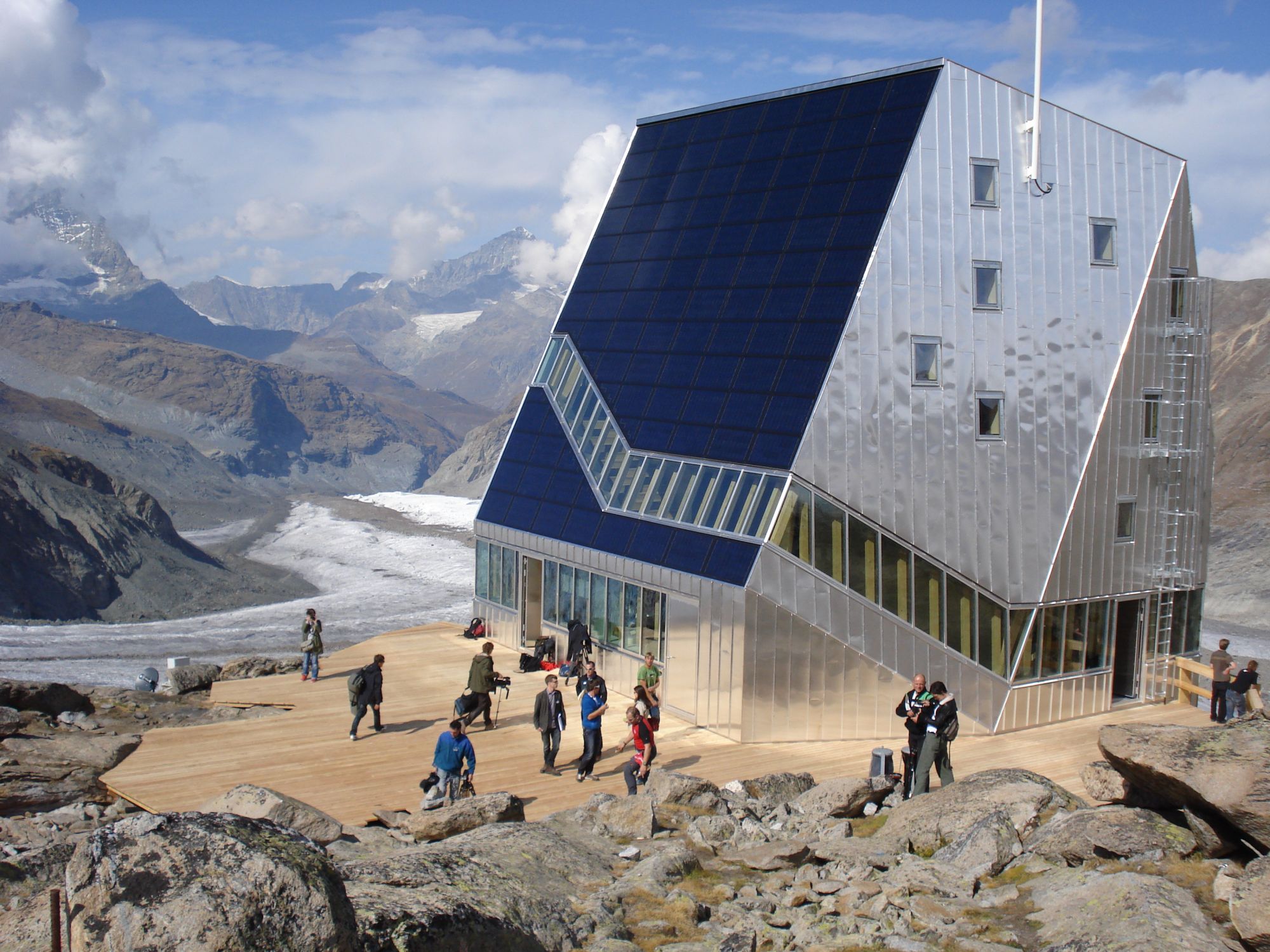
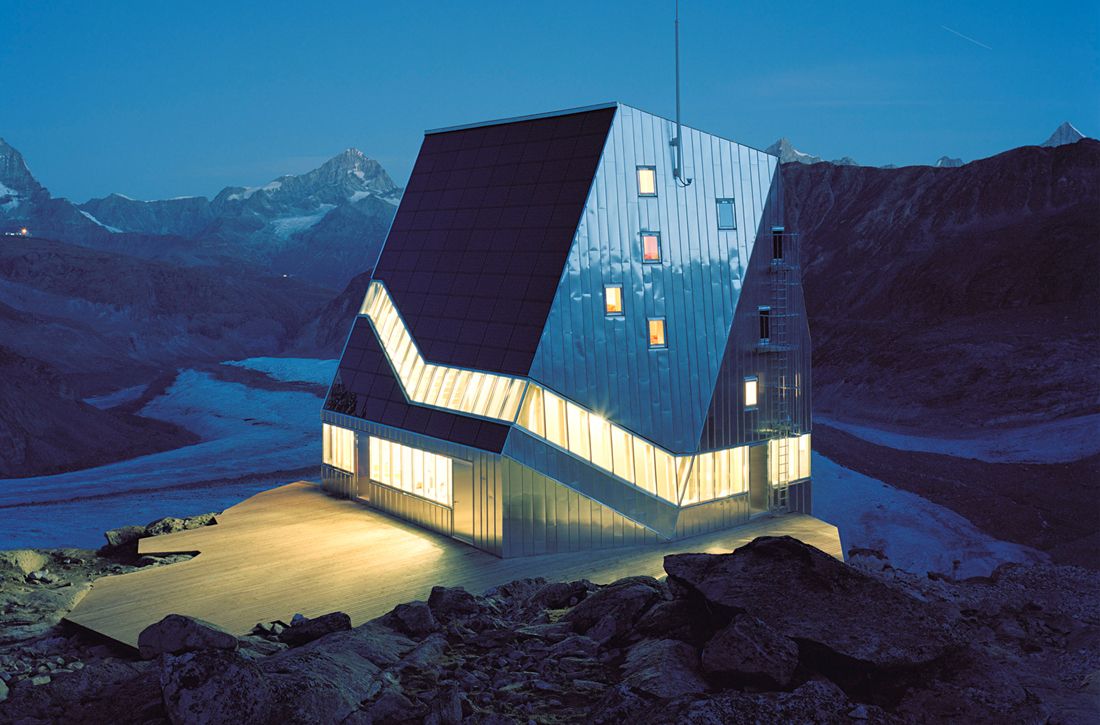
The same holds true in the high mountains. The Monte Rosa Hut, built at nearly 3,000 metres in the Swiss Alps, uses photovoltaic panels, water recovery systems, and integrated energy management to achieve a high degree of self-sufficiency. The structure was largely prefabricated, because transporting materials, workers, and equipment to altitude is both complex and costly. Its faceted form may look like an iconic gesture, but it is also the result of a building forced to account carefully for every resource.
The Global Seed Vault in Svalbard
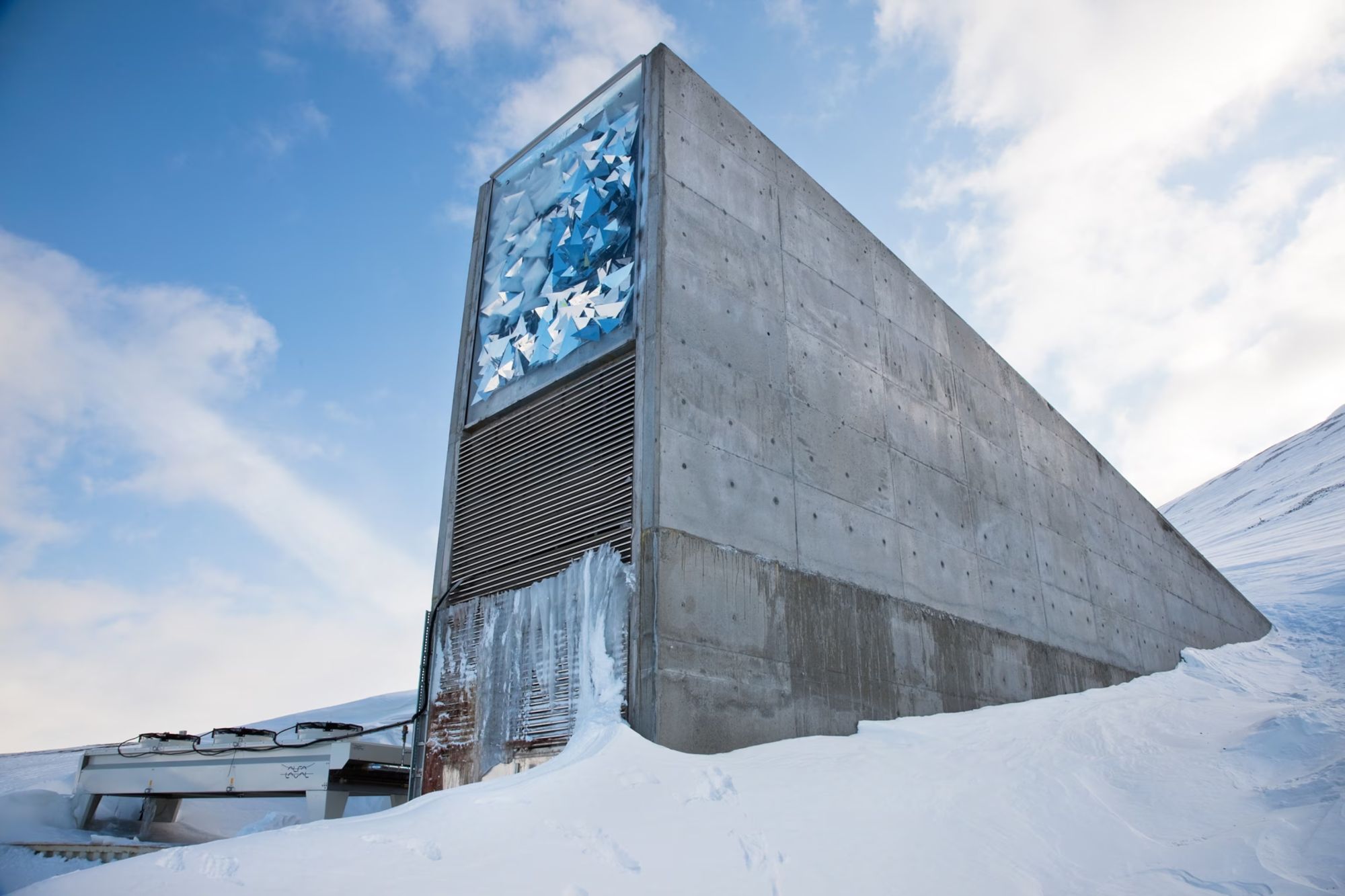
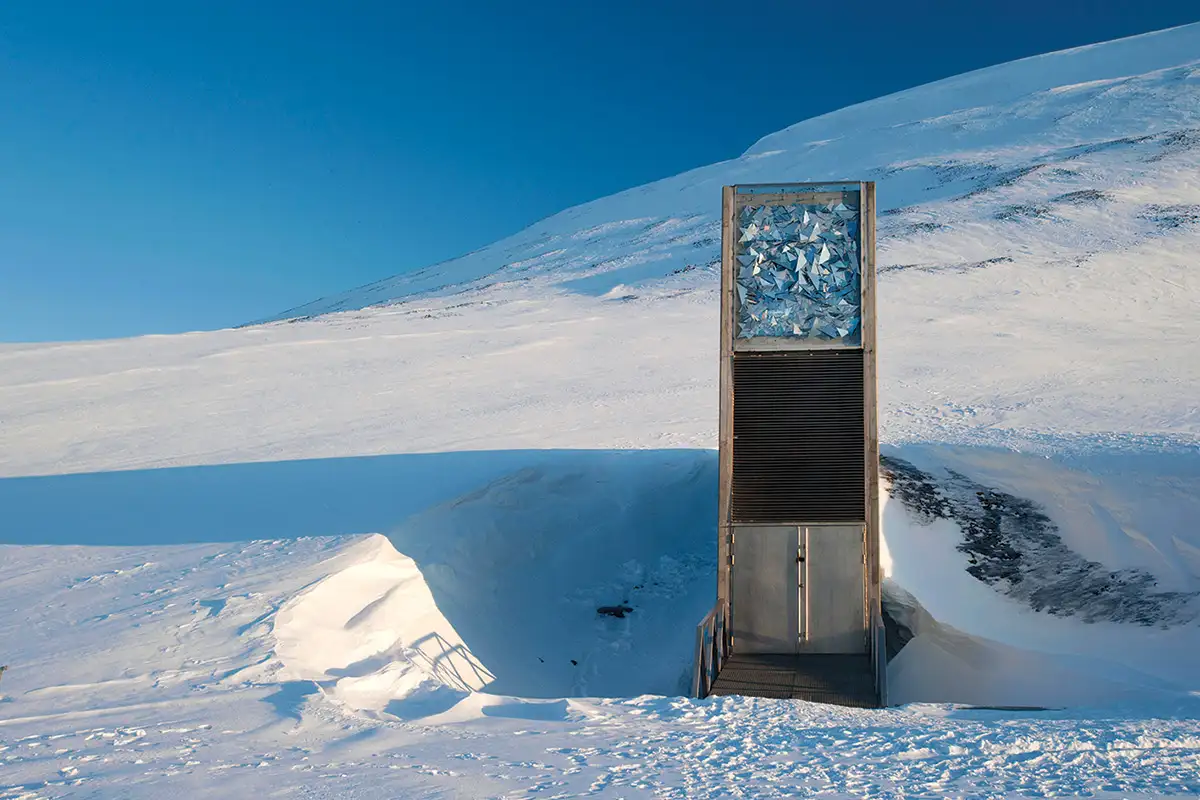
In Svalbard, the Global Seed Vault applies yet another strategy. Rather than standing exposed, it burrows deep into a mountain of rock and permafrost. The facility holds backup copies of seeds from gene banks around the world, keeping them at a temperature of around −18 °C. Even in the event of a systems failure, the location and the natural cold would slow any rise in the internal temperature. This is not simply a resilient building, but an architecture built around the concept of backup: not preventing every possible crisis, but ensuring that something can survive when that crisis arrives.
This may be the most important lesson that extreme architecture has to offer. These buildings work not because they believe they can fully control their environment, but because they plan for the unexpected. They have redundant systems, use resources carefully, reduce external dependencies, and can continue to function even when something stops going according to plan.
An extreme future
For a long time, we have imagined the architecture of the future in terms of skyscrapers, smart surfaces, and ever more technological cities. Yet the future may look more like these isolated structures: buildings that are adaptable, self-sufficient, easy to repair, and capable of using fewer resources. Not because our cities will suddenly come to resemble Antarctica, but because the gap between normal conditions and extreme ones is narrowing. Heatwaves, intense rainfall, prolonged droughts, and infrastructure failures are already changing the way many urban areas need to be designed.