.gif 2000w)

































Ricky Gervais' "Alley Cats" makes us reflect on who we really are The British comedian's six-episode animated series arrives on Netflix, blending jokes with unexpected tenderness
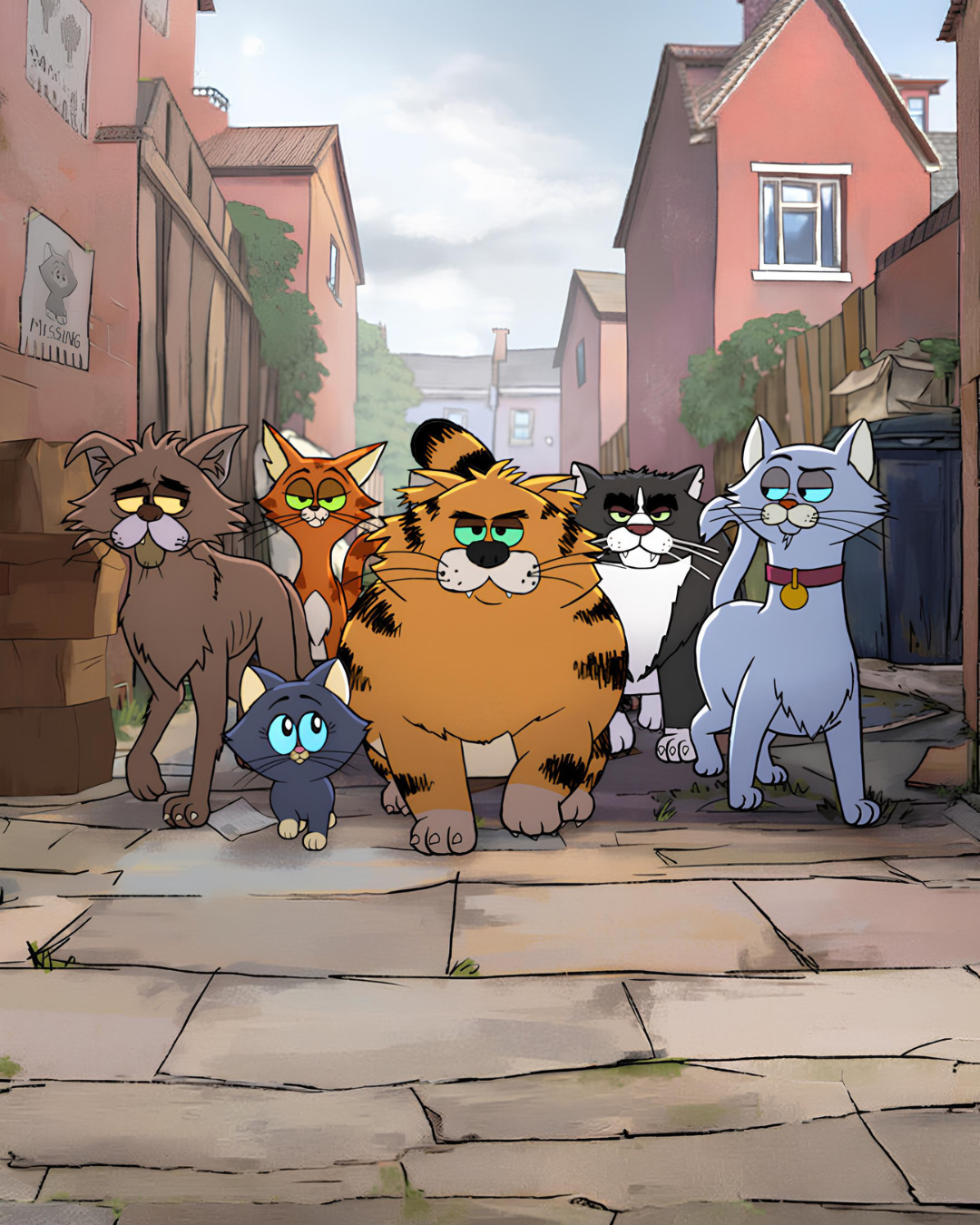
After After Life, Ricky Gervais is back with a new show on Netflix, but this time in the form of a cat. Or rather, as the voice of a cat. The British comedian, actor and stand-up comedian has created an animated series, Alley Cats in which a group of strays spends its days wandering around the city's neighborhoods and hissing at each other. Meanwhile, the felines talk and reason about the themes dearest to Gervais, from the meaning of life to death, from religion to who we are. Even if, in this case, we are cats.
The series consists of six episodes of less than twenty minutes each that fly by in an instant, just as fleeting as the existence that Alley Cats deals with, which, though transposed to the feline condition, becomes a way of telling once again how we react when we have to face life's most dramatic turning points. The taste can only be bittersweet, although compared to Ricky Gervais's usual personality there is a much more pronounced underlying tenderness. The disillusionment is still there, but it is as if this time it did not want to give in to the defeatism and cynicism of its comedian and author.
The family we choose
@netflixuk Nine lives, zero f*cks. #RickyGervais original sound - NetflixUK
One of the reasons is the story that Alley Cats tells, the horizontal narrative thread along which the series unfolds, while each episode then focuses on a specific day spent by the group of animals. Leading the gang is Gus, voiced by Gervais himself, who takes charge of a little foundling kitten who cannot remember where her home is.
The bond between the two grows stronger episode after episode, leading them to establish a relationship of surrogate parenthood that speaks of the families we build for ourselves, not those assigned to us by chance. People we choose to spend time with, to share places and days with. It is with them that one decides to take care of the little newcomer, integrating her right away and explaining to her a bit how things work in the world.
It is through the still innocent eyes of the orphan that the viewer looks around, eyes that will be filled with the often mocking, often caring teachings of the gang. A familiar way for Gervais to convey his position, which with Alley Cats softens, bringing back the impudent grump we know, but one who in the end has let himself be scratched and softened, precisely he who has always proved so drastic and unyielding.
Ricky Gervais's softer side
One more sleep till Alley Cats.
— Ricky Gervais (@rickygervais) August 6, 2026
She’s ready pic.twitter.com/RRcQxHnP00
It might be because of the animated packaging, some might think. In reality, animation has always been a vehicle for being even more ruthless, for not limiting oneself to what real figures can achieve. It goes beyond the tangible world and lands in that of imagination, which can be even more daring, incisive and brutal. It is therefore a deliberate choice not to fall this time into the most rigid pessimism, the destructive kind that leaves nothing to hold on to. On the contrary, it aspires to a kind of happiness even in the stray life of its protagonists, a life that weighs less when spent together.
In any case, the most vulgar jokes and nonsense dialogues are not missing, and they still have an internal logic of their own. There are conversations about cats' barbed penises, about their libertine ways, about whether it is right or not to kill people or eat bees. Conversations that make it clear from the start that, despite the softening, Alley Cats does not lose its author's edge, who is still ready to take a swipe.