
There's a reason some films are set in a single location The power of locking characters in a room, from "The Invite" to "12 Angry Men"
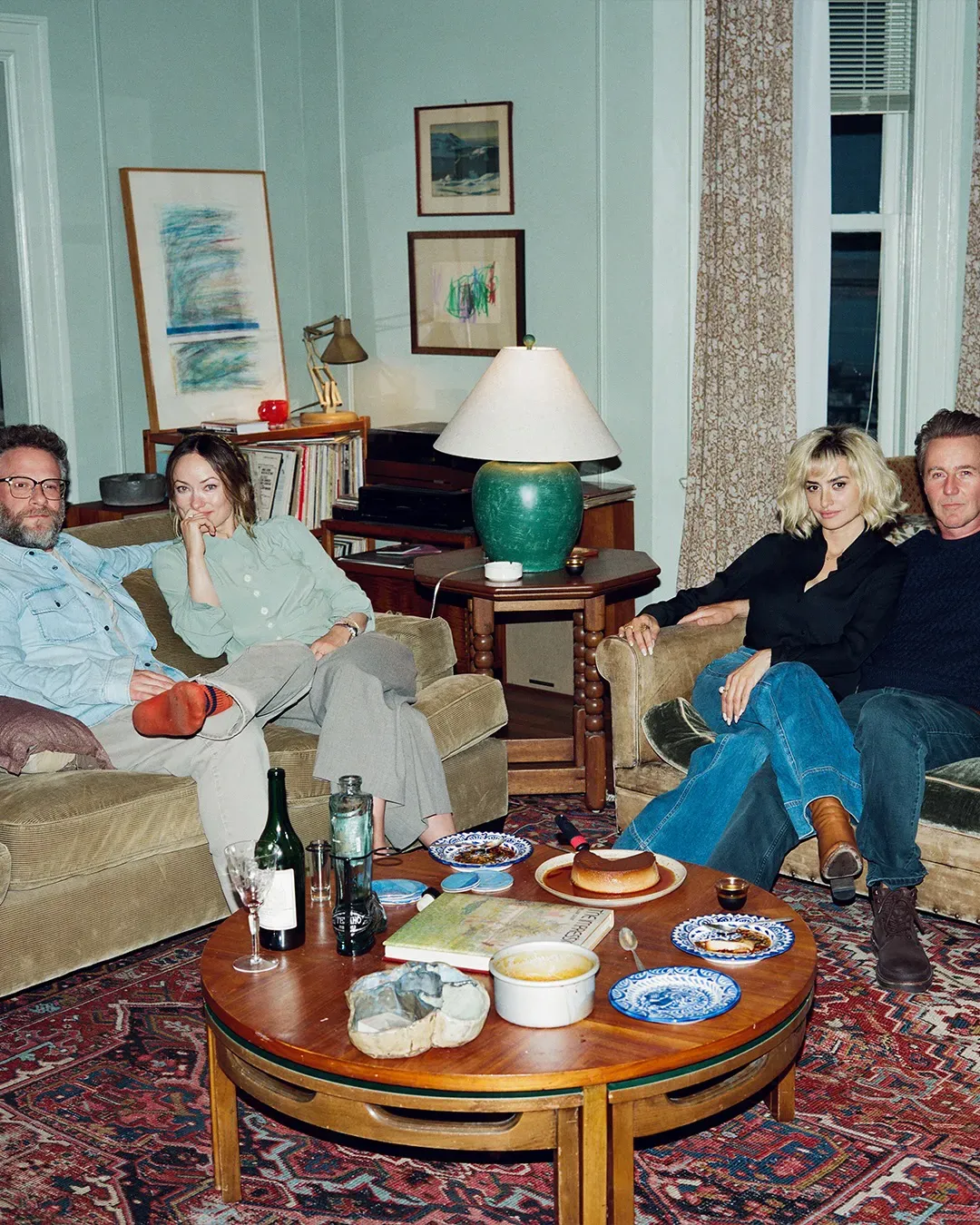
The Invite and The Echo Chamber have reminded us just how electrifying films set in a single location can be. Olivia Wilde's film, a remake of the Spanish Sentimental (which has had several versions, including an Italian one), features four characters confined to a house for a quiet dinner that turns into an examination of relationships and sex. Andrea Pallaoro's work, on the other hand, tells the love story of a man and a woman who cannot bring themselves to part. The last screenplay written by Bernardo Bertolucci (himself the author of another great classic set almost entirely in a single place, The Dreamers), The Echo Chamber frames only the protagonist's apartment, depicting the woman played by Alicia Vikander as she adapts to her partner's space.
While the protagonists feel hemmed in by the four walls surrounding them, they are in fact showing audiences a far broader spectrum of the themes they bring to the table. The Invite puts the sex lives of two couples under scrutiny, The Echo Chamber the protagonists' obsession, but the characters are merely pawns on a larger chessboard that the audience has the best view of. The particular scenario staged is a microcosm that incorporates within itself moral, social, and human questions, locked in a single room through whose peephole the world can be observed.
The power of words
When a work succeeds, the credit belongs to the pen behind it. When one decides to set a story in a single place, one must be certain of having a watertight screenplay and, typically, those who write it also seem more aware that words carry greater weight than in a multi-location feature film. It is no coincidence that writing for characters in a single space is believed to be a way for screenwriters to reach and speak to their own subconscious. The same subconscious that is activated in the protagonists and that makes every word spoken essential. There can be no misplaced line, no dialogue that feels like filler or padding: one must say only what is necessary for the story.
Directing emotions
It is not only the screenplay that gives a film its meaning. Although it tends to fade into the background, direction can also lend considerable depth to a story. It is not simply a matter of positioning the camera: in order to avoid the feel of filmed theatre, the lens must move through the space with boundless freedom. It can envelop the characters, surround them, observe them from below or above. It can offer unexpected angles that transform the environment, shift a character to echo what they are feeling. Isolating someone in a corner, for instance, can convey their exclusion, while leaving an empty space behind them can allow their unconscious to emerge.
Close-ups in 12 Angry Men (1957)
Then there is the function of the close-up. Narrowing the lens around a face is a way to capture even the micro-expressions of a performer and, at the same time, a tool for observing up close what they are experiencing. 12 Angry Men by Sidney Lumet is the clearest example: the 1957 masterpiece opens with a wide shot and continues with a series of broad, expansive framings. In that moment, the camera establishes the objective reality the characters are inhabiting.
The twelve jurors called upon to decide the fate of a young boy grow increasingly heated as the film progresses. The issues brought into play, as we noted earlier, no longer concern only the case they are asked to deliberate on (which nonetheless involves a serious matter such as a possible death sentence), but expand until the characters involved become archetypes of our society. As we watch them debate, the camera does not linger idly but closes in on their faces to humanise them and bring their feelings to the surface. It traps and watches them, so that the audience can catch every glance, every bead of sweat, every grimace. Reality immediately becomes subjective, an externalisation of the protagonists' inner lives.
The room as a microscope on society
If the camera and cinema have always served as a lens through which to portray civilisation, in films set within a single environment that civilisation is placed under a microscope. Rope by Alfred Hitchcock is a refutation of human law, with two protagonists who consider themselves above everyone else, shaped by a presumed intellectual superiority that renders them untouchable. It is the gratuitous domination of one human being over another, the dichotomy between good and evil, as well as the repression at the heart of a film that stands as a manifesto of queer censorship — inflicted both on the characters and on what the filmmakers were trying to express (as evidenced by the Italian version, in which the homosexuality of the two is effectively erased).
The same psychological tension is found in Tennessee Williams's stage play Cat on a Hot Tin Roof, later adapted into the 1958 film by Richard Brooks. Here, the condition of a woman is added to the mix — a woman who, given the era she inhabits, must do everything in her power to maintain her position through financial support and stability, both of which are essential for a woman within a patriarchal system.
Widening the aperture even further, while the setting narrows to the point of inducing claustrophobia, is Roman Polański's Carnage, a work in which the human condition on display is tied to reflections on social class and in which the civilisation of human beings is unmasked as flawed and prejudiced. The good manners the four characters initially adopt with one another — Jodie Foster, John C. Reilly, Kate Winslet, and Christoph Waltz — soon give way to the primal instincts that the dialogue ends up igniting. A bourgeoisie that shatters under the weight of its own hypocrisies, in which comfort does not make language a means of mutual understanding but rather a weapon for causing harm — another example of society's class divisions and their representation within a single space was the high-speed train in Snowpiercer by Bong Joon-ho.
The Father (2020) by Florian Zeller
Among the more recent examples of single-location films, The Father by Florian Zeller adds an unprecedented element, closely bound up with the production design and editing. Anthony, the role for which Anthony Hopkins won his second career Oscar in 2021, is a man suffering from dementia who refuses to leave his home. In fact, he never does — yet throughout the film the rooms and furnishings tend to change.
What Zeller establishes is a sleight of hand, a mystery box in which the protagonist is literally trapped inside, and whose impossibility of escape is at once voluntary and forced. Voluntary, because we see Anthony declare from the outset that he does not want to leave his home; forced, because as the narrative unfolds we come to realise that there are few choices the man can make consciously, as he must submit to the decisions and care of his family members.
Zeller creates a space that is mutable in its immobility, always the same yet constantly changing. The location designated by the film becomes a manifestation of what Anthony's mind is projecting at any given moment. There is the past, there is the present, there are people who overlap, as do various locations from his life. The environment becomes projection in The Father — singular, yet capable of transformation. A device that, like the examples listed above, demonstrates how sharing a space with characters can evoke an infinite number of places, each with its own thematic universe. A plunging deep into one story to find a thousand others, hidden within its nuances. To move us, push us, shift us; to arrive at an awareness we could never have reached had we not remained fixed in that one place.
What to read next

For Halloween, the director of "Obsession" gifted us a new short film
It's called "Mama Bear", it's on YouTube, and it was written, directed, and edited by Curry Barker
How many nepo babies are there in Hollywood?
Spoiler: a lot, but it depends on how we define the category of industry offspring
"Wild Horse Nine" by Martin McDonagh is tender and ruthless at once
With an award-worthy John Malkovich