
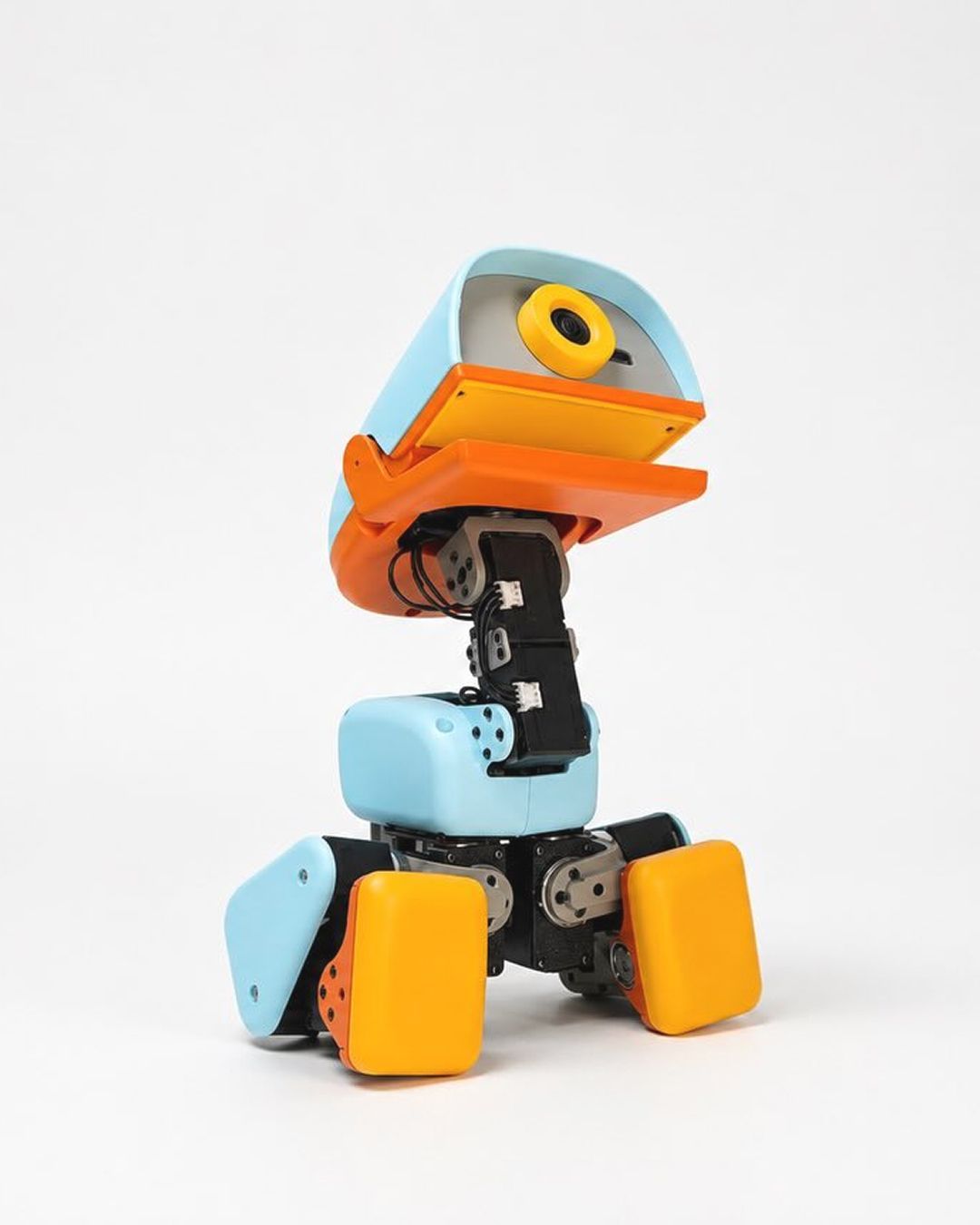
What to expect from Nvidia's Microducks? The introduction of cute characters by Big Tech companies is part of a very specific marketing strategy
Jensen Huang, the CEO of Nvidia, one of the most important companies in the tech sector and the highest market-cap company in the world, took the stage at the company's annual conference accompanied by a small group of duck-shaped robots. The robots, called Microduck, waddle as they walk, tap their feet on the floor, and emit cute electronic sounds.
On voice command, the Microducks sit down, drop to the ground to "take a nap," or perform a somersault: a simple repertoire of actions, but one that was enough to win over the audience — it's no coincidence that the demonstration video went viral almost immediately. The commercial impact was felt right away: the day after the presentation, Microduck pre-orders had surpassed 20,000 units.
Microduck orders are expected to be delivered by Christmas, which could make these little robots one of the most sought-after gifts of the upcoming holiday season. The target audience, however, would not consist solely of children. In the promotional videos released by the company, adults are also shown playing with the robots, a sign that the product is aiming for a potentially broader market than that of toys.
Where the Microducks come from
Behind the Microducks is Pollen Robotics, a company specializing in AI-powered robotic devices that became a partner in 2025 of one of the most widely used platforms among AI developers, Hugging Face. The latter was recently acquired by Nvidia for nearly 13 billion dollars. The deal is part of Jensen Huang's plans to grow and strengthen his presence in the "open-weight" sector — that is, the model on which Hugging Face is based, which makes the parameters used during the training of artificial intelligence systems available to third parties. Depending on the individual license, this allows them to study, modify, or adapt those parameters to their own needs.
Huang wants to promote this model because it helps prevent the development of advanced artificial intelligence systems from remaining the exclusive domain of a handful of large companies. It is an approach that China is investing heavily in — just think of DeepSeek, which is built on precisely this principle — and one that Nvidia (an American company) intends to use to stay competitive.
Why tech companies are turning to mascots
In recent months, mascots and, more broadly, cute characters have become a recurring presence in the communication and commercial strategies of major tech companies. Meta, for example, introduced Jolly, a sweet and friendly-looking character that assists users with Muse, its artificial intelligence system. OpenAI also chose to present one of its new services through four animated characters. But the trend extends to other major players in the sector as well: Microsoft announced and then shelved Mico, a mascot intended to assist with AI Copilot, while Apple used Lil Finder Guy to promote MacBook Neo, its new budget laptop.
These characters, however, do not serve merely a promotional or brand-recognition function. In many cases they become a genuine interface for AI agents, systems capable not only of responding to requests, but also of carrying out operations autonomously on behalf of users. In order to operate, however, these tools must be able to access personal information, habits, and sensitive data, establishing a relationship with their users that is potentially far closer than that offered by traditional digital services. The spread of AI agents therefore requires a particularly high level of trust.
This is also why companies choose to give these services a reassuring appearance. The design of these mascots draws on certain features that human beings instinctively associate with infancy, such as large eyes and facial proportions — characteristics known as "baby schema", widely used in animation, for example in Pixar films, and in the design of toys such as Labubu — which, not coincidentally, have also become very popular among adults. Applied to AI agents and robotic devices, this strategy helps make such products feel more familiar and softens the perception of the risks associated with services that, by their very nature, may have access to a considerable amount of private information.
What to read next

Data centers are invading our cities
The more demand for artificial intelligence grows, the more everything needed to make it work grows too
Is all this terrorism about AI founded or not?
Could artificial intelligence actually kill us all before the end of the decade?