
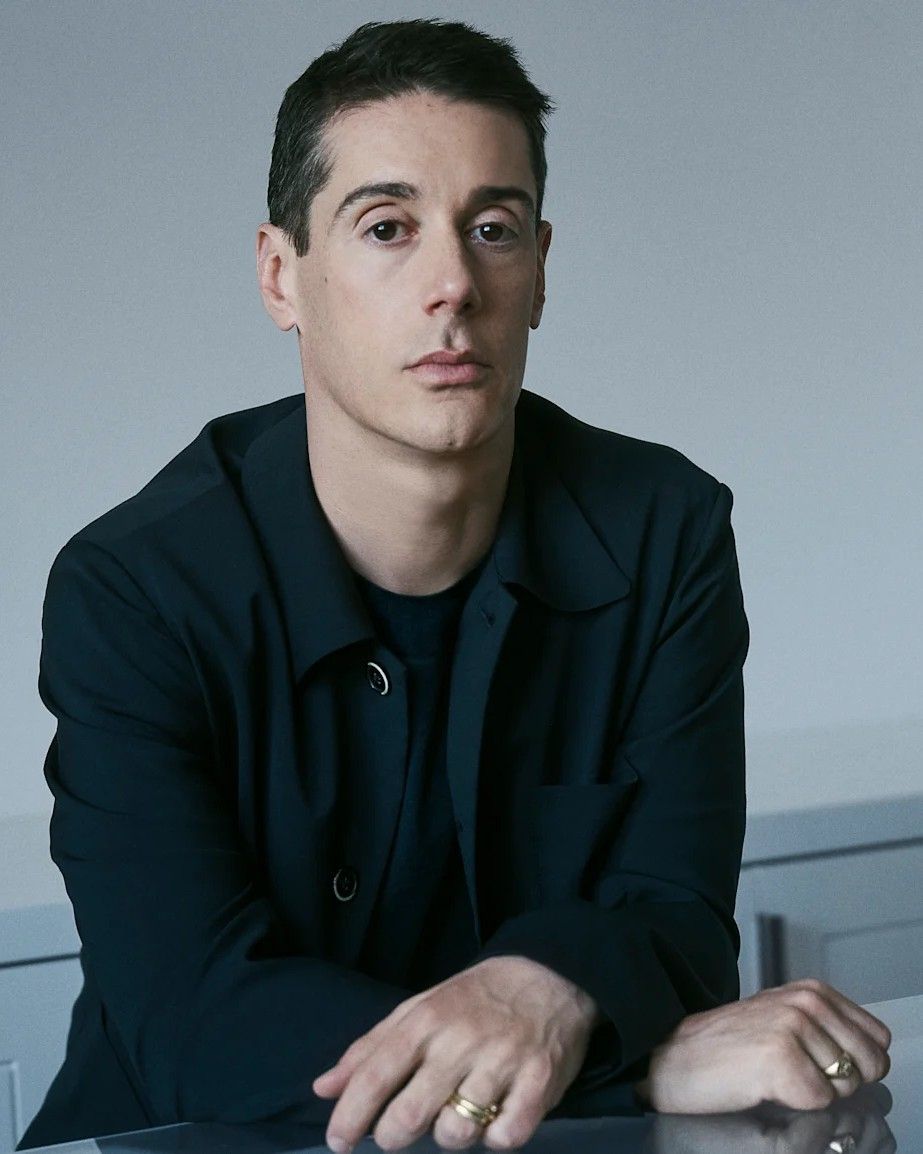
But what exactly does the Chief Brand Creative Officer at Louis Vuitton do? The brand has just appointed one, even though it already has two creative directors
There was a time when brands had designers, and those were simpler days. Today, designers are no longer the talk of the town — it's all about creative directors. Over time, as the nature of brands grew more complex, other titles emerged: artistic director is the most popular, but also chief brand officer and image director. All names that reflect the shifting activities of a brand, which produces often extensive clothing collections and has a far more multifaceted and cross-sector creative output than in the past.
Last Friday, taking things a step further, Louis Vuitton has appointed a Chief Brand Creative Officer — a veteran of Tiffany & Co. and Rimowa named Hector Muelas, whose influence we will soon see radiating across every facet of the brand. But why bring in a "brand creative officer" when you already have two creative directors — namely Pharrell and Nicolas Ghesquière? Or should we read the appointment as a hint of developments to come?
The meaning of a Chief Brand Creative Officer
Muelas's appointment signals Louis Vuitton's need — perhaps the most far-reaching brand on the planet — to have a central figure who can forge a cohesive aesthetic language across visual materials, social media, campaigns, cultural initiatives, and so on. It is particularly noteworthy that Muelas will report directly to Damien Bertrand, Louis Vuitton's deputy CEO, effectively "bypassing" the artistic directors. His role will be to define and steer the creative storytelling of the entire brand and ensure it possesses a unified visual and narrative identity: campaigns, art buying, content production, collaborations, regional operations, and even creative partnerships — ambassadors, perhaps.
At this point, it naturally raises the question of where the new mega-manager will sit in relation to the actual creative directors. Traditionally, it is the creative director who handles aspects such as campaigns and ambassadors, as well as brand identity, store design, and so forth. Each of these areas clearly has its own dedicated team, but the point is that the creative director should be overseeing all of them. Which leads us to wonder whether the role of Nicolas Ghesquière or Pharrell has been scaled back, or whether the two were already focusing solely on collections and the development of certain concepts, without involvement in the dozens of campaigns and collaborations the brand undertakes — such as the recent Art Basel activation.
Even though Glitz Paris recently confirmed that Ghesquière, whose contract runs until 2028, is not about to leave his comfortable position (and with an annual salary of €14 million, who would?), there have been persistent rumours that LVMH wants to bring Louis Vuitton's two lines — menswear and womenswear — under a single shared director. But let us not forget that Louis Vuitton also has a creative director solely for leather goods: Darren Spaziani. It is therefore not unreasonable to think that the brand's internal workings operate with many moving parts functioning in concert. But in which area can we expect to see Muelas's hand?
A craftsman of culture?
To understand what he has actually done in his career, we have numerous sources — both interviews and LinkedIn posts by Muelas himself. At Rimowa, for instance, he led the entire 2018 rebranding and relaunch, overseeing global campaigns, marketing, PR, and partnerships. He was the mind behind the Rimowa x Off-White collaboration during the Virgil Abloh era, as well as the architect of the global campaign featuring Roger Federer, Virgil Abloh himself, Adwoa Aboah, Yoon Ahn, and chef Nobu Matsuhisa.
At Tiffany & Co., he oversaw the brand's entire creative execution, with a particular focus on campaigns featuring Natalie Portman and Anya Taylor-Joy. His work earned the brand two awards at the Grand Prix de la Haute Joaillerie in Monaco. For someone relatively removed from the public eye, Muelas has been extraordinarily influential over the past decade: consider alone how dramatically our perception of both Rimowa and Tiffany & Co. has shifted. Before joining LVMH, Muelas served as Global Creative Director for Worldwide Marketing Communications at Apple — and essentially, the entire communications strategy behind the launch of Apple Watch up to 2015, and again from 2019 to 2021, bore his signature.
What is particularly compelling is that this influence — now formalised by an appointment at a brand far larger and more institutional than any of his previous ones — sits at the intersection of culture, media, technology, entertainment, and communication. It demonstrates both how much a brand's perceived image is the primary driver of desirability, and above all how its creative output is increasingly concerned with communication and ever less with the actual product.
What to read next

These are the secondhand handbags that are worth the most in 2026
Searches for the Chloé Paddington have risen by 610%, but the real star of the secondhand market is Chanel
LVMH's fashion division keeps getting worse
Third-quarter results showed a -5% decline driven by the Chinese market