












LVMH expands its Parisian empire from the Bois de Boulogne to the street redevelopments of Paris Culture and urban development become the ultimate showcases for the luxury empire
In 2017, the news made headlines: following the spectacular opening of its Foundation, the LVMH group acquired the former Musée des Arts et Traditions Populaires, closed since 2005, to turn it into a vast center dedicated to craftsmanship. Announced with great fanfare by Bernard Arnault alongside then-President François Hollande, Anne Hidalgo, and architect Frank Gehry, the project promised an opening within three years. Almost ten years later, the site has still not opened its doors and the original vision has morphed. Between strategic realignments in the Bois de Boulogne and the funding of urban developments on the Champs-Élysées, LVMH is gradually redrawing the map of Paris, reigniting a fierce debate on the privatization of the city in the process.
In the Bois de Boulogne, LVMH's long road
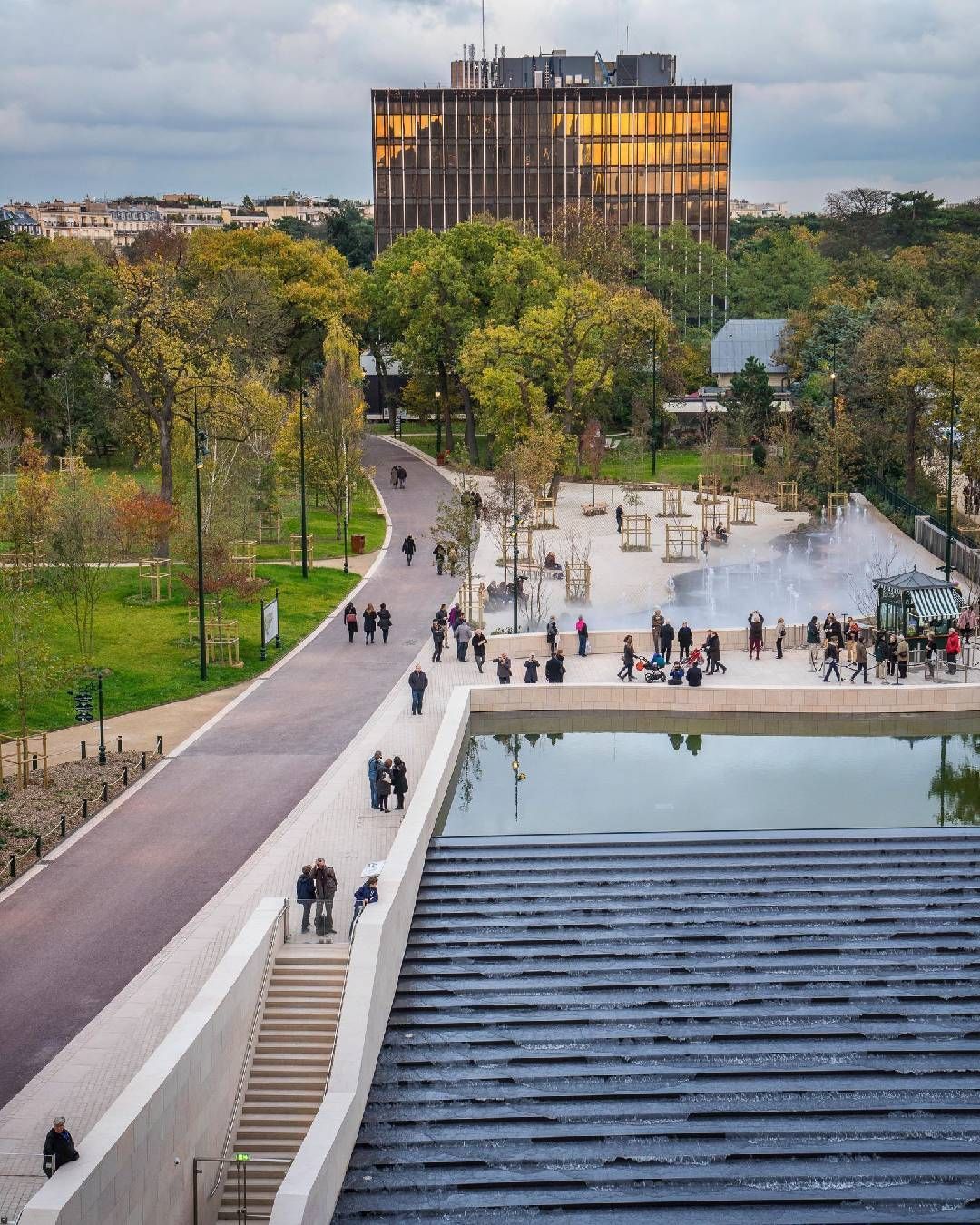
@lvmh Floating glass sails, endless curves, natural light everywhere… @Fondation Louis Vuitton really feels like stepping inside a Frank Gehry sketch. Gehry Partners, LLP and Frank O. Gehry #FondationLouisVuitton #FrankGehry #Architecture #Design #LVMH son original - LVMH
The story is reminiscent of the Louis Vuitton Foundation, which took nearly a decade to materialize. The initial budget of 158 million euros and the architectural ambition of gutting Jean Dubuisson’s modernist tower to cloak it in a glass structure designed by Frank Gehry and Thomas Dubuisson have led to accumulated delays and adjustments.
While Bernard Arnault originally presented this initiative as a "new cultural and philanthropic start-up", revelations from the investigative press, particularly via the news outlet Glitz, point to a notable shift in programming. The original project envisioned an academy open to school groups and young people from working-class neighborhoods, a major performance hall, as well as a panoramic restaurant. The new plans now prioritize artist residencies and a vast "demonstration hall" spanning two levels overlooking workshops dedicated to the craftsmanship of the group’s houses, from leather goods to spirits. Exhibition galleries will also host extensions of the Louis Vuitton Foundation’s collections featuring internationally renowned artists such as Takashi Murakami, Damien Hirst, or David Hockney. By linking this museum to the Foundation and the Jardin d'Acclimatation - for which the group also holds the concession - LVMH is finalizing the creation of a giant private cultural perimeter in the heart of the public domain.
This expansive complex is accompanied by recurring local political tensions. The Paris City Hall notably approved the transfer of 6,400 square meters from the Jardin d'Acclimatation to the museum project without financial compensation, allowing the group to build a green amphitheater that can be privatized up to 130 days a year. On their end, the left-wing opposition and Green councillors regularly denounce the rent deemed paltry at 150,000 euros per year for a fifty-year concession. Meanwhile, LVMH representatives point to the constraints of the Bois de Boulogne, including inadequate public transport links and security issues linked to surrounding prostitution. Unlike its competitors who set up shop in the hyper-center, LVMH is thus betting on reigning over an out-of-the-way cultural enclave.
Champs-Élysées: when luxury finances and shapes the roads
@samantashyne Louis Vuitton on the Champs-Élysées There’s something special about seeing Louis Vuitton in the city where it all began. Walking down the Champs-Élysées and stopping at this iconic flagship store felt like a true Paris moment.
The luxury giant’s footprint does not end at the borders of the Bois de Boulogne and now extends into the very heart of the capital. On the Avenue des Champs-Élysées, behind the monumental temporary display trunk masking the construction site at 103-111, Louis Vuitton is preparing the installation of a flagship project combining a store, exhibition spaces, a restaurant, and a hotel. To accompany this major development, the City of Paris has entrusted the brand with the direct redevelopment of Rue Bassano and Rue Galilée. Fully funded by the luxury house to the tune of two million euros, this development aims to calm the public space at the foot of the future site, featuring widened sidewalks, the installation of benches, bicycle racks, and planted greenery. Louis Vuitton is not merely funding the project; the brand is directly managing the roadwork before restoring the public space upon completion of the construction.
This decision immediately triggered a political debate. For several opposition figures and Green councillors, delegating the management of the capital’s streets to a multinational corporation sets a dangerous precedent toward the "privatization of public space," arguing that the municipality is forfeiting its urban development responsibilities in the process. Facing criticism, City Hall counters that it is a win-win partnership. According to the municipality, involving private entities with the financial means helps Paris shine while freeing up municipal funds to finance other necessary projects in residential neighborhoods, such as school streets.
From transforming a former national museum into a private craftsmanship showcase in the Bois de Boulogne to directly remodeling the streets of the 8th arrondissement, LVMH is establishing itself as a full-fledged urban development actor. While these projects bring massive funding and undeniable tourist appeal, they raise a fundamental question for the capital’s future regarding the limits of delegating city building to luxury industry giants.