




































"The Social Reckoning" tells us a terrifying reality Aaron Sorkin brings the Facebook Files to the big screen, but the direction doesn't live up to the story
To discuss The Social Reckoning, the conversation must be divided into three sections: the comparison with its prequel, the density of its content, and the direction of Aaron Sorkin. Let's start with the first. The Social Network, the 2010 masterpiece directed by David Fincher and written by Sorkin himself, opens with one of the best-written, best-directed, and best-edited sequences in world cinema. It has rhythm, provides context, immediately establishes the character, and draws the viewer straight into the story of young Mark Zuckerberg during his college years — the same years in which he founded Facebook.
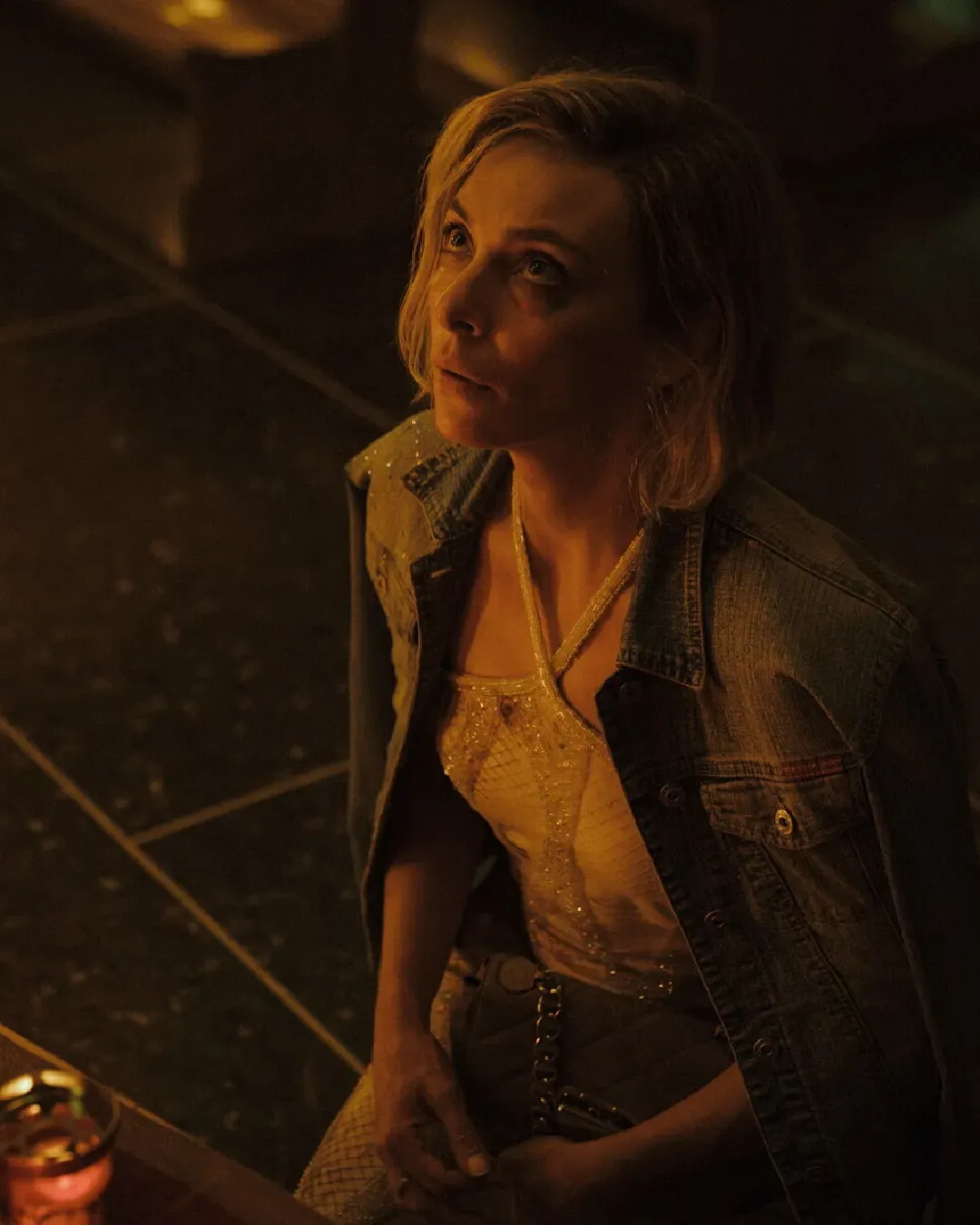
The Social Reckoning also opens with a contained scene, a prologue that will resurface throughout the film as the inciting incident driving the actions of protagonist Frances Haugen, the data scientist who helped bring the Facebook Files to light, played by Oscar winner Mikey Madison. Once again, the sequence is well written. The pen is the same, yet despite this, the dialectic employed and the impact the exchange between characters has on the audience is less striking than one might have hoped.
An "ideal" sequel
If The Social Network closed with Zuckerberg repeatedly refreshing his friend request to his ex-girlfriend — a moment that gave meaning to the entire work and brought an already refined film to a masterful conclusion — its sequel is far less impactful, even banal in terms of its mise-en-scène.
The comparison between the two films is merciless, but not because The Social Reckoning is unworthy of attention: it is the unmatched quality of the first film that weighs on the other's shoulders, a predecessor so unreachable that it clears the field from the outset. This is likely one of the reasons Sorkin's film has been described as an ideal sequel. Fincher's film functions as a treatise on disappointment and ambition, on what it means to have real friends as well as virtual ones, while Sorkin's work is content to be a reportage-film — certainly shocking in its content, but housed in a conventional package.
The story of the Facebook Files
Very difficult for me to come up with any other descriptor of The Social Reckoning other than, "it's fine."
— Josh Parham (@JRParham) October 6, 2026
This brings us to the second point: the subject matter of The Social Reckoning. Following the investigation of journalist Jeff Horwitz, played by The Bear's TV chef Jeremy Allen White, the film reconstructs the events that led to the publication of a series of articles in The Wall Street Journal that exposed the mechanisms and consequences of social media in everyday life. From engagement boosted by user outrage to the spread of fake news, to the space given to political ads containing outright lies.
64% of people ended up gravitating toward far-right extremist groups as a result of the algorithm's recommendations — an algorithm programmed with no regard for the health and safety of its users. Facebook, however, was not portrayed as an inherently harmful social network: the blame was placed on individuals and shareholders. A weapon created not to cause harm, but taken up by bad actors and used for their own ends — to paraphrase an observation made by journalist Horwitz in the film.
Disillusionment with the direction the platform had taken is one of the reasons that drives Haugen to expose the truth, even as throughout the film she continues to profess her strong support for her work at the platform. A defense that ties into the positive side of every digital communication bridge that has made it possible to connect with any corner of the world — though it has become impossible to ignore the growing problems that have led to a drift not only on social media, but above all in the world at large.
A very good writer, not a great director
director aaron sorkin does not deserve to work with writer aaron sorkin
— p (@bananabreadbloc) October 9, 2026
This leads to the third and final point: Aaron Sorkin's direction. The Social Reckoning is the author's fourth directorial effort; he comes from a writing background and since 2017, with Molly's Game, has also turned his hand to directing. It is not quite his strong suit, especially when measured against his own pen — which continues to set the standard to this day, from his cinematic debut in 1992 with A Few Good Men to his landmark contributions to television with The West Wing and The Newsroom.
The overall package of The Social Reckoning, its mise-en-scène and its bare visual aesthetic, make for a film with a genuinely terrifying true story that is poorly served by direction equally capable of sweeping the audience along. It limits itself to capturing and presenting without ever displaying a particular spark — an insight beyond placing the camera in front of the actors and letting them perform. This limitation allows glimpses of potential in the film's dialogue that, had it been harnessed by a more inventive and inspired director, could have built a ticking time bomb ready to detonate both inside and outside cinemas.
The dangers of social media
The film comes across as innocuous, inoffensive, lacking the «hitting hard» it speaks of — presenting facts that are incandescent in themselves, not by virtue of the way they are told. The same applies to the performances of the actors, including Jeremy Strong's method acting turn as Zuckerberg: interpretations in service of a story that aimed higher than the film telling it.
Despite everything, The Social Reckoning is worth watching. Even if the facts are already known, it sheds fresh light on the risks that social media has continued — and still continues — to expose us to. It is a way to revisit or discover why not everything posted on a feed should be taken at face value, and why even within freedom of speech there can and must exist a moral arbiter capable of maintaining a shred of integrity. One who ought to care about the wellbeing of the people for whom they built their social network, rather than washing their hands of a world they helped make worse — and for which they appear to feel no remorse whatsoever.