
The student revolt is happening simultaneously IRL and on TikTok An analysis of a growing phenomenon
Behind the blockades: social demands
This movement is of unprecedented scale. The high school and university student mobilization underway since September 21 is already shaping up to be one of the most significant France has seen since May 68. At the heart of the anger are straightforward demands: young people are calling out a glaring lack of resources in the schools where they study. Unreplaced teacher absences, deteriorating learning conditions, and pervasive precarity have driven youth to sound the alarm.
What has particularly sparked outrage in recent days is the police response, which relies on violence to suppress the movement. No fewer than 6,547 arrests have been recorded since the mobilization began in late September, with a record single-day peak of 1,949 arrests on Thursday, October 1. This number of arrests now surpasses those recorded during the Yellow Vests (Gilets Jaunes) movement and even May 68.
On the ground, protests are accompanied by denunciations of detention conditions described as inhumane, with one arrested youth highlighting a 24-hour period without any food distributed. Physical violence marked by chokeholds, the use of spit-back launchers (LBDs), and batons is deepening the divide. In an official press release, the FCPE, the main parents' association, strongly condemned this government crackdown on youth. Tensions remain high: yesterday, October 8, 157 schools were closed by midday, marking the launch of Act IV of the high school movement.
A government under pressure
@itsleiiii_ Soutien aux lycéens #blocus #lycee #paris #palestine son original - misa
A major mobilization in the streets invariably brings crisis meetings at the highest levels of state. On Tuesday, the President of the Republic convened his ministers to address the situation. Across media platforms, Prime Minister Sébastien Lecornu denied any "police repression." Meanwhile, Education Minister Édouard Geffray indicated he would present an "emergency plan" within "a few hours or days" regarding unreplaced absent teachers - one of the main concerns raised by protesting students.
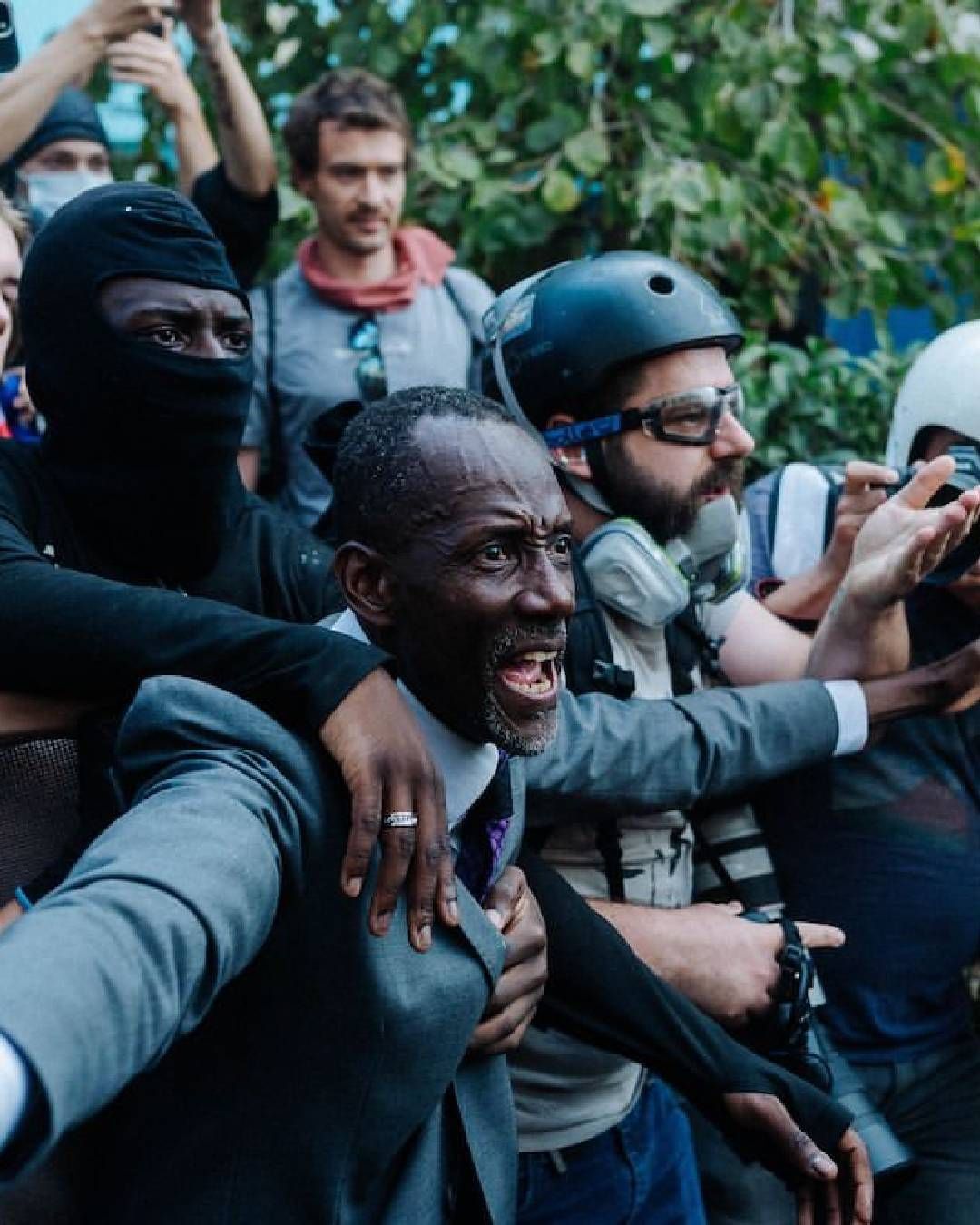
At the municipal level, political stances are sparking sharp friction. Social-democrat Paris Deputy Mayor Emmanuel Grégoire proposed opening district town halls to protesting high schoolers so they can meet without facing police violence, immediately drawing anger from conservative mayors. He argued that the high school movement must be able to express itself safely, affirming the city's readiness to support the mobilization. Another figure in the spotlight and at the center of criticism, left-wing politician Bally Bagayoko, has been protesting alongside students, even stepping physically between them and law enforcement - an image that went viral across social media before quickly being turned into a meme.
The impact of this French crisis has reached beyond national borders, drawing public comment even from U.S. President Donald Trump. The scale of this mobilization extends far beyond street-level marches, generating extensive media coverage and a dedicated story arc across all social media platforms.
Bypassing the algorithm through memes and cyber-blockades
@tdfmanga Bagayoko> Spiderman
son original - Tdfmanga
One of the defining features of this protest lies in its dual modes of action and its mastery of digital spaces. Alongside physical blockades at school gates, some activists are organizing cyber-blockades to slow down or completely shut down online learning platforms, disrupting remote education.
It is on TikTok, however, that the subtle cultural battle plays out. The platform is known for throttling the reach of explicitly political or activist content, as well as posts depicting violence. To bypass this "algorithmic censorship" and prevent their videos from being buried at the bottom of feeds, students are deploying a deliberate strategy.
By packaging their political message as memes, repurposing gaming clips, anime tropes, or trending audio tracks, they game the system. The algorithm perceives the posts as high-engagement, lighthearted content and pushes them heavily onto the "For You" page. This memification is not mere teenage frivolity: it functions as a digital Trojan Horse. It bypasses moderation filters while delivering a deeply political, mobilizing message to millions of users.
October 17: toward a social movement coalition?
@memphis_atm We will be there for Fete de la musique part 2 @henri som original - Biell
The general mobilization is now set for October 17, a date positioned as the potential climax of the high school and student revolt. Ranks of young protesters are beginning to be joined by other social groups feeling a shared sense of frustration, starting with firefighters.
On social networks, the mobilization strategy moves beyond traditional trade union communications. Young people still remember last summer's Fête de la Musique being taken over by British tourists. To sow confusion, generate buzz, and fuel momentum, some creators on TikTok are earnestly declaring a "second Fête de la Musique" in Paris on October 17, adding that the official dress code is, naturally, a yellow vest.
For the government, the threat no longer comes solely from barricades erected outside high schools, but from the millions of views accumulating across social feeds. By turning revolt into a viral cultural artifact, students have already won the battle for attention. It remains to be seen whether October 17 will translate this digital dominance into political victory on the pavement.