
Julie Kegels praises gravity in her Spring-Summer 2027 collection The opening show of Paris Fashion Week
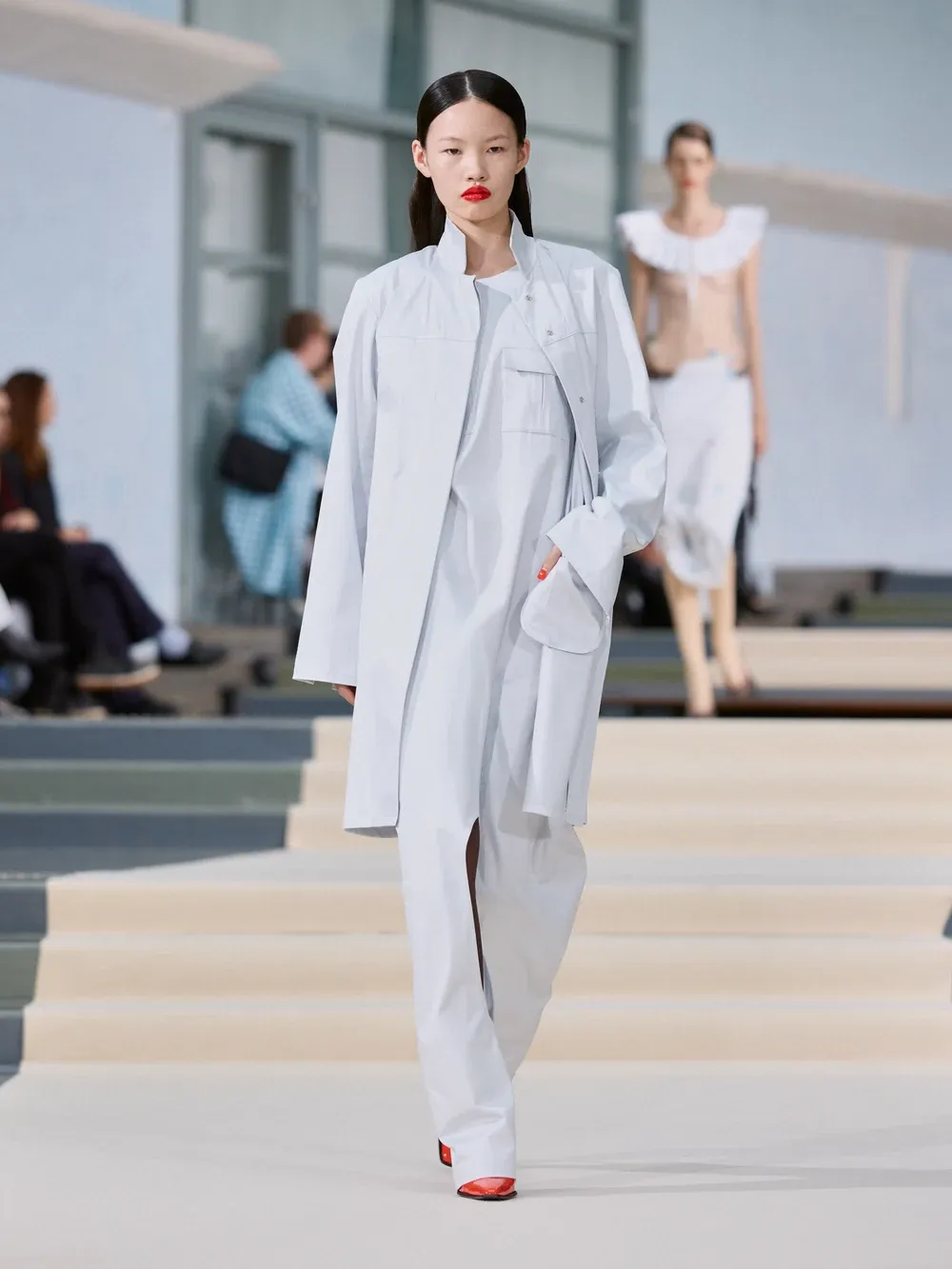
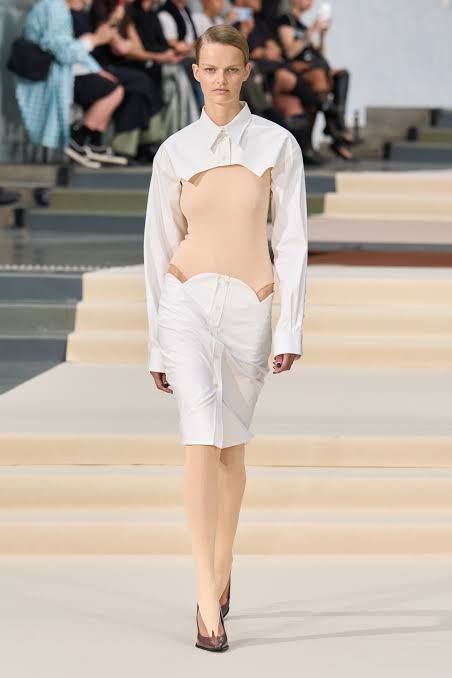
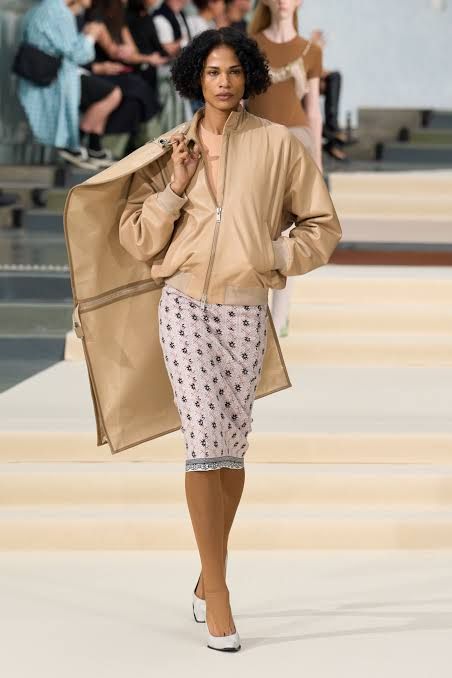
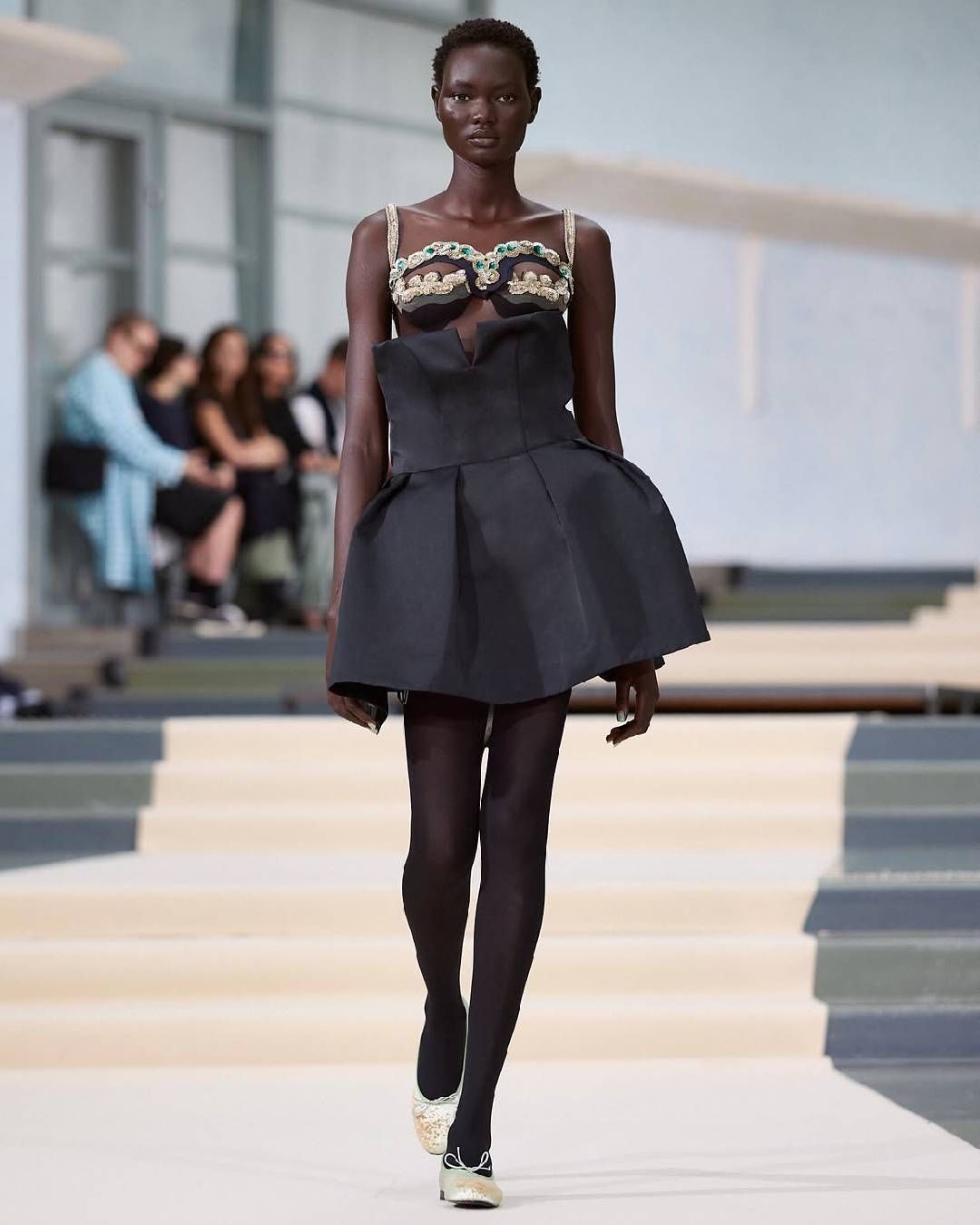
Recently crowned with the LVMH Prize, Belgian designer Julie Kegels had the honor of opening Paris Fashion Week for the Spring-Summer 2027 season. In a Paris edition decidedly more conscious of the world and its changing environment, the young designer presented a poetic and deeply conceptual collection titled "Apple of the Day". A subtle reflection on gravity, the weight of societal expectations, and letting go, this runway show captivated audiences with its deceptive lightness and sharp sense of deconstruction.
Knowing that all eyes in international fashion will be on you to launch the Paris season is a immense responsibility. Yet Julie Kegels seems to have weighed every word and every cut. With "Apple of the Day", the designer refers not only to her personal daily apple ritual, but also invokes Isaac Newton's apple to build a comprehensive meditation on gravity - both literal and figurative. It addresses the idea of falling, but also pressure: the pressure we endure, and above all, the pressure we put on ourselves.


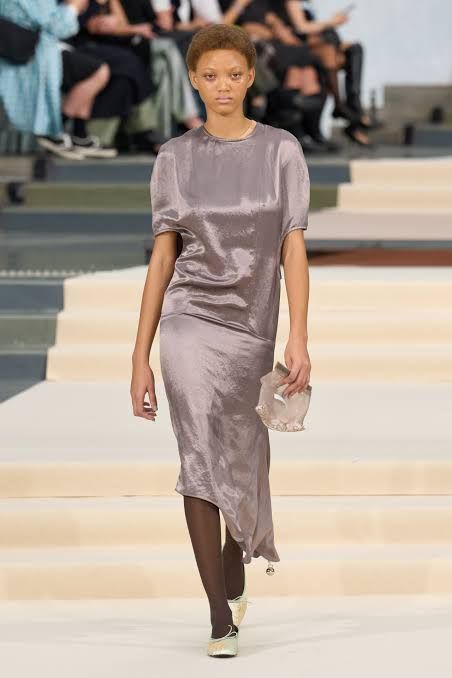
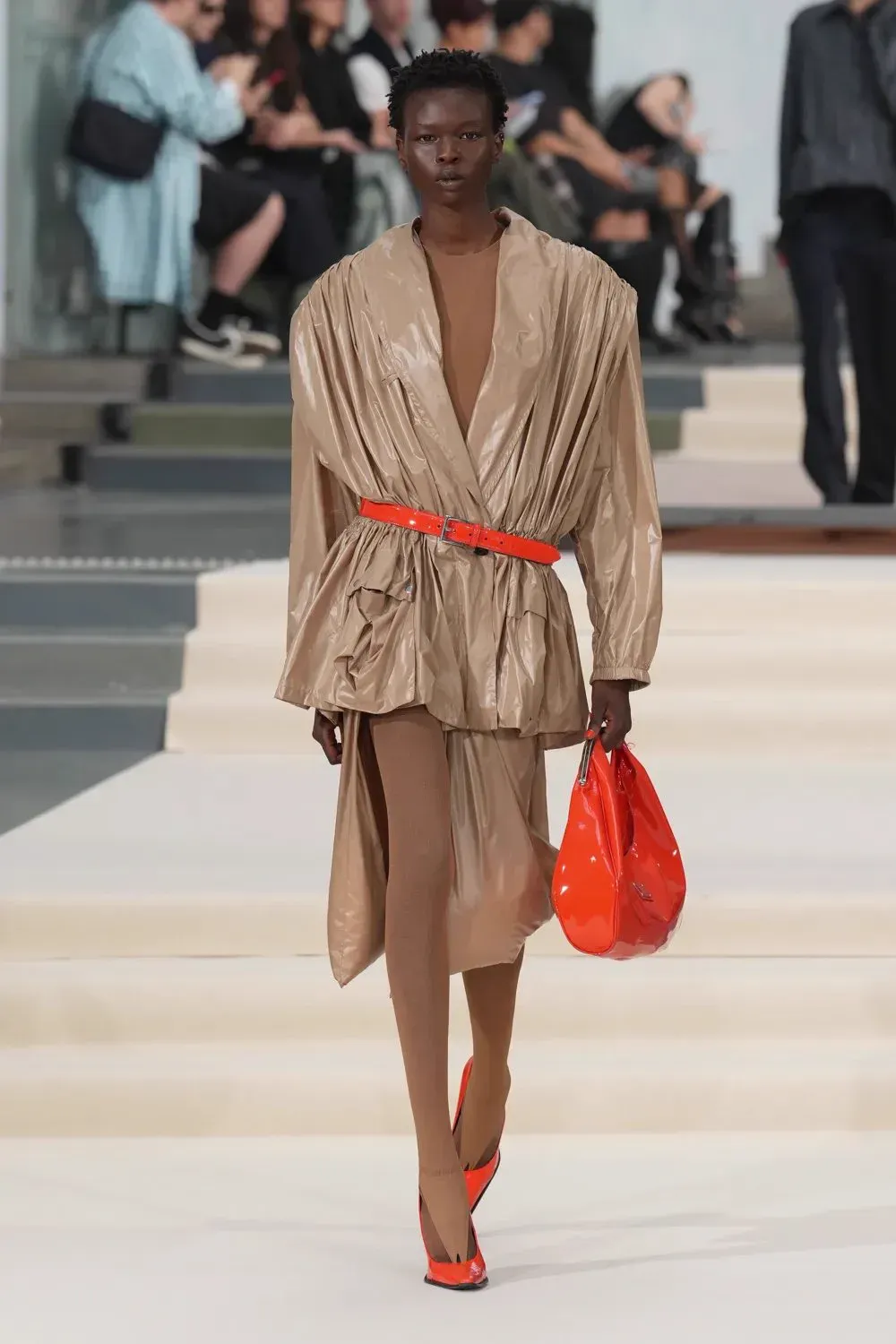
To answer it, the designer sheds weight from her silhouettes. Bare shoulders peek through the openwork knit of a sweater, while shoulder pads, turned completely inside out, dangle carelessly along the arms. Sheer fabrics and transparency play with absence and reveal the naked body through optical illusions where garments seem to hold together as if by magic.
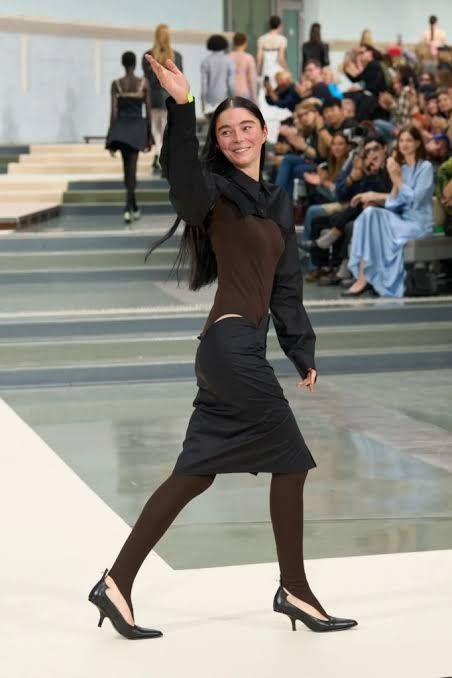
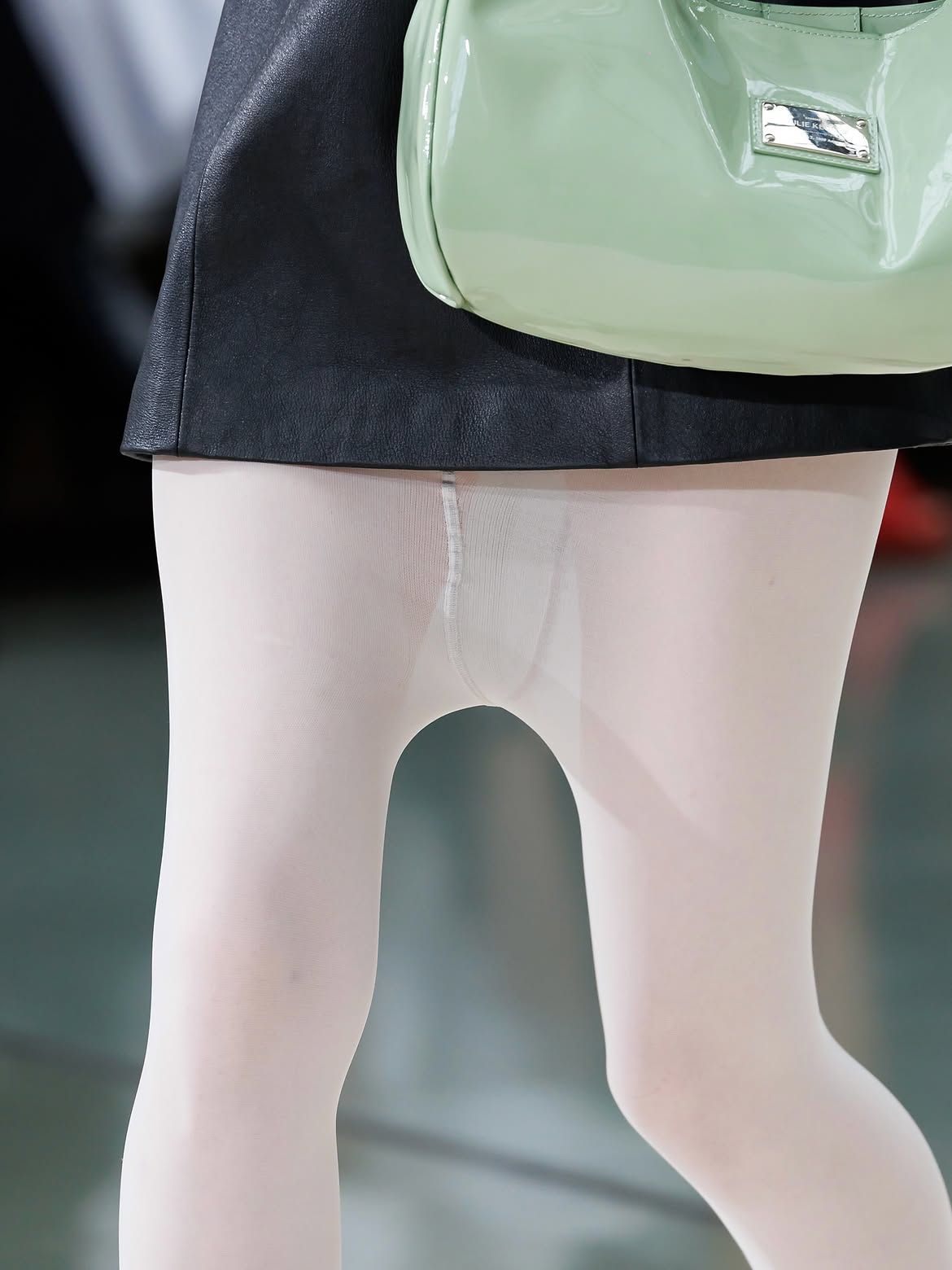
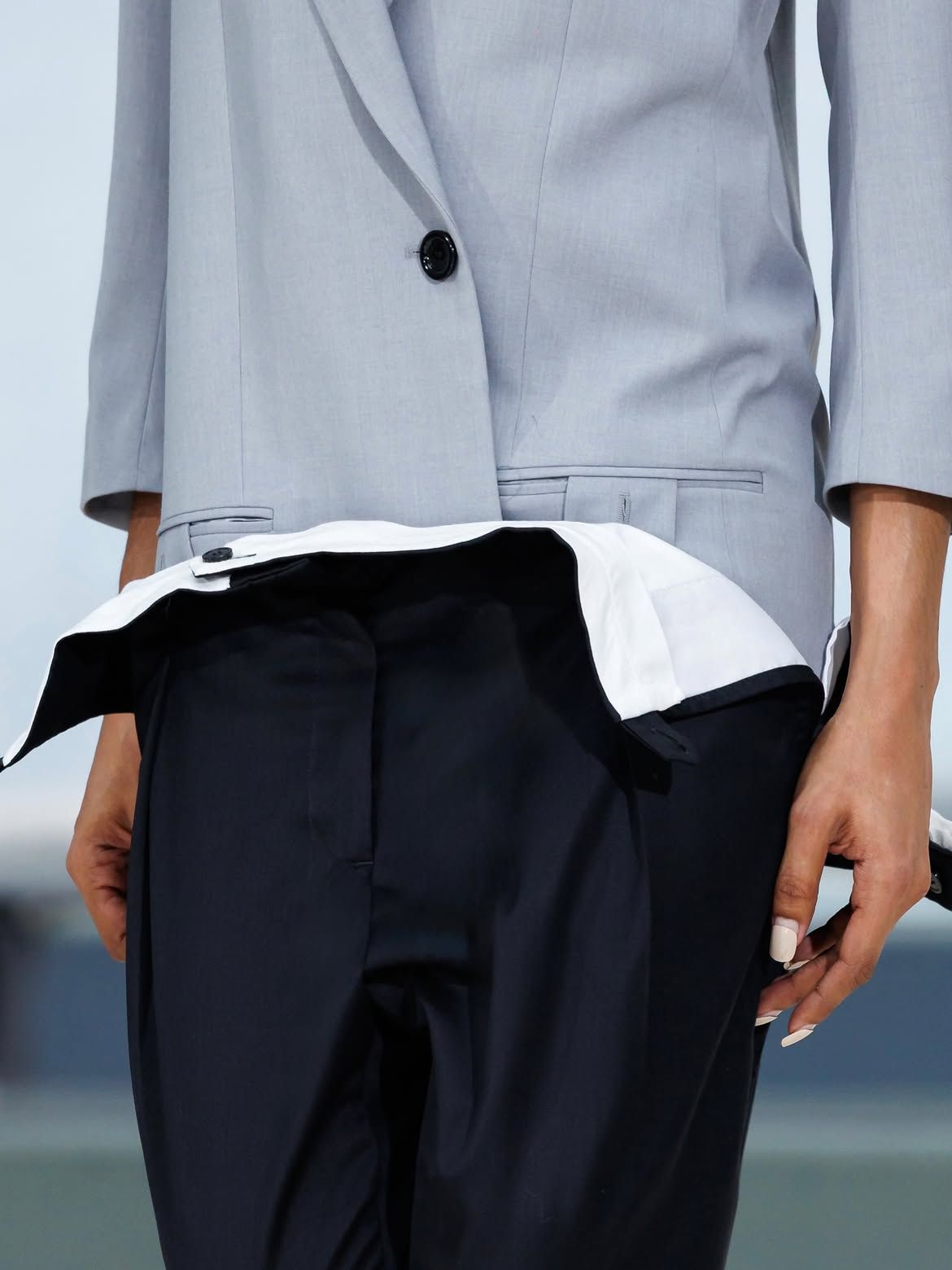
Throughout this procession, an impression of permanent metamorphosis dominates: outfits seem to construct and deconstruct themselves right before our eyes. The classic shirt is cropped into a tiny top, paired with a pencil skirt thrown on as if in a rush, or styled with offset buttons. Over-sized denim shorts with cuffs retain a deliberately unfinished look. This work on proportions extends to pants and denim canvas, where the inseam is reworked to the point of almost disappearing. Half-skirt, half-trousers, the garment restricts movement: to advance on the catwalk, models sometimes have to grab the fabric with both hands. The journey is all the more sinuous as the runway holds its own surprise: between the steps, the path becomes a kind of stretched canvas where silhouettes seem to bounce - a high-wire balancing act in stiletto heels. This intentional discomfort finds a nostalgic echo in the treatment of tights, worn extremely low with an exaggeratedly sagging inseam—a direct nod to childhood memories of slipping tights that had to be awkwardly pulled up throughout the day.
The show takes on the feel of a dreamlike procession, filled with outfits straight out of a dream - a dream filled with intentional continuity errors ("faux raccords"). Garments are worn backward, like a top crafted from a denim jacket whose vertical back seams are placed at the front. Further down, dresses and strapless tops migrate to the hips to become skirts.
Underwear also undergoes a poetic transformation. We see the remains of several bras—the "leftovers" mentioned by Lara Violetta in a get-ready-with-me video before the show—layered in the same spot. Having lost their primary function of support, they become adornments worn proudly over clothing. It is a subtle critique of the demands placed on the female body, but also a nostalgic reflection on the passage of time: these textile fragments recall a childhood security blanket, that cherished object to which we stay attached for a lifetime. Julie Kegels does not forget her signature elements. The plastic dry-cleaning cover, a recurring motif for the brand, is reinvented in a glamourous light: now fitted with a handle, it is worn over the shoulder as a functional handbag. Similarly, glitter from her previous collection reappears like the remnants of a past party, this time trapped beneath the transparent organza of a dress.
Closing with 42 silhouettes - a number far from random, rich in mathematical and technological symbolism - Julie Kegels proves that she masters not only garment construction, but also the art of storytelling. By turning physical constraints and the weight of the world into a spectacle of lightness and poetry, the Belgian designer demonstrates that she fully deserved her LVMH Prize and delivers a memorable opening to Paris Fashion Week.