
























Louis Vuitton wins legal battle against Chinese tea giant At the heart of the dispute: the famous four-petaled flower
The French luxury house has just won a major legal battle in China for trademark infringement. Yet, beyond the court's verdict, this case raises profound questions about the commercial appropriation of ancestral motifs.
A Final and Decisive Verdict
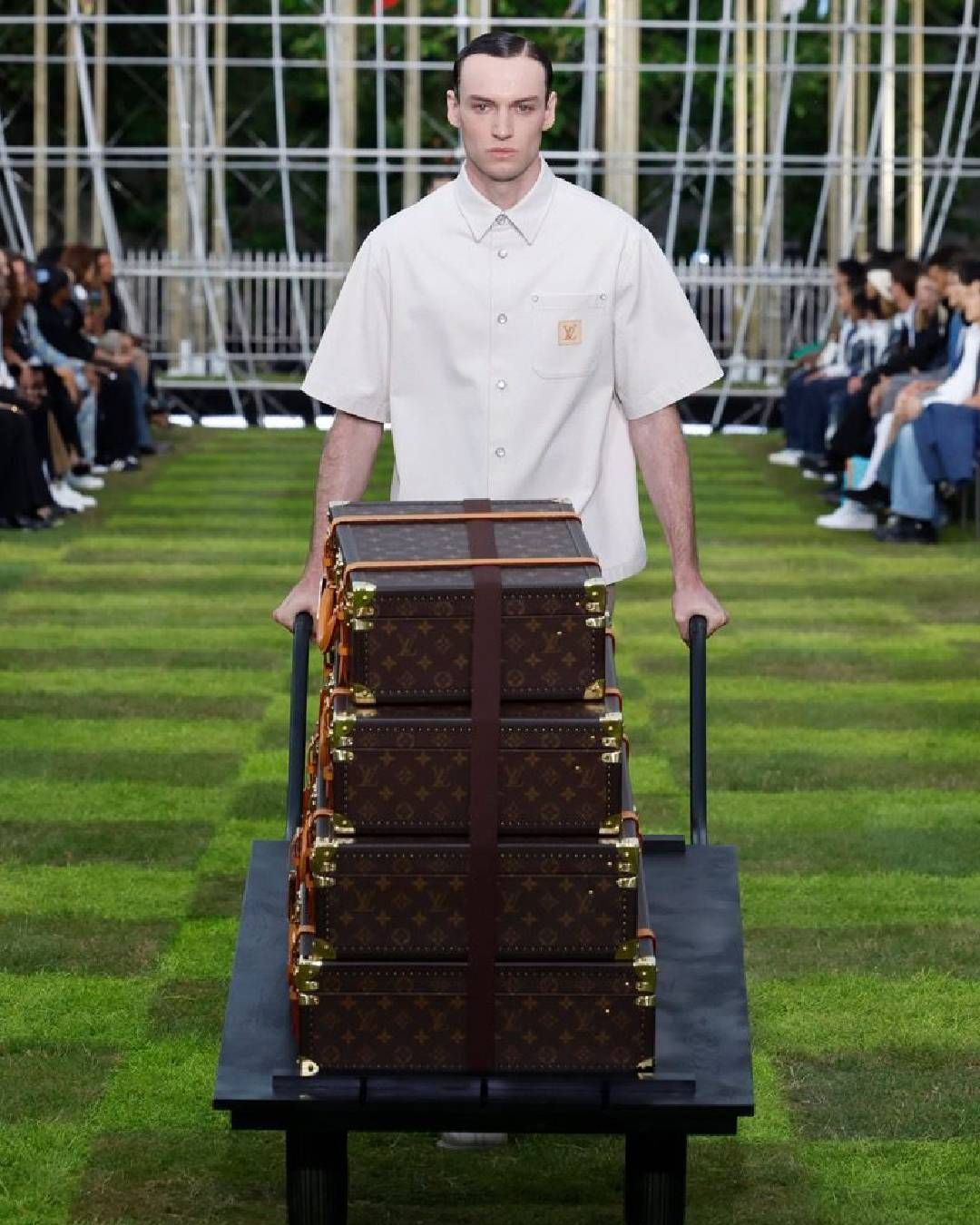
Last week, luxury giant Louis Vuitton won its case against Molly Tea, a rapidly expanding Chinese tea chain with no fewer than 2,000 outlets. At the heart of the dispute was the Chinese brand's use of a four-petaled floral logo, deemed far too similar to the famous flower in Louis Vuitton's signature monogram.
The ruling has been handed down, and it is particularly harsh for the local brand. Molly Tea has been ordered to pay $1.5 million in damages to the French house - a sum it must settle within a very tight ten-day window following official receipt of the court's decision. However, while justice ruled in favor of the Parisian trunkmaker, the battle for public opinion seems to have taken a completely different turn.
Between Law and Culture: The Appropriation Debate
On Chinese social media, the public has shown massive support for Molly Tea, turning a simple commercial dispute into a national cultural debate. Since 2022, Molly Tea had been desperately trying to register its four-petaled flower logo. In total, the brand suffered 17 registration attempts, all rejected due to systematic opposition and the legal weight of Louis Vuitton.
This situation highlights a true historical paradox. Louis Vuitton's famous monogram was developed in the late 1800s. Yet, as reported by the fashion watchdog Instagram account Diet Prada, many internet users are pointing out a historical irony: this four-petaled flower is heavily inspired by Buddhist ornaments and traditional Chinese patterns created centuries before the French house was born. This clash between legal legitimacy, held by the French giant, and cultural legitimacy, claimed by Chinese netizens, poses a fundamental question: Can a motif belonging to the historical heritage of a civilization be privatized by a Western brand for purely mercantile purposes? On the social media platform X, one user bluntly summarized the situation: "LV vs. Chinese civilization."
"Many internationally renowned brands have, to varying degrees, drawn inspiration from traditional Chinese decorative patterns in their signature designs… At a time when artificial intelligence is advancing rapidly, China should explore establishing a comprehensive database of traditional Chinese aesthetics, including traditional decorative patterns," noted the media outlet People’s Opinion, as cited by WWD.
This official stance highlights the glaring imbalance between a highly Westernized trademark law and the protection of cultural heritage. Facing the rise of AI, which accelerates the plundering of ancestral motifs, the idea of a national database is more than just an archiving project: it is a legal shield.
By scientifically codifying its historical aesthetics, China could counter luxury giants with "cultural prior art" and block abusive trademark filings internationally. Unable to win on strict legal grounds today, local brands possess another formidable lever: public opinion. By capitalizing on the Guochao movement - which translates to "national wave" - a brand like Molly Tea can transform its legal defeat into a massive marketing victory, positioning itself as the guardian of a heritage plundered by the West.
An Aggressive Protectionist Strategy
This lawsuit is far from an isolated incident. It is part of a global and particularly fierce defense strategy by LVMH. According to data from the South China Morning Post, Louis Vuitton filed nearly 60 lawsuits for trademark infringement in 2026 alone.
This heightened legal protectionism is notably driven by the brand's new ambitions. Louis Vuitton no longer just sells bags, but an entire lifestyle. The giant already operates two restaurants on Chinese soil. To secure this aggressive diversification into cafes, hotels, and restaurants, the brand must lock down its visual identity across all possible sectors, explaining its frontal attack on a beverage player like Molly Tea.
"The dispute also comes at a time when Louis Vuitton plans to expand beyond traditional fashion categories into hospitality and experiential luxury, which explains its increasingly protective stance toward trademark protection," WWD decodes.
The Louis Vuitton versus Molly Tea case goes far beyond a simple corporate news story. It exposes the growing tension between international intellectual property laws - often tailored for Western multinationals - and the desire of Asian countries to reclaim sovereignty over their cultural heritage. While the Chinese market remains crucial for the luxury industry, this divorce between legal rigor and public opinion could prove to be a slippery slope for Louis Vuitton. The question remains: how far can brands capitalize on the history of others without risking a cultural backlash?
What to read next

These are the secondhand handbags that are worth the most in 2026
Searches for the Chloé Paddington have risen by 610%, but the real star of the secondhand market is Chanel
LVMH's fashion division keeps getting worse
Third-quarter results showed a -5% decline driven by the Chinese market