


























When Marc Jacobs Created a Louis Vuitton Collection with Yayoi Kusama The event that launched the Japanese artist into the world of fashion
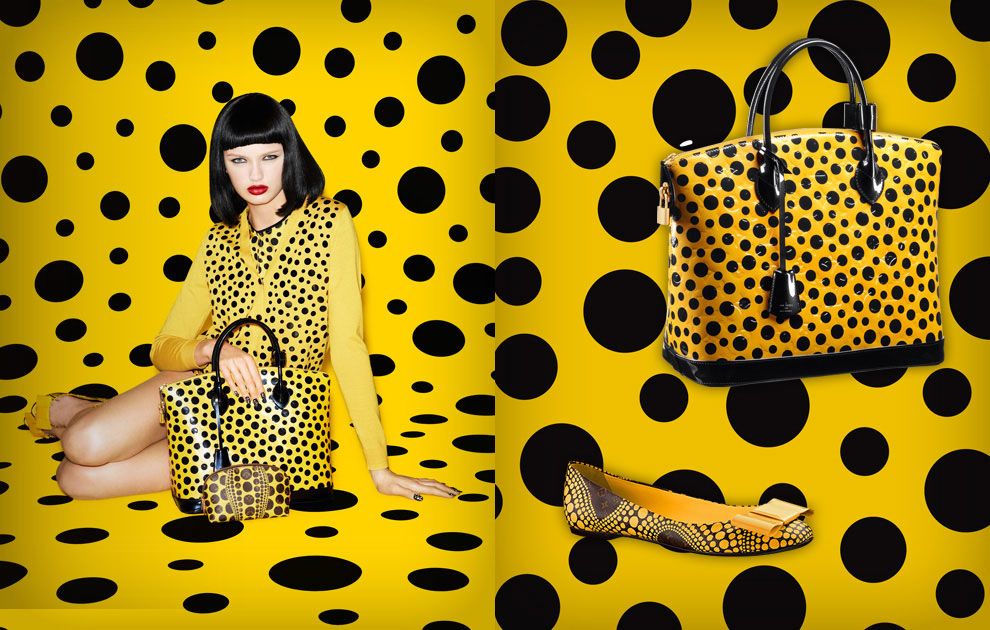
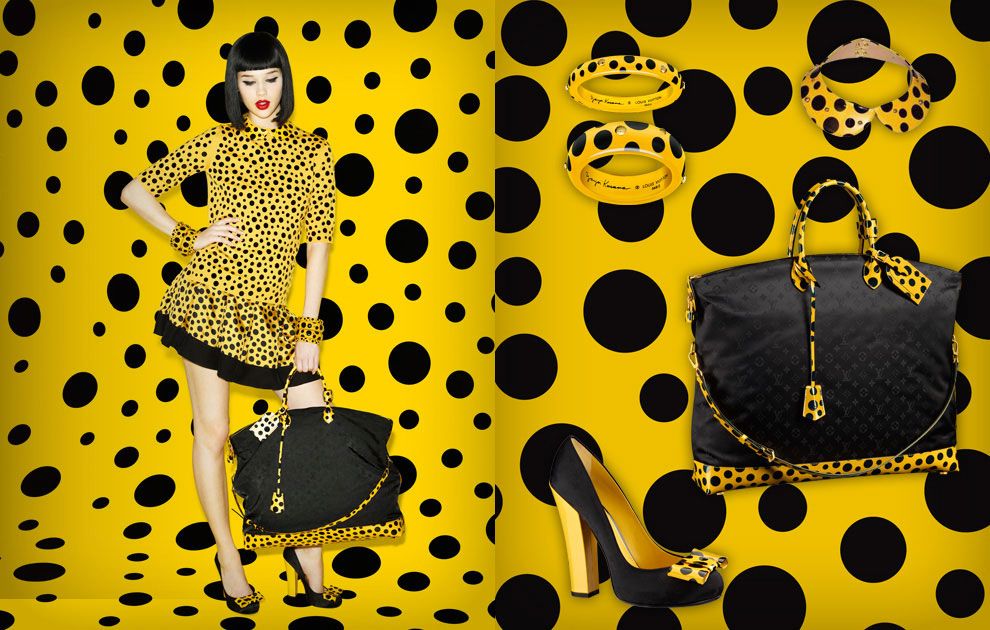
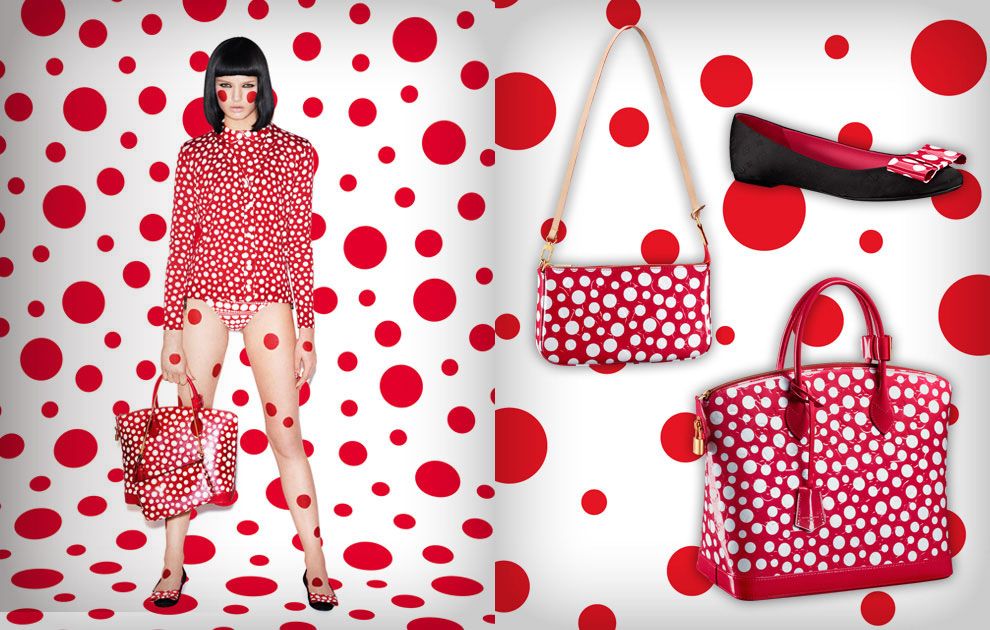
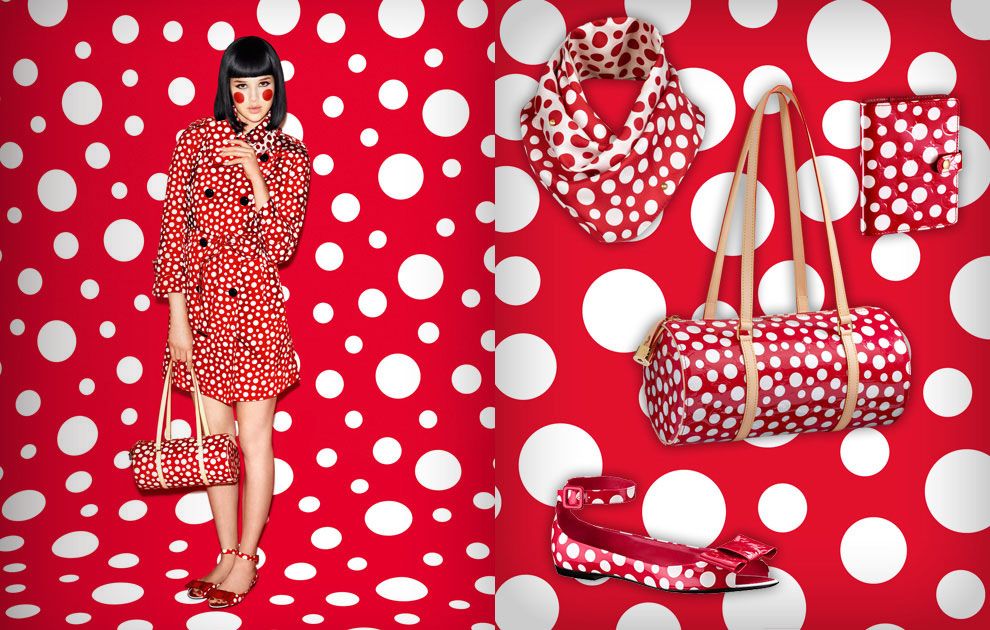
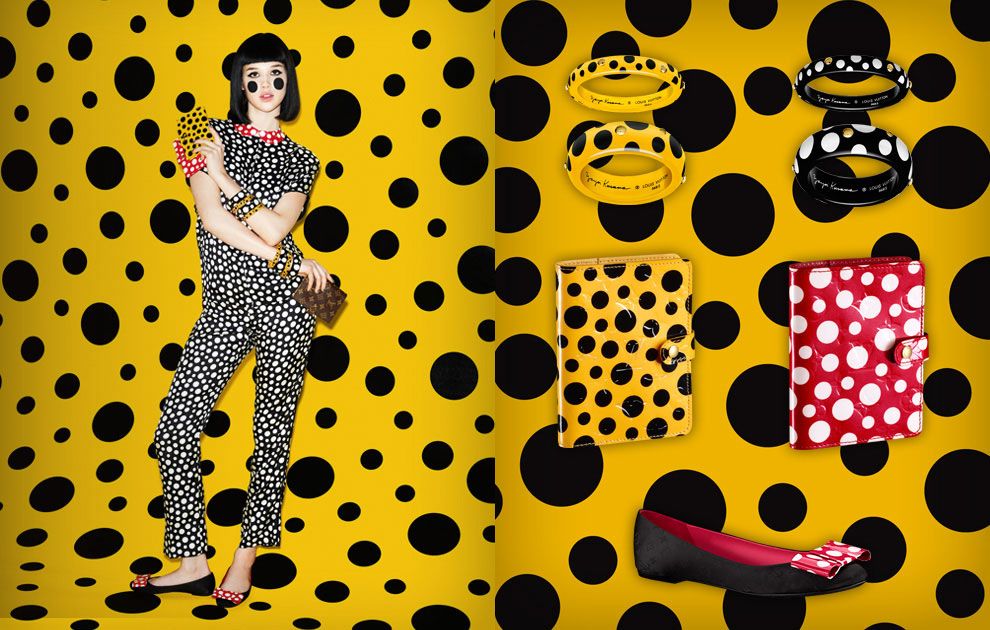
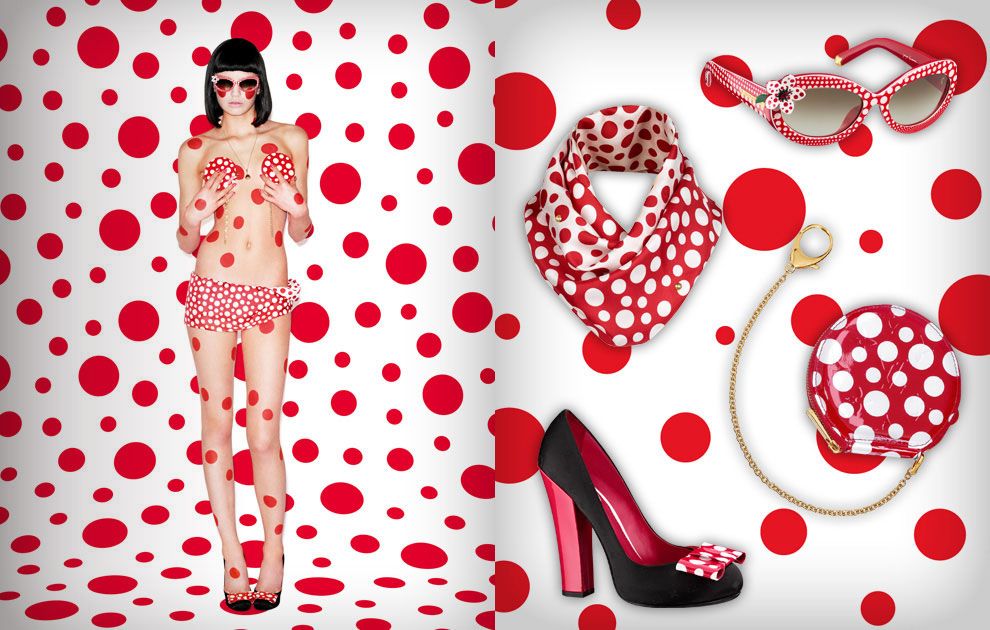
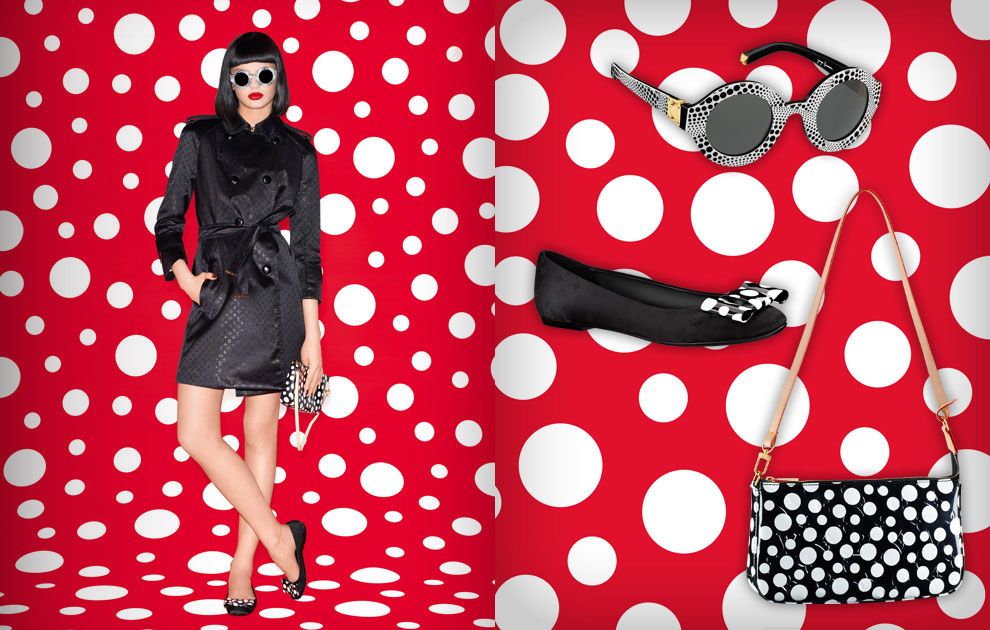
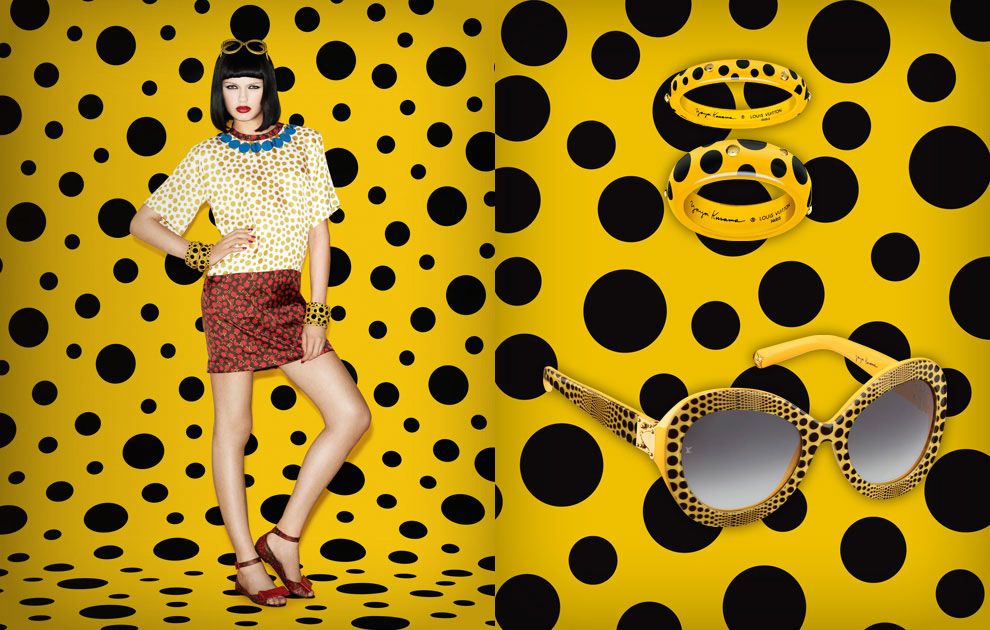
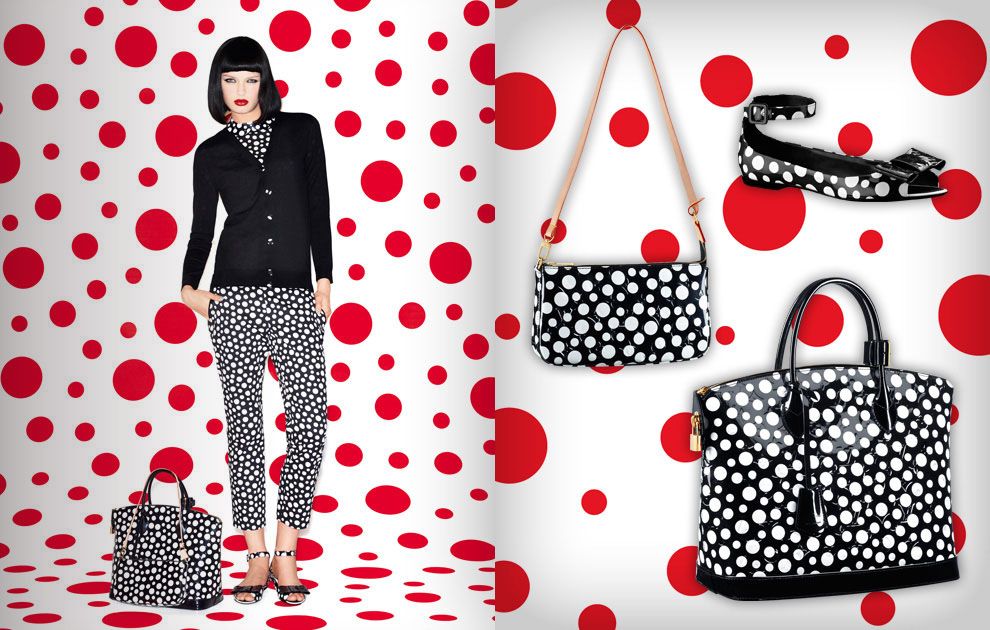
Yesterday came the announcement that celebrated Japanese artist Yayoi Kusama has died, at the age of 97. The announcement actually came several weeks after her passing, as the artist had breathed her last in hospital on 14 August. Kusama was one of the most acclaimed artists in the world and, beyond her extraordinarily long career and her undeniable merits, her fame among the general public owes much to fashion and, specifically, to Louis Vuitton. In 2012, Marc Jacobs invited the artist — already hugely celebrated in contemporary art circles — to create a collection for Louis Vuitton, though their acquaintance had begun long before. But how? And why was that collection so revolutionary?
Yayoi Kusama before fashion
@nouvelle.vague81 L’artiste japonaise Yayoi Kusama s’est éteinte à l’âge de 97 ans. Figure majeure de l’art contemporain, elle s’était imposée comme une des artistes les plus cotés au monde avec son obsession pour les pois et les citrouilles. Elle avait nottament collaboré avec la maison Louis Vuitton à deux reprises en 2012 et 2023, une collaboration parmi les plus emblématiques de l’histoire des partenariats art-mode. Copyright: Louisiana Channel, Louisiana Museum of Modern Art, 2015
something i never said to you - Subho Beatz
Yayoi Kusama's beginnings were not immediately glorious — far from it. The inspiration for her art came early. As she wrote in her autobiography, "One day I was looking at the red flower patterns of the tablecloth on a table, and when I looked up I saw the same pattern covering the ceiling, the windows, and the walls, and finally all over the room, my body and the universe. I felt as if I had begun to self-obliterate, to revolve in the infinity of endless time and the absoluteness of space, and be reduced to nothingness. As I realised it was actually happening and not just in my imagination, I was frightened. I knew I had to run away lest I should be deprived of my life by the spell of the red flowers".
Her mother, who was physically violent, used to send her to spy on her father during his extramarital encounters, instilling in her an aversion to sex that lasted her entire life. Her obsession with pumpkins was born from a childhood visit to a large seed-harvesting field with her grandfather, while her obsession with dots derived from the sight of white pebbles in the riverbed near her home. After the traumatic end of the war in Japan, in 1948, she began studying painting in Kyoto, though she remained dissatisfied with traditional methods, preferring Western avant-garde art. She began painting polka dots on walls and furniture in 1950 and organised her first exhibition in 1952.
Considering Japanese society "too small, too servile, too feudalistic, and too scornful of women," at the age of twenty-seven she left the country after destroying many of her early works. In 1957 she moved to Seattle for an exhibition, then, in 1958, to New York, encouraged by her correspondence with Georgia O'Keeffe. In the 1960s, she caused a sensation with phallic sculptures and frequent displays of nudity. In 1965, however, her Infinity Mirror Rooms — rooms in which mirrors and lights generate apparently infinite spaces — attracted millions of visitors.
Kusama suffered greatly when she saw artists such as Andy Warhol, Claes Oldenburg and Lucas Samaras employing ideas she felt she had conceived first. After a series of scandalous performances (one even featuring Fleetwood Mac), financial setbacks and psychiatric difficulties, she gained meaningful recognition by participating, in 1966, in the Venice Biennale, even though the authorities prevented her from selling her mirrored spheres to visitors for 1,200 lire each. In Japan, however, the scandal was not well received, and even her former high school erased her name from its records.
She returned there in the 1970s, where she voluntarily committed herself to a psychiatric institution that practised art therapy, following a couple of suicide attempts. From there she continued to work constantly, including in the field of writing. She remained relatively forgotten for many years, until Alexandra Munroe organised a retrospective of her work at the Center for International Contemporary Arts in New York in 1989. In 1993 she was invited back to the Biennale, where she brought one of her Infinity Rooms to enormous success. That same year she worked on the giant yellow pumpkin that was later displayed on the pier at Naoshima in Japan, until a typhoon destroyed it a few years ago. The revival had begun. In 2001 she received the Asahi Prize, which recognises outstanding cultural, academic and artistic contributions in Japan. And in 2006 came her first encounter with the man who would bring her art into the world of fashion: Marc Jacobs.
Yayoi Kusama and fashion
Louis Vuitton was not Kusama's first foray into fashion. "In 1968, in New York. I was window-shopping and found some dresses that looked like my creations. So I went to the company that manufactured those dresses to show them my work. I said, "I'm making these dresses which look exactly like yours." I ended up establishing a company with them," she recounted in an interview some years ago. The artist even had her own little corner at Bloomingdale's. We have no images of those clothes, but the artist said they included more classic suits and dresses covered in holes, especially at the back.
"My flower child dresses sold very poorly. Conservative suits sold very well. It was so hard to sell avant-garde dresses with holes," explained Kusama, whose hole-riddled garments anticipated those of Rei Kawakubo by a good decade. But the clothes were part of her art. Kusama created "one big dress for four people, with holes cut for sticking out heads and arms" for the first gay wedding in America.
Around the same time she created "a single large dress for four people, with holes cut out for heads and arms to poke through" for a series of anti-Vietnam War protests, which the artist called Love Orgy. "I myself have never joined a sex orgy," she clarified. "I was afraid of venereal disease." In 2009, meanwhile, she created a limited series of three thousand pieces that included a handbag-shaped mobile phone and phones covered in polka dots, for Japanese telecommunications giant KDDI Corporation.
The collaboration with Louis Vuitton
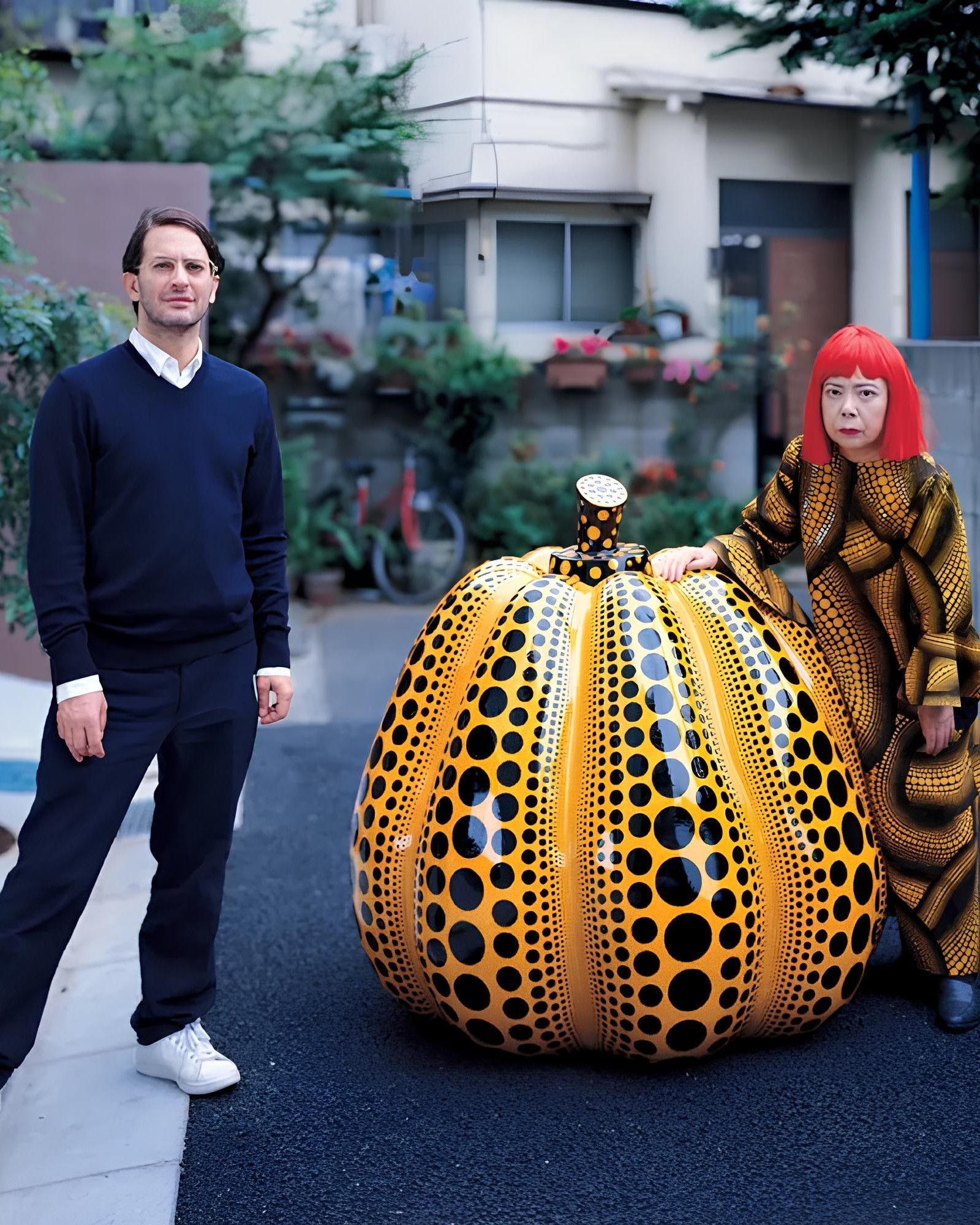
Marc Jacobs was the ultimate pioneer of collaborations between fashion and contemporary art during his long creative tenure at Louis Vuitton. The first was with Stephen Sprouse, then came the one with Takashi Murakami and another, celebrated, collaboration with Olafur Eliasson in 2006. That very year, Jacobs, who was in Tokyo, was received by Kusama in her studio. The artist showed him a Louis Vuitton Ellipse bag on whose monogram she had painted her celebrated polka dots. The encounter was immortalised by Loïc Prigent in the documentary Marc Jacobs & Louis Vuitton, released the following year.
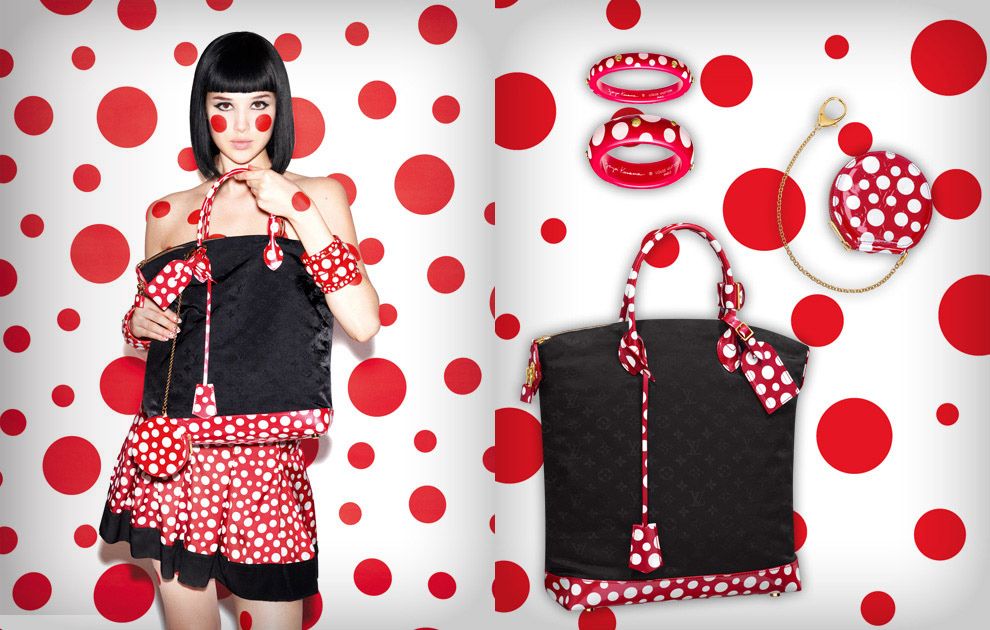
Jacobs has always been an art collector and was a fan of Kusama. "The obsessive character and the innocence of her artwork touch me," he once said. And six years after the visit, the collaboration with Louis Vuitton arrived, just days before a major exhibition dedicated to her at the Whitney Museum in New York. Two days before the opening, in July, the maison presented a collection of clothing and accessories. In October, a second wave of monogram leather goods followed, decorated with the tentacle motif. As a marketing move, Louis Vuitton's shop windows anticipated the launch without displaying any merchandise.
Yves Carcelle, then president and chief executive, compared the maison's monogram — with its LV initials and stylised flowers — to the polka dot obsession, calling it equally obsessive, and declared that the project was more a cultural endeavour aimed at animating the boutiques than a commercial move, even as he acknowledged that these partnerships tend to work (the 2003 Murakami collaboration had generated around 350 million dollars, equivalent to roughly 10% of annual turnover), and the fact that Kusama was the protagonist of a series of extremely high-profile exhibitions around the world that year made 2012 her year. In addition to the Whitney, Kusama had exhibited at the Pompidou in Paris and at Tate Modern in London.
The pieces were produced in limited quantities, with the intention of making them collector's items. The launch was supported by a dedicated iPhone app exploring Kusama's universe (with no products for sale, but with the ability to personalise photos using her motifs) and by pop-up stores featuring installations reminiscent of museum displays, such as mirror rooms lit to create the illusion of infinite space. It was a moment many remember for the fusion of art and commerce — then unusual — and for the way it radically transformed the brand's boutiques, bringing them close to the realm of genuine artistic installation.