
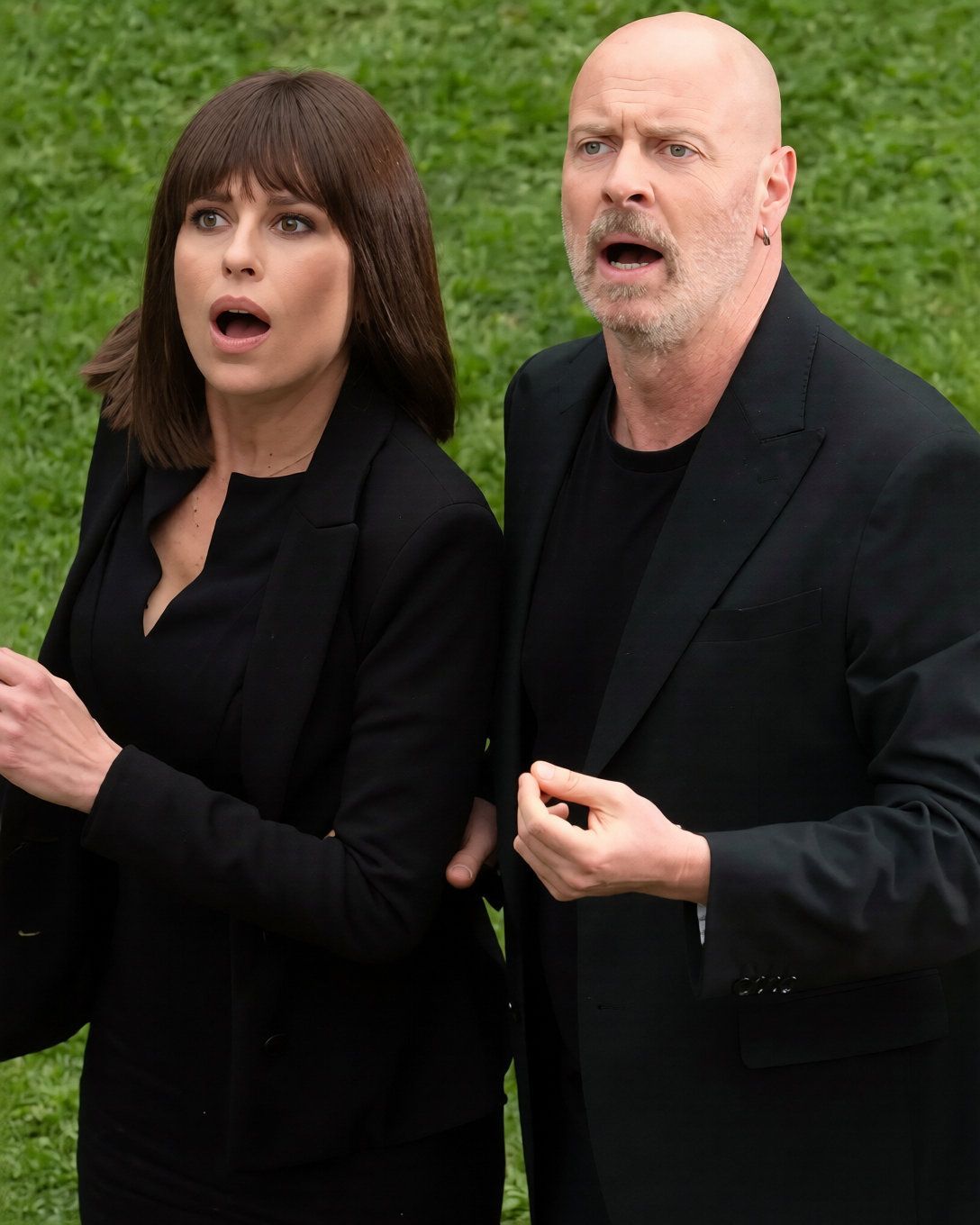
"Un tranquillo funerale di famiglia" is everything comedy should not be today Massimiliano Bruno's film had its premiere at the Rome Film Festival
Un tranquillo funerale di famiglia by Massimiliano Bruni is the Italian remake of a cult comedy classic, Funeral Party by British director Frank Oz. It is not the first remake: in 2010, Neil LaBute directed the American version with a predominantly African American cast, titled Death at a Funeral. Oz's original film, however, holds a unique place in the comedy landscape, with that distinctly British irony that is as singular as it is difficult to replicate.
The American version, like the Italian one, has its own stylistic identity, even as it explicitly echoes certain lines and gags from Oz's work. While little time passed between the release of Funeral Party in 2007 and its first remake, the nearly twenty years separating the British film from the Italian feature demonstrate how a work — especially one belonging to the comedy genre — must adapt not only to its national context but also to the historical and cultural moment in which it is set. This is precisely what makes Un tranquillo funerale di famiglia an anachronistic film: its pursuit of laughs relies on tired, worn-out logic and devices that seem to drag onto the screen, right up to the present day, a style of comedy belonging to another era.
An Outdated Brand of Comedy
The number of inappropriate jokes is beyond counting, and the way they are delivered by the cast inevitably suffers from their inherent staleness. This is a film that still sees fit to rely on racist slurs and entirely gratuitous fat-shaming jabs that add nothing to the characterisation of the characters. The central question in contemporary comedy is not only about what one wants or is allowed to say, but also how and why it is said. There are cases where a joke rooted in race, body image, or gender helps define a character or lend meaning to the story; here, however, the resort to such devices is so gratuitous as to feel out of place on every single occasion.
It is true that jokes of this kind can sometimes exist purely to get a laugh, but for them to work, there needs to be a certain brilliance in the writing — one capable of making us laugh at the film while also laughing alongside its characters. That quality is entirely absent from Un tranquillo funerale di famiglia. This is not a matter of being prudish or of having lost the ability to laugh at anything; it is simply a matter of recognising and understanding how times have changed.
An Inexplicable Cast
In the film's favour, however, is a cast that clearly does not see the project in the same light. The few smiles the film manages to raise are owed more to the individual personalities of the performers than to the writing or direction of the characters. Take Pietro Sermonti, a scene-stealer whose mere presence provokes amusement and laughter, or Edoardo Ferrario, who could hardly have chosen a worse project for his film debut, yet comes out of it far better than many of his co-stars. Not even the charismatic Claudia Pandolfi manages to save herself, trapped like the others in a broken, anachronistic film — complete with a closing original song, also written by Massimiliano Bruno, which makes no sense at that moment or in that form, and whose lyrics are bad, truly bad, just like everything that came before it.
Even if Un tranquillo funerale di famiglia were a faithful retelling of Funeral Party, even if it contained precise references and similar scenes, failing to notice that the years have passed and that comedy needs to evolve is the gravest mistake anyone who writes — comedy or otherwise — should never make. Because the result, in the end, is a film as dated as Un tranquillo funerale di famiglia.
What to read next

"Wild Horse Nine" by Martin McDonagh is tender and ruthless at once
With an award-worthy John Malkovich
«Club Kid is a once-in-a-lifetime opportunity», interview with Jordan Firstman
Everything about the directorial debut of the American actor and screenwriter
"Cambogia" teaches actors that you have to care about your own characters
Valerio Lundini's directorial debut premiered at the Rome Film Festival