























In 2027 the Italian government could support the fashion industry like never before For the next Budget Law, the CNMI has submitted eleven proposals for the sector
Ahead of the upcoming 2027 Budget Law, the Camera Nazionale della Moda Italiana (CNMI) has submitted to the Government and Parliament a package of eleven proposals to support the Italian fashion industry. The aim is to create a framework that strengthens the entire system by backing investment and, above all, the businesses that must navigate an increasingly competitive international market, shaped by wars and disruptions to international supply chains, as well as an endemic decline in demand.
Underpinning the proposals is the significant role that the fashion industry plays in Italy. According to data provided by the CNMI, the sector generates annual exports of close to 90 billion euros, and encompasses an ecosystem that brings together major brands, small and medium-sized enterprises, excellence in manufacturing, craftsmanship, and creative expertise recognised worldwide. According to president Carlo Capasa, "investing in fashion means investing in the growth and future of the country." But what exactly are these proposals, and how can the Italian government help the fashion industry?
Creativity, design and training
The first request concerns the extension until 2030 of the tax credit for design and aesthetic creation activities, at a rate of 10% and with an indicative allocation of 200 million euros per year. Fashion companies can already obtain a 10% tax credit on costs incurred for creating new models, collections, styling, prototypes, and so on. The CNMI is calling for this incentive to be extended until 2030, so that businesses can plan their investments with greater confidence, with a maximum cap of around 200 million euros in tax credits each year across the entire sector. In practical terms, if a company spends 1 million euros on design, it recovers 100,000 euros in taxes.
On the skills front, the CNMI is proposing the establishment, under the Ministry of Enterprises and Made in Italy, of an official register of corporate academies. This would be accompanied by a 30% tax credit on costs that companies can recover, subject to a cap of one million euros per year. The measure is intended to encourage companies to develop new professional skills, ensure the transfer of artisanal knowledge and the retraining of workers, and counter the loss of specialist know-how.
Tariffs, energy costs and employment
Following the confusion and losses caused by Trump's tariffs, the CNMI's proposal is to help brands diversify their export markets by introducing a tax credit (i.e. a tax reduction) of 10% on the increase in exports to Mercosur countries and the Gulf Cooperation Council for 2027 and 2028, up to a maximum of 300,000 euros per year per company. And for companies that generate at least 15% of their turnover in the US (which would include numerous luxury groups), the proposal includes an extraordinary 50% tax credit applicable solely to the year 2027 and to costs arising from tariffs.
On the matter of energy costs, the CNMI has proposed allocating up to 70 million euros in 2027, of which 20 million would go towards a 30% tax credit on the purchase of electricity from renewable sources (which would only be triggered if the average energy price rose by 20% compared to 2026), and 50 million for 30% incentives on investments in renewable energy plants and storage systems linked to renewable energy communities within the supply chain.
To protect employment and manufacturing expertise, the proposals also call for the possibility of extending by up to six months, over the 2027–2028 two-year period, the wage supplementation schemes already in place, for companies that have recorded a drop in turnover or orders of at least 20% compared to the previous year.
Circular fashion and the supply chain
A significant step towards rethinking how #fashion defines value, waste and responsibility.
— ersel örge (@orgeers) August 14, 2026
The EU’s ban on destroying unsold clothing challenges an uncomfortable reality: overproduction is not simply a waste-management problem; it is a design and systems problem.
From a…
Two further proposals concern the circular economy. The first aims to establish new and clearer rules on the documentation to be submitted when a company has unsold products and redirects them for reuse. Whereas today the tax authorities may presume that such items have been sold and apply both VAT and income tax, clearer regulations would allow a company to demonstrate that the products were not sold but simply reused, thereby reducing fiscal risk. The second proposal calls for companies that use renewable materials and natural fibres meeting European environmental standards to pay lower contributions or receive discounts and incentives.
To consolidate the supply chain, the CNMI has also requested a 30% tax credit for companies that acquire stakes in strategically important businesses within the sector, on condition that production and employment levels remain in Italy for at least 36 months. Furthermore, the CNMI is calling for a simplification of generational transitions and the restructuring of family-owned businesses, given that under current rules, in order to access a tax benefit that defers the immediate payment of taxes on shares, each family member is assessed individually. The proposal is to allow the shareholdings of all members of the same family to be aggregated, making it easier to qualify for the benefit. The objective is to prevent families from being forced, due to tax issues, to sell their companies to outside parties and lose Italian ownership.
Finally, the proposals call for a facilitated resolution of longstanding disputes over tax credits for research and development from the 2015–2019 period, by reopening the window for settling outstanding positions, offering a simplified procedure, and providing some form of redress for those who have already paid in full. The aim is to reduce litigation with the tax authorities and give businesses greater certainty.
What to read next

Will the new EU regulations on unsold goods really help independent brands?
Yes, but there's a catch
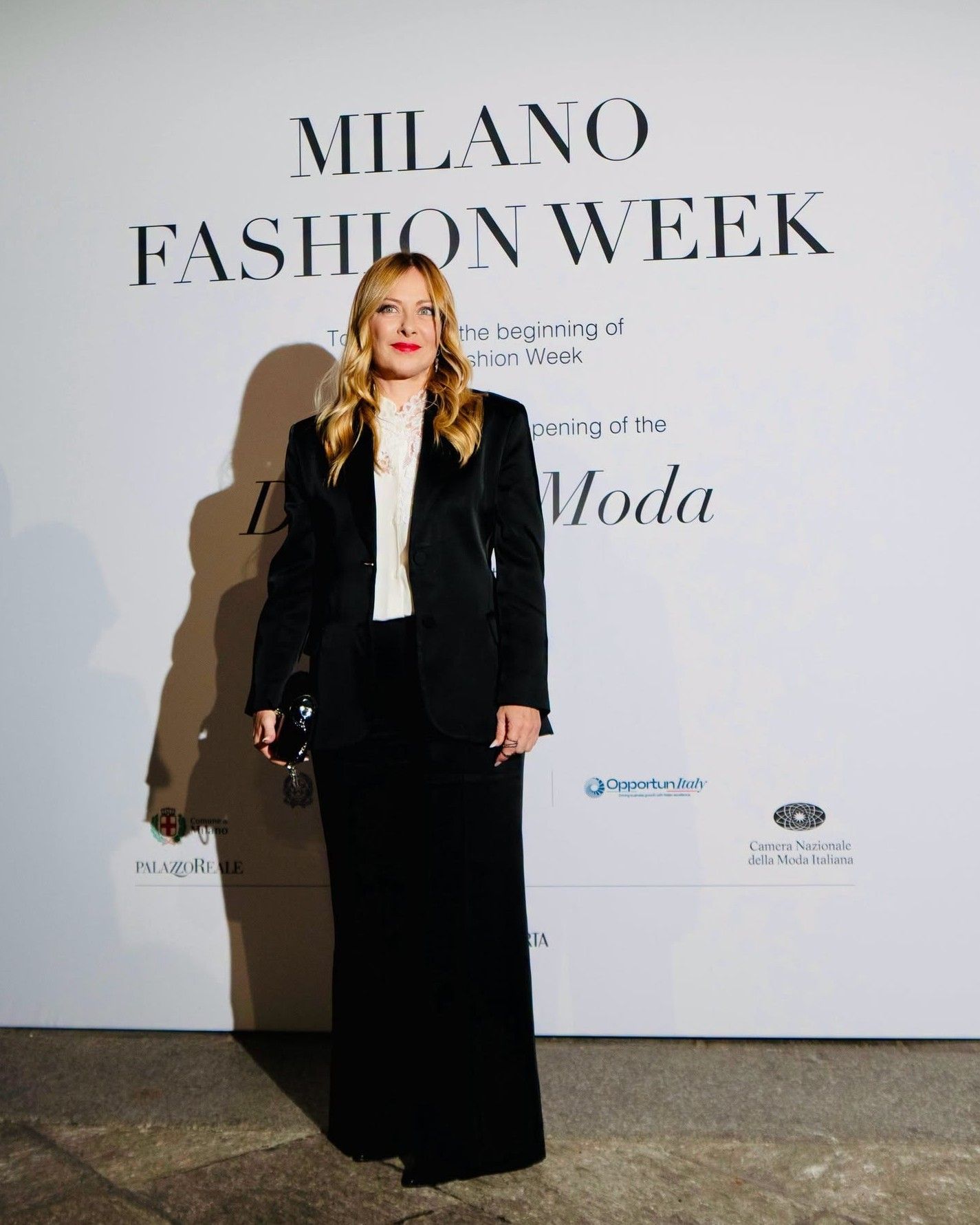
Why was Giorgia Meloni at the Milan Fashion Week gala?
A gesture of closeness to the industry, as meaningful as it is symbolic