
Hermès calls on an artist once again to design its website Another thumb of the nose at AI
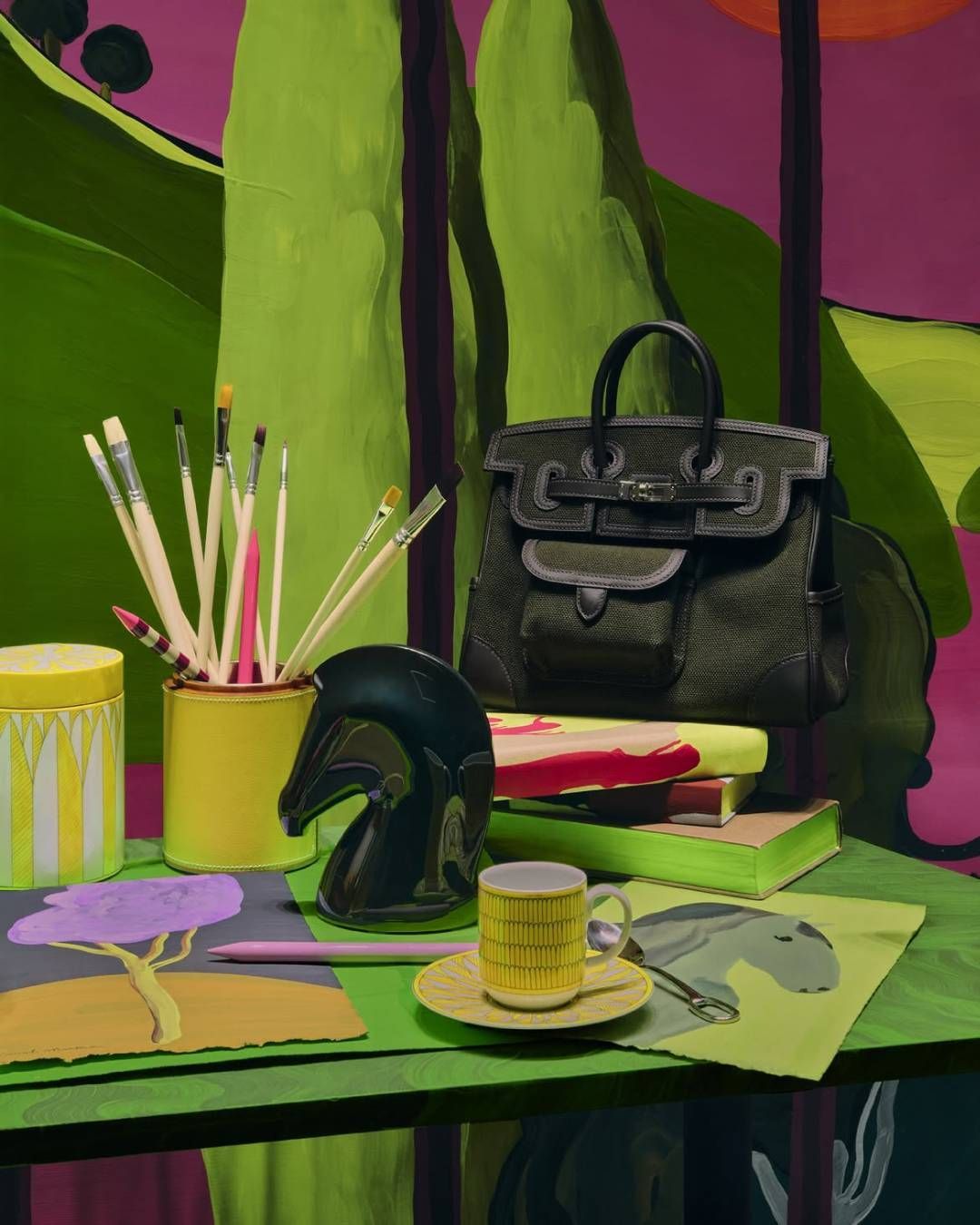
In a digital landscape increasingly saturated with synthetic content and automation, Hermès reaffirms its commitment to craftsmanship in all its forms. To dress its website, the Parisian leather goods house chose to entrust its visual direction to artist Sarah Martinon. Her paper illustrations, transposed into a digital environment and animated by artist Armand Béraud, transform the e-commerce platform into an immersive, poetic experience.
Human craftsmanship at the heart of the online experience
This project realizes Hermès' ambition to make its website a true digital extension of its physical boutiques. Where generative AI tools could produce visuals in a matter of seconds, the house opts for painstaking artistry requiring several months of work to illustrate every section of its online showcase.
Selecting Sarah Martinon fits naturally into this philosophy. The artist is no stranger to the brand: earlier this year, she designed the window displays for the Hermès store in Lugano, Switzerland. Highly sought after across the cultural and luxury sectors, she also recently signed the catalog for the "Les ors d’Yves Saint Laurent" exhibition and collaborated with Chanel for the holiday season.
Sarah Martinon succeeds Linda Merad, a Parisian artist whose traditional lithography-inspired style had already won Hermès over on three occasions. This loyalty to human creators allows the house to offer tailored navigation and maintain a narrative-driven universe, far removed from industrial standardization.
Authenticity as a marker of distinction
Long hesitant to embrace digitization in order to preserve the primacy of human contact and physical experience, major luxury houses saw their digital transformation accelerate dramatically during the COVID-19 pandemic. Yet, while an online presence is now essential, integration strategies for new technologies vary widely from one player to another.
At Hermès, rejecting automation goes beyond graphic creation: the house also refuses to outsource customer service to chatbots. This approach signals a clear positioning strategy - resisting the influx of AI to celebrate manual expertise, taking time, and honoring human creation.
Two visions of luxury: taking the opposite track from LVMH
This posture contrasts sharply with the strategy adopted by other industry giants like the LVMH group, which is progressively integrating generative AI into the core of its creative and marketing operations.
As Gonzague de Pirey, Chief Omnichannel and Data Officer at LVMH, recently explained:
"In marketing, we have a classic framework at LVMH: research, ideation, production, and distribution. I am adamant that the human element - the marketer - retains control at every step. But AI can assist us everywhere. For research, it's obvious. For ideation, AI can be incredible. At Dior, for instance, a team of twenty people manages window displays, which are refreshed every three weeks. A colossal effort. They equipped themselves with generative tools that allow them to propose richer creative directions, going far beyond three pencil sketches sent in the mail. This transforms the very process of ideation. Then comes creation: around 25 houses within the group have tested producing high-quality assets. We want to systematize the use of these tools."
While LVMH leverages technological power to boost productivity and scale up visual assets (notably at Dior and Sephora), Hermès places the opposite bet: prioritizing rarity, the poetic imperfection of human craft, and pure digital artistry. It is a strategy that solidifies its status as a house apart in the world of luxury.