
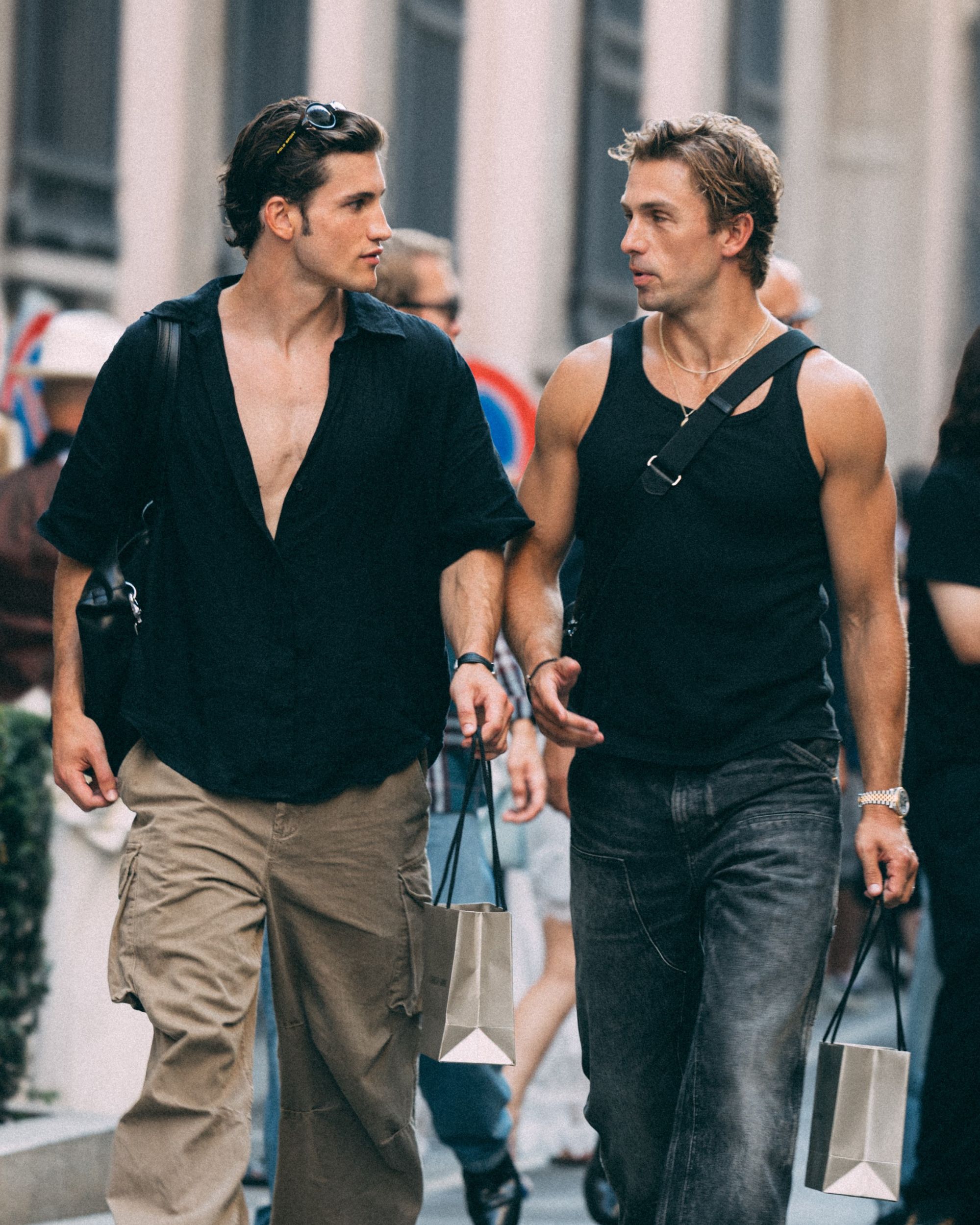
Why are more and more people going on day trips to the outlet? It has to do with a new social factor called
Bad news for luxury shopping streets. According to the new Destination Outlet report commissioned by McArthurGlen Group — the group behind the many "outlet villages" scattered across Europe — designer outlets have overtaken both department stores/multi-brand retailers and brand websites as consumers' preferred place to shop for fashion. The research, conducted among more than 5,000 consumers across seven European markets, has shed light on a shift in purchasing behaviour that nss magazine has been discussing for some time and that needs no further elaboration: everything costs too much, and those who want to buy will always find a way to pay less. But what exactly does the study say?
Shopping tourism
As we said above, the reason an outlet is appealing is because it's cheap. There's really no point debating that — it's the fundamental premise of every outlet that has ever existed. The element of the equation whose mechanism has finally clicked into place, however, is something else: outlets are destinations. These villages are often located outside the city and connected to the centre by a dedicated bus or train line. These same villages have equipped themselves with restaurants, cafés and walking areas, as well as spaces dedicated to children.
In short, the most significant finding of the study is that 64% of consumers say designer outlets are more than just a shopping destination, 72% combine their visits with food and time spent with friends or family, and 59% believe outlets have evolved into a complete leisure experience. The experience has a direct impact on commercial performance, as customers who are satisfied with their overall shopping experience spend on average 100% more than dissatisfied ones.
It is therefore the quality of the time spent, not just the product, that generates value, loyalty and repeat visits. So much so that the same study finds that the best-performing outlets are those that establish emotional connections beyond the transaction, encouraging customers to stay longer, engage with all the various services available to them and, of course, return more often. But we're not here to talk down luxury fashion — quite the opposite, in fact, since the second part of the report shows that outlets are increasingly a stepping stone towards purchasing in boutiques.
One bag leads to another?
An important aspect is that these outlets are also a powerful customer acquisition platform for fashion proper, effectively serving as the place where aspirational customers priced out of luxury can purchase their goods at a discount. 63% of visitors buy new brands at outlets, and 53% of these go on to purchase full-price items from those brands. A mechanism not to be underestimated at a time when, almost everywhere, foot traffic in stores is in freefall.
An outlet ultimately creates that first emotional connection with a brand on more informal (i.e. more affordable) ground, and in half of all cases that discovery can turn into long-term loyalty. In this sense, for brands, outlets should not be merely a dumping ground for unsold stock, but a way of cultivating new and potential customers. Among these potential customers are, of course, young people. 73% of Gen Z and 67% of Millennials have purchased from new brands at an outlet. For these audiences, outlets are truly a substitute for stores whose price tags are out of reach for 90% of the planet.
The key lies in wrapping the bargain purchase in an inviting atmosphere: the outlet is a "village," with fountains and restaurants, the aesthetic of a small town is simulated, but crucially, organising a day trip there also becomes a social occasion — something to do, or for shopping enthusiasts, an adventure.
Buying at a discount is a sign of savviness
The US & China should really bond over their shared love of out-of-town faux-European outlet villages pic.twitter.com/IYveqrZLle
— Your Pal (@CurtExplores) May 18, 2026
Another key element of the report is the emergence of a new mindset whereby discounted fashion is no longer something for people who can't afford full price, but a smart move reserved for the most savvy shoppers. 63% of consumers say that finding discounts is now aspirational, a figure that rises to 78% among high spenders. 61% feel "smarter" when buying discounted designer items. In other words, value has become a status symbol rather than a compromise. Luxury lovers also want to know they got what they wanted at a good price, while those who can afford to spend a lot enjoy the thrill of the find, the emotional reward and the feeling of spending wisely.
As for the future, the report identifies three growth opportunities for these outlet villages. The first lies in improving services to build visitor loyalty. The way we would interpret this involves introducing dining and service offerings that are less "touristy" and more in line with what you'd find in the city, as well as events, pop-ups and more. The second, less clearly defined, is described as responsible retail and circular initiatives that help give shopping a sense of purpose.
Here we would venture to say that if major brands' deadstock were also offered at further markdowns, the public would certainly snap it up quickly. Finally, the third is the implementation of technological tools to remove friction from in-store shopping. All wonderful innovations — but will they be able to compete with the main draw, namely rock-bottom prices?
What to read next

Road to nowhere: why is fashion so expensive in 2024?
How the myth of infinite growth has thrown the industry into chaos
Perché i brand di moda non abbassano semplicemente i prezzi?
Sì e no, dato che la questione presenta più problemi da più lati