




















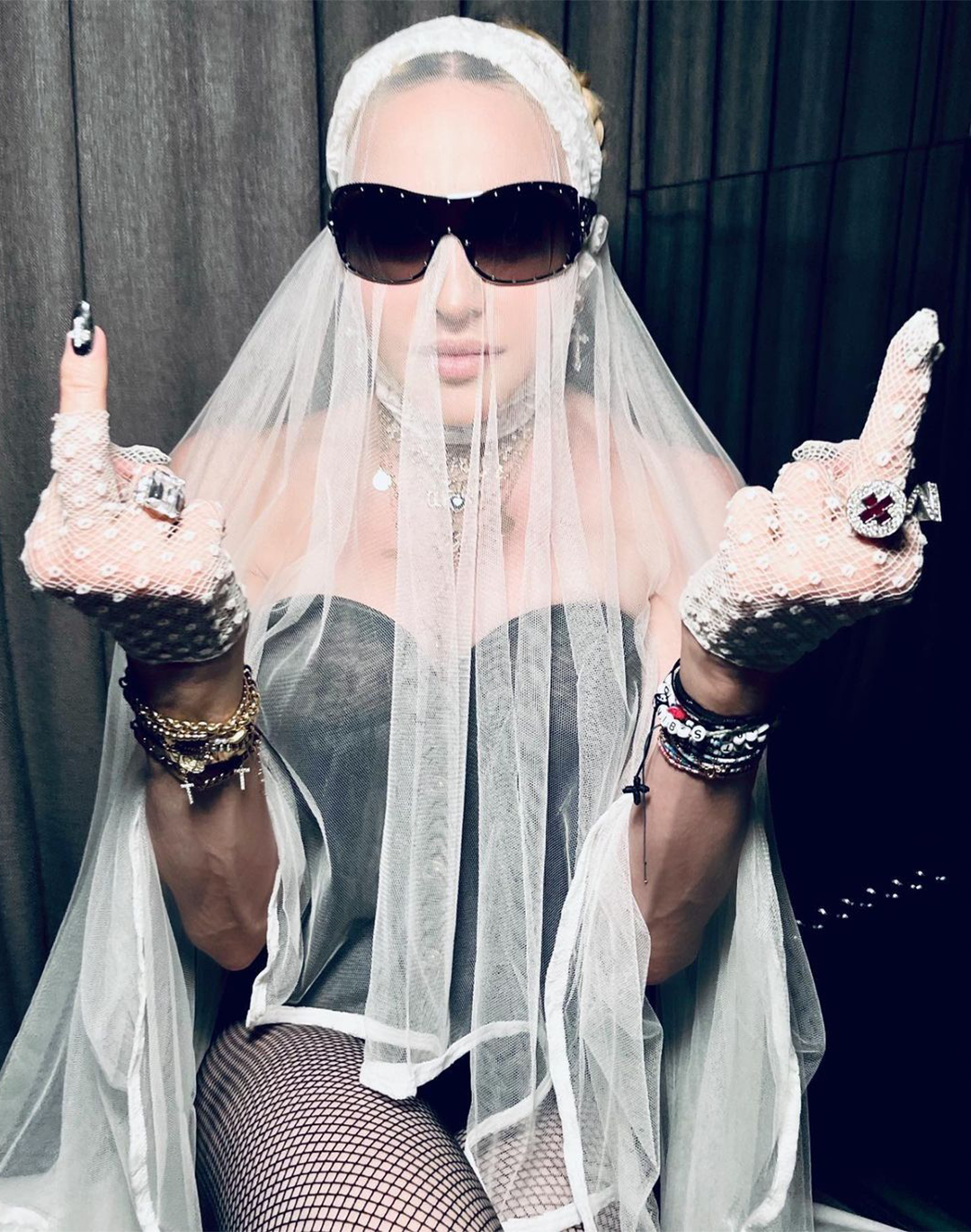
That time Madonna made the Vatican angry And turned a scandal into a piece of pop history
Among the most memorable chapters of Madonna's career, there is one that, more than thirty years on, continues to illustrate her relationship with religion, censorship, and artistic freedom better than any other: her clash with the Catholic Church during the Blond Ambition World Tour of 1990. And what better occasion to remember it than today, the Queen of Pop's birthday.
The tension had begun a year earlier, in 1989, when the video for Like a Prayer had enraged the Vatican: burning crosses, Christian iconography reinterpreted through a pop lens, and a kiss bestowed upon a saint had sparked accusations of blasphemy, ultimately leading to the collapse of her collaboration with Pepsi. But that was only the beginning of the legend.
The Threat of the Blond Ambition World Tour
Indeed, when the Blond Ambition World Tour arrived in Italy in the summer of 1990, the atmosphere was already fraught, so much so that Pope John Paul II publicly urged the faithful to boycott the concerts in Rome and Turin, while several Catholic associations organized protest campaigns. For some figures in the religious world, Madonna's show was "one of the most satanic spectacles in the history of humanity" and, perhaps, one of the most iconic as well. In reality, the tour was far more than mere provocation. It was a show constructed as a narrative about power, sex, religion, and female emancipation.
The most debated sequence opened with Like a Virgin, in which Madonna simulated auto-eroticism as an act of liberation from the guilt instilled by a Catholic upbringing. This was followed by Like a Prayer, with dancers dressed as priests symbolically forcing her to repent, leading to a final act of rebellion set to the strains of Papa Don't Preach. Rather than an attack on faith, it was a critique of religion's use as an instrument of control, told through the language of pop.
Madonna had never concealed her conflicted relationship with Catholicism. Having grown up in a deeply religious family, she had spoken on numerous occasions about how that upbringing had been accompanied by a persistent sense of guilt. "In Catholicism you are born a sinner and you remain one for the rest of your life," she declared in several interviews from that period. Like a Prayer transformed that very personal conflict into a pop work capable of speaking to desire, faith, and identity without ever separating the sacred from the profane.
An Unofficial Excommunication
@madonnabloom Like A Prayer - Madonna - Blond Ambiion Tour (1990) #madonna #queenofpop #reinadelpop #music #rebelheart #parati #art #foryou #foryoupage #fyp #love #popmusic #80s #80smusic #rock #rockstar #popstar #superstar #mtv #trending #musica #evolution #materialgirl #reina #queen #like #finallyenoughlove #vogue #pride #thecelebrationtour #laislabonita #madonnafans #madonnaqueenofpop #madonnaqueen #gay #lgbt #popular #viral #blondambitiontour #likeaprayer #VoiceEffects Like a Prayer - Madonna
The clash with the Church, however, had tangible consequences, contributing to a drop in advance ticket sales and, amid the threat of strikes and organizational tensions, the second date was cancelled. The singer also received death threats and was moved to a residence outside the city for security reasons. Madonna, however, did not back down. She invited the clergy to attend the show before passing judgment on it, and explained that her intention was not to promote a lifestyle, but to explore the conflict between good and evil, redemption and personal freedom. "My show raises questions," she told journalists shortly before leaving Rome. "It's then up to the audience to decide."
With hindsight, it is difficult to say who truly won that battle. The Church managed to disrupt part of the Italian leg of the tour, but Madonna turned that controversy into one of the most significant moments in the history of pop culture. After all, Madonna was not simply courting scandal, she was demonstrating that pop could simultaneously be entertainment, provocation, and cultural manifesto. And, judging by how much people still talk about it, her work has endured far longer than the controversy itself.