
Can Madonna still be controversial in 2026? Confessions II" reveals what it means to be a pop star today
The wait is over. Twenty one years after Confessions on a Dance Floor, Madonna returns to the very album that, in 2005, not only revived her career but also reshaped contemporary pop music. Confessions II, the singer's fifteenth studio album, arrives as a sequel, an undertaking that is as ambitious as it is risky. After all, when you choose to revisit one of the most influential records of the past twenty years, comparisons are inevitable.
Whether we like to admit it or not, all of us have, at some point, been shaped by the world Madonna created. This goes beyond musical taste. It is about pop culture. From religious provocations to music videos that became cultural landmarks, from monumental tours to the styles that redefined the relationship between fashion, sexuality and performance, the artist built a creative language and a body of work unlike any other. She turned every era of her career into a distinct aesthetic, every album into its own narrative universe and every scandal into another chapter of her legend.
Ultimately, what ties everything together is Madonna's controversial aura, divisive, irreverent and, at the same time, iconic, an image that has gradually evolved into living in the shadow of her own myth. Yet it is precisely there, in that same darkness that has always defined clubs and rave culture, that her story truly begins. Within that ambiguity lies the real power of an artist who built the empire and the musical legacy we still know today. The question, however, remains: will Confessions II truly live up to the success of its predecessor, or will it inevitably have to contend with the weight of an impossible legacy to surpass?
Confessions II
Together with Stuart Price, the producer who shaped the sonic identity of Confessions on a Dance Floor back in 2005, Madonna has chosen not to chase the present. Instead, she returns to the roots of dance music: Chicago house, Detroit electronic music and European disco, embracing the club culture that has always represented far more than just a musical genre.
Price, who co wrote and produced the entire project alongside the singer, revealed that their goal was as simple as it was daunting: to make an album "as good as, if not better than" the original Confessions. A challenge Madonna herself confirmed during a conversation with Interview Magazine: "Stuart and I agreed that if we were going to make a sequel, it had to be as good as, or even better than, the original. Otherwise, there was no point."
Confessions II will not attempt to sound contemporary by today's music industry standards, the artist explains in the interview. There will be no imitation of the hyper compressed productions that dominate TikTok today, nor any attempt to emulate the sounds of artists such as Charli xcx or PinkPantheress. Madonna is fully aware that chasing the present would mean losing her identity. If anything, she reminds us that much of today's pop landscape exists because she helped shape it.
The Beginning
@meet_me_on_a_dancefloor Snippet of “Sorry” from Confessions On A Dancefloor 2005 (Master AAC ProRes) Don’t talk Don’t speak #Madonna #sorry #confessions #madonnafans #xycba Sorry - Madonna
When Confessions on a Dance Floor was released in November 2005, it felt almost like an anomaly. Following the introspective experimentation of American Life, Madonna made the unexpected decision to return to the dance floor through a concept album structured as one continuous DJ set, with virtually no breaks between tracks. Stuart Price seamlessly wove together Seventies disco, Eighties synth pop, house, electro and club culture into an uninterrupted musical journey lasting more than fifty minutes.
The result was far more than a commercial success: four million copies sold, the number one spot in more than forty countries and Madonna's return to the centre of global pop culture. Purple became the defining colour of the album, mirror balls returned to the mainstream, while bodysuits, fishnet tights, leg warmers and metallic fabrics took over fashion runways before finding their way into an entire generation's wardrobes. More than its music, Confessions proved that pop could become an all encompassing universe.
@roccoccicone MADONNA Confessions On A Dance Floor ~Twenty Years Edition~ @madonna #madonna #madonnaconfessionsonadancefloortwentyyearsedition #madonnaontiktok #roccociccone #madonnafans original sound - roccoccicone
Back in 2005, there was still MTV, magazine covers, music charts and a shared cultural imagination celebrated by a fandom that seemed limitless. Pop stars were larger than life figures, capable of dominating public conversation for weeks. Today, the landscape is fragmented. Algorithms decide what deserves our attention, TikTok has shortened the lifespan of songs, microtrends emerge and disappear within days and even celebrities seem to burn out as quickly as they are created.
We live in a time when everything shocks us for a few hours, yet almost nothing truly leaves a lasting impact. In this landscape, Madonna returns to doing what she has always done best: questioning the very meaning of pop itself. Because, ultimately, her greatest provocation has never been sex, religion or politics. It has always been her ability to understand how the collective imagination works before anyone else, not out of resentment or defiance, but first and foremost for herself.
The Queen of Pop Has Returned
Madonna's comeback takes shape through an album conceived as one continuous sonic journey, featuring sixteen tracks that unfold over the course of nearly an hour. It builds gradually, moving from a slow warm up to the euphoria of the dance floor, before reaching a more contemplative finale. The structure deliberately echoes Confessions on a Dance Floor, yet it does far more than recreate its formula. It gives it a new meaning. Confessions II has no desire to appear youthful, nor does it attempt to appropriate the language of Gen Z or adapt itself to the rhythms dictated by algorithms. It is an album that demands time, attention and complete immersion, reminding us that dance music was born to be experienced collectively long before it became something to consume individually through a screen.
Madonna is clearly having fun. She plays with her own persona, moving effortlessly between moments of reflection, "The dance floor is a ritualistic space where movement replaces language," and pure hedonism, where she once again becomes the undisputed centre of the party: "Everybody's watching now... I don't care." A true high priestess of club culture and a born provocateur. After all, that is precisely what makes Confessions II such a compelling dialogue with the past, one that Madonna herself has reshaped time and again throughout her career. Today, however, the kind of scandal that once made her famous seems to have lost much of its impact. Not because Madonna has stopped provoking, but because we have changed. Or perhaps because our perception has been numbed by a relentless stream of images, news and provocations that disappear before they have the chance to leave a lasting impression.
The Visual Manifesto of Confessions II - The Film
Madonna e Kate Moss mulheres insanas pic.twitter.com/sjrYLzAKlu
— Bianca (@cicconerafferty) June 11, 2026
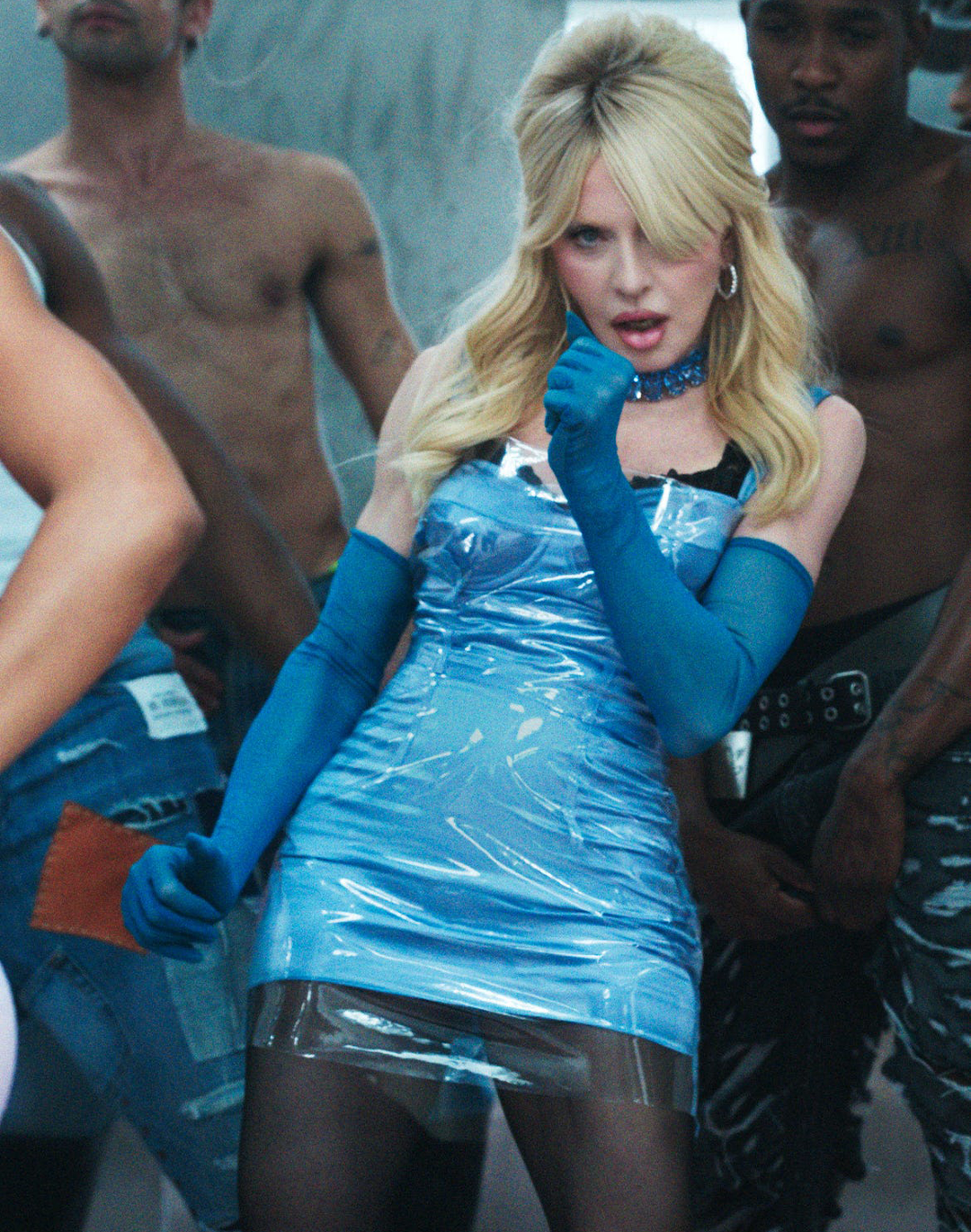
If the album marks Madonna's return to the dance floor, Confessions II - The Film is the visual manifesto that completes its vision. More than a music video, it is a nearly fourteen minute short film conceived as an immersive experience, where music, fashion and pop culture merge into a single narrative. Directed by Jonas Åkerlund, Madonna's longtime collaborator since the Ray of Light era and the filmmaker behind some of the most iconic music videos of her career, the film does far more than introduce the album. It expands its universe, creating a world in which every room, every character and every frame becomes part of a broader narrative.
It is no coincidence that the teaser is populated by figures from different creative worlds. Alongside Madonna appear Kate Moss, Julia Garner, Debi Mazar, Lourdes Leon, Richard E. Grant, Benedict Cumberbatch and numerous personalities from fashion, cinema and nightlife. Together, they reinforce the cross disciplinary nature of pop, a language that has always evolved through its dialogue with other art forms. From the outskirts of the city to the club, from dressing rooms to bathrooms, from corridors illuminated by strobe lights to the dance floor itself, Madonna constructs a journey that is both physical and symbolic. Every setting represents a different stage of personal transformation, as though the dance floor becomes the one place where different identities can finally coexist.
It is significant that one of the first lines spoken in the film is: "The dance floor is not just a place." The dance floor is presented not simply as a space dedicated to music, but as a sanctuary, a place of belonging and a political space. For Madonna, the club has never been just entertainment. Since the beginning of her career, when she immersed herself in New York's nightlife during the early Eighties, dance floors have represented places where the queer community, artists, outsiders and anyone who felt marginalized could build their own identity. In this sense, Confessions II is far less about nostalgia than it is about cultural memory. If Madonna once challenged the present by constantly reinventing it, today she enters into a conversation with her own past.
Pop Still Exists. It Has Simply Changed Shape
With Confessions on a Dance Floor, Madonna created an album that seemed to condense fifty years of pop music into a single, uninterrupted sonic journey. ABBA coexisted with Giorgio Moroder, Donna Summer met the Pet Shop Boys, disco merged with house and electronic music entered into dialogue with Middle Eastern influences. Stuart Price succeeded in transforming all of these references into a remarkably cohesive project that redefined the aesthetic of pop for a new millennium.
Today, that world no longer exists. Even the very concept of a "pop star" feels fundamentally different. Topping the charts is no longer enough. Artists are expected to remain constantly visible, produce content and turn every moment into something worth watching. Yet looking at Confessions II, it is impossible not to wonder whether pop has simply changed its skin. Perhaps, today, a pop star is no longer defined by the number of records they sell, but by their ability to build a cultural universe, or create a space where people can see themselves reflected. Someone capable of giving shape to the desires, fears and contradictions of their time.
In this context, Confessions II becomes a place where the body once again turns into language, dance becomes an act of liberation and pop rediscovers its original purpose: building community. The album ultimately achieves something increasingly rare. It asserts its right to exist as a work created to endure. And perhaps that is the greatest provocation Madonna could make in 2026. Not by proving she is still the Queen of Pop, but by reminding everyone why she never truly gave up the throne in the first place.