

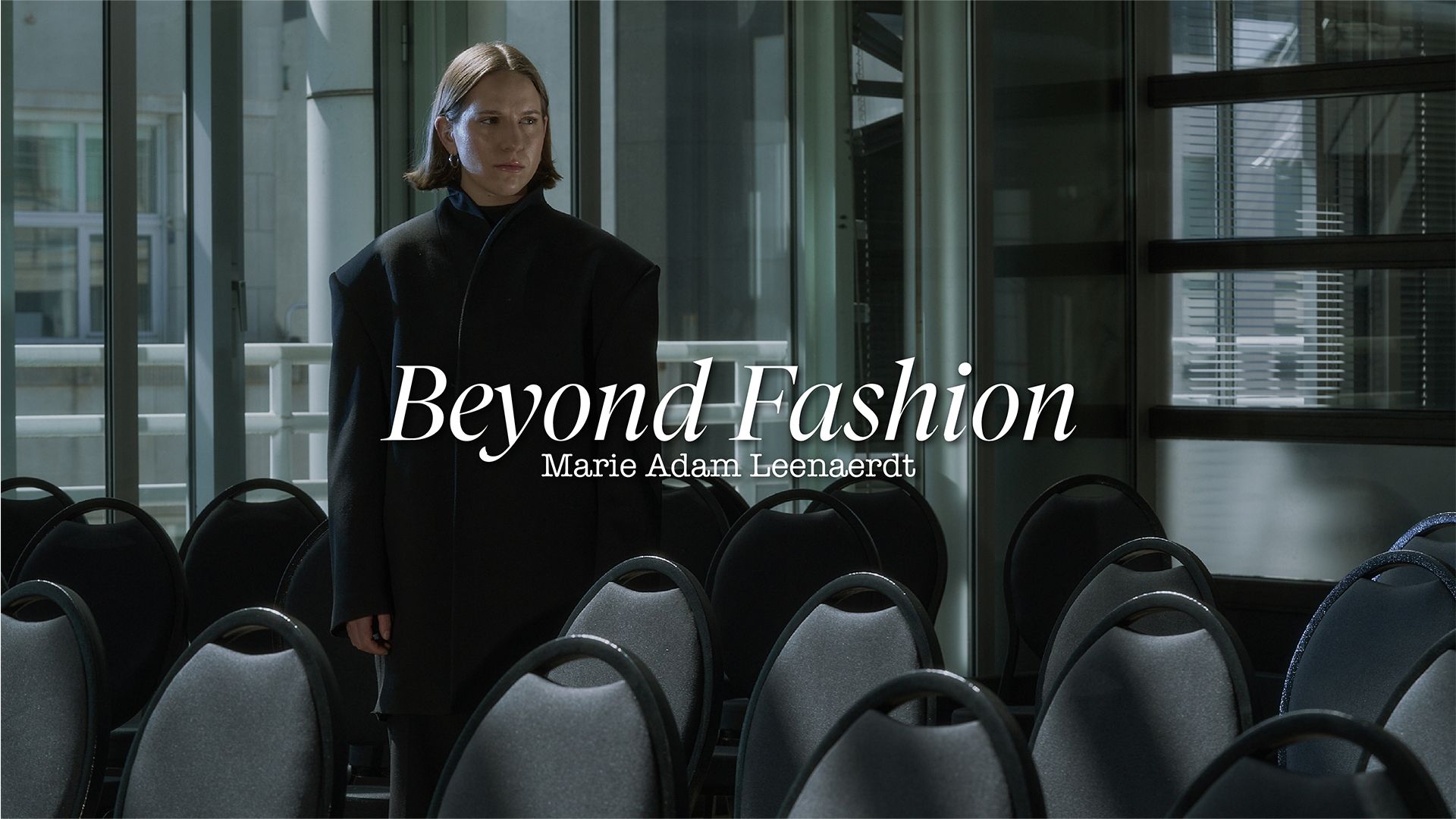
Marie Adam-Leenaerdt’s work unfolds in a space where fashion no longer behaves like a closed discipline, but opens up into something more hybrid and expansive. In her world, a runway becomes a performance, a garment turns into an object of design, and a silhouette operates as a small engineered mechanism. A massive traveller bag unzips and leaves layers behind, so much it becomes a classy night-time clutch.
What defines her language is this sense of precision, not as an aesthetic choice but as a method. The way she moves between fashion, performance, and product design doesn’t feel like a stylistic blur, but rather a way to question what clothing can still do today, how it can function, adapt, and respond. Her pieces carry a kind of practical intelligence, shifting shape, changing purpose, and adjusting to different needs and different lives.
Based in Brussels and presenting in Paris, the Belgian designer has developed a practice that feels both conceptual and deeply grounded. Her fashion doesn’t rely on excess, nor does it retreat into abstraction, but instead moves through construction, movement, and function, holding together a persistent sense of emotion that never fully abandons its relationship to femininity.
There’s always a sense of linearity in your fashion shows, from models lining up at an airport to the audience queuing to grab a seat. Is this intentional, or just a coincidence?
Marie Adam-Leenaerdt: I don’t know if it’s a coincidence, but I like to think of the show as a moment of life, something very grounded in reality. I often start from simple everyday situations like queuing, waiting, or moving from one place to another, because they are very universal and easy to relate to. It’s important for me to recreate these mundane moments and to bring reality back to fashion. My goal is to challenge the traditional format of the fashion show, to challenge codes, and to rethink the way things are done and the way we see them. For me, an idea is strong when it’s radical, without decoration.
Your collections often present two very juxtaposed visions of femininity, one more romantic and pop, the other more somber and dark. Is that a reflection of your internal dialogue?
Marie Adam-Leenaerdt: I think it reflects different women, or the same woman at different moments. Sometimes you want something darker and more introspective. Sometimes you want something more playful, more free, more colorful. I’m interested in that contrast because it feels very real to me. It’s not about choosing one or the other, but about allowing both to exist, depending on the mood, the moment, or how you want to express yourself that day.
What is your favorite part of the creative process: research, execution, or performance?
Marie Adam-Leenaerdt: Definitely the research and the execution. I like it when the research starts to take shape, when ideas become real and begin to connect with each other. It’s also the moment when one idea leads to another very naturally; there is something quite organic in that process.
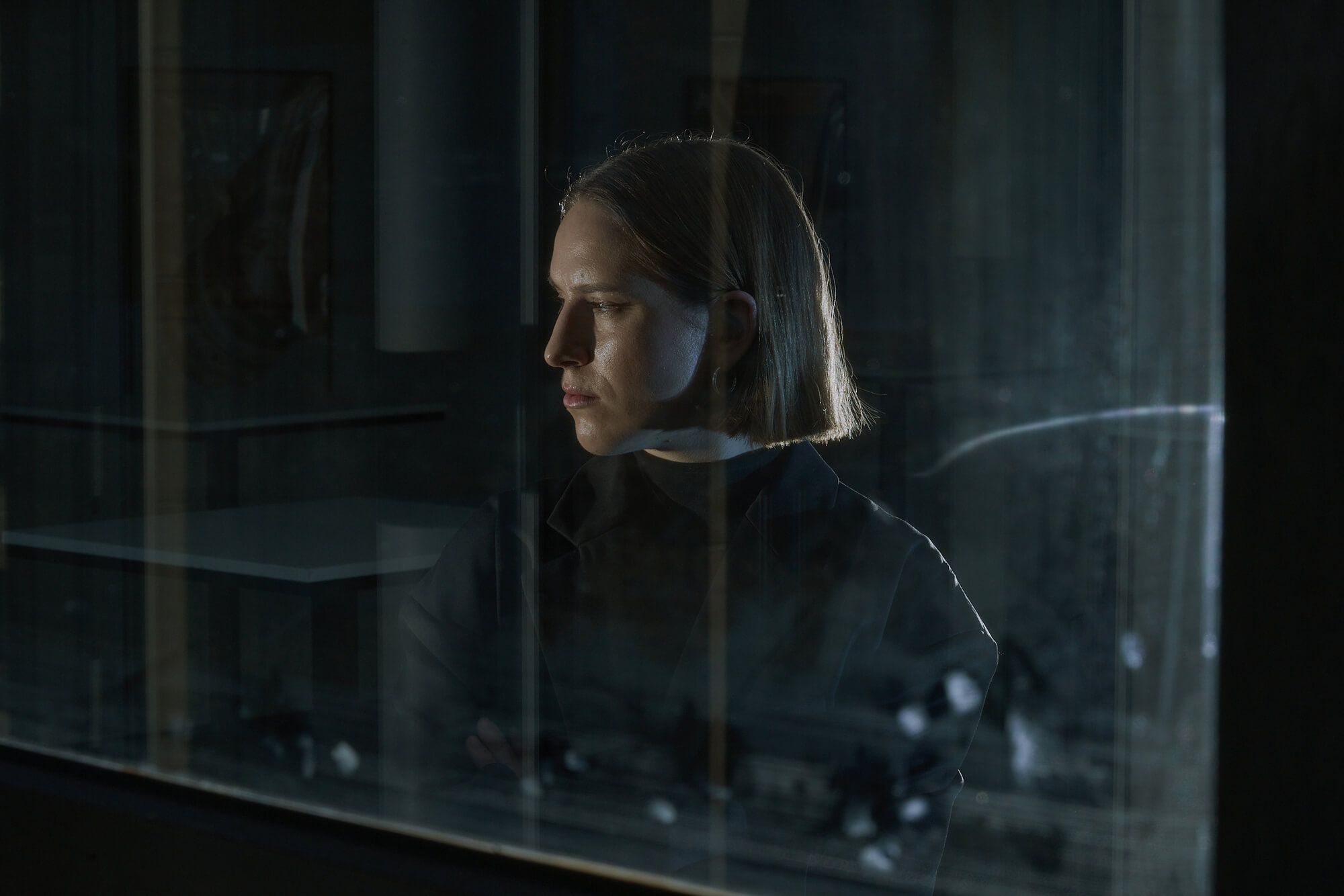
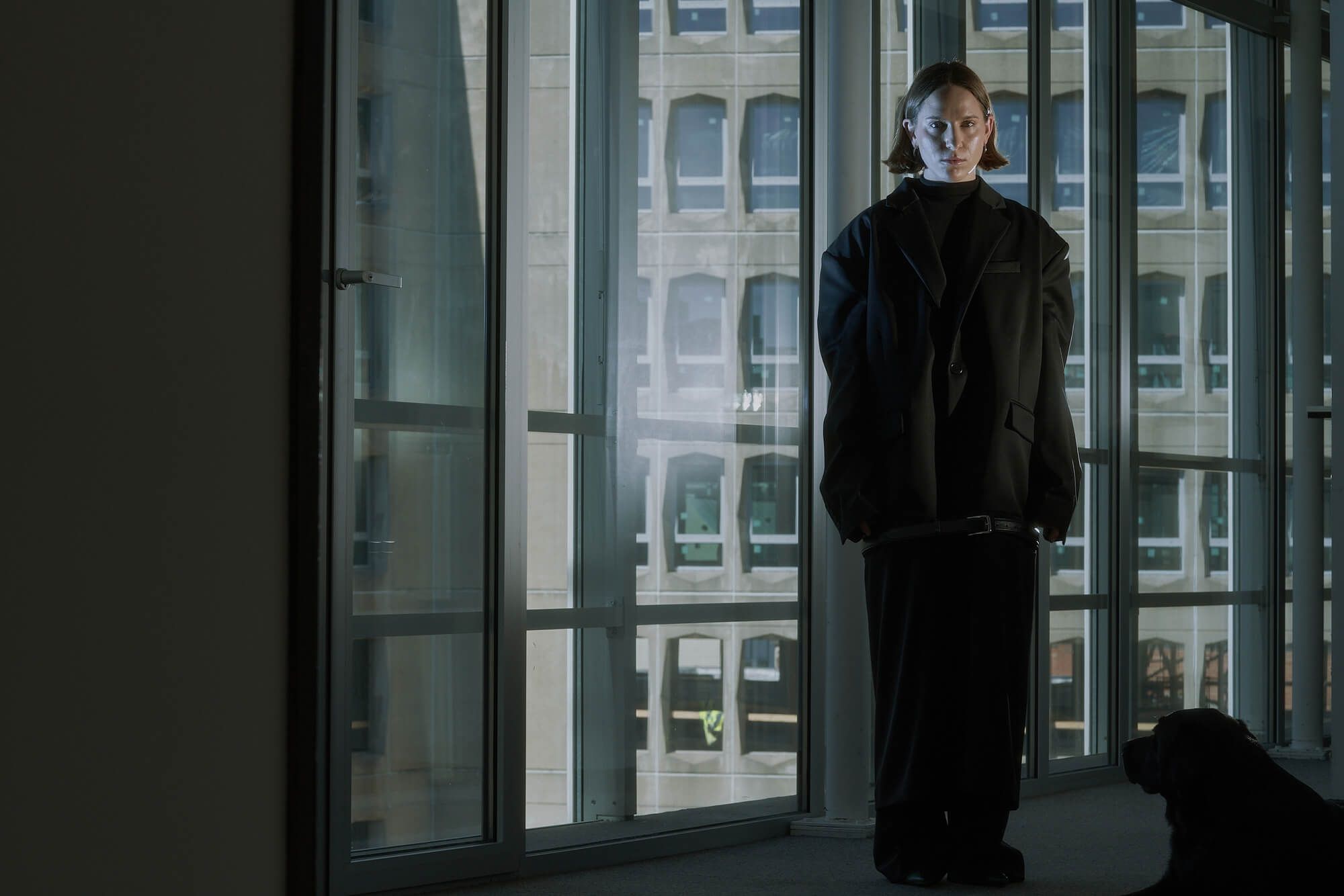
Many of your garments don’t serve just one purpose. They can be worn in multiple ways, almost like product design pieces that happen to be wearable. Do you think the line between design and fashion is blurred in your work?
Marie Adam-Leenaerdt: I think it’s important to approach garments almost like design pieces, to give real value to each piece in a world where there is already so much, that is why I often integrate multifunctionality in the clothes I make. When you buy a piece, it’s important that you can wear it in different ways, because it is also a way to make a garment more intelligent and more useful. It extends its life and allows it to be worn in different situations and by different women. For example, when I create a new trench coat, I think that when you buy a trench coat, you might want a short one and a long one. So why not do both together?
When you showed your first collection in 2023 and opened Paris Fashion Week, how did it feel?
Marie Adam-Leenaerdt: I don’t think I really realized it at the time. Everything happened very fast, and now we are already at the seventh show. With this rhythm, you don’t really have time to step back and see what you have done before. But I’m very grateful to Étienne [Russo], who believed in me and made that first show possible.
Does showing during Paris Fashion Week still feel stressful?
Marie Adam-Leenaerdt: Yes, more and more [laughs]. The more you do it, the more pressure there is – it never gets easier in my opinion.
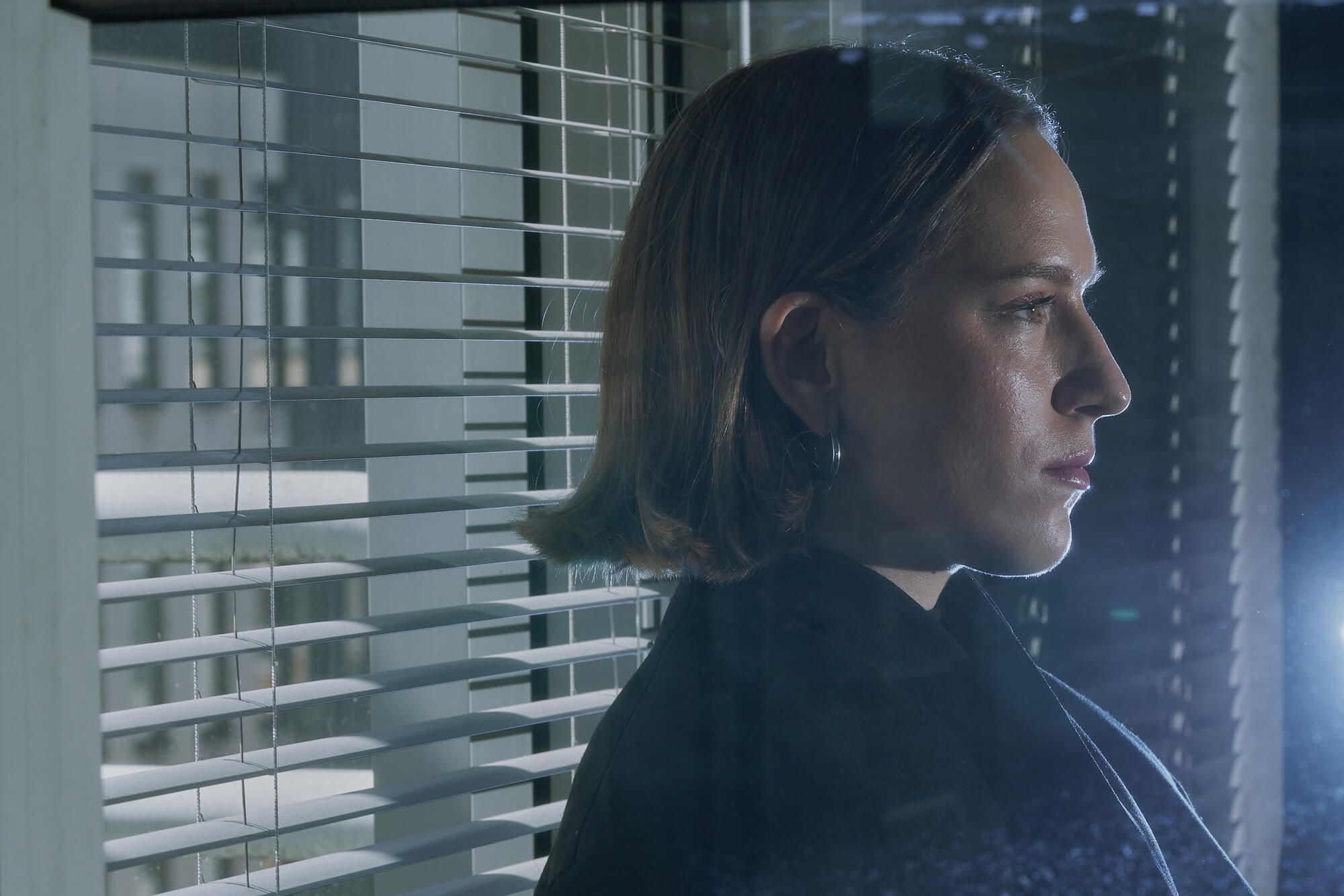
You’re from Belgium and still live in Brussels, yet you chose Paris to present your collections. Would you ever consider moving there?
Marie Adam-Leenaerdt: I chose Paris because it fits the culture and identity of the brand better, and it’s a city where there is always something happening, and a lot of opportunities come your way. But in daily life, it doesn’t leave much space to breathe. And to create, you need those moments of calm.
If your brand were a Paris arrondissement, which one would it be?
Marie Adam-Leenaerdt: I’m not really into putting things into boxes, because each arrondissement is different, and that’s the beauty of it. It’s more about diversity and how different energies coexist, rather than choosing just one.
Your Instagram handle is @marlastar. Is there a story behind it?
Marie Adam-Leenaerdt: I created that name when I was 15, just for fun. I kept it because I like the idea that Instagram can stay a playful space. It’s more about enjoying what I do and not taking everything too seriously.
Is there ever a moment when you feel like a superstar? Maybe at the end of a show?
Marie Adam-Leenaerdt: Absolutely not, at the end of a show, I’m just stressed.
Do you think the world needs more reason or more love?
Marie Adam-Leenaerdt: Both. I think it’s important to bring more reason and meaning to what we do, to create more intelligently. And the love will come after.
Who or what is the biggest love of your life?
Marie Adam-Leenaerdt: Creating. Creating clothes, creating anything.