






































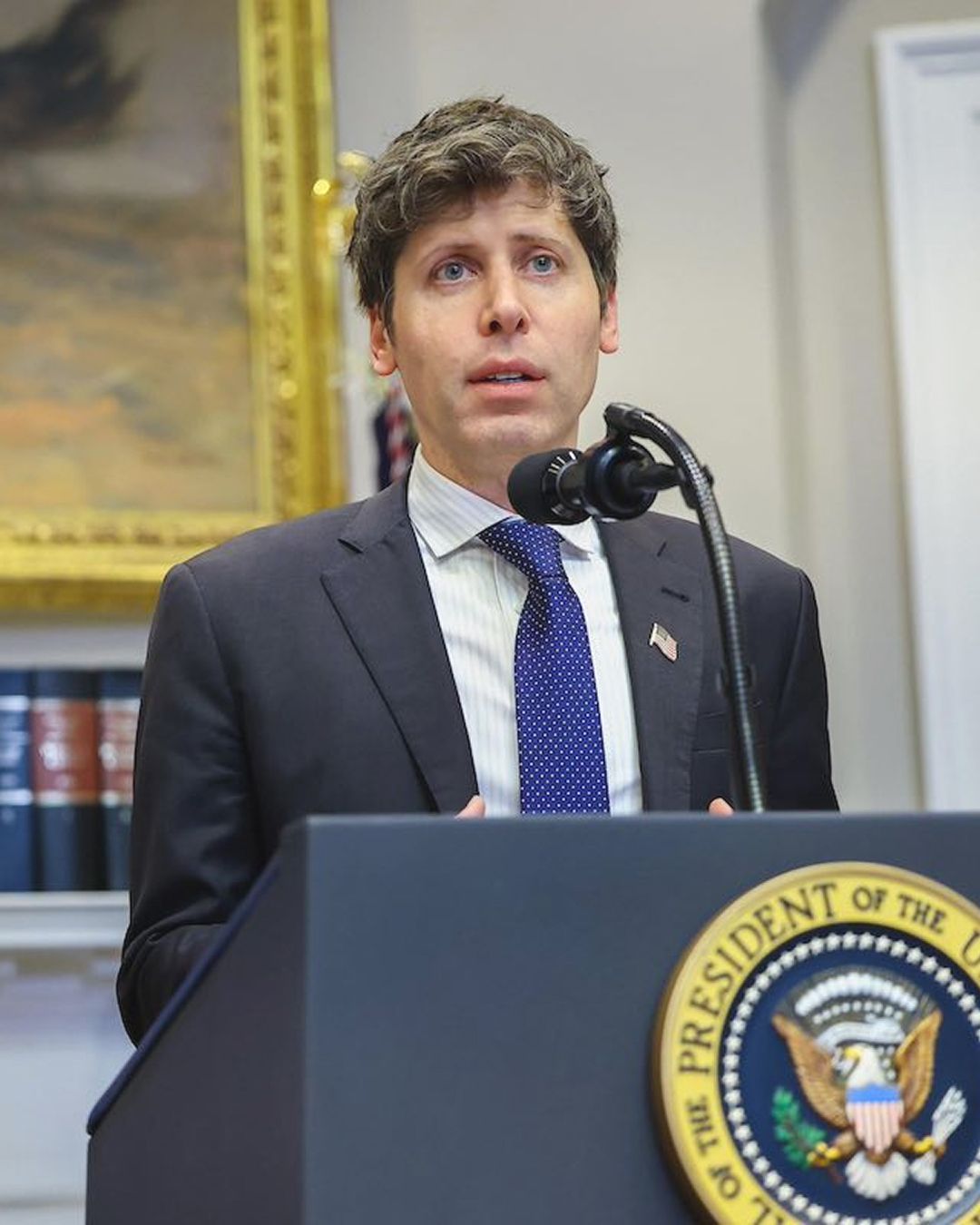
What's happening between AI companies and the White House? Everything you need to know about the potential partnership that could reshape the AI industry
Recently, several international media outlets reported that OpenAI is considering transferring a 5% stake in the company to the United States government. The idea is still in its early stages, but if confirmed, it could reshape the relationship between major artificial intelligence companies and U.S. institutions.
The proposal was reportedly first supported by Sam Altman, who believes that the development of artificial intelligence will generate enormous wealth over the coming years. According to OpenAI's CEO, a portion of this value should be distributed to American citizens. The proposal – according to Altman himself – would not apply only to OpenAI, but could potentially be extended to other major companies in the sector as well.
What the potential partnership between OpenAI and the White House would involve
The idea of allocating part of AI companies' equity to a public fund is not entirely new. Both OpenAI and Anthropic have long argued—as stated in several internal documents—that in the future it may be necessary to create mechanisms capable of distributing the economic benefits generated by AI more equitably. One of the proposals is precisely the creation of a public fund that would invest in these equity stakes and then redistribute part of the returns to citizens.
Sam Altman reportedly discussed this scenario directly with Trump and with some of the White House's leading economic officials. At the same time, he is also said to have held discussions with members of the opposition, including Senator Bernie Sanders, who has long supported cooperation between the government and AI companies.
The initiative comes as OpenAI and Anthropic prepare for a possible stock market listing, a milestone that many analysts believe could value both companies at more than one trillion dollars. If the public ownership proposal were to materialize, it would set a significant precedent for the entire technology sector.
The relationship between AI companies and the Trump administration
@atlasberry008 OpenAI just offered the US government 5% of the company — roughly $42 billion. Everyone's covering the what. Almost nobody's explaining the why. It comes down to incentives. As we approach AGI, the labs need Washington as a partner, not an adversary — and 5% is a bargain next to the 50% Bernie Sanders wants. Trump already took 10% of Intel. The playbook exists. The twist: both Vance and Sanders back a version of this — a sovereign wealth fund modeled on Alaska's, paying out like an oil dividend. When the far left and MAGA right agree, pay attention. Regulatory lock-in just shifted into second gear. If you like this kind of thing and want to stay close — join our community Frontier. Link in bio. openai, sam altman, sovereign wealth fund, artificial intelligence, agi, government equity, private markets, regulation, alaska permanent fund, ai policy #venturecapital #openai #ai #investing #founder original sound - atlasberry008
At the moment, there is no formal agreement, and the discussions are described as purely preliminary. However, even if the proposal were approved, it would likely require action by the U.S. Congress in order to become a reality. Many questions also remain regarding whether other AI companies would be willing to participate in such an initiative.
Nevertheless, the proposal appears to be aimed at easing tensions between AI companies and the Trump administration. In recent months, the White House has increased oversight of the most advanced AI models, particularly because of their potential implications for national security and the spread of technologies considered strategically important.
In early June, for example, an executive order was signed introducing a pre-deployment oversight system. AI companies are encouraged to voluntarily submit their models—especially the most advanced ones—to the relevant authorities for review at least thirty days before their release, allowing regulators to assess potential risks. Within this framework, OpenAI announced that its new and most powerful model, GPT-5.6 Sol, will initially be made available only to a limited group of customers selected in coordination with the U.S. administration.