



















All eyes are on Boloria, Olivier Theyskens' new brand The cult Belgian designer debuted just before Paris Couture Week
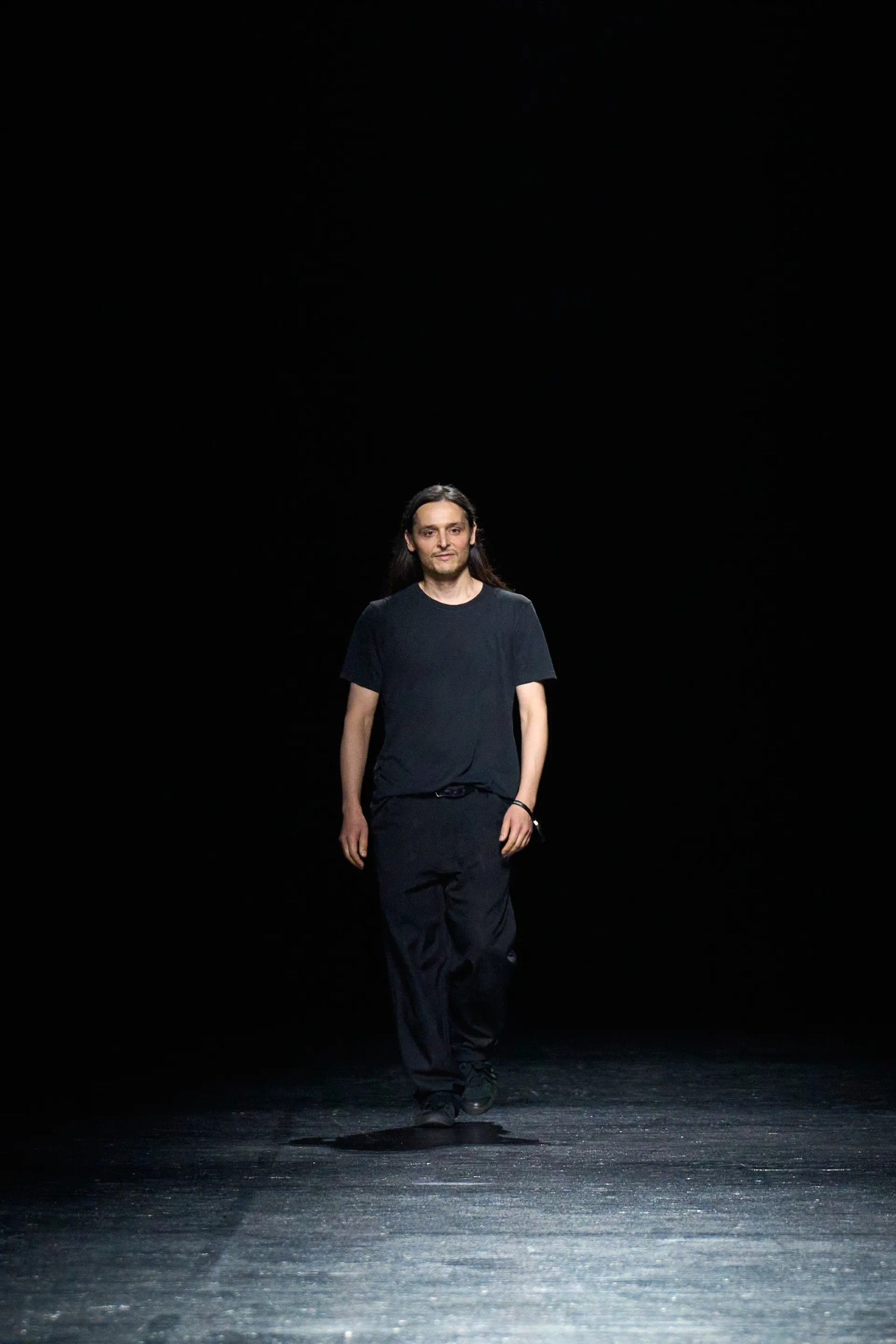
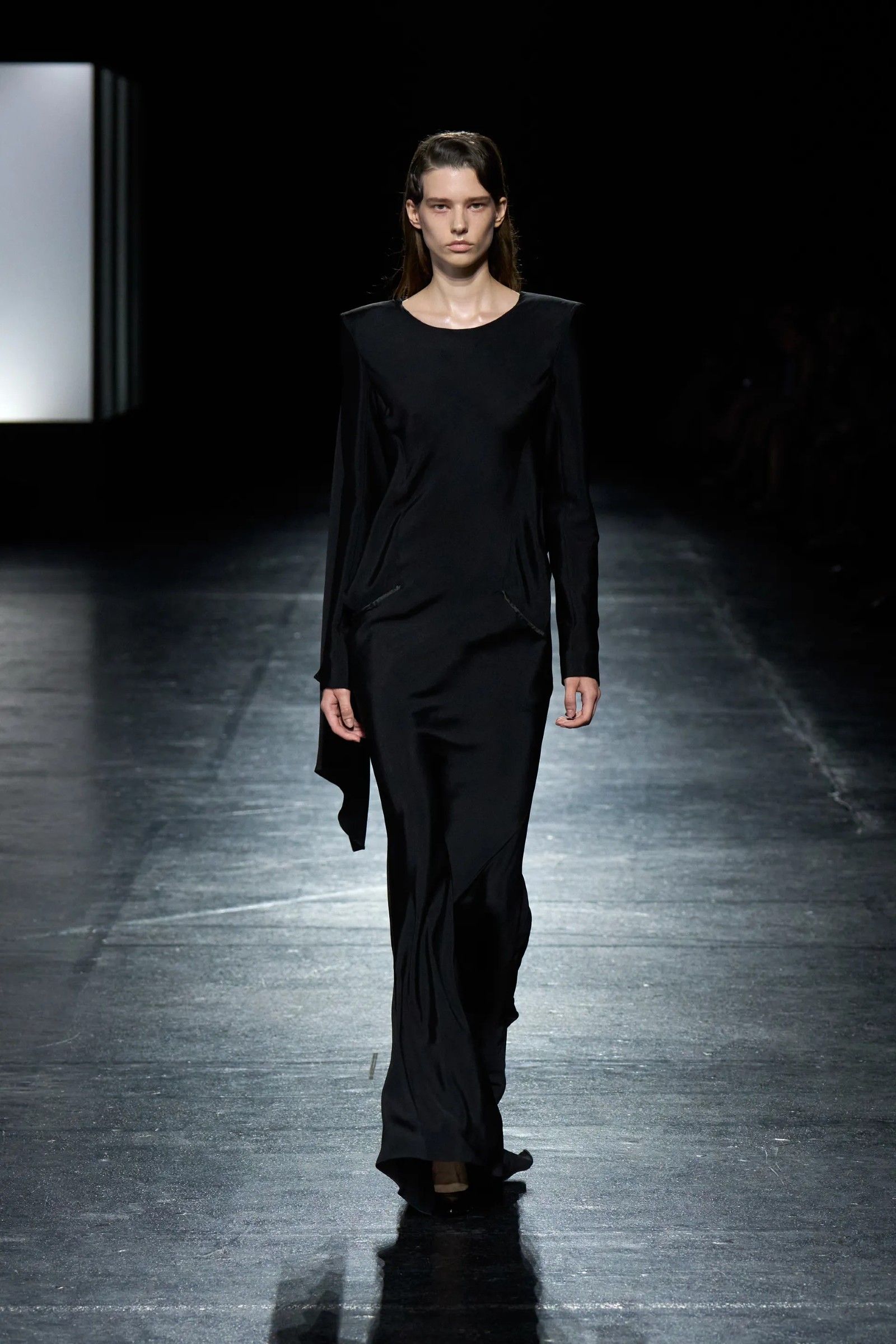
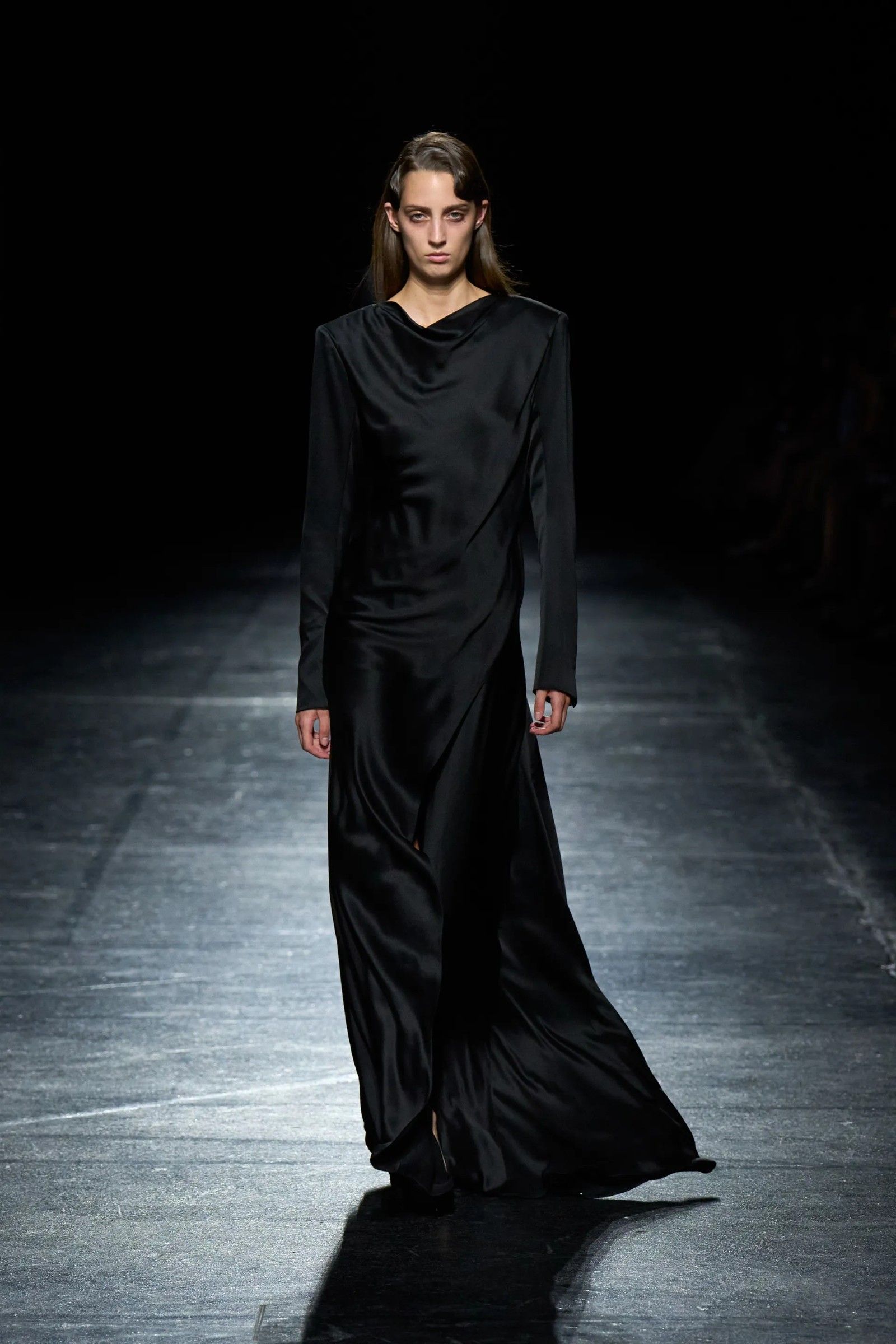
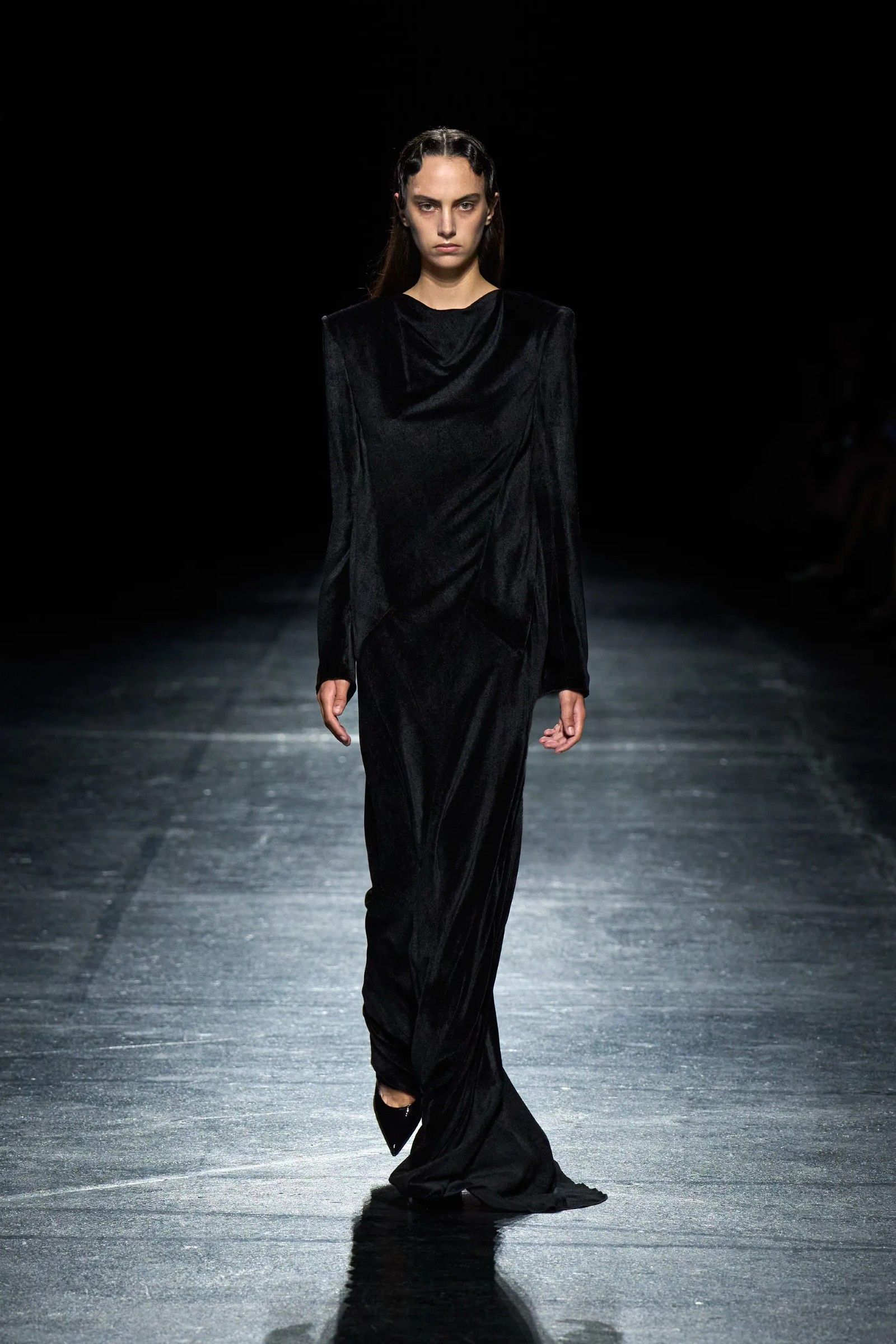
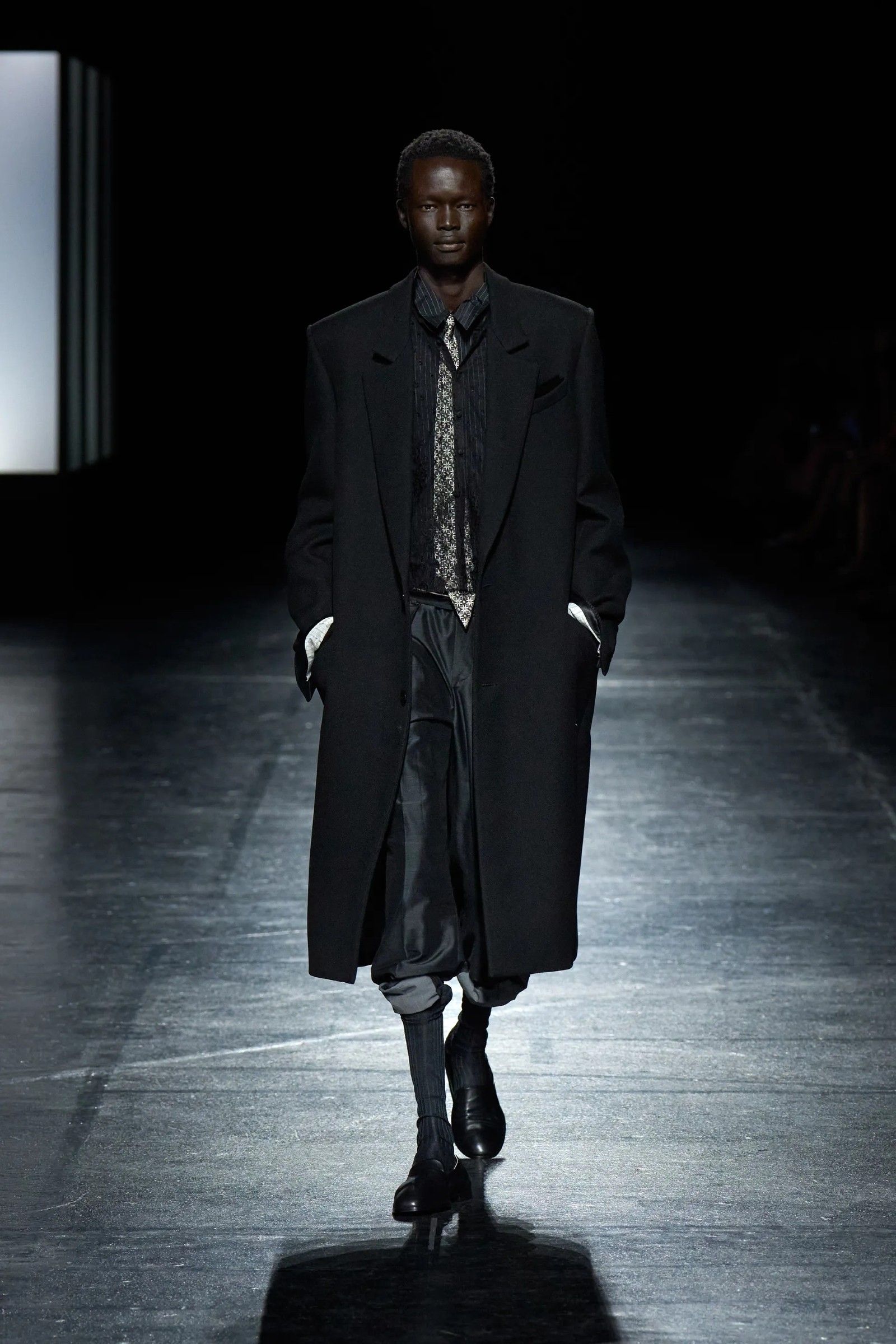
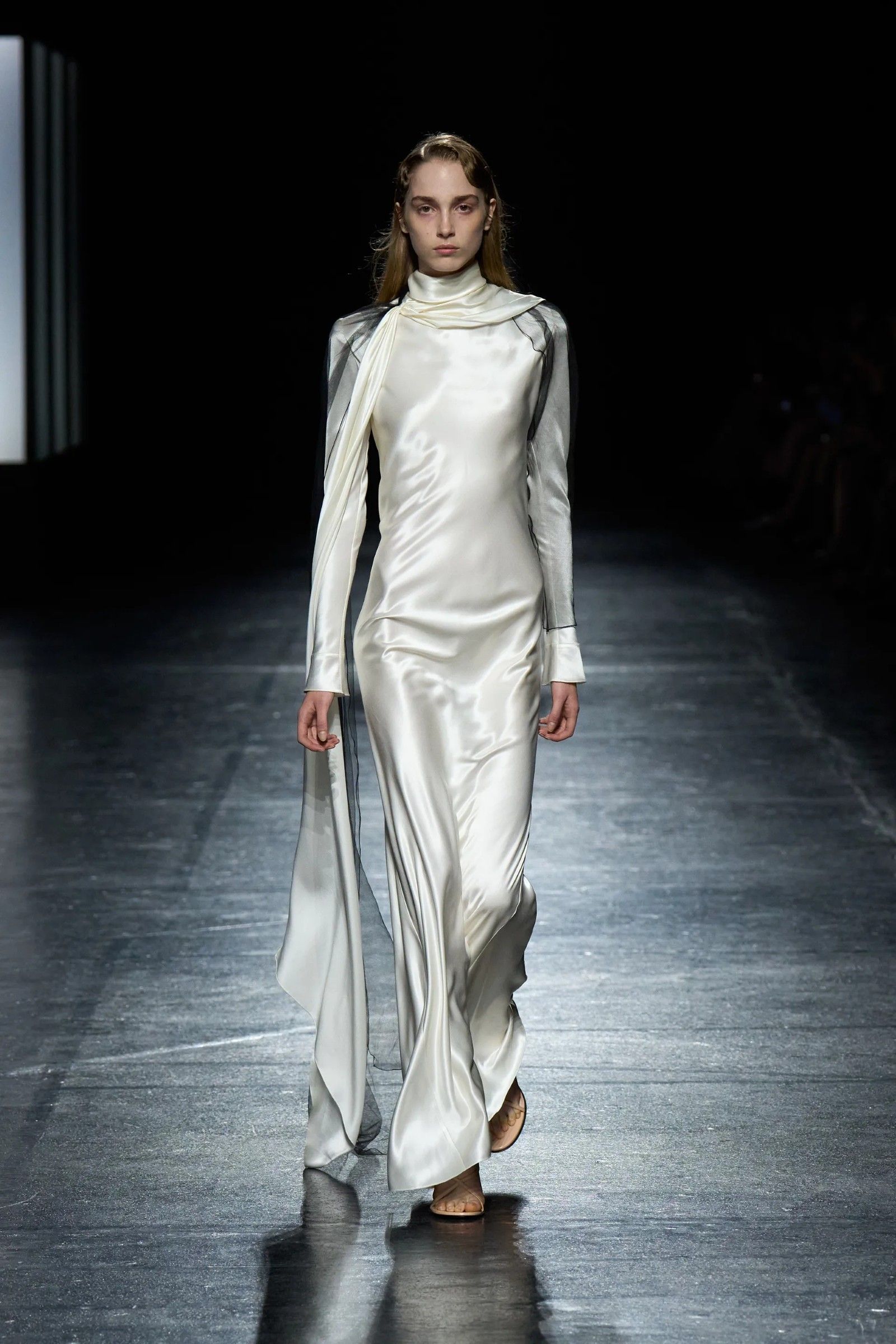
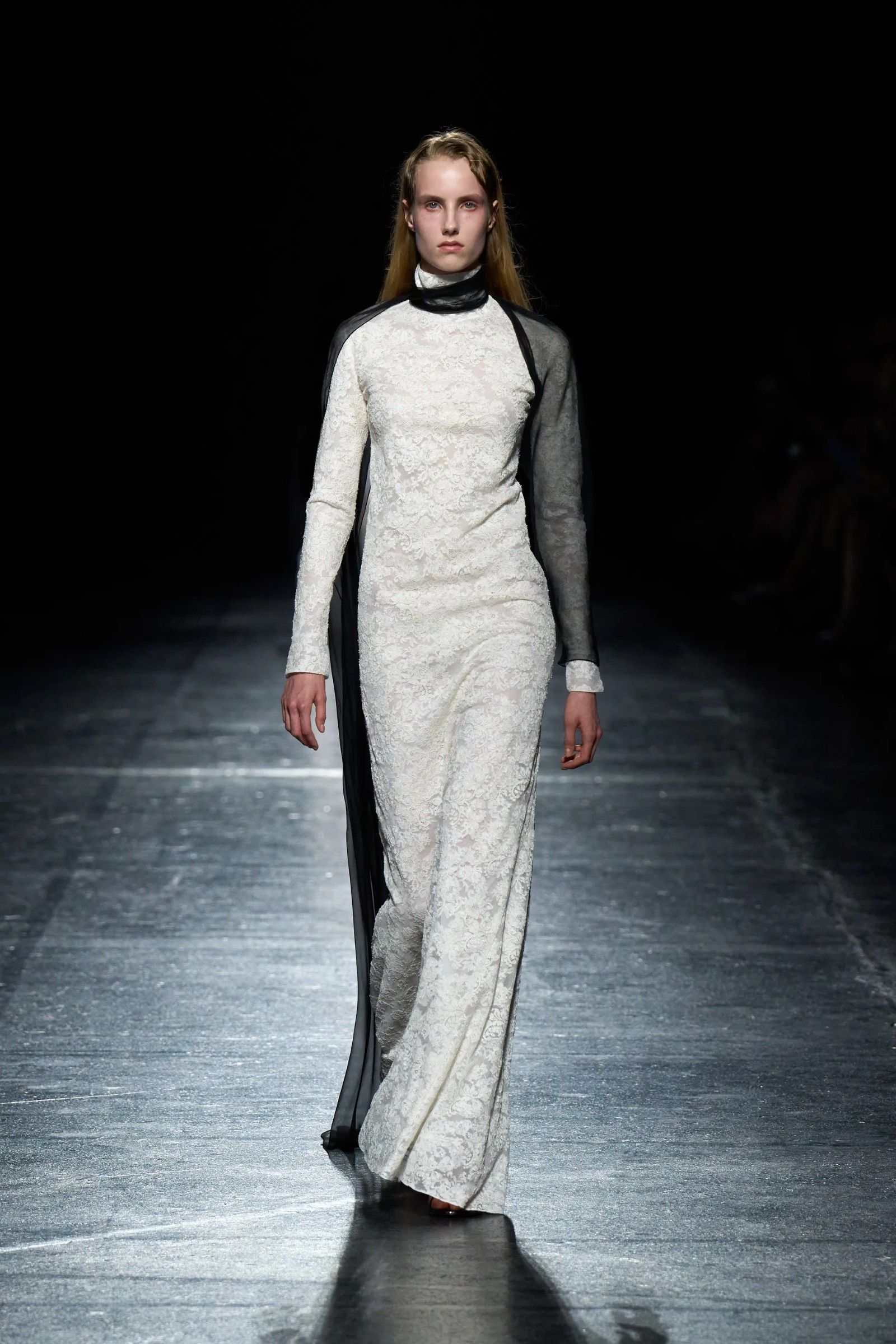
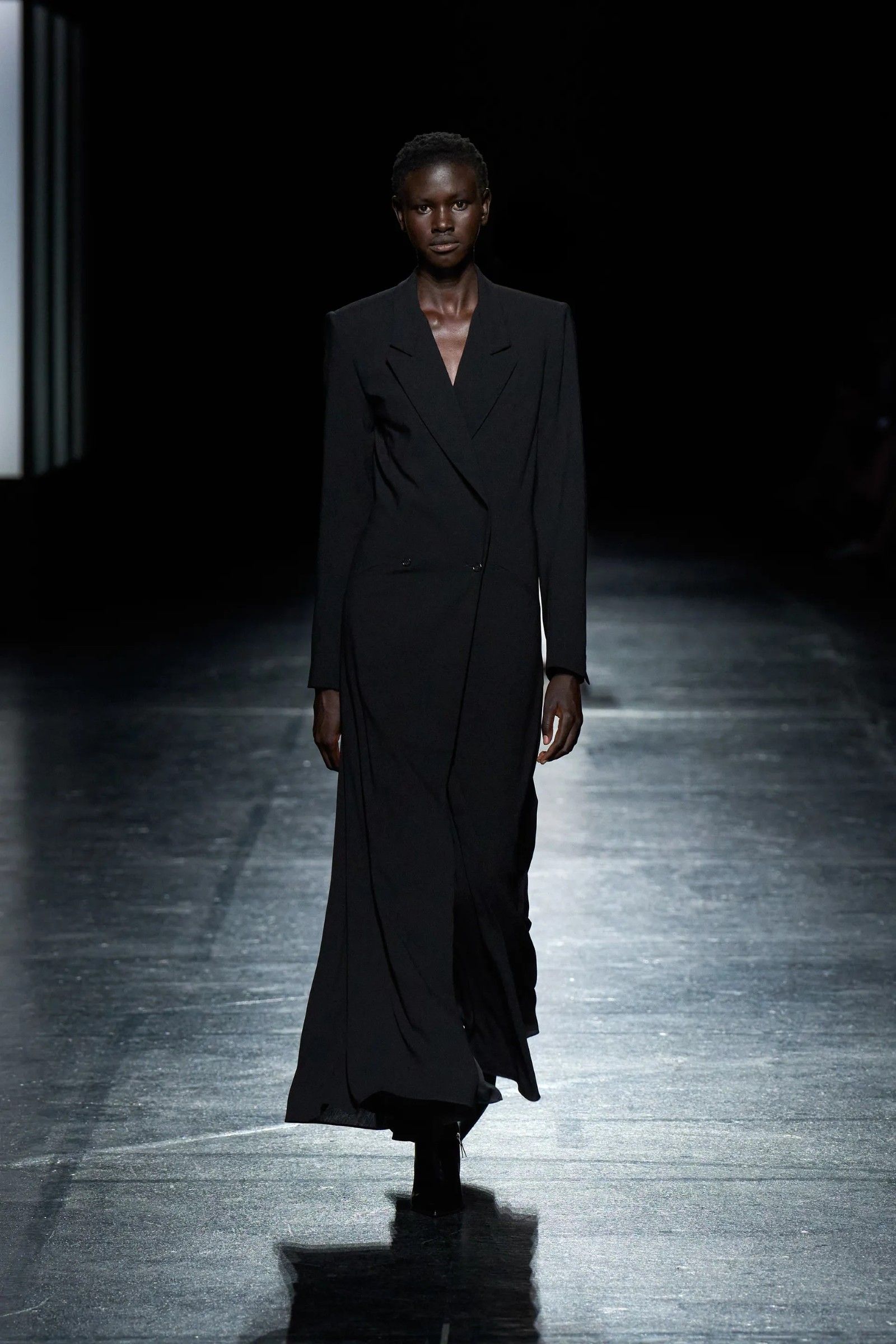
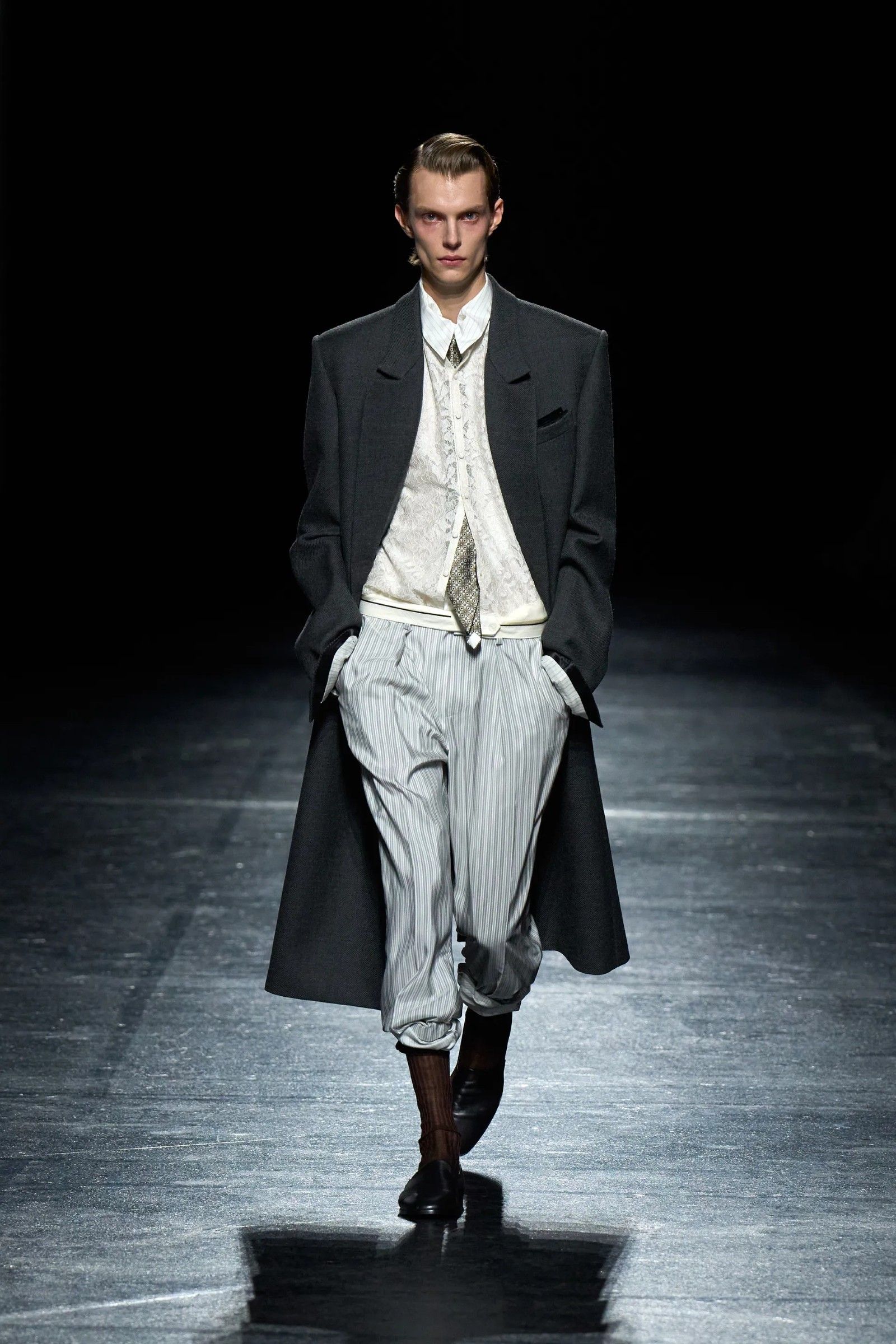
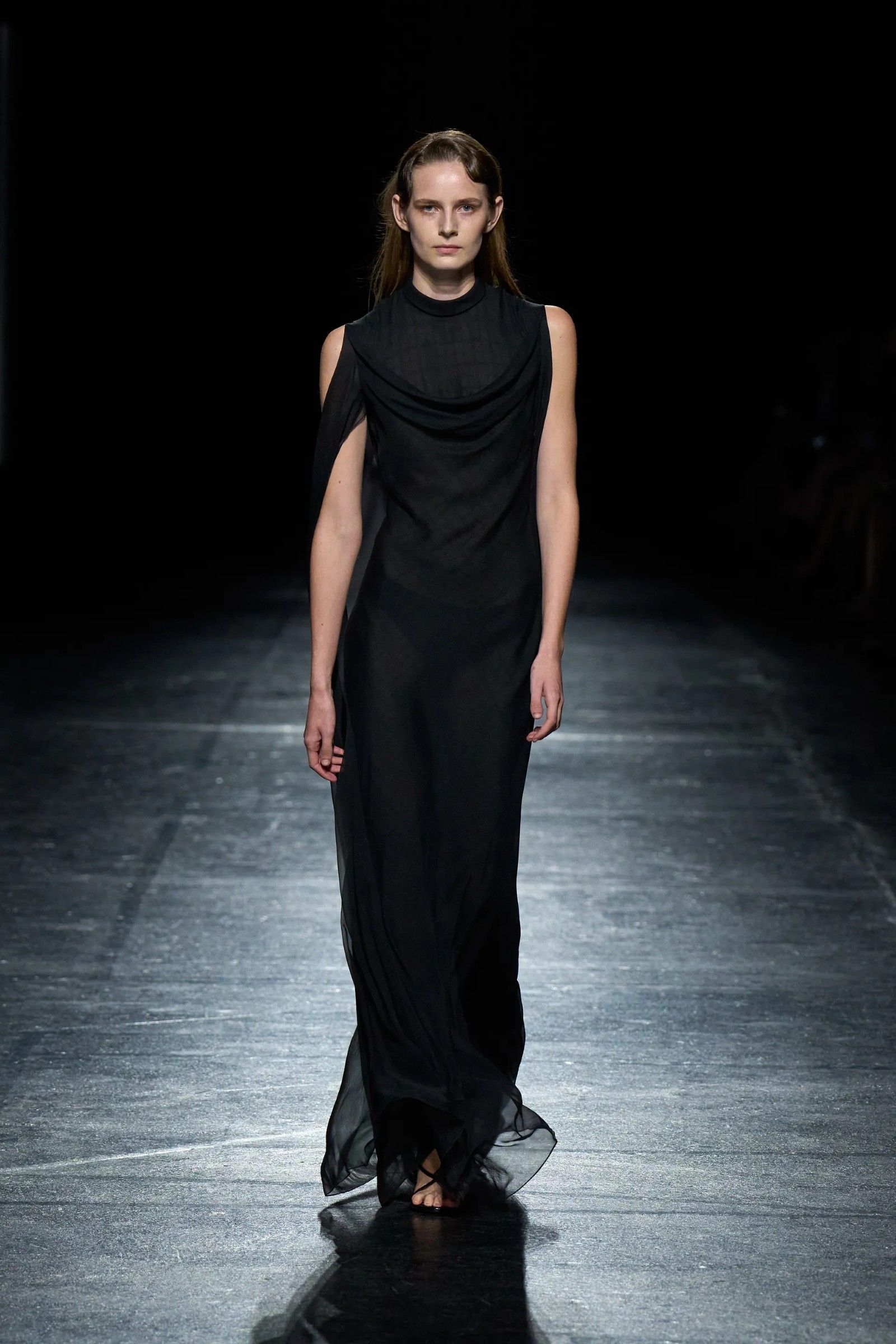
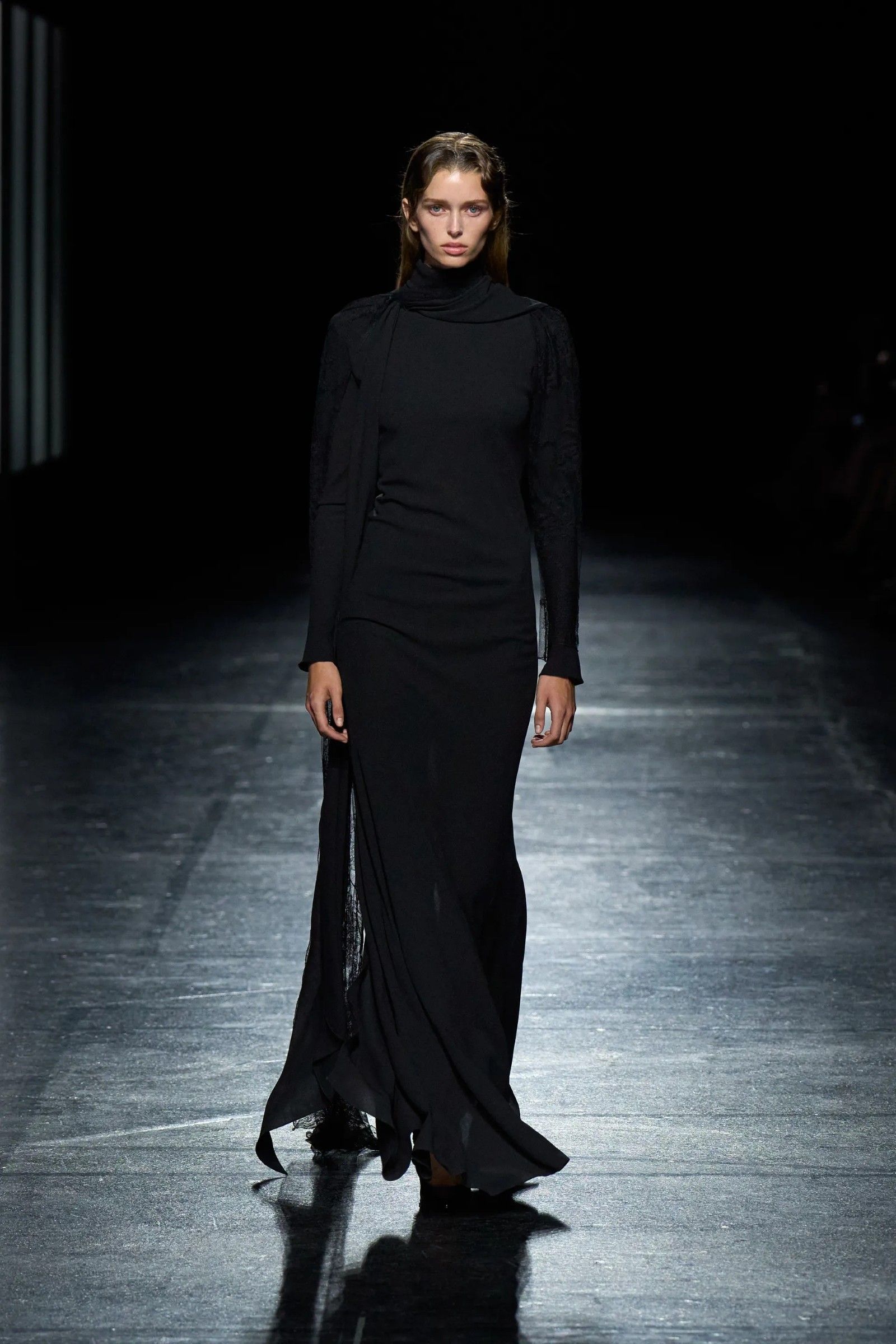
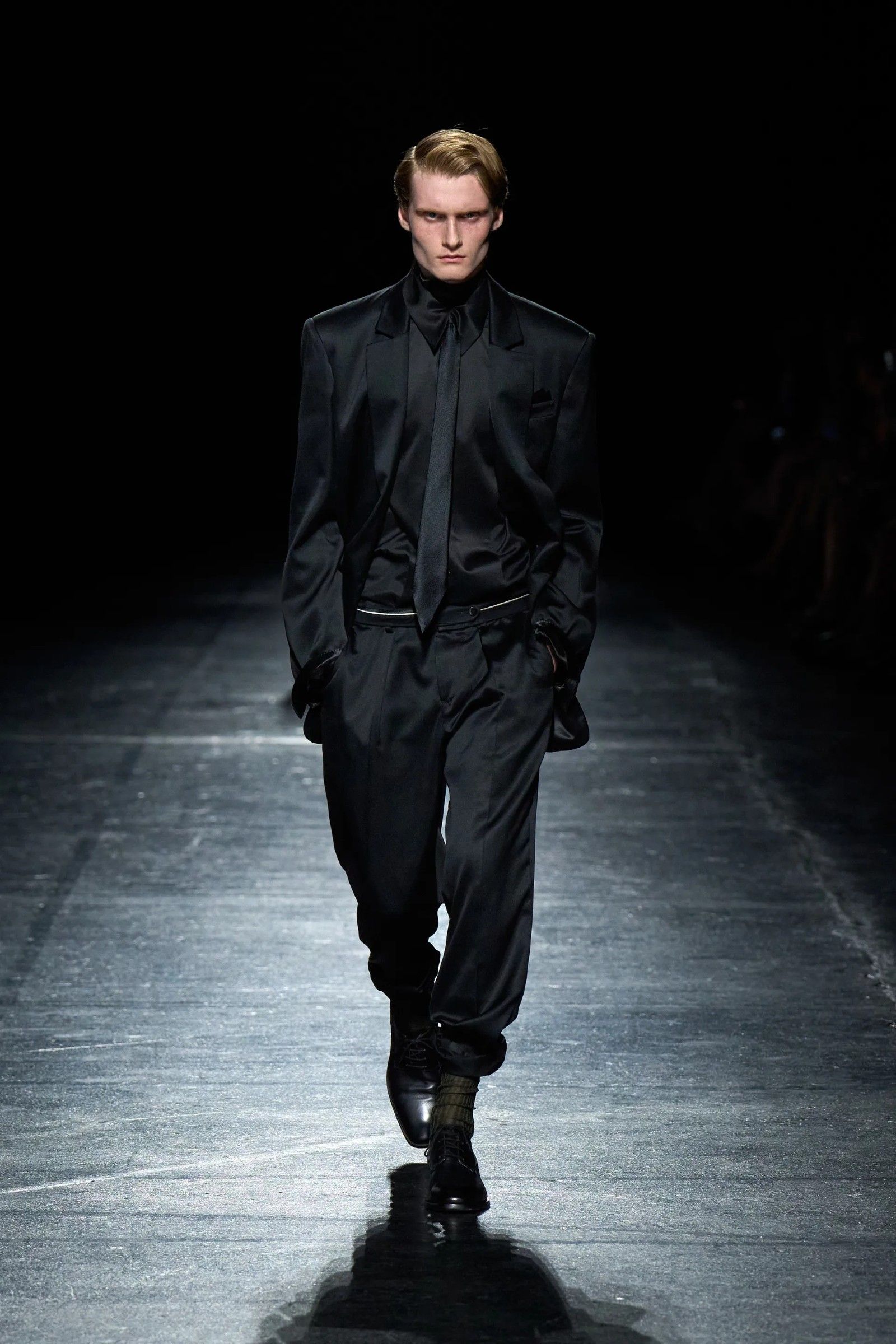
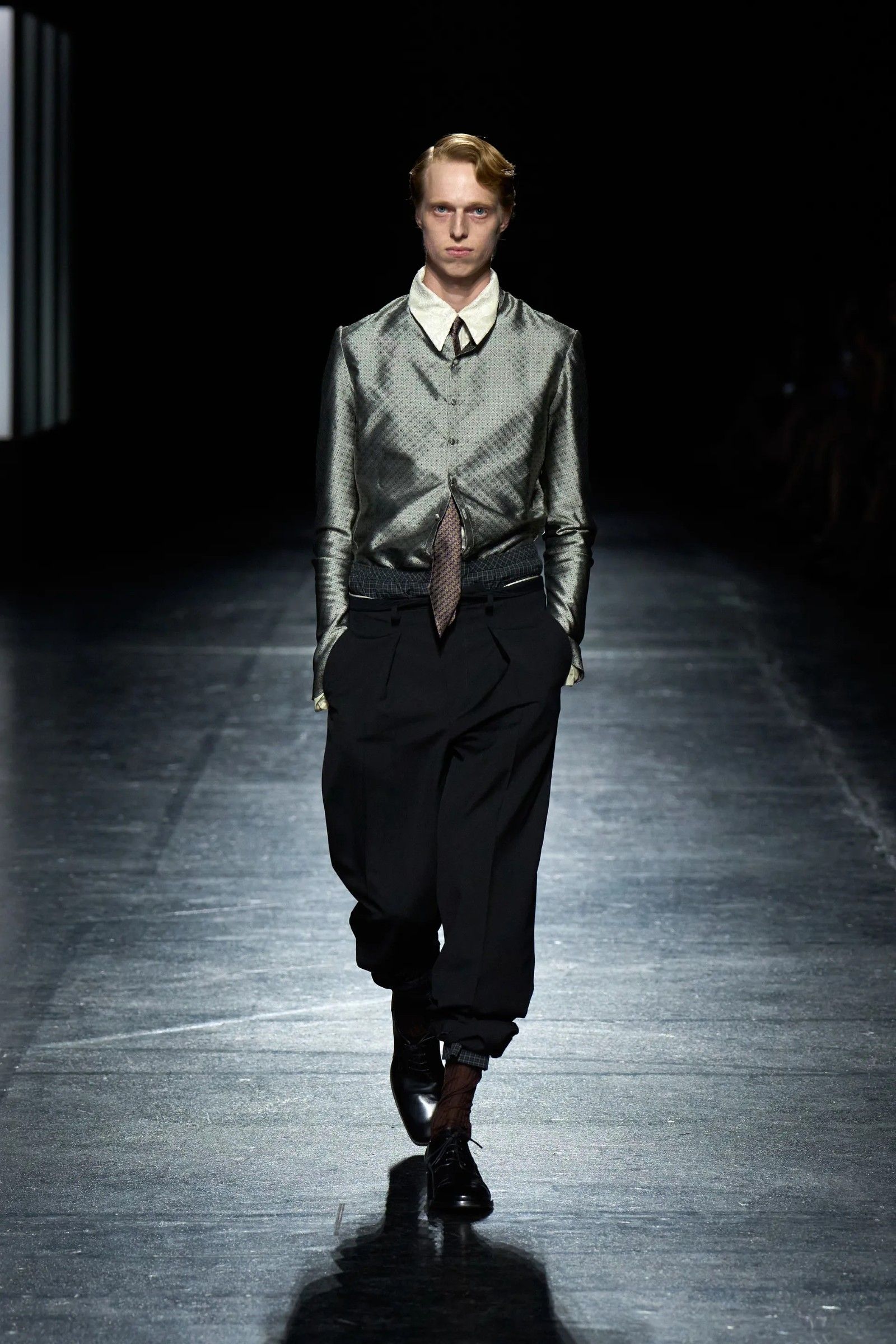
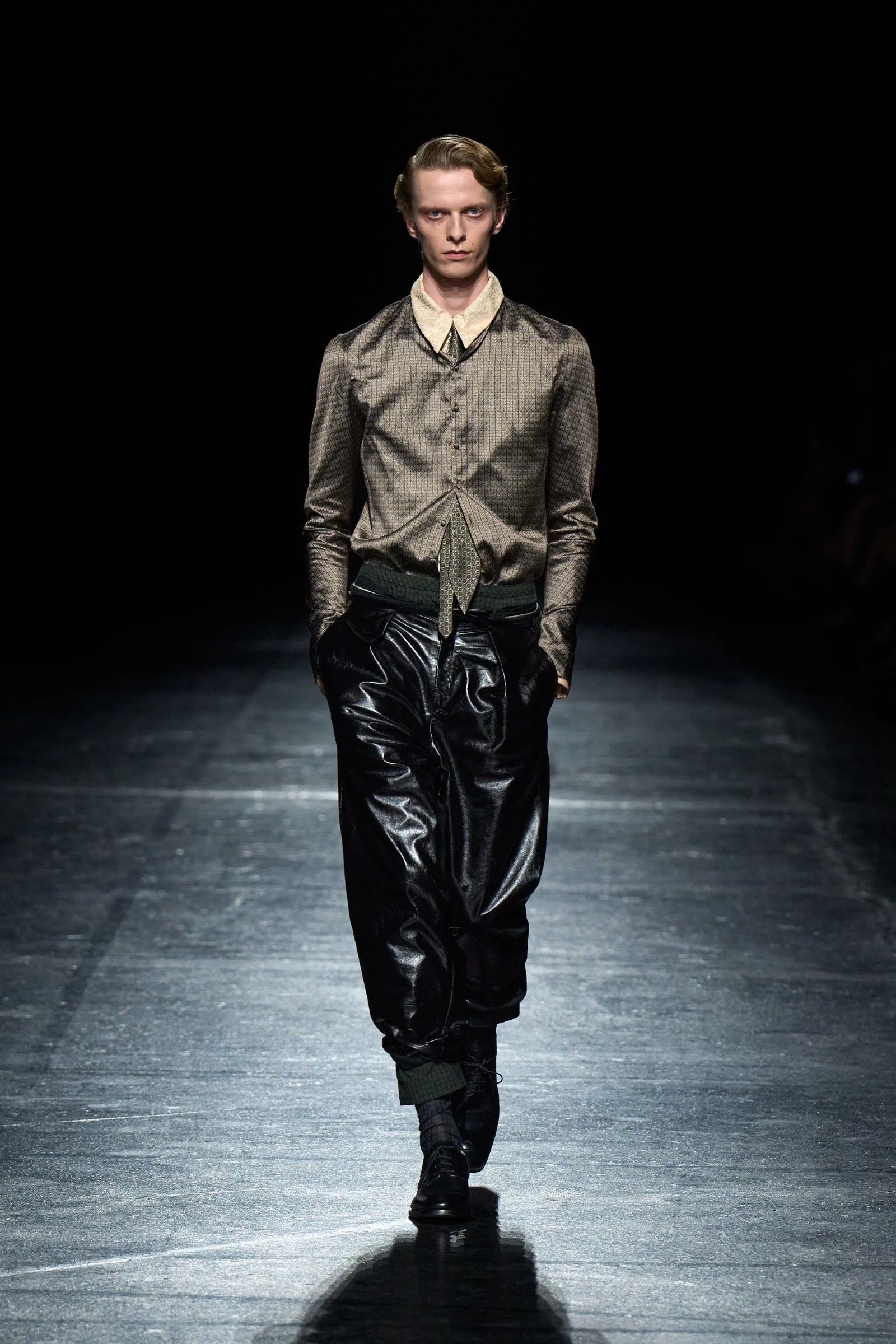
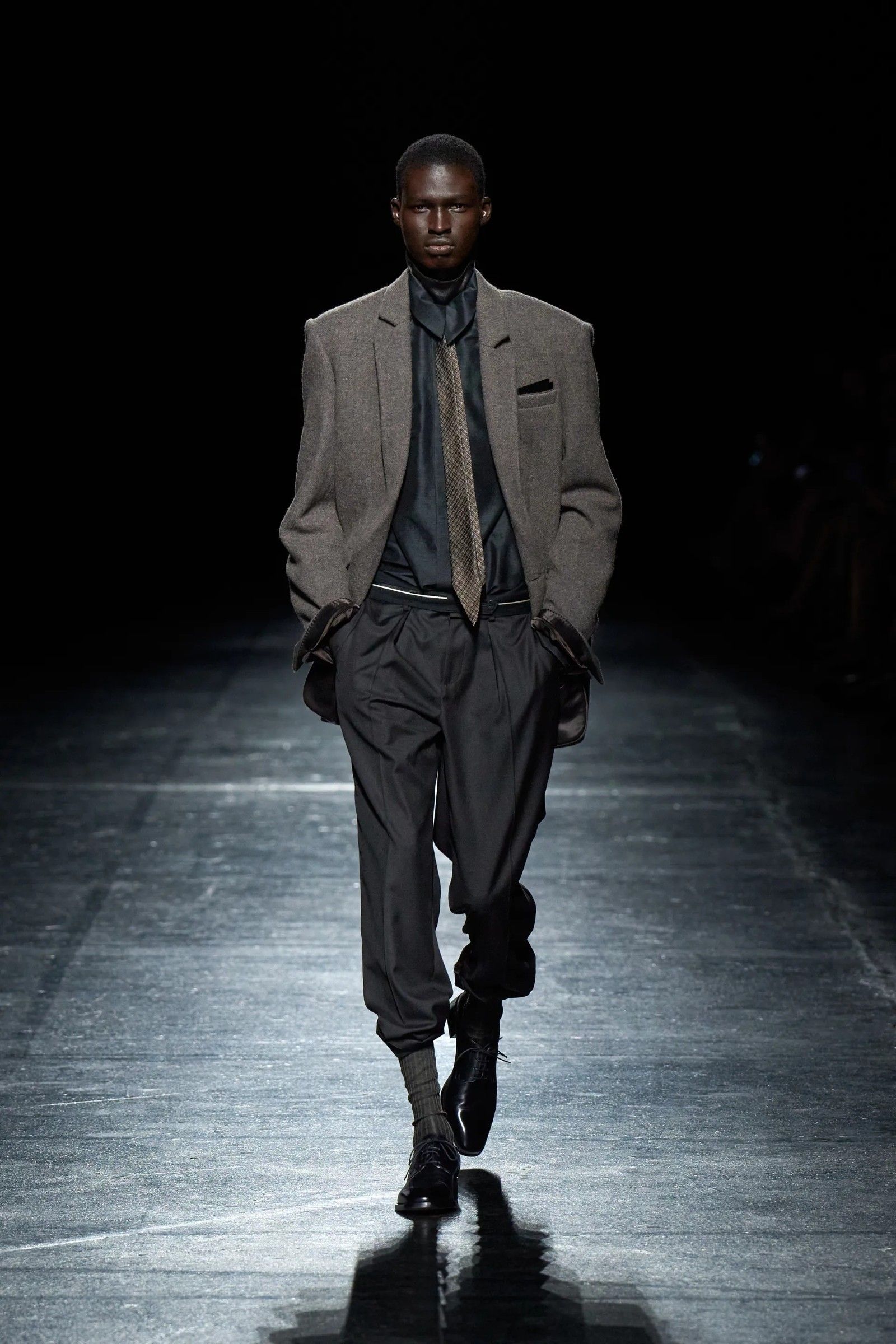
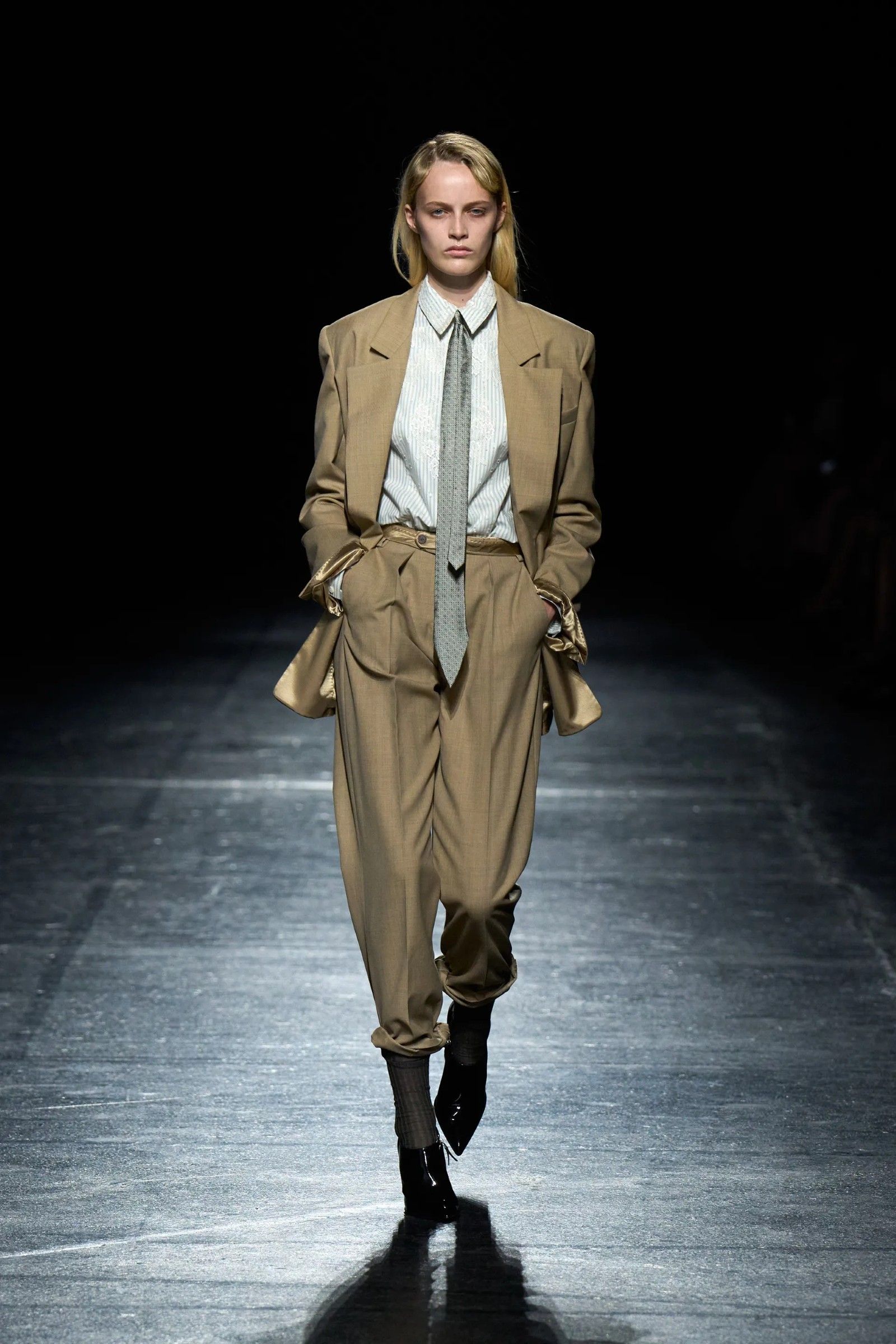
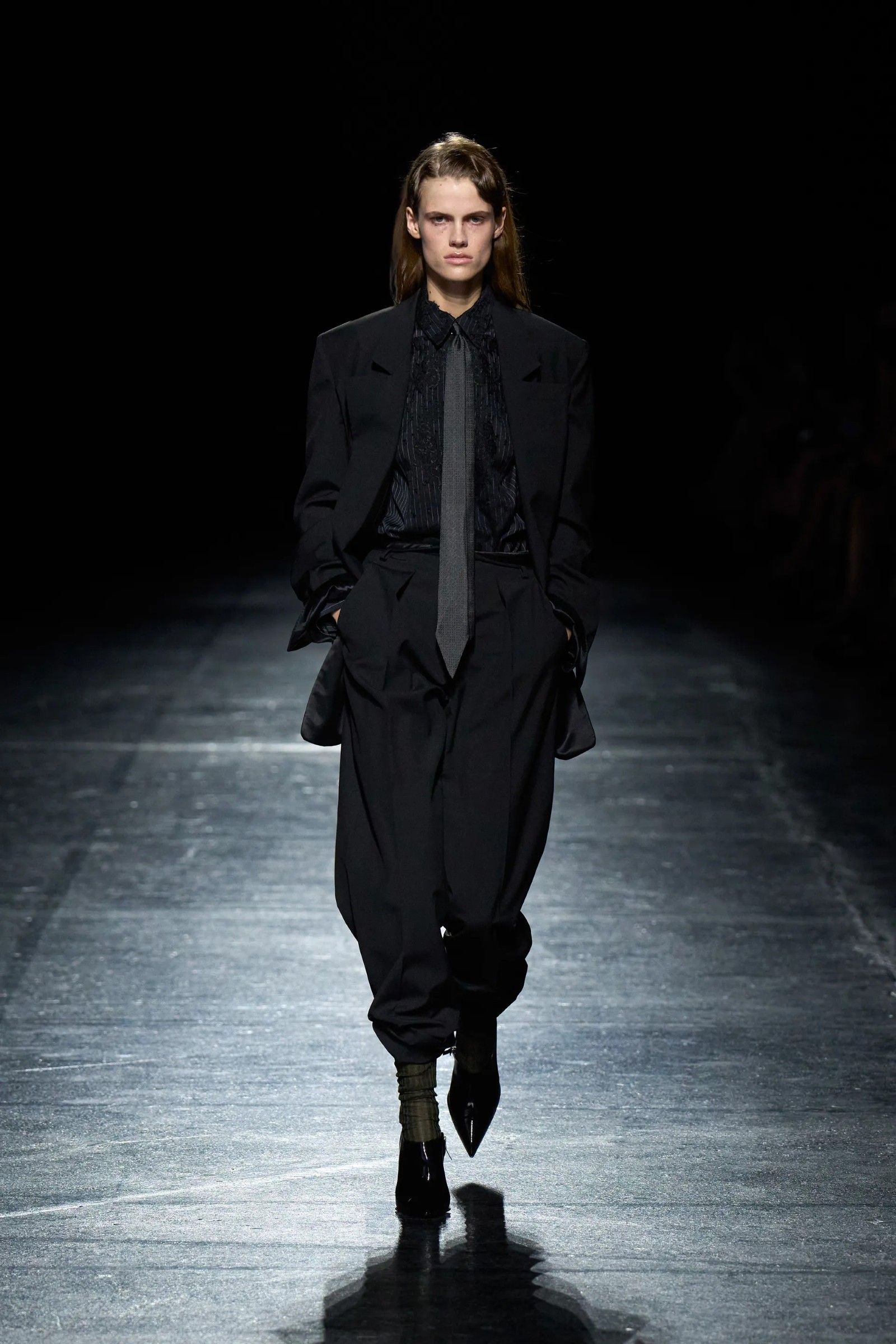
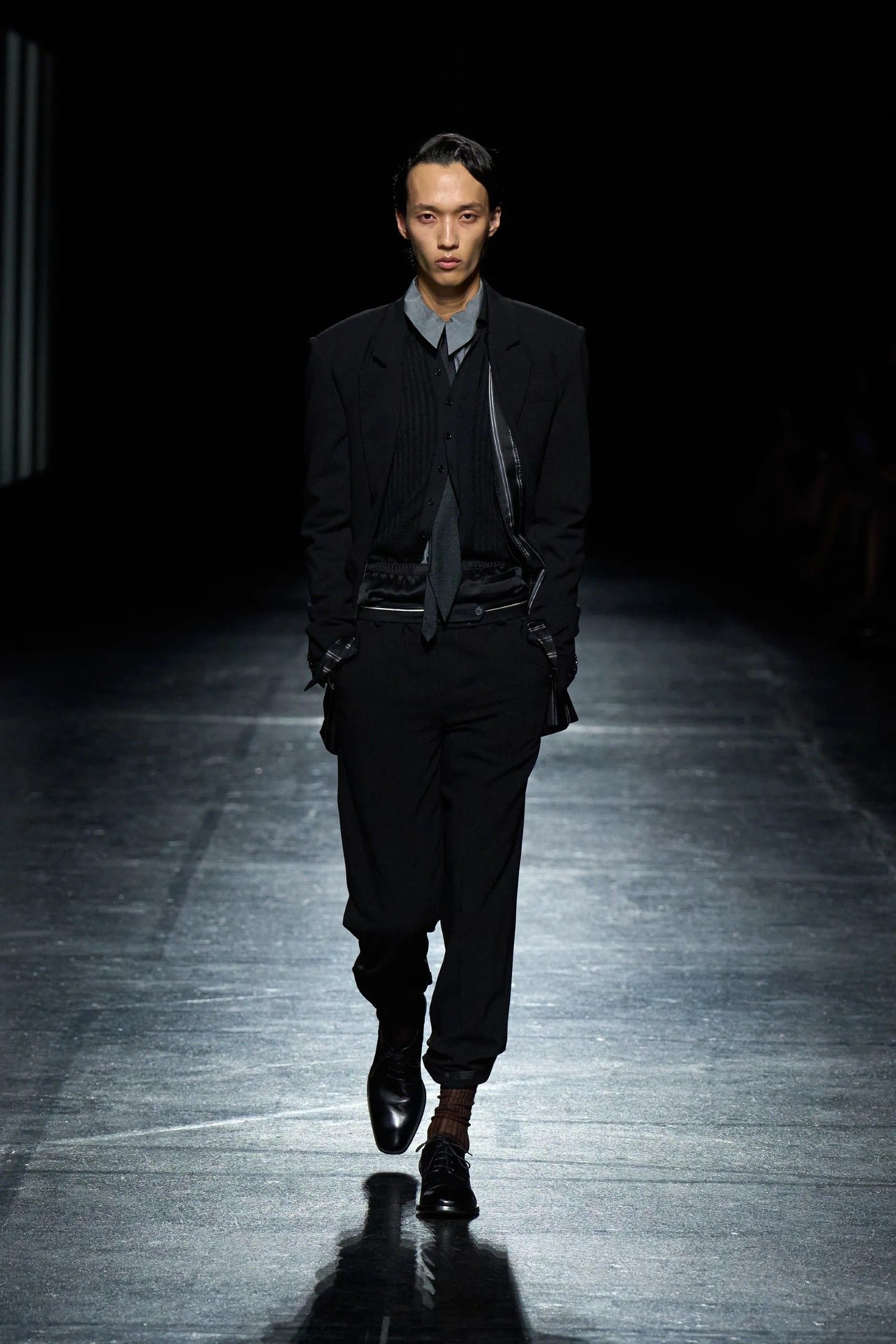
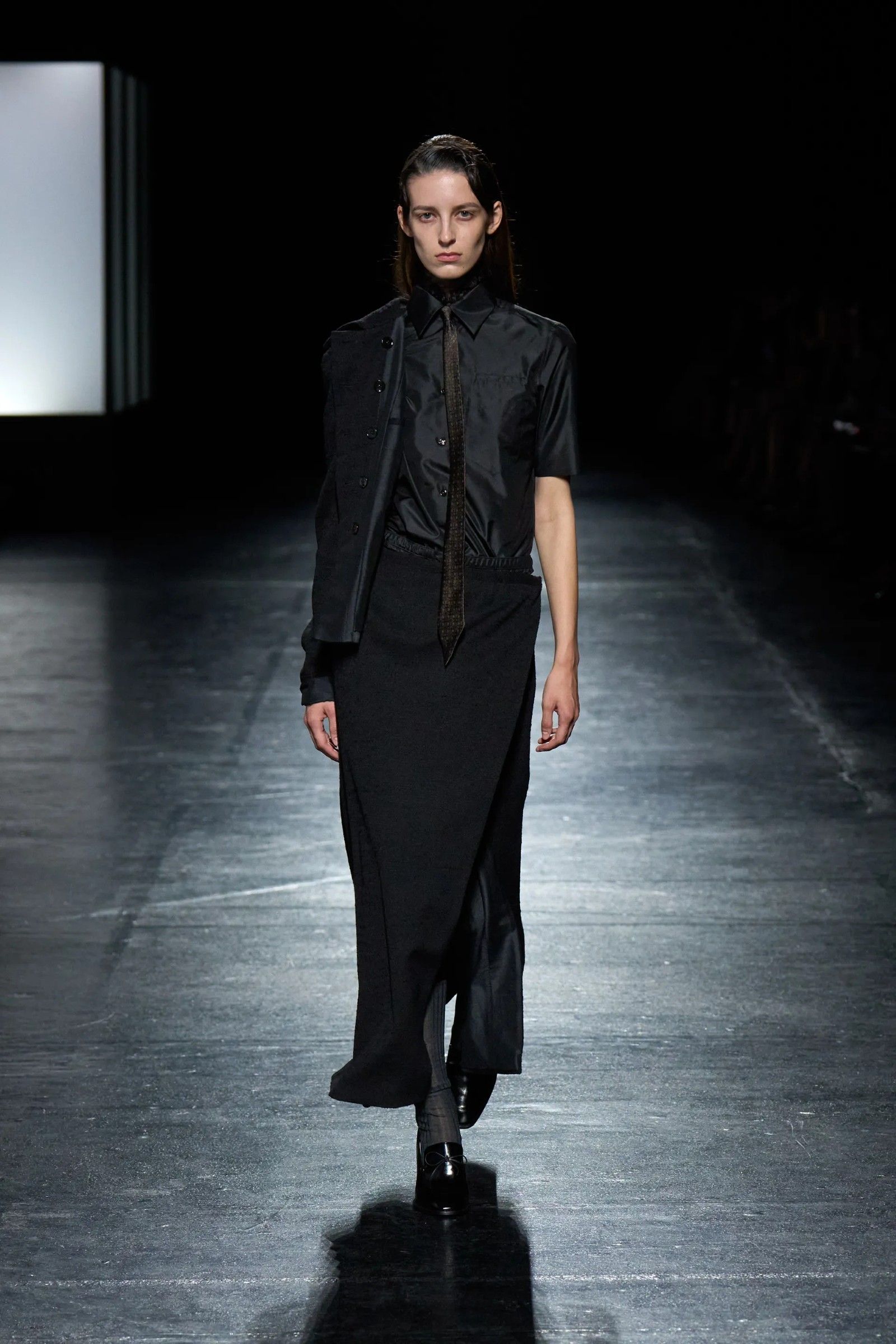
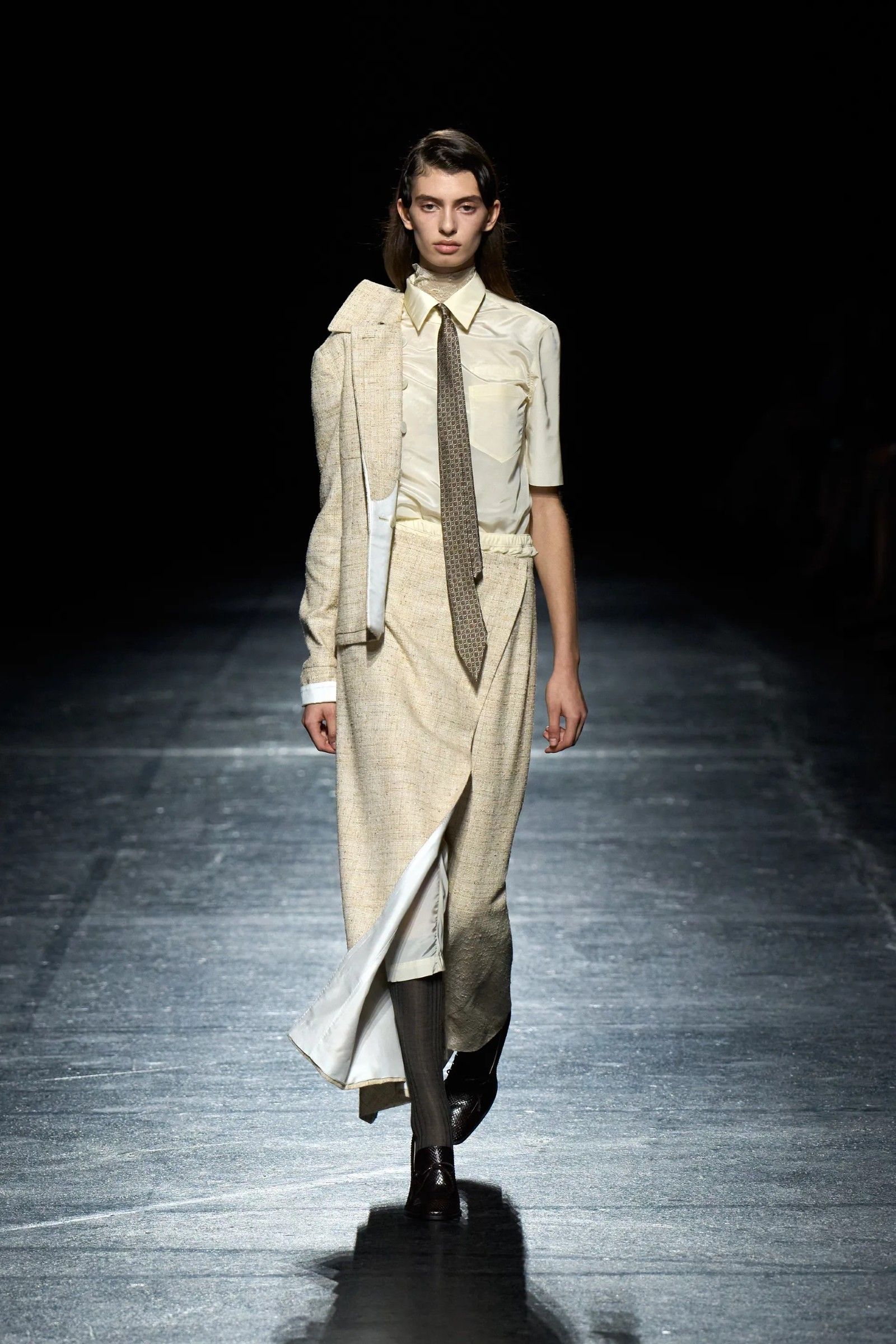
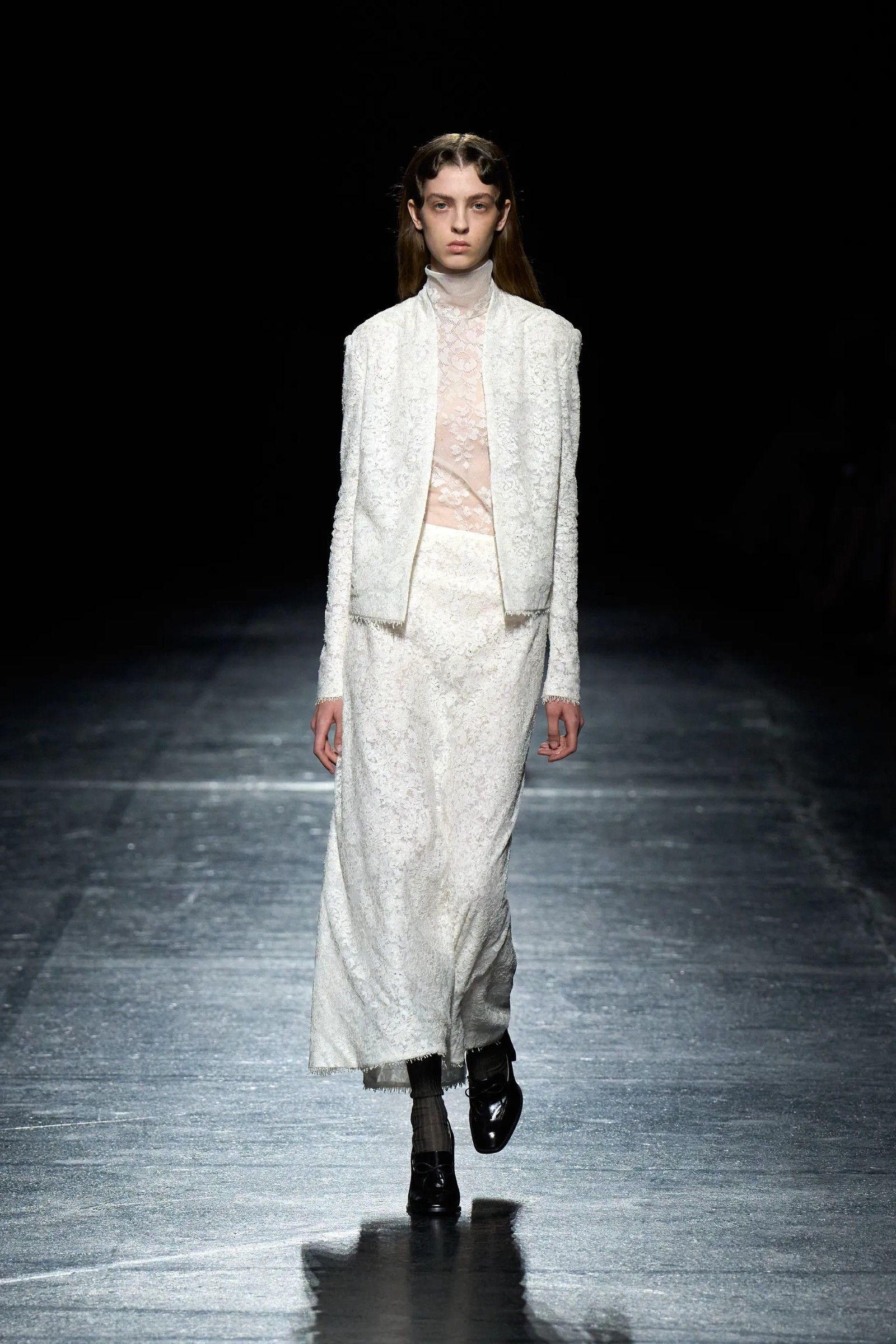
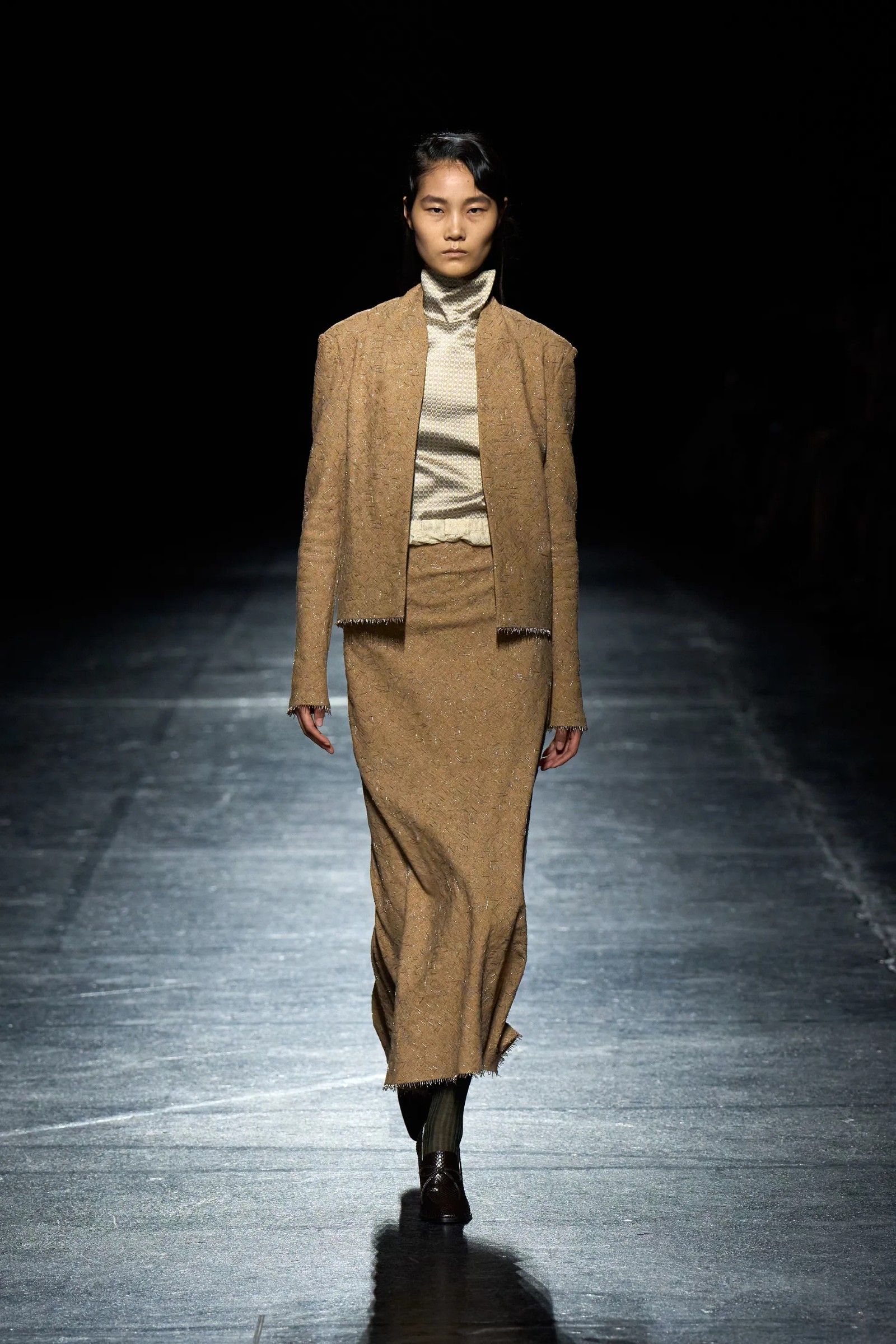
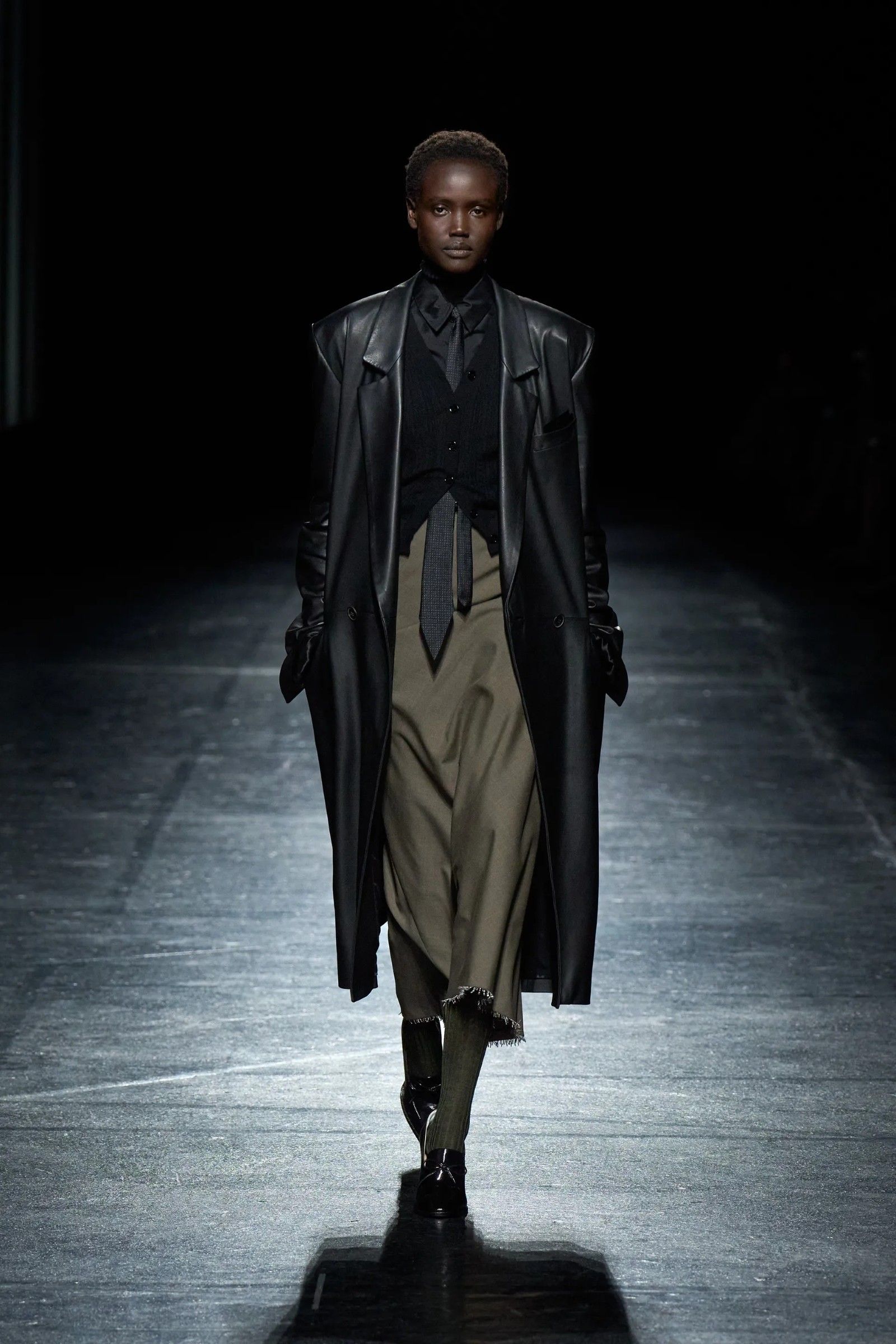
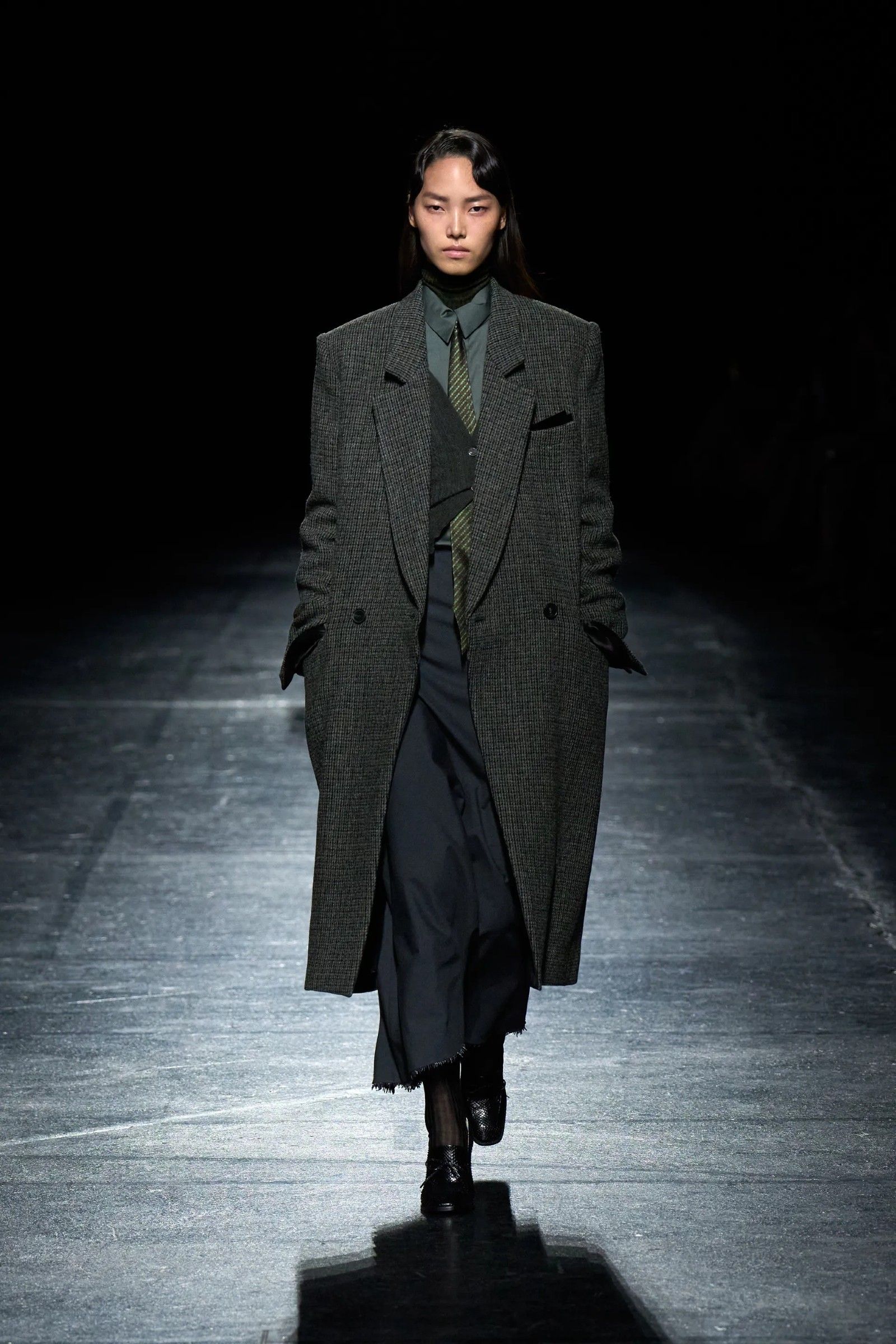
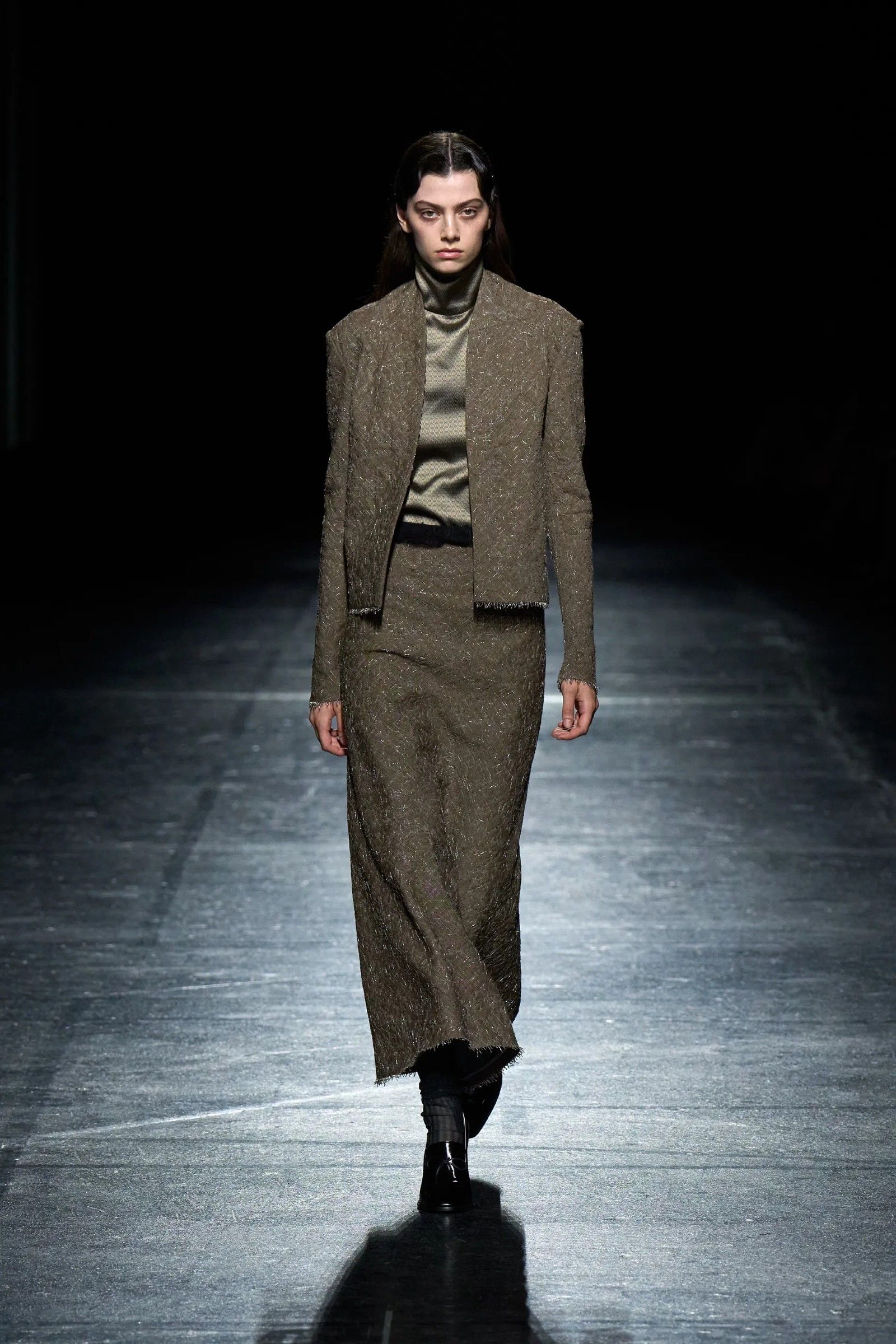
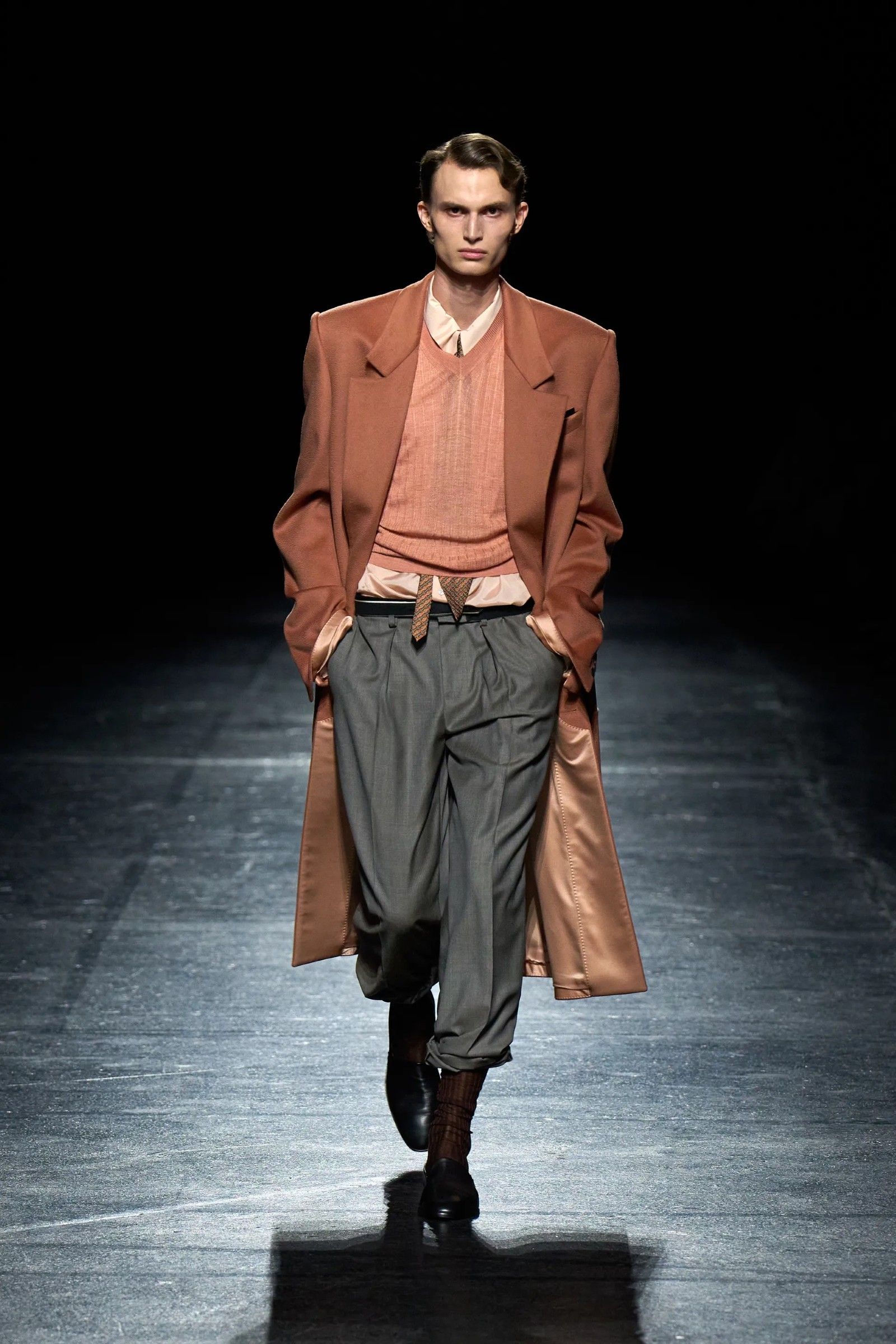
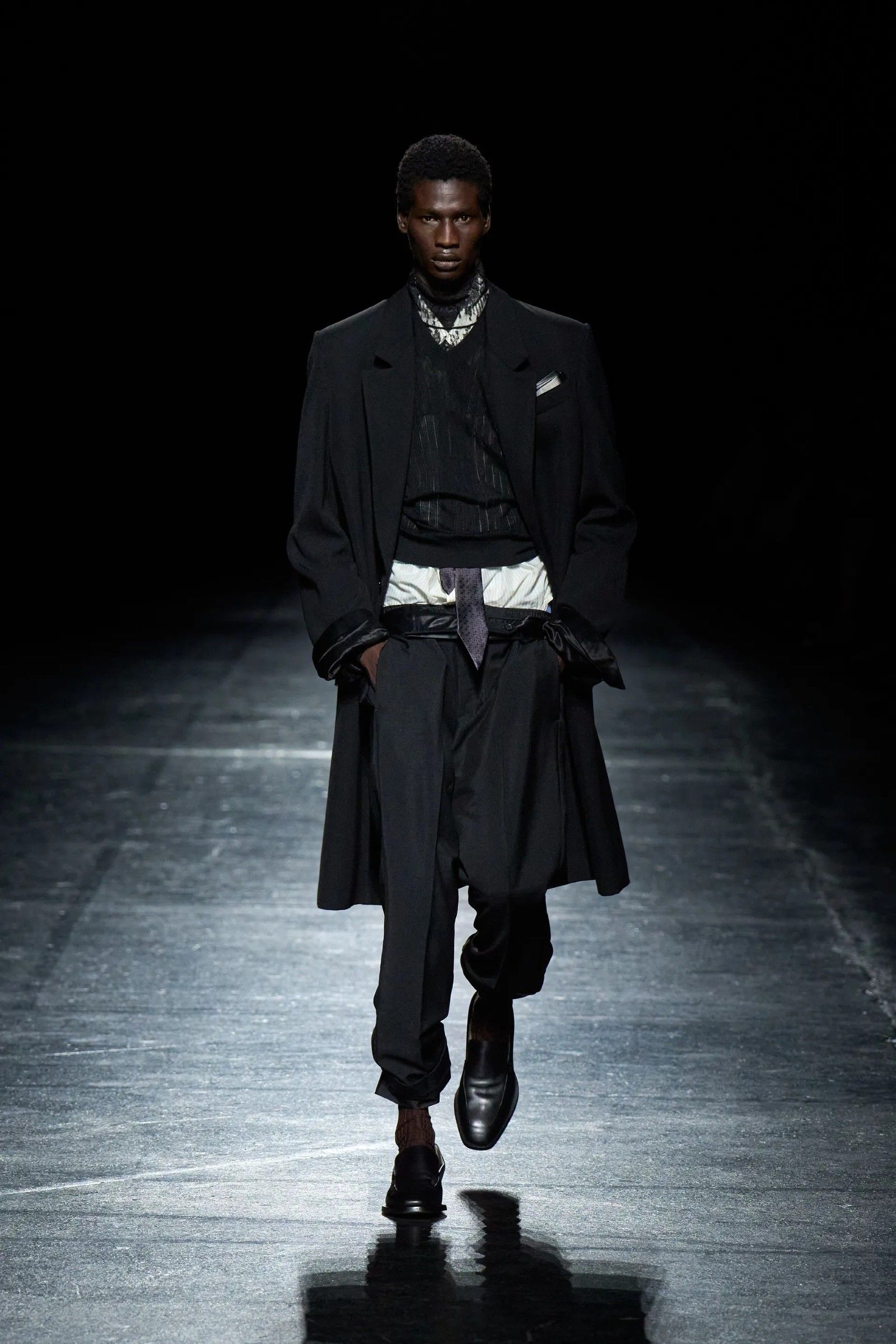
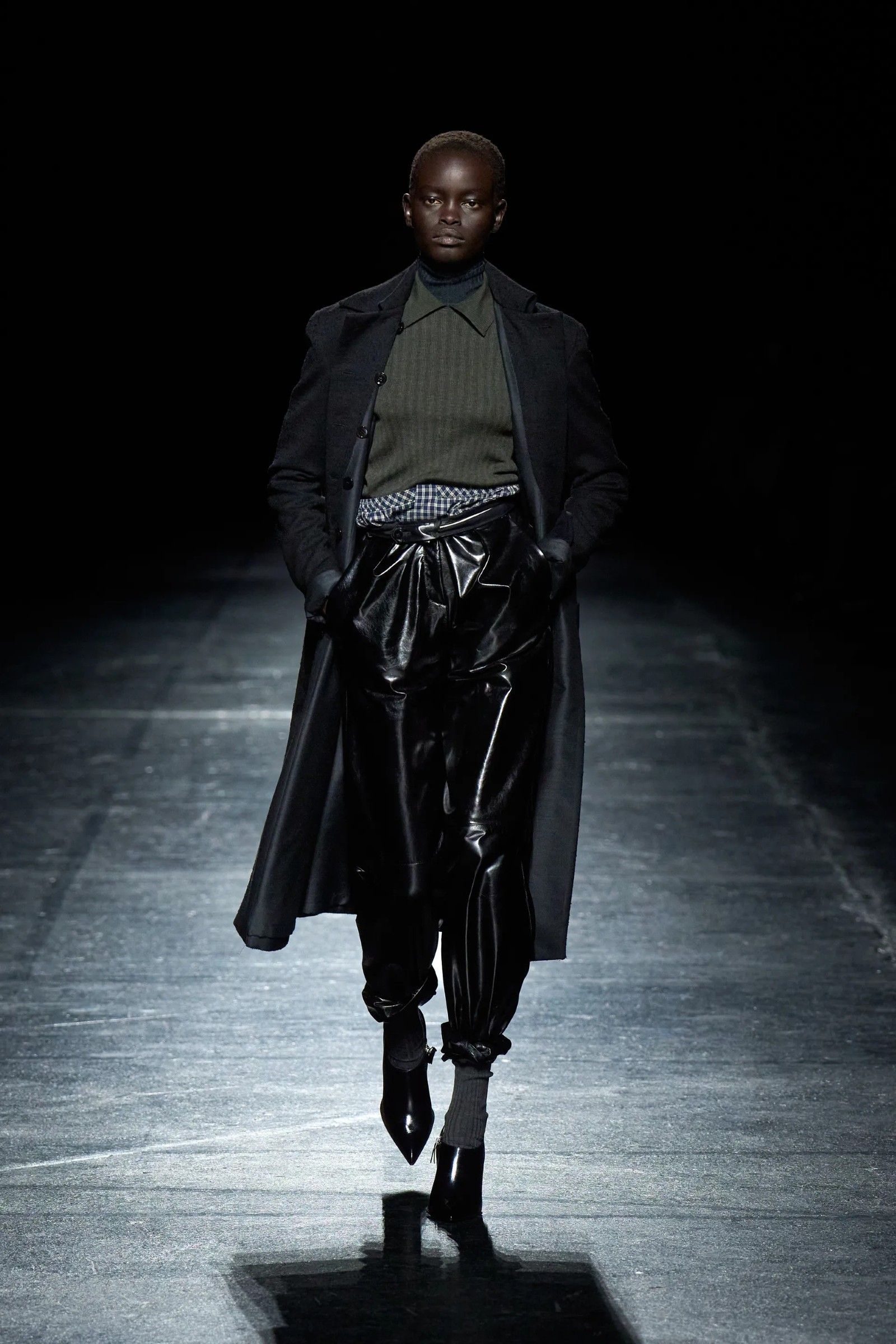
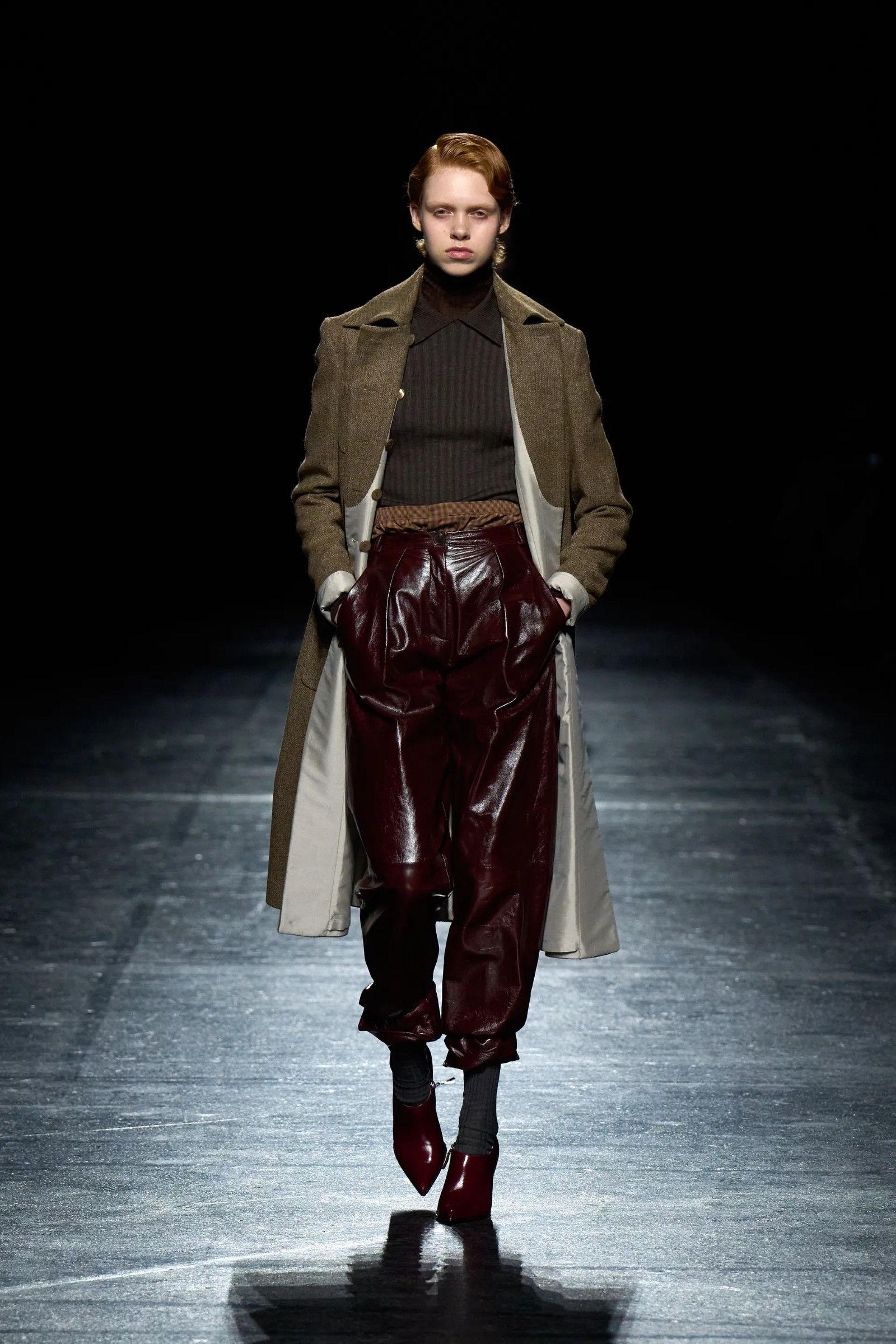
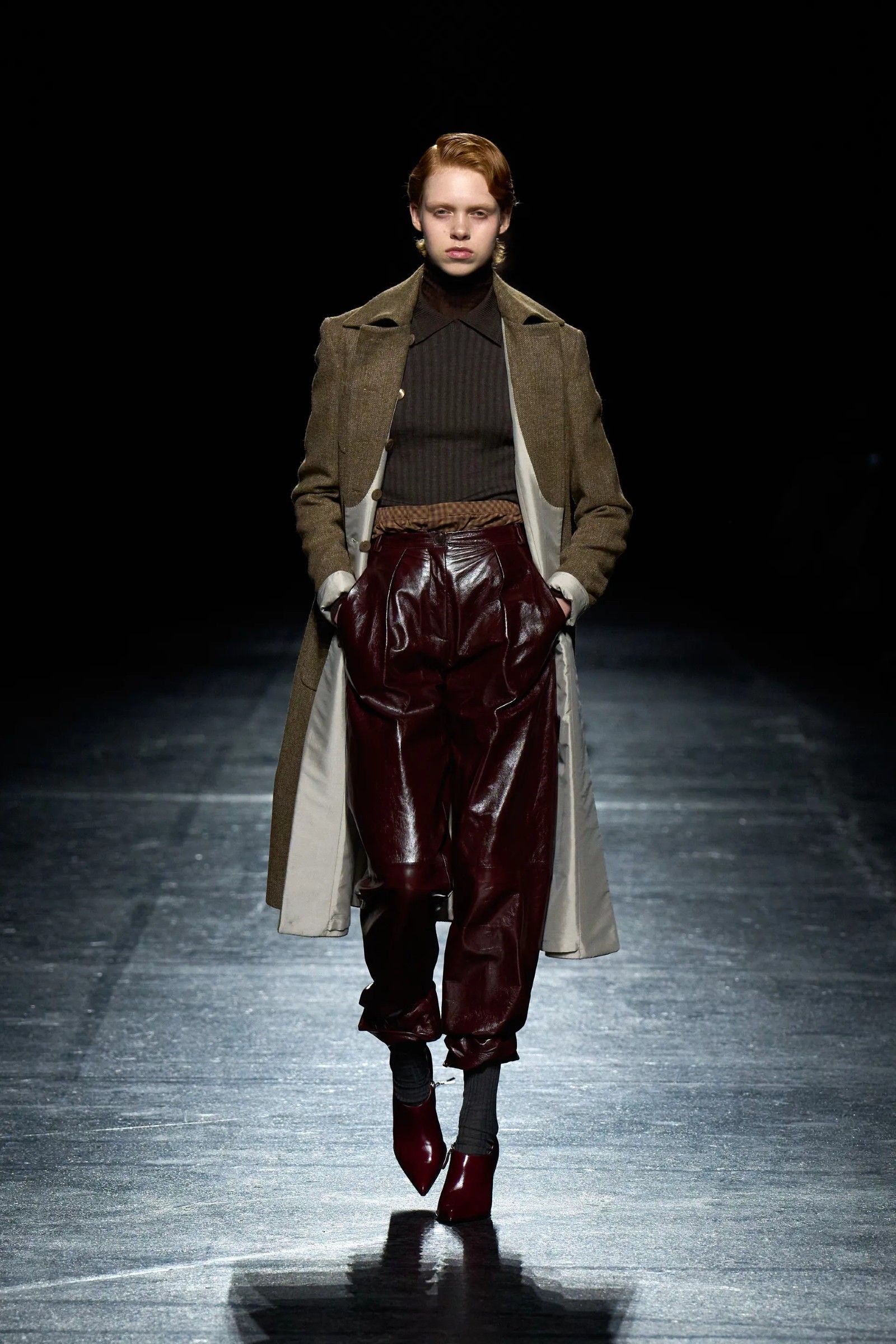
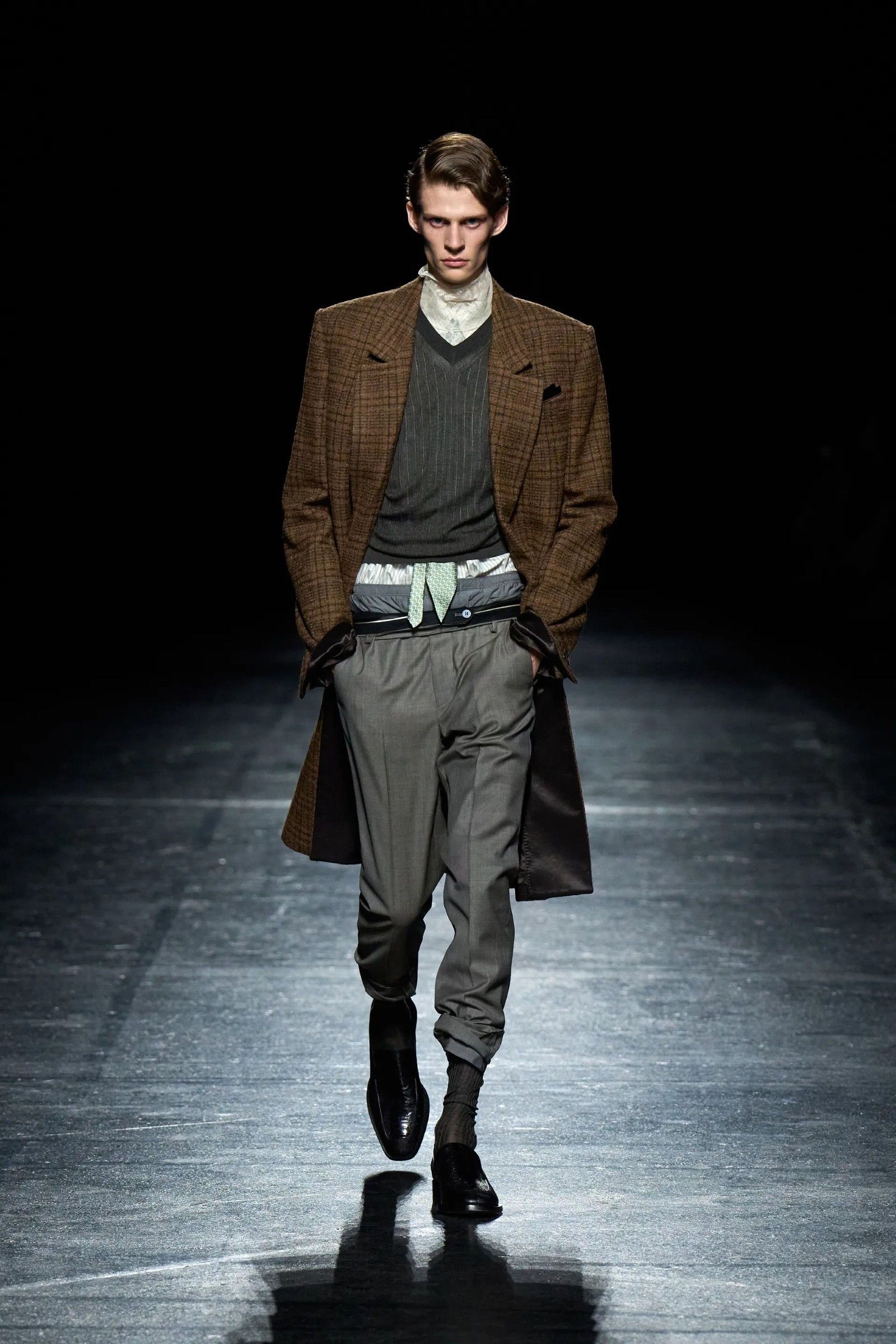
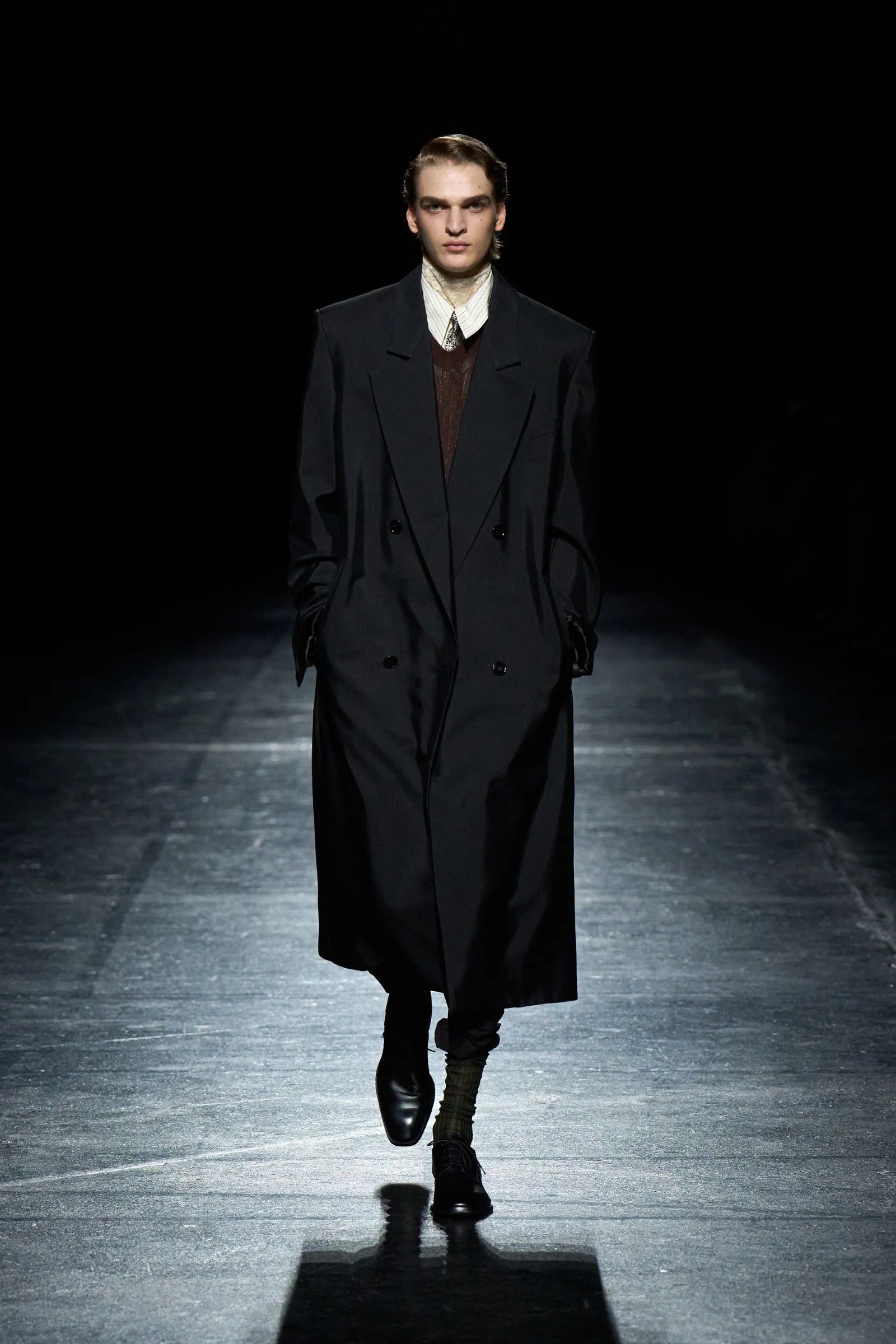
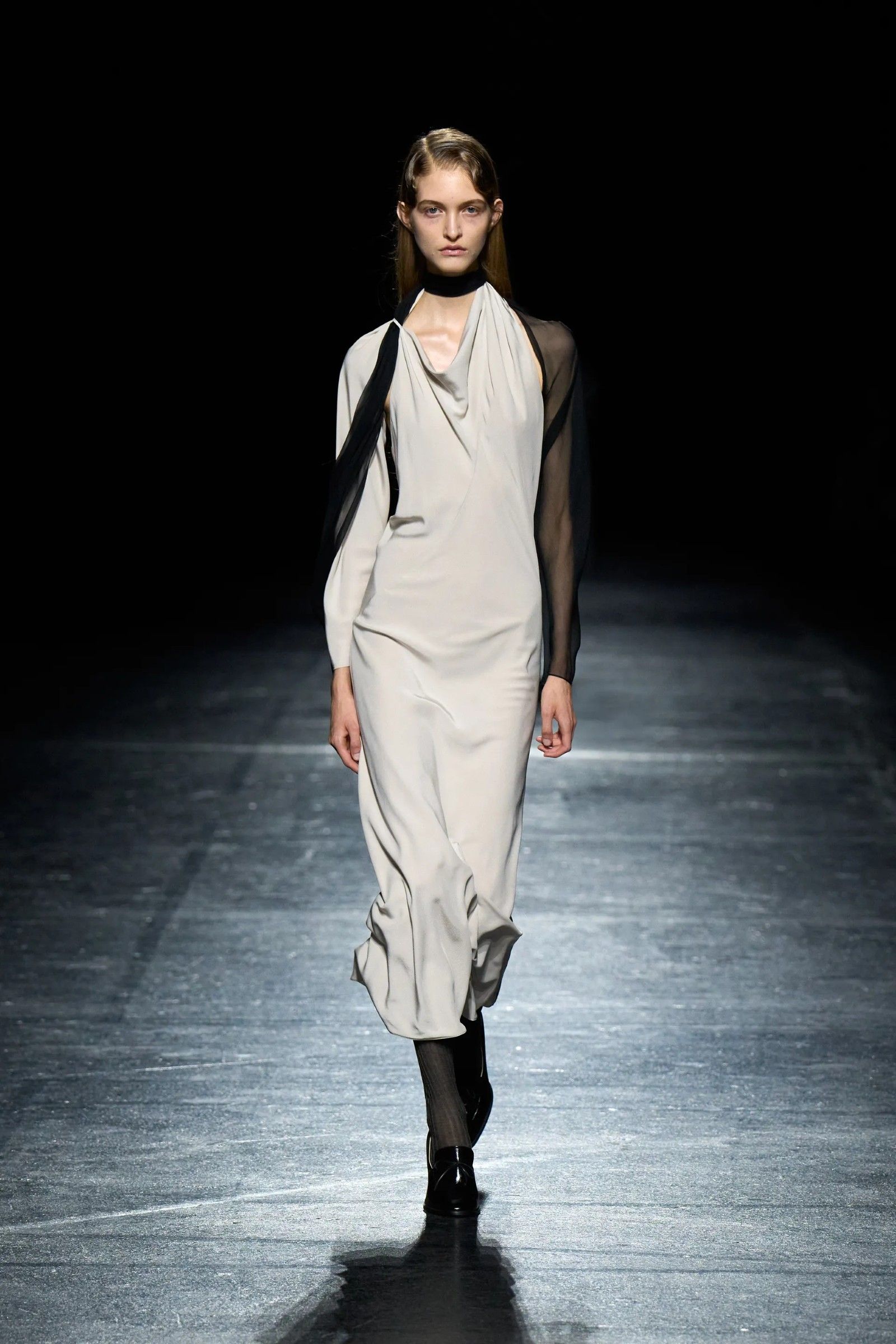
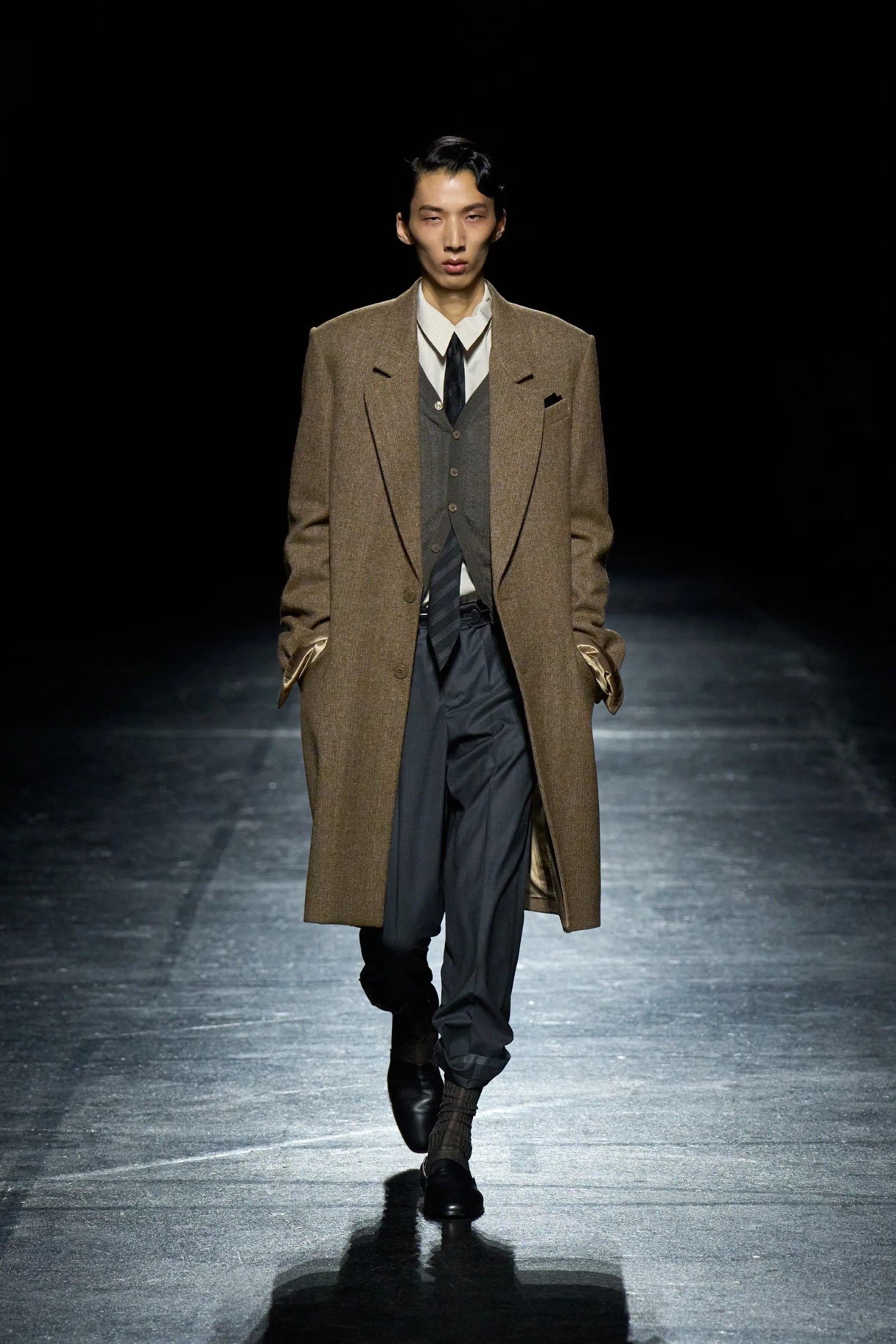
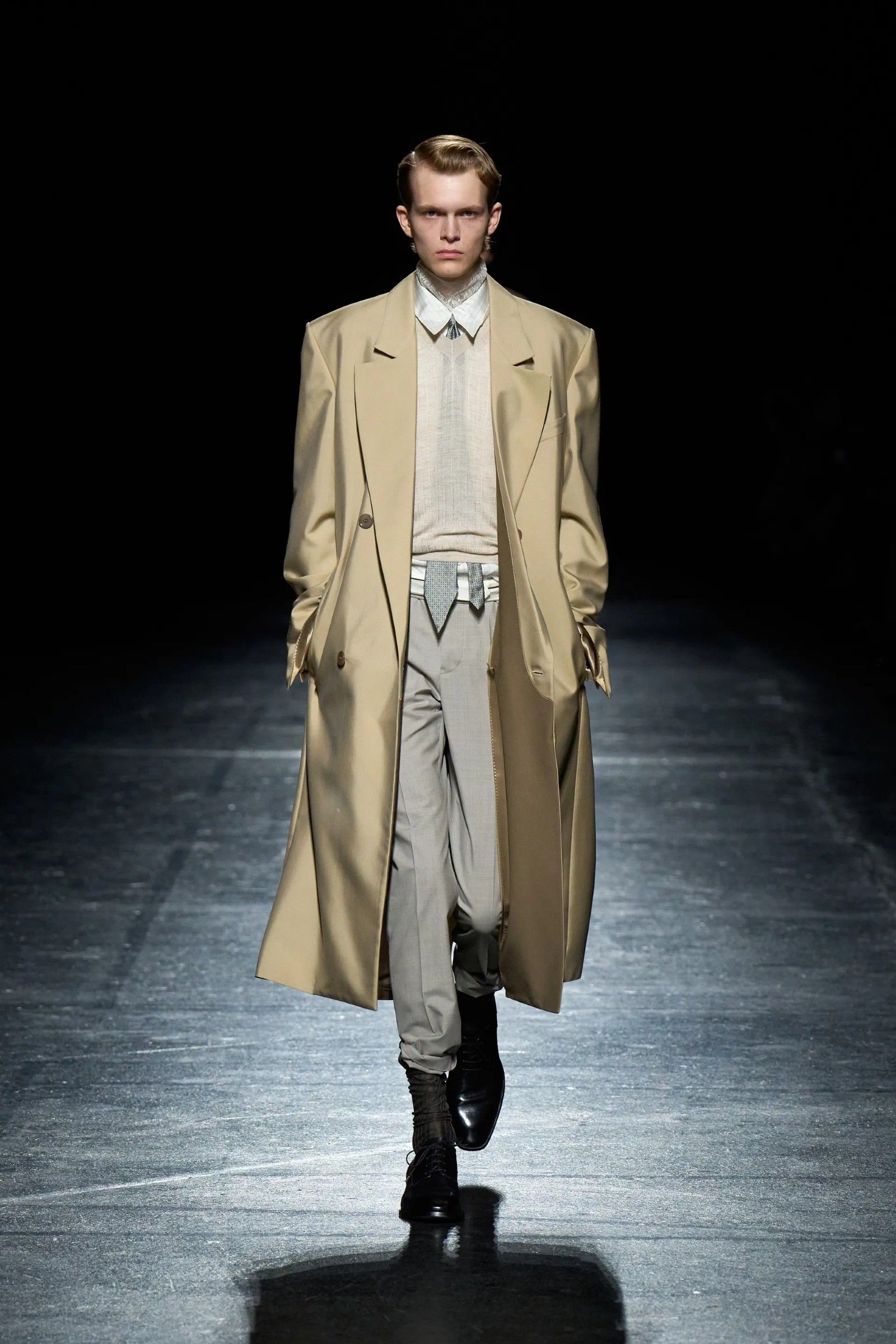
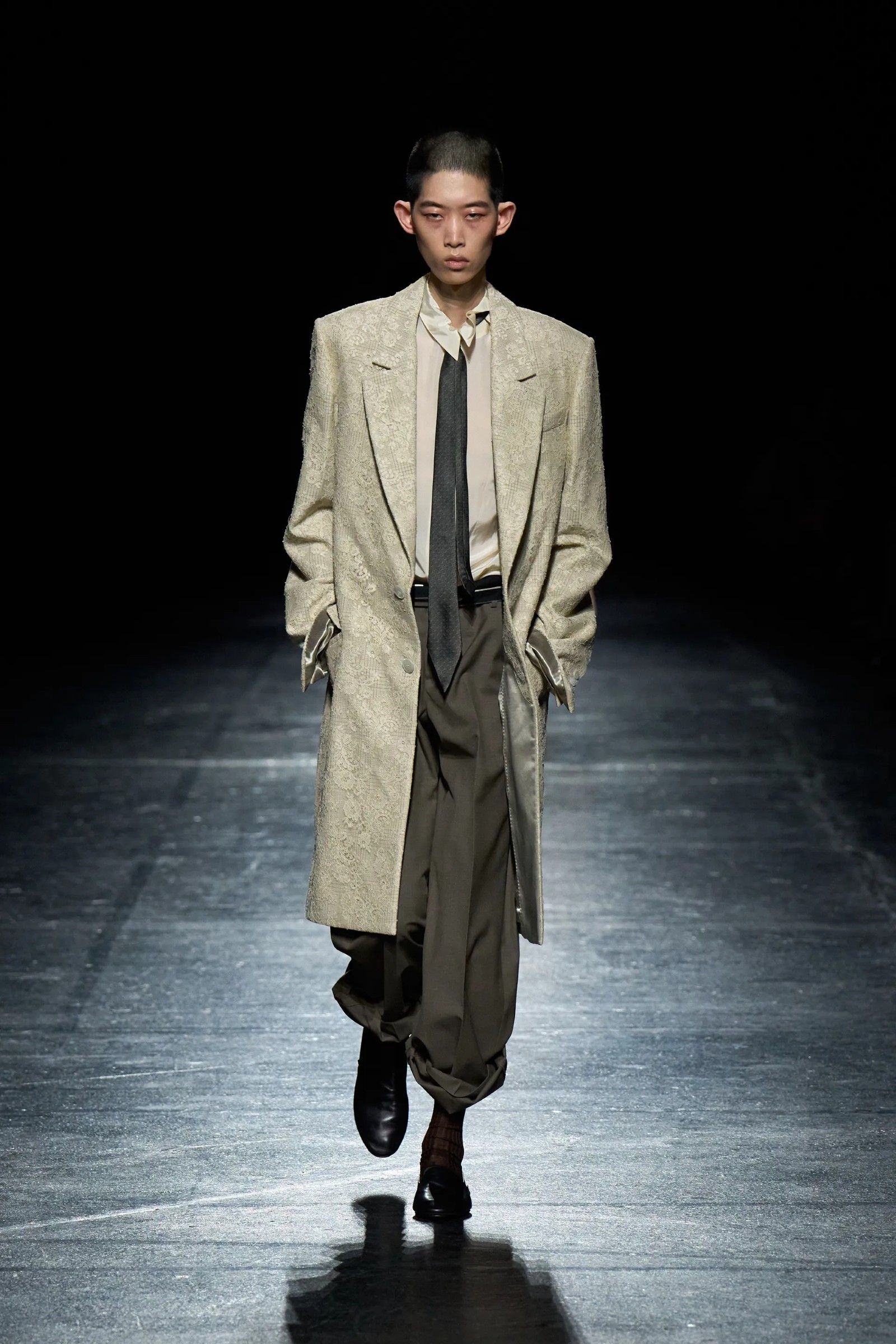
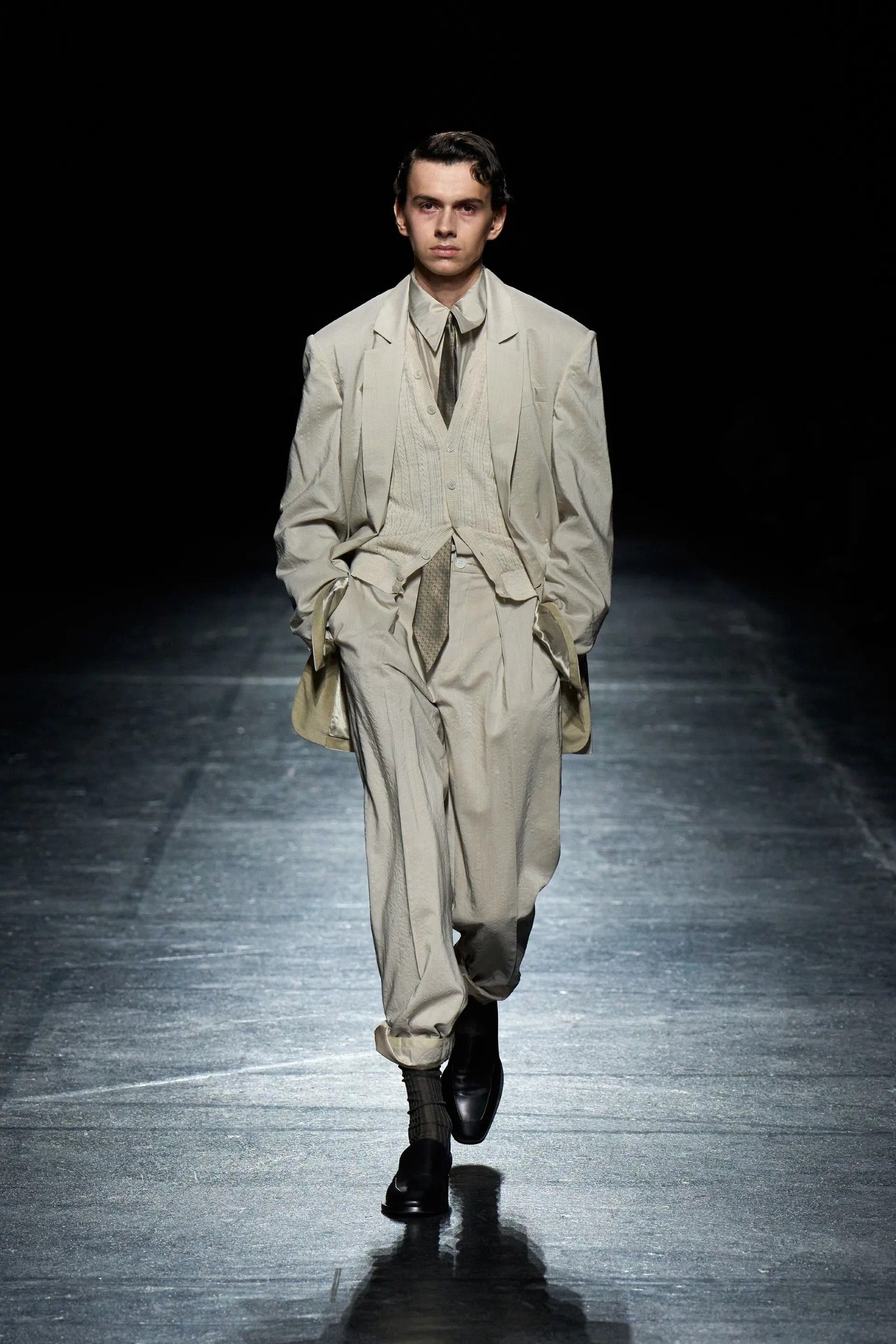
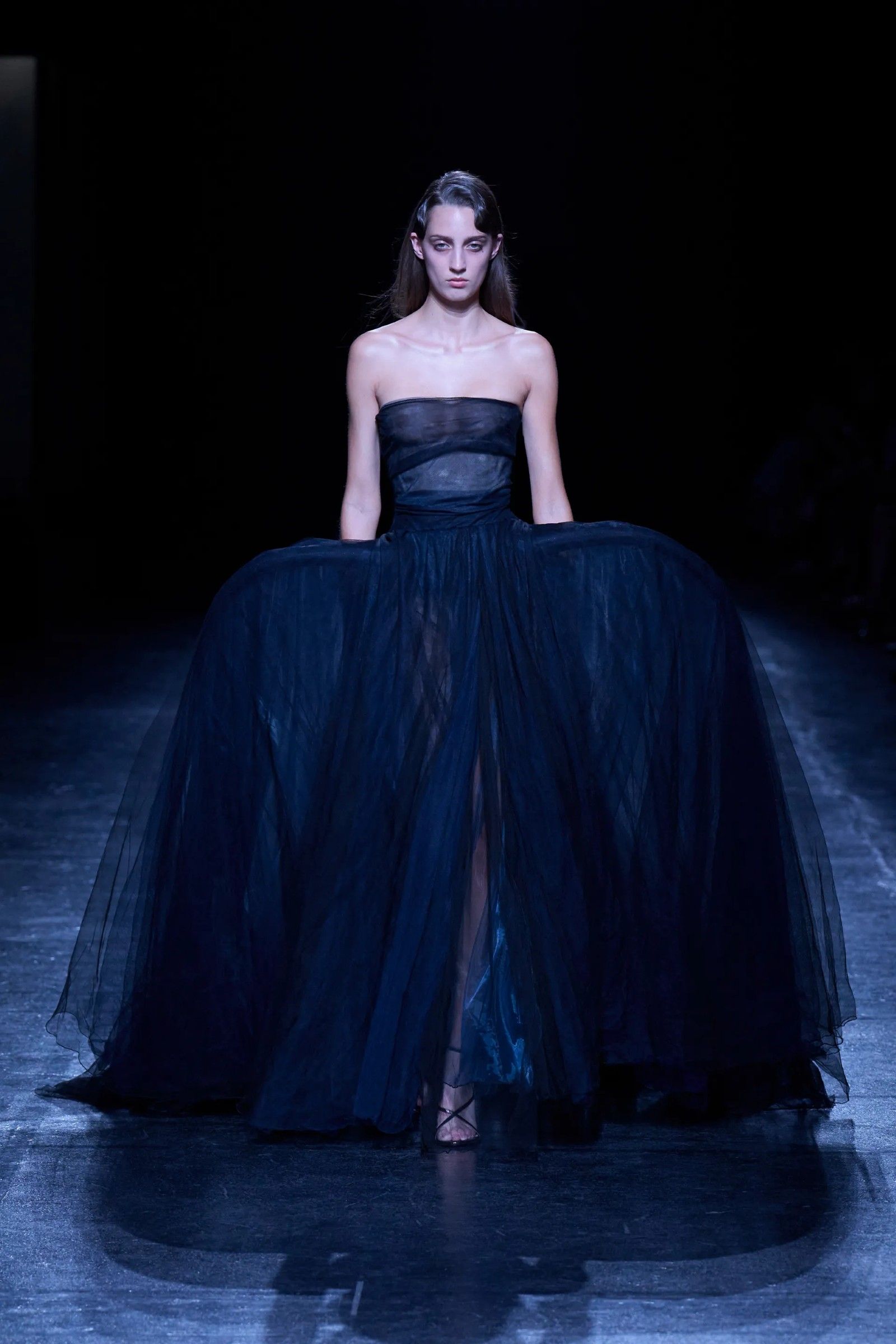
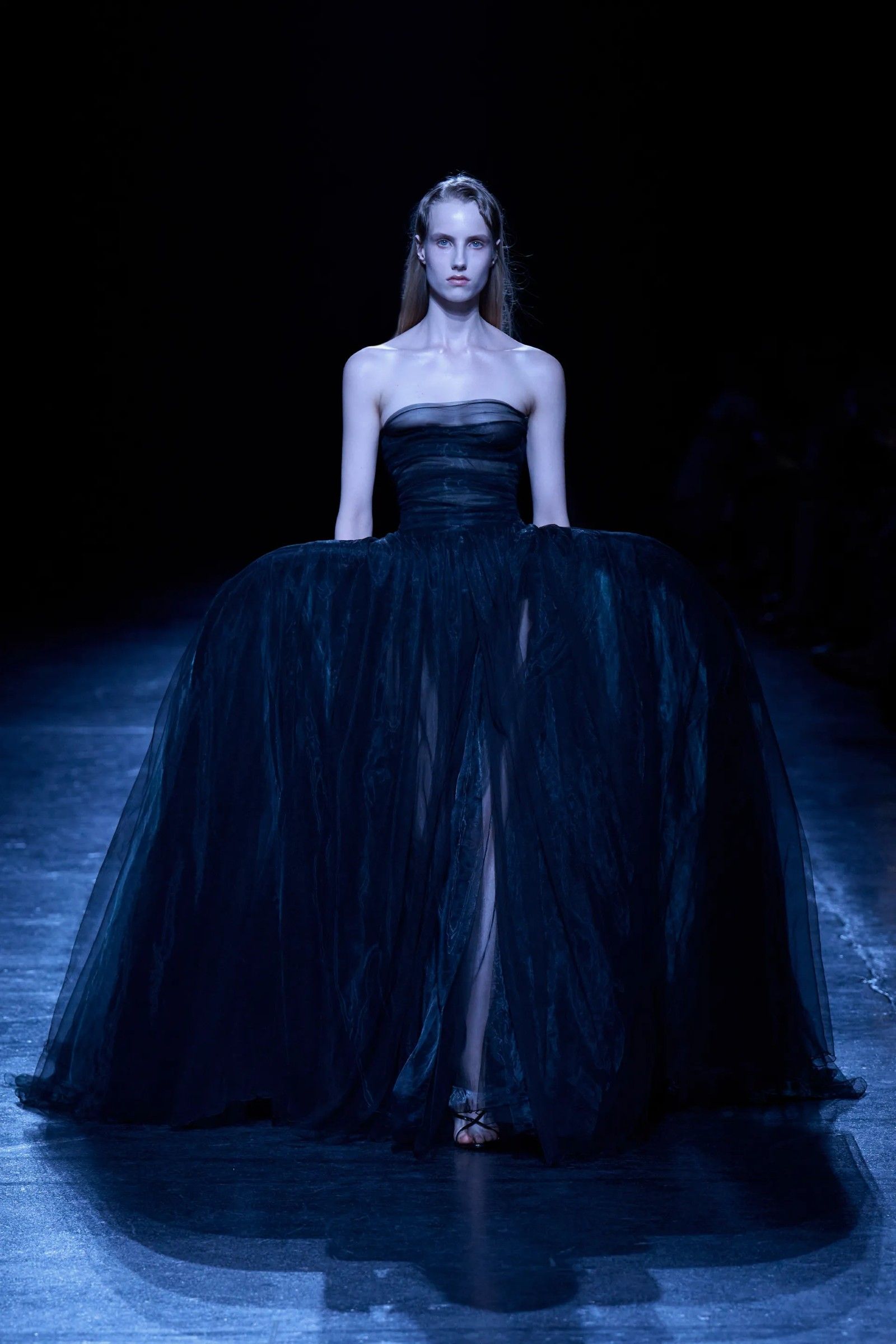
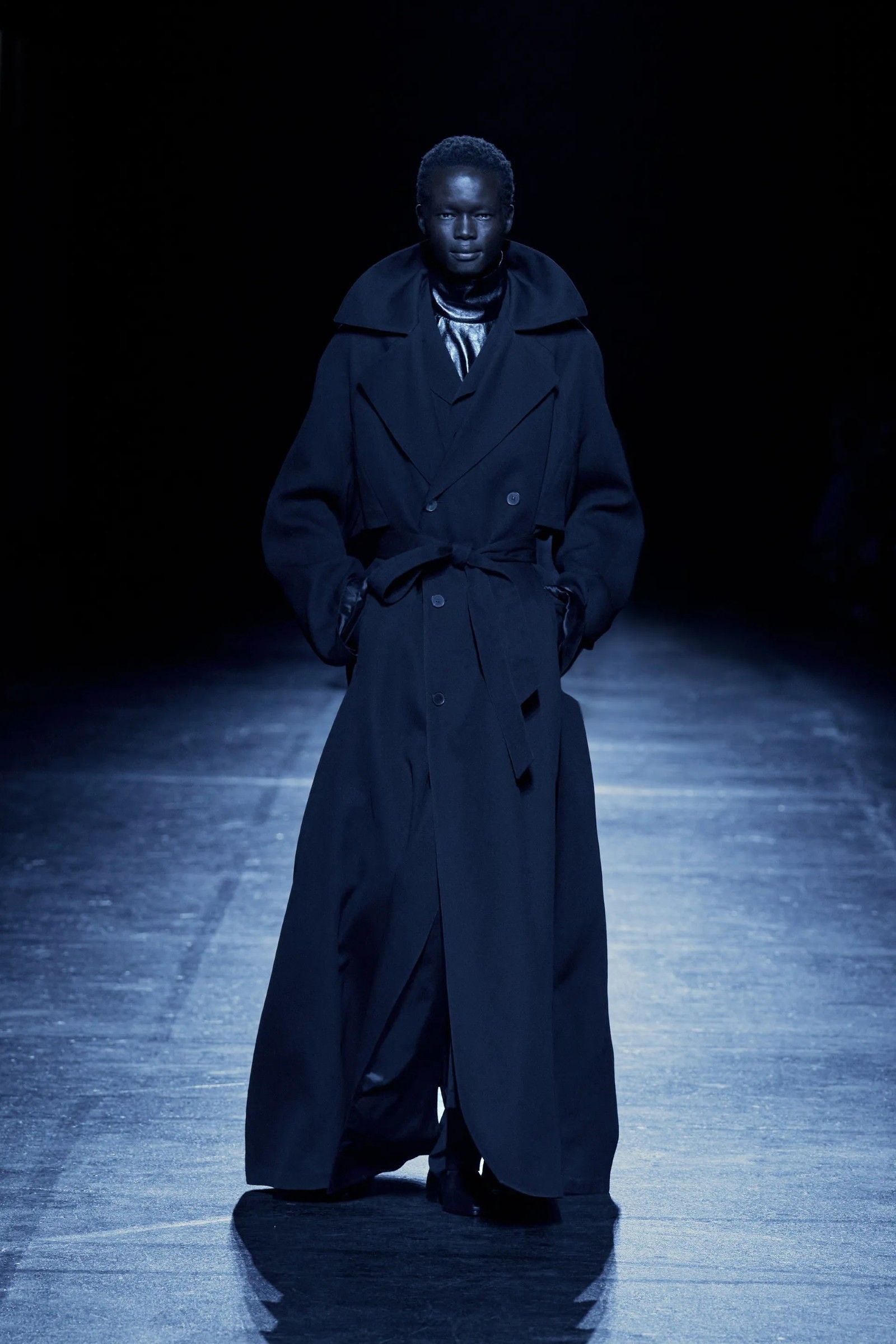
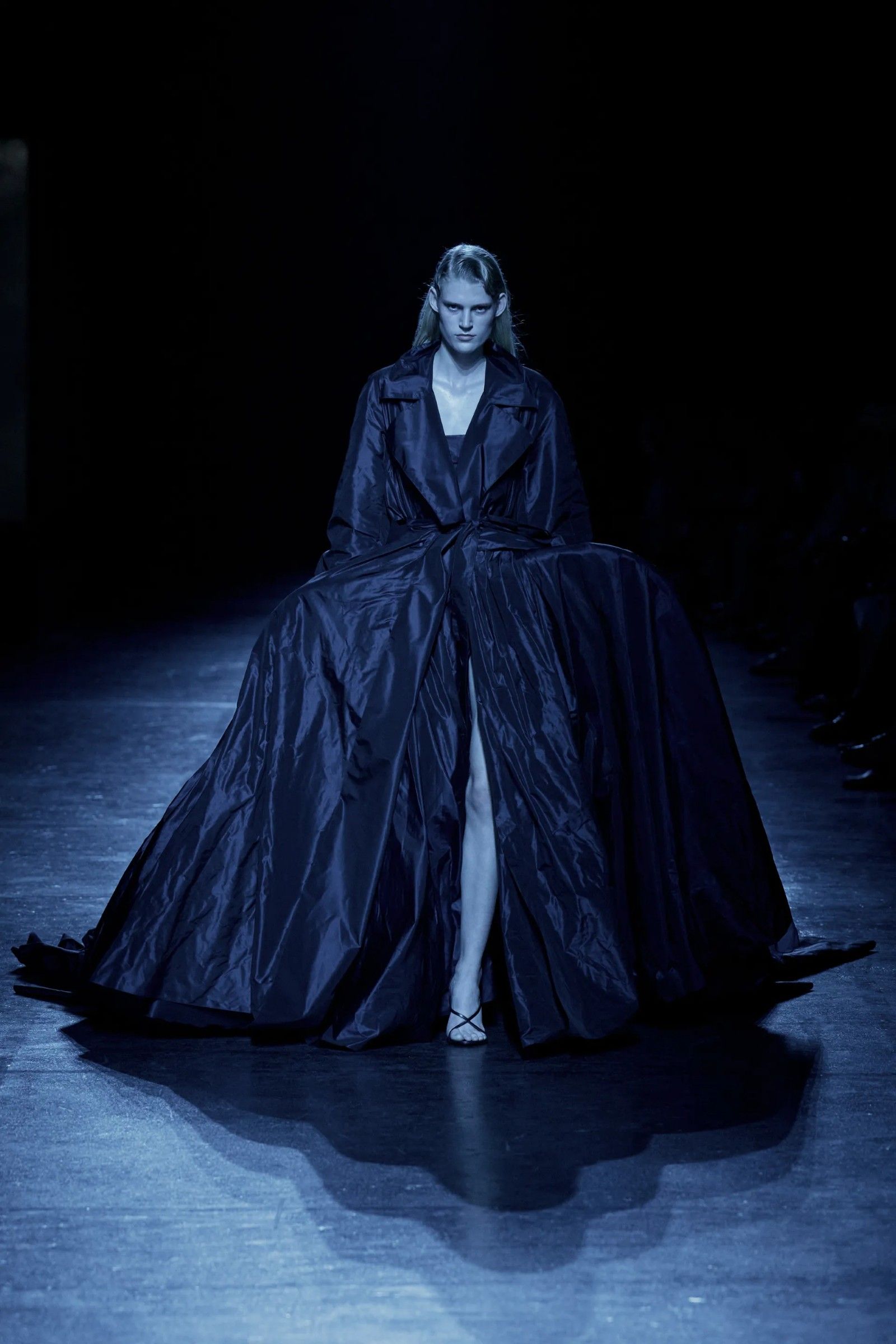
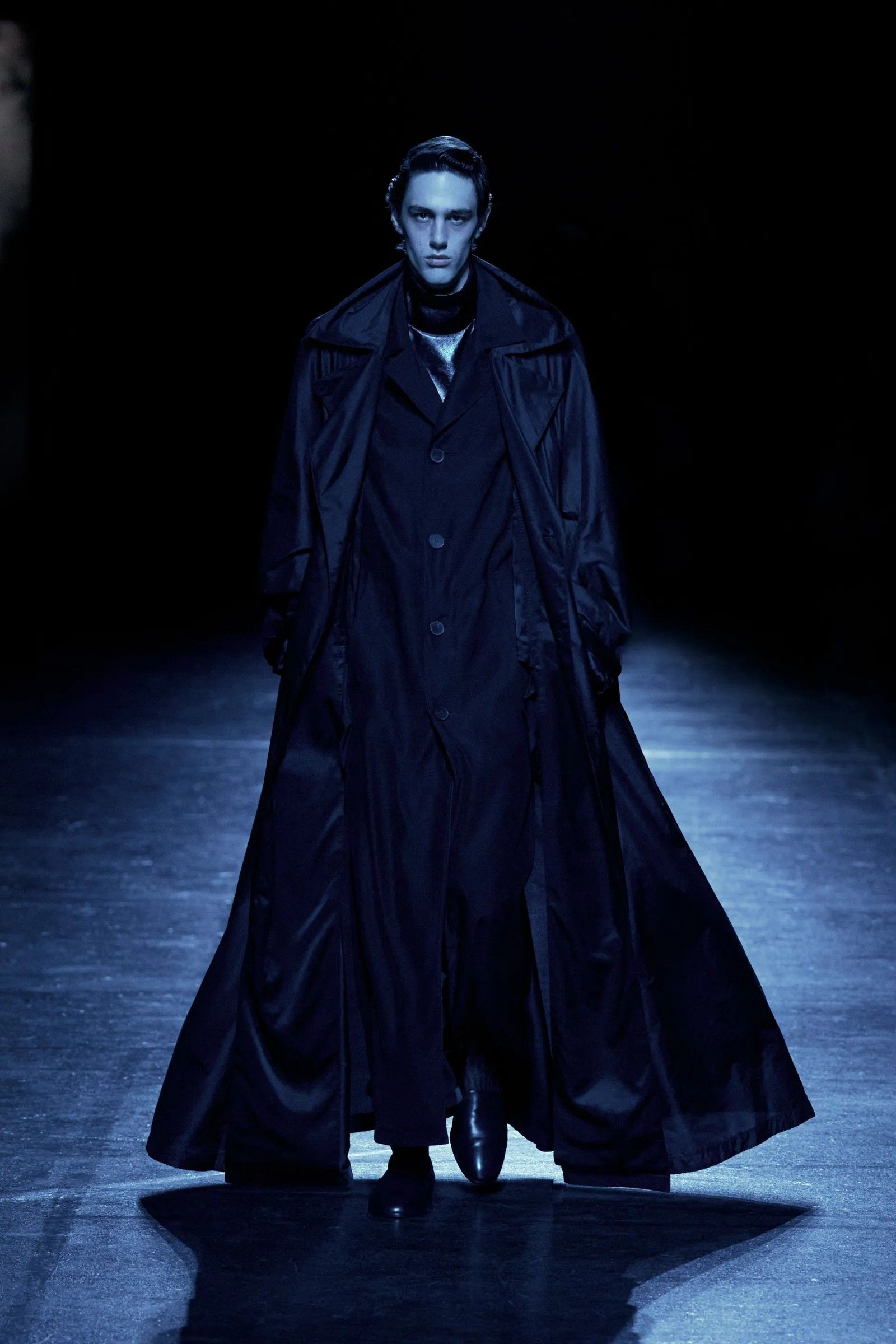
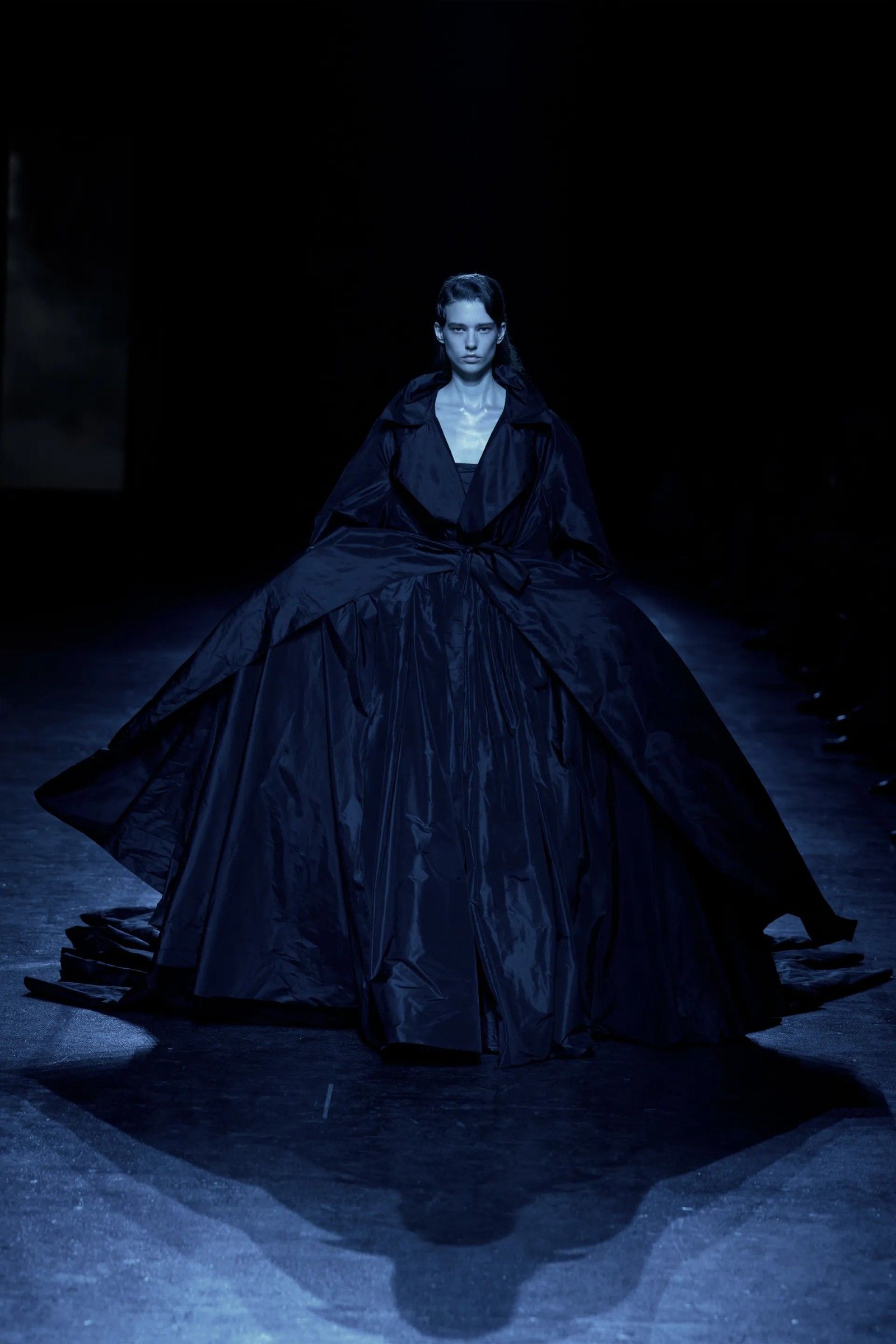
We know what inventiveness and what degree of theatricality Olivier Theskeyns is capable of unleashing on the runway. And it is precisely for this reason that his return to the scene yesterday in Paris, ahead of Couture Week, with the inaugural collection of his new brand Boloria, was surprising: with a measured hand, without yielding to easy drama, the cult Belgian designer, formerly creative director at Rochas, Nina Ricci, and Theory, as well as founder of his own label with its dark, gothic aesthetic—has, so to speak, struck the first notes of the overture that will serve as the theme for his future symphonies. Yesterday's show was, in fact, apparently very simple: a series of pseudo-panier dresses as an opener, followed by a succession of tailored looks that moved, semi-fluidly, between the masculine and the feminine. Should Theskeyns have surprised us more?
Fashion as a system
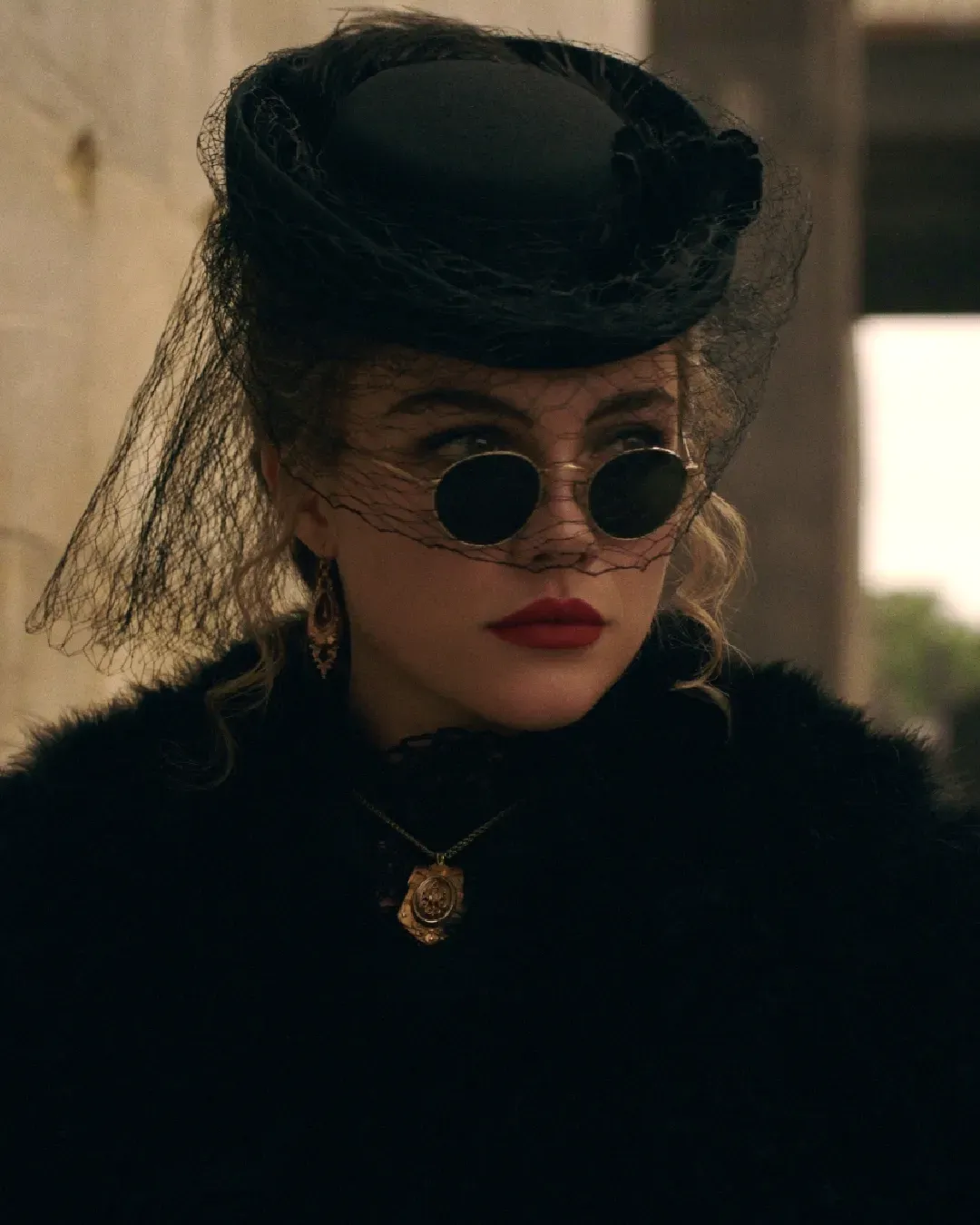
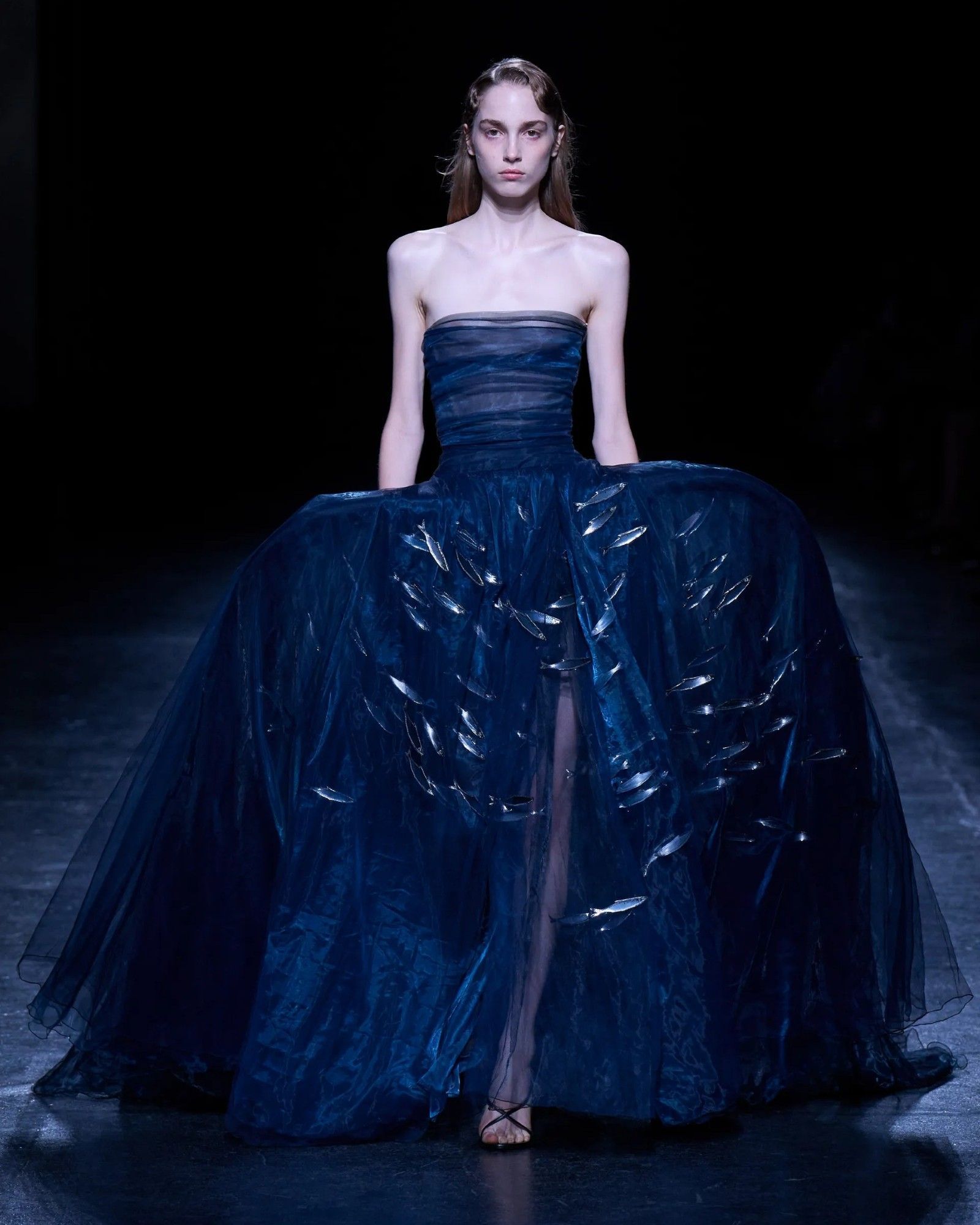
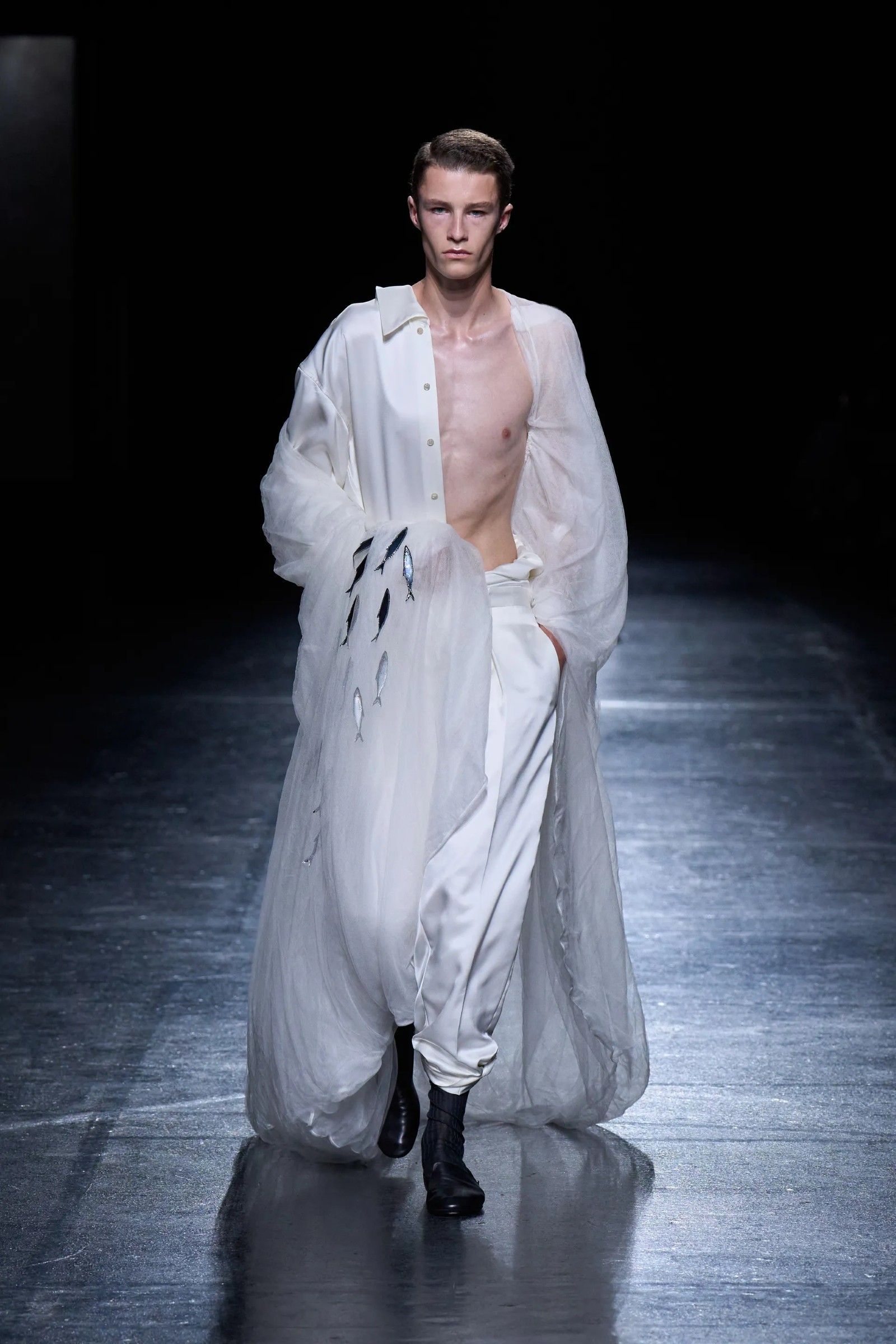
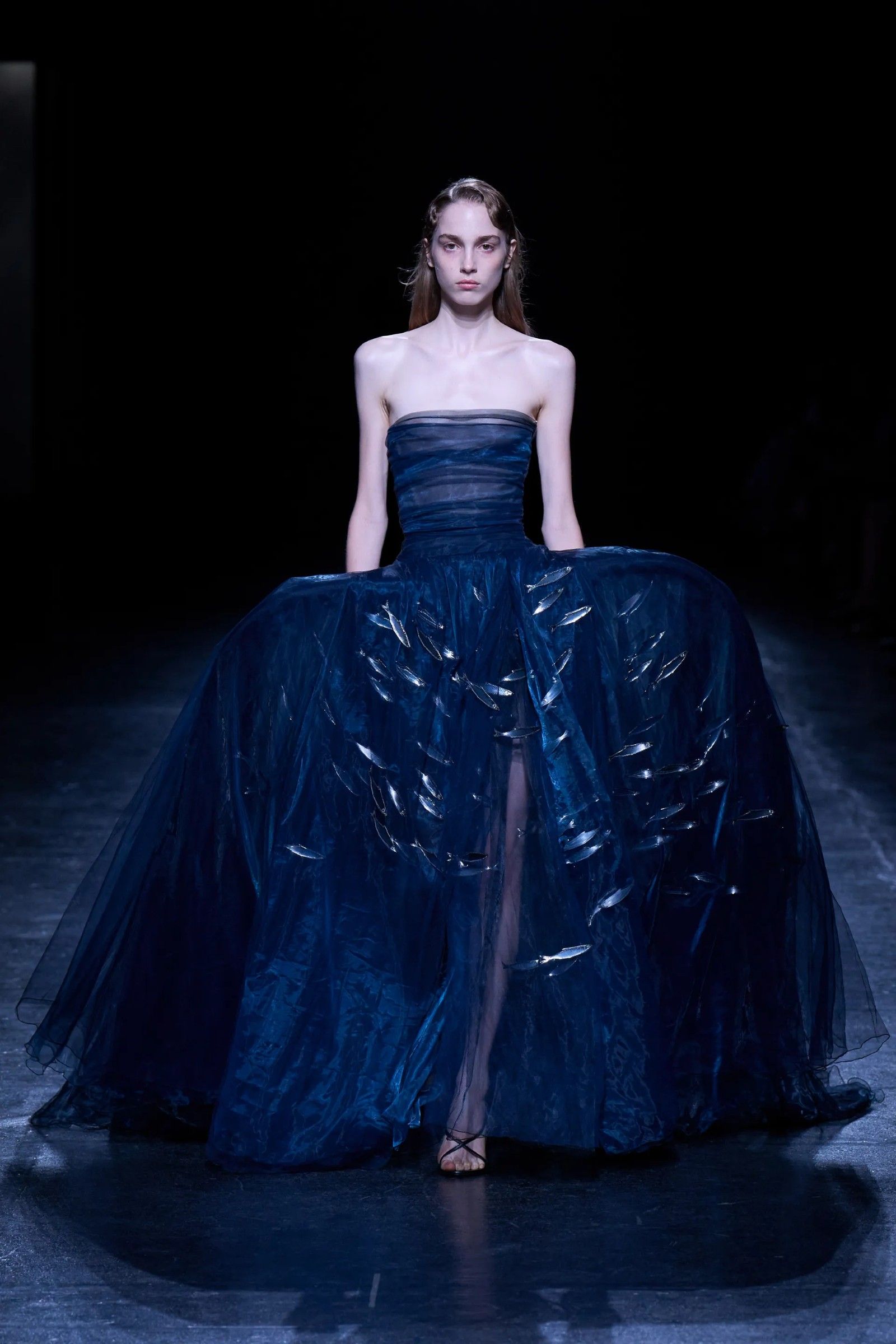
The show opened with a series of seven more imaginative looks that will be produced only on request and made to measure, consisting of dresses with two-dimensional paniers, wide at the front but flat at the back, with immense trains. These dresses were constructed as a layering of black and midnight-blue tulle draped in a chaotic cascade of fabric. These seven opening notes also featured no less dramatic outerwear, as well as an extraordinary skirt in which the silhouettes of a school of silver fish seemed trapped mid-air in the tulle. These looks represented the dimension of dreams and were accordingly lit by blue lights which, shortly afterwards, gave way to normal lighting representing wakefulness.
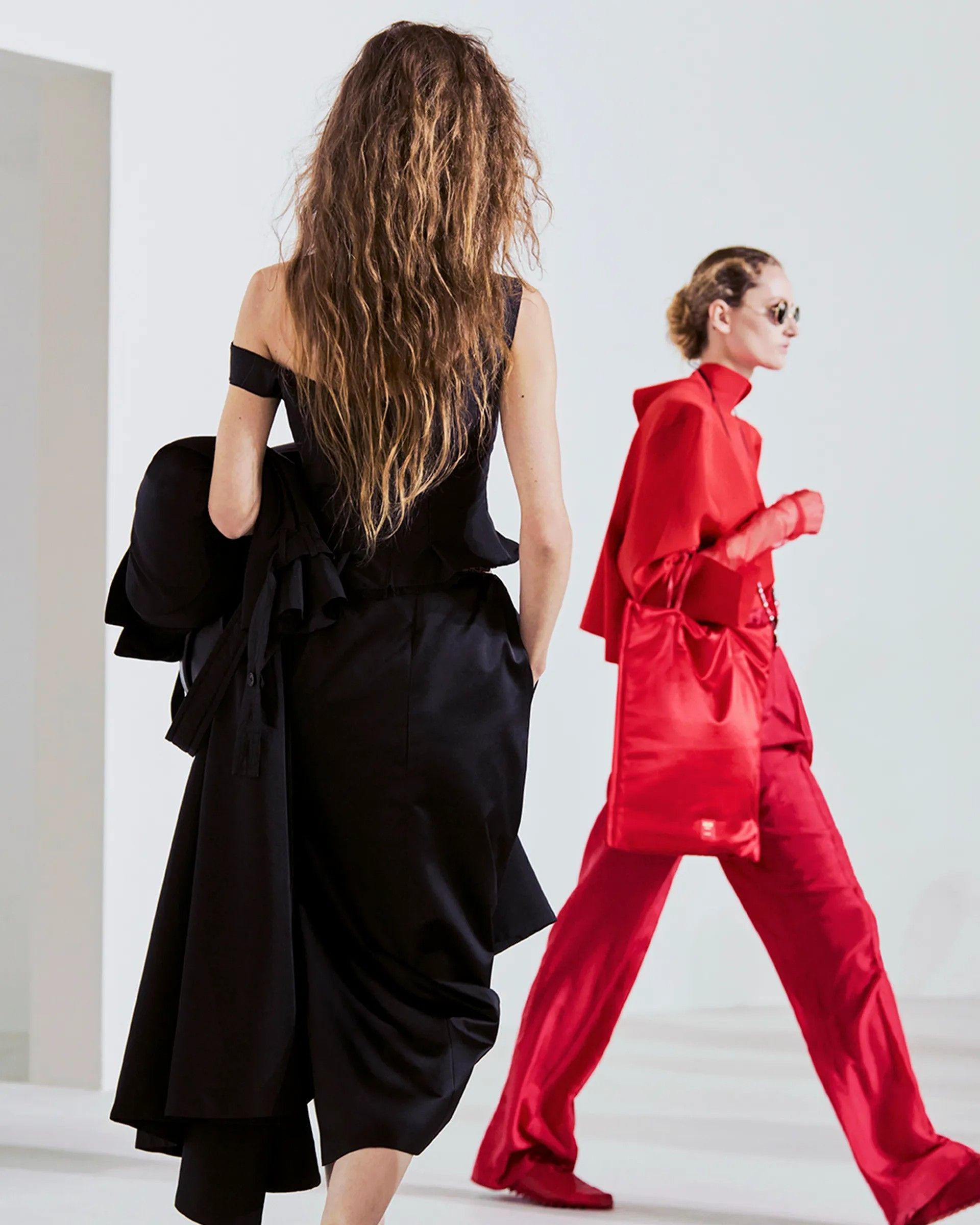
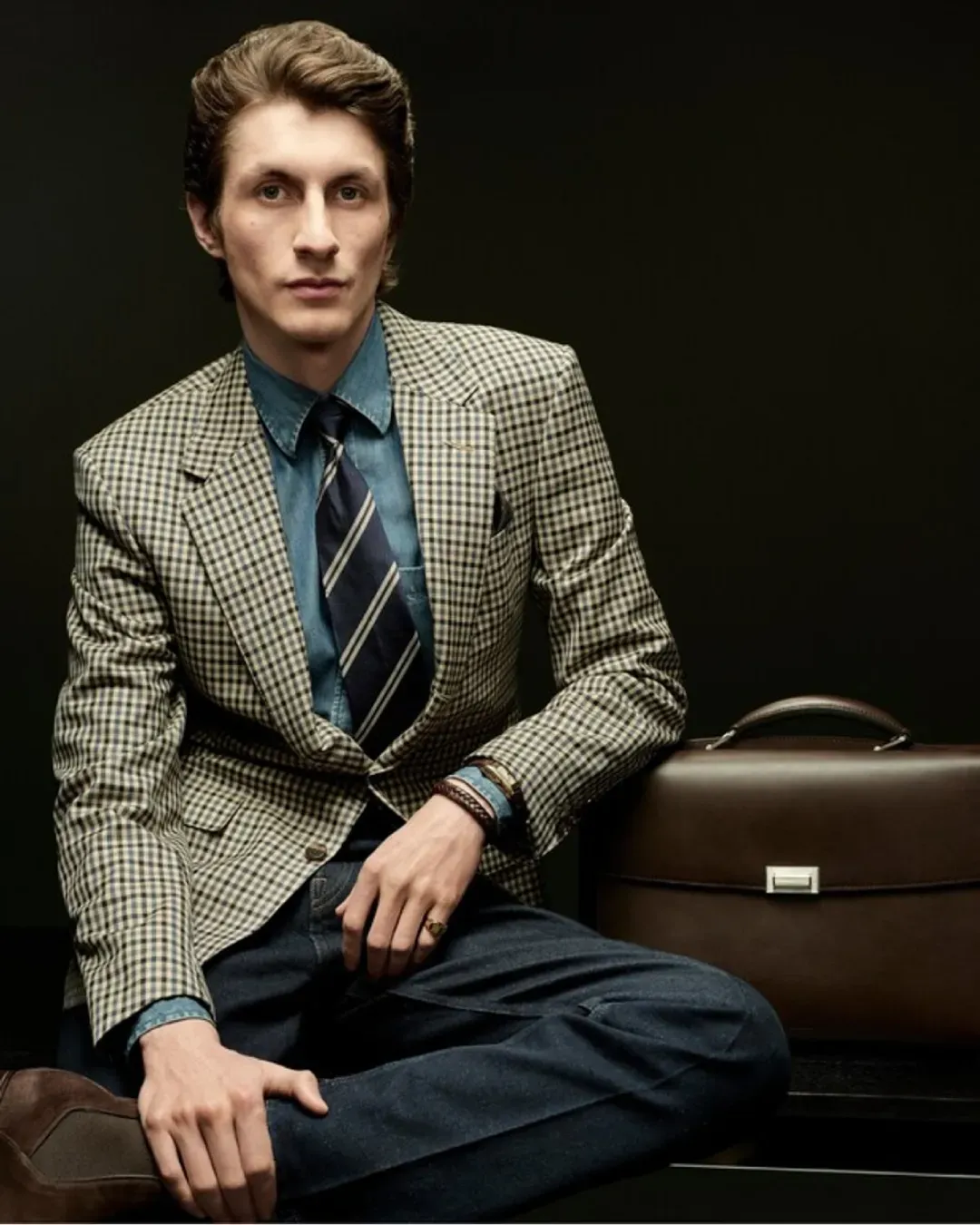
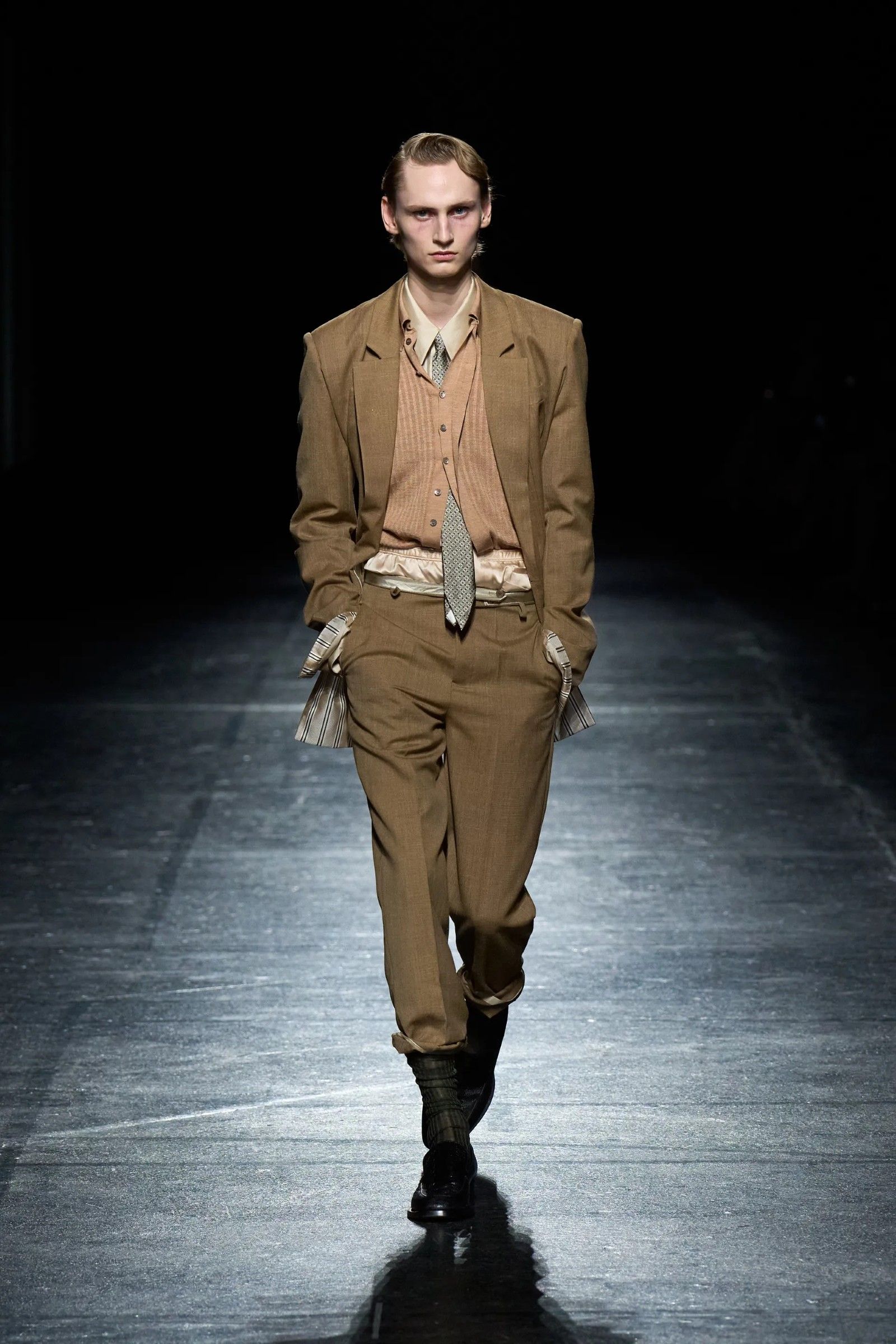
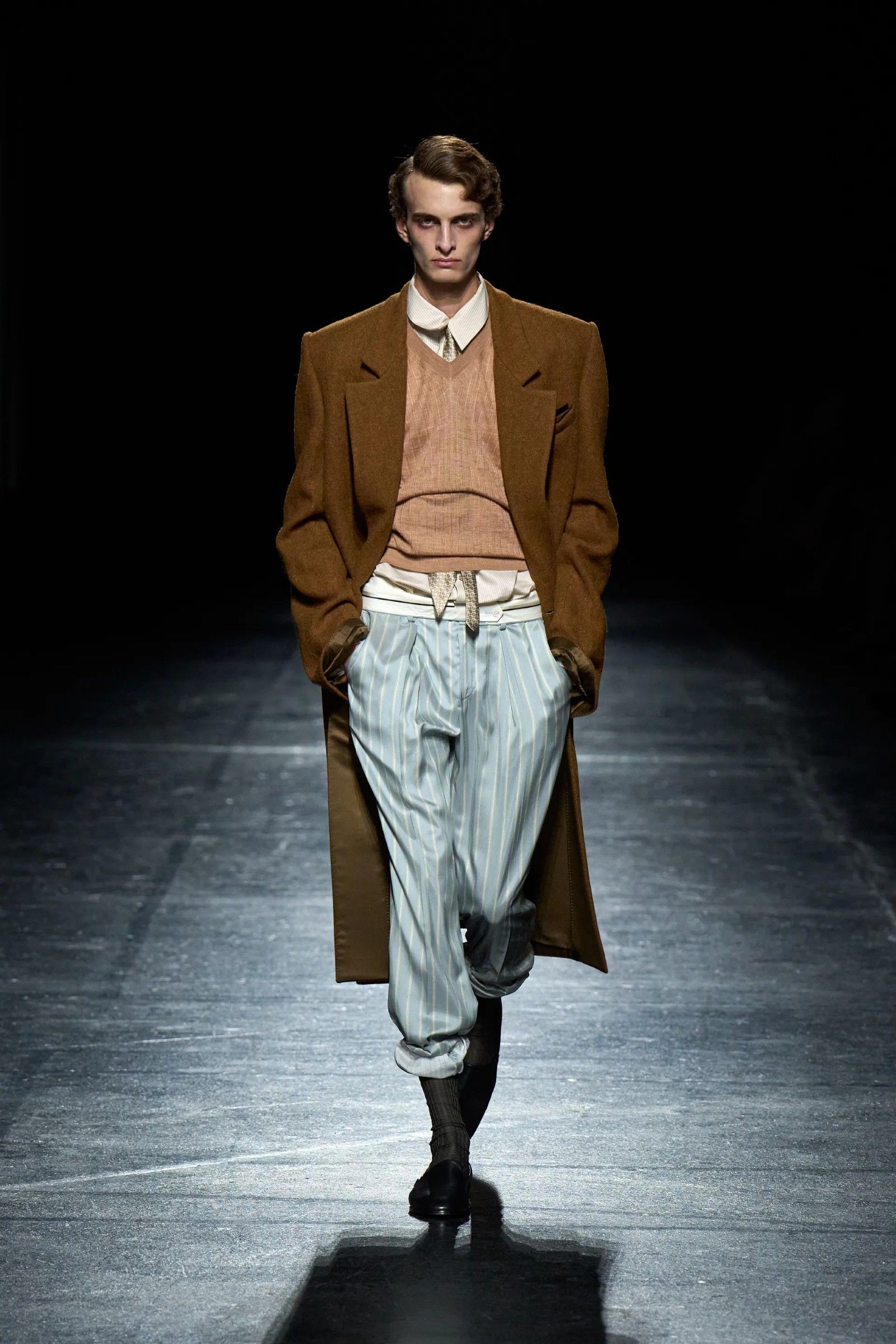
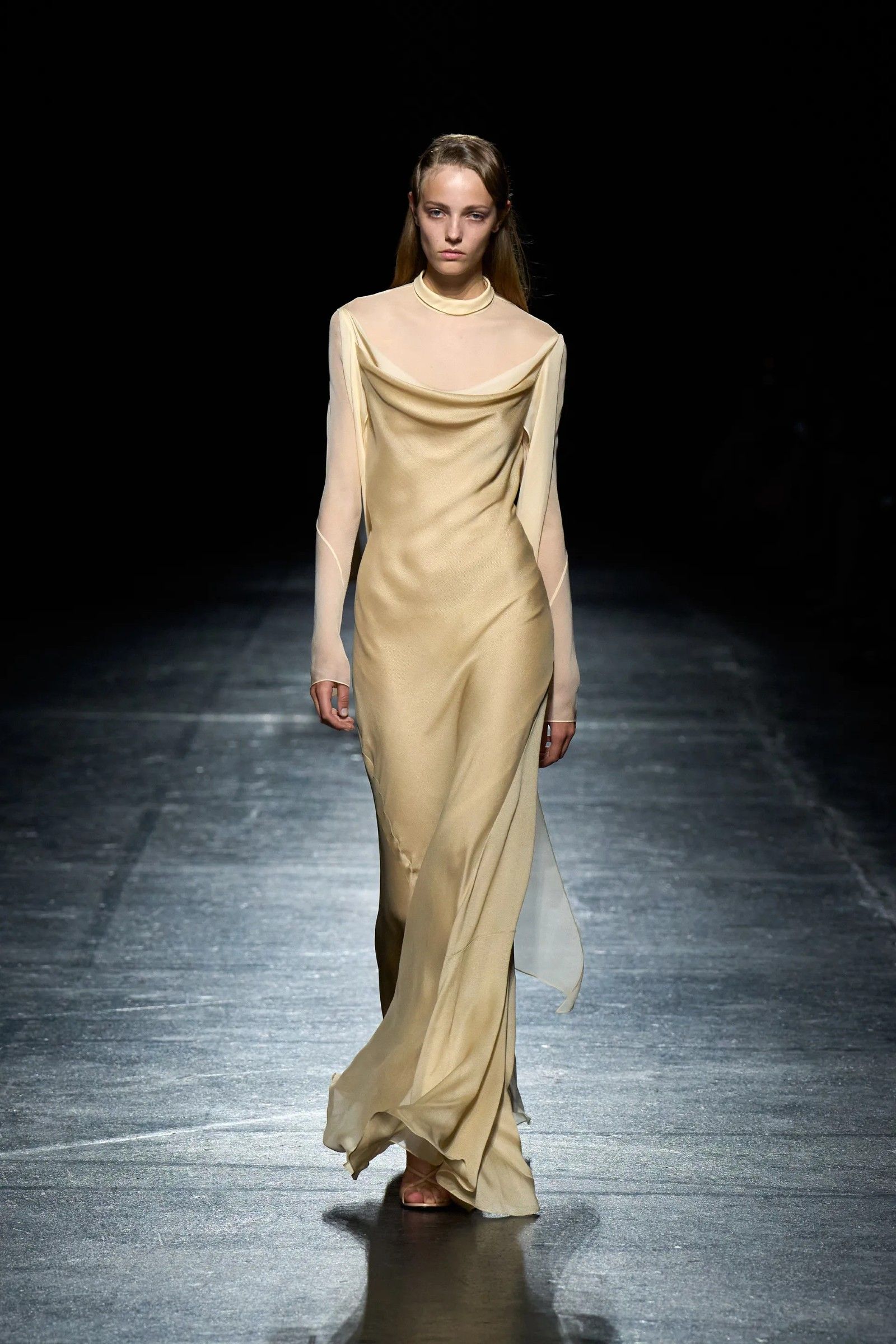
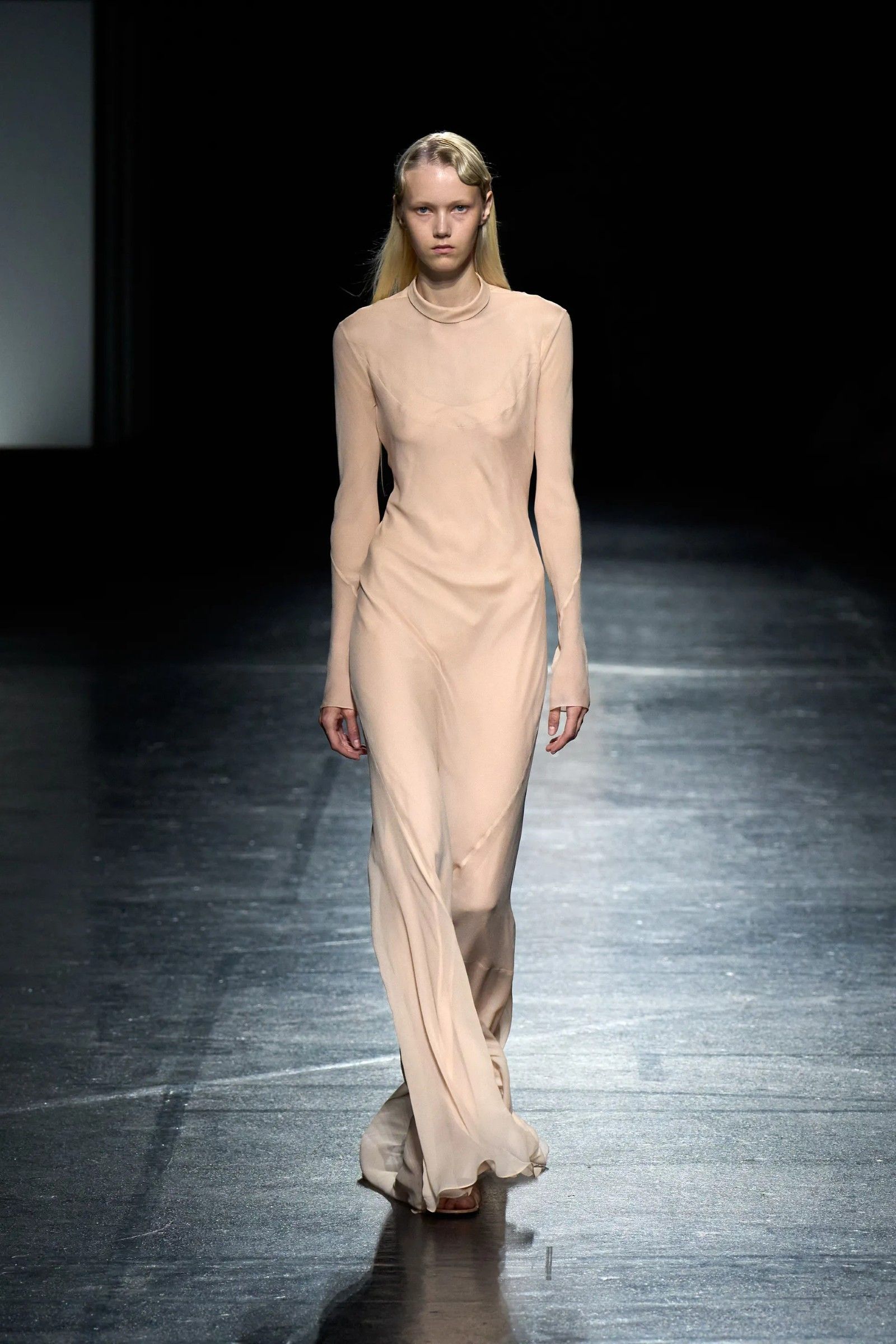
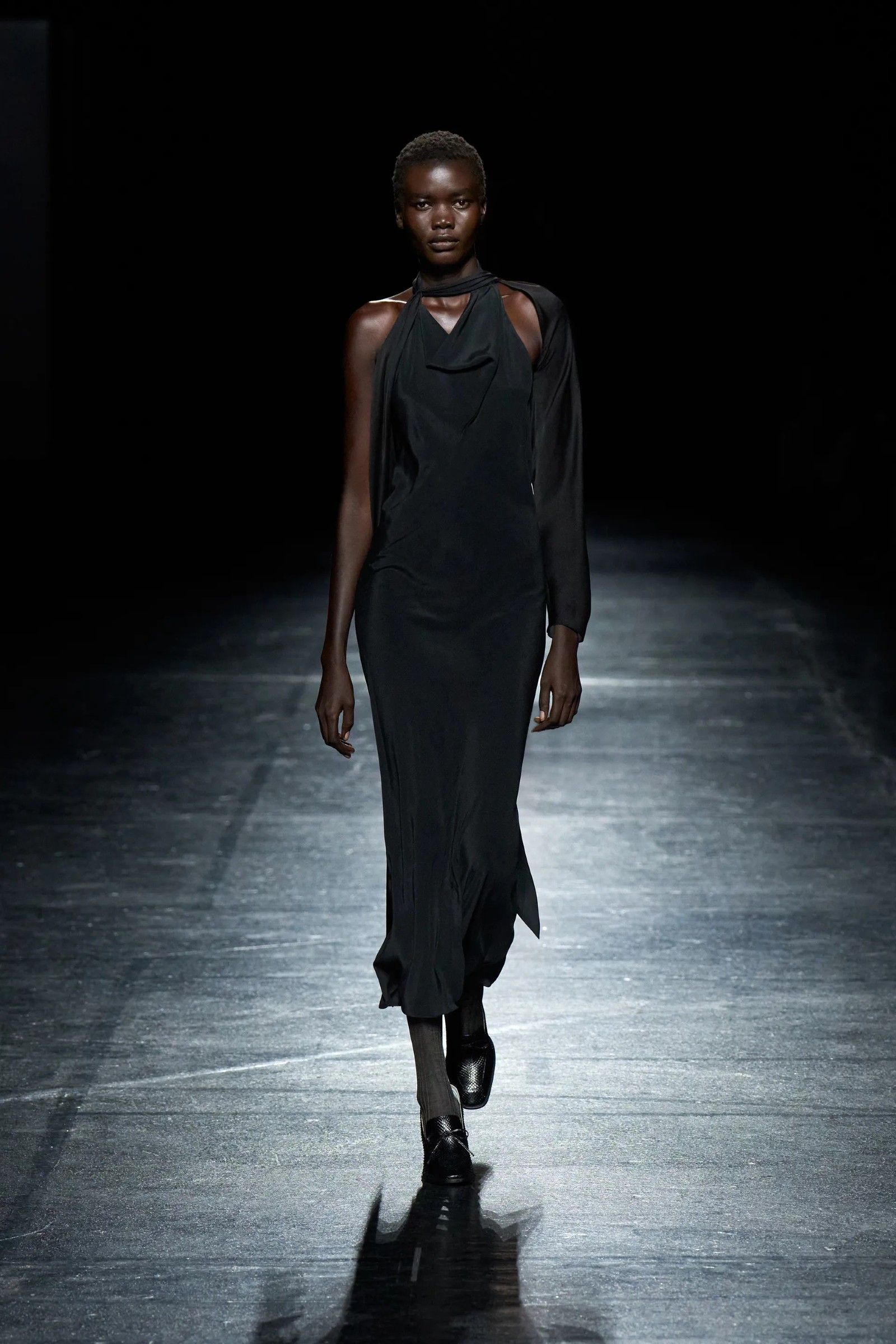
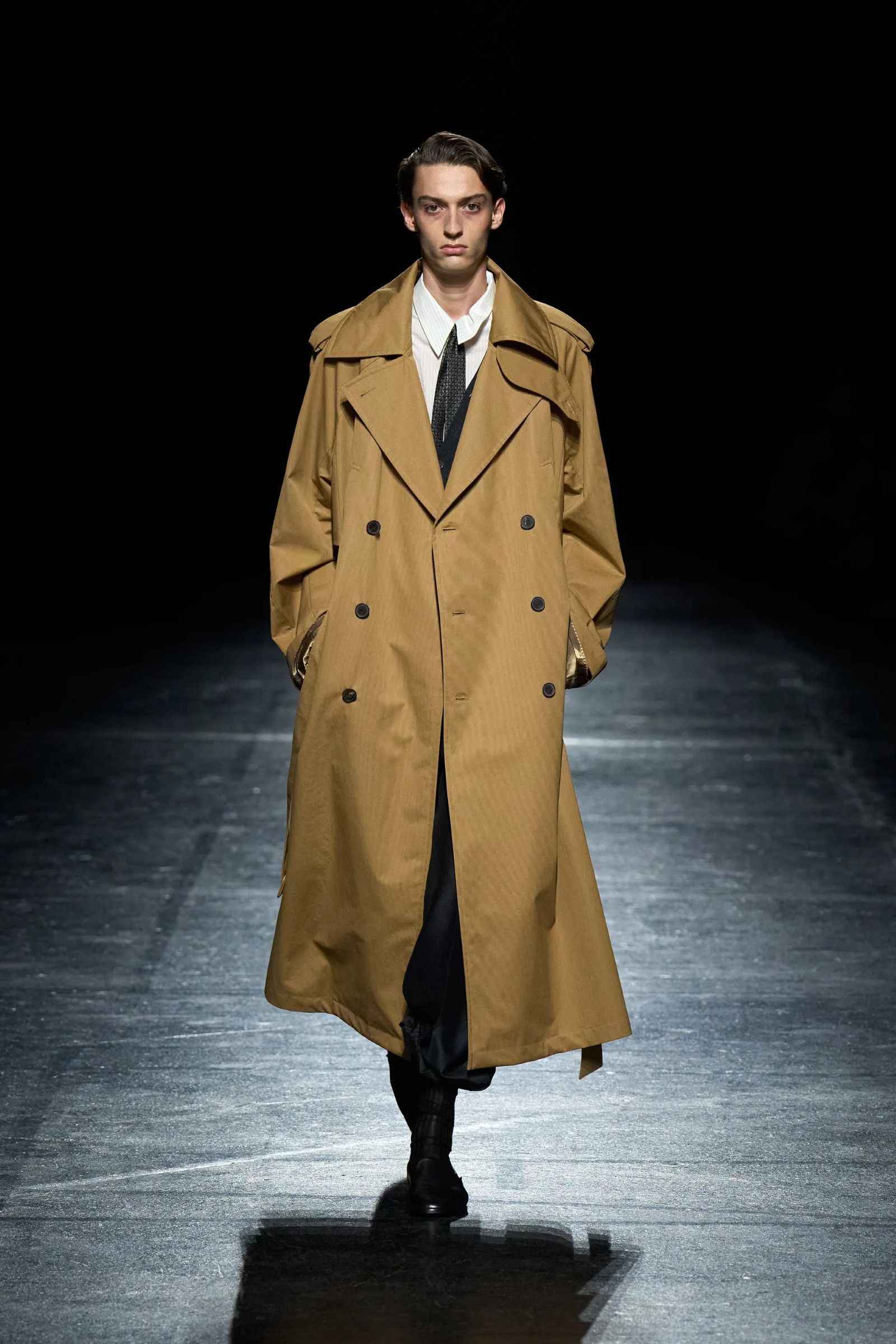
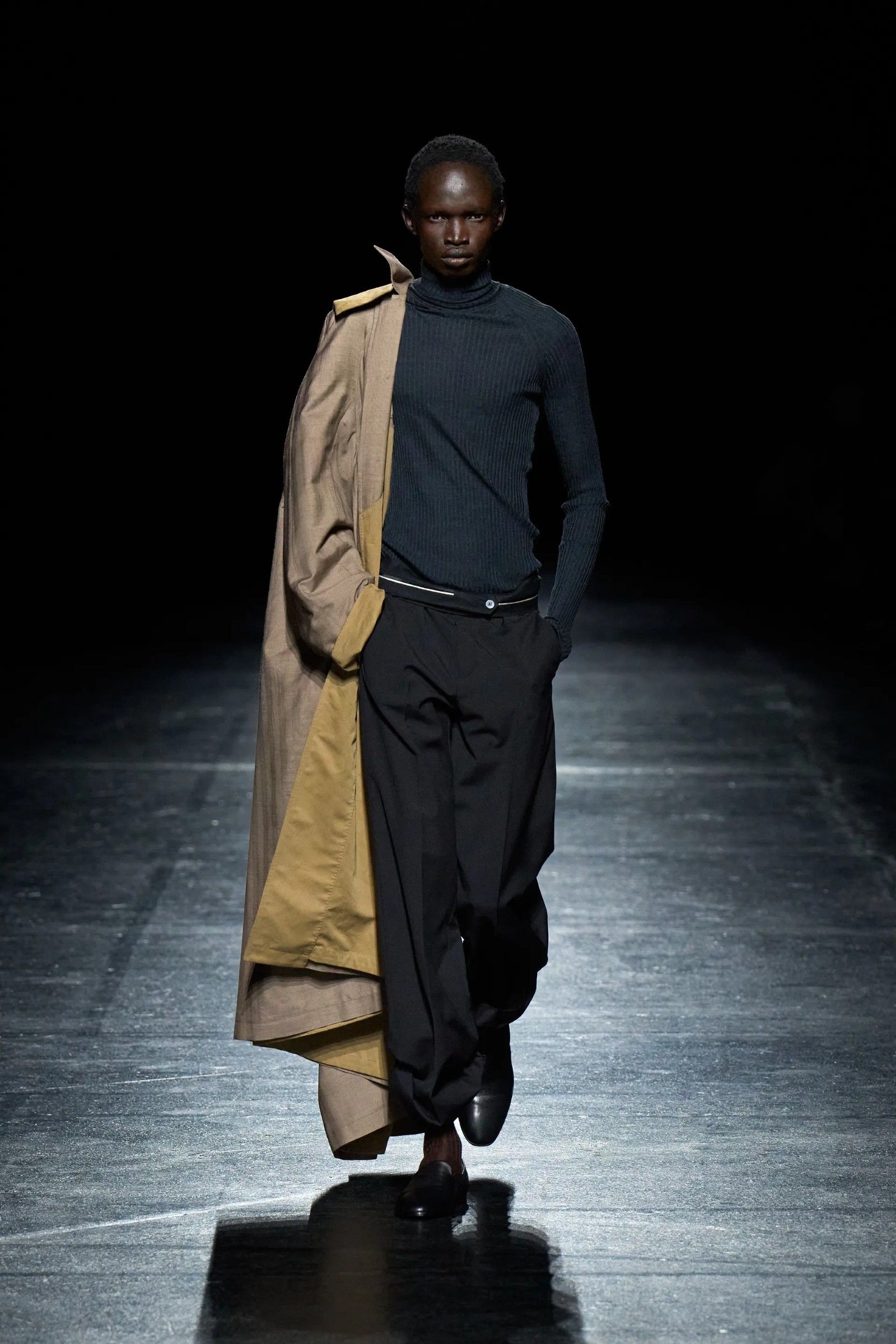
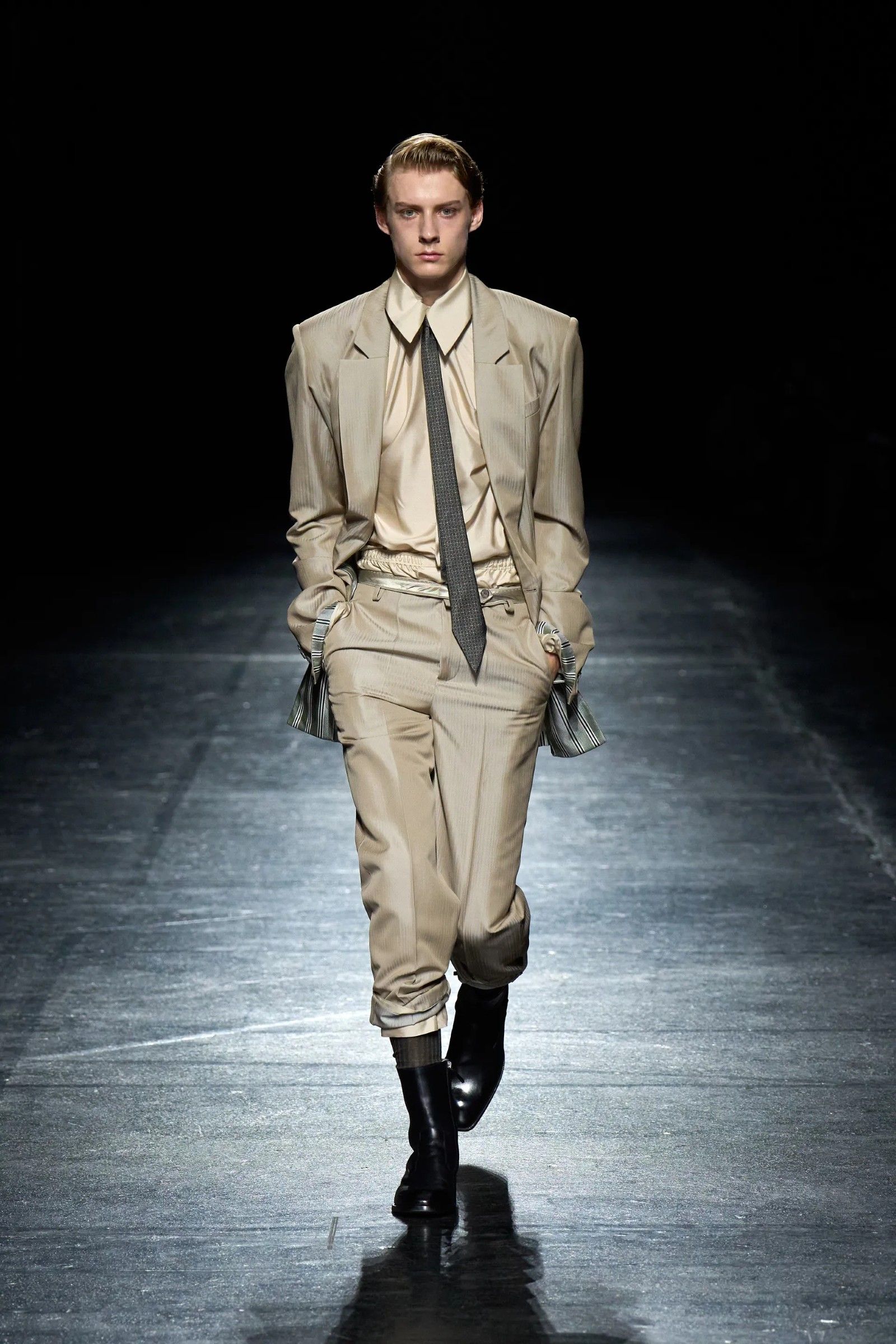
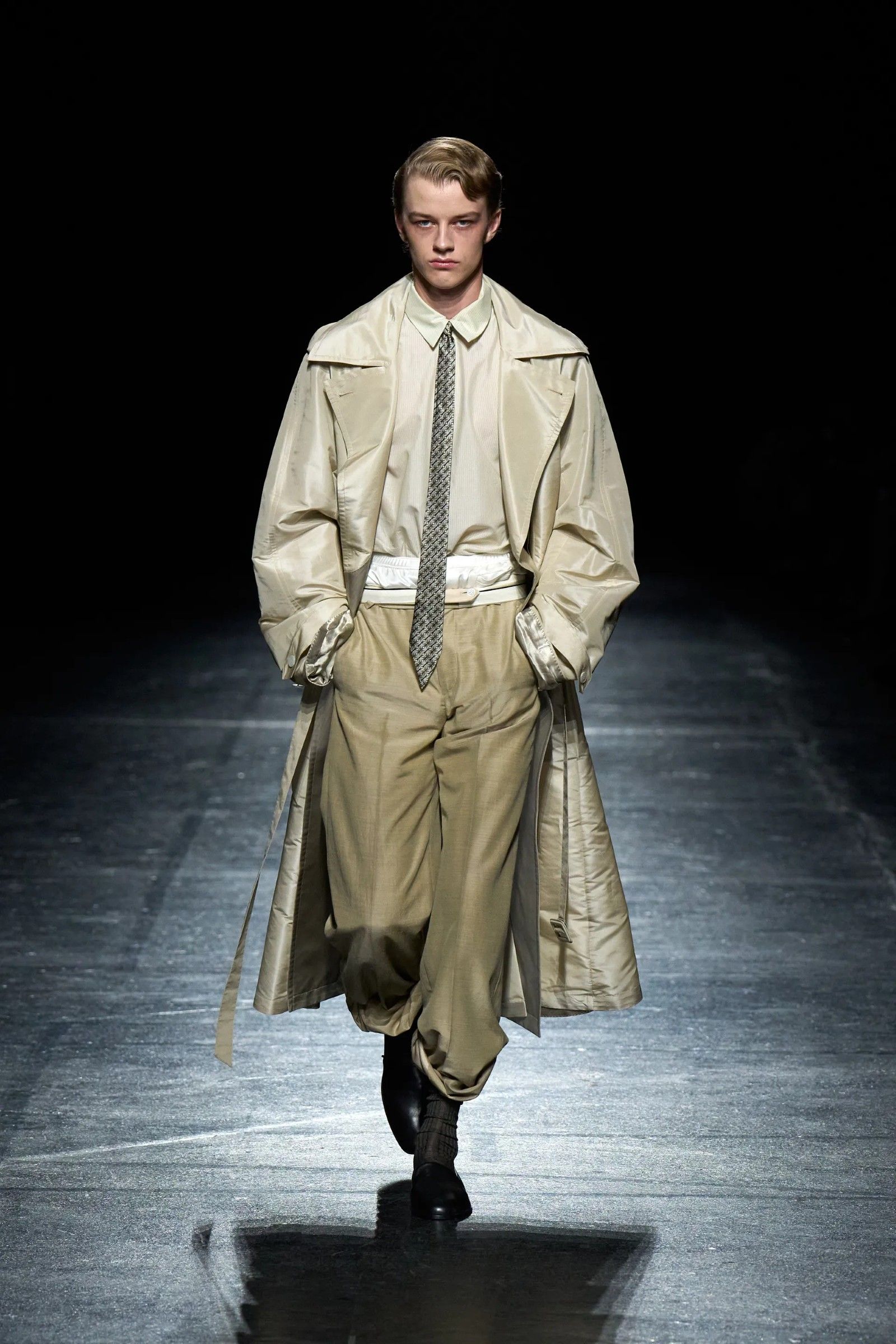
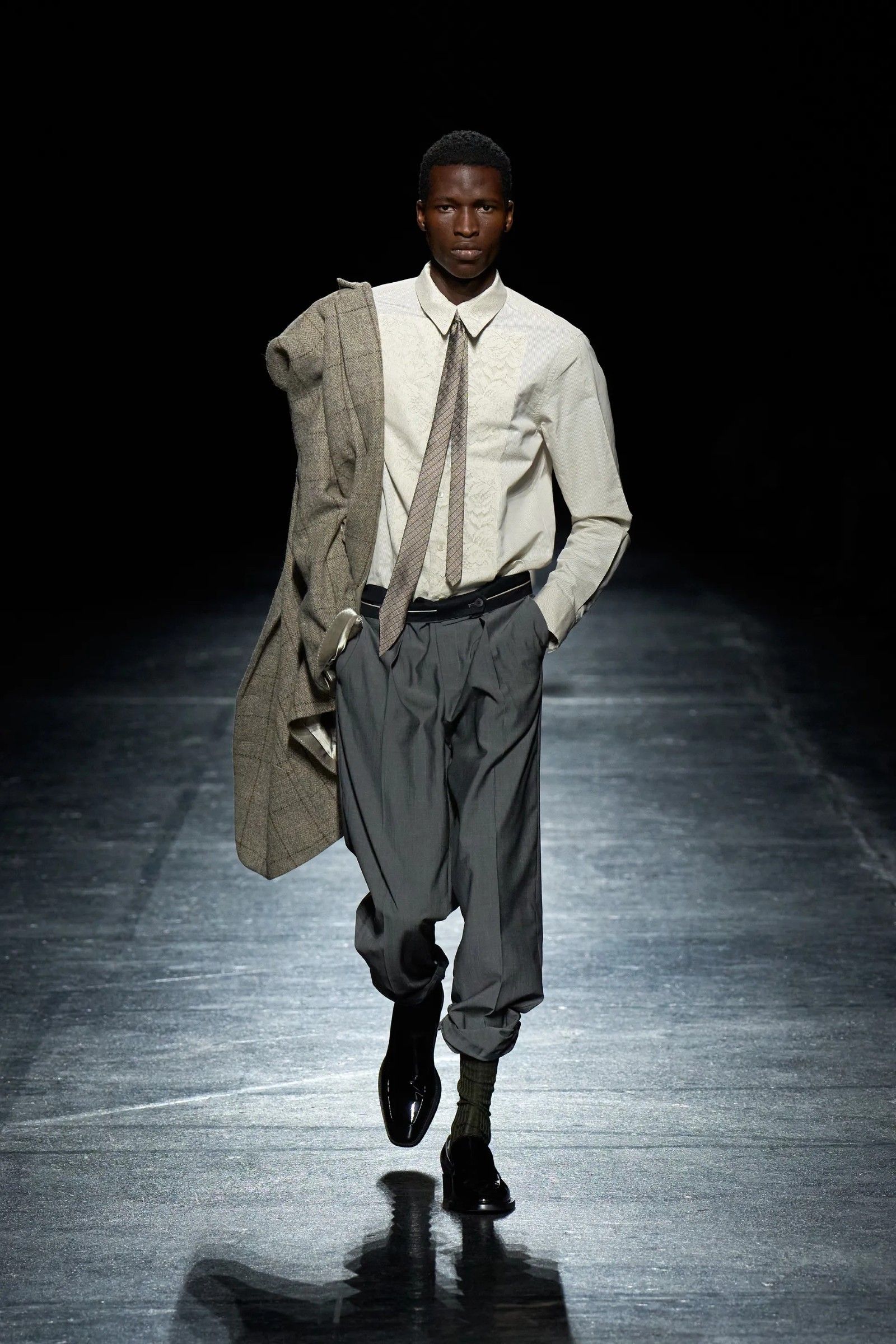
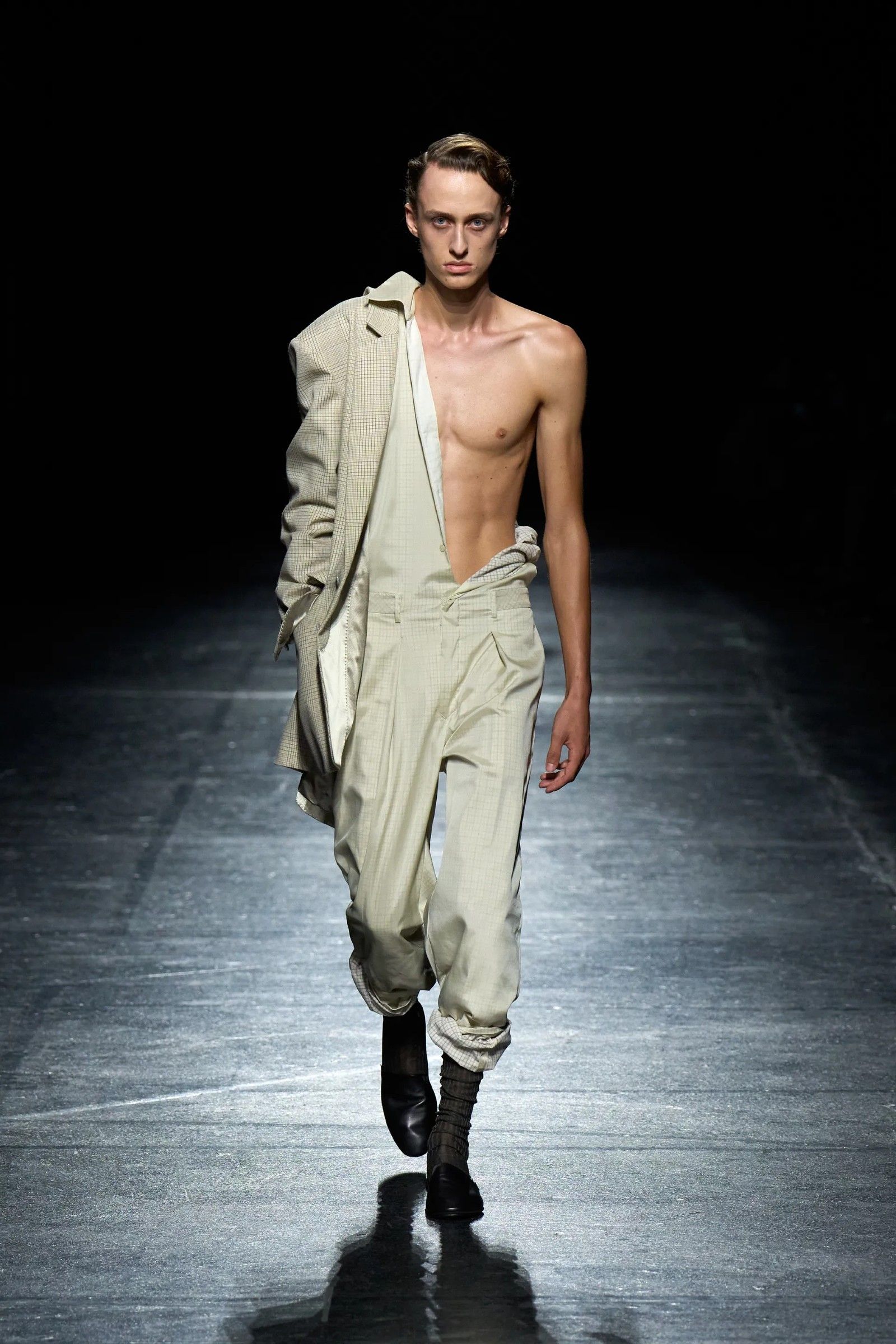
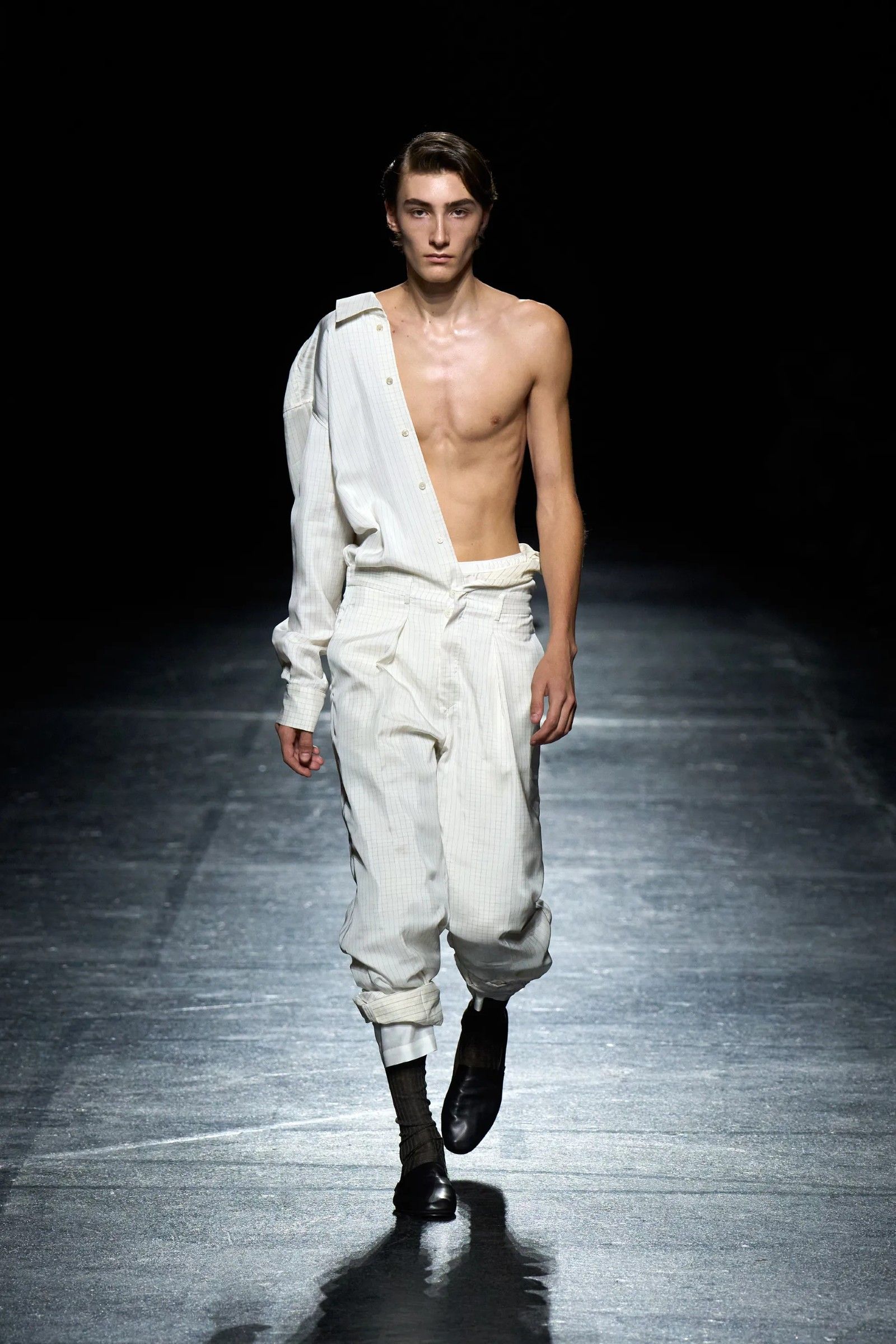
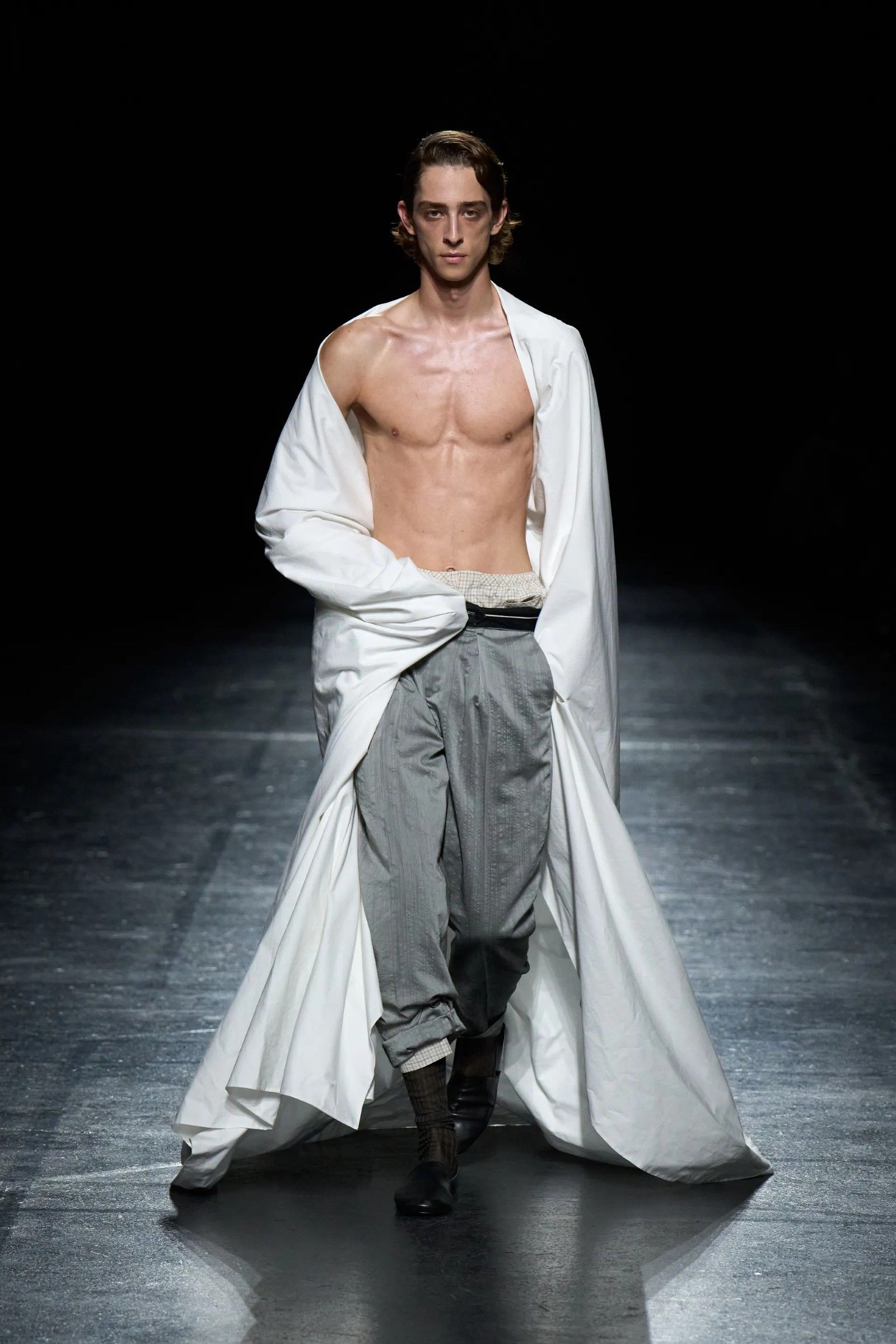
Entering the dimension of daytime and real life, the clothes returned to a relative normality. The looks can be divided into three groups: the largest cluster consists of tailored looks with jacket and tie, worn normally or over one shoulder, draped diagonally across a bare torso; the second group comprises bias-cut dresses, clean and monochromatic, with black elements of varying transparency dancing around a shoulder or wrapping a sleeve like gauze; the third, smaller group features women's suits ranging from more traditional styles to a more interesting jacket-and-skirt set in tweed with micro metallic fringing.
All these looks were unified by common elements, most notably a high-neck blouse—sometimes in lace, sometimes in other materials—worn as the lowest layer of the outfit by both men and women alike. Another essential element was the shirts, which were highly distinctive: their silk collar was slightly wider than usual yet entirely unstructured, giving the impression of a deliberately studied imprecision. The idea, one might presume, was to create a shirt in a 1930s style while making it far more versatile. The overarching theme was, in any case, almost the sense of liquidity in the fabric—its sinuous movement as it flowed—underscored by fairly pronounced shoulders that created an hourglass silhouette, particularly in the longer dresses.
In this repetition of looks and pieces, one could glimpse an attempt to establish a foundational wardrobe, a base system of classic pieces that signals the direction of the brand before any distinct character has been fully developed. A slow and deliberate approach that also reflects the nature of Theskeyns's brand, backed by the group behind Tomorrowland and therefore removed from the global dynamics of the luxury industry. Speaking to journalists, the designer said he spent two years producing this collection, devoting himself to every detail, from the profile of the heels to the metallic inserts in the fabric.
An "off-key" styling?
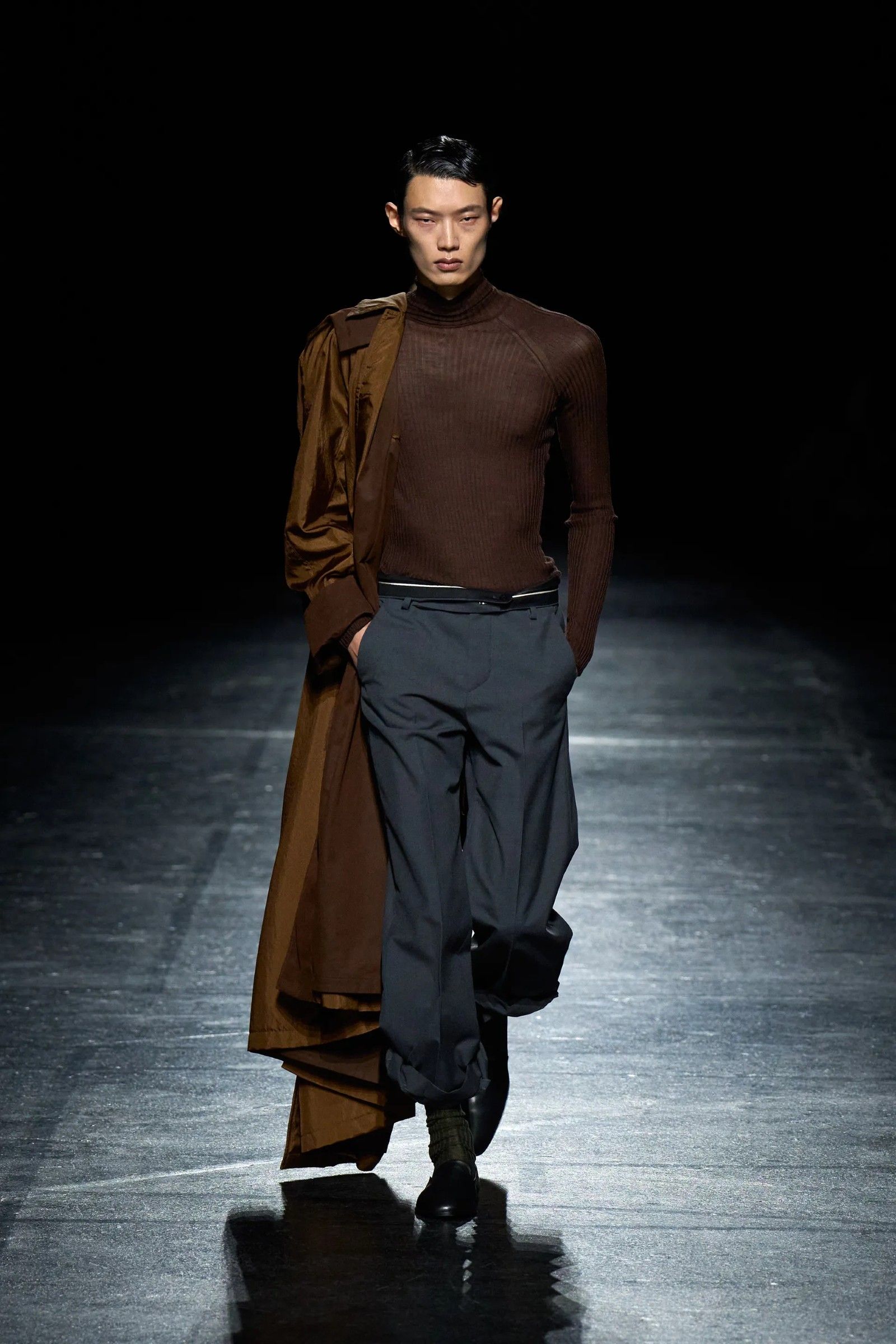
Handling the show's styling was superstar Oliver Rizzo, the long-standing stylist behind the shows of Prada, Maison Margiela Artisanal, and Coach. His hand and eye were evident, as was his attempt to communicate the romanticism of the clothes by tucking trousers into sock elastics, folding trouser hems outward and exposing the boxers beneath them, into whose waistbands the shirts were often tucked directly. These last elements, in particular, struck a few discordant notes: does a brand presenting itself in such a refined register really want to come across in such a TikTok-ish manner?
Heavily exposed boxer waistbands, askew collars, and rolled-down trouser waists are, in fact, elements that have by now become highly repetitive across various shows this season and feel almost predictable given how TikTok has popularised them to the point of cliché. One could certainly detect an attempt to give classic menswear suits almost harem-like lengths and volumes, thereby enhancing their romanticism and nostalgic qualities—yet in that overly exposed boxer and that rolled-down trouser waist, there was a sense of urgency to make everything more (and we use this word reluctantly and with some gravity) "trendy", in the sense of social-media friendly.
Beyond these somewhat predictable styling choices, Boloria's inaugural collection was a first step taken with considerable confidence. Certainly, Theskeyns's talent now moves in different territory from the 1990s, and so future collections will almost certainly call for a less minimalist approach to fully distinguish the brand from the enormous mass of competitors and rivals offering their own versions of elevated tailoring, deconstructed garments, and decadent, luxurious fabrics. But we know that there is no one quite like Theskeyns.