
























Do men really want such shiny, glittery clothes? From silver trousers to glitter and sequins, an eccentric trend is making its way down the runway
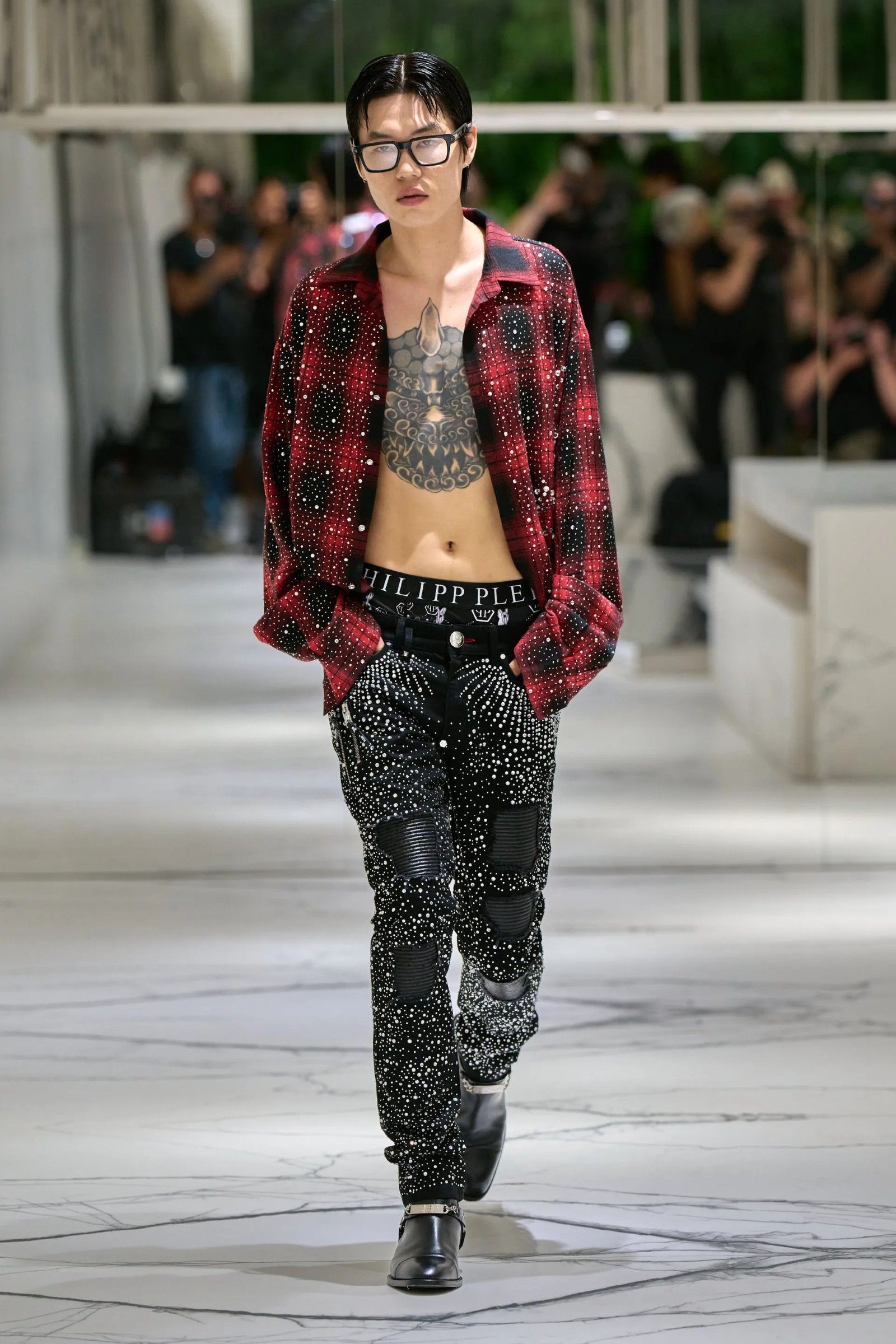
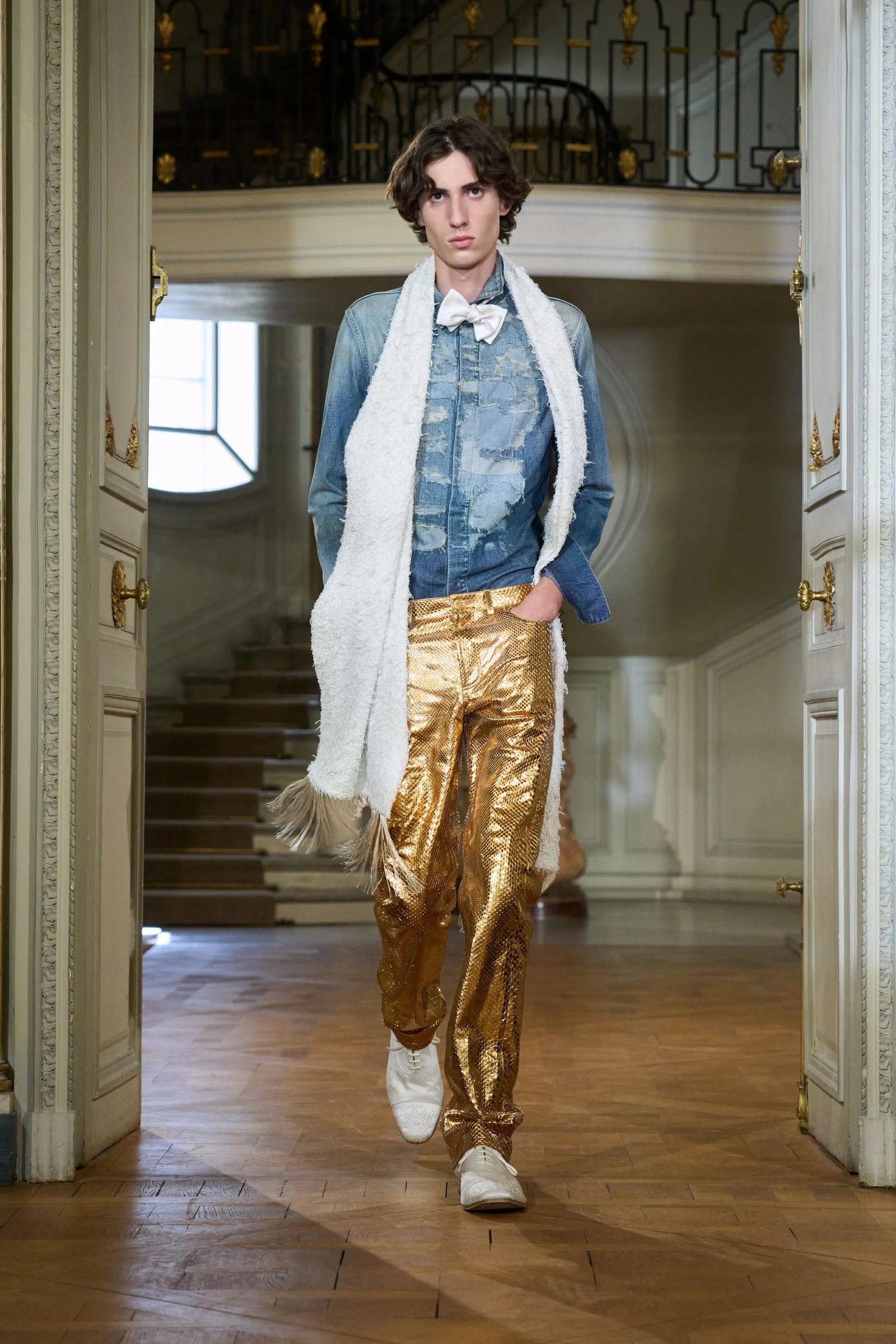
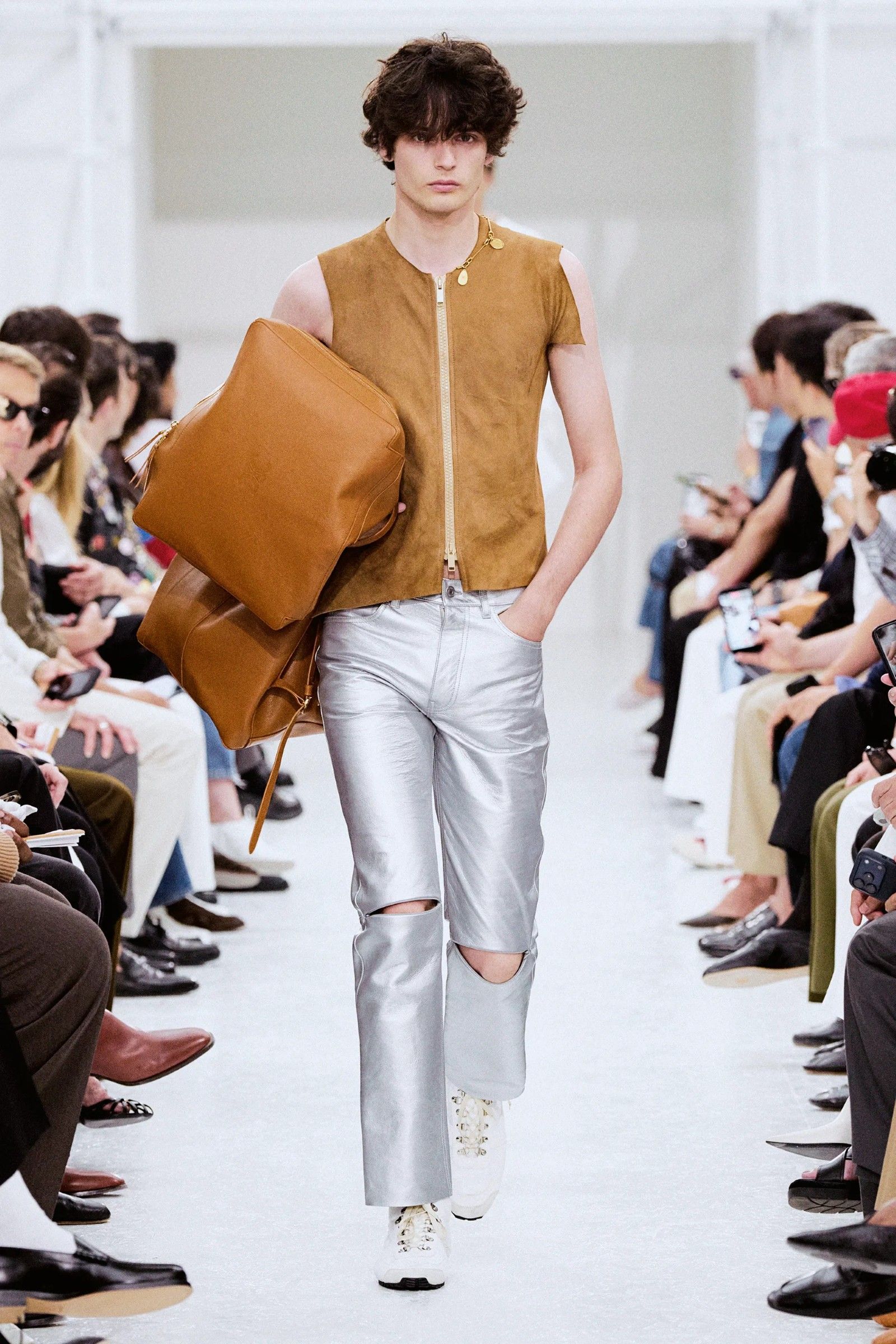
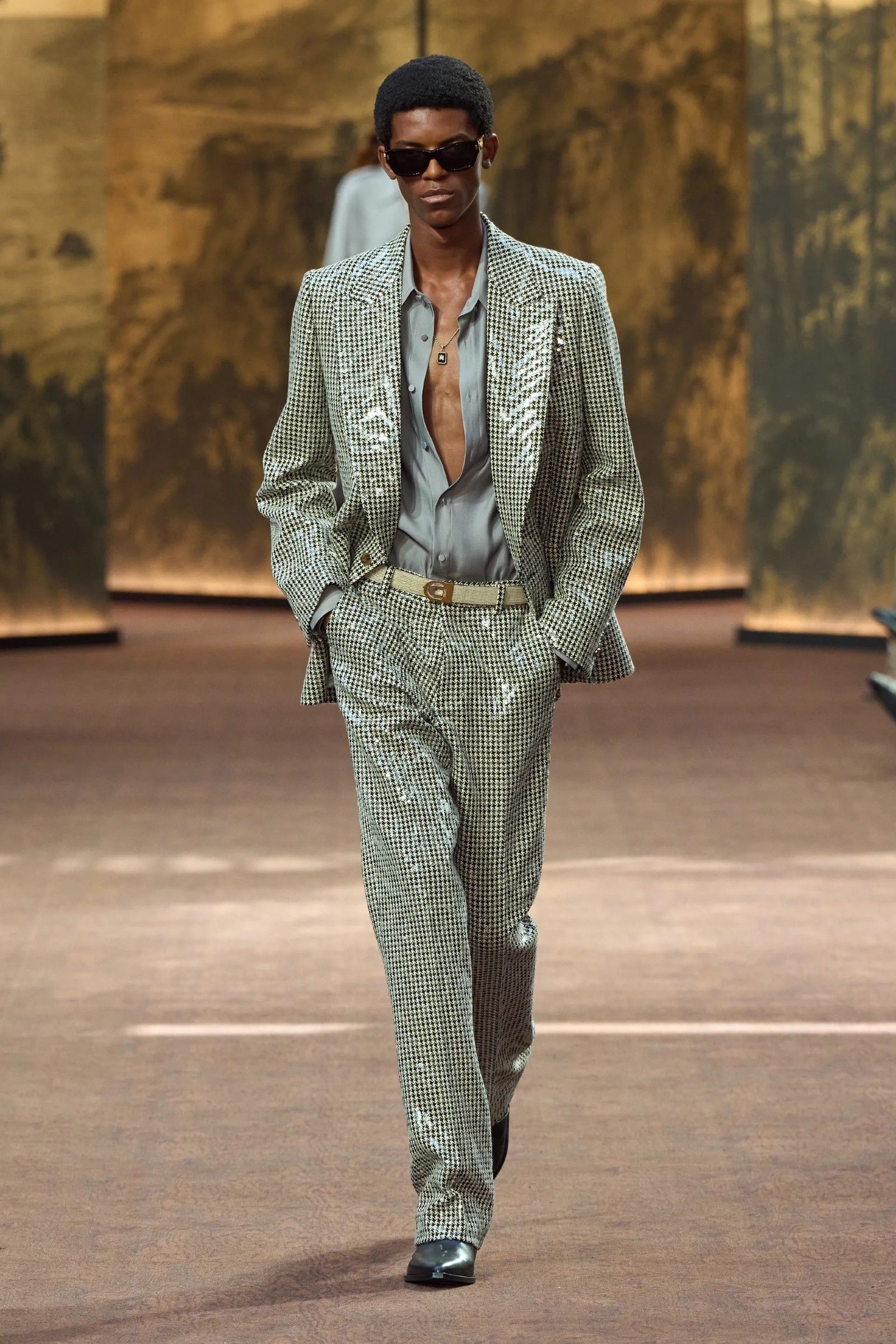
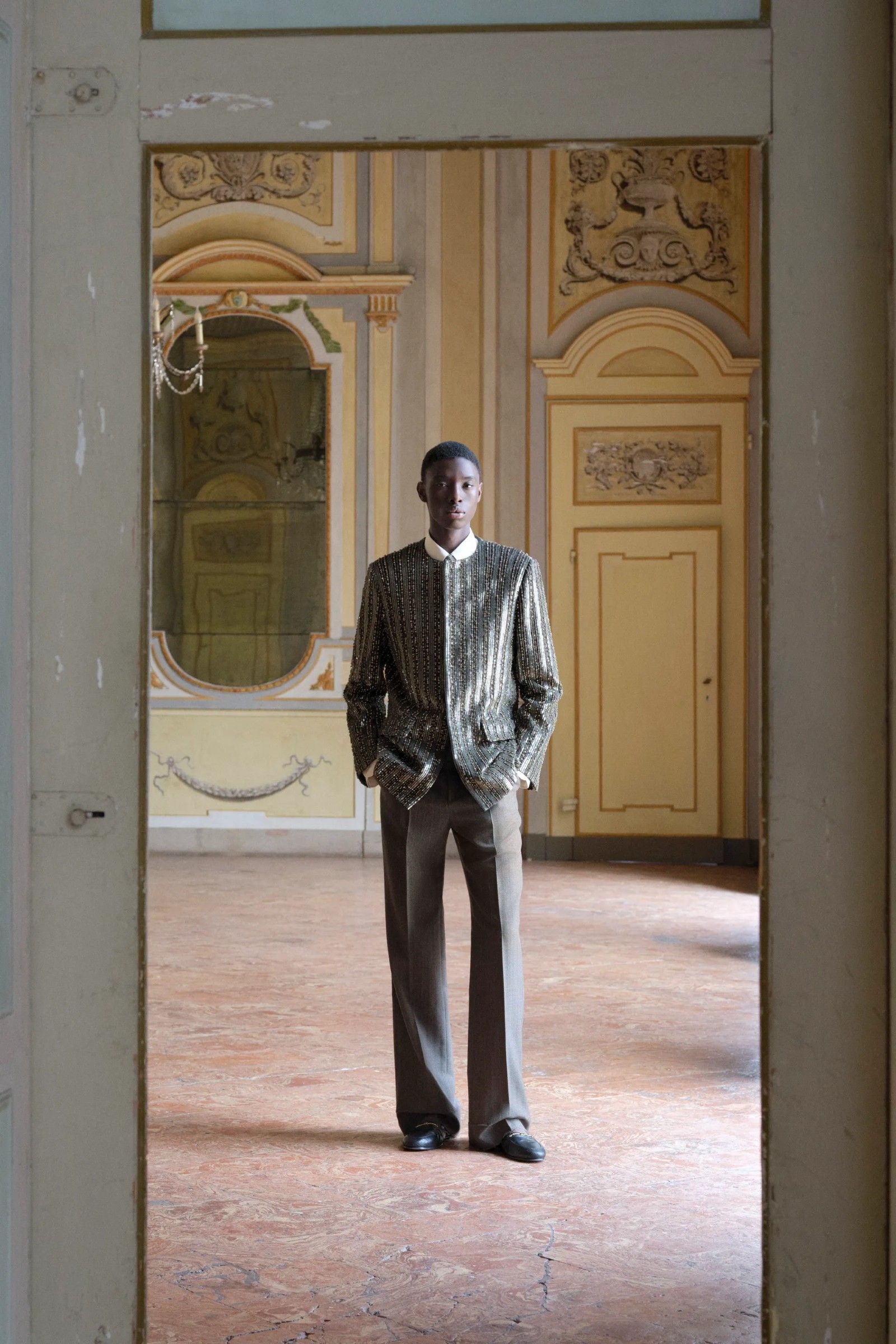
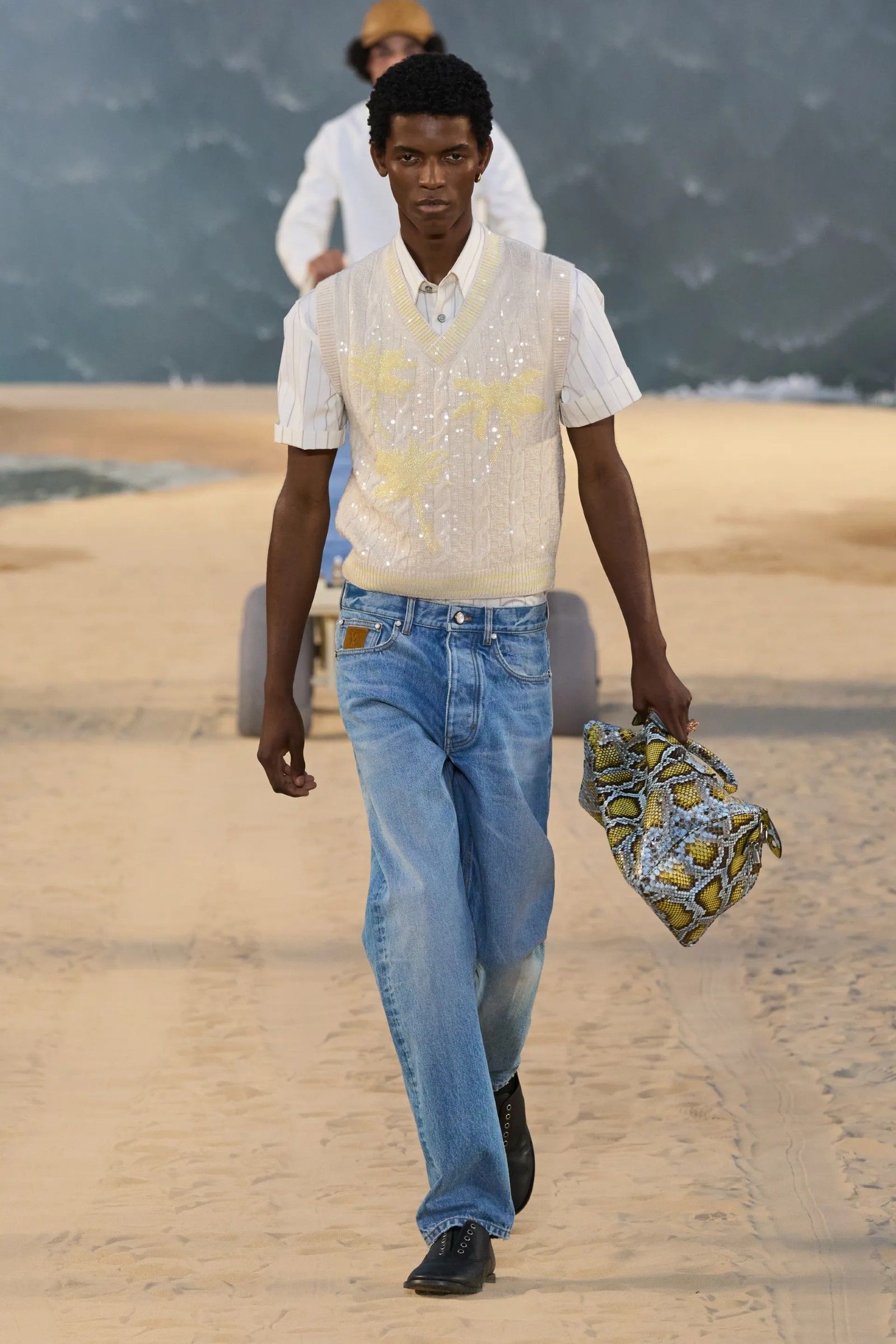
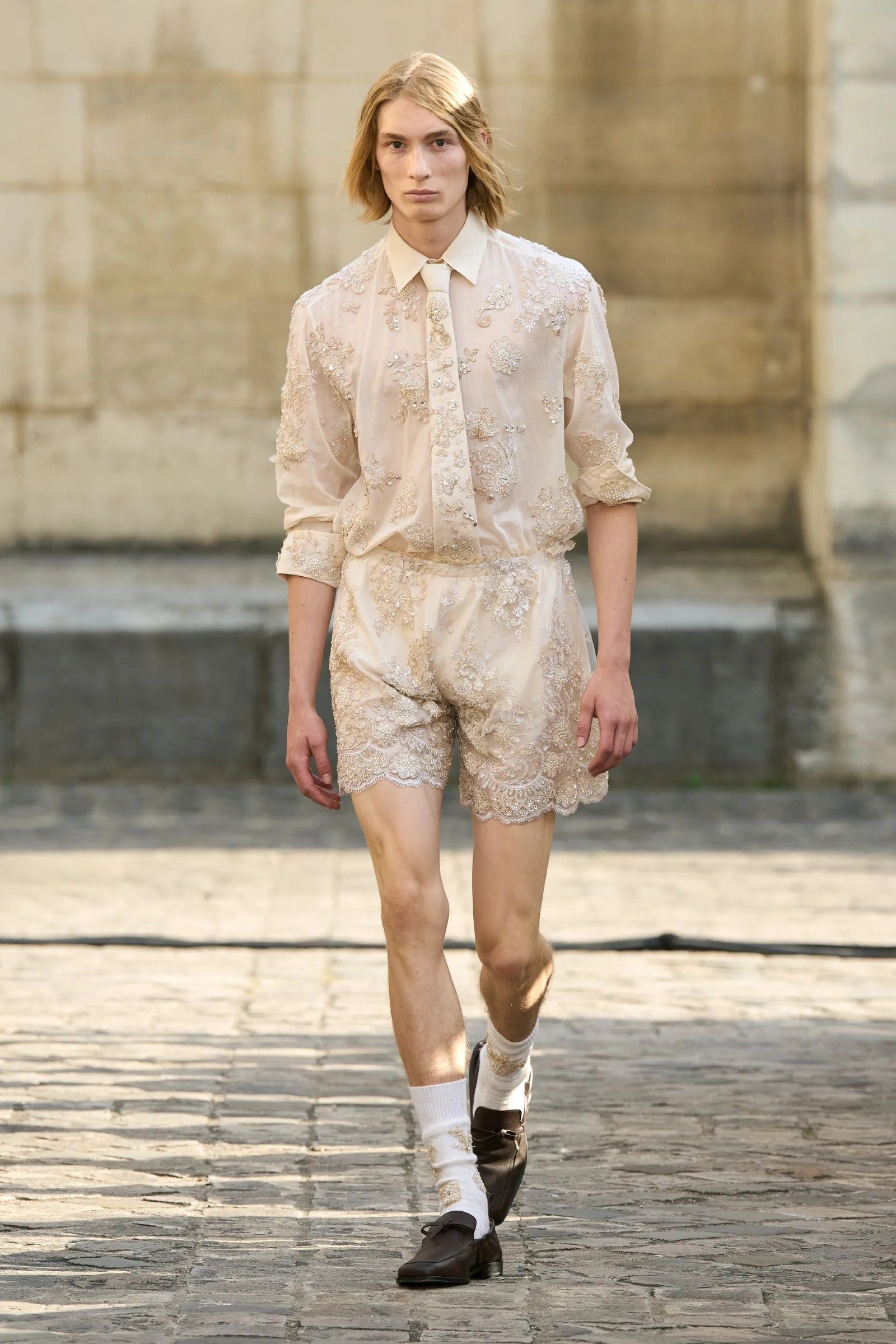
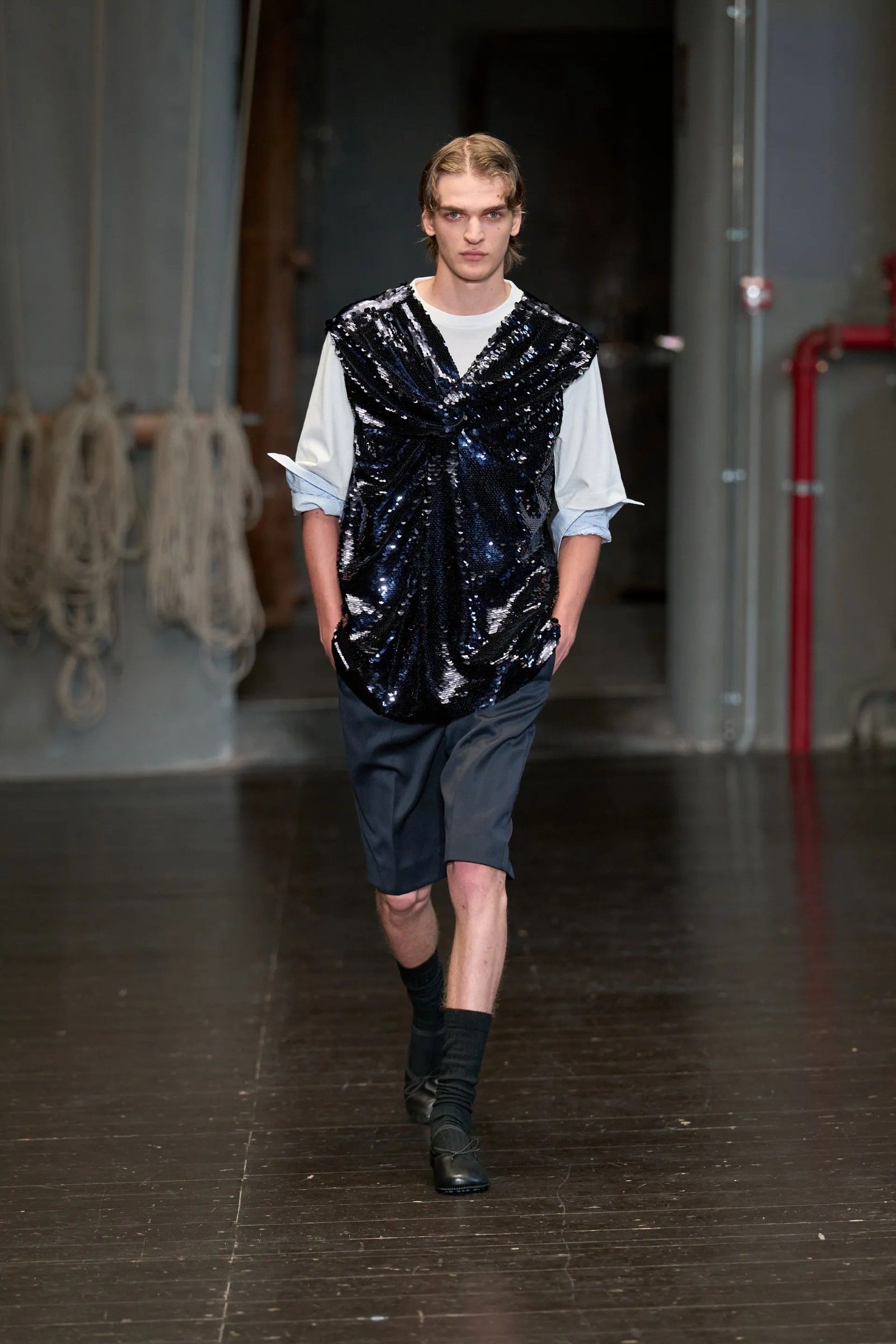
When commenting on a show or a collection, the cultural references one ends up citing are almost always the same. And usually when we see metallic garments, glitter, and sequins in menswear collections, their presence tends to be dismissed as a nod to glam rock of the '70s and '80s. Yet establishing the origin of a certain inspiration does not justify the inspiration itself — it doesn't explain why a particular piece is making a comeback right now.
It's true that, especially in the world of entertainment, a certain category of shimmering, "spotlight-ready" menswear remains widespread — and yet it's quite hard to imagine, or even see, men wearing metallic garments, encrusted with crystals or sequins, out on the street. So why are they on the runway?
Just for rock stars?
Beyond the classic musical references ranging from Liberace, David Bowie, and Elton John to Kiss and Mötley Crüe, the use of metallic fabric has evolved outside the musical groove: we have Gianni Versace's Oroton; we have the tinfoil-like garments from Martin Margiela's FW92, which returned again in SS03; and above all we have the legendary Helmut Lang FW99. Three very particular cases, confined to niche markets and united by designers who wanted to employ unusual materials — chainmail, tinfoil, astronaut suits — to produce otherwise conventional clothing.
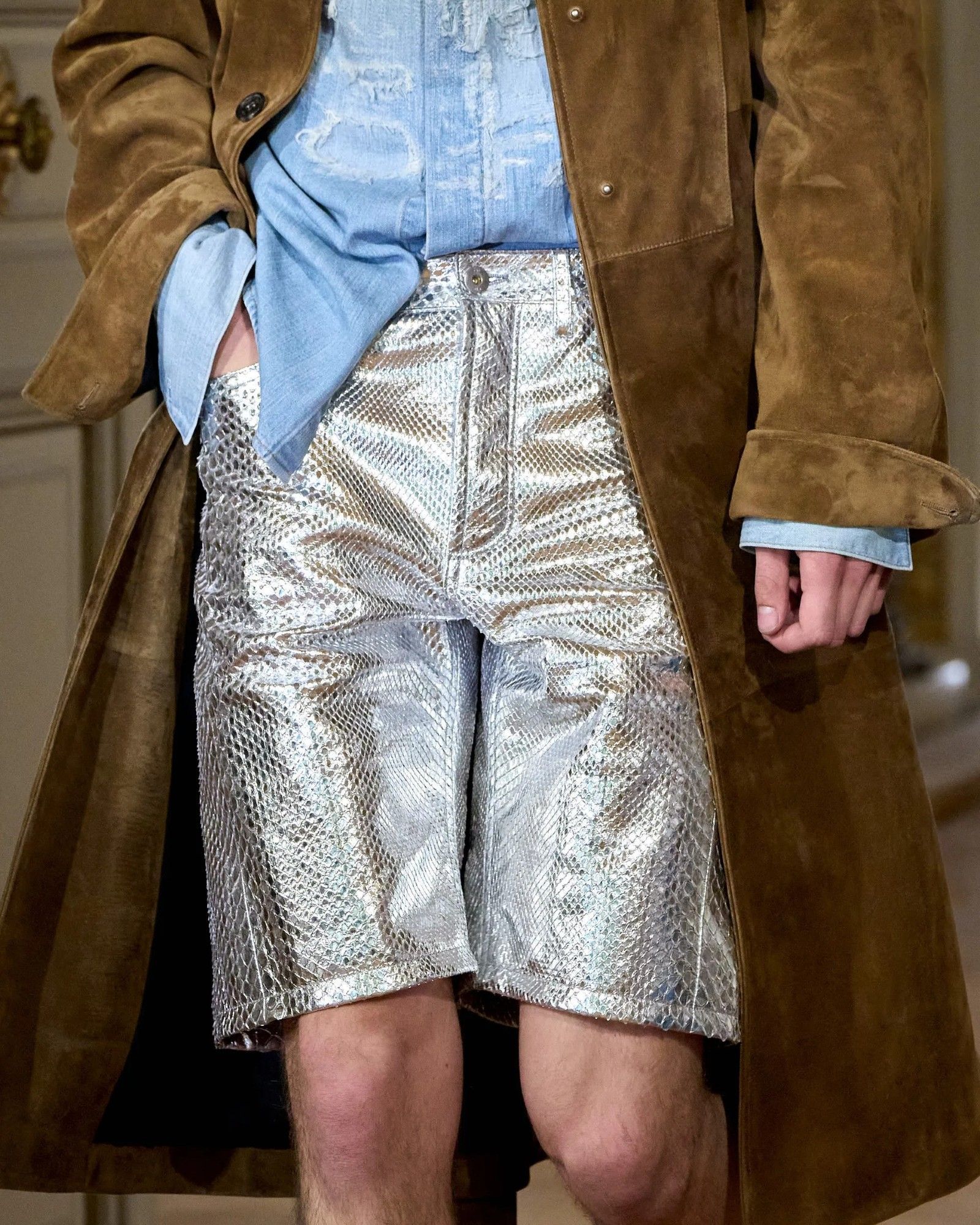
And as he made a point of reminding everyone on the very morning of the Dior show, it was Hedi Slimane who, from 2005 onwards, first introduced golden and silver metallic trousers at Dior, as a tribute to the indie sleaze scene, where metallic effects, crystals, and shimmer were in abundance. Slimane again, during his years at Saint Laurent, introduced ripped jeans whose tears were mended with jewel-like threads. In menswear, these fabrics have come and gone, appearing also in Demna's first Gucci show, where several looks featured a similar metallic effect.
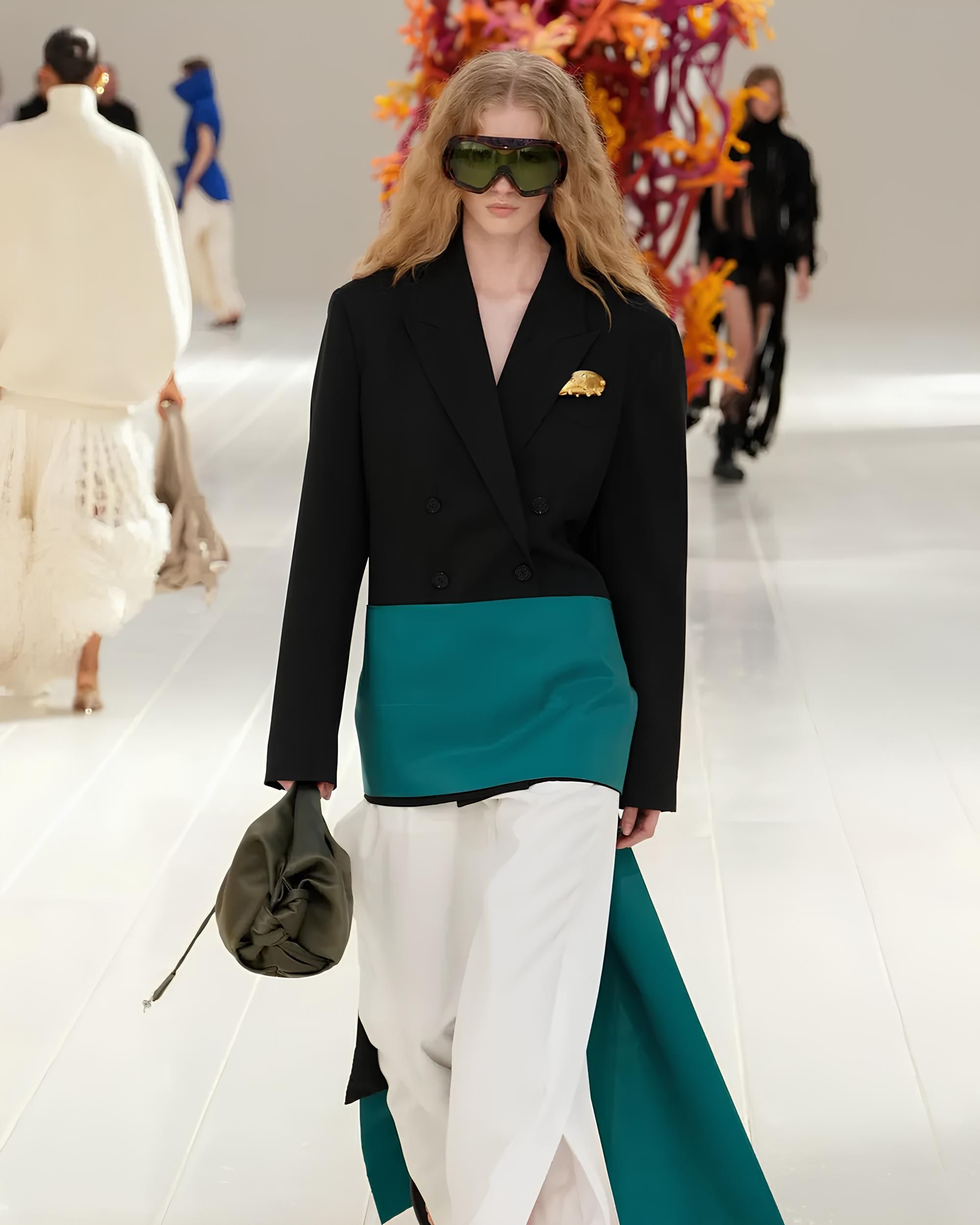
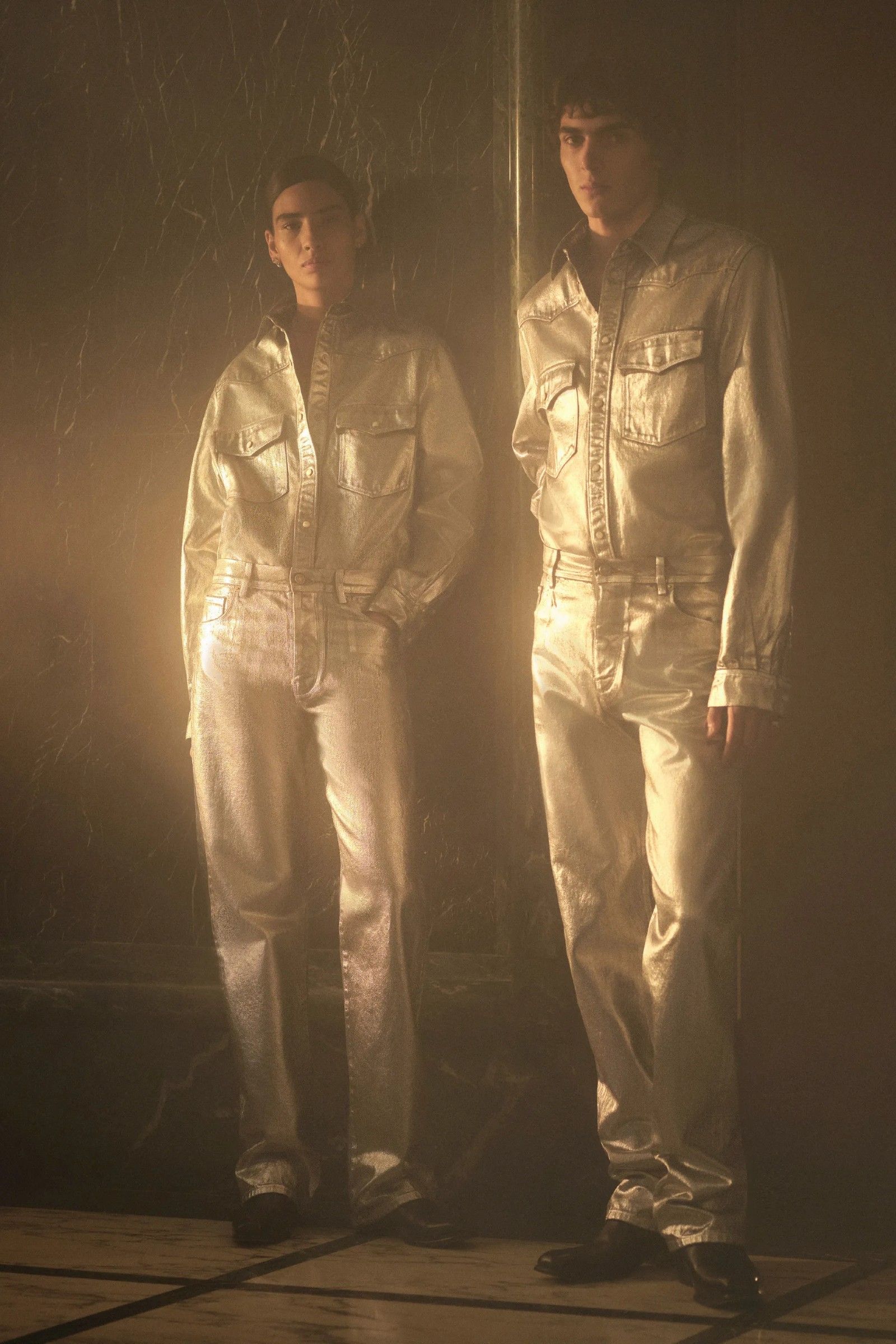
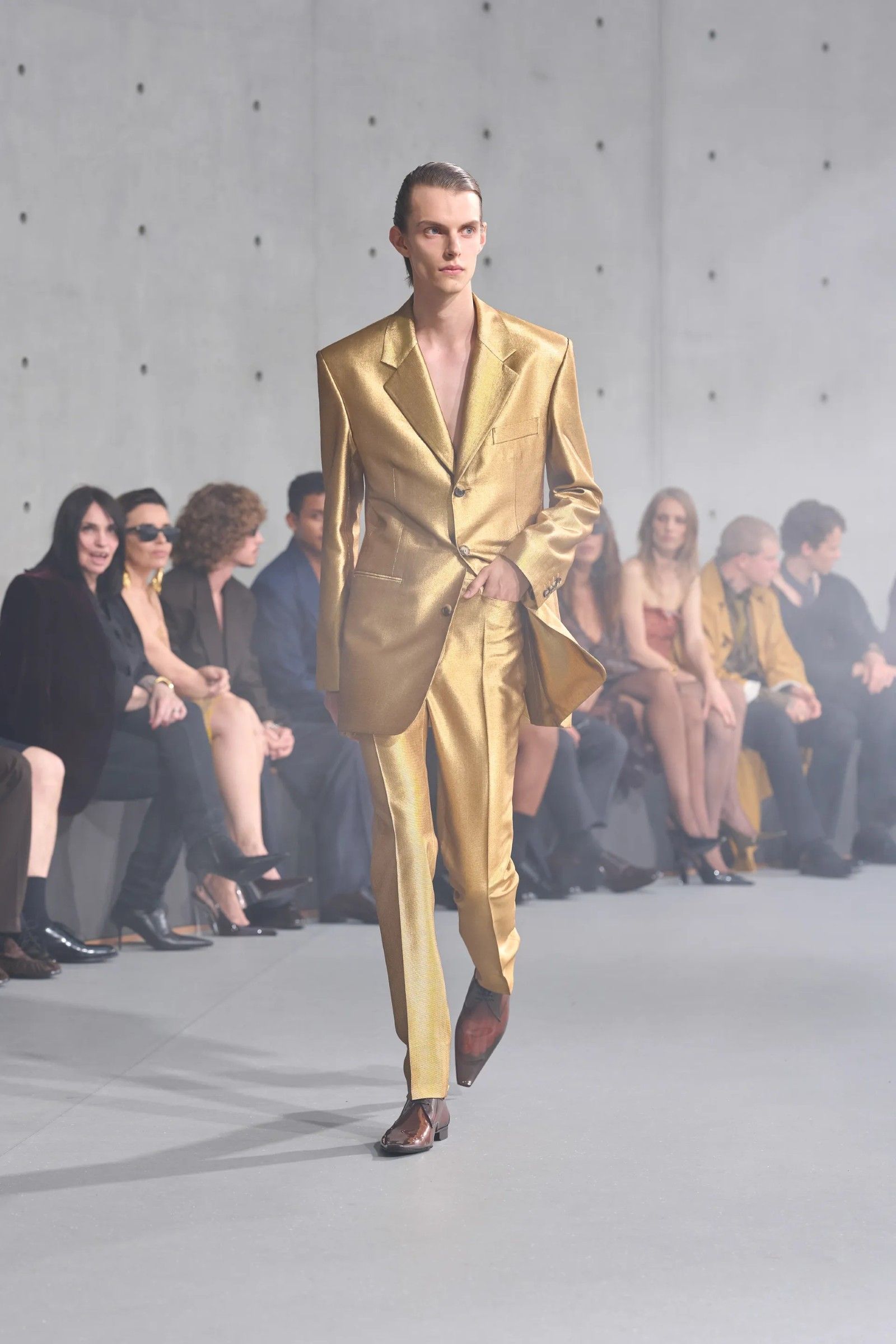
This year it has certainly been Jonathan Anderson's Dior that has included them in every menswear show so far — almost one of his new "signatures." Meanwhile, many were surprised to see the Saint Laurent menswear collection incorporate entirely golden looks, reviving certain longstanding codes of the Maison. At Celine, silver accents were also on display; a blazer in metallic knit appeared in Valentino's Resort 2027. Even more surprising was seeing Fendi include an entirely silver Canadian tuxedo (denim jacket and trousers) in its Resort 2027 collection.
A touch of delicacy
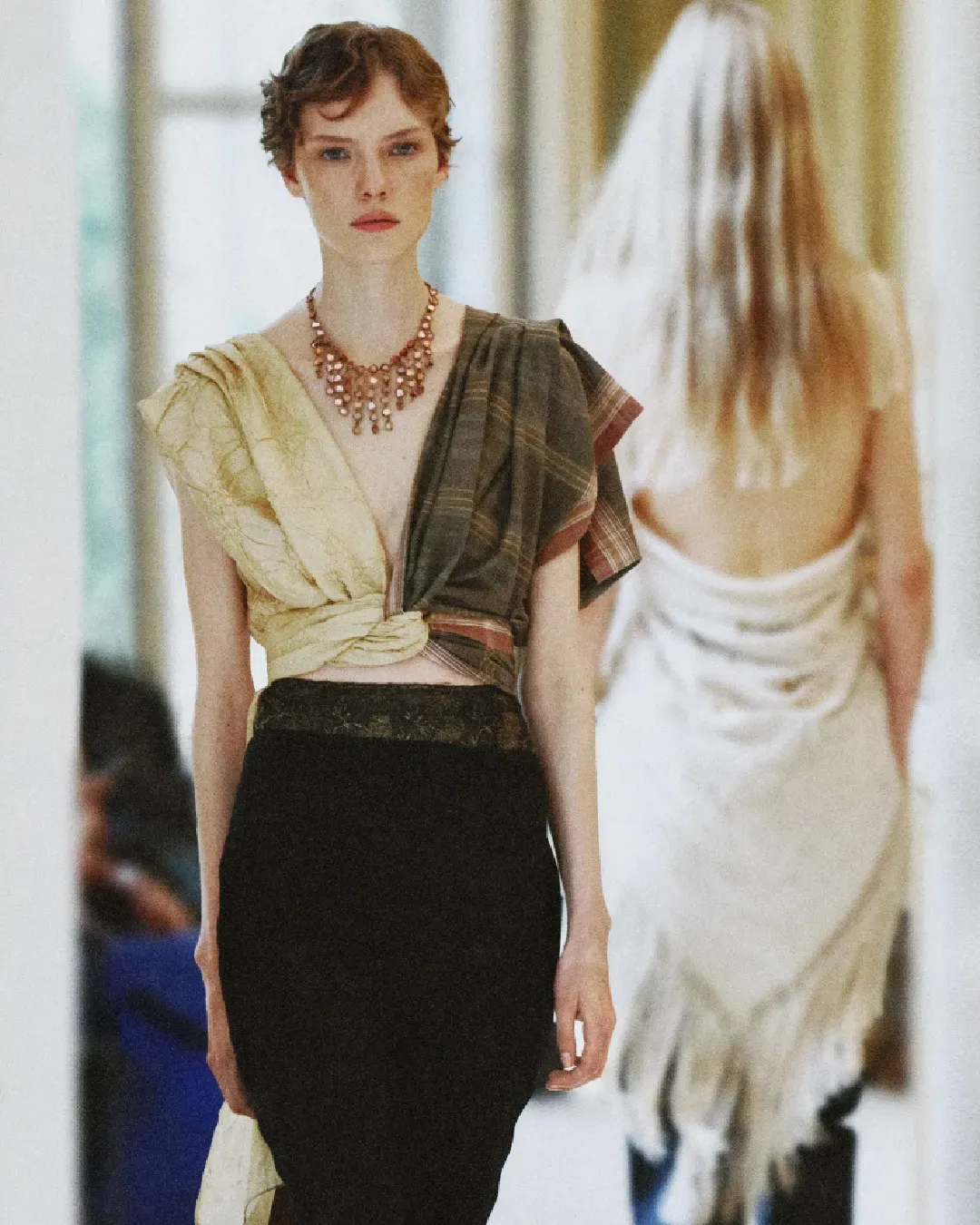
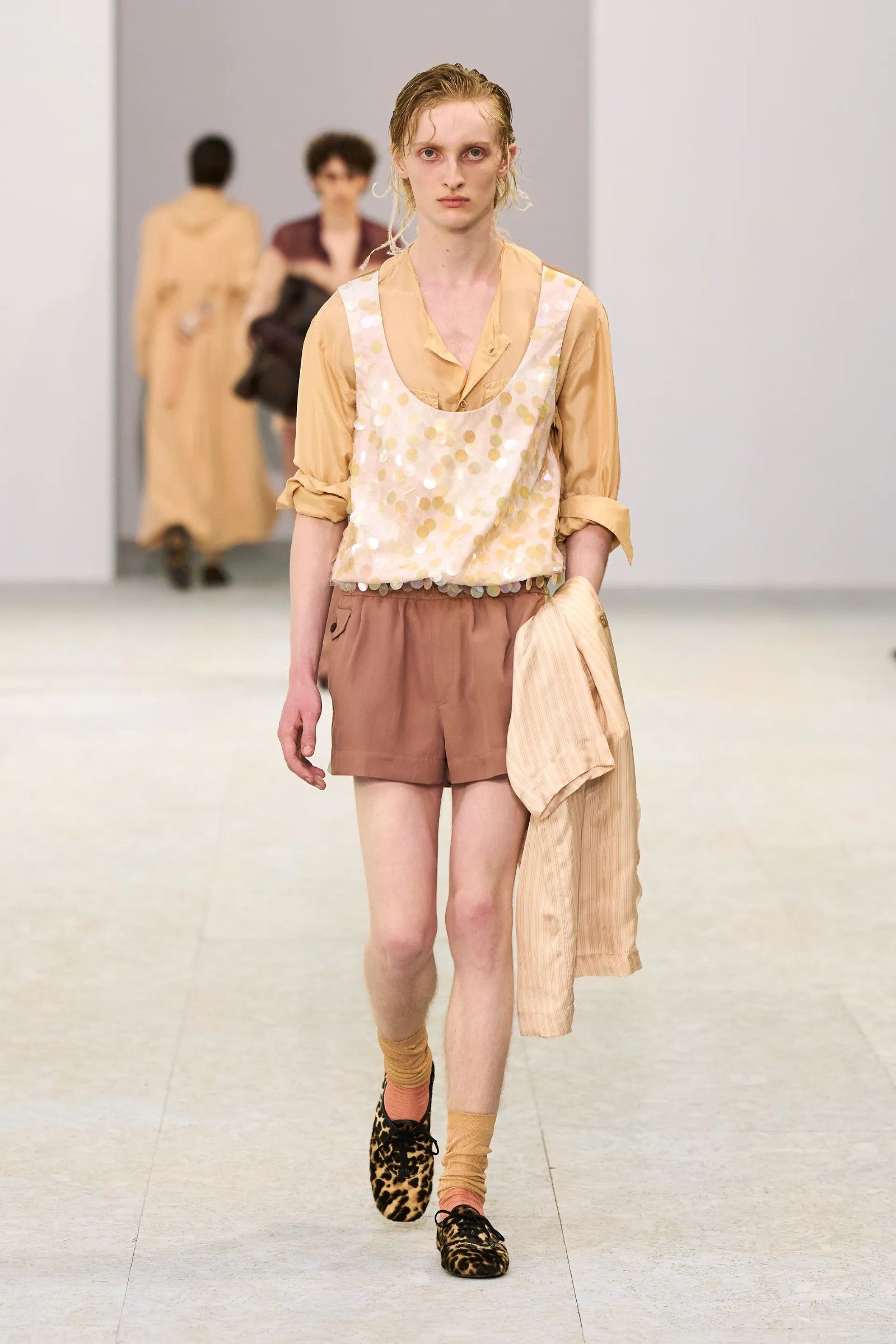
Less flashy (and less vulgar, let's admit it) than the metallic trend is its parallel counterpart of glitter, crystals, and sequins. This past season we saw oversized, semi-transparent rhinestones adorning tops at Dries Van Noten and Louis Vuitton; and traditional, highly brilliant rhinestones at Simone Rocha. Egonlab created a very short men's lace set entirely encrusted with pearls and crystals, while Amiri and Plein incorporated crystals and shimmering fabrics for their signature rock allure.
Clearly the most unusual name on this list is Louis Vuitton — a brand that plays very little with the rules of the genre — also because the use of sparkling elements has been deployed across the board either as an attempt to render the male figure more delicate or ethereal, or as a nod to the variety-show tailoring of the 1970s (think rock stars, but also wrestling presenters) by brands that could not exist without their own larger-than-life characters — namely Amiri and Philipp Plein.
More all-encompassing is Jonathan Anderson's approach at Dior, where he has scattered shimmer across a great many knitwear pieces, shoes, and shirts. It should nonetheless be noted that the abundance of sparkling knitwear at Dior and the presence of a similar piece at Louis Vuitton — two brands with a strong commercial orientation — may suggest that this kind of trend is on the rise.
Glittering, not gleaming
It is honestly difficult to imagine the global commercial appeal of these pieces. And so, once again this fashion season, the question that Jacob Gallagher of the New York Times raised several months ago in front of certain menswear looks from various brands' co-ed shows has resurfaced: who is actually going to buy these clothes? To which we add another question: will they actually be produced? Among the trousers on Dior's website, there is no trace of golden elements, and the trousers that do come from the runway will number fewer than half a dozen. The sparkling pieces from Demna's Gucci debut, on the other hand, are available.
If they exist beyond the runway and editorial shoots, these metallic and glittering pieces will perhaps be produced for VIC clients who specifically request them. The purpose of including them, in the context of fashion shows like those of Dior or Celine, may be to suggest excess and extravagance. And in fact, if we consider brands like Philipp Plein, Versace, or Dolce & Gabbana have been including such elements in their ready-to-wear for years, one must conclude that a clientele does exist.
Perhaps, then, if Dior, Gucci, and Fendi are including them, it is precisely to attract that type of customer who loves the flamboyant? It's conceivable. From a design perspective, we might in fact interpret the whole thing more as an attempt — perhaps not a particularly subtle one — to elevate basic pieces through a literal embellishment of their surface.
Metallic garments also demand a certain quality of craftsmanship, given that after a certain amount of wear they tend to deteriorate, flake, and lose their lustre. In short, if you're going to wear them, they had better not be cheap. After all, the game now is to capture the attention of an ultra-wealthy clientele that is increasingly bored and perhaps no longer inhibited about flaunting the excess and opulence of their lives. But is all that glitters truly gold?