

























Gen Z tourists in Italy are spending more and more on Italian fashion Tax Free After all, how can you resist shopping?
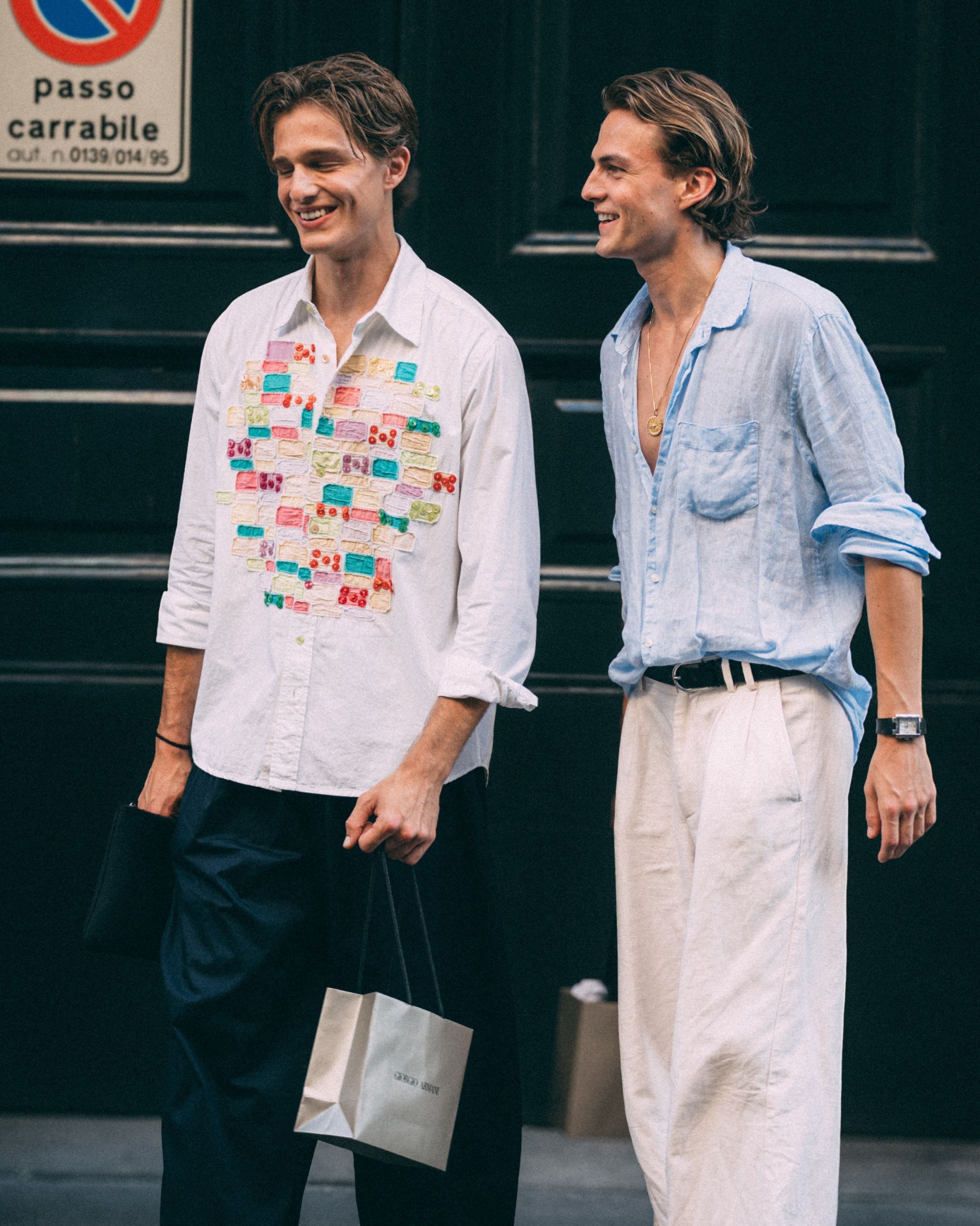
Young tourists under thirty are becoming the primary driver of Italy's Tax Free Shopping market — the system that allows non-EU citizens to make purchases without paying VAT on a minimum spend of 70 euros. According to the latest data from Global Blue, over the past year the number of Gen Z shoppers using Tax Free has risen by 22%, while total Tax Free spending has climbed by 11%. This momentum demonstrates just how often tourists, through this so-called "facilitated" economic scheme, drive a significant share of retail in our country — particularly in fashion. But what exactly is the scale of the phenomenon?
Young, wealthy, and handbag obsessed
@allycase1 Two reasons why buying luxury items in Europe is often cheaper: 1) Many designer brands are made in Europe, so the base cost is lower compared to countries where they’re imported. 2) If you’re not an EU resident, you don’t pay taxes on items over a certain amount. You get a VAT (Value Added Tax) refund after purchasing, making it even more affordable than for locals The bag I bought: Over $3,300 with taxes if purchased in the US $2,337.44 after VAT refund if purchased in Europe I saved almost $1,000 on it buying in Portugal when compared to if I were buying it in my home state I’ve been searching for this bag for months, and I still can’t believe I found it My last several totes fell apart within a year () so it was time to invest in a great one that I’ll have for years and years to come #vatrefund #shoppingineurope #designershopping #europeshopping #designerbags heatwaves x diet pepsi by addison rae - addison fan account
The growth of Gen Z shopping while travelling keeps pace with their rising age. Since 2019, the number of Gen Z shoppers has exploded by 368%, compared to a more modest 39% recorded by older generations. As the report shows, between April 2025 and March 2026, while older consumers grew by just 3% — a slight slowdown compared to the past — it is young people who have posted double-digit growth, even though they still account for a relatively small share of all Tax Free shopping in Italy, at just 14%.
One should not be misled by the smallness of this market segment, because young international travellers generate in Italy 28% of all European Tax Free spending within this age group, making the country the one where young people spend the most. Milan, in particular, ranks second in Europe by spending volume, with an 11% share, just behind Paris. In the two fashion capitals, average spend per shopper exceeds 1,400 euros — a figure far higher than in cities such as Rome, where it stands at around 870 euros, Barcelona at 720 euros, Madrid at 670 euros, and Florence at 600 euros.
It is no coincidence that spending is concentrated in Milan and Paris, given that fashion is a very significant expenditure category for Gen Z tourists. In the report, spending on luxury brands grew by 6% in a year, while spending on "exclusive labels" alone rose by 35%. Breaking it down by category, Gen Z spending on watches grew by 33% versus 6% for the overall market; jewellery spending rose by 19% compared to an overall 1%, while clothing grew by 16% against an average of 4%.
Spending on handbags, up 3%, and footwear, up 2%, is also strong among young shoppers and declining among older ones. Handbags are the favourite category for Gen Z tourists and account for 27% of their total spending, with an average price per item of around 400 euros.
But where do these young tourists come from?
In terms of nationality, 21% of these tourists come from the United States, their numbers have grown by 20%, and they generate 18% of total spending, with an average of around 1,000 euros per person. Behind them come young Chinese tourists, who now make up 10% of young shoppers, having grown by 48% in a year — a signal of strong further expansion potential for the Italian sector.
Among Gen Z tourists in Italy, aspirational-tier customers account for 85% yet generate only 37% of total spending within the age group. This is because the remaining 15% of young travellers, though a minority, concentrates a far higher share of spending, driven above all by a tiny elite of Ultra High Net Worth Individuals with assets exceeding thirty million dollars. Although they represent just 0.3% of travellers, young millionaires contribute 12% of total Gen Z tourist spending, with an average purchasing power reaching 51,000 euros per person — surpassing the 43,000 euros observed in other generations.
All of this data shows that generations do not change their spending patterns — rather, they amplify them. The proverbial top 1% of Gen Z spends more than its Millennial or other-generational equivalent. This makes these young tourists a strategic component of Italian Tax Free Shopping. The perceived value of a product, its desirability, and the influence of social media are their spending motivators, and judging by the growing weight these tourists in this age bracket are carrying, much of the merchandise that fashion will produce in the years ahead will need to adapt to their tastes.