
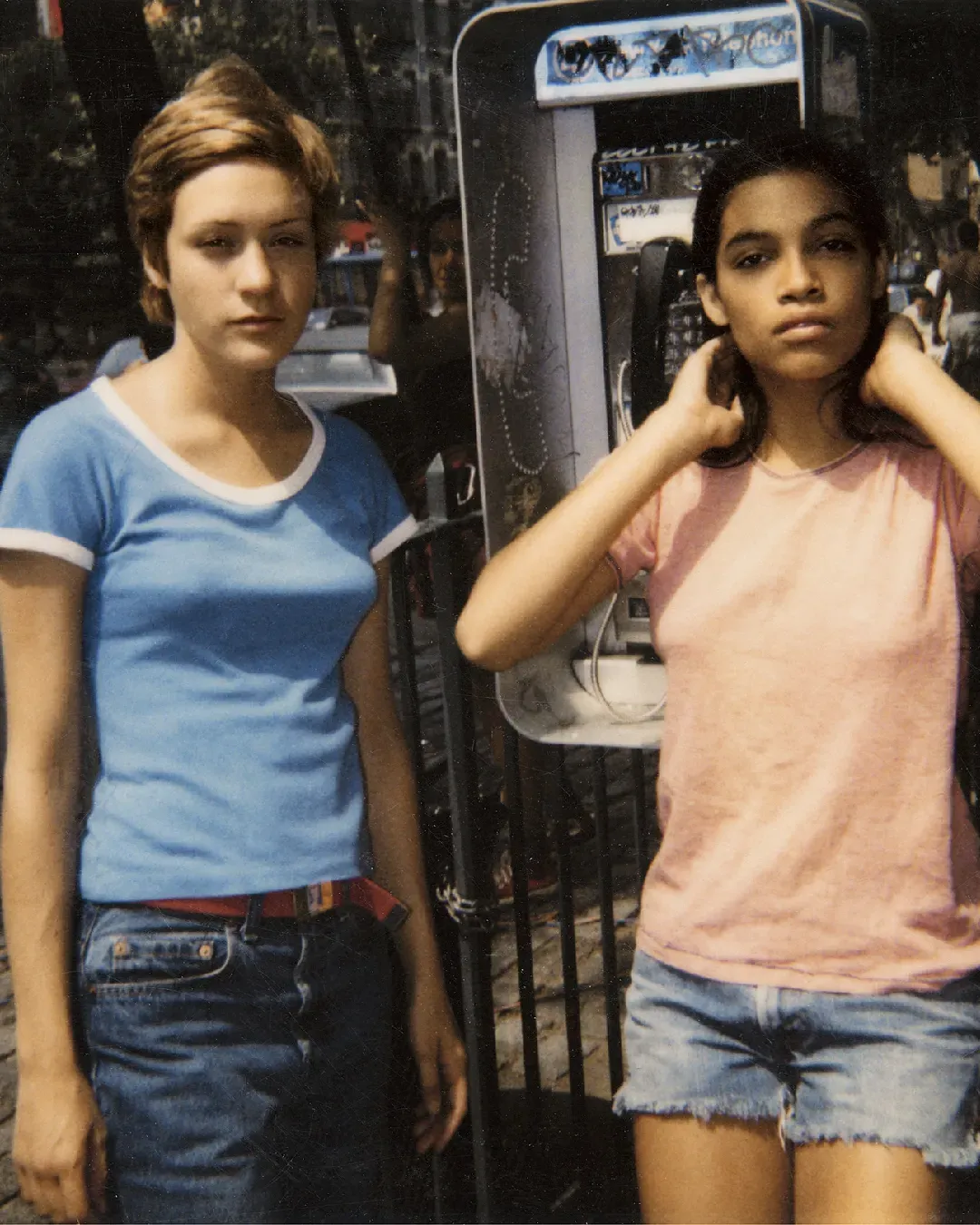
When do we stop being teenagers? With "adultescence", internet suggests it may take longer than we think
We live in a digital age whose content teaches us, motivates us and constantly encourages us to improve ourselves, where personal growth increasingly coincides with the acquisition of social, professional and emotional awareness. Yet within this multitude of messages shaped by optimism, often excessively so, there remains a grey area that escapes every rhetoric of self-realisation: adolescence. The latter brings with it not only trauma, discoveries and anxieties experienced by young people searching for their place in the world. It also carries the illusion of a suspended temporality, of an age that seems never to end.
If adolescence once represented a transitional phase marked by uncertainty, the search for identity and inevitable disillusionments, today those same feelings seem to have evolved into a permanent cultural condition. New generations of adults continue to share the same emotional states that we traditionally associate with the teenage years, transforming them from an age category into an existential posture. Adolescence thus becomes a dimension capable of surviving beyond the boundaries we have always assigned to it.
When Tumblr was around
@tumblr 19 years of tumblr! thank u to everyone who’s made our community so special #tumblr #tumblraesthetic #2010s #nostalgia #2014tumblr original sound - dj cara
2026 has confirmed itself as the year of the romanticisation of 2016. Social media is overflowing with videos, moodboards and photographic collections dedicated to that era which, when compared to a present marked by geopolitical tensions, economic crises and widespread uncertainty, appears surprisingly light-hearted and carefree. Before photo filters, Snapchat dog ears, the obsession with Coachella and a California imagined through screens, however, there was another digital universe. Before the colourful aesthetic we now remember with nostalgia, there was Tumblr.
It was 2014 and the platform developed between 2006 and 2007 had become one of the spaces that best represented the most authentic soul of the internet, contradictions included. Tumblr was dominated by the spectacularisation of pain: everyone was suffering, or at least it seemed that way. Adolescent uncertainty, melancholy, feelings of inadequacy and disillusionment became elements of collective belonging. From the reckless use of the word “depression” to the sharing of content that today would be immediately moderated, the Tumblr generation seemed to live in a permanent state of vulnerability.
@valentinabate Risposta a @tuttobenegrazietu #tw nomino dca e disturbi mentali, parti di un’estetica della sofferenza estremamente tossica che viveva su #tumblr #tumblr2014 #lanadelrey #arcticmonkeys #indiesleaze Lo-fi hip hop - NAO-K
The narrative of adolescence often became intertwined with forms of emotional extremism, suffering and violence, as if the construction of identity could inevitably slip towards radical expressions of the self. Yet it would be reductive to remember Tumblr solely for this. What made Tumblr the quintessential space of adolescent expression was not only the sharing of personal fragilities, compared to the performatively optimistic landscape of contemporary culture, but also the possibility of sharing them within a community. Before the regulatory tightening that progressively reshaped the web, the platform allowed users to consume every kind of content: photographs, music, personal diaries, outfits, visual collages and intimate reflections.
Despite the profoundly disillusioned nature of its community, Tumblr represented a space of cultural nourishment. A place where adolescence was neither hidden nor corrected, but lived through. Tumblr aesthetics were influenced by music, subcultures, graphic T-shirts, rock, punk and sounds that today we would define as experimental. Every profile became a sort of digital bedroom in which images, desires, references and obsessions could accumulate. Tumblr was not an escape from reality but, perhaps, one of its most honest and ruthless manifestations.
The principle of Adultescence
se è la psicologia sociale italiana ad aver coniato il termine "adultescenza" un motivo ci sarà
— pinodipino (@spinaus) May 14, 2016
If adolescence seems never to end, it is also because contemporary society continues to postpone the very idea of adulthood. Public discourse increasingly revolves around adultescence, a neologism describing the condition of those who, despite having reached adult age, continue to maintain lifestyles, habits and relational patterns typically associated with adolescence, postponing or rejecting the assumption of lasting responsibilities. In Italy, this phenomenon takes on particularly visible contours, touching upon one of the most delicate issues of our time: the difficulty of growing up in a society that seems to have lost the value of maturity.
Adolescence has always been a transitional age but today contemporary culture celebrates youth as the only truly desirable condition. One must remain young in body, image, language, consumption habits and even in the eyes of others. Maturity is perceived as a loss, old age as something to conceal and responsibility as a burden to avoid. But if becoming an adult is portrayed solely as a renunciation, why should an adolescent ever aspire to it?
Every young person needs to feel seen in order to grow. But being seen is not enough. One must also be recognised, because recognition itself restores value to someone's existence. In this sense, even a controversial space such as Tumblr fulfilled an important function: it allowed people to feel part of something, to find a common language through which to shape their vulnerabilities and within which they could recognise themselves and be recognised by others. If adulthood appears only as exhaustion, performance anxiety and nostalgia for youth, then growing up can only become frightening.
Nostalgia as a form of creation
There is an artistic practice that seeks to interrogate nostalgia not as a simple longing for the past, but as a threshold towards leaving adolescence behind. Within this context we find the work of curator Julia Marchand, co-founder of Octobre Numérique - Faire Monde, a festival dedicated to experimental video games as a cultural form deeply connected to adolescence, both as an aesthetic production and as a tool for emotional and psychological processing. “We worked precisely on this: providing a platform for languages that emerge from a more unconscious or repressed dimension”, Marchand explained to Artribune, identifying adolescence as a privileged condition for self-expression precisely because it is characterised by a position of vulnerability.
In the interview, the curator also stated: “Video games allow for a form of ambiguity between dreaming and wakefulness, between control and loss of control. I am convinced that play, in its capacity to build its own world, is the format closest to an adolescent's bedroom: passions are poured into it and a collage is created.” A definition that perfectly describes not only video games, but much of contemporary culture. From playlists to social media profiles, from moodboards to virtual worlds, we continue to build symbolic rooms in which to deposit fragments of our identity.
Inhabiting the present
@jocelynamoran Adolescence lasts into your 30s, a new study shows #adulthood #news original sound - Jocelyn Moran
Perhaps the reason we continue to romanticise Tumblr, 2014 or 2016 does not truly lie in the desire to go back. It is not nostalgia for a specific historical period, nor for a platform that has now been unfairly forgotten. What we call nostalgia is often a longing for a moment in life when everything was still possible. Even if the world seemed to weigh heavily upon our shoulders, we, confused and disillusioned adolescents, did not yet carry the responsibility of adulthood because we were too busy fighting the present, or rather, fighting ourselves.
An age in which identity was not yet defined but still under construction, in which the future was frightening yet still retained the fascination of the unknown. This is why adolescence continues to resurface through aesthetics, trends and contemporary cultural forms. Not because we refuse to grow up, but because society itself seems to have transformed that transitional phase into a permanent condition. And while we continue to build new symbolic rooms in which to seek refuge, share and narrate ourselves, perhaps the real question is not when adolescence ends, but whether it has ever truly ended for anyone.