
































Inditex is doing well despite tariffs In the third quarter, sales for the fast fashion giant increased by 8.4%
The Spanish fast-fashion giant Inditex is not slowing down even in the face of the crisis that has crippled almost the entire fashion industry. This last quarter, the group that owns Zara, Mango, Bershka, Massimo Dutti, Stradivarius, Oysho and Pull&Bear recorded an 8.4% increase in sales, surpassing analysts’ estimates, which had predicted growth between 7% and 8%. In the last month, moreover, sales jumped to +10.6% at constant currency, driven by the relaunch of Zara which, for the holiday season, has stepped on the accelerator of its own glow up, from the opening of a new flagship store in Barcelona to the launch of new luxury collaborations for the brand’s 50th anniversary.
Operating costs under control and investments in technology
A data point highlighted by every media outlet that has analyzed Inditex’s new results concerns operating costs, which still increased by 3% thanks to an efficient control of the entire supply chain, during a period in which the sector is wavering under geopolitical pressures on all fronts. Last October, Zara inaugurated a new design and operations hub in Arteixo, Spain, a complex of about 195,000 square meters. The company is also working on new technologies to improve inventory accuracy and enable faster self-checkout systems. In Zaragoza, meanwhile, a new distribution center has opened.
Fewer stores, but bigger and more efficient
Even on the retail front, Inditex is implementing a winning strategy: closing less-performing stores and investing in larger and more efficient locations by 2026. In addition to the opening of the store-maison in Barcelona, this year the brand has inaugurated a new space at the Forum Shops in Las Vegas and a men’s-only store in Rome. Beyond Zara, the group’s other brands also seem to be performing well, with new openings across Europe.
Although many analysts have commented with dissatisfaction on Inditex’s results, for a year like 2025 they are objectively more than positive. Despite macroeconomic uncertainties, the group proves once again to be a step ahead of luxury, thanks to a well-positioned strategy. Consumer behavior remains uncertain due to the crisis that is distancing many people from impulsive shopping, but according to early holiday results, consumer anxiety does not seem to be affecting Spanish fast-fashion brands. The potential imposition of new tariffs in the United States represents an additional risk that CEO Oscar Garcia Maceiras still considers “difficult to predict”, but the group’s geographical diversification of production shows just how well prepared it actually is for unforeseen events.
- TAKEAWAYS
- - Inditex surpasses estimates with sales growing 8.4% and +10.6% in the last month, driven by Zara’s relaunch.
- - Effective cost control, with operating costs rising only 3% thanks to a highly optimized supply chain.
- - Strategic investments in new hubs, inventory-management technologies, and faster self-checkout systems.
- - Retail repositioning: closing underperforming stores and focusing on larger, high-level spaces by 2026.
- - Strong consumer resilience, with Spanish fast-fashion seemingly unaffected by macroeconomic uncertainty and consumer anxiety.
- - Geopolitical risks remain, such as potential new U.S. tariffs, but the geographical diversification of production strengthens the group’s capacity to absorb shocks.
What to read next
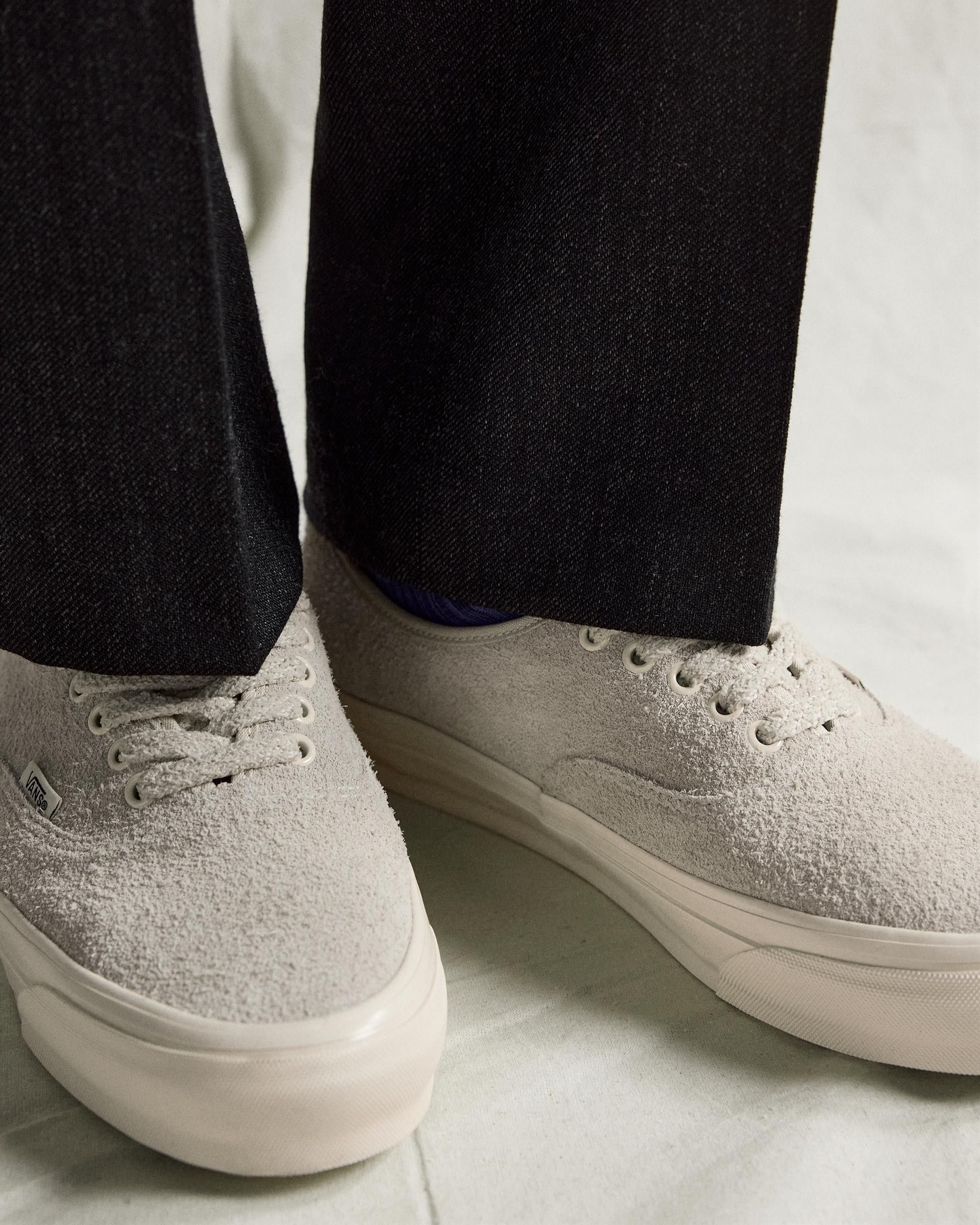
What do you mean Zara started selling Vans?
The two brands have entered into an ongoing partnership

Zara had to pull a striped costume after a huge controversy
And it's not the first time it has happened

The first Re{form} Zara collection signed by John Galliano has finally arrived
And it's as beautiful as we expected