
How do billionaires prepare for war? With million-dollar bunkers
The U.S. edition of Wired has published an investigation into Mark Zuckerberg's new residence on the island of Kauai, in Hawaii, reportedly worth more than $200 million. Currently under construction, the compound spans an area of more than 5,000 square meters and will include two villas, several additional structures, and a large facility set to house a gym, a swimming pool, and a tennis court, among other amenities.
According to Wired, which spoke with a spokesperson for the Meta CEO, the project will also include a fully equipped bunker, connected to the main residence through an underground tunnel. The shelter will feature soundproof walls, internal elevators, armored doors, and reserves of water, among other provisions. On top of that, the compound will include autonomous systems for electricity production as well as an extensive network of surveillance cameras.
However, the investigation reveals that very few people are authorized to speak about the project, since almost all workers involved were asked to sign strict non-disclosure agreements: «It’s like Fight Club, we can’t talk about it», a source who worked on the project told Wired. At least one employee was reportedly fired after sharing a photo of the construction site on Snapchat. There have also been numerous debates regarding the environmental impact of the residence, with several residents of the island expressing their opposition to Zuckerberg’s development.
The business of luxury bunkers
@youwontbelievemeofficial #MarkZuckerberg is creating a underground #bunker in #hawaii Beethoven Moonlight Sonata-High Sound Quality - Amemiya
Zuckerberg is not the only billionaire to have built a bunker. Max Levchin, one of the founders of PayPal, has stated that roughly half of those who became wealthy through the new economy have invested in some form of “emergency plan” to protect themselves in case of wars or revolutions. The same applies to figures such as Jack Ma, founder of Alibaba, James Cameron, and William Foley, a well-known finance magnate. The construction of underground safety shelters, in fact, is no longer reserved exclusively for heads of state, as it largely was throughout the twentieth century.
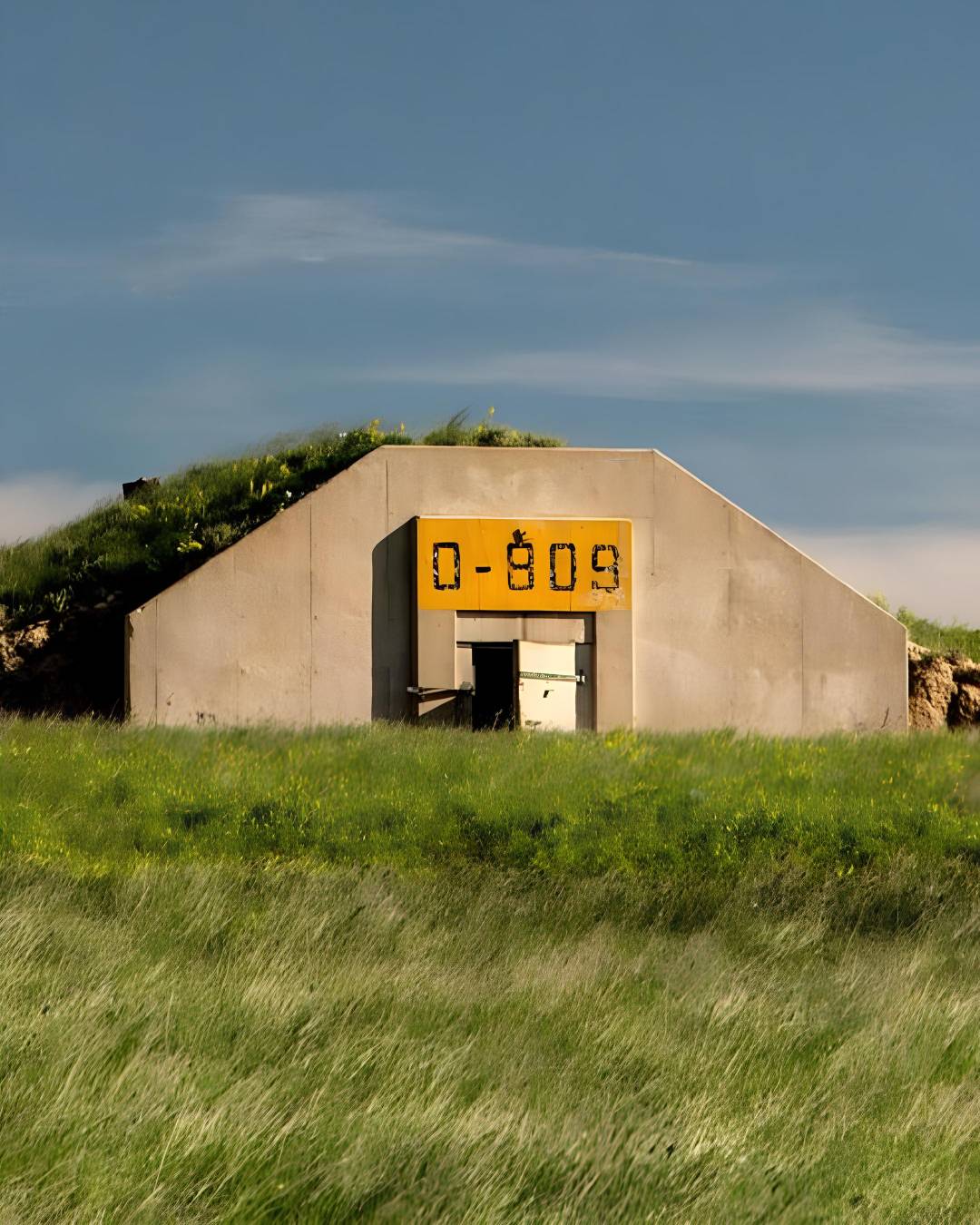
American entrepreneur Harry Hall, for instance, previously invested in the business of building bunkers for billionaires. His company Survival Condo offers luxury apartments connected to shelters designed to withstand nuclear war. The New York Times managed to enter one of these residences. The interiors resemble those of luxury hotels, featuring wood finishes, designer furniture, swimming pools, and hot tubs, among other amenities. On the walls, there are screens allowing residents to monitor what is happening outside the bunker. Dedicated filtration systems prevent air contamination. Wind turbines and solar panels ensure electricity supply, while dedicated areas for growing plants and raising fish are designed to provide a nearly unlimited food supply.
The bunker is said to have complete autonomy for up to five years. One buyer of these apartments, valued at $1.5 million, told the New York Times that he believes we are living in the most dangerous era in history and that, in order to protect himself from nuclear war or societal collapse, he chose to make this investment. Post Malone also reportedly invested $3 million in 2019 to build a bunker beneath his home in Utah.
Who today’s “preppers” are
The New Yorker attempted to better understand the potential buyers of these luxury bunkers and, more broadly, who the Americans are that spend millions of dollars preparing for the apocalypse. Being ready for a possible collapse of society is not considered an excessive concern in the United States. There is even a term used to describe people who accumulate weapons and food supplies in anticipation of such a scenario: “prepper”, meaning «those who are prepared».
In recent years, associations and groups of individuals training for a possible apocalypse have multiplied. Until recently, they were not multimillionaires, but mostly camping enthusiasts and gun fanatics. The clients of the luxury bunker market, however, do not belong to this category. They represent a new generation of “preppers,” no longer coming from rural America nor aligned with far-right conspiracy theorists. Their real fear, in the end, is not so much nuclear war or the collapse of society, but rather a revolt against their economic privileges.
What to read next

When Rei Kawakubo designed a furniture line
An experimental collection created by the designer in the 1980s for Comme des Garçons
In "The Stranger" the family is fertile ground for horror and fear
Paolo Strippoli's new film puts the mother-daughter relationship back at the center