





























A brief joruney into the backrooms of cinema, from David Lynch to Kane Parsons While we wait for ‘Backrooms’, let’s rediscover the urban legend on the big screen
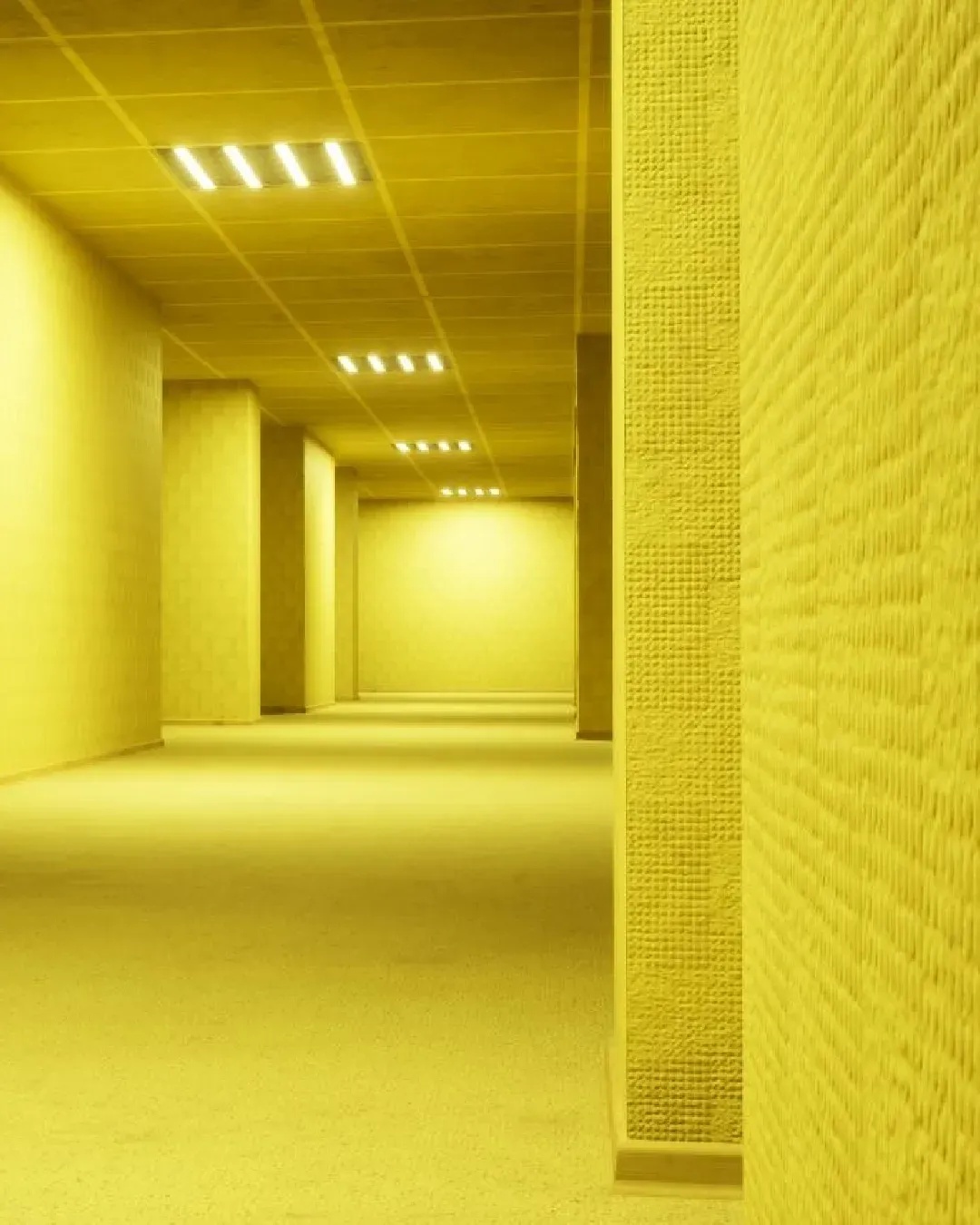
Backrooms has just been released in theaters, telling the urban legend born online in 2020 and represented as a parallel dimension made up of an infinite series of empty rooms. But Kane Parsons’ film, born in 2005 and who launched the Backrooms web series at the age of seventeen, is not the first example of contamination between the internet and audiovisual media involving the backrooms. It is certainly the most fitting prototype, but cinema and television had already begun infusing the fears of creepypasta (disturbing stories created and spread online through copy and paste) into their atmospheres, from Severance to Skinamarink.
Since the backrooms are liminal territories, it is amusing (as well as frightening) to imagine that there is a portal in space-time whose defining date is 2020, when the entire world was forced into lockdown. That said, around this urban legend revolve other similar models that emerged before that fateful year.
Early 2000s
Released in 2006, Inland Empire was the final feature film by David Lynch, in which boundaries were constantly crossed, all tied to the subtle distinction between the actress’s real life, played by Laura Dern, and the film she was acting in. Even the physical locations represented the splitting of the character, reflected in the film’s settings, spaces that eventually merged into one where fake and original, digital and analog coexisted in the madness of filmmaker Lynch and his protagonist.
Inland Empire is certainly more closely tied to a reflection on the central issues connected to the technological revolution that transformed cultural production in the early 2000s. However, the intangible essence of the digital world it explores became the very nature of Internet spaces which, beginning with the first image considered the origin of the backrooms, later flooded the web with a specific lore and an entire background mythology. It is the same context from which Parsons’ Backrooms (and the web series) emerged, quickly transcending media itself, with the same ease as the noclip phenomenon through which one can fall into these familiar yet terrifying rooms without ever knowing how to escape.
Skinamarink, Vivarium and The Shining
Another title that anticipated Backrooms is undoubtedly Skinamarink (2022) by Kyle Edward Ball, in which the setting is a house where rooms become places of uncertainty and where doors and windows move. In Ball’s film, the only connection to the outside world is a flickering television, surrounded by noises coming from nowhere and everywhere at once. The house in Skinamarink is a more confined place compared to the seemingly endless corridors of Backrooms, but even here a possible expansion is never excluded. Spaces with their own rules that can constantly change, and certainly do in Ball’s work.
But liminal horror in cinema does not stop there: three years before Skinamarink, and seven before the birth of the backrooms legend, Lorcan Finnegan directed Vivarium, a 2019 film in which the two protagonists, Jesse Eisenberg and Imogen Poots, are unable to leave a house and a neighborhood because they are prisoners.
And above all, the Overlook Hotel from The Shining is considered by many to be an echo of the unsettling spaces of the web phenomenon, having developed its own canon structured into nine levels, with the fifth level containing the Terror Hotel.
The Carpet in Severance
The TV Show Severance spaces inspired by Oscar Nieyemer design from French communist HQ pic.twitter.com/HIkWB6CJlW
— INTERIOR HUB (@INTERIORBYHUT) February 2, 2026
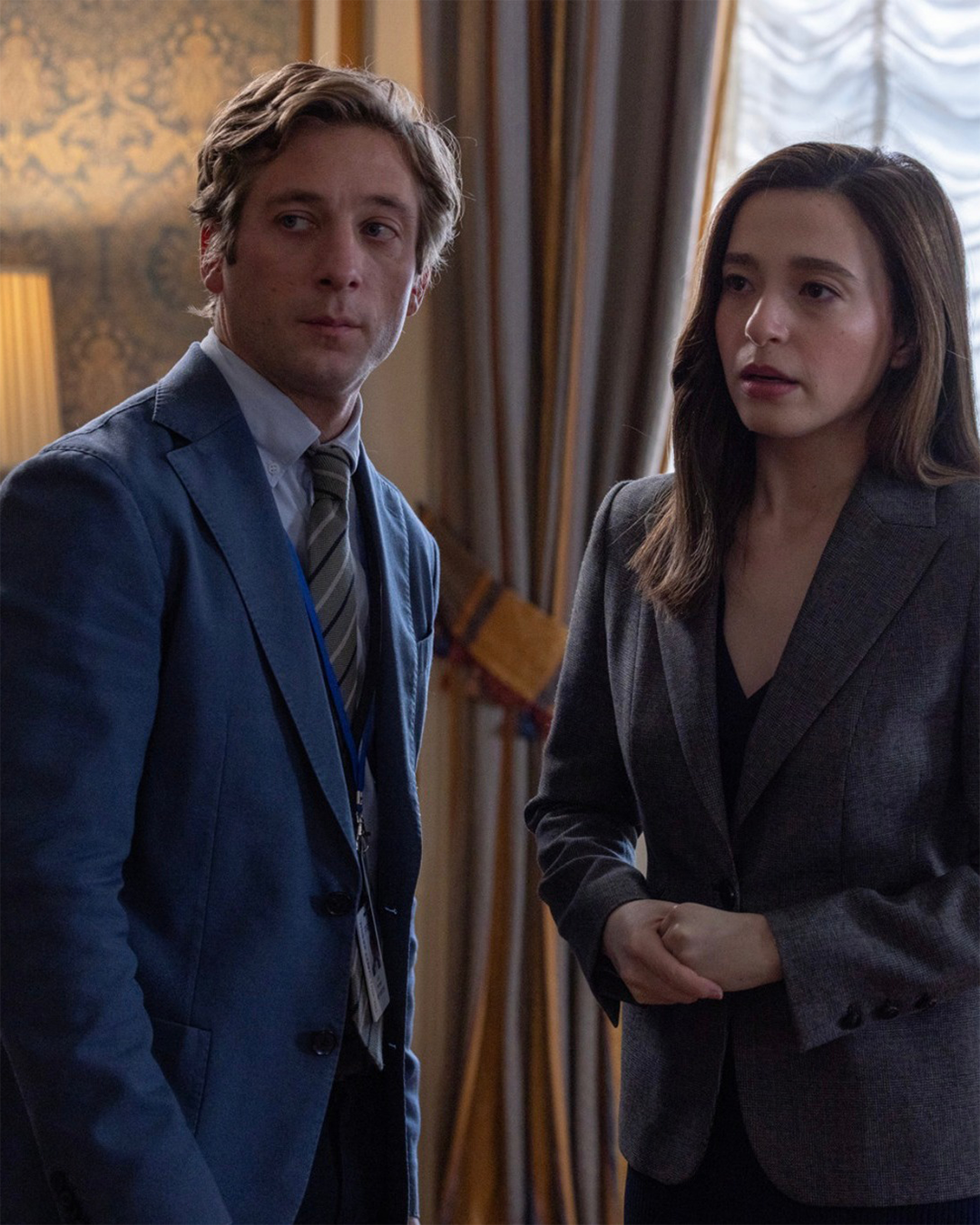
If one of the defining traits of the backrooms is the unexpected leap that a person or object can make, catapulting from one place to another, in a series like Severance by Dan Erickson all it takes is an elevator to descend to the office floors of the protagonist, whose “outside” memory is erased to create his “work” persona. While the arrival is controlled, it is the way the show’s locations are structured that recalls the creation of the backrooms; that sense of incomprehension toward a place, the inability to decode it. A world where everything repeats itself, everything blends together, and where the green carpet changes color compared to the original yellow one, yet remains the same type that characterizes the floors of the backrooms online.
More than once, Severance has given audiences the opportunity to investigate and wander through the depths of the offices of Lumon Industries. What they encountered were paintings as tall as walls and goats roaming freely in an indoor garden, a narrative that expands upon what the backrooms merely hinted at, and that Erickson’s show proved to be fertile ground for one of modern television’s greatest successes.
And finally Backrooms, the 2022 series and the film coming out this May
Kane Parsons himself, with the web series Backrooms, managed to work on the narrative level in a way similar to Severance, albeit following different directions and intentions. In 2022, he created the first in a series of short films in which he animated the spaces of the backrooms: from a single original image emerged numerous videos that progressively built an actual story around the internet phenomenon.
What emerged was a mosaic of events, composed of episodes of varying lengths, some only a few minutes long, others much more extensive. Parsons thus gave context and narrative structure to isolated images, transforming them first into footage and then into actual legends complete with origins and backstories. This process continues when the project derived from the series was entrusted to screenwriter Will Soodik, who started from Parsons’ concept and further reworked it for the film scheduled for release on May 27, 2026.
Ultimately, this is precisely the mutable nature of the backrooms: to distort and adapt to the moment. To remain still, yet never identical; liminal places that seem familiar to everyone, but where perhaps no one has ever truly been.