
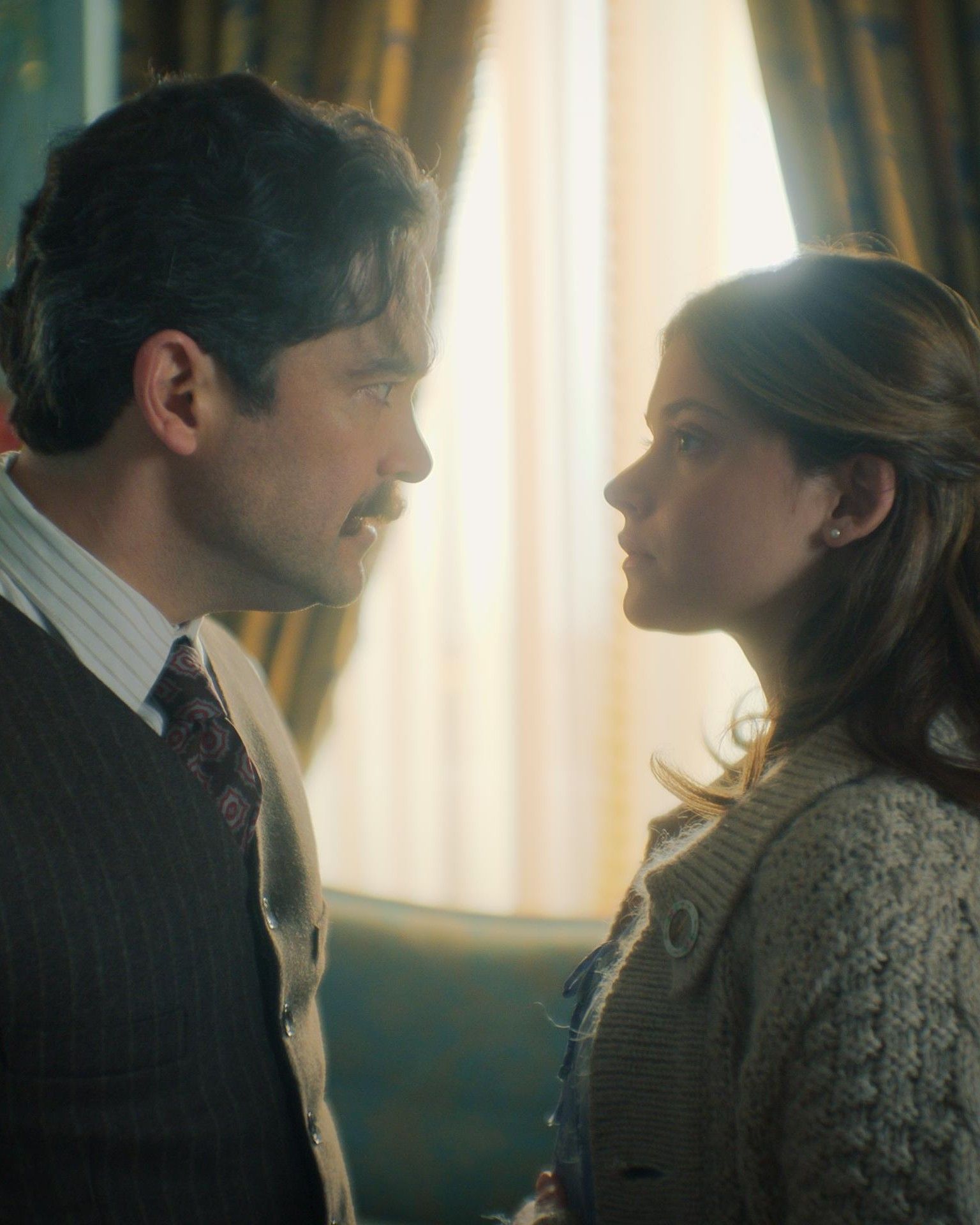
The series based on "The House of the Spirits" is a missed opportunity Il romanzo di Isabel Allende arriva su Prime Video, ma perde di potenza
Quietly, without anyone really noticing, the adaptation of Isabel Allende’s book The House of the Spirits has arrived on Prime Video. A Chilean production, closer in this sense to the atmospheres and colours of the bestseller published in 1982, but not for this reason appreciable only because it belongs to the same land as its author and the setting in which the intertwined stories of the Trueba family take place.
The series, consisting of eight episodes, had a prestigious showcase with its premiere at the recent Berlin Film Festival and is being released on a weekly basis. An admirable springboard for a product where, however, a more televisual than artistic feel emerges from the episodes that make up the screen adaptation of the story conceived by Allende — faithful in the power of the narrative but not thanks to the support of the staging. A waste of resources, especially given the sisterhood that could have been created between the novel and the adaptation, for a production that did not live up to the writer’s work, despite remaining faithful to the pages and their transition to the screen.
@primevideoca One family, four generations, one incredible story. The House of the Spirits will stream April 29 on Prime Video #TheHouseOfTheSpirits #NicoleWallace original sound - Prime Video Canada
A series that could have reclaimed a national text which, as often happened, years ago was intercepted by Hollywood, which took possession of it for its own version. A 1993 film written and directed by Bille August (of Danish origin, among other things) that removed Spanish as the main language in favour of English, featuring prominent stars who were and still are quintessential movie-star faces such as Meryl Streep, Glenn Close, Jeremy Irons and Winona Ryder, who had little to do with the Chilean roots of the characters.
It is in fact the national soul that Isabel Allende herself, who supervised the project and participated in its creation as executive producer, appreciated about the series. An authenticity that was missing in the cinematic adaptation and which she found again in the episodes of The House of the Spirits, the only merit we can grant the product and, surely, among the most important. It respects the characteristics of its characters, the lands and their everyday spaces, figures whose destinies are intertwined with the historical background that marked the political and social developments of 20th-century Chile, which changes and unfolds across the fabric of a family and feminine legacy.
And yet it is regrettable to note that everything else is missing, especially the frenzy that the novel manages to instil in readers, pushing them to turn page after page — a desire absent in the serial equivalent. The main impasse of this version of The House of the Spirits, in addition to an aesthetic that is not particularly refined and which shows all its limits especially in the more imaginative parts.
The invitation, however, is that the poor result of the Prime Video series does not discourage all literature enthusiasts who do not trust adaptations of classics, especially in anticipation of the return of a title that, drawing from a similar pool, managed instead to make the most of it. It is One Hundred Years of Solitude by Gabriel García Márquez, taken on by Netflix and with a release scheduled for the summer of 2026, a peculiar case given the power of the novel which, incredibly, had never received an adaptation before the series released in 2025.
It therefore has a unique and direct connection with the Colombian roots of a story where, once again, the years and generations pass across the stage of a world that for Márquez was the fictional Macondo, but which opens up to a broader breath that embraces his country of birth — one that pulses as much in the book as in the outcome of the series. An example of how identity and its expression can coincide, just as between what one is able to convey with the words of a novel and with the images of a lens.