




















How Arab fashion is winning back the Gulf’s ultra-wealthy local clientele The Franco-Italian dominance of the fashion world has new rivals
If today fashion is in crisis, it is because for at least twenty years its hegemons have exploited the rapid economic growth and strong spending of customers in China and in the Arab Countries. Customers from these two key markets still demonstrate today that they greatly love European fashion but things are changing: between rising costs and decreasing spending power, the rise of nationalisms and the now completed maturation of local fashion industries (also based on government investments that have understood their economic potential), customers from those regions have started to buy, if not actually prefer, local fashion. This creates a new category of competition for the already fatigued European fashion.
The fundamental element to consider is that these phenomena are taking place precisely in the two most important markets for fashion, namely China and the Middle East, corresponding to societies with a culture very distinct from the European one, in which local brands move naturally unlike European brands which, over the years, have had to adapt, often with great effort. Started in China several years ago, the trend has now reached notable proportions in Arab markets. But how did they succeed?
The ambitions of Saudi Arabia and the United Arab Emirates
@sheerluxe.me Saudi fashion brands we’re not gatekeeping. Head to the SL YouTube channel or tap the link in bio to SheerLuxe Middle East’s first Saudi podcast… #saudibrands #regionalbrands #saudiarabia original sound - sheerluxe.me
Saudi Arabia represents more or less 40% of the luxury market in the Gulf region, making it the most prominent market in the region when it comes to fashion, both in terms of pure sales and internal initiatives such as Vision 2030 which includes direct investments in the local sector such as the Fashion Commission, Saudi 100 Brands, local fashion weeks aimed at reducing dependence on imports and creating jobs, especially for the female population which represents 55% of the local industry’s workforce. Another notable case in the region is that of the United Arab Emirates where, according to Adat.ae, Emirati fashion alone represented over 70% of the market with an estimated value of around 2.7 billion dollars in 2024 alone.
Two years ago, in the Saudi State of Fashion Report, it was stated: «Local brands are still few and at the beginning of their journey, since many only emerged after 2010, and cannot yet afford rents in shopping malls. As these brands expand their operations and capabilities, supported by programs such as “Saudi 100 Brands”, it is expected that they will acquire a stronger position in regional and neighborhood shopping centers, targeting specific local customer pools». The issue raised was therefore logistical: spending is based on shopping malls and therefore growth is based on access to them, which can only happen after growing enough to afford the rent. And, as Vogue Business reports, this is precisely what has happened in recent months.
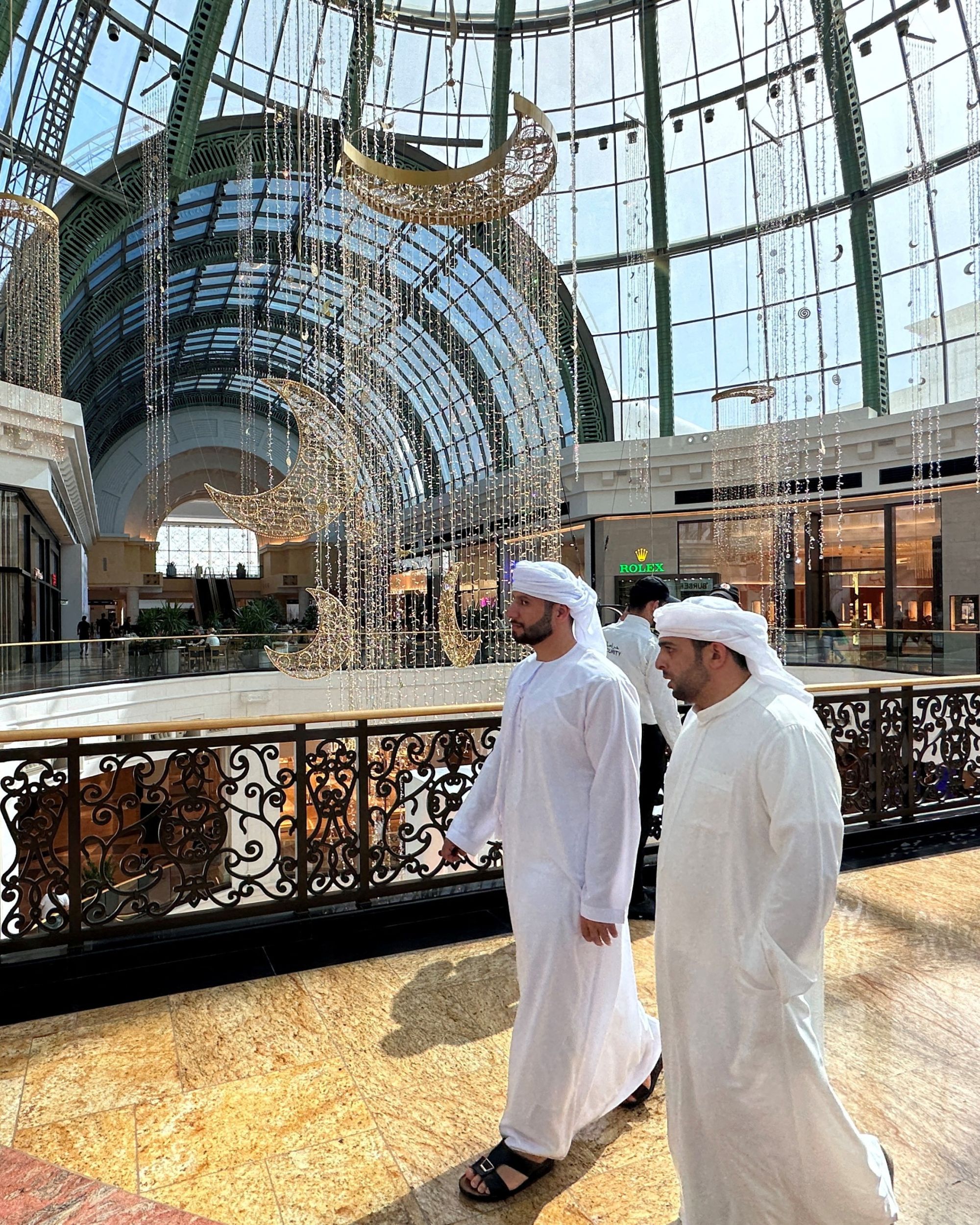
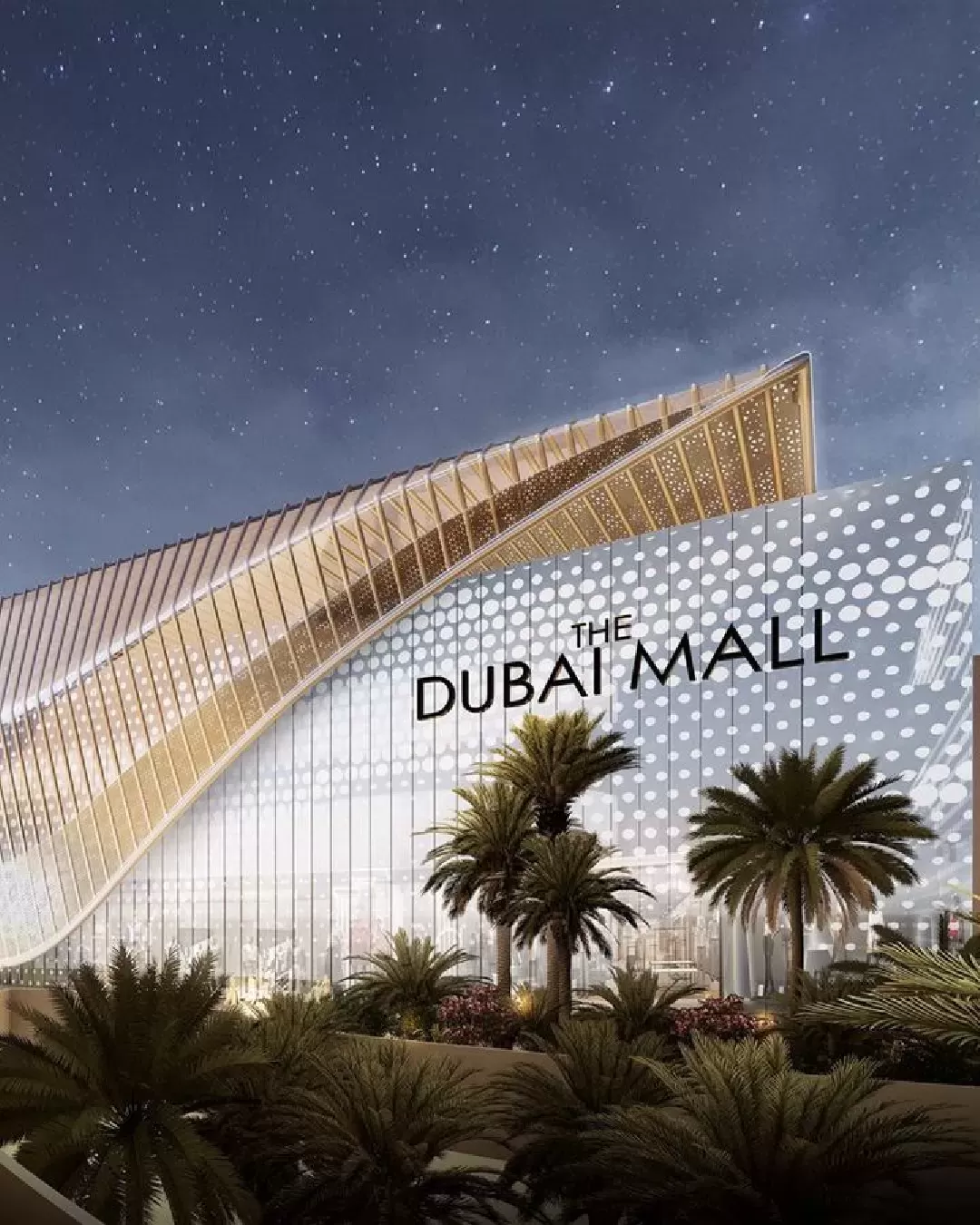
On the first of May, the brand The Giving Movement, which was born and spread in Dubai, inaugurated a space dedicated to emerging local brands inside City Walk Mall. Karen Wazen, who produces eyewear, presented a lifestyle pop-up at Palm Jumeirah and will soon arrive at Dubai Mall. In recent months, another pop-up dedicated to six local designers was hosted by The Edit Dub while Majid Al Futtaim, one of the largest local retail groups, launched the Ma'an platform (“together” in Arabic) to bring small and medium-sized local enterprises into its retail network. Khalifa Bin Braik, the group’s CEO, told Vogue that «the next chapter of retail fashion in this region will not be written only by big global names».
And already in 2024, Arab News reported Statista data according to which the Saudi fashion market would generate around 4.37 billion dollars in revenue in 2024, with an annual growth rate of 11.62% until 2029. This figure was then confirmed by the Saudi State of Fashion of 2025. The e-commerce segment alone was expected to reach 2.5 billion dollars, with the share of online fashion sales destined to rise from 40.6% to 68.9% by 2028. One year later, the newspaper Gulf News published a YouGov survey according to which 6 out of 10 Saudi consumers prefer products from their own country. But what is happening in the others?
Smaller but growing ecosystems
In addition to the more “aggressive” Saudi Arabia, the other Gulf countries are also building their own ecosystems. At the level of local brands, the scenes are smaller than in larger countries, but they are developing both in high luxury and in more accessible brands. Kuwait, for example, which is small but extraordinarily dense with high-income consumers, has developed its own fashion in recent years with brands such as Manal Smaoui, Bazza Alzouman and Yousef Al Jasmi. At an institutional level, the Oud Fashion Talks platform has reached its fourth edition in November 2025.
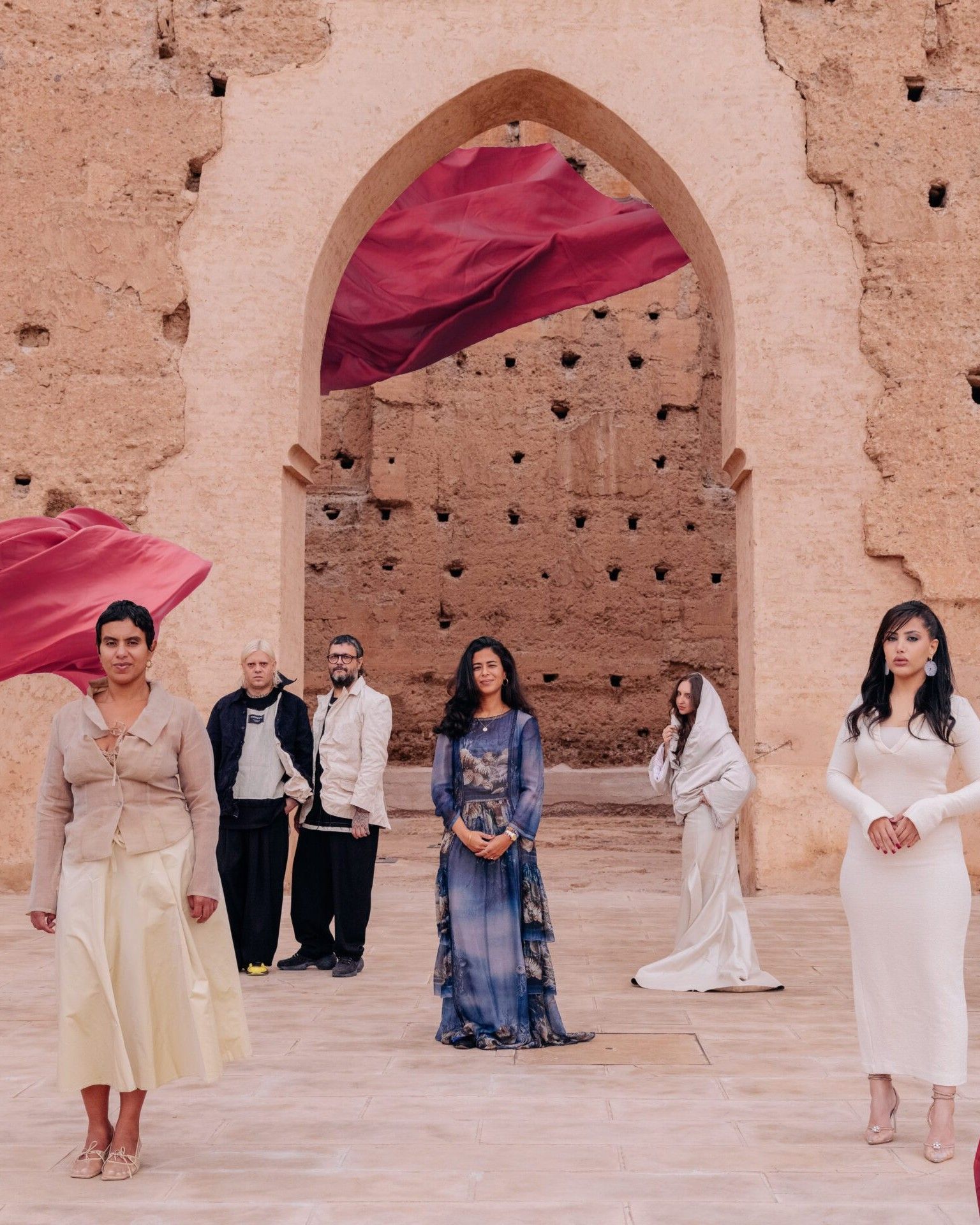
Then there is Qatar where, according to official reports, 14% of local consumers prefer national or Arab region designers and where Fashion Trust Arabia was born, under the patronage of the Qatari royal family and based in Doha, which reached its seventh edition in 2025 and has also included designers from Bahrain, Morocco and Egypt. At the level of local brands, among the most notable designers in the region are Wadha Al Hajri, Dana AlMulla, Ghada Al Subaey and Yasmin Mansour.
Bahrain is the least studied among the Gulf markets, but it has produced some of the most original voices in regional design. At the Fashion Trust Arabia Awards 2025, the designer Alaa Alaradi, born in Bahrain and raised in Switzerland, won the Franca Sozzani Award for debut talents, while the sisters Dalal and Fatema Alkhaja won the Fashion Tech Award with their brand Touchless. All recognitions that show how a scene of local designers exists and can compete at a regional and international level despite the limited size of the domestic market.
The numbers that unite the Gulf
أول ظهور لتصميم من مصمم سعودي في الميت قالا!
— Mohammad Yousif (@mohvmsm) May 4, 2026
تصميم من مجموعة Ashi Studio. pic.twitter.com/pJPFp2O2tu
Beyond national specificities, there are some cross-cutting trends that unite all the countries in the region which, let us remember, is a fundamental market for luxury. According to Grand View Research, the global Islamic clothing market (which includes abaya, hijab, thobe and more “international” items but still in line with regional customer needs) was estimated at 84.98 billion dollars in 2024 and will grow to 140.59 billion by 2033 with an annual rate of 5.9%, with the Middle East and Africa holding 48.25% of the world share of the entire market. The cultural peculiarities of the region, then, with its various religious festivals, social occasions and consumption patterns, require hyper-local approaches that greatly favor the development of internal brands.
In general though, outside of Saudi Arabia, the Gulf countries do not yet have the institutional structure to support local fashion that Riyadh is building through the Fashion Commission and Vision 2030. Many (but not all) countries lack structured fashion academies, dedicated public funds, and a local production chain. And designers often have to deal with fragmented ecosystems, production abroad and domestic markets that are too small to really grow.
Yet between the work of Fashion Trust Arabia as a regional connector, the policy of fashion as soft power that is spreading and greater collaboration between the retail world and local designers, the scene is maturing visibly. Yet the real question is not whether there will be space for local brands in this expanding market but who, among the Gulf countries, will be the first to build a national creative industry capable of expanding globally.