






























"Man on Fire" is yet another formulaic Netflix series An impersonal narrative based on A.J. Quinnell’s novel
To notice the anonymity of a series like Man on Fire - Sete di vendetta, one only needs to look at the titles of its seven episodes. Without any trace of originality, the show names each episode simply with its numerical order, failing to find any meaningful connection to the content. It is a practice that, if you pay attention, streaming series increasingly fall into, and in the case of the Netflix title created by Kyle Killen, it reinforces its lack of identity.
Missed originality
@netflixit Combatti con noi Man on Fire è ora disponibile solo su Netflix! #davedere #serietv #netflixitalia original sound - Netflix Italia
An irrelevant series, which does not mean bad, but it raises the question of how many similar titles, between cinema and television, we have already seen. It is also evident how in Man on Fire there is no memorable element that would justify spending valuable viewing time on the platform’s project.
Even the Netflix adaptation is not entirely original, as it is the serial version of the novel by A.J. Quinnell, already adapted for the big screen twice. The first time in 1987, directed by Élie Chouraqui, while in 2004 it was Tony Scott who took the helm, casting Denzel Washington. This time, taking on the role of protagonist John Creasy is actor Yahya Abdul-Mateen II, in his second series of 2026 after the release of Wonder Man within the Marvel Cinematic Universe, here dealing with powers that do not stem from innate abilities but from his work in special forces.
Flat storytelling
One of the most skilled agents in his unit who, after suffering a severe loss on the job, can no longer recover and chooses to give up. A colleague will bring him back into action, pushing him to uncover what lies behind a mission that soon becomes deeply personal. Yet everything intimate in the situation the protagonist is involved in has nothing to do with the execution and packaging of the series.
While the character played by Yahya Abdul-Mateen II remains engaging mainly because of another devastating loss he suffers and seeks to avenge, nothing distinctive emerges from the creation and the way the story is told and staged in this new iteration of Quinnell’s narrative. Only the Brazilian setting adds a slight extra touch, but although it appears several times throughout the episodes, it never stands out enough to become an unmissable stage that motivates viewers to keep watching.
@netflix There is nothing Yahya Abdul-Mateen II can’t do. Man on Fire premieres April 30, only on Netflix.
original sound - Netflix
If the protagonist has a valid reason to remain in a foreign country, striving to uncover the truth behind the conspiracy he is caught in and to protect those in danger, it is the viewers who are left without reasons to stay invested in the mission. The feeling is that everything unfolding in Man on Fire has already been seen and experienced through countless other titles. Not even the characterization of John Creasy functions effectively as a hook: the agent’s analytical mind and professional expertise make him a formidable, albeit worn-down, fighting machine shaped by post-traumatic stress, and it works when the narrative shows that even such a rigid armor can reveal vulnerability.
A series without personality
This Man On Fire series is absolute GARBAGE.....
— THE MITH (@TheMithMusic) May 3, 2026
However, the emotional dimension that Man on Fire – Sete di vendetta attempts to convey, along with its character relationships, is not enough to truly engage the audience. Viewers may watch the series on Netflix given its potential to rank among the platform’s most-watched titles — as has been the case since its release, largely due to its genre appeal — but perhaps precisely because it is so similar to many other stories, it can easily become background viewing without requiring much attention. This is both its strength and its flaw, certainly not an exciting trait when it comes to defining personality.
What to read next

Timberland and Slam Jam Rewrite the History of the World's Most Famous Boot
From the Paninari to New York's hip-hop scene, a collaboration that celebrates the cultural legacy of the iconic Timbs
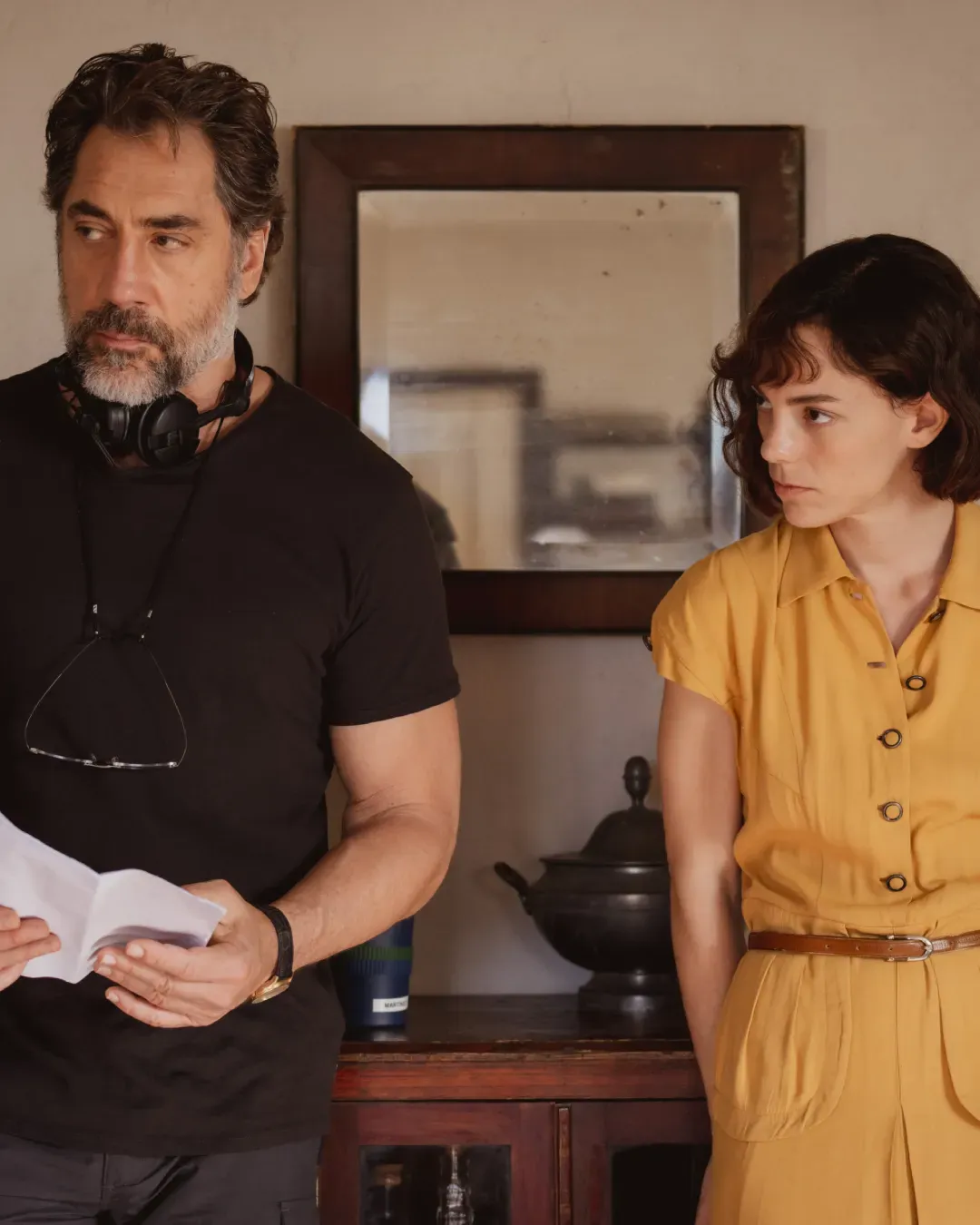
There is a scene in El ser querido that explains how the world is changing
The film is directed by Rodrigo Sorogoyen and stars Javier Bardem and Victoria Luengo

What is VisionQuest, the new Marvel series on Disney+?
Paul Bettany once again plays Vision, although this is not the same character from the films of the cinematic universe