

































The future of design is regenerative «The starting point is cultural», an interview with Thomas Miorin, CEO of EDERA
For years, the word sustainability has been the benchmark of contemporary design: building better, consuming less, reducing impact. A language that has become familiar, almost automatic, accompanying the evolution of architecture and design over recent decades. But today it no longer seems enough. In a context marked by climate crisis, economic instability, and growing pressure on resources, simply “doing less harm” is no longer sufficient. The point is no longer just to reduce, but to give back. This is where an increasingly evident paradigm shift emerges: the transition from sustainable to regenerative.
This transition is not as straightforward as it is often described. It is not simply about updating the language, even though in many cases the risk is exactly that - stopping at the surface. As explained by Thomas Miorin, CEO of EDERA, an innovation center for the decarbonization and regeneration of the built environment, «the idea of sustainability has essentially been oriented toward ‘stopping at a threshold to avoid too much damage’.» The regenerative model, instead, introduces a more radical shift: «it is not merely the result of a change in language - despite this being the reality for many - but the creation of a radically different model, aimed at going beyond ‘no harm’ to produce a positive impact for present and future generations.»
This means redefining what is considered value within a project. While a sustainable building is still measured primarily by its emissions, a regenerative approach broadens the perspective. «A regenerative process shifts the focus to people and the entire ecosystem that creates and inhabits the building,» explains Miorin, introducing a viewpoint that includes material reuse within a circular framework, the quality of the built space, the development of new skills, and the impact on the urban context.
It is a shift that also deeply changes the role of design. It is no longer just about optimizing an existing system, but about questioning its fundamental logic. «The regenerative approach reverses the extractive logic that has characterized much of capitalism,» moving attention toward a perspective capable of generating value over time.
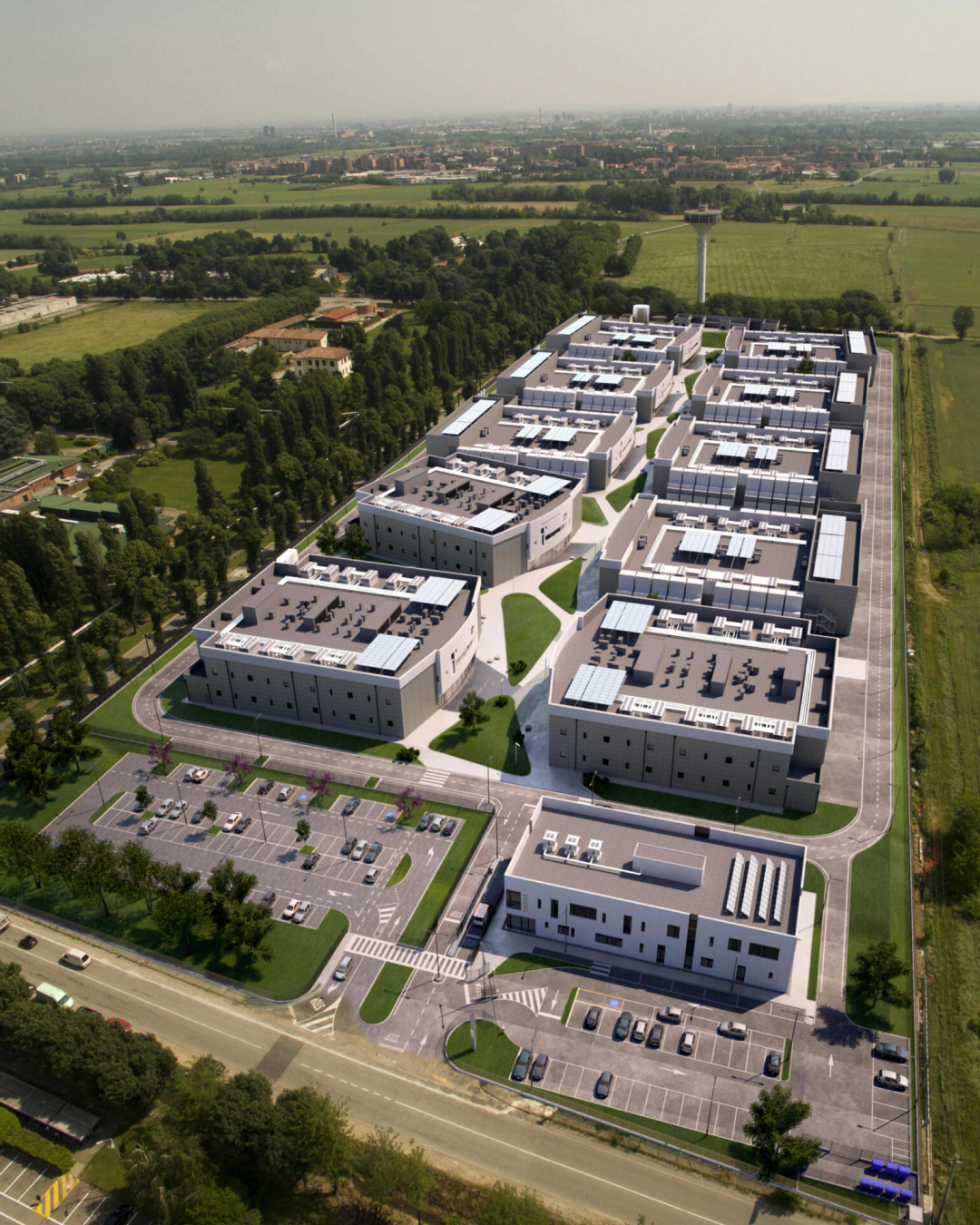
EDERA (Enabling DEep RegenerAtion), a non-profit innovation center created to accelerate the transformation of the construction sector through innovative solutions capable of reducing time, costs, and environmental impact, operates precisely in this direction, seeking to translate these principles into a concrete operational model. The approach starts from the very definition of sustainability and impact within its charter, through the adoption of structured frameworks, and develops into initiatives such as offsite Hub, designed to support a new technological framework oriented toward positive impact.
Between saying and doing
The critical issue, however, remains the gap between intention and implementation. Many projects today communicate sustainability, but few manage to translate it into measurable results. The problem is not only technical, but also cultural. As Miorin points out, «the journey always begins with a narrative, heard or told, that defines the imagination.» This narrative can remain an empty image or become a powerful engine for transformation, but without concrete tools it risks remaining on the surface.
When supported by evaluation systems, protocols, and professional communities, sustainability begins to enter an operational dimension. «The specific measurement of the sustainability of one’s product certainly represents an important reality check supporting decisions,» but the real leap occurs when the logic of the single intervention is overcome. «A radical step for real change is moving from creating one or more sustainable products to an organization that thinks and operates in a regenerative way by default.» This implies deep work on governance and corporate culture, up to redefining the very purpose of the company. It is no coincidence that models such as social enterprises, charitable organizations, and entities oriented toward the common good are spreading, capable of going beyond profit maximization.
Within this scenario, the construction sector represents one of the most complex nodes. It is a fragmented, slow system, often resistant to innovation, where transformations occur with difficulty. Added to this is an increasingly unstable global context. To describe this condition, Miorin uses a precise metaphor: «a funnel created on one side by an exponential increase in demand for resources and on the other by a radical decrease in available resources.» As the limits of this system are approached, costs rise, tensions emerge, and instability multiplies, making the need to find sustainable long-term trajectories increasingly evident.
Rethinking production and relationship methods
In this context, approaches such as prefabrication, modularity, and offsite take on a central role. «Offsite represents an important ingredient in helping construction set this course, both for its ability to incorporate efficiency, circularity, and for the possibility of replicating the best solutions on a large scale, reducing their cost and making them inclusive,» explains Miorin. It is not just a more efficient construction technique: «The offsite approach is a way of thinking about construction that responds to present changes and remains flexible for possible future developments,» introducing a dimension of adaptability that is becoming increasingly necessary.
Initiatives such as offsite Hub, the first and largest Italian network of skills and relationships to guide, coordinate, and develop the innovation needed to make the construction sector sustainable, fit into this logic, seeking to build a system capable of simultaneously responding to needs for speed, quality, and sustainability. In a context where changes are increasingly rapid, flexibility and scalability become central elements for a truly inclusive transition.
Despite these possibilities, transformation remains tied to a decisive factor: cultural change. The technology already exists, as do the tools and skills to implement it. The market is also beginning to recognize its value. The main limitation lies in the fact that these innovations are often inserted into decision-making models still tied to traditional logic. For this reason, OH aims to give a voice to the innovative construction sector and Modern Methods of Construction, creating the conditions for the development of a sustainable and efficient Italian market.
A cultural problem
As Miorin highlights, «the problem is that we often continue to use new tools within old decision-making models.» If the criterion remains the lowest initial cost, transformation will inevitably be partial. Real change occurs when the focus shifts to the entire lifecycle of the building, considering energy, maintenance, health, adaptability, emissions, and social value. In this perspective, the building ceases to be a finished product and becomes «an infrastructure that generates impact over time.» It is here that design truly changes its role, moving from object to system, from a one-off solution to part of a broader process.
The transformation of the sector cannot be reduced to a single lever. «A combination of all three is needed, but the starting point is cultural.» Technology, market, and culture must work together, building a new alliance between design, industrial capacity, and economic responsibility. The shift from sustainable to regenerative remains, in this sense, a direction rather than a definitive answer. An open field, marked by tensions, limits, and attempts. On one side, awareness of the need for more decisive action is growing; on the other, the system struggles to transform at the required speed.
And it is precisely in this unstable balance between intention and reality that the most relevant question emerges: whether design can truly help reverse a system of which it has been part for so long, or whether it risks remaining, at least in part, a narrative that anticipates a change not yet fully realized.