





















Churchcore has taken over Design Week In Milan, Christian symbols and spiritual aesthetics are shaping design, fashion and pop culture
During the Fuorisalone, it is as if Milan gathers with a large net all the trends that have populated the creative spheres of cinema, art, fashion and music over the last year and redistributes them around the city in the form of events. After all, Design Week does not aim to innovate, but to reflect the times we live in and the trends that ride them. It is no coincidence, therefore, that this year it was precisely purity and spirituality that colored so many installations, from the choice to organise events inside churches and sacristies to that of welcoming guests in completely white rooms to sit around a console and listen in perfect silence to ambient music. With the era of clubbing and after parties over, Milan chooses meditation.
But why?
Confessionals, pure white and gothic looks dominate pop culture
The signs that religion - and by this we mean its aesthetics, since we are talking about design - would be back in fashion have been felt for some time. The entire project of Lux, Rosalía’s fourth album, was inspired by the history of some of the greatest saints in history, not only Christian ones, a theme also reflected in the visuals of the work and in the singer’s styling. Alongside Lux, in the past year gothic-religious imagery (churchcore for insiders) has infiltrated pop culture through cinema, with standard-bearers Nosferatu, The Conjuring, Frankenstein, The Testament of Ann Lee, Sinners, all films that achieved a certain success (Oscars included) and that in their own way explore themes such as spirituality, faith, the occult, purity and devotion.
@nssmagazine ROSALÍA at the LUX Tour in Milan #rosalia #luxtour #milan #concert #concerto audio originale - nss magazine
Since Rosalía’s album was released, religious-inspired projects have been popping up everywhere: in Italy, the trend is affecting both high and low culture, art and rap. Maurizio Cattelan, before inviting his fans to a breakfast in the Duomo at 7 in the morning to celebrate the start of Design Week, launched Hotline, a telephone assistance service that reproduces the confessional dynamic. At the same time, the title of Shiva’s new album, released in early April and announced with images of the rapper in church, is Vangelo (Gospel) and includes tracks titled God Exists, Kiss of Judas, Rise Again. This concentration of Catholic references in art is no coincidence, and reflects the polarising vision that two Italian generations have of religion: the older one (Cattelan, born 1960) mocks it; the younger one (Shiva, born 1999) approaches it.
The codes of spirituality reinvented at Design Week
@lameraviglia Milan Design Week hasn’t even officially started yet and it’s already amazingggg #mdw #milandesignweek #prada #pradaframes #milano la petite fille de la mera - Lucidity
Without continuing to list all the examples from the past year, from the big screen to Spotify, that have been using Christian or generally religious imagery for media purposes (let’s also add to the mix the rise of influencer priests, controversies included), let’s get to the point: spirituality at Design Week. Between installations set inside deconsecrated churches and events taking place in completely empty, pale and silent rooms, it is quite clear how much religious imagery is influencing Milanese design - and we are not talking about an authentic aesthetic, but a derivative style created by pop culture for pop culture.
Among the church-based activities this week, Prada Frames left its mark, the annual symposium curated by Formafantasma which welcomed visitors to the complex of Santa Maria delle Grazie, a historic site in central Milan that houses The Last Supper by Leonardo da Vinci. Inside the Sacristy, conferences and concerts took place, with dialogues emphasising «the immateriality of contemporary culture and its tendency to privilege representation over facts.»
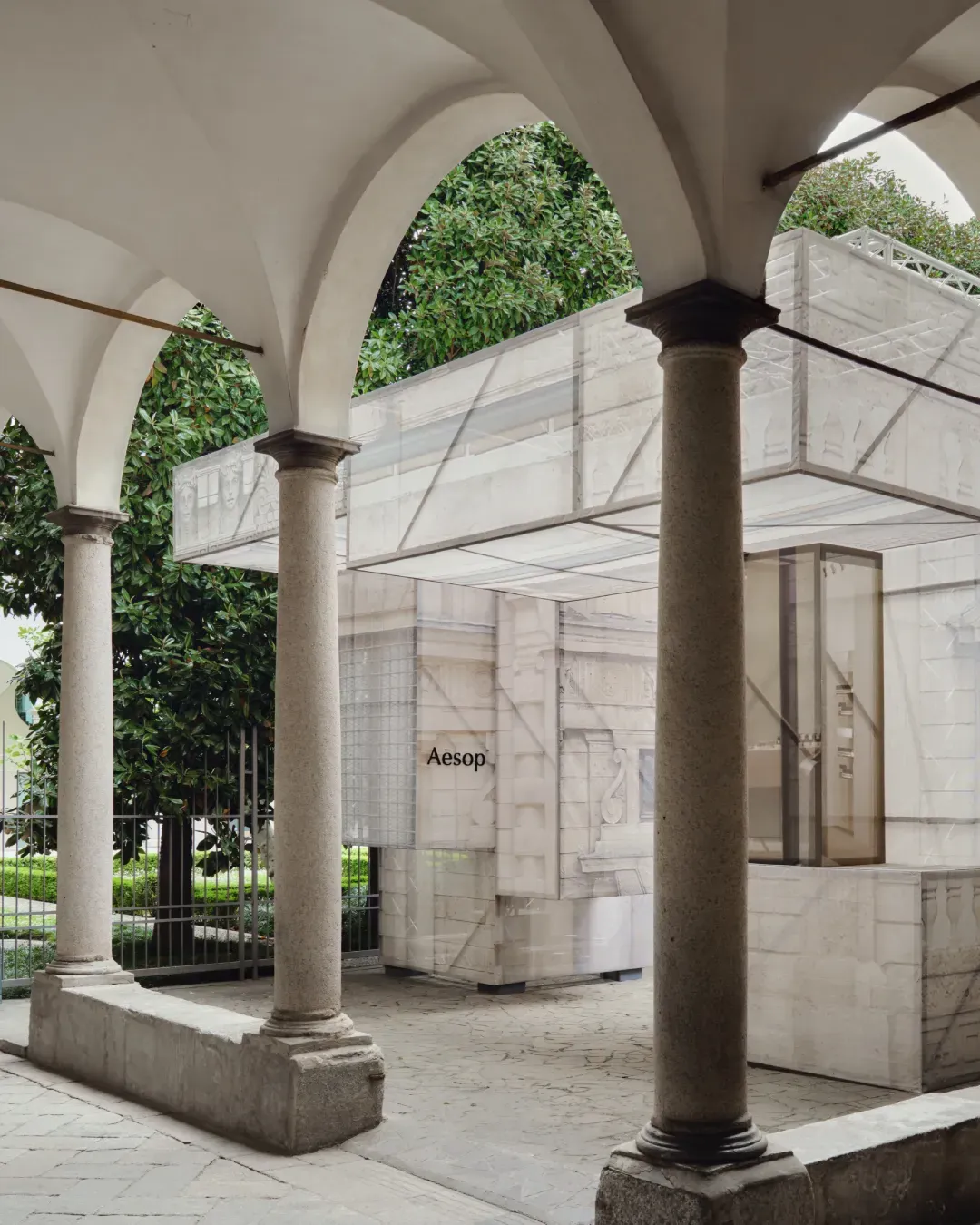
Aesop, the Australian personal care brand, also took part in the Fuorisalone in a church, at Santa Maria del Carmine in the Brera district. Celebrating craftsmanship through a collaboration with architect Rodney Eggleston, the brand welcomed visitors into an intimate space that celebrated light and the hands that shape it. The focus of the project was the lamp designed by the architect for Aesop, but the set, among carved wooden walls and religious imagery, left its mark.
Beyond churches, another code associated with the Christian religion has made its way into this year’s Fuorisalone activities. We are talking about bread, an element long present at some of Milan’s most exclusive events, which this week ended up in the spotlight several times - from the participation of the bakery Davide Longoni in the Alcova showroom with a dedicated pop-up, to Alessi’s activation, which paid tribute to Ettore Sottsass, conviviality and the art of bread with La Bella Tavola.
Milan is in search of comfort
CALMA BY ZARA 2026 https://t.co/4I7XOaBPMI pic.twitter.com/CAsxBvtYDo
— PR TIMES (@PRTIMES_LIFE) April 22, 2026
In short, in 2026 design has followed art, cinema and music, and has drawn inspiration from spirituality and its codes. In Milan, churches have served as backdrops for concerts, conferences and immersive installations, while bread has brought attention back to the importance of sharing. Perhaps the phenomenon is nothing more than a passing trend, or perhaps it is a sign of the times: in a moment full of social and political tensions, where our screens are dominated by images of war alongside others generated by AI, the creative industry seeks solutions in the ancient, reassuring image of an altar and a piece of bread. The answer to uncertainty is not in the practice of religion, to be clear, but in its representation; after all, it is aesthetics that end up online.