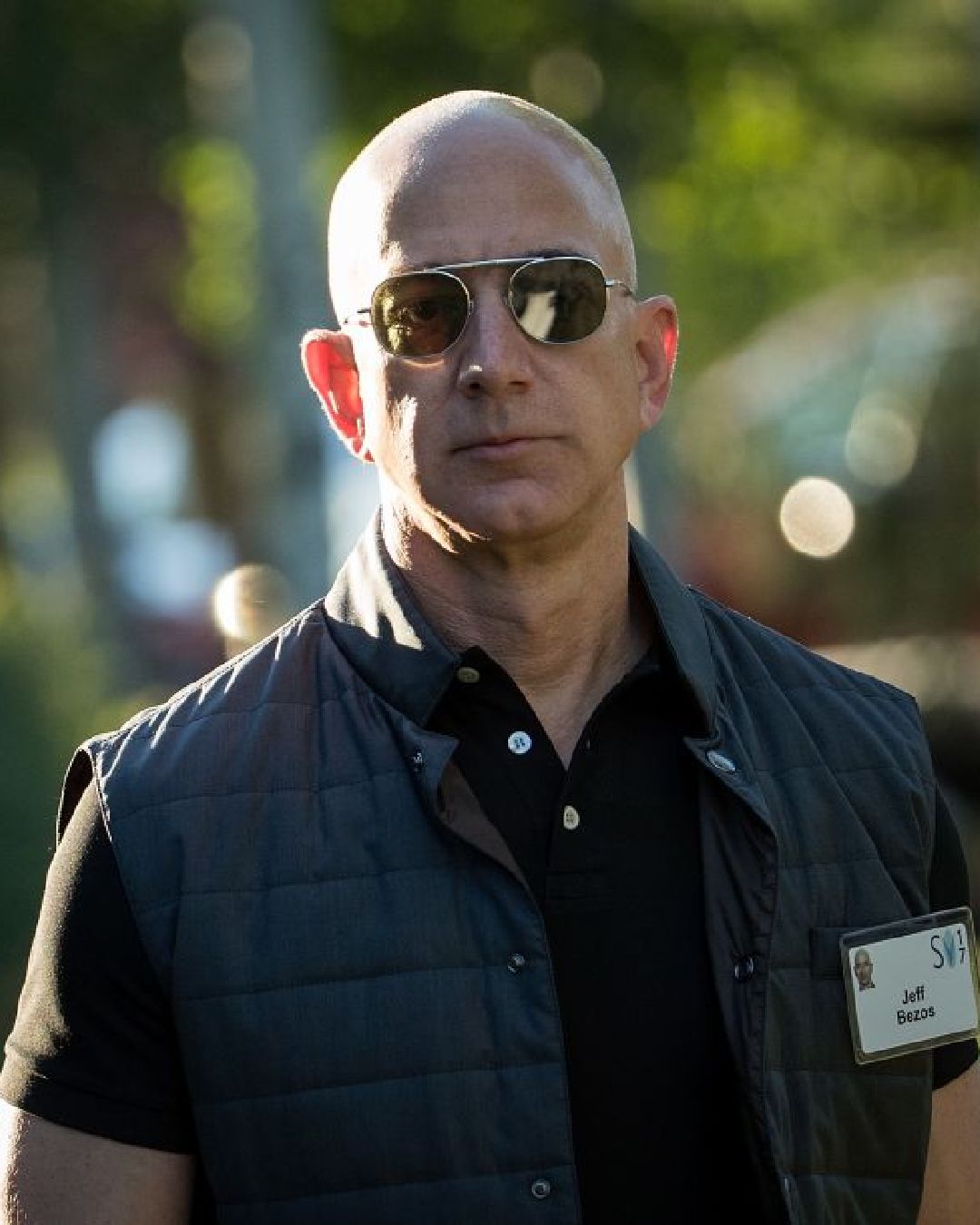








































What do billionaires actually do during their retreats? When you have everything and need a little time to understand how to get even more
Around 2010, confidence in startups and large technology companies was growing strongly, driven also by the charismatic image of Steve Jobs and by films such as The Social Network. Today, instead, the figures at the top of Big Tech who have accumulated enormous wealth are often viewed with suspicion, especially because of the economic and political power they exercise.
This is well illustrated by a recent article published in the Atlantic by the American writer and screenwriter Noah Hawley, who recounts his experience at Campfire, an exclusive retreat organized by Jeff Bezos in Santa Barbara, California, and reserved for a selected group of celebrities, intellectuals, and prominent figures in the technology sector.
How do billionaire retreats work?
The setting described by Hawley is that of a luxury resort, where for several days talks and conferences alternate with more informal moments, such as cocktail parties designed specifically for “networking.” The atmosphere, essentially, is similar to that of other gatherings of this kind, including the annual one organized by Allen & Company, a U.S. investment bank specializing in the media and technology sectors. The event takes place in Sun Valley, a mountain resort in Idaho, and is one of the most sought-after meetings for executives, entrepreneurs, and investors. But in retreats of this kind, networking is not the only activity: they often lay the groundwork for concrete business operations, such as mergers, acquisitions, or strategic deals intended to have large-scale effects.
According to Hawley, one of the most problematic aspects of these gatherings is the composition of the guest list, made up of people so wealthy and influential that they often believe they can meaningfully contribute to solving global problems that are, in reality, highly complex. Hawley notes that, in this sense, economic success achieved in a specific field can easily translate into the belief that one has broader expertise, even on issues outside one’s direct competence, issues that should instead be addressed by public institutions.
Does excessive wealth cause a loss of contact with reality?
@ryanis_online #stitch with @sbworkersunited to be a partner #starbucks #sbworkersunited #unionstrong #tobeapartner #starbuckspartner #baristalife Spongebob Tomfoolery - Dante9k Remix - David Snell
As the Atlantic article points out, when wealth reaches extremely high levels, the relationship with risk and with the consequences of one’s actions can in some cases change significantly. Potential financial losses in one or more ventures, for example, often become almost irrelevant, despite possible impacts on workers; in this sense, the very concept of failure loses its usual weight.
Those who hold great power and wealth also tend, at times, to reduce more or less consciously exposure to dissent, surrounding themselves with so-called yes men, people who generally do not question their superiors’ decisions, often out of convenience. In such conditions, even the feedback system that normally corrects toxic behaviors and potentially wrong choices becomes weaker.
This is a phenomenon that can also be observed, in certain respects, in some dynamics typical of the increasingly popular extreme tourism aimed at billionaires. Looking at the offerings of the many operators providing these kinds of experiences, it seems that today there are virtually no places in the world truly out of reach for those with sufficient financial resources. The impression is that, with the right amount of money, even the risks typical of these activities can be effectively neutralized. Yet, for instance, reaching outer space via the launch system developed by Blue Origin, Jeff Bezos’s company, involves a series of dangers that cannot be eliminated as such, even for billionaires who assume they have access to the most advanced technological solutions. And yet, the wealthiest do not seem to even consider the issue.
What to read next

Why do billionaires want to appear at fashion weeks?
They are looking for something that money cannot buy: cultural relevance

5 getaways for a weekend away from Paris
Whether you're dreaming of a waterfront mansion or a wilderness retreat