
























Is hating fashion a political statement? Silvia Salis's Shirt and the Politics of Luxury Outrage
There is always a lot of talk about how women in politics dress. In Italy, there was the case of Silvia Salis who, the day after her interview on Che Tempo Che Fa, was accused by social media propagandists of wearing an extremely expensive Versace shirt (which was not actually Versace) and of having worn a denim shirt as a "pose" to communicate closeness to workers. Similar accusations were levelled at Salis over a photo in which she was wearing a pair of Manolo Blahnik shoes, a Louis Vuitton bag and Bottega Veneta sunglasses. The left-wing mayor was criticized for not being "close to the people" and for representing a political progressivism seen as antithetical to the possession of wealth.
Social media hatred is not limited to the so-called "communists with a Rolex", but also targets the right: think of when former minister Santanchè, who comes from the business world, was claiming until a few months ago to be the «living embodiment» of everything the phantom left hated, precisely because she owned designer shoes and bags. Granted, the difference here is that Salis is a left-wing activist who has built her political message around equality, and so there is a logical tension between preaching certain values and visibly embodying their opposite. But why does a politician wearing a designer outfit (think, in the US, of the debates around Mamdani's wife) trigger us so much? Are we really contesting an ideology, or an entire ruling class? In short, is the antipathy toward fashion political?
Left or right?
Non amo fare questo discorso, ma vista la Sinistra di oggi, chiedo:
— AnonimoRomano (@GufoPuso) April 27, 2026
Può la Salis che indossa una camicia da 500 euro (scontata da 900€) essere lontanamemte in grado di capire il "lavoratore povero" di cui parla?
Per esperienza personale, i ricchissimi non sono in grado. Mai. pic.twitter.com/wEuse7Du0m
The greater outrage directed at Salis compared to former minister Santanchè actually follows the same archaic categorization that, in Italian public discourse, separates the right from the "communists" whom Silvio Berlusconi was still railing against twenty years ago. This mental category is alive and well: for instance, a few months ago minister Bernini called medical students who were protesting against her «poor communists» — not because they were actual communists, but because the term in Italian simply denotes everything that is "other" to what one already knows.
Take techno music, hated by boomers today just as older generations in the 1970s hated rock for corrupting the young: the first decree of the Meloni government targeted rave parties, and Silvia Salis's most famous political moment was precisely a techno music event in Genoa. In any case, if Santanchè can proudly claim her designer clothes and accessories while Salis is accused of not being close to the people, it is because in the Italian public imagination there persists an idea of the left that probably died with Berlinguer: workers' rallies, trade unions, and the world depicted by Gian Maria Volontè in The Working Class Goes to Heaven.
But in Italy this distinction barely exists anymore: an Ipsos analysis cited by The Vision shows that the PD draws more support from entrepreneurs, professionals and managers, while Lega and FdI win among blue-collar workers; according to 2022 election data processed by Tecnè, FdI received 33% among blue-collar workers and 33% among white-collar workers, while the PD performed better among executives and middle managers at 23%. More broadly, according to Codice Rosso, blue-collar workers have been voting predominantly for the right since the era of Berlusconi's People of Freedom party, dating back to 2008. Rather than speaking to workers, farmers and tradespeople, the left now addresses urban elites concerned with sustainability and civil rights while doing little to advance the concrete interests of citizens — a point recently raised by commentator Raffaele Giuliani on Accordi&Disaccordi. So what is the actual problem with luxury?
Is the antipathy toward fashion political?
Political discourse involving fashion is always instrumental: it reflects an Italian cultural forma mentis that ideally exalts a very Catholic sense of frugality and humility, counterbalanced by an opposing drive toward ostentation and display. To put it plainly, Gianni Agnelli and the Boss delle Cerimonie represent opposite extremes of the same cultural spectrum along which all Italians oscillate. The taste for kitsch stereotypically associated with the South — historically the poorer region — is proof of this. Yet even when a public figure openly flaunts their wealth, as right-wing politicians tend to do, there remains an expectation of humility.
This is why neither Daniela Santanchè nor Giorgia Meloni herself has been immune to criticism over ostentatious luxury. In the Prime Minister's case, in 2022 she was called out on social media for wearing a Cartier bracelet, to the point that her press office felt compelled to clarify that it was not a real Cartier and that she no longer owned it. Whatever one makes of that statement, it is telling that a sound political strategy in Italy today involves distancing oneself from the frivolous and wasteful world of luxury. But if luxury is universally disapproved of — varying only in degree depending on one's political affiliation — what is the real point?
A cry for help
Beyond all the political discourse and analyses one might apply to the concept of "radical chic," the attacks on Salis's wardrobe — and the broader outrage that erupts whenever fashion and politics intersect — can be read as a twofold sense of frustration among Italians. Twofold because, first, these grievances come from a country where, as recent data confirms, real wages have stagnated for twenty years, with 61% of taxpayers declaring less than 26,000 euros gross. When social mobility is frozen and citizens cannot improve their standing due to structural limits in culture and the labour market, the very idea of an overpriced shirt becomes a provocation.
Second, there is a general frustration toward politics and all its representatives: now that even right-wing voters are partly disillusioned with the government's record (or lack thereof), the feeling is that politicians amount to nothing more than a parasitic class regardless of their orientation. Across party lines, the outrage over a shirt or a bracelet is a symptom of something deeper — the sense that those who govern inhabit a separate world, entirely removed from the hardships of those who elected them. As long as politics responds to this frustration with image management — distancing itself from luxury or flaunting it — rather than with concrete policies on social mobility, the outrage will not subside. It will simply find a new target.
What to read next
Even politicians need to be social media-savy in 2026
Spontaneity, combined with the ability not to take oneself too seriously, seems to be the key
Should we judge politicians by their hair?
If you think about it, hairstyles help reflect a person's worldview
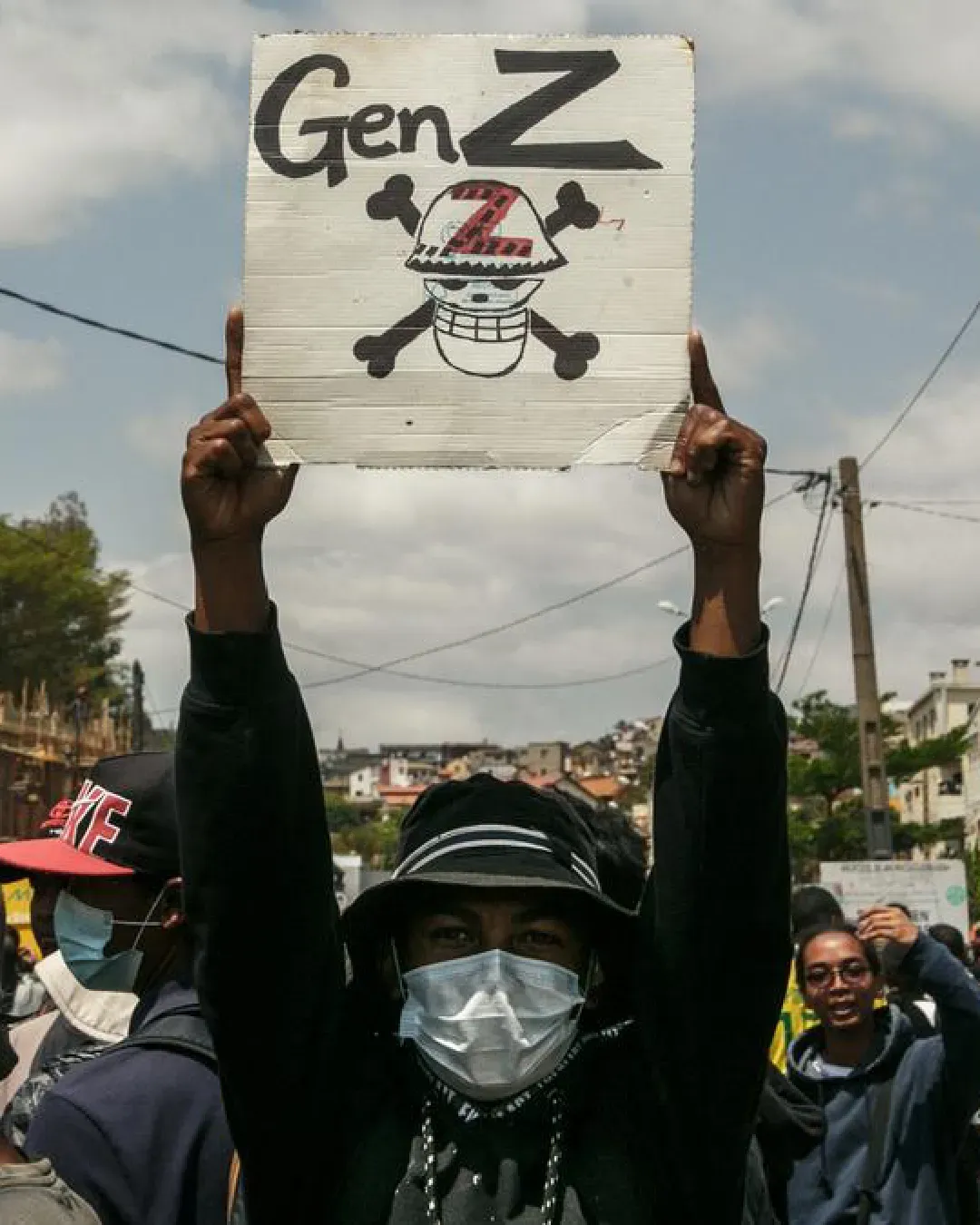
Gen Z isn't afraid to take to the streets
It has been some time since a generation this defiant emerged