
The U.S. will refund the money from Trump's tariffs, but not to consumers And now companies need to figure out how to manage it
Trump's tariffs have been, since their announcement, a true nightmare for fashion. For an industry that constantly imports and exports, and for which the United States is a critically important market, having to pay higher customs duties was a real headache. Ironically, luxury had less to worry about: fashion's customers have no problem spending a little more. In fact, the worst impact fell on fast fashion brands that import enormous volumes and also lost the workaround of the de minimis clause, which had exempted small shipments from duties.
Not that this stopped Prada, Tom Ford, and EssilorLuxottica from suing the US government between November and February, as reported by The Independent. But now that the Supreme Court has declared those tariffs illegal, the US government has committed to returning $166 billion in collected duties, give or take. And since the entire process will be rolled out in phases but could be interrupted, the race for refunds has officially begun. There is, however, a catch: the money will go back to companies, but consumers who paid higher prices won't see a dime. But let's take things one step at a time.
How the tariff refund process works
@itsdeaann The Trump Administration Is Being Forced To Issue LARGEST Refund In HISTORY.
Deep Cinematic Sub Boom 1 -
Following the Supreme Court ruling, the US government launched an online portal managed by US Customs and Border Protection, which however received so many requests that it crashed for many users, who were met with error messages telling them to try again later. As BoF explains, the number of companies owed refunds is a staggering 330,000.
Among the importers cited by BoF: Asos, which announced it wants to recover around £7 million; Levi's, which is seeking back roughly $80 million; Gap could potentially claim up to $400 million; Nike up to $1 billion; and Walmart over $10 billion. Data on how much European fashion brands could claim or may have already claimed is missing - not only because the refund portal is not public, but also because companies like LVMH, Kering, Prada, Zegna, or Brunello Cucinelli, being publicly listed, would only be required to disclose the size of any refunds if they were material to their financial statements.
On a procedural level, the refund process is relatively straightforward: companies must compile the data on taxed goods, format it according to CBP guidelines, and upload it to the portal. More sophisticated businesses already have this data on hand, while less organized ones can fall back on customs records. CBP has indicated that payments should arrive within 60 to 90 days of request approval, meaning that by late June some companies could start seeing money return to their accounts. But this is where the complications begin: tariffs drove up prices for consumers, and now that the money is being returned to companies, are consumers owed anything?
Satisfaction guaranteed or your money back?
So the corporations will get a tariff refund check.
— Bonnie Rae (@bonnieblithe) February 20, 2026
Even though the consumer paid the tariffs.
And the prices will still stay high for the consumer.
Almost like they planned it that way. pic.twitter.com/OuMI9k5bnM
As BoF explains, several companies including E.l.f. Cosmetics, Lululemon, EssilorLuxottica, and Fabletics are already facing a wave of class action lawsuits from consumers who believe they are entitled to compensation. Many of these companies, moreover, had publicly justified their price increases by citing the tariffs, meaning they can hardly pretend those refunds aren't at least partially owed to the public. On top of this comes political pressure: 15 Democratic members of Congress sent open letters to the CEOs of Walmart, Amazon, Home Depot, Lowe's, Target, Best Buy, Costco, FedEx, UPS, and DHL urging them to "pass on" the refunds to consumers.
But this legal and political pressure has become yet another headache, since in practice, how do you calculate exactly what each consumer is owed based on what they did or didn't buy? Many brands raised prices on specific product categories according to criteria that varied widely from one region to another, with no uniform increase across all products. That makes calculating what any given customer is owed virtually impossible. According to BoF, the most viable path is to lower prices going forward, but companies need to receive the refunds first. In short, it's going to be a long road. And since the refund system is once again private, it is impossible to know whether companies like Amazon have even filed a claim.
Trump’s warning
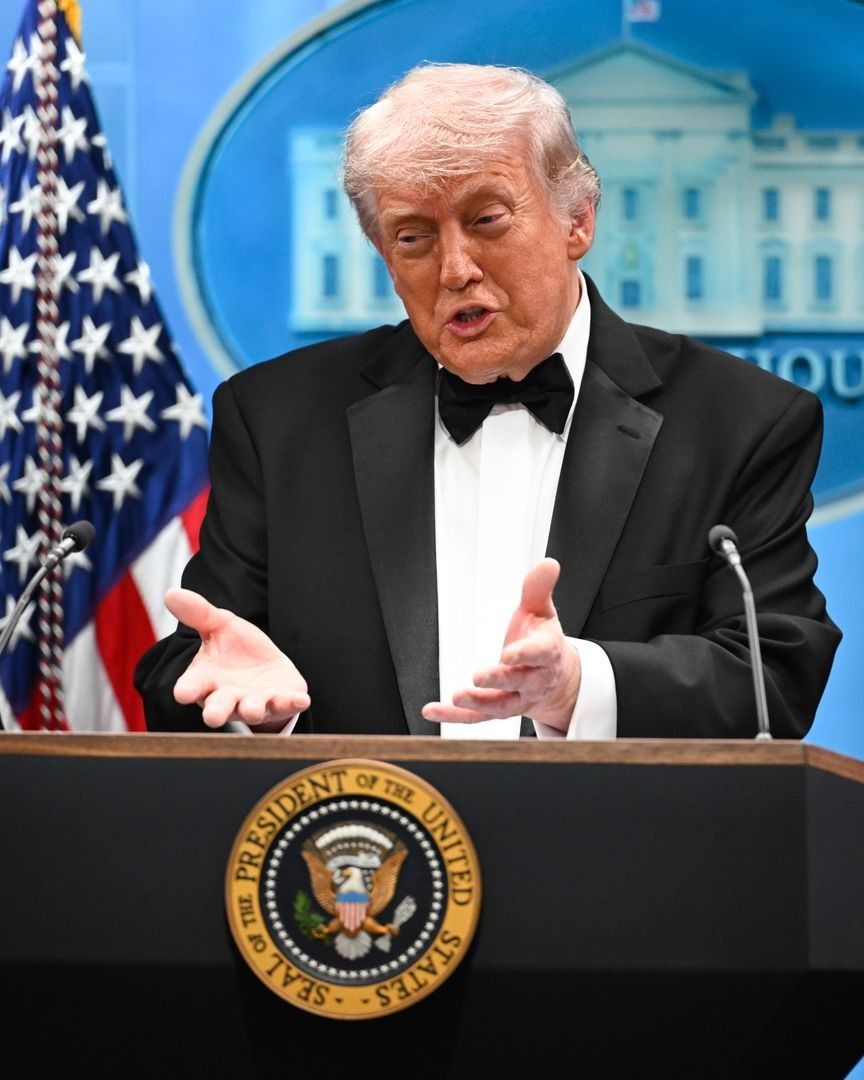
Amid all this, research cited by the US lawmakers who formally called on major CEOs to return the money to consumers and published by the Penn Wharton Budget Model estimates that refunds potentially subject to repayment could reach $175 billion, plus an additional $700 million in interest. And to counter political pressure with political pressure, Trump has weighed in, declaring he will "remember" companies that forgo their refunds, a classic intimidation tactic of his (with faint echoes of organized crime) that frames the legally mandated return of funds as an act of coercion, and the voluntary waiving of legally owed refunds as a kind of loyalty pledge.
But the tariff saga may not be over yet. The Trump administration is already exploring ways to bring them back under a different and more legally solid basis, launching investigations into sixty countries - including major fashion suppliers like China and Vietnam - accused of using forced labor. Treasury Secretary Scott Bessent has said that if successful, tariffs could return to their previous levels as early as the beginning of July, setting the chaotic merry-go-round of uncertainty and rising prices spinning once again.