



















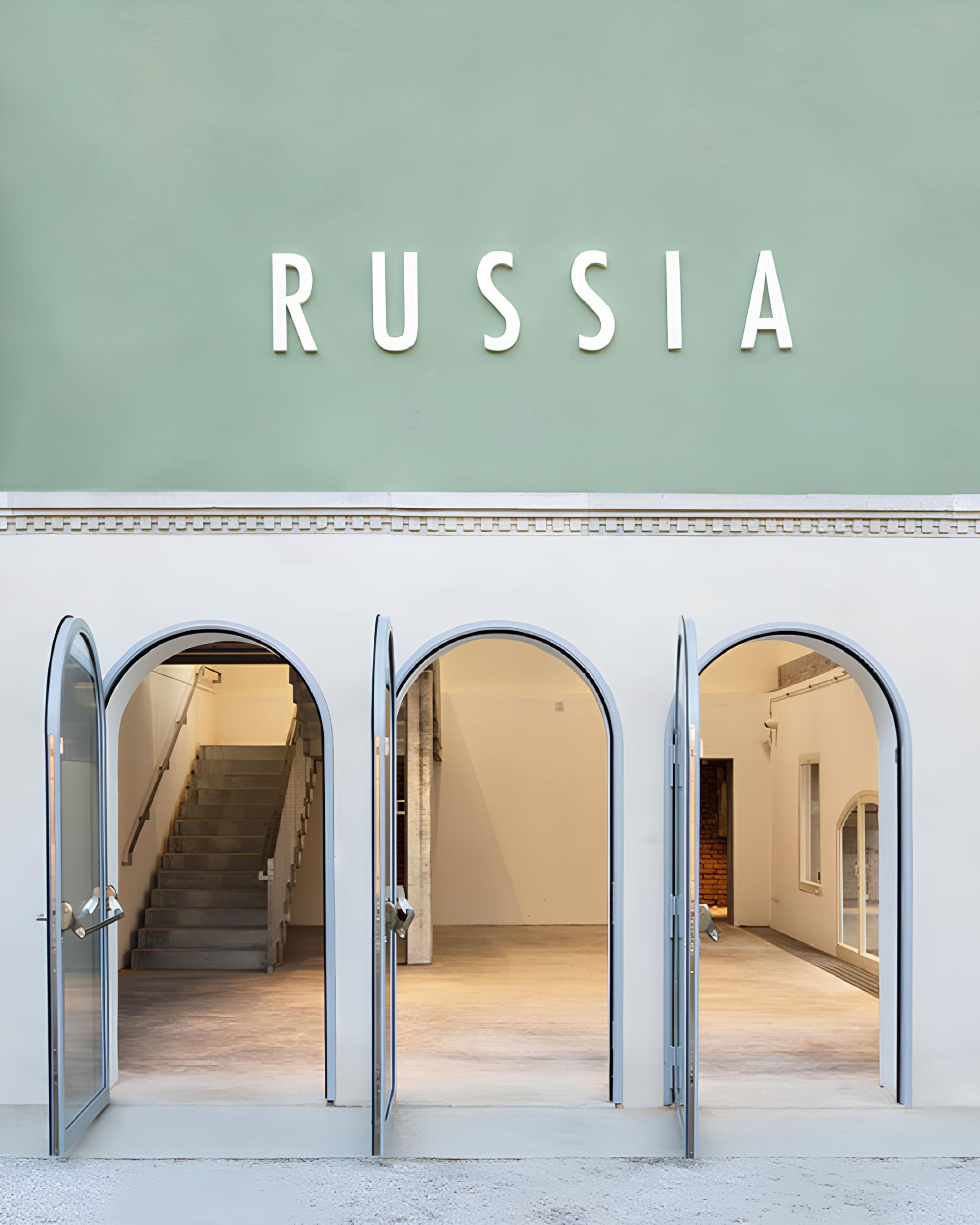
There's a new update regarding Israel and Russia’s participation in the Venice Biennale But it's not enough for the EU, which has decided to make significant cuts to funding for future editions
The return of Russia and Israel to the Venice Biennale is not happening quietly. On May 9, 110 artists from all over the world - but not from Italy, for the first time in the fair’s history - will present their works in the Venetian lagoon, selected by curator Koyo Kouoh and her curatorial team. Russia and Israel will participate for the first time in years, news that has deeply shaken the creative industry; however, new directives from the Biennale aim to recalibrate the prominence of the two countries.
Russia has not participated in the Venice Biennale since 2022, the year of the invasion of Ukraine and consequently the withdrawal of the two artists who were supposed to represent Russia that year. In 2024, Russia lent its pavilion in the Giardini to Bolivia, the same edition in which the Israeli pavilion was closed at the request of the representing artist Ruth Patir. The artist, born in 1984 in New York to Israeli parents, refused to open her exhibition until a ceasefire agreement and the release of hostages in the war with Gaza had been reached.
The new rules for the participation of Russia and Israel
Last Thursday, the Biennale jury of Venice stated that «it will refrain from considering» artists from countries whose leaders are accused of crimes against humanity by the International Criminal Court in The Hague. The statement does not name the countries it refers to, but it appears directed precisely at Israel and Russia. Artists will be able to participate in the art fair, but will not be eligible for the Golden Lion and Silver Lion, awarded to the best works of the edition. «As members of the jury, we also have a responsibility toward the Biennale’s historic role as a platform connecting art to the urgencies of its time,» the statement reads.
This year’s jury is composed of five women: Solange Oliveira Farkas, Zoe Butt, Elvira Dyangani Ose, Marta Kuzma and Giovanna Zapperi. They are joined by curator Koyo Kouoh, who sadly passed away last October. Together, they affirmed their commitment to defending human rights, also emphasized in the statement outlining the new rules regarding awards at the Biennale.
What will they bring to the Venice Biennale?
Pointing out that, during the years of apartheid in South Africa, the country had been excluded from the Venice Biennale, several activists and participating artists have long tried to convince organizers to ban the participation of Israel and Russia from the new edition. But this year Russia will return to the Giardini with the group exhibition The Tree Is Rooted in the Sky, which will bring together 38 artists and musicians - a participation also disapproved of by Italian Minister of Culture Alessandro Giuli, who stated that he will not take part in the new edition.
The Israeli pavilion, on the other hand, will host an installation by artist Belu-Simion Fainaru this year. Titled Rose of Nothingness, the work consists of a reflective basin filled with a dark liquid. In an interview with Artnet, Fainaru harshly criticized the Biennale jury, claiming it is guilty of creating «a hostile and degrading environment» toward him.
The consequences
However, the participation of Russia and Israel in the fair has already brought serious consequences for the organization: Kaja Kallas, head of the European Union’s foreign policy, this week confirmed a funding cut to the festival due to Russia’s return. Over the next three years, the Biennale will face financial cuts totaling 2 million dollars.
«While Russia bombs museums, destroys churches and tries to erase Ukrainian culture, it should not be allowed to exhibit its own,» Kallas stated. Last month, a special representative of Putin said in an interview with ArtNews that «Russia’s participation in the Biennale is further proof that Russian culture is not isolated and that attempts to ‘cancel’ it have not succeeded.»
What to read next
Gen Z is spending more on art than any other generation
A new Arts Economics report on global collecting reveals the trend
Tiffany&Co. celebrates its autumn garden on the Grand Canal
At Fondaco dei Tedeschi, the gala for Blue Book 2026: Hidden Garden, with Anya Taylor-Joy and Matilda De Angelis among the guests