




















Will Ye withdraw from Reggio Emilia’s Hellwatt Festival? A story repeating itself
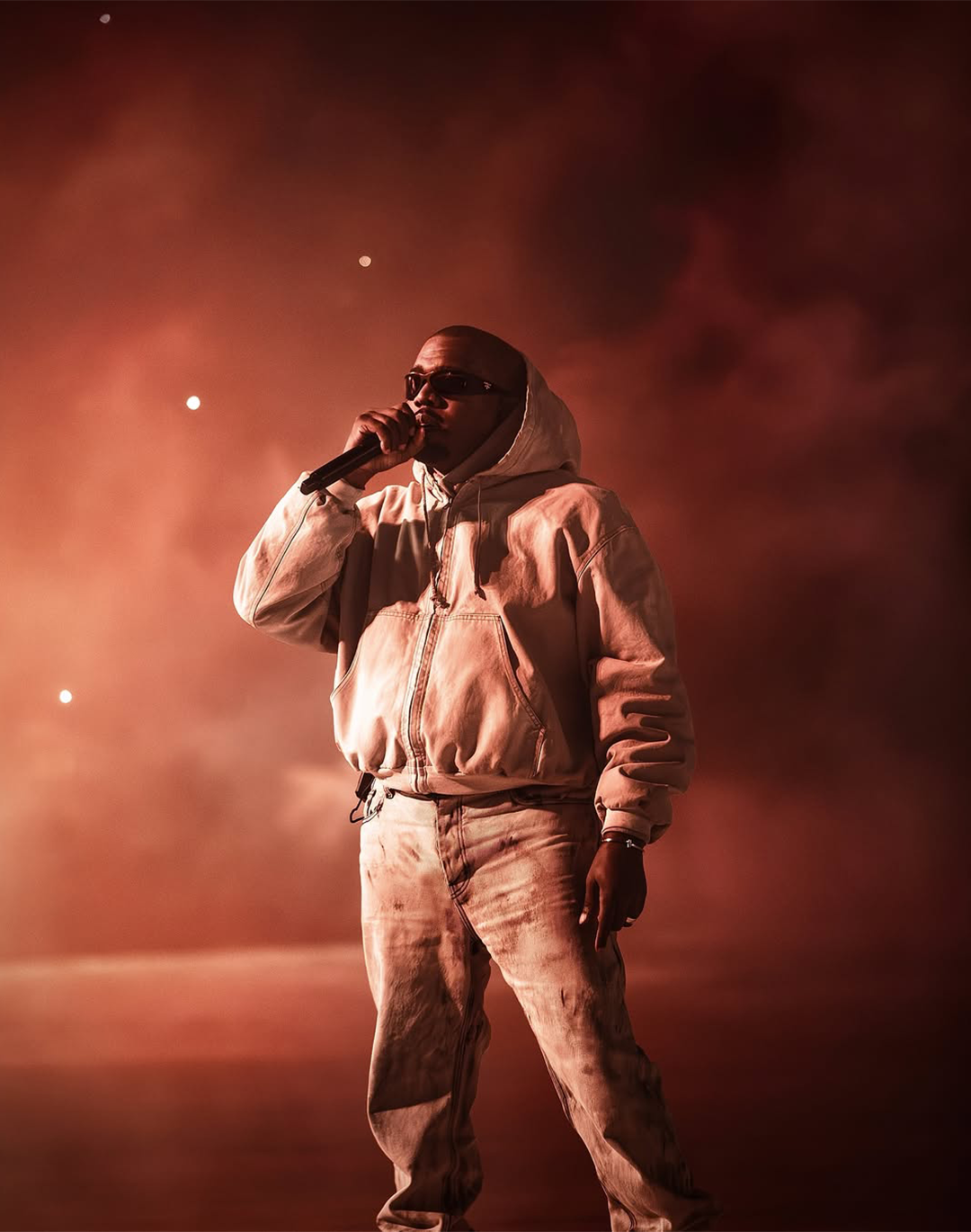
News of Ye’s possible appearance at the Hellwatt Festival in Reggio Emilia, scheduled for July, had reignited the hopes of his Italian fanbase. However, once again, it appears that the artist will not perform on this occasion either. An outcome many, deep down, had expected, given the growing pressure placed on public institutions to follow the example of the United Kingdom, France, Switzerland and Poland. At the heart of the controversy are the antisemitic and pro-Nazi statements made by the artist over the past year, later retracted through apologies considered belated and, by now, pointless.
A country that, rightly, does not forgive
STATEMENT REGARDING THE CONCERT IN ITALY
— YEEZYTALIA (@yeezytalia) April 23, 2026
Lately, you’ve been seeing a flood of news from the world’s leading media outlets regarding a possible cancellation of the concert in Italy.
The unrest or potential protests they are reporting on simply do not exist. Even those in…
In Italy as well, institutional dissent has been unequivocal. The president of Emilia-Romagna, Michele de Pascale, stated that there must be no space, in the region or elsewhere in Europe, for anyone who glorifies bloody dictatorships or spreads messages of hatred and antisemitism. Taking the same stance were Emanuele Fiano, former Democratic Party MP and son of Nedo Fiano, an Auschwitz survivor, who called for intervention from the Ministry of the Interior by invoking laws against the glorification of fascism and discriminatory propaganda. He was followed by Pina Picierno, Vice-President of the European Parliament with responsibility for antisemitism, who urged the Italian government to follow the model adopted by other European countries.
Adding further weight to this moral anvil were the words of Vasco Errani, former president of Emilia-Romagna for three terms and now president of the Alcide Cervi Institute, according to whom Ye’s presence would represent a slap in the face to the democratic and antifascist history of Reggio Emilia. This view was shared by the Jewish Community of Modena and Reggio Emilia, led by Nicoletta Uzzielli, which formally requested the cancellation of the event, describing it as highly divisive.
Collateral effects
Political pressure surrounding Kanye’s concert is not the only concern local authorities have regarding the success of the Hellwatt Festival, a massive event scheduled across three weekends in July in the Campovolo area. The festival has involved a huge financial and reputational investment, which many believe was risky: at the head of the organisation is a person unknown to industry insiders and apparently without experience at this level.
And as the legend of Ye’s cancelled concerts would have it, political pressure has been joined by organisational pressure, in what seems like an inevitable domino effect. Trade unions have also requested clarification regarding the origin of the festival’s funding, which will cost tens of millions of euros, worsened by the absence of major sponsors, something rather unusual for an event of this scale.
Various factors, including the chaotic management of ticket sales and flawed methods of communication with the public, have fuelled fears that the organisation behind Hellwatt Festival may prove inadequate to handle an event of this size. In particular, there are concerns over the management of security at an event expected to host tens of thousands of people, which will be especially complicated on the night when Travis Scott performs, as his concerts are notoriously turbulent.
A definitive condemnation?
As had already happened in the United Kingdom, the final salvific appeal was once again directed to art and the universal power of music. Ye himself had argued that music can become a tool for sharing, capable of spreading messages of love and bringing people together beyond every division. A claim that, once again, appears to have proved futile. The organisers of the Hellwatt Festival nevertheless defended their decision: Victor Yari Milani, the festival’s artistic director, explained that he had asked the artist for a public apology in Italy as well, reiterating that the festival was conceived as a space of free expression, inclusion and encounter between different cultures.
Yet one question remains open, as ancient as it is unresolved: that of the separation between art and artist. The debate over how far it is possible to distinguish the work from its creator remains as thorny as ever, a tangle of moral sensitivities, public opinion and political tensions that, for now, seems almost impossible to unravel and, echoing the statement released by CISL Emilia Centrale: «Ye claims he has changed, that he wants to perform for peace and love, no longer for the swastika and antisemitism. But the question remains: does show business matter more than constitutional values?»
What to read next
Are today's teenagers really teenagers?
The case of North West that's angering Millennials and Gen Z