































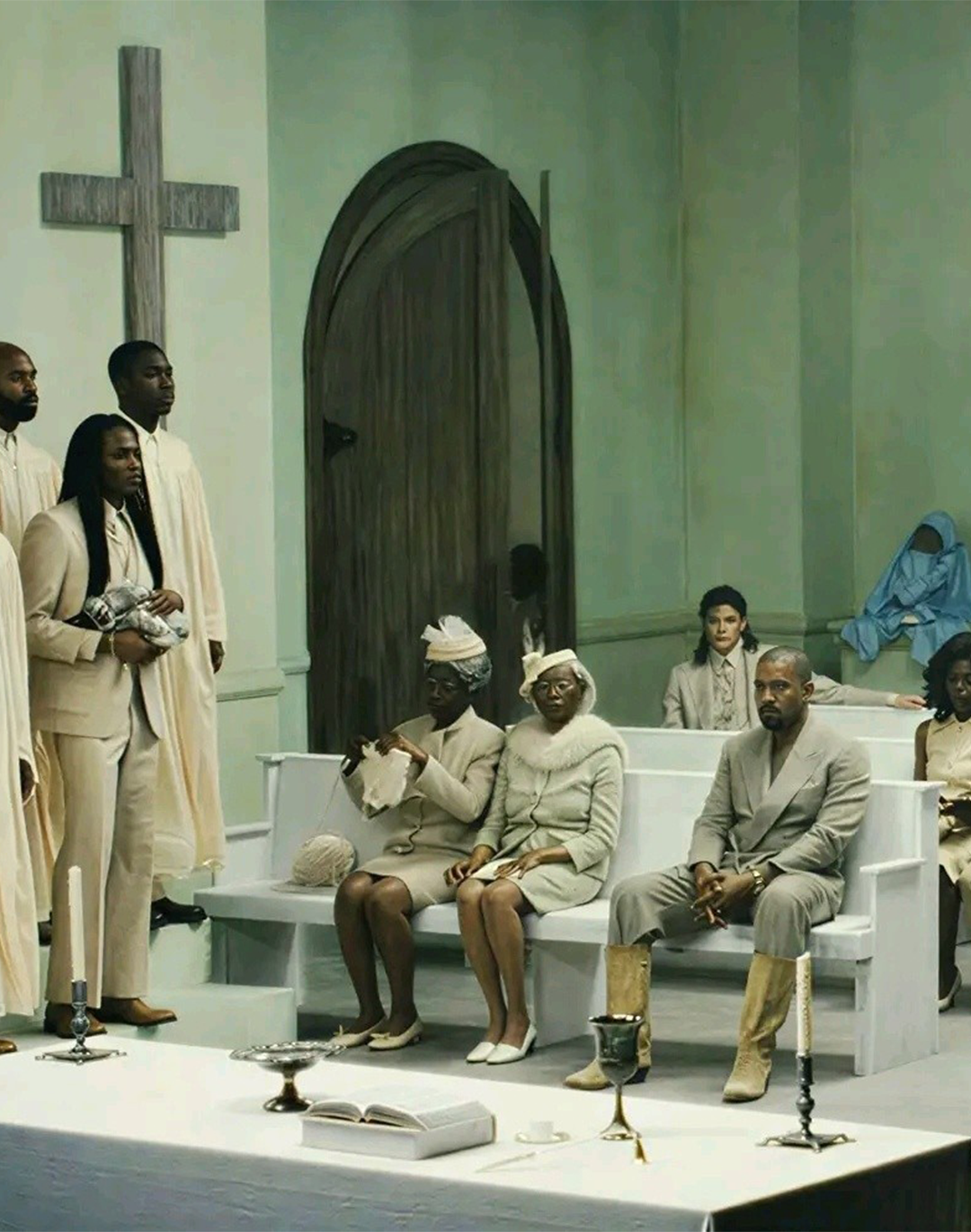
“BULLY” and Ye’s artistic redemption But will it be enough to erase the past?
What happens when an artist as contradictory and problematic as he is brilliant continues to reinvent himself and reshape the music industry? He constructs a gray area in which redemption from past mistakes coincides with the release of a new album that, according to expectations, contributes to rewriting the myth of himself.
In fact, more than a year ago, in February 2025, Kanye West, now known as Ye, gave an interview in which he stated that the title of his next album was inspired by one of his children: “My son was playing with another kid, and then he kicked him”, Ye told Justin Laboy.“I asked my son, like, ‘Why did you do that?’” He replied “Because he’s weak”. And I thought “This kid is really a bully”. From this episode comes BULLY, telling fans to expect a June release. Then, in the early hours of March 28, a collection of eighteen tracks titled BULLY finally appeared on Spotify and Apple Music, marking the official release of Ye’s twelfth album.
Between past and future
BULLY has finally given listeners what they wanted. For some time, Ye had been asked to return to the soul samples with pitch-shifted vocals that made his name, and here there is an unmistakable return to “chipmunk soul”, as well as hints of the dark 1980s-inspired rhythms of "808s and Heartbreak"; the orchestral maximalism of "My Beautiful Dark Twisted Fantasy"; the industrial aggression of "Yeezus" and the conflicted spirituality of "The Life of Pablo".
In this way, Ye transforms the lowest points and most intolerable aspects of his personal life into astonishing creative peaks, and there are glimpses of this on BULLY. The opener KING is swaggering and provocative; on the almost theatrical "HIGHS and LOWS" he seems to be desperately clinging to everything he has built, and on the closing track "This One Here" he sings the line “I know dawn is upon us” in a way that sounds as though he is pronouncing the name of his late mother, Donda West, before promising, once again, to let go of that problematic ego.
Who is Ye now?
@nssmagazine Bianca Censori has directed Kanye West’s new music video for “FATHER,” featuring Travis Scott, from the new album BULLY. What do you think? #biancacensori #kanyewest #ye #musicvideo #bully som original - SoundOldAndNew - O—y
Who is Ye now? Listening to BULLY, it can be difficult to say. Some tracks seem designed to remind listeners of his earlier incarnations, less incendiary ones. "Punch Drunk", which lasts under two minutes, is built on a sped-up sample of the Clark Sisters and sounds like a return to early Ye, when he made a living by transforming old records into new beats he could sell to fellow rappers. And "All the Love" evokes the grandeur of the "Twisted Fantasy" era, thanks in part to contributions from André Troutman, who plays the talk box, a robotic instrument that modifies the voice. Many of the tracks feel like fragments or drafts, with added vocals and bars that sound unusually uncertain, as if Ye is not entirely sure how, or how much, to give his listeners.
BULLY ON THE WAY NO AI pic.twitter.com/LJFUAczgSl
— ye (@kanyewest) March 25, 2026
Over the years, Ye has gathered what is perhaps the most obsessive fanbase in the entire music industry, and some of them have closely followed the evolution of BULLY. During that interview with Laboy, Ye expressed enthusiasm for a new technology that was allowing him to make music in a different way: artificial intelligence. Fans speculated that tracks like "Last Breath" might be the result of AI-based vocal manipulation, wondering whether he was really rapping in Spanish or had reprogrammed another singer.
Interest in AI has raised questions about the authenticity of his voice, but in a recent post on X, Ye promised that the new version of BULLY would not include artificial intelligence: "BULLY ON THE WAY NO AI" he wrote, reassuring fans. This announcement seems to respond to listeners’ desire for an authentic connection. Fans want to be sure that the voice they hear is truly his. New technology is making it increasingly difficult to distinguish between pure and altered recordings, and his decision to remove AI appears to be a step toward maintaining that perceived authenticity.
An impossible redemption
Despite its title, BULLY is in some ways a conciliatory offering. In fact, Kanye West has expressed antisemitic obsessions for years and in 2022, during an interview with Alex Jones on InfoWars, he stated that he appreciated Adolf Hitler, denying and distorting the reality of the Holocaust. But last January he purchased a full-page advertisement in the Wall Street Journal in which he apologized for virtually everything, writing that a car accident in 2002 (which inspired his hit single "Through the Wire") had damaged his brain, contributing to his bipolar disorder, which in turn led to poor judgment and reckless behavior.
He said he was recovering, “through an effective regimen of medication, therapy, exercise and healthy living.” And he asked for forgiveness. “I am not a Nazi or an antisemite,” he wrote. “I love Jewish people.” One can hear both remorse and defiance in "King", the first track of BULLY, which features a fuzzy, droning bass and lyrics suggesting that sometimes pride precedes not only destruction but follows it as well. Often, over the past twenty-five years, the thrill of listening to Ye has been the thrill of hearing someone trying to figure himself out.
Ye’s disciples
Discussions around Ye’s use of artificial intelligence seem to revolve around a need for connection: fans want to be certain that the voice they are hearing is truly his, even as new technologies make it increasingly difficult to distinguish between authenticity and artifice. Paradoxically, what has strained the “authentic” relationship between Ye and his audience is not so much his past statements, but rather the introduction of AI, an element that reveals far more about listeners than about the artist himself.
And yet, once again, if part of the music industry (and beyond) is unwilling to forget the past, his disciples are. BULLY does not simply represent a possible redemption or the conclusion of a journey of identity and artistic research, but confirms the presence of a figure capable of dividing, evoking and provoking, or simply the fact that those who listen to his music are not concerned with moral implications. Thus, in Ye’s case, separating the art from the artist does not apply, since his very music is now imbued with contradictions that legitimize any form of disapproval, giving rise to an album permeated by the echo of the past and the remorse of the present.