































Is design rethinking concrete? The construction industry’s most controversial material is trying to reinvent its image
At the Milan Design Week, concrete did not appear in the way we are used to imagining it: heavy, grey, definitive. It was not the material of hastily built suburbs, poor-quality pours, scorching summer pavements or cities impermeable to water. Instead, it was presented as a material to be observed as technology: 3D-printable, structurally lighter, embedded within a narrative of efficiency, waste reduction and construction experimentation.
The occasion was Città delle Idee, an installation designed by Mario Cucinella Architects for Corriere della Sera, Living and Abitare at Solferino 28, realised in part thanks to the cement mortar developed by Heidelberg Materials for 3D printing. Concrete appeared as the foundation of a modular structure gradually intended to dematerialise, alongside materials such as wood and plastic. But the true protagonist was not only the installation itself: it was the attempt of a historic material to reposition itself within the contemporary imagination.
Between environment and culture
@mvvvc more solarpunk less ecobrutalism #ecobrutalism #architecture #sustainable #concrete #environment #solarpunk#voiceeffects A Moment Apart by Odesza Harp Cover - hannah_harpist
Because concrete is not only facing an environmental issue: it is also facing a cultural issue. Global cement production is responsible for around 8% of worldwide CO₂ emissions, a figure that makes it one of the most difficult sectors to decarbonise. A significant share of these emissions depends not only on the energy used in kilns, but on the chemical process itself through which clinker, the key component of cement, is produced. This is why the sector’s transition cannot be solved through a single gesture: it requires less clinker, more substitute materials, greater energy efficiency, new binders, carbon capture technologies and a more intelligent use of matter.
This is where 3D printing becomes much more than a technique. In public discourse, it allows concrete to partially distance itself from its more traditional image. It is no longer an indistinct pour, but a controlled process. It is no longer only mass, but precision. Some research and applications show how 3D concrete printing can reduce waste, limit the use of formwork and enable hollow or lightweight geometries, using material only where necessary. Yet the question remains open: reducing material does not automatically mean making an entire supply chain sustainable. Rather, it means opening up a possibility.
@ugreen_us If you're part of a sustainable solutions company and want to be featured on UGREEN's feed, please DM us for more information. In addition to its amazing properties, the moss used by @gorespyre in this bioreceptive concrete plays a crucial role in urban biodiversity. It creates micro-habitats that shelter small insects and aid in pollination, contributing to a healthier city ecosystem. The moss also acts as a natural filter, capturing fine pollution particles and filtering heavy metals from the environment. Moreover, its ability to absorb and retain water helps mitigate urban flooding, providing a smart solution to infrastructure and environmental challenges. #SustainableArchitecture #Bioengineering #GreenCities #EnvironmentalInnovation #EcoConstruction som original - UGREEN Education
Meanwhile, the sector is also trying to address its most complex side: emissions. In Brevik, Norway, Heidelberg Materials inaugurated in 2025 a CCS plant designed to capture around 400,000 tonnes of CO₂ per year, equal to roughly 50% of the facility’s emissions. Linked to this supply chain is also evoZero, presented by the company as a “near-zero carbon captured” cement intended for the European market. According to Reuters, the entire 2025 production of this cement had already been pre-sold. This is a significant figure because it shows that demand exists. At the same time, it also highlights the complexity of the model: these technologies require investments, infrastructure, research and often the support of public policies capable of facilitating their adoption.
The point, therefore, is not to dismiss everything as greenwashing. That would be too easy, and also inaccurate. The real issue is understanding how much technical innovation can turn into real change, and how much instead risks remaining primarily a new language. What happens when 3D-printed concrete enters an elegant installation at Design Week? On one side, it makes tangible a concrete research process involving materials, manufacturing methods and new construction forms. On the other, it can soften, make more desirable and more acceptable the image of a supply chain that remains central, energy-intensive and difficult to replace.
A new aspirational material
@paragonet A look inside Rick Owens' Paris home and studio back in 2006 - a converted warehouse that perfectly mirrors his aesthetic: raw concrete, monolithic forms, brutalist furniture, and sculptural calm. The interview offers a rare glimpse into how Owens blends living and working, fashion and architecture, simplicity and provocation. He talks about his daily routine, the importance of restraint, and why his space is an extension of his mindset. Still relevant, still inspiring. A reminder that great design isn't always about decoration - it's about clarity.
Bloody Sink - Blade and Bath
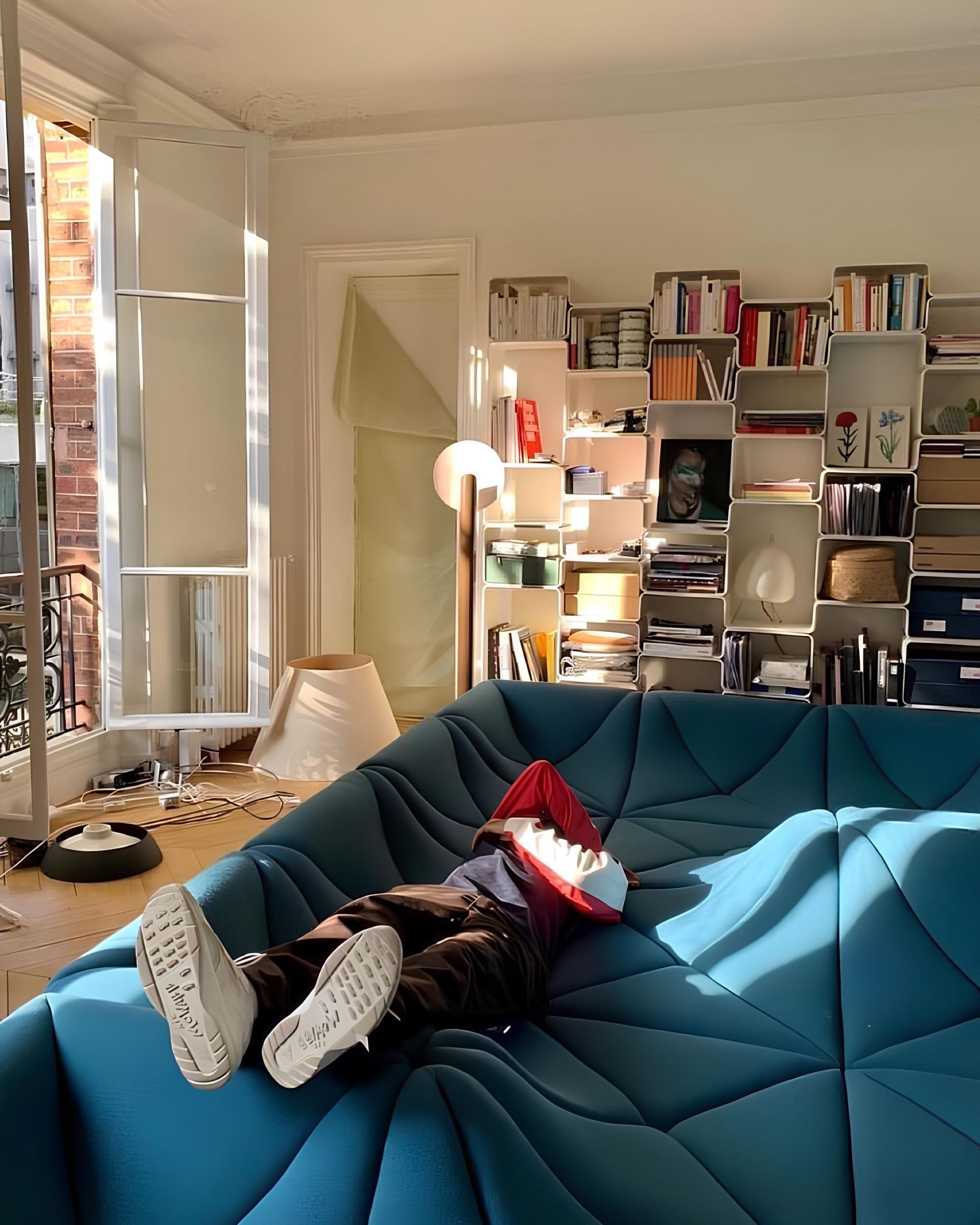
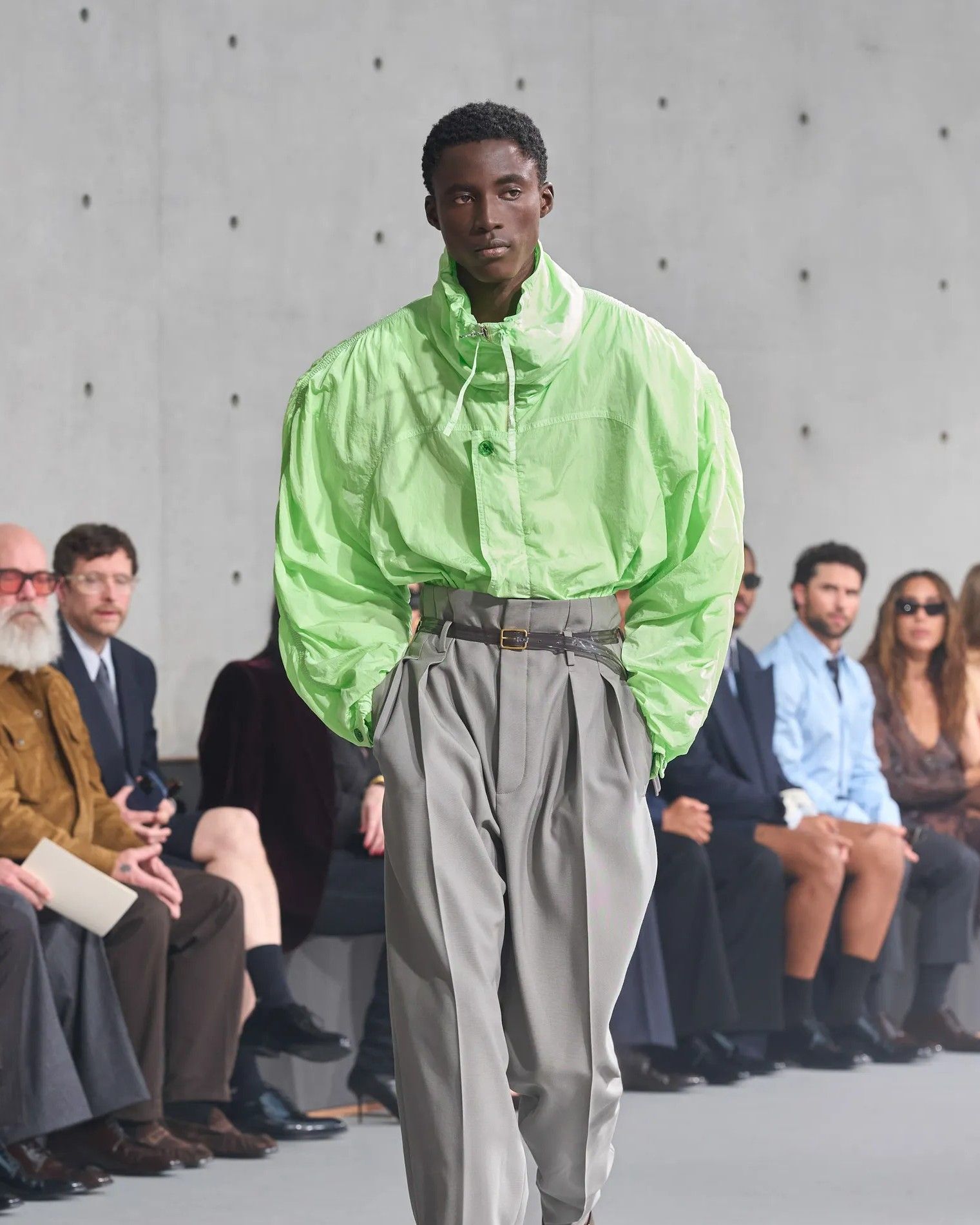
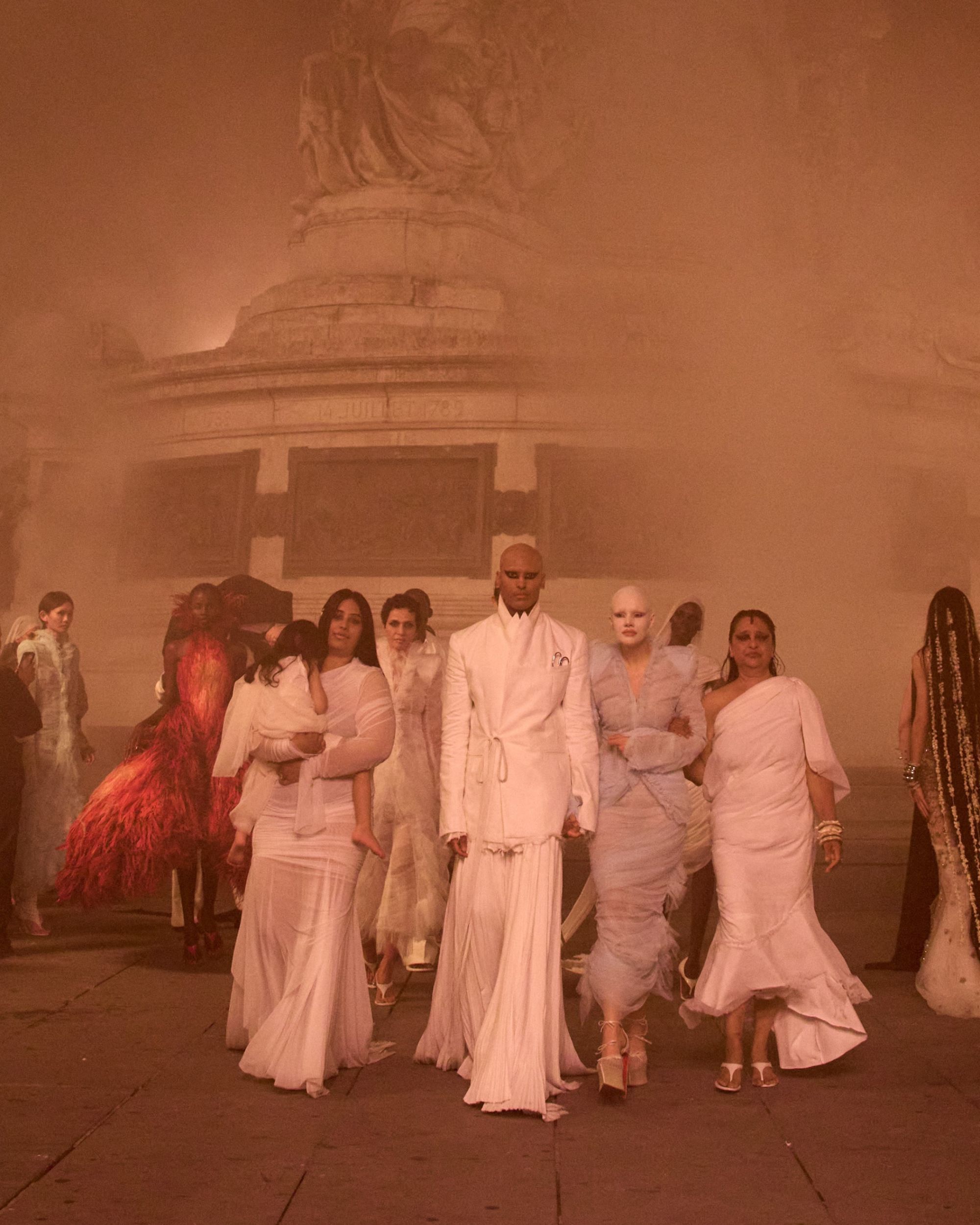
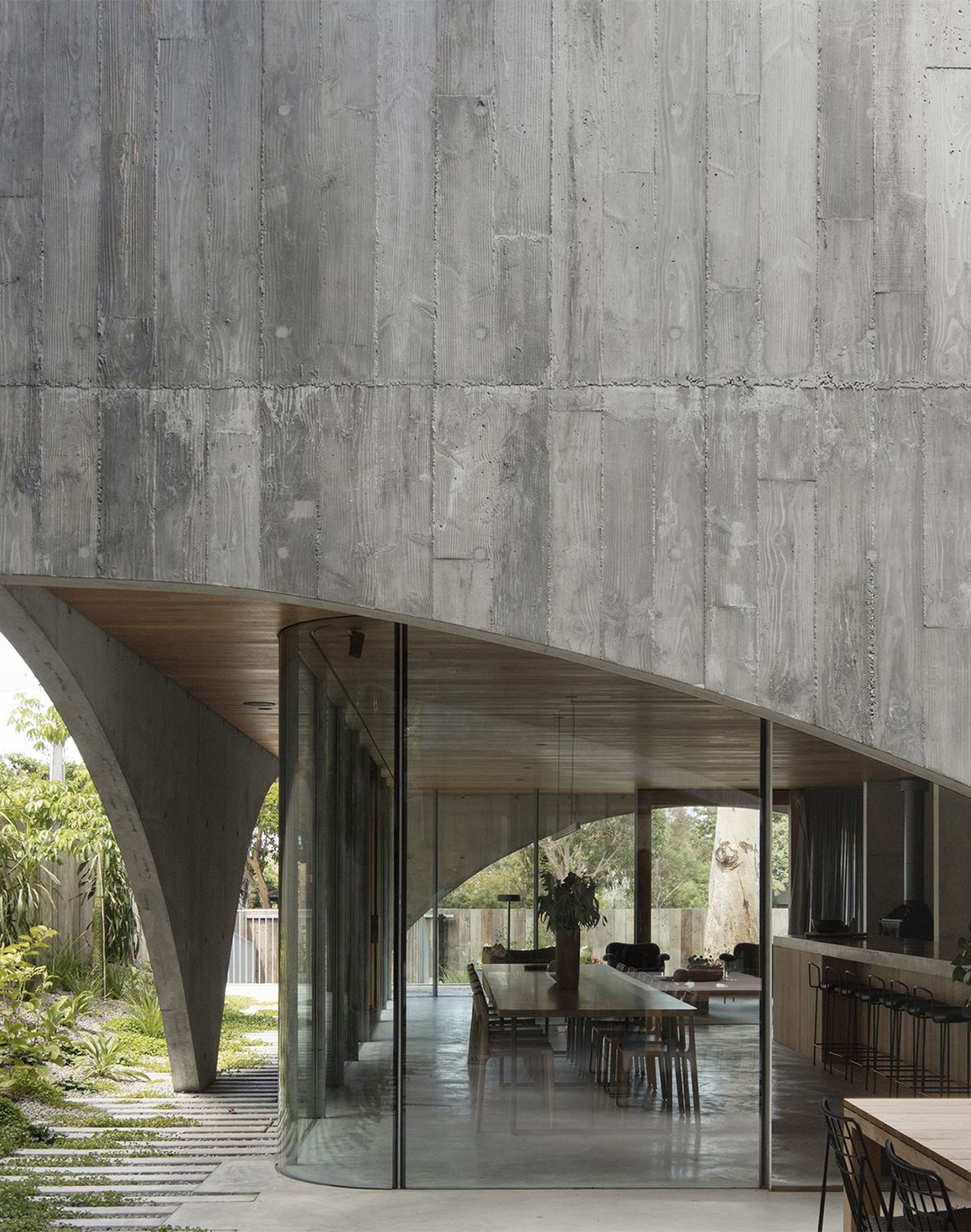
What makes the issue even more interesting is that concrete, culturally speaking, has never truly been expelled from contemporary desire. On the contrary, in recent years it has returned as an aspirational material. Brutalism has re-entered interiors, fashion sets, retail spaces, domestic renderings, digital aesthetics and the visual references of Gen Z. Raw surfaces, industrial floors, bare walls, monolithic volumes and bunker-like atmospheres have become codes of taste rather than mere signs of harshness. From Rick Owens to minimalist-brutalist interiors, concrete had already been rehabilitated by the imagination long before being fully rehabilitated by the industry itself.
This changes the question. Concrete must not only prove that it can reduce its impact; it must also confront the fact that it has become desirable again. Its new image works because it combines two promises: one technical and one aesthetic. On one side it says: I can emit less, waste less, capture CO₂, use less material. On the other it says: I can be beautiful, contemporary, radical, photogenic. I can enter Design Week, homes, concept stores, Instagram feeds and the moodboards of those searching for a harsher kind of luxury, rougher and less decorative.
The sustainability of a material, however, does not depend only on how it is produced, but also on what it allows us to build. A lower-impact concrete used to regenerate existing buildings, reduce waste and improve urban quality carries one meaning. The same material used to keep expanding cities, sealing soil and producing unnecessary new volumes carries another. The question is not only: “how much does this concrete emit?”. The question is: “what idea of the city is it being used for?”.
There is a need for awareness
@worldarchinspo Could you live and work in a space like this? In Haldenstein, Switzerland, Peter Zumthor designed "Casa Z" a concrete house wrapped around a garden at its core. Every space-whether open studios or private rooms upstairs-flows toward this garden, framed by carefully placed windows and shifting ceiling heights. Concrete gives it weight, glass opens it to light, and together they create an atmosphere that's quiet yet powerful-an intimate reflection of Zumthor's architectural philosophy. #architecture #brutalism #housedesign #designinspiration original sound - World Architecture Inspiration
Perhaps concrete does not truly want to become lighter. It wants to become more aware, more precise, more acceptable. It wants to stop being perceived only as the material behind urban problems and instead present itself as a possible part of the transition. In part, it already is, because no realistic transformation of the built environment can ignore such a widespread material. But precisely for this reason, it should be observed carefully, neither with automatic suspicion nor with naive enthusiasm.
Concrete will not disappear from the city of the future. The real question is whether its attempt to reinvent its image will help build less, better and with greater awareness, or whether it will simply become proof that even the most controversial materials, once they learn the right language, can once again appear desirable.