






















How men started wearing shirts with scarves The Meanings of the Lavallière in Menswear
In the book “The Life of Forms,” Alessandro Michele says that constructing a garment is equivalent to composing a sentence, because clothes, like words, change shape and meaning. Yet some garments are capable of defying every syntax, such as the scarf blouse (known in French as the lavallière). Worn by different bodies and distant identities across time, this piece periodically returns in new variations throughout contemporary fashion collections and on red carpets, always expressing a kind of tailored enigma, a styling game in which the rules constantly shift, rewriting each time the boundary between past and present, decorum and disorder, masculine and feminine.
The history of the lavallière: a game of gender
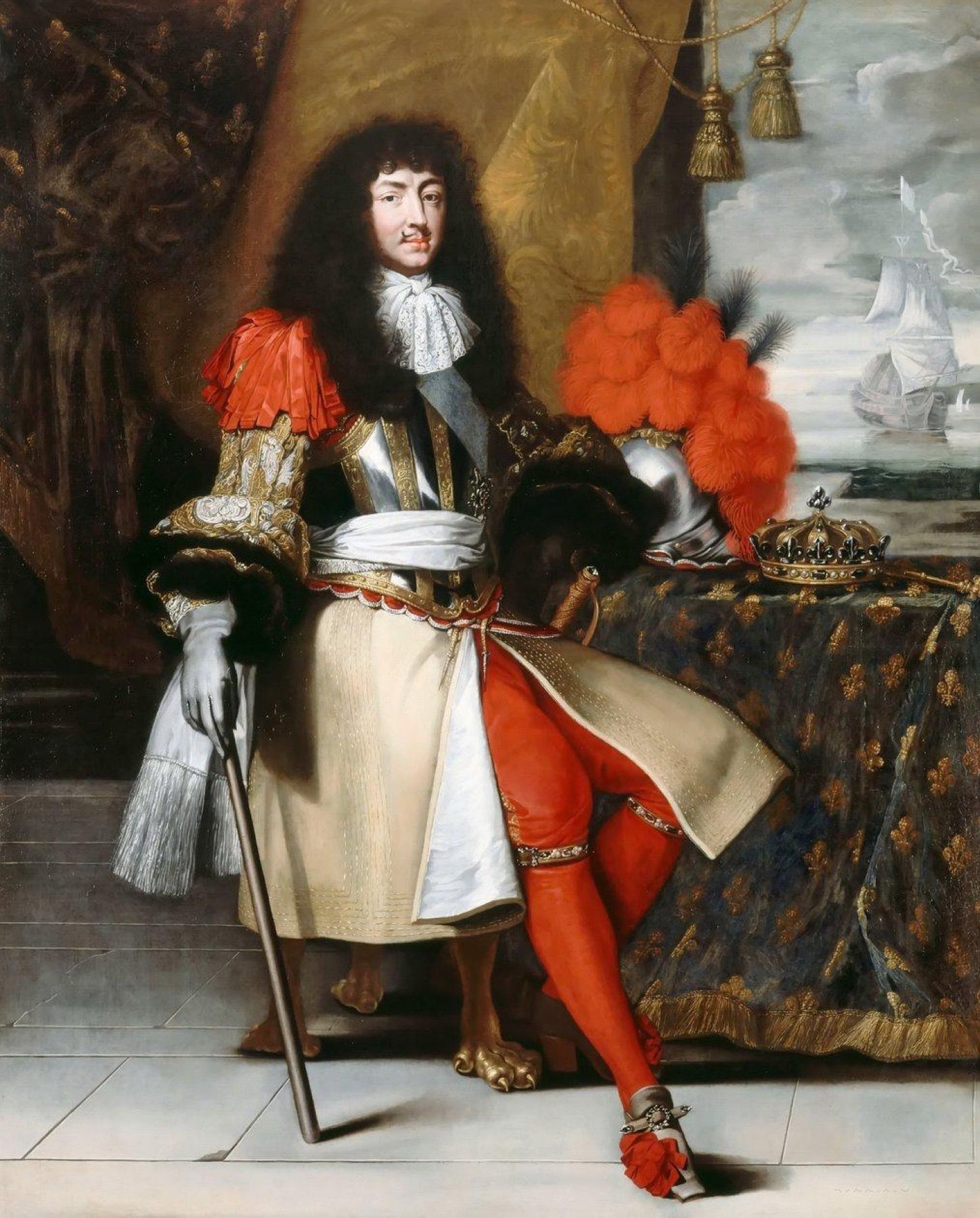
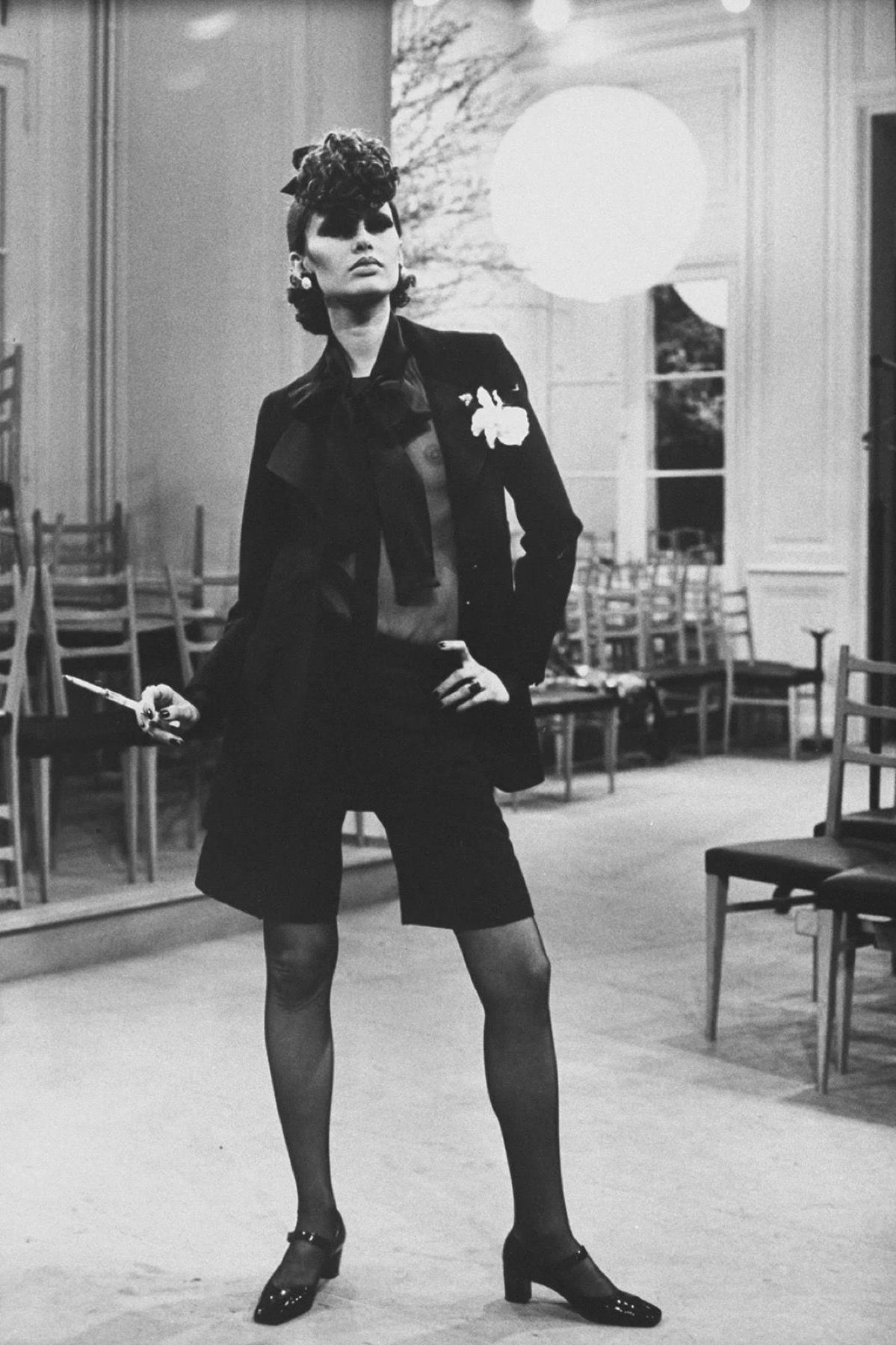
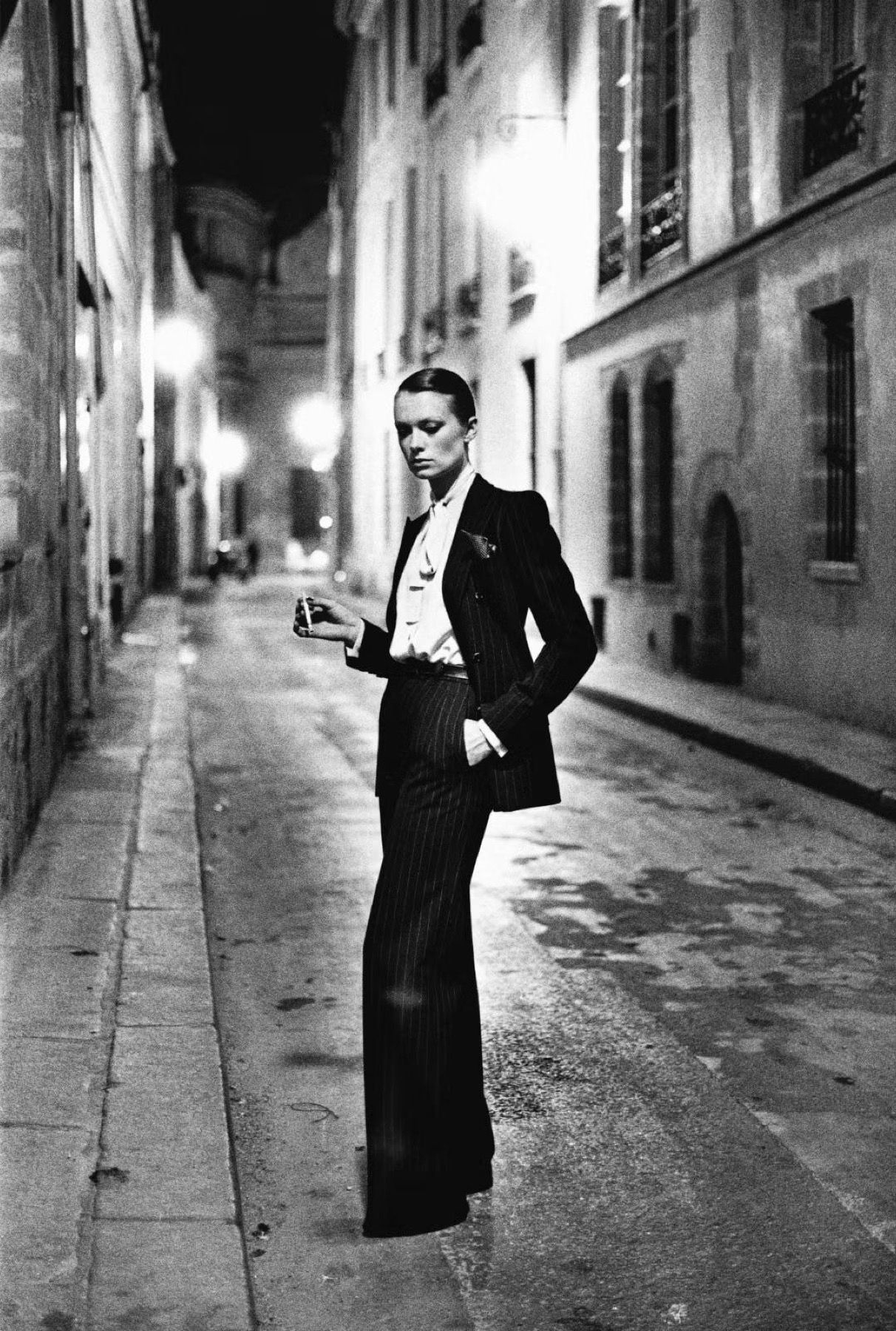
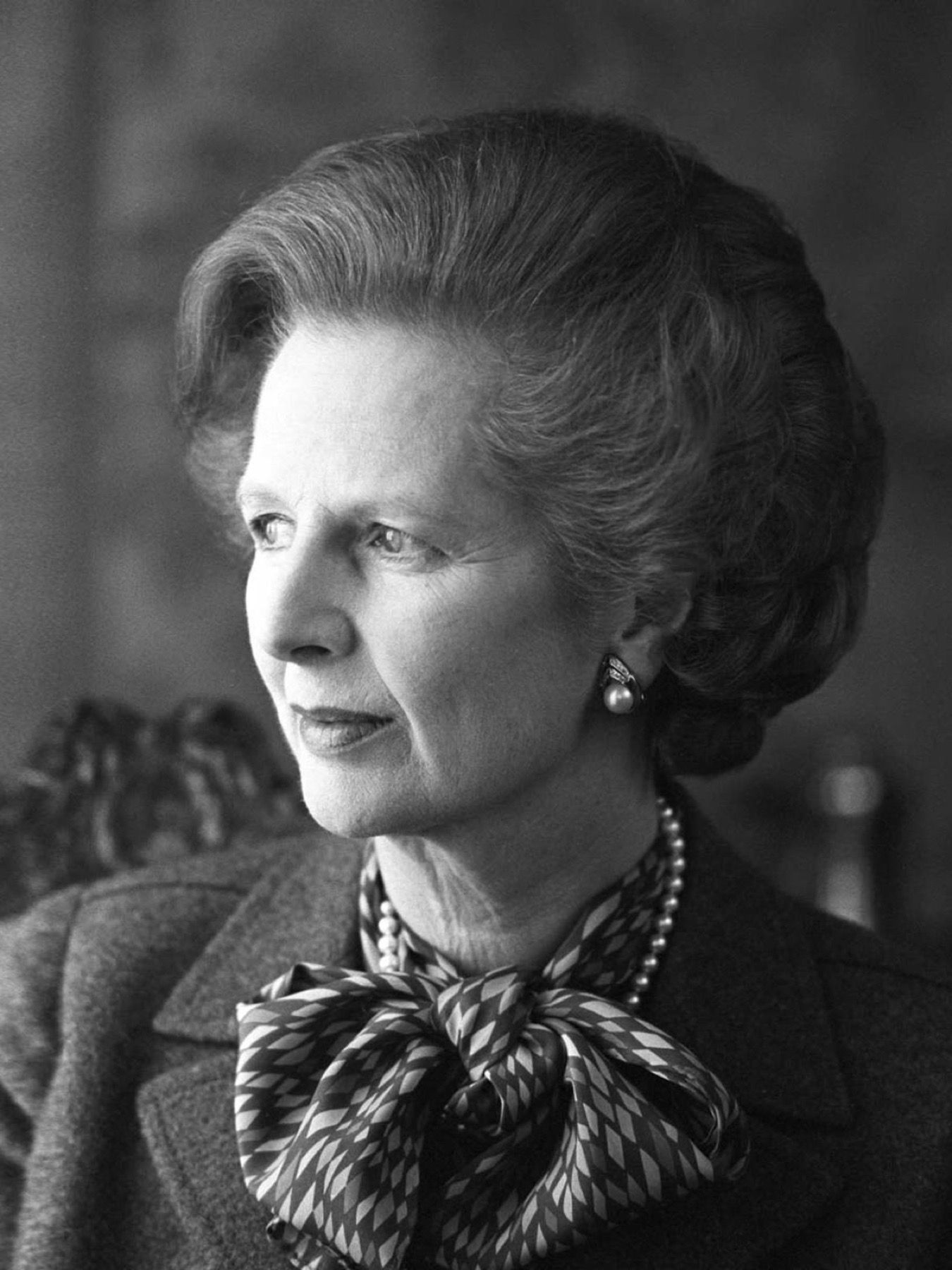
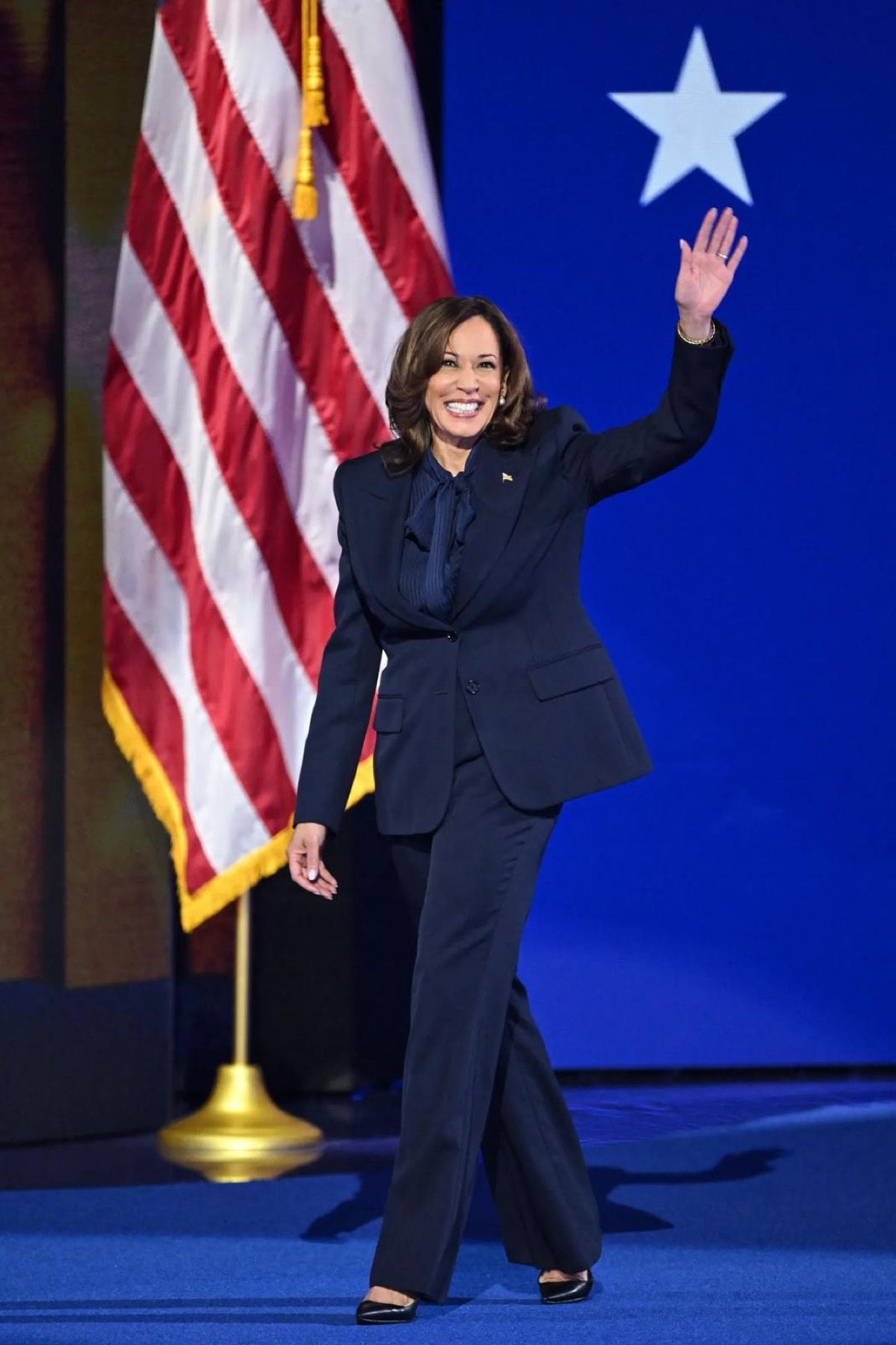
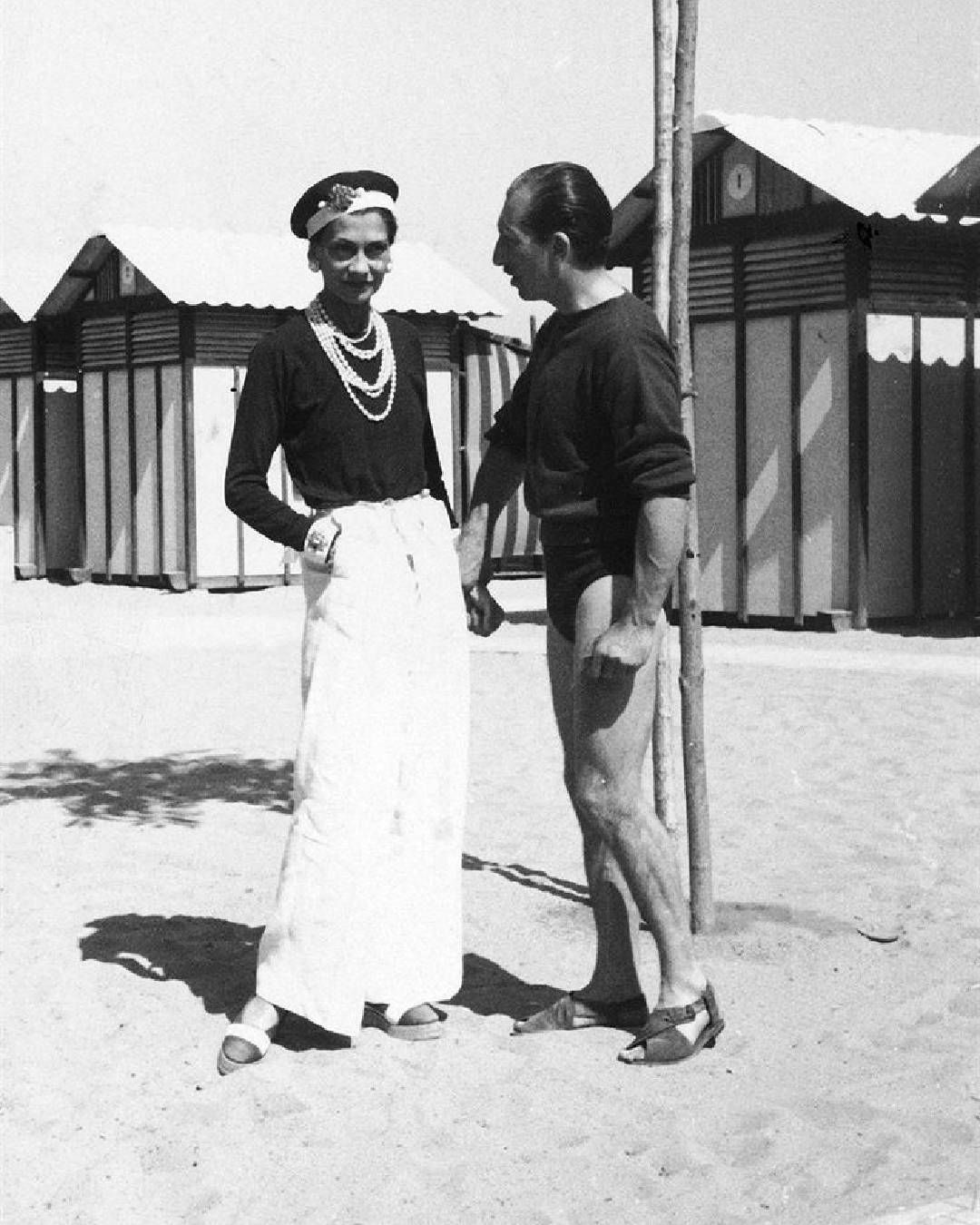
The name of this garment pays tribute to Louise de La Vallière, the mistress of Louis XIV, remembered for her fondness for the silk neckties she borrowed from the male wardrobe of the royal court. Legend has it that she herself invented this blouse with an integrated bow, transforming a rigid accessory into a softer ornament. From that moment on, throughout history, the lavallière became the subject of a continuous game of gender and identity, worn by Romantic poets before reappearing among the Gibson Girls of the early twentieth century. If first Coco Chanel and later Yves Saint Laurent established the blouse as a symbol of emancipation and androgyny, during the 1980s the garment experienced a kind of split personality: on one hand, the pussy bow blouse became the uniform of the career woman, a choice that from Margaret Thatcher to Kamala Harris still communicates bourgeois composure and reassurance today; on the other, within the male wardrobe, the blouse followed the opposite path and became a tool for dismantling binary norms.
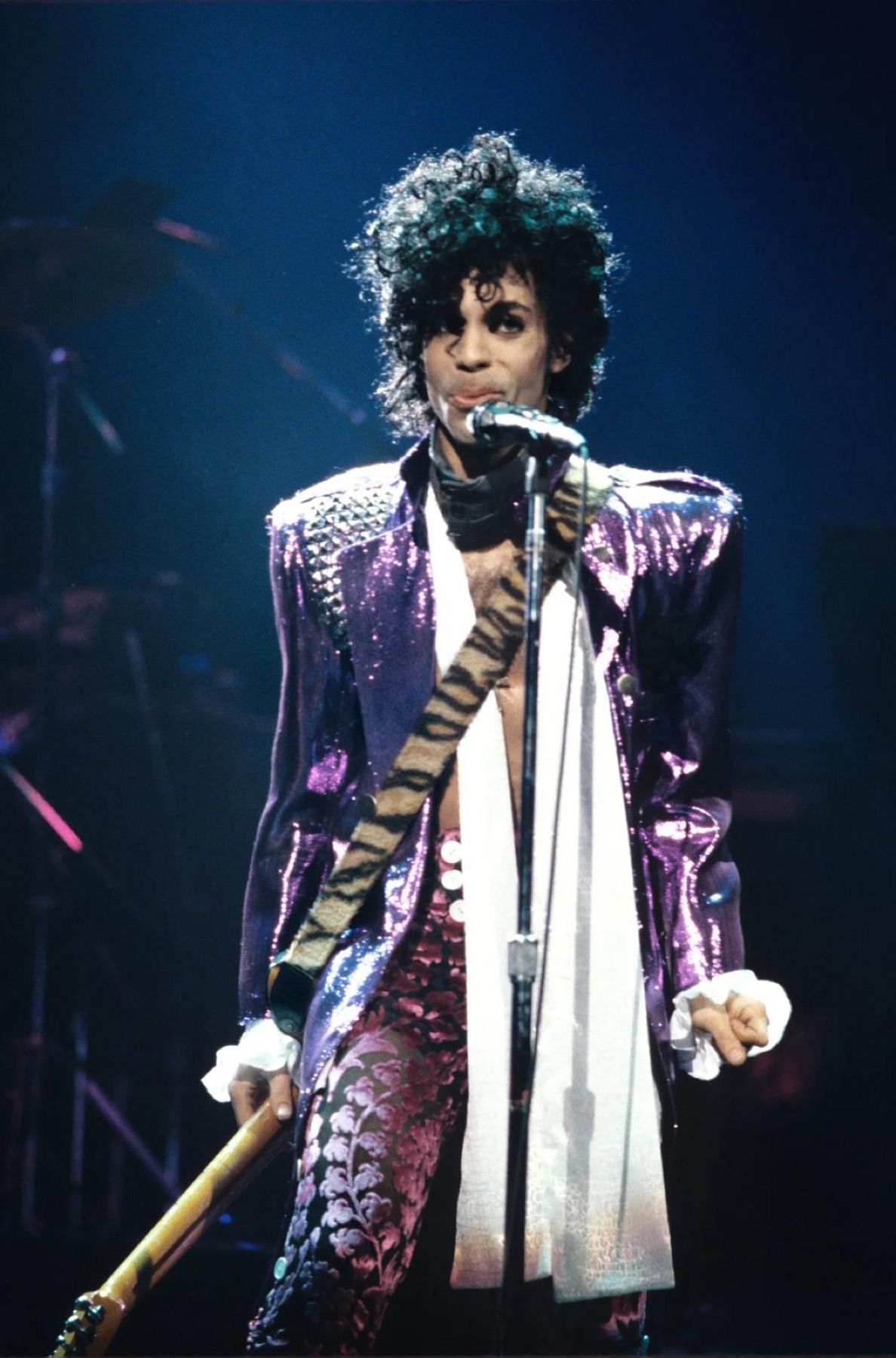

In the hands of artists such as David Bowie and Prince, the garment stopped being merely bon ton and became regal, erotic and provocative. In this context, the lavallière acquired a profoundly queer dimension, even though, ironically, this coincided with the moment when the garment returned to the male wardrobe. This is where the game of forms becomes subtle: much like a word that changes meaning depending on the sentence in which it is placed, the lavallière worn by a man in the 1980s no longer signified the aristocratic belonging of a Versailles nobleman, but rather the rejection of the very norm that had confined it to the trunks of bourgeois women. It was not simply a return to its origins, but a rewriting.
The revival of the lavallière in contemporary fashion
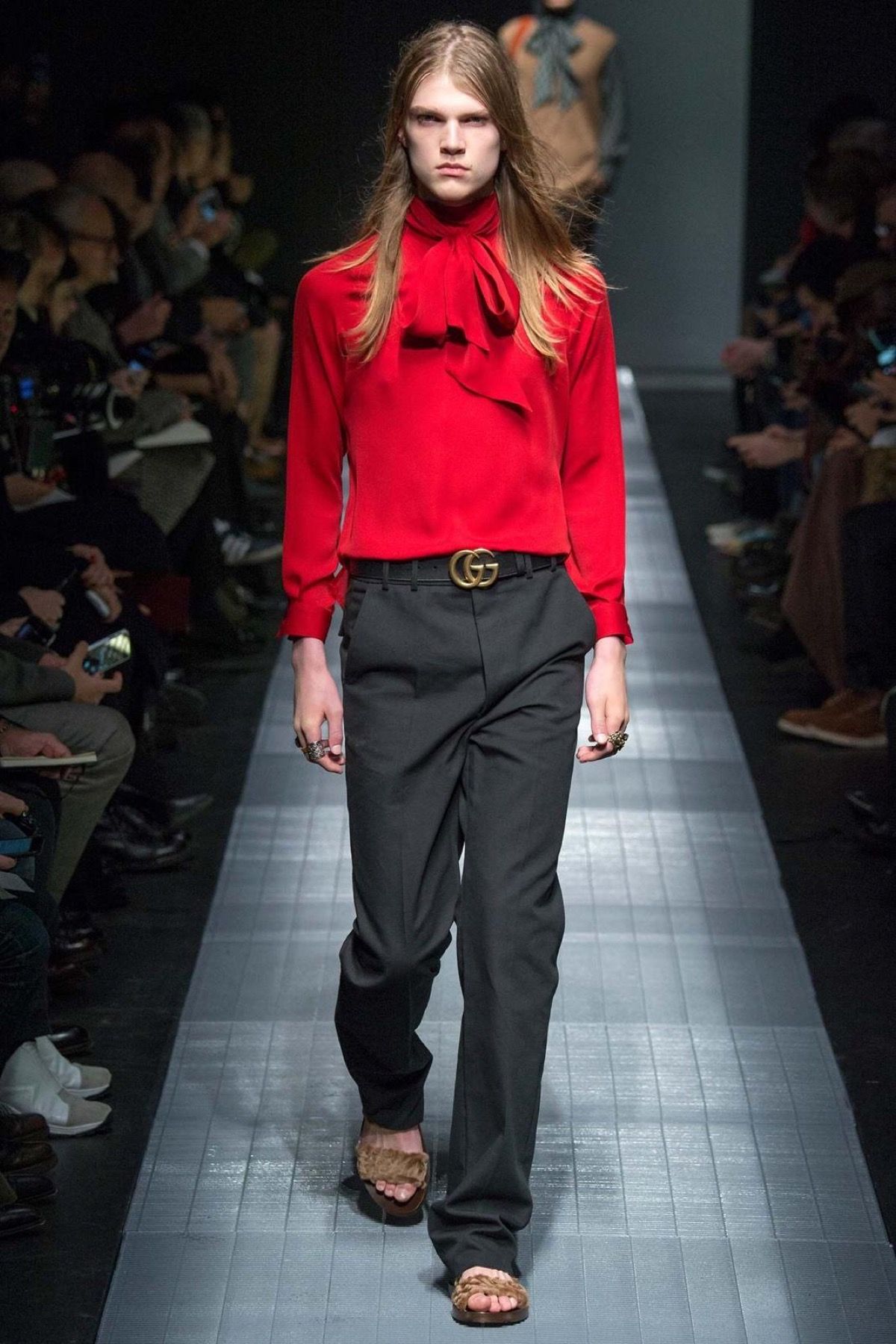
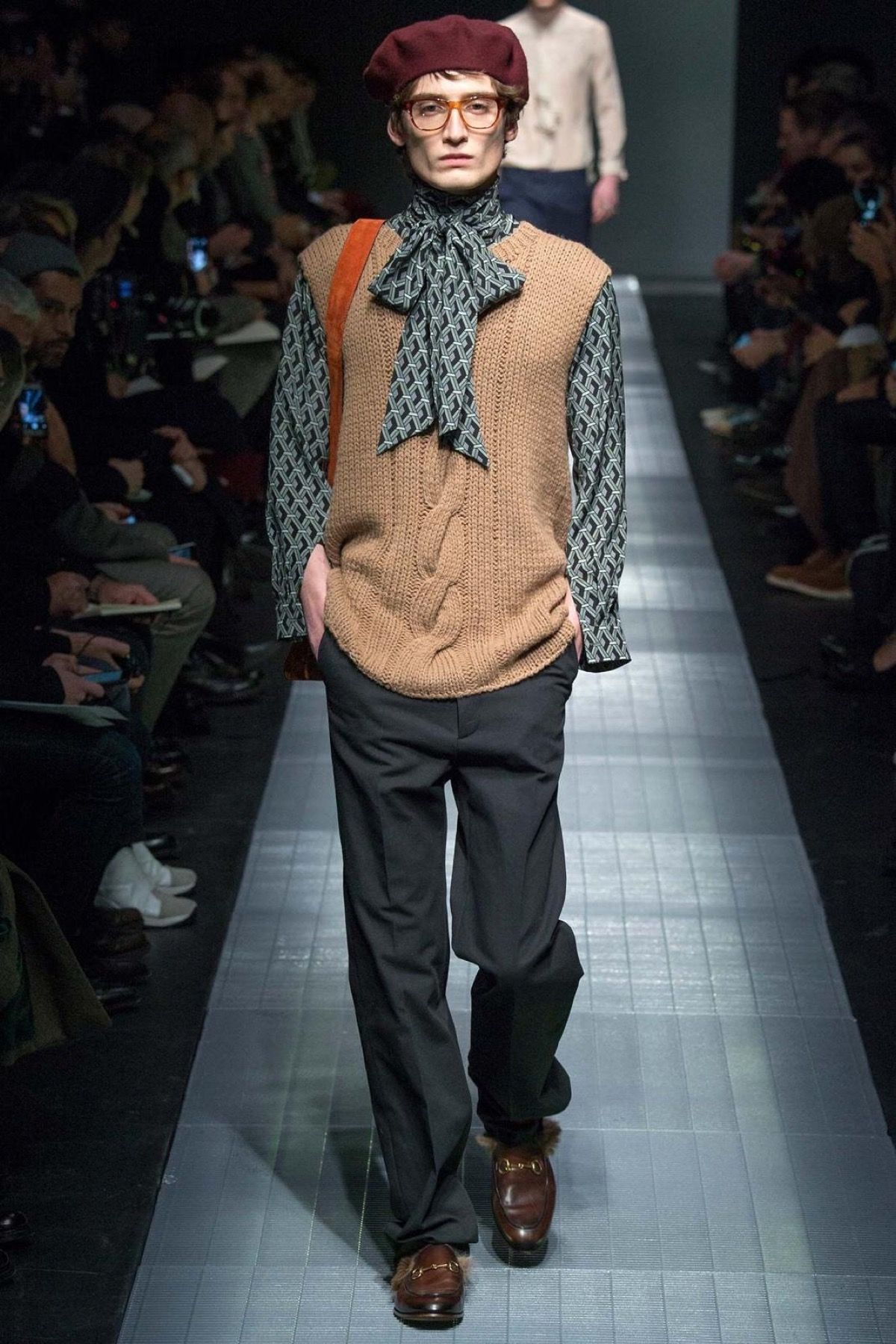
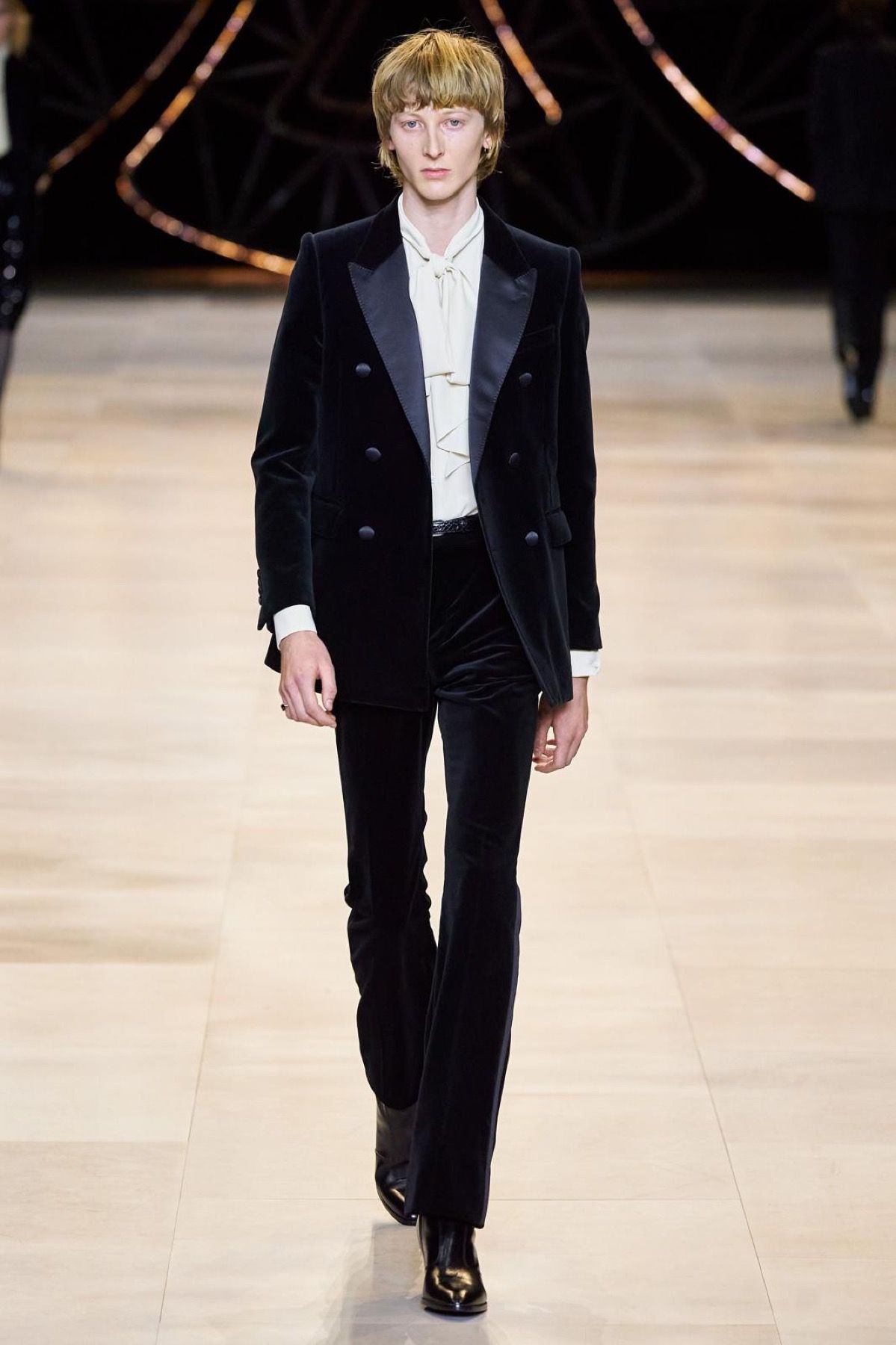
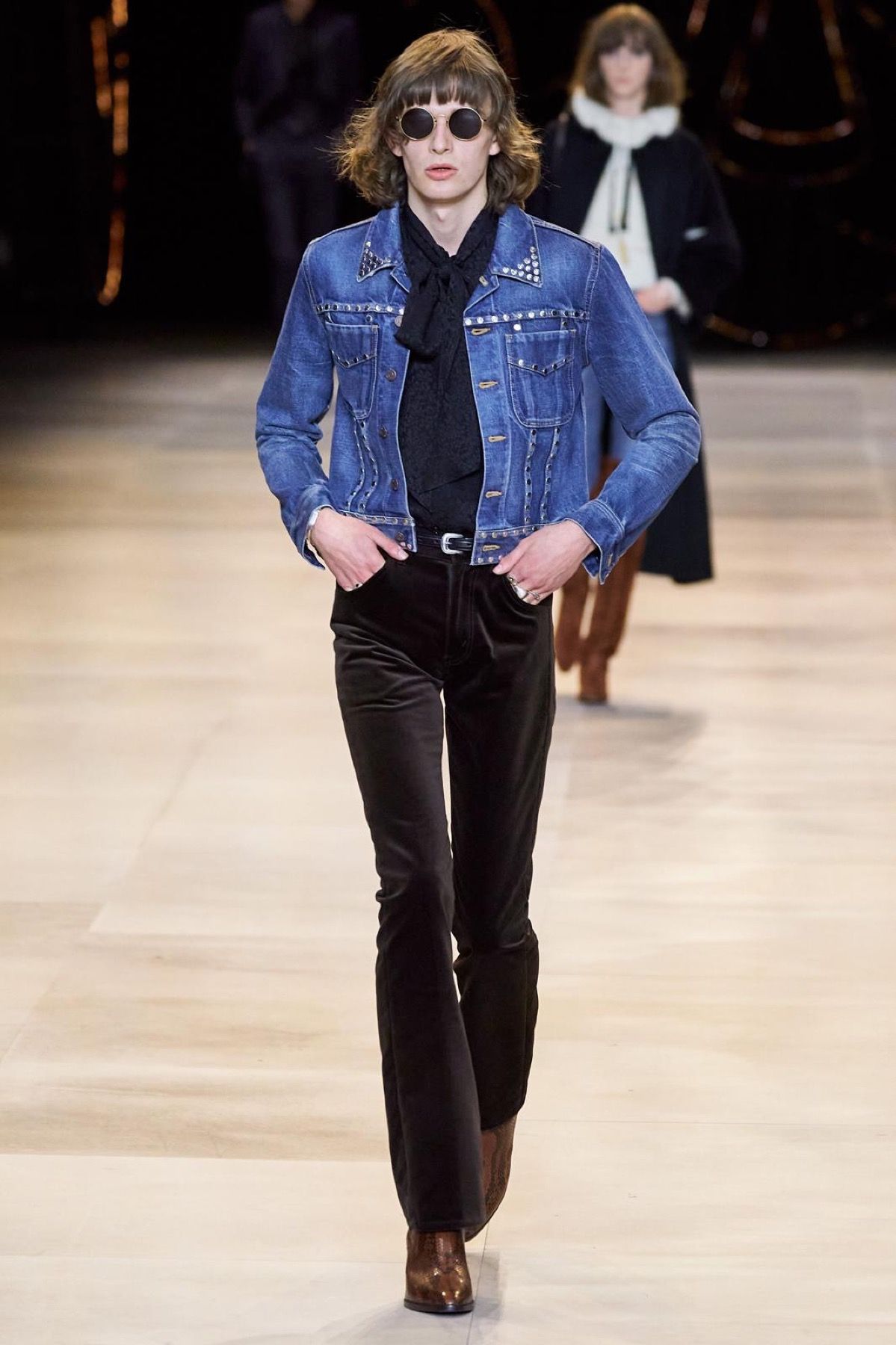
If throughout the 1970s and 1980s the lavallière had been confined almost exclusively to stage costumes, it was during the mid-2000s that it made a powerful return to menswear. It was Alessandro Michele, in his debut collection for Gucci (FW15), who reintroduced the garment, resurrected from the wardrobe of memory, a piece in which both genders could see themselves reflected. Later, in Celine’s FW20 collection, Hedi Slimane made the blouse more sophisticated, sending his hedi boys down the runway, suspended somewhere between dandies and rockstars, wearing silk lavallières beneath denim jackets or velvet tailoring.
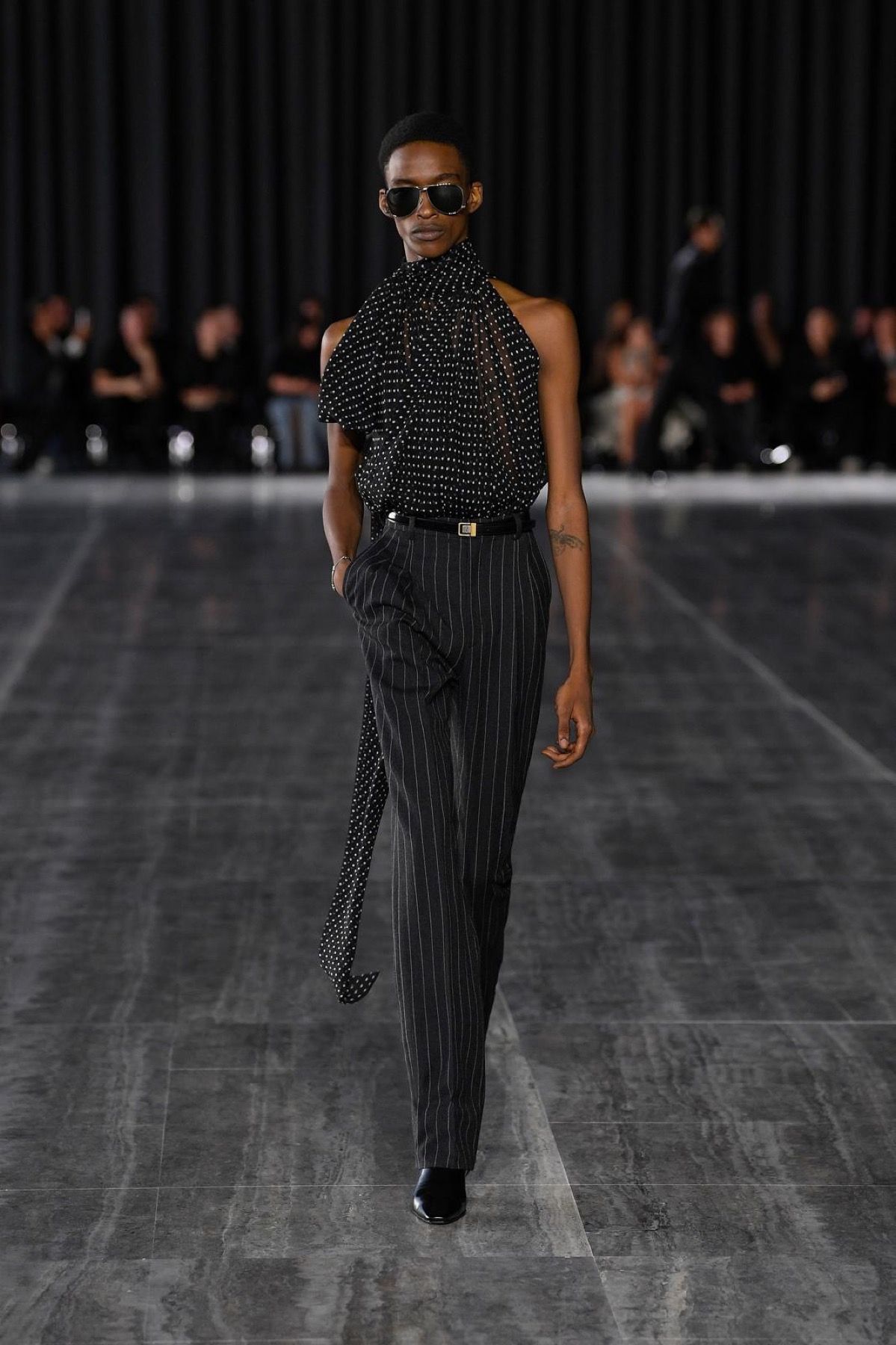
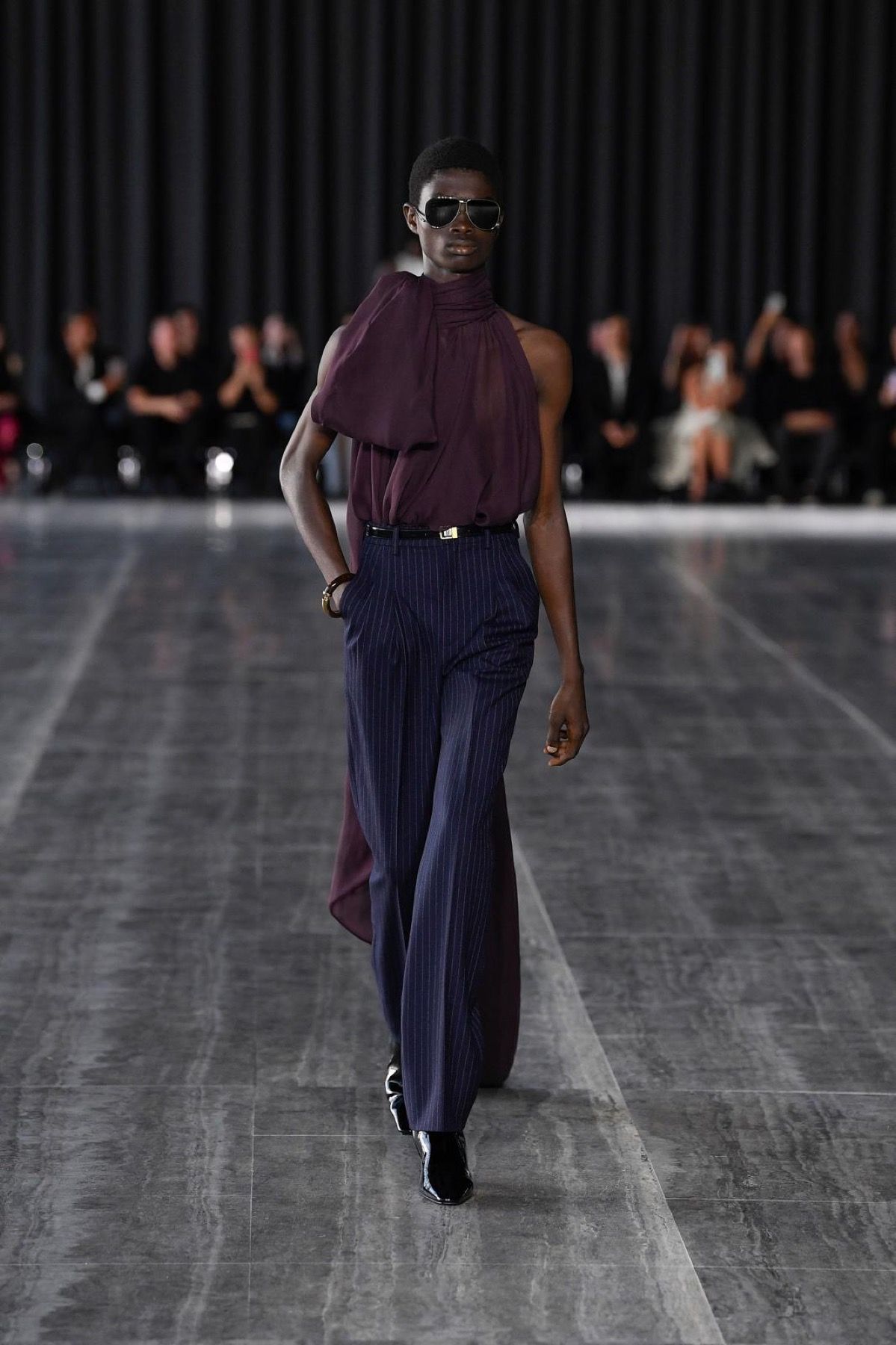
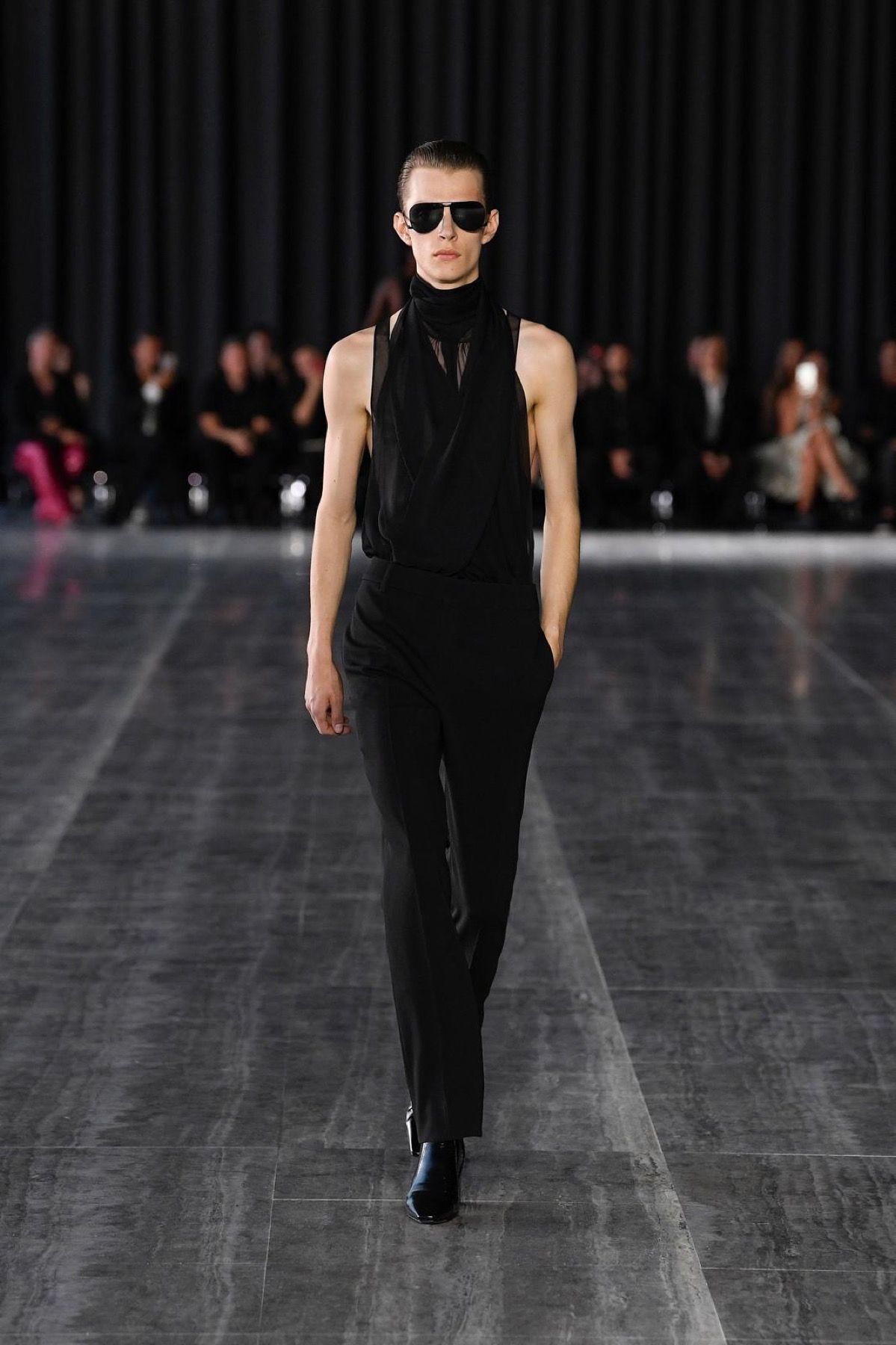
In recent years, the lavallière has shed its skin once again thanks to Anthony Vaccarello. In a kind of backward journey through the Maison’s heritage, the designer transformed the flou blouse into the new defining element of the Saint Laurent man. It is a masculinity that mirrors itself in a subtle feminine silhouette, stealing from it lightness and mystery. In the SS24 collection especially, lavallières worn off the shoulders created a more erotic and seductive image, one far less rigid and constrained than the traditional tailored suit.
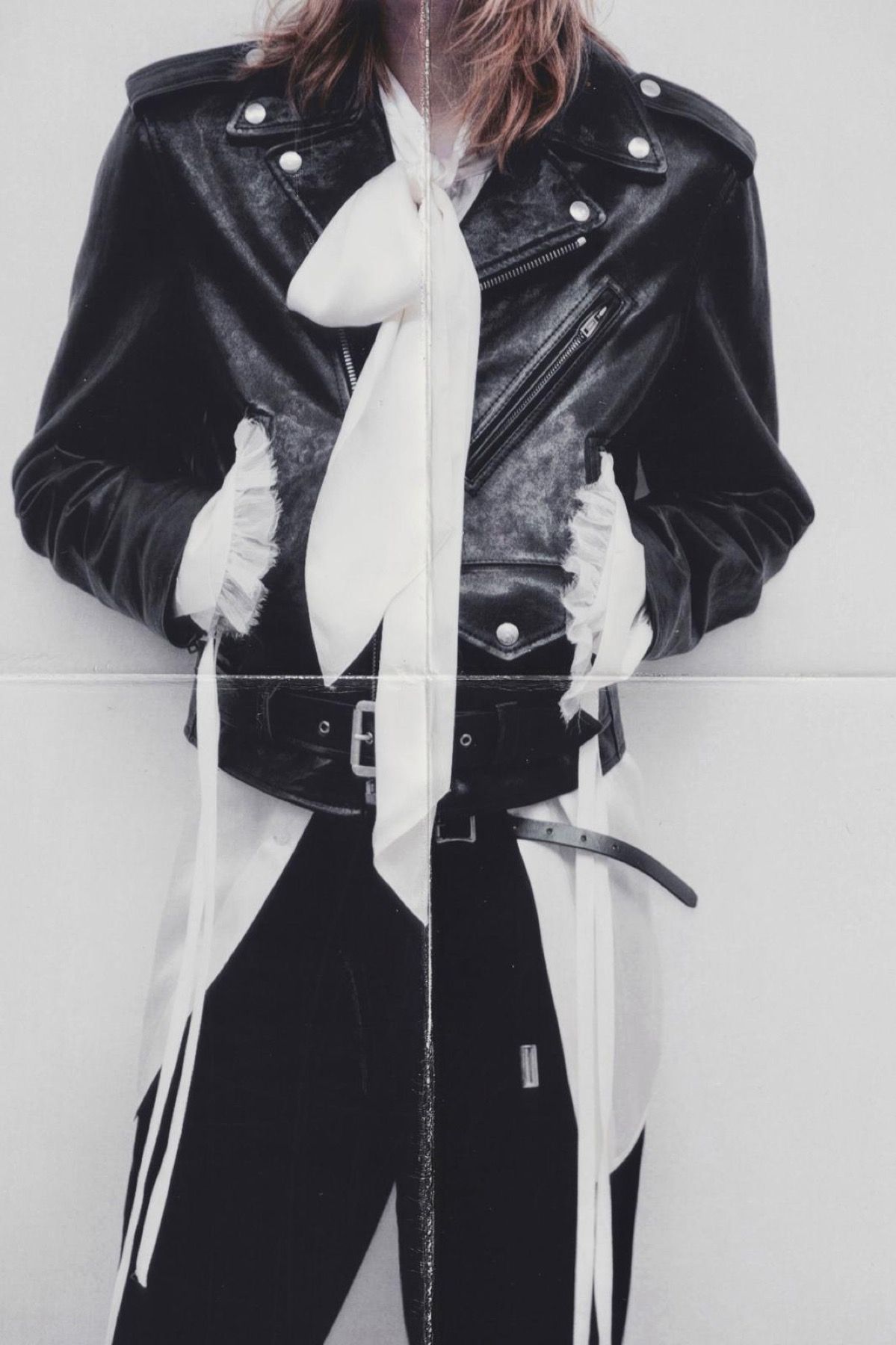
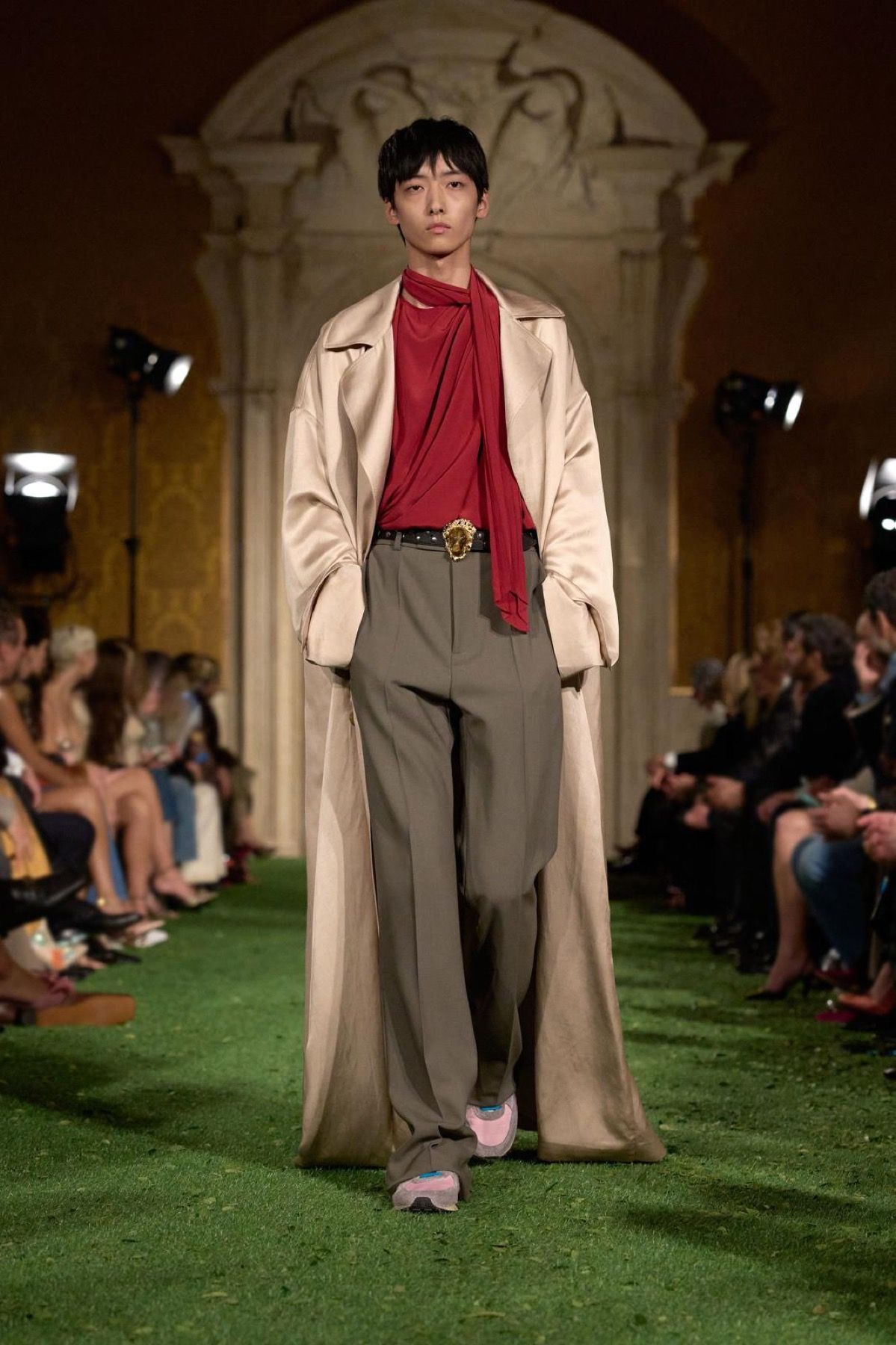
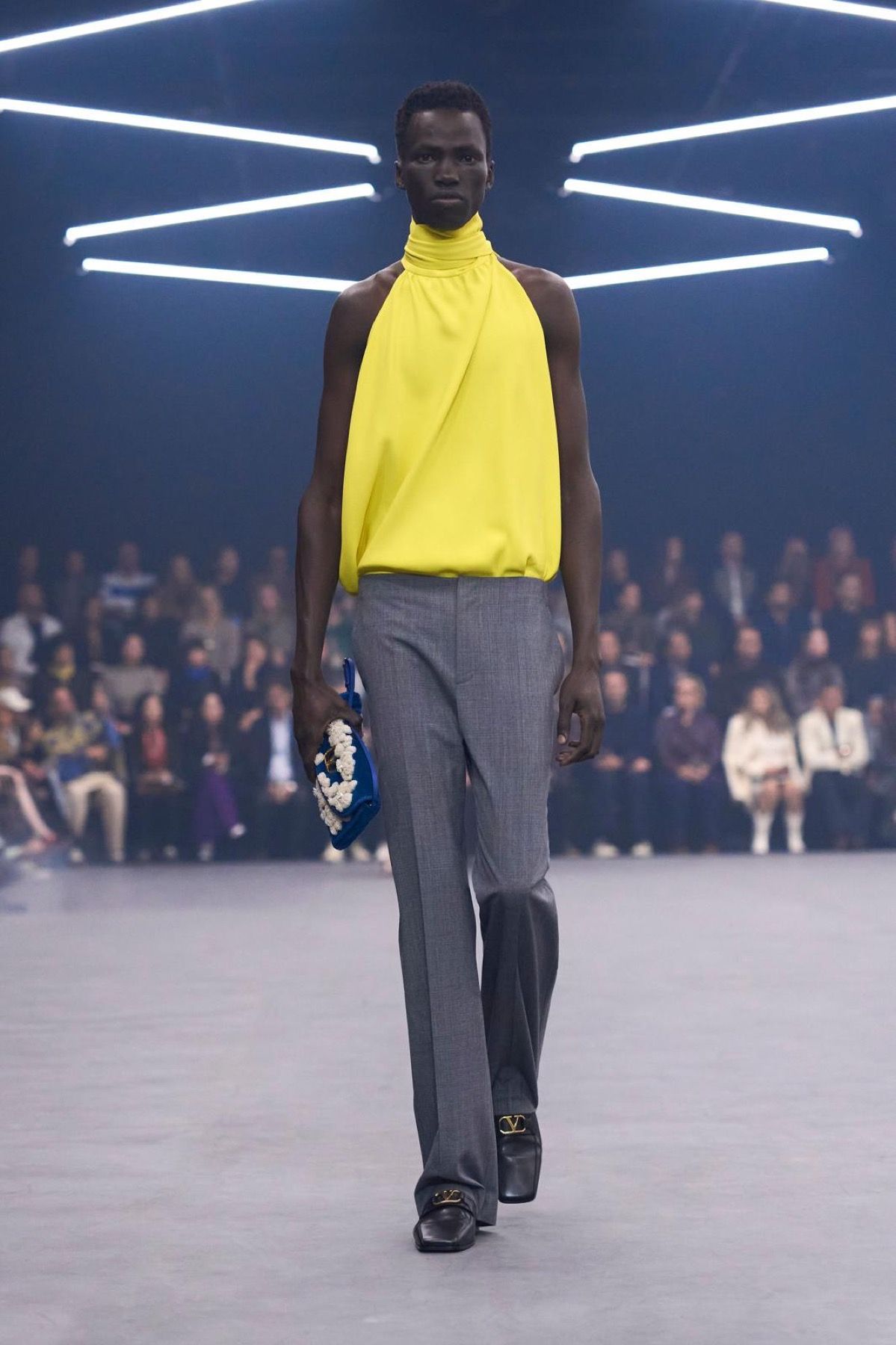
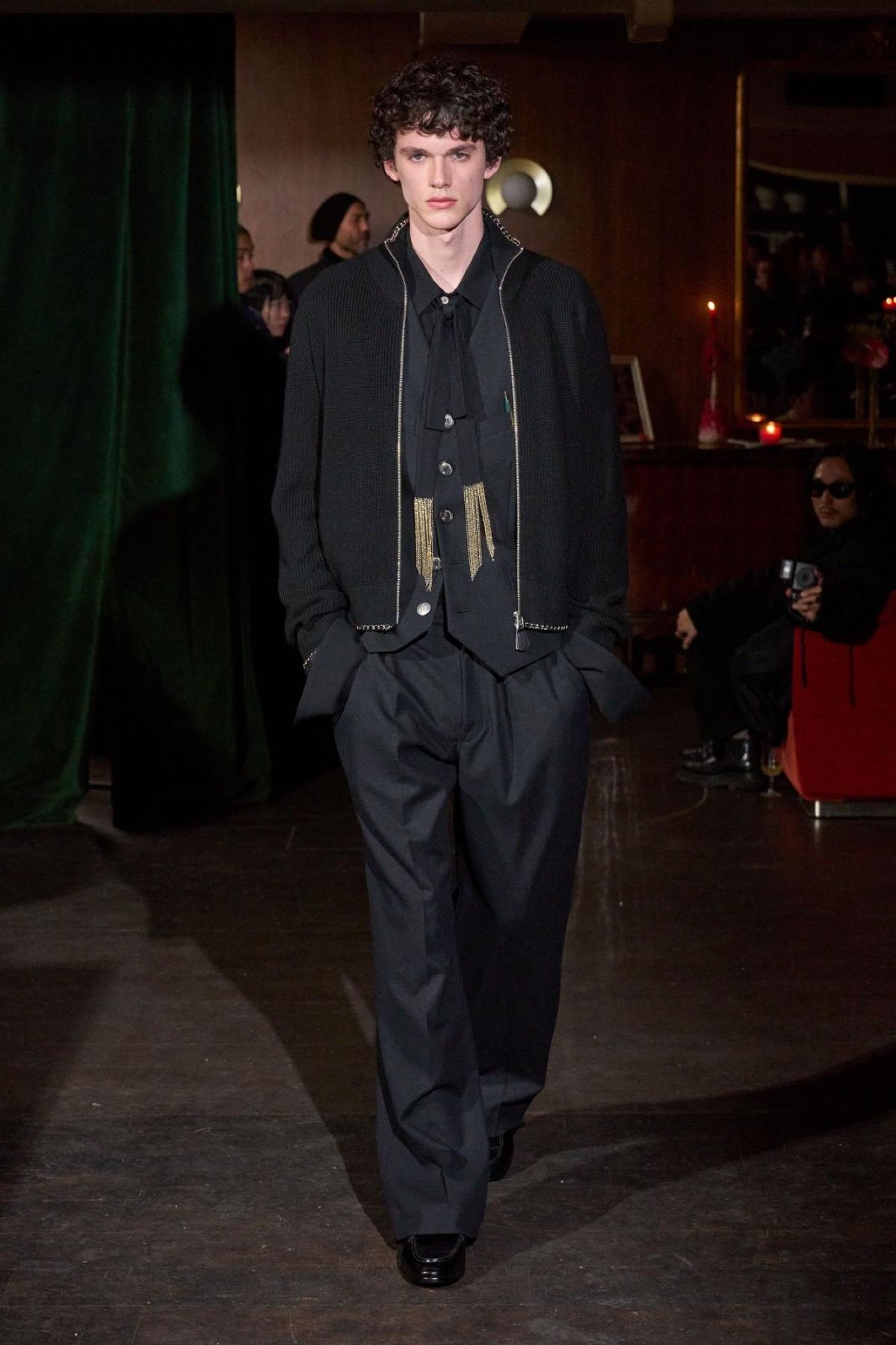
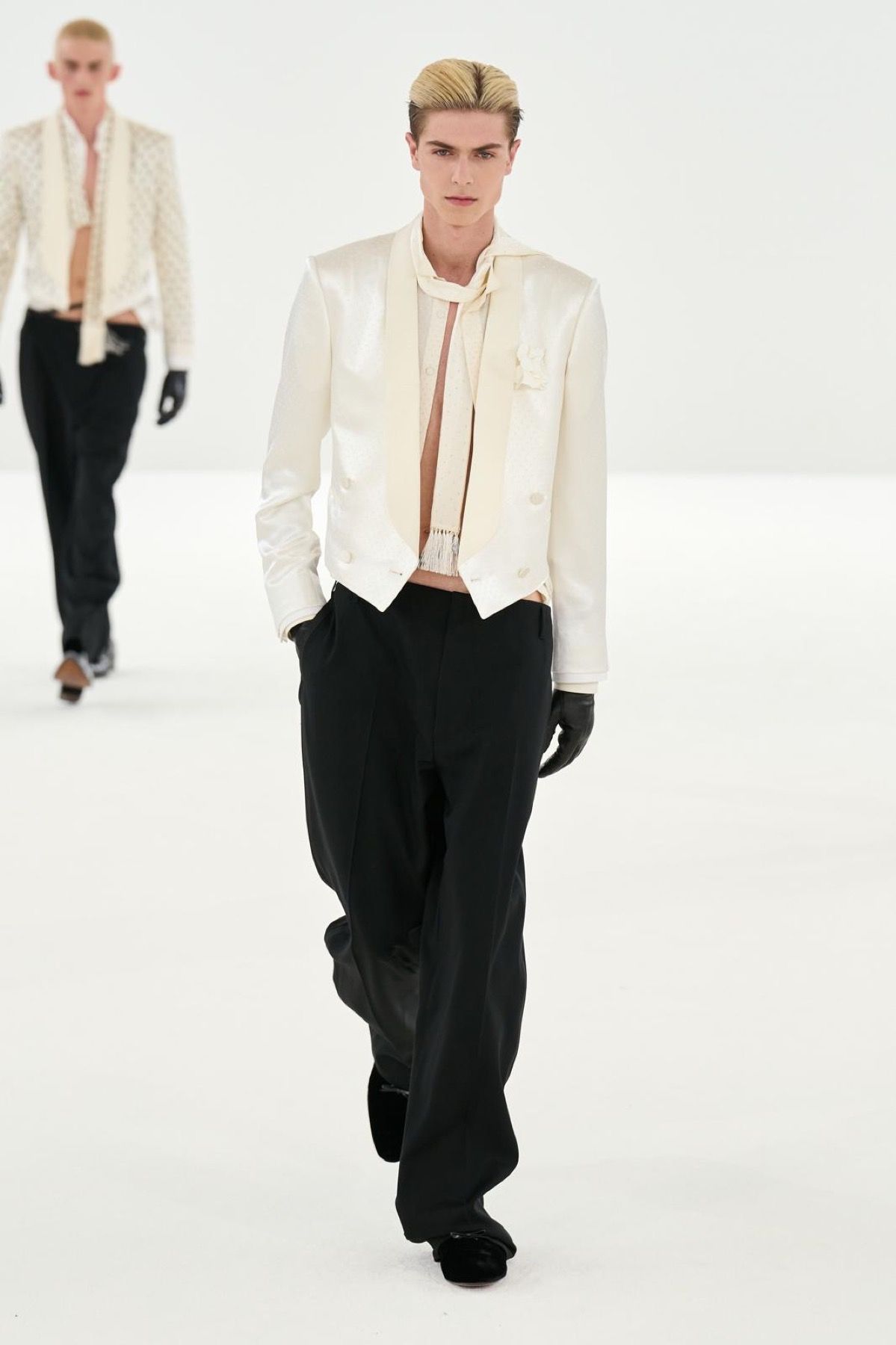
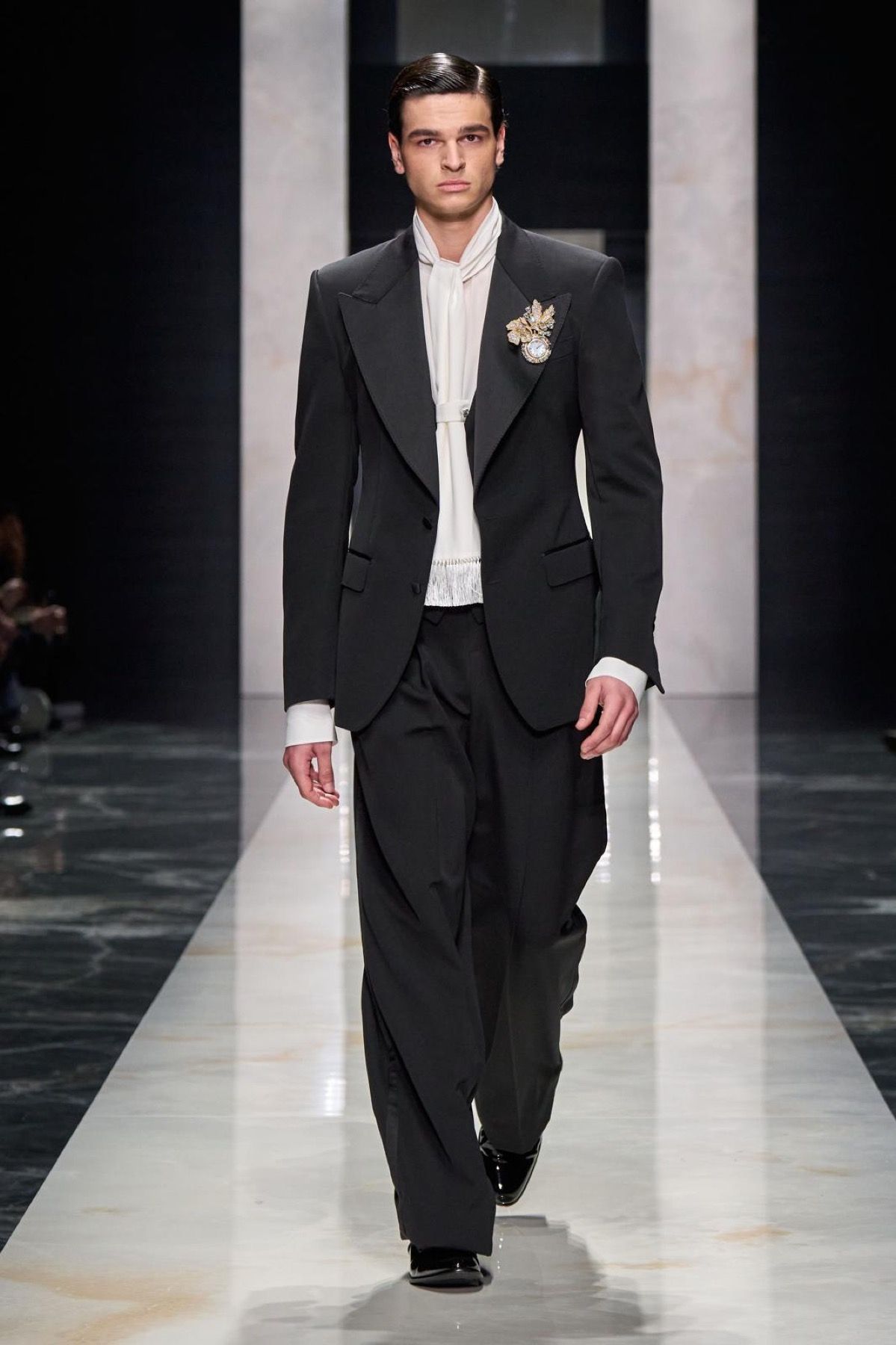
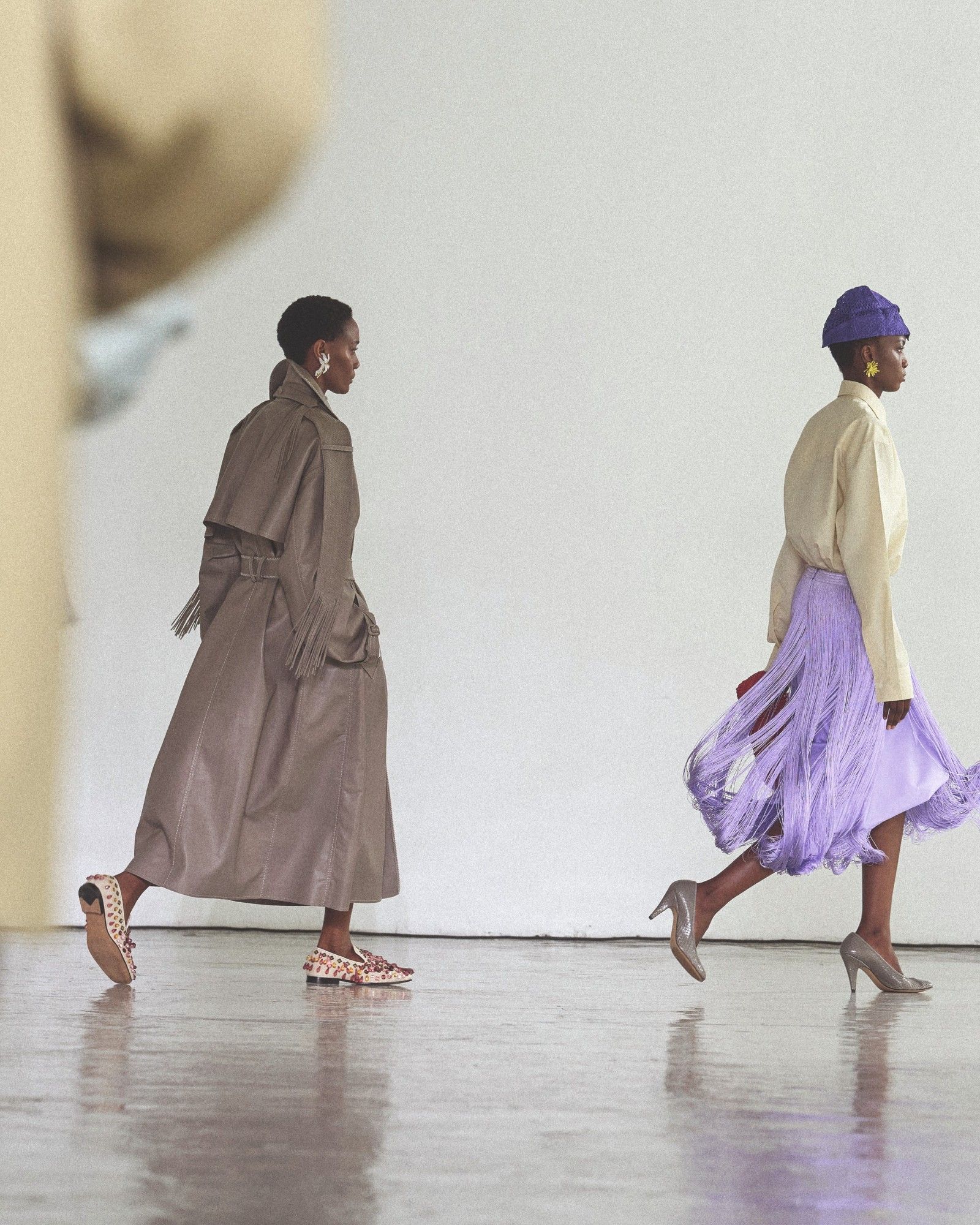
The latest runways confirm the ubiquity of the lavallière. Stefano Gallici immersed it in the darkness of Ann Demeulemeester, while Valentino ennobled it through couture craftsmanship. For Tom Ford and Dolce & Gabbana, the shirt collar became a subtle silk scarf with fringes, while other brands, in response to the widespread return of neckties, proposed scarves knotted like lavallières: in recent collections by Sacai, Bed J.W. Ford and Todd Snyder, thin scarves appeared hidden within or directly integrated into the construction of the shirts themselves.
The most talked-about shirt on the red carpet
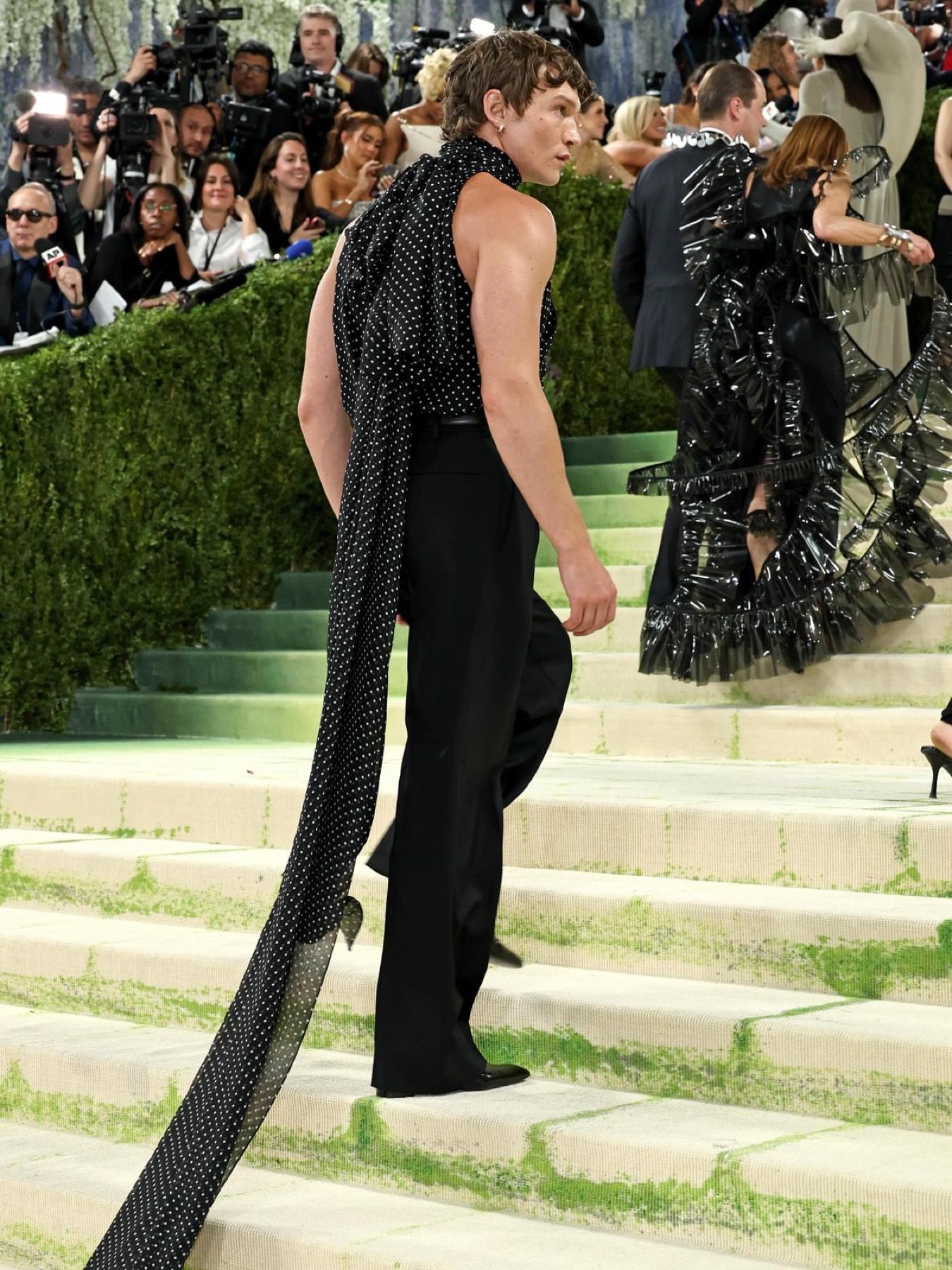
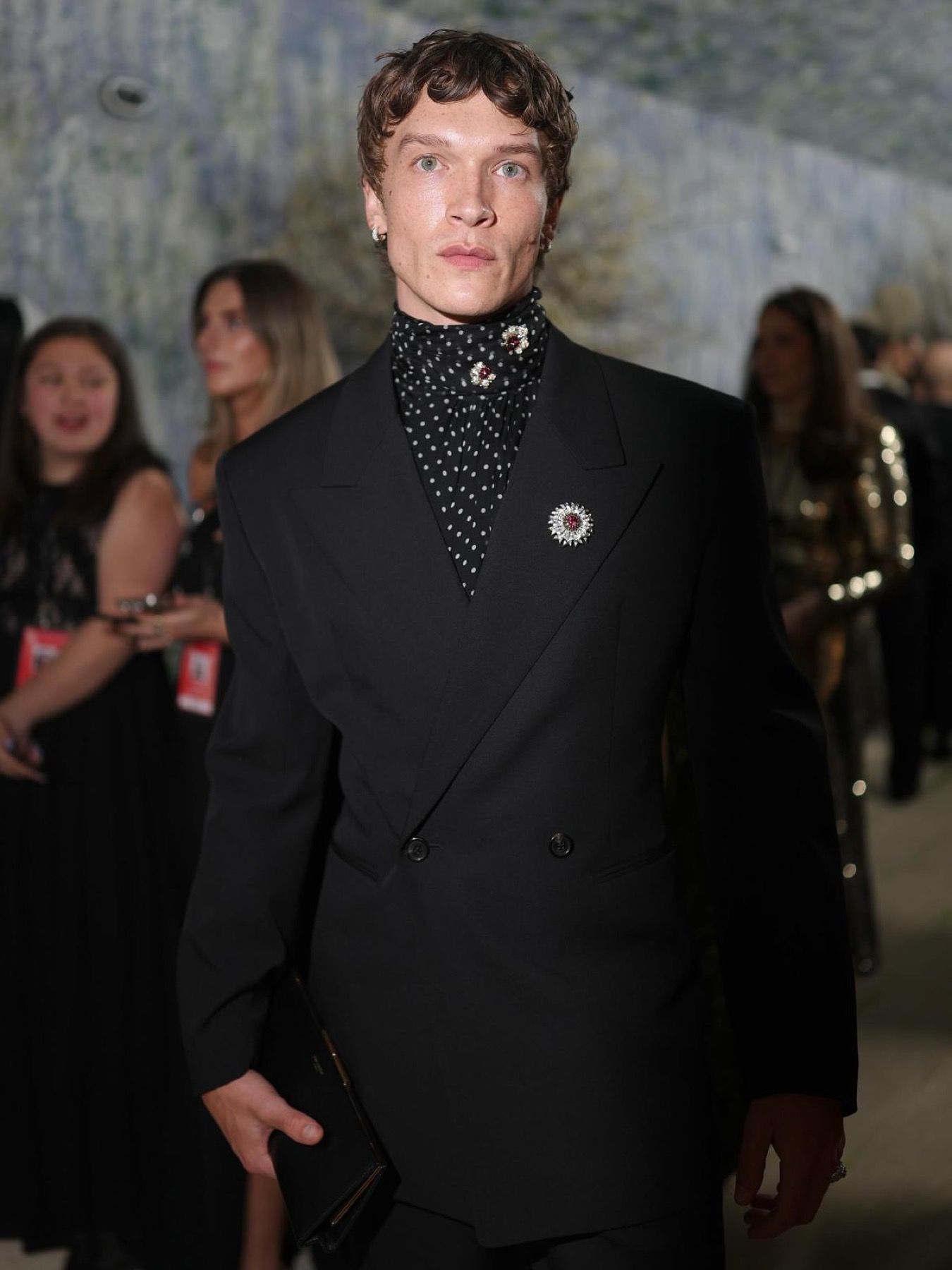
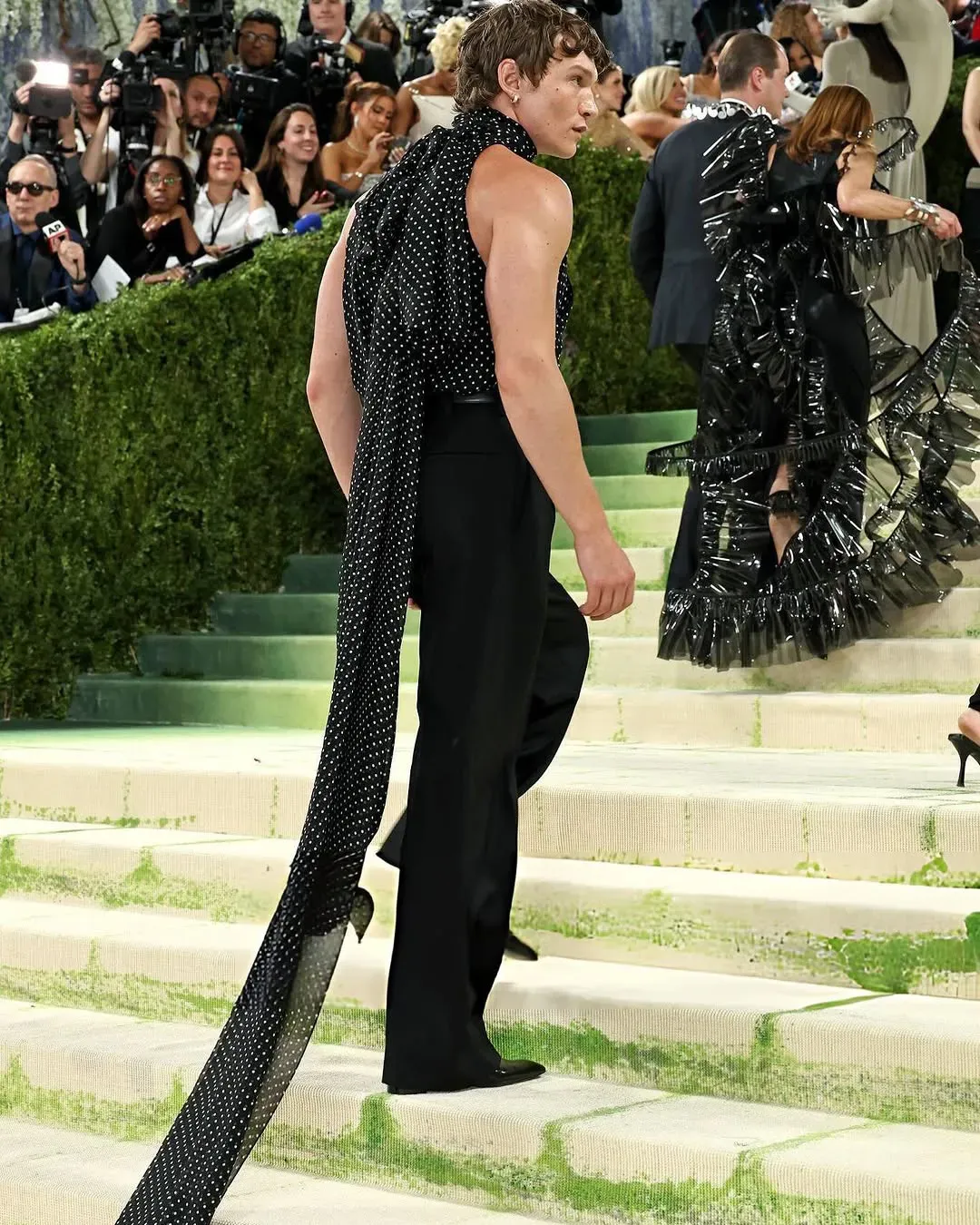
The most recent appearance of the lavallière has the face of Connor Storrie. For his debut at the 2026 Met Gala, the actor appeared in a total Saint Laurent look consisting of a fitted blazer concealing a polka dot blouse, whose bow unraveled into a dramatic train revealed in its entirety only when Storrie removed his jacket on the carpet, exposing his sculpted arms. Speaking on Vogue’s podcast, Chloe Malle described the moment Connor Storrie decided to take off the blazer: a gesture followed by a roar outside the Met powerful enough to eclipse even the reception usually reserved for Rihanna. Yet despite the crowd’s enthusiasm, the look sharply divided critics.
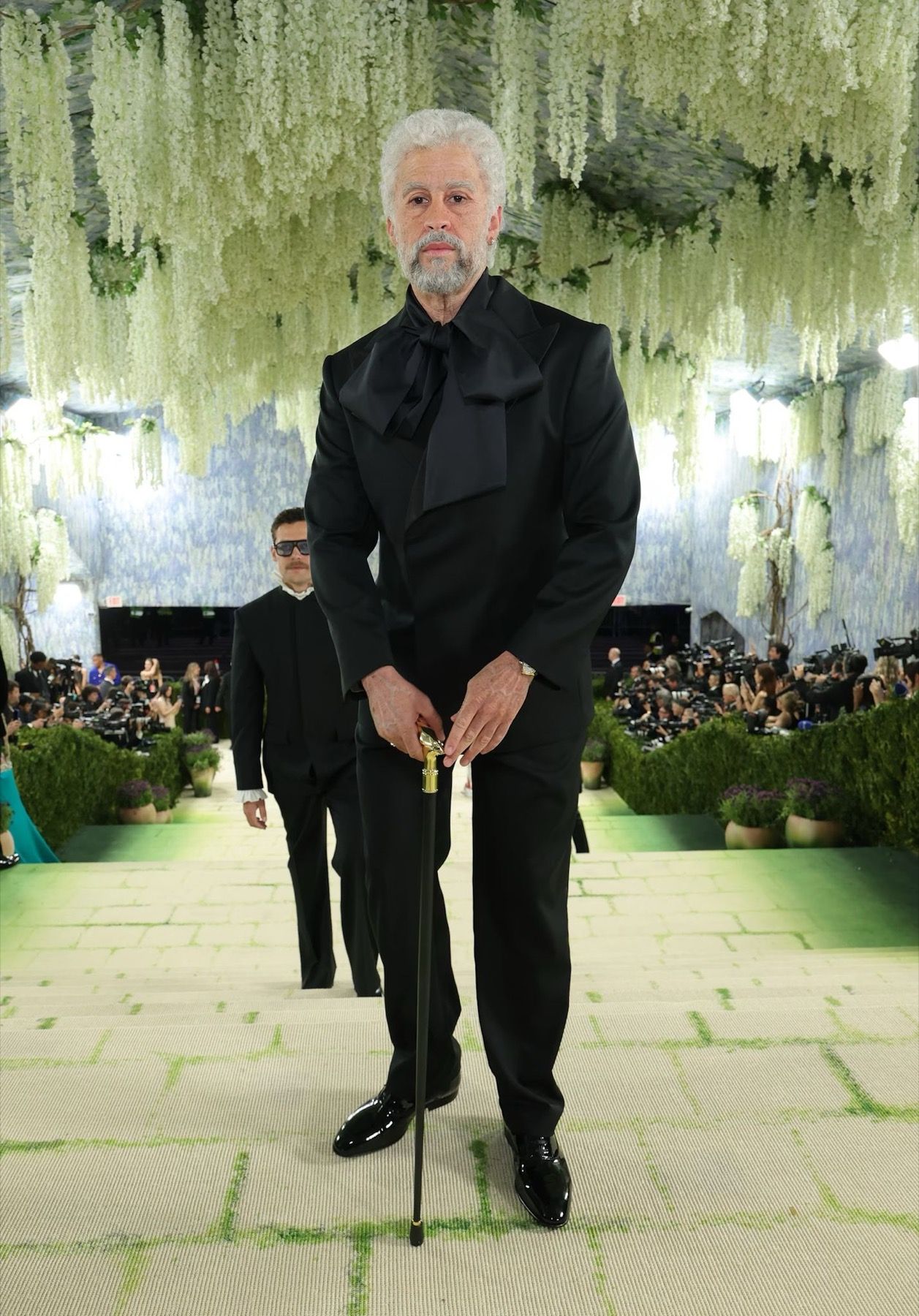
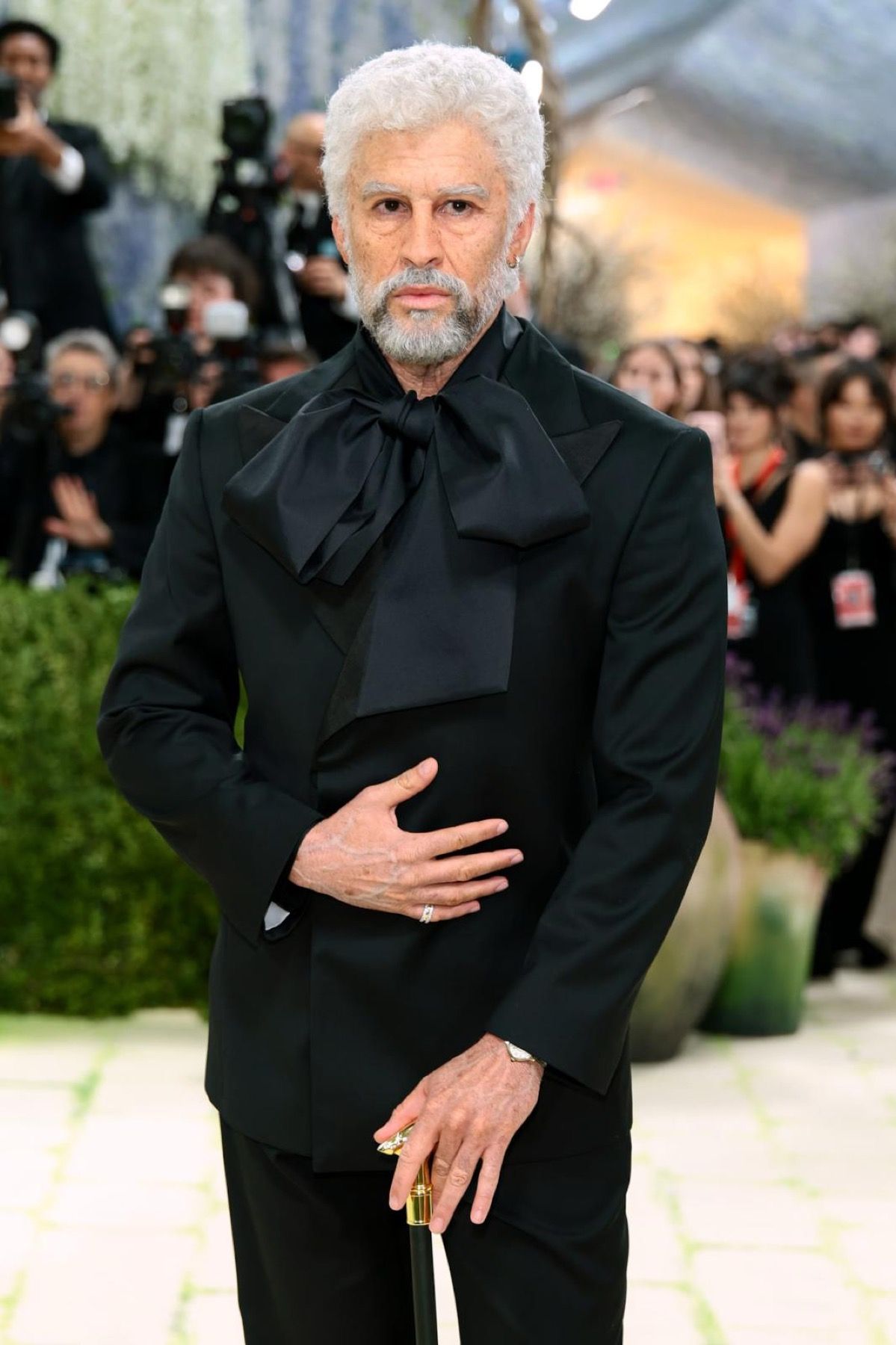
For some, the choice of the lavallière was far too minimalist or even “lazy” in relation to the Fashion Is Art theme, while for others it was perfectly on point: it was Storrie’s own body, in its sculptural perfection, that became the artwork itself. And while whispers circulated through the fashion system suggesting that the striptease had not been planned, the moment confirmed how the lavallière remains a garment capable of turning the male body into a territory of discussion. Storrie was not the only one to wear the piece at this year’s Met: Bad Bunny also embraced the scarf blouse, though in a far more restrained way, emphasizing its retro charm. Thanks to prosthetic makeup, the Puerto Rican artist appeared twenty years older on the carpet, wearing a tailored suit designed by himself and produced by Zara, referencing Charles James’ 1947 “Bustle” dress.
A few side effects
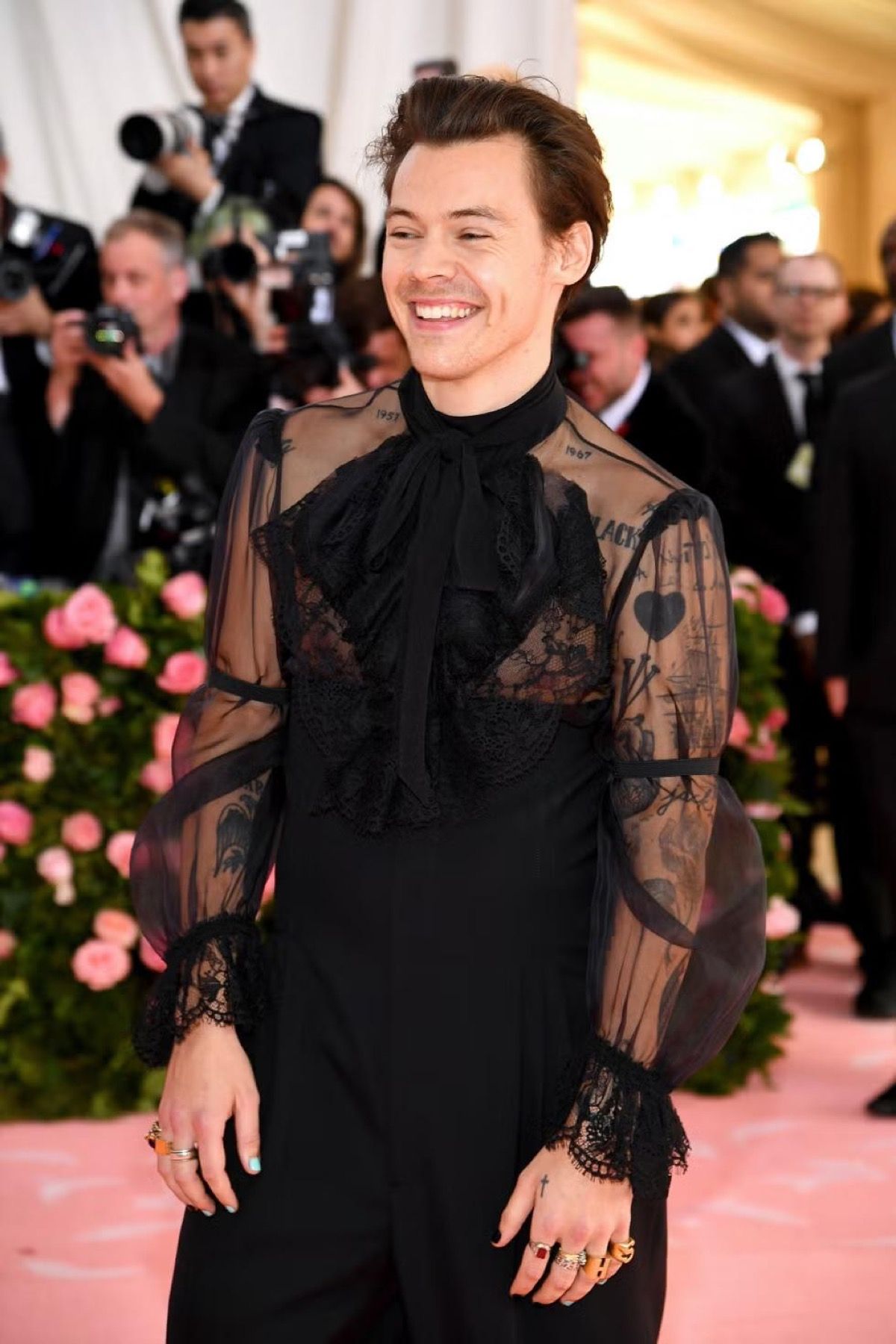
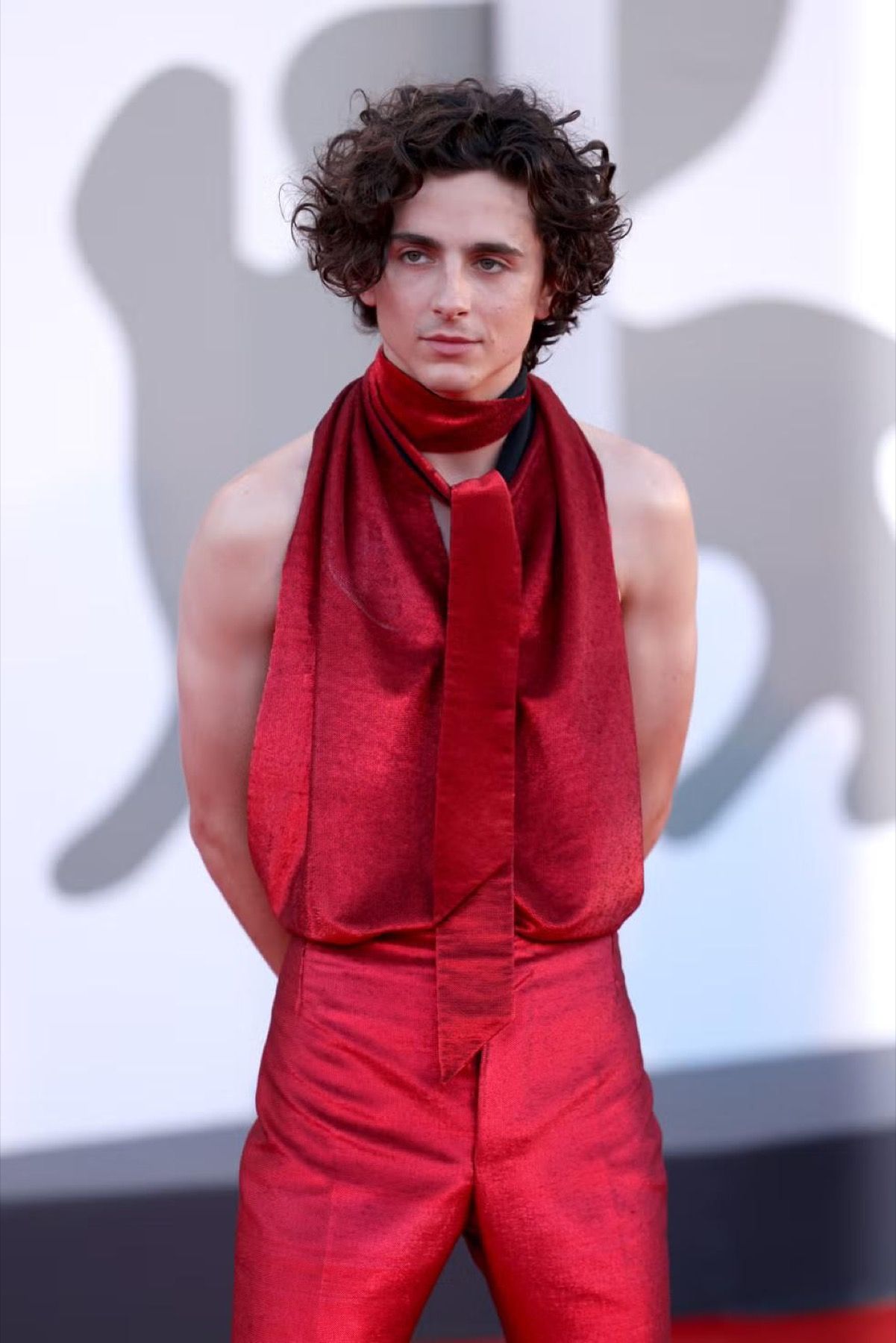
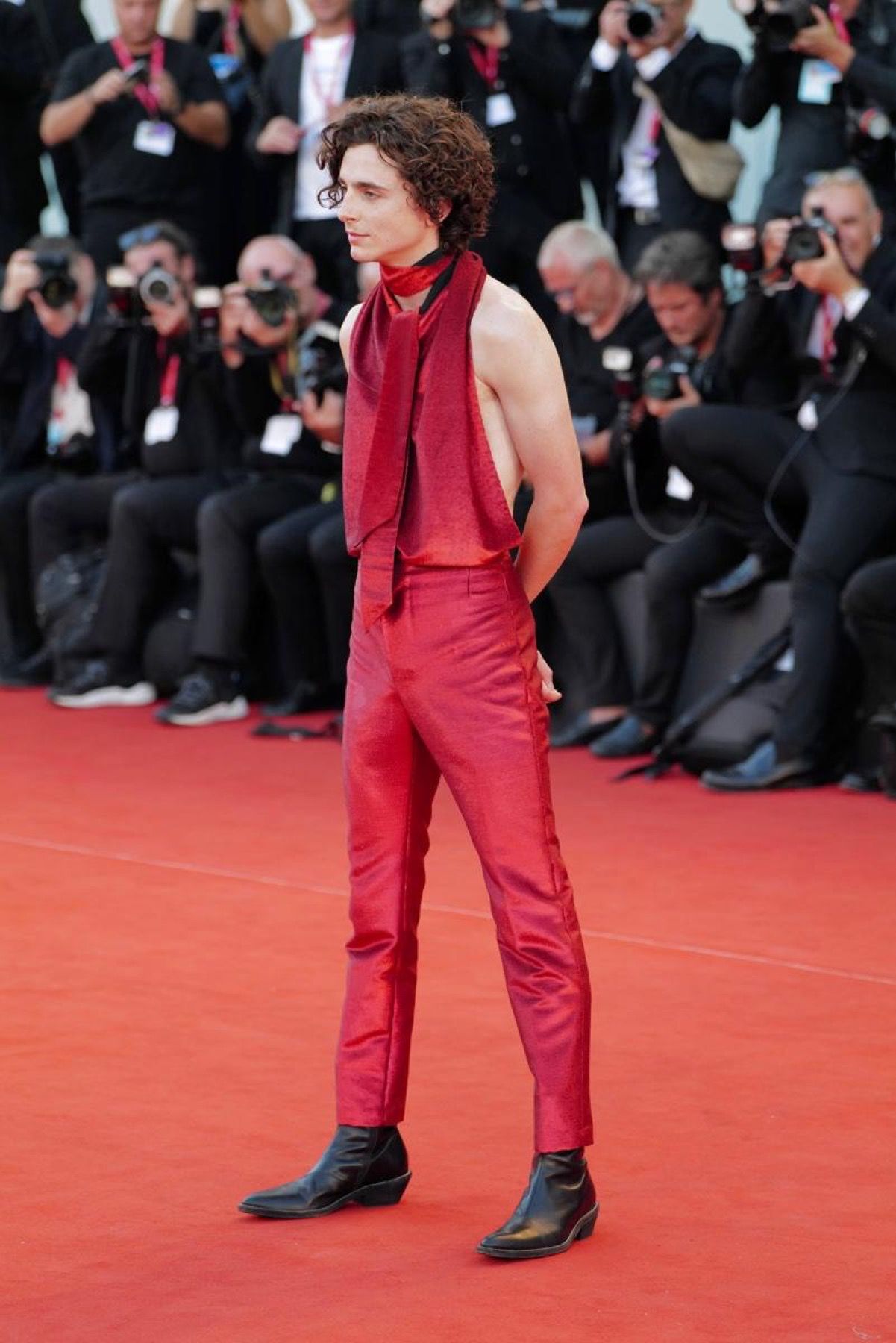
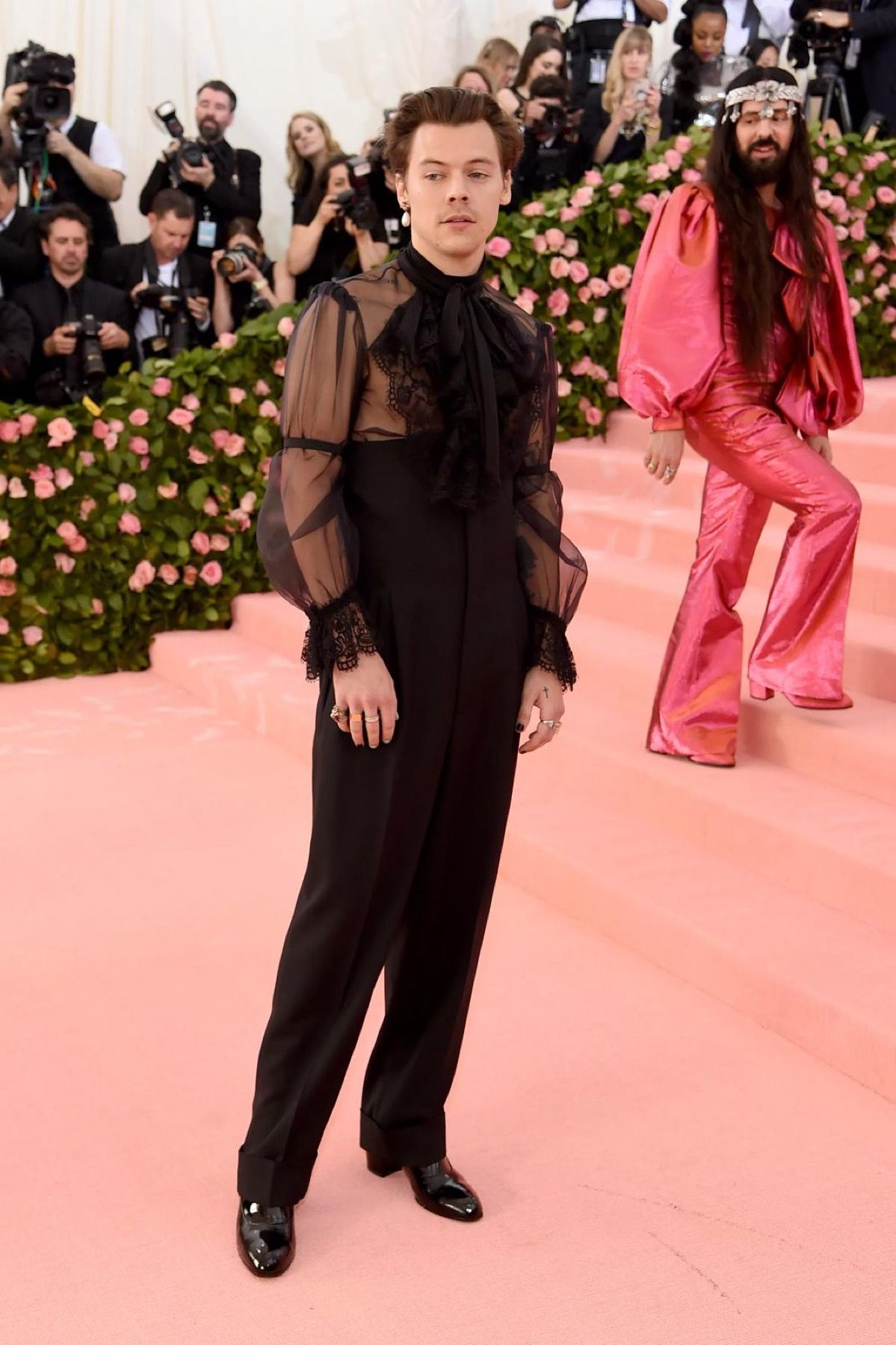
This is not the first time the blouse has stirred controversy at the Met Ball. In 2019, the year of Camp, Harry Styles arrived on the carpet wearing a sheer Gucci blouse designed by Alessandro Michele. That lavallière, styled with a pearl earring and an almost Renaissance-like attitude, sparked intense debate: while some celebrated it as an ode to a freer masculinity, others exposed the singer to harsh accusations of queerbaiting. A few years later, Timothée Chalamet experienced a similar reaction when, during the 2022 Venice Film Festival, he appeared on the carpet wearing a red lavallière designed by Haider Ackermann. Chalamet’s bare back divided opinion drastically: some dismissed the outfit as an inappropriate display lacking the decorum expected of the Festival, while others praised its avant-garde intention.
Naturally, you do not need Connor Storrie’s biceps to surrender to the charm of the lavallière. Beyond the dramatic reveals of the Met Gala, fashion TikTok has already crowned it the heir to the necktie: all it takes is a deep dive through Vinted to uncover vintage lavallières by Celine or Saint Laurent, ready to be worn and knotted, continuing in the present that game of knots and forms that began centuries ago in Versailles.