





























Gen Z isn't afraid to take to the streets It has been some time since a generation this defiant emerged
When it comes to countries like France, where youth riots are one of the region’s strongest stereotypes, protests are not such big news. But when all young people around the world, from Nepal to Peru and from Italy to Madagascar, take to the streets to demand their rights and protect those of the voiceless, it becomes impossible to ignore. The images and videos of the marches for Palestine in recent days have broken through the algorithmic wall, reaching even the phones of those who had turned away all these months. Last night, cities such as Milan, Naples, and Turin lit up in green, red, and black in support of the Global Sumud Flotilla and all the vessels carrying humanitarian aid heading to Gaza, with chants and laments led by very young voices. But the «Gen Z protests», as they have been named in Nepal, are not only about the protection of Palestinian land.
Gen Z is the international name of the protesters
Arrested Moroccan protesters from #GenZ212 movement, taking selfie from a police van.
— Omar Radi (@OmarRADI) September 29, 2025
Best selfie ever.#Freealltheprisoners pic.twitter.com/laobbrLPVS
After the Bangladesh riots of summer 2024 against Prime Minister Sheikh Hasina, clashes and tensions between Generation Z youth protesters and law enforcement were also seen in countries such as Nepal, Kenya, and the Philippines. Platforms like Discord, TikTok, and Telegram serve as the main spaces for organization and discussion, but the uprisings of the new generation no longer ignite only online as people were always led to believe, and young protesters worldwide are not afraid to use the word Gen Z to identify themselves. In Morocco, young people protesting in Marrakech, Rabat, Tangier, and Casablanca for an end to corruption, better public healthcare, and more rights have gathered under the label GenZ212, while in Nepal, during protests against the government, posters and banners repeated “gen z against corruption and nepotism.”
Peaceful and revolutionary protests
In recent weeks, Gen Z has taken to the streets in many countries. While in Europe the countries most involved in the Palestinian cause (Italy, France, and Great Britain above all) continue to show their support through general protests, sit-ins, and street takeovers in a peaceful manner — even though the press often portrays it differently — in other countries such as Madagascar, Morocco, and Peru young people are demanding their rights through genuine revolutionary uprisings that spare no one. Images of the Parliament and homes of some Nepali political officials being set on fire went viral, while in recent days, in Peru, youth protests in Lima against the pension reform — which forces adults to join a pension fund — turned into real violence, also due to the harsh and disproportionate repression by law enforcement against the protesters.
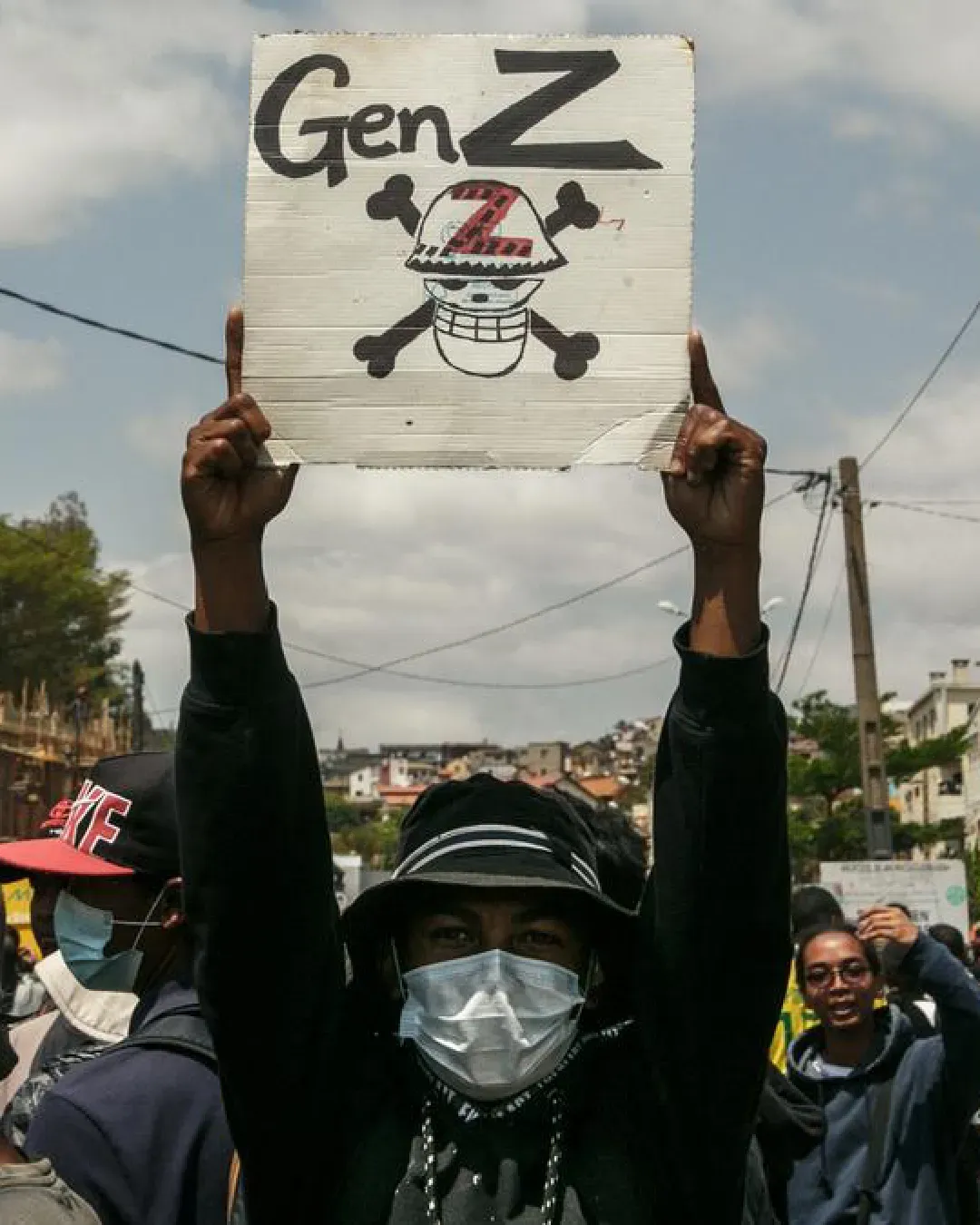
The One Piece flag becomes a Gen Z icon
Nepal, Indonesia, Philippines and now Peru. The meaning of the One Piece flag has resonated across the world.
— Kapitan Kidlat (@kapitankidlat24) September 29, 2025
A symbol of liberation! #OnePiece pic.twitter.com/mzhdpyvMYz
The Gen Z protests that are erupting in countries far from each other are made up of different associations, often not even led by a single leader or specific team, but they all share the same goals: denouncing corrupt governments and repression, restoring basic necessities to citizens (such as water and electricity, which have been lacking in Madagascar, or public healthcare in Morocco), and reducing economic inequalities that divide those in power from the average population. Young people occupying stations, universities, squares, and streets of major world cities also seem to have already chosen an icon to recognize themselves in: the One Piece flag. If years ago in Thailand the three-finger salute from Hunger Games was taken as inspiration, today the preferred symbol of the new generations of protesters is the skull with the hat from the Japanese anime. The first time it appeared at a protest was in 2023, during pro-Palestinian marches in Indonesia and Great Britain, but today the flag belongs to everyone, also seen in Nepal, Indonesia, and the Philippines.
A generation changing politics
@rijawan61 Gen Z protest in Nepal #protest #Gen Z protest #creatorsearchinsights #nepalnews @A R Y A N @Babu Pandey @Mr.Smile @Dhiraj Chand Thakuri sonido original -
For years, Gen Z has been at the center of debates that mocked it, ridiculed it as too superficial, too egocentric, and too attached to their phones. The revolutionary movements and peaceful demonstrations that are taking place in every corner of the world are proof that, instead, the strong digital connection with which they grew up and the empathy they developed by observing online the injustices afflicting the world have made them an active generation, tangibly engaged in society not only online. With courage and great organization, Gen Z is proving not only capable of fighting for everyone’s rights but also of achieving them. Proof of this is the election of Nepal’s first female prime minister, Sushila Karki, elected on Discord as head of an interim government until next March.