
Does Milan Fashion Week still work? Fashion shrinks, the city expands: how Fuorimoda was born
On September 22, a new edition of Milan Fashion Week will kick off, an event that today more than ever, despite social media, influencers, and the “inclusive” communication of big brands, keeps its doors shut to the public. Gone are the days when fashion students could sneak into shows to watch presentations by their favorite designers; the front row has become even more unreachable, ruled by ambassadors and K-pop stars armed with security escorts. It’s even said that brands no longer want to invite influencers - the only ones who, until recently, managed to open an honest window into what really happens during the most glamorous event of the year. According to a study by Karla Otto and Lefty, in the SS25 season there was a 75% drop in influencers attending shows and a 21% decrease in the number of social media posts. After years of so-called “democracy” through the opening to social media, the old fashion world has returned to the total worship of A-list celebrities. And the public is still drawn to it, even though resentment is beginning to build.
But how can fashion stand strong if it doesn’t pay attention to what’s happening on the streets, to how people dress and, more broadly, to the reality in which it operates? The exodus of young Italian creatives in the industry toward more hospitable destinations like Paris - where more and more designers are choosing to present their collections - proves that Milanese fashion needs to change its approach. Luckily, the city still has spaces to reclaim: third places that, outside the luxury venues of fashion shows and after-parties, can breathe a different wind: the voices of a new generation waiting to be heard.
Milan Fashion Week has shrunk
In Milan, it’s not only the guest lists for shows that have shrunk. The Italian fashion capital counted only 15 physical shows on the SS26 Men’s calendar and 20 for SS25 Men’s. Paris, meanwhile, hosted 40 shows for SS26 and 44 for SS25. This decline reflects not only the fashion industry’s growing disinterest in Milan, but also how the Italian system is rejecting independent and emerging brands that, over the years, tried to become part of it. Brands of every kind and origin are flying to Paris to show, from New York’s The Row to London-based Kiko Kostadinov, from Copenhagen’s Cecilie Bahnsen to Belgian Meryll Rogge, and even Italy’s own Niccolò Pasqualetti. Paris has always been the most prestigious fashion capital thanks to its history and international character (in short, it attracts more buyers). But what still makes Paris Fashion Week special seems to be the atmosphere created in the city - something Milan is now missing.
Paris, an open city during Fashion Week
Paris, cradle of Haute Couture but also of new and young talents, blooms during Fashion Week. This summer, the French fashion week coincided with the opening of a wealth of exhibitions and public activations, designed to make fashion a shared, not exclusive, asset. From the Charles Frederick Worth exhibition at the Petit Palais to “Balenciaga by Demna”, the retrospective on the Georgian designer’s work before his departure from the maison, there were plenty of opportunities for enthusiasts and the curious to peek into the world of fashion. For the upcoming October shows, the city also plans to host the first European exhibition entirely dedicated to Virgil Abloh, Paris’ dedication to new generations. In Milan, on the other hand, perhaps the only retrospective likely to attract fashion fans this September is the Armani Privé exhibition at Armani Silos, celebrating 20 years of the couture line, yet it opened back in May.
And what about Design Week?
While Milanese fashion struggles to keep up with Paris, the same cannot be said for design. In 2024, Design Week generated a total public expenditure of 260 million euros, compared to Paris’s 145 million. This year, the Milan event reached even higher numbers: 300,000 visitors at Salone del Mobile, 660,000 at Fuorisalone (bringing the total close to a million), and overall visitor spending of 278 million euros. Since its spontaneous birth in the 1980s and its official establishment in 1991 with the Interni magazine guide, Fuorisalone has become Milan’s most anticipated event of the year: a week in which, while design professionals head to Rho Fiera, citizens and international visitors enjoy exhibitions, presentations, and parties across the city center. In 2025, Fuorisalone counted 1,650 events, stealing the spotlight from its “big brother” and establishing itself as the true banner of civic participation.
@nssmagazine As with every Design Week, the main goal for most attendees seems to be collecting as many free gadgets as possible. Last year it was Zegna and Saint Laurent tote bags; this year, Etro stools and Loewe’s shoulder-strapped magazine. What do you think? #designweek #milandesignweek #milanodesignweek #mdw #mdw2025 #etro #vinted #loewe WEIGHTLESS! - femtanyl
The impact of Fuorisalone on Milan goes far beyond revenue. Over the years, entire neighbourhoods have been revitalised thanks to Design Week, such as Porta Nuova and Porta Volta, enhanced through the Innovation Design District (IDD) project. Not to mention the Porta Genova Design District, with Tortona Rocks as its emblem, or the Brera Design District, which since 2009 has even attracted design brands that once preferred the Rho Fiera venue. The popularity of Design Week has also drawn countless fashion brands into the event - one memorable case being an Etro stool resold online for hundreds of euros - transforming the event into a new kind of Fashion Week: more open, more widespread, more integrated with the city. Today, Design Week represents what Milan Fashion Week could have become, if fashion had learned to listen to its public.
Fuorimoda is born with Milan and youth at the center
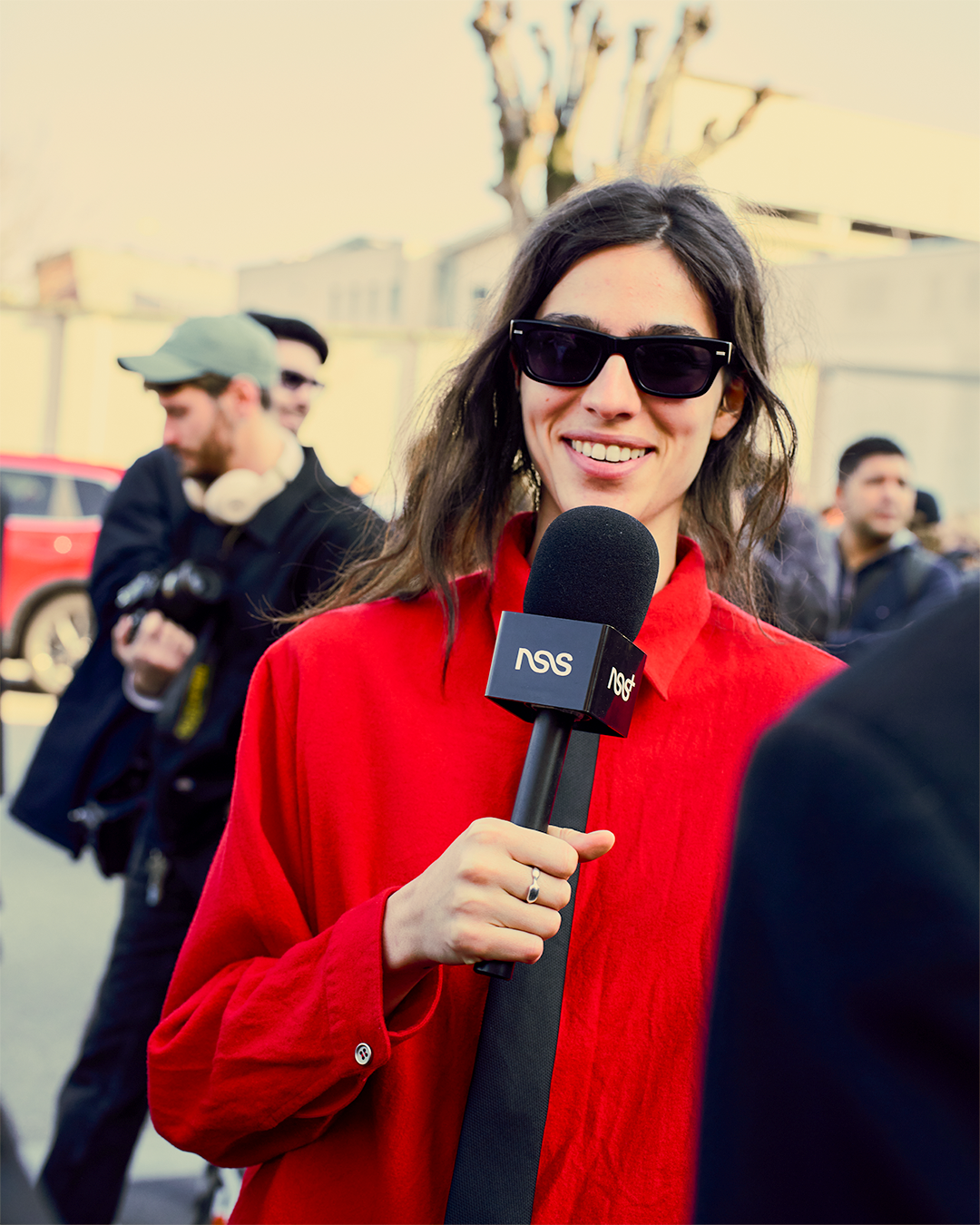
Like Fuorisalone, which energises Milan’s neighbourhoods by involving citizens and tourists, Fuorimoda is born to overturn the exclusive logic of the glossiest week of the year and finally make it accessible to everyone. With an open, integrative model free from predefined schemes, Fuorimoda is an invitation to look beyond the classic idea of Fashion Week and its runways, to reconnect the industry with the city that helped it grow. From September 22 and throughout Fashion Week, nss edicola in Piazza Bruno Buozzi will once again become the gathering spot for the nss community, with a program combining entertainment and debate through screenings, parties, moments of sharing, and the launch of a dedicated capsule.
Fuorimoda opens the doors of an exclusive event like Fashion Week to reignite the passion that has fueled Milan over the years. Only through sharing and dialogue can true innovation happen. That’s why younger generations will be the protagonists of the entire event. More real, more authentic, more participatory: this is Fuorimoda’s manifesto, which, with an alternative schedule to the institutional one, aims to rewrite the rules of a system too closed in on itself. With the collaboration of creatives from the fashion industry, a new atmosphere will emerge. After all, for fashion to thrive, it needs to return to the streets and listen to the needs of its consumers.