
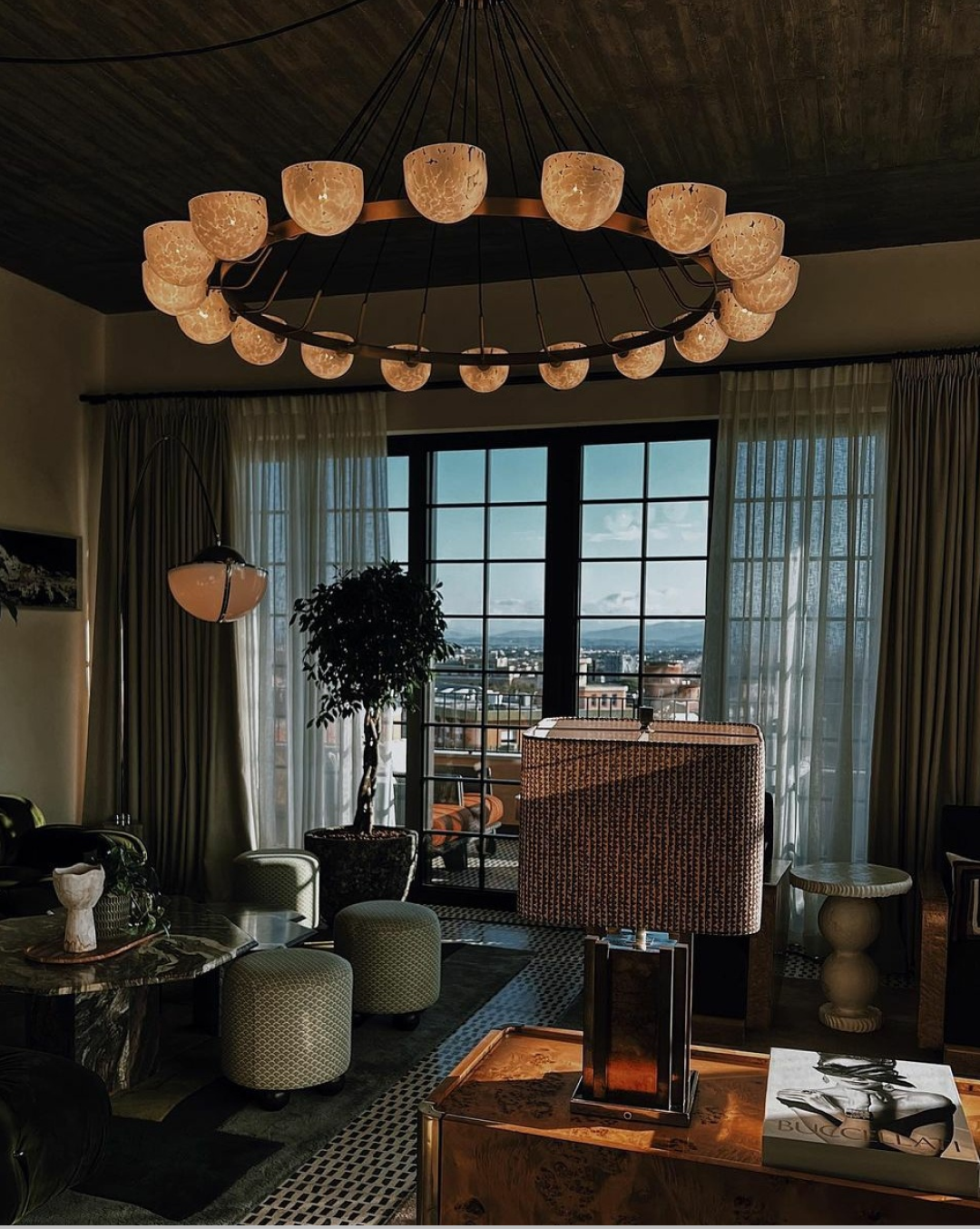
Why haven't The Core and Soho House opened in Milan yet? Pre-Covid openings continue to be postponed, while doubts grow that the city's future lies in less exclusive spaces
Exclusivity works according to a law of subtraction: the more people are kept out, the more special those on the inside feel. It is an ancient and cross-cutting logic that, over time, has found one of its most structured expressions in private clubs, from the gentlemen’s clubs of 18th-century England to the aristocratic and upper-bourgeois circles of Italy. In Italy, there are still around twenty exclusive clubs, such as the Circolo della Caccia at Palazzo Borghese in Rome; the Società del Whist in Turin, co-founded by Cavour in 1841; and the Circolo dell’Unione, the Clubino, and the Società del Giardino in Milan.
In recent years, the landscape has expanded with hybrid and more inclusive formats (women are now allowed in) such as Casa Cipriani, Aethos Club, and The Wilde. It is within this context that two international giants announced their arrival in Milan. The Core and Soho House are different projects, yet they share common traits such as exclusivity and the promise, so far unfulfilled, of opening in the city. What is really holding back their Milanese openings?
The Core and a seven-year odyssey
According to an investigation by Milano Today, the club’s opening was originally scheduled for 2020, yet as of January 2026 nothing has materialized. Construction resumed in October 2024 with the entry of new partners and is expected to conclude with a seven-year delay compared to the initial plans: the end of works is scheduled for March 2027, with the opening set for the summer.
But what is The Core? The project was founded in Manhattan in 2005 by Jennie and Dangene Enterprise, who aimed to create the most exclusive club in the world. The Core quickly climbed the global rankings, with extremely long waiting lists and membership fees of $50,000. In 2019, however, the two founders chose Milan as the second location after New York, perhaps driven by the appeal the city holds for the international elite.
The address is Corso Matteotti 14, just steps from San Babila, inside a historic building of roughly 4,000 square meters leased for the project. According to Milano Today, based on financial statements, The Core Milan company, controlled by a Delaware holding, incurs annual management costs of €1,755,000 for the building. For now, the project is only visible through the renders available on the website and envisions five floors featuring restaurants, private dining rooms, a wine gallery, a culinary laboratory, a regenerative and longevity medicine clinic, a beauty center, a gym, a theater, a library, event spaces, suites, and panoramic terraces.
Soho House, from the Brera project to the former Cinema Arti
The other major international club that has promised an opening in Milan is Soho House. Founded in 1995 in London by Nick Jones as a small private club for artists and actors, the brand has since expanded to over 40 cities worldwide, guided by a philosophy of creating welcoming spaces for creatives and one golden rule: phones are banned in common areas.
The Milan project was first announced back in 2018, with an initial location planned at via Brera 19, opposite the Pinacoteca, but that idea collapsed after years of inertia. In June 2024, an official announcement confirmed a new location in the former Cinema Arti building, situated between Piazza San Babila and Corso Indipendenza, close to via Montenapoleone. Yet even for Soho House Milan, works have been stalled ever since, with a possible opening in 2026.
Exclusivity as a problem
too many thing popping up claiming to be a “third space” but having costs associated with the space/club?
— (@koezi_) September 11, 2024
that’s literally not a third space
Both projects appear to be stuck amid bureaucratic procedures, difficulties in restoring protected historic buildings, and complex real estate negotiations, yet it ultimately seems to be only a matter of time. Still, these delays may prompt reflection on whether a more inclusive alternative, within the redevelopment of urban spaces, might be the right choice. Historic clubs were founded on the exclusion of women, and many continue to do so. The new generation of members' clubs instead present themselves as spaces open to any gender and orientation, yet they filter access based on other parameters, replacing gender discrimination with elitism.
A city needs theaters, museums, cultural centers, concert venues, and imperfect places that are often underfunded but open. And perhaps, in the end, this is precisely what is increasingly missing from a city that continues to chase an international model, forgetting that true cultural wealth is built when it is shared, not when it is fenced off. Construction sites that fail to open could, paradoxically, become an opportunity to rethink what kind of spaces we really want.