


















How to become show designer In conversation with Etienne Russo, Harriet Cuddeford and Fabio Cherstich
In Yves Saint Laurent, the 2014 film directed by Jalil Lespert, it is portrayed with great accuracy how fashion shows worked before they became spectacles. Inside the ateliers of Dior, in Paris, the new creative director (even though this term was not yet in use) Saint Laurent finalises the looks of the new collection before presenting them to the press and potential buyers. No set design, no lighting effects: just a few people gathered around a runway only a few meters long, watching the models walk while holding the number corresponding to the look they were wearing. Since then, things have changed considerably.
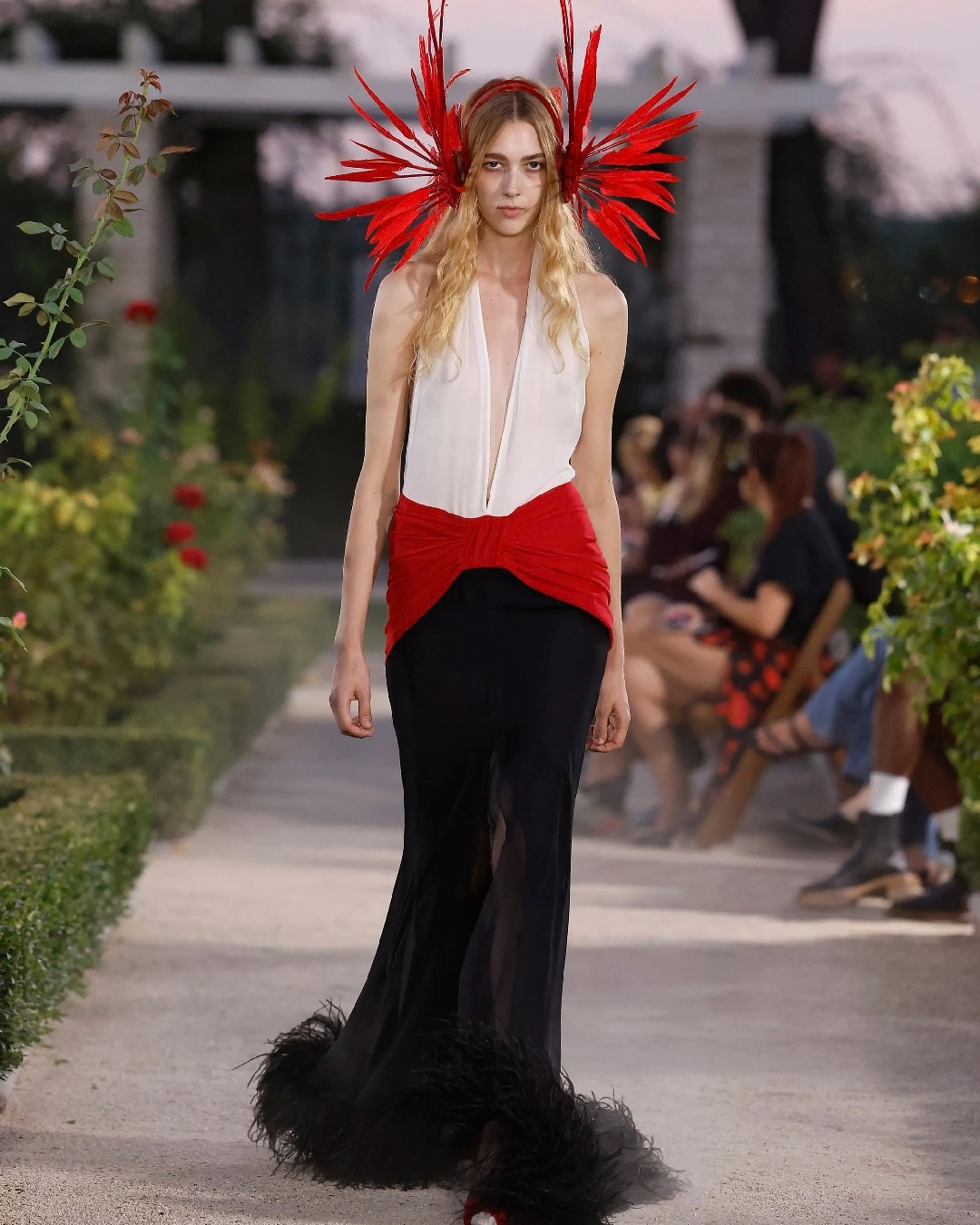
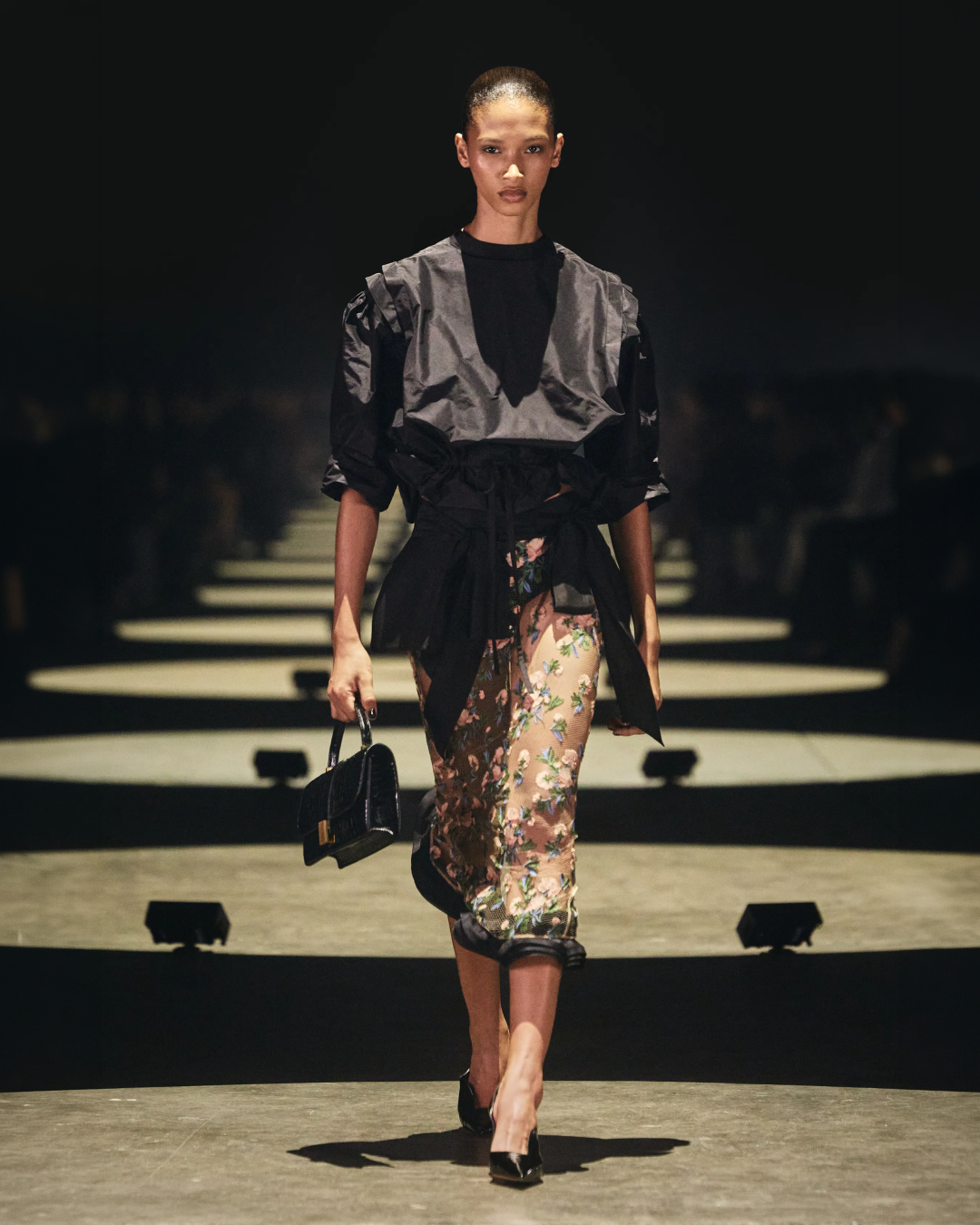
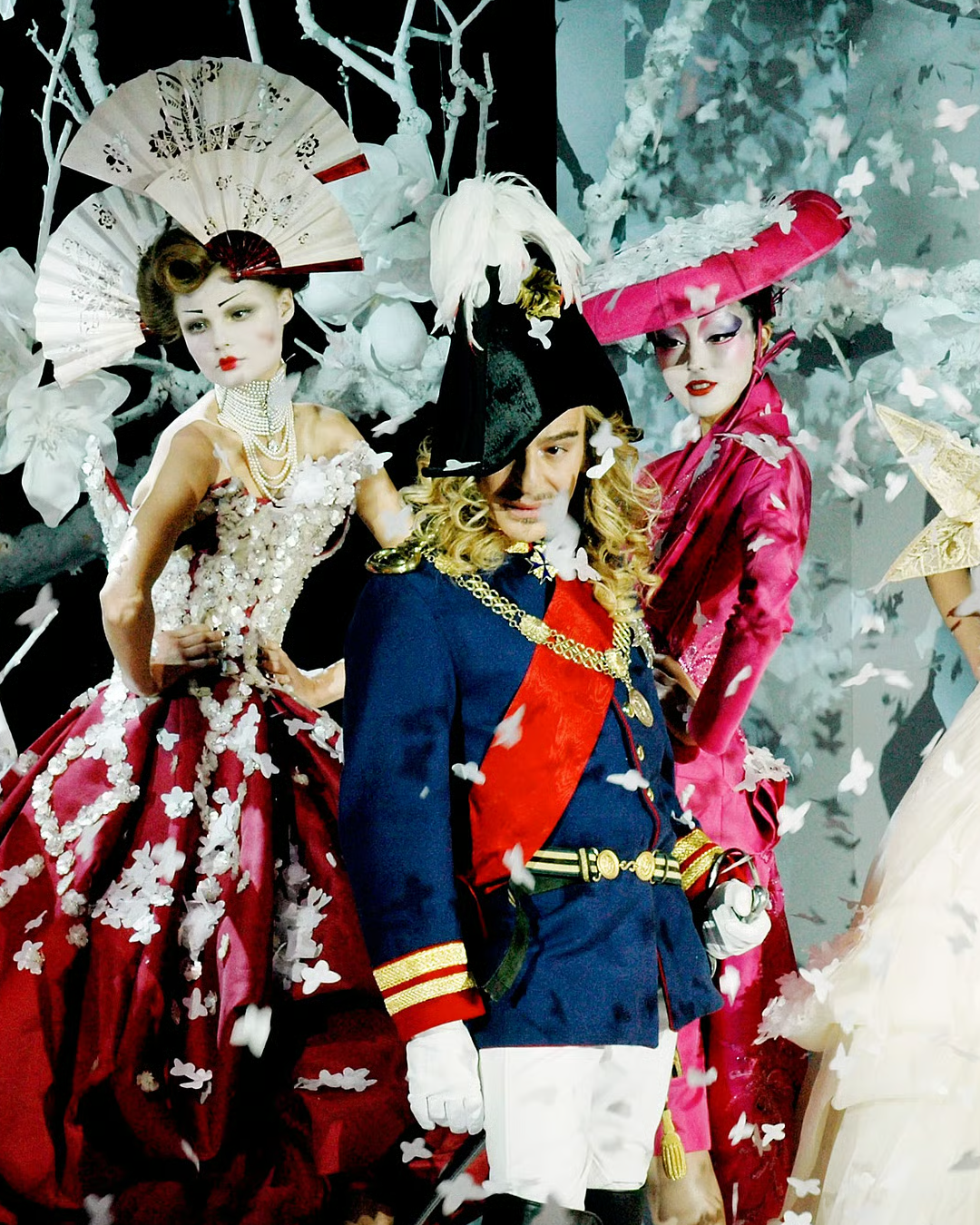
The concept of the fashion show arrived in the fashion capitals only later, with the birth of the Fashion Weeks (New York, London, Milan, and Paris) and the development of an ecosystem of brands and Maisons that, in order to stand out amid the growing number of new labels, had to refine the experience by adding distinctive stylistic touches. As often happens, the pioneers of this new way of staging runway shows were independent designers, those farthest from traditional luxury, such as Martin Margiela, Alexander McQueen, Franco Moschino, Fiorucci, as well as Thierry Mugler, Vivienne Westwood, Jean Paul Gaultier, and John Galliano. Thanks to the success of these designers, even the more conservative side of fashion realised that runway shows could be an integral part of a collection, contribute to the brand’s imagery, and expand its media value. But a show, to be successful, requires strategy and direction, qualities that today can be found in the role of the show designer.
But what exactly does a show designer do? How is a large-scale artistic event created, coordinating all the people who contribute to its realisation? In past editions of How You Become, we learned that no one in the fashion industry is an island, and often a single title hides a myriad of other roles that go unnoticed. For this reason, we spoke with creative directors, show producers, art directors, and directors (we’ll stop here, as all the definitions would not fit into one paragraph) who have created some of the most remarkable shows and events of recent years: Etienne Russo, founder of Villa Eugénie, Harriet Cuddeford, the creative director behind Bad Bunny’s iconic Super Bowl halftime show, and Fabio Cherstich, theatre director and art director.
Together with Russo, Cuddeford, and Cherstich, we attempted to create an identikit of the show designer and producer, ultimately discovering that the profession has a thousand faces - and needs a thousand more.
Etienne Russo, Founder of Villa Eugénie
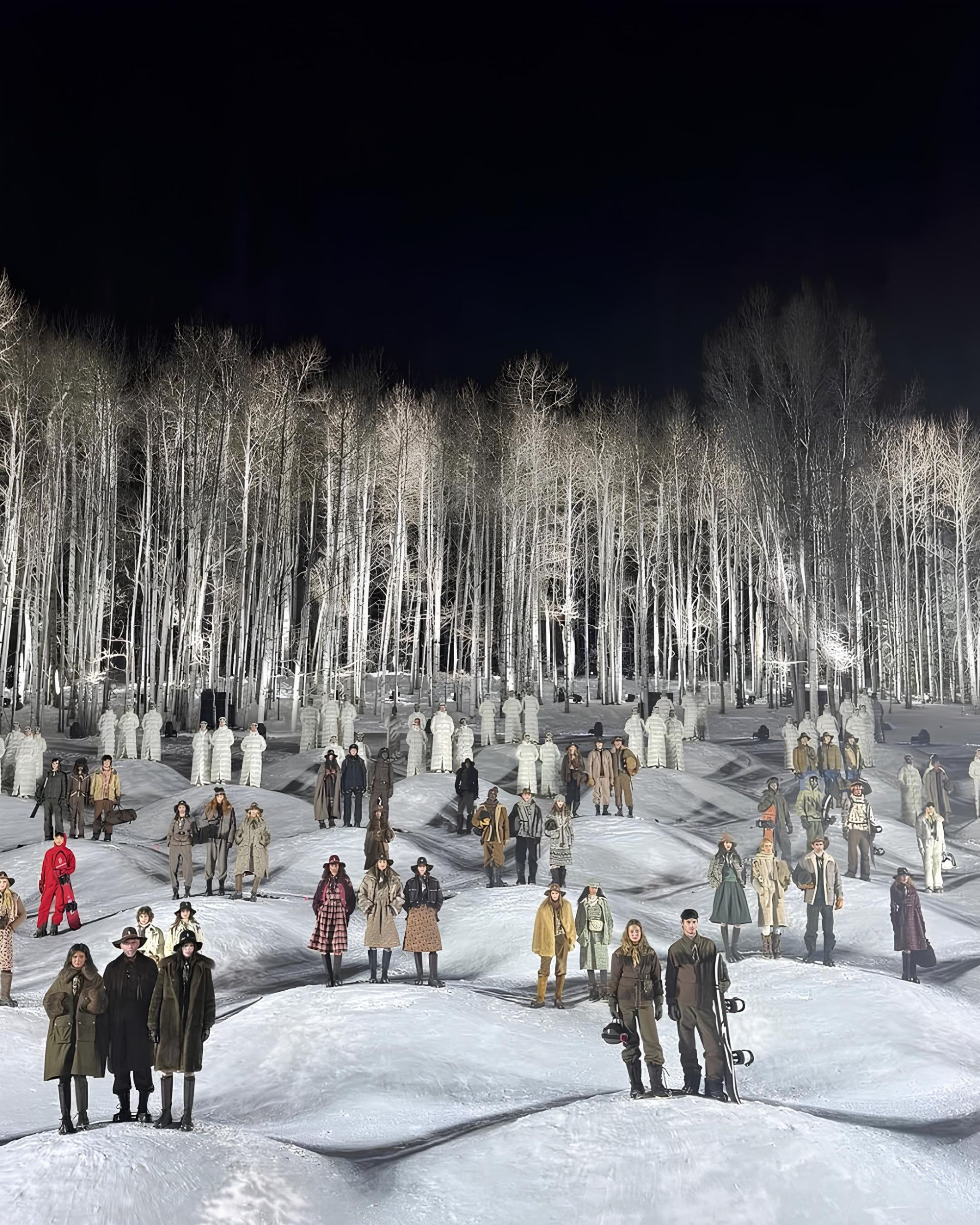
Summarising Etienne Russo’s work in a few lines is no easy task. Over more than thirty years, his agency, Villa Eugénie, has produced iconic shows, from Dries Van Noten’s Paris Fashion Week debut to Karl Lagerfeld’s Chanel Haute Couture presentations. From Dior’s mechanical gardens to Moncler’s snowy high-altitude landscapes, Miu Miu’s beaches, and Maison Margiela’s tents labyrinths, Villa Eugénie has done it all - driven, Russo says, by a single quality: obsession.
He explains that he constantly asks his collaborators to pursue research: not the social media kind that traps users in repetitive loops, but tangible, paper-based exploration. In the early years, Russo fondly recalls spending entire days after Fashion Month with his sole creative assistant, gathering books and spending entire days highlighting colors, lights, and details for future use. «Maybe it sounds old fashioned,» he admits, «but that to me was fantastic.»
Obsession and research continue to guide Villa Eugénie’s success. While the shows and events last only twenty minutes or a single evening, each project aims to create moments that can last a lifetime. Russo emphasises that show production is a chain in which every link is essential, especially the invisible ones.
What has been the key quality of Villa Eugénie that has made it one of the most successful companies in the industry?
Obsession, research and emotion. I approach production almost like a movie, where everything unfolds at the right moment. We have to think about space, sound, light, audience, attention: I don't call it decoration, it’s more of an immersion and it has to be as rigorous as possible, almost surgical. And instinct for me is extremely important. I think all of that has built our credibility. Our clients - or as I call them, our partners - know that we lever no drama, just intensity. That’s it.
What qualities do you look for in a potential collaborator at Villa Eugénie?
He or she must think out of the box and have no fear for the unknown. I'm looking for people that resemble us, that have the same flame inside of them that pushes them to do something they never did. It is kind of difficult now, because everybody today has Instagram, Pinterest and all of that, where they receive the same information. So I'm pushing people to go back to books, to go see movies, art exhibitions, to open their eyes and their minds. Integrity is also extremely important.
@moncler Moncler Grenoble unveils its future heritage among the Rocky Mountains, where performance meets style. #MonclerGrenoble #Aspen audio originale - MONCLER
How do you translate an artist’s or creative director’s vision into a physical event?
First of all, I listen more than I speak. It’s a bit weird what I’m going to say, but when we have a new client what we try to do is have the same definition of the word “normal”, just to make sure we are speaking the same language. And from show to show, from event to event, we develop a common sense, a communication that’s been based on the thing that you’ve been creating from moment one. Sometimes an artist can have a mood, a memory, a word, which we have to decode without betraying their sense of direction. Then we break it into physics: materials, acoustics, timing, weight. The translation from idea to structure is delicate, we have to protect the poetry while respecting the gravity of it.
How many people does it take to produce a show at Villa Eugénie? Are there any roles that you believe are undervalued or underrepresented, yet essential to every project?
It can range from 40 to 400 people, depending on the size and where you produce. I think the most undervalued roles are the technical crews: the technical director, the stage manager, the sound engineer, the people who remain invisible when everything works and only become visible when something doesn't. A door opening at the right second, the silence before music starts, these are very fragile moments. Fashion celebrates the visible production, yet it depends on the invisible.
I would like to bow to my teams everywhere. Without them there would be no Villa Eugénie, there would be no Etienne Russo. I may be the person who has the idea, but then it takes tons of people to bring it to reality. Show production is a chain, and everybody has the same value. Of course, some have more responsibilities, but there's no one better than the other.
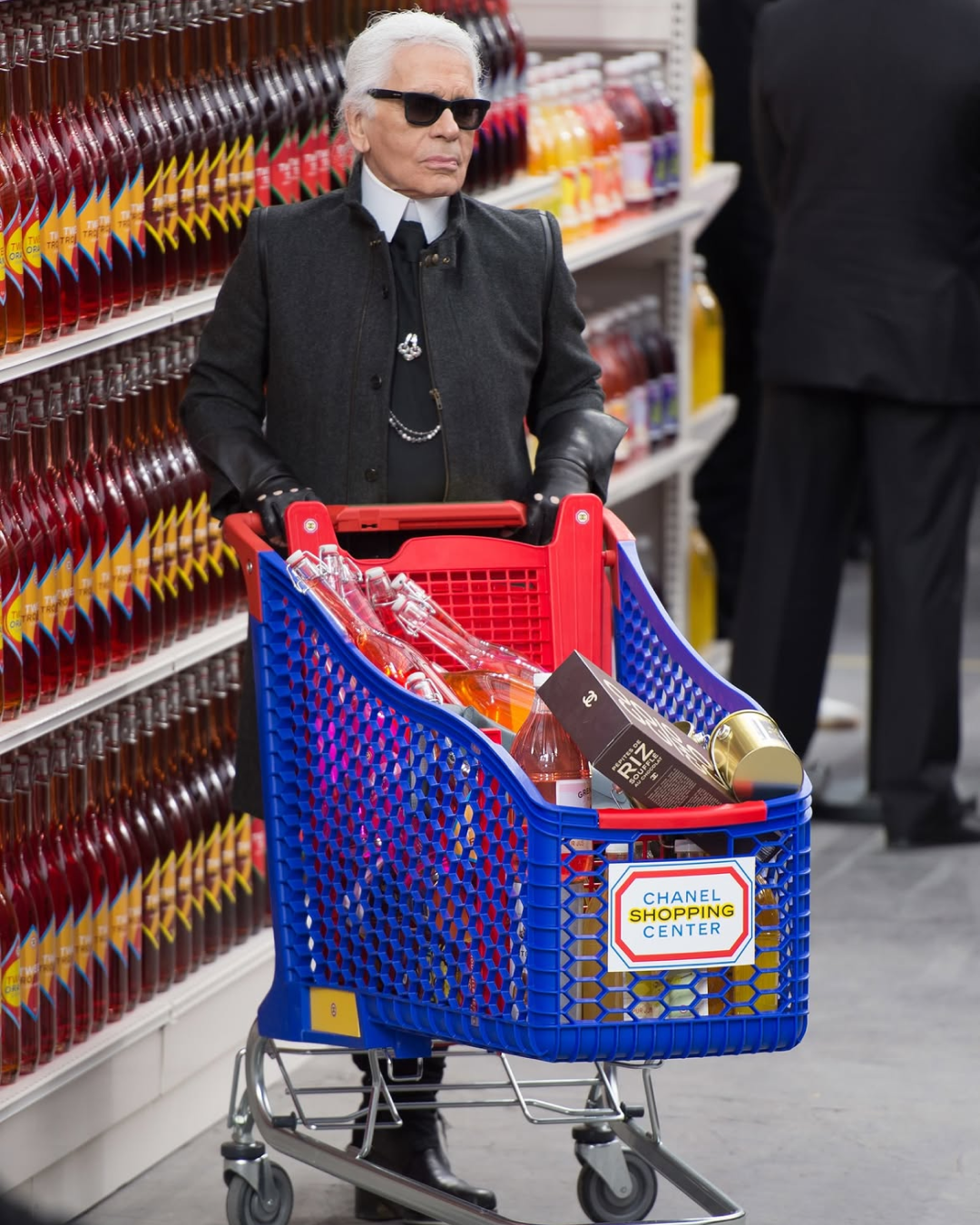
@talktomenice55 Chanel’s Supermarket at Le Grand Palais #chanel #karllagerfeld #fashiontiktok #fitcheck #outfitinspo Long Cool Woman in a Black Dress - The Hollies
What skills should an aspiring show producer or set designer develop in order to grow in today’s industry?
You need resilience, curiosity, and technical knowledge, of course. More importantly, you need to understand culture, music, architecture, lighting, youth, movement, and digital behavior. Shows are no longer isolated moments, they live online, fragmented, replayed. You must accept pressure. This job is not glamorous backstage, believe me. You really have to accept that you will have to work extremely hard, you will have to deal with stress. There are a lot of responsibilities that fall on you, from decision making to time and budget constraints. If you can remain calm when 10,000 people are waiting for something and something goes wrong, then you belong to this industry.
Harriet Cuddeford, creative director
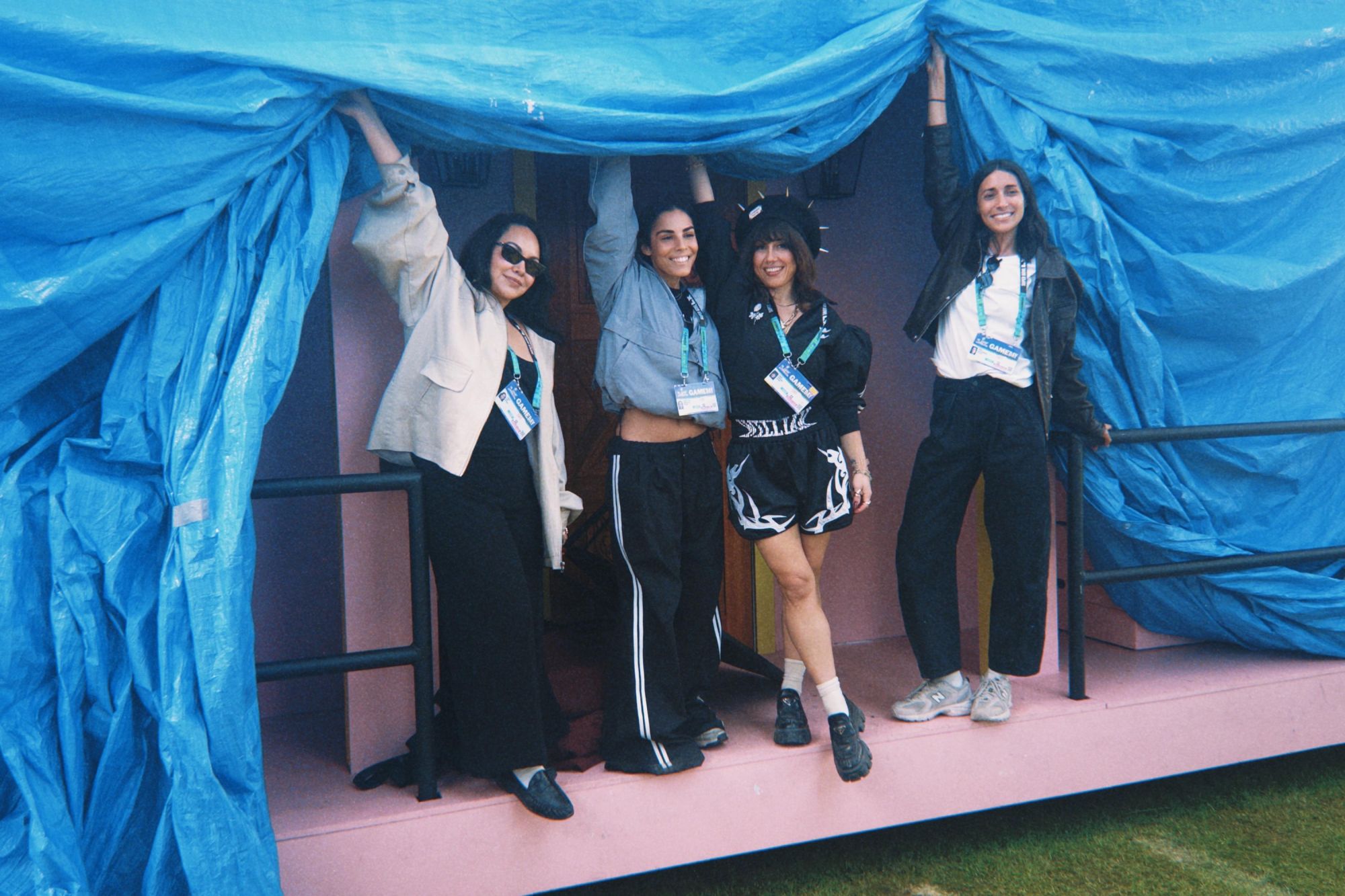
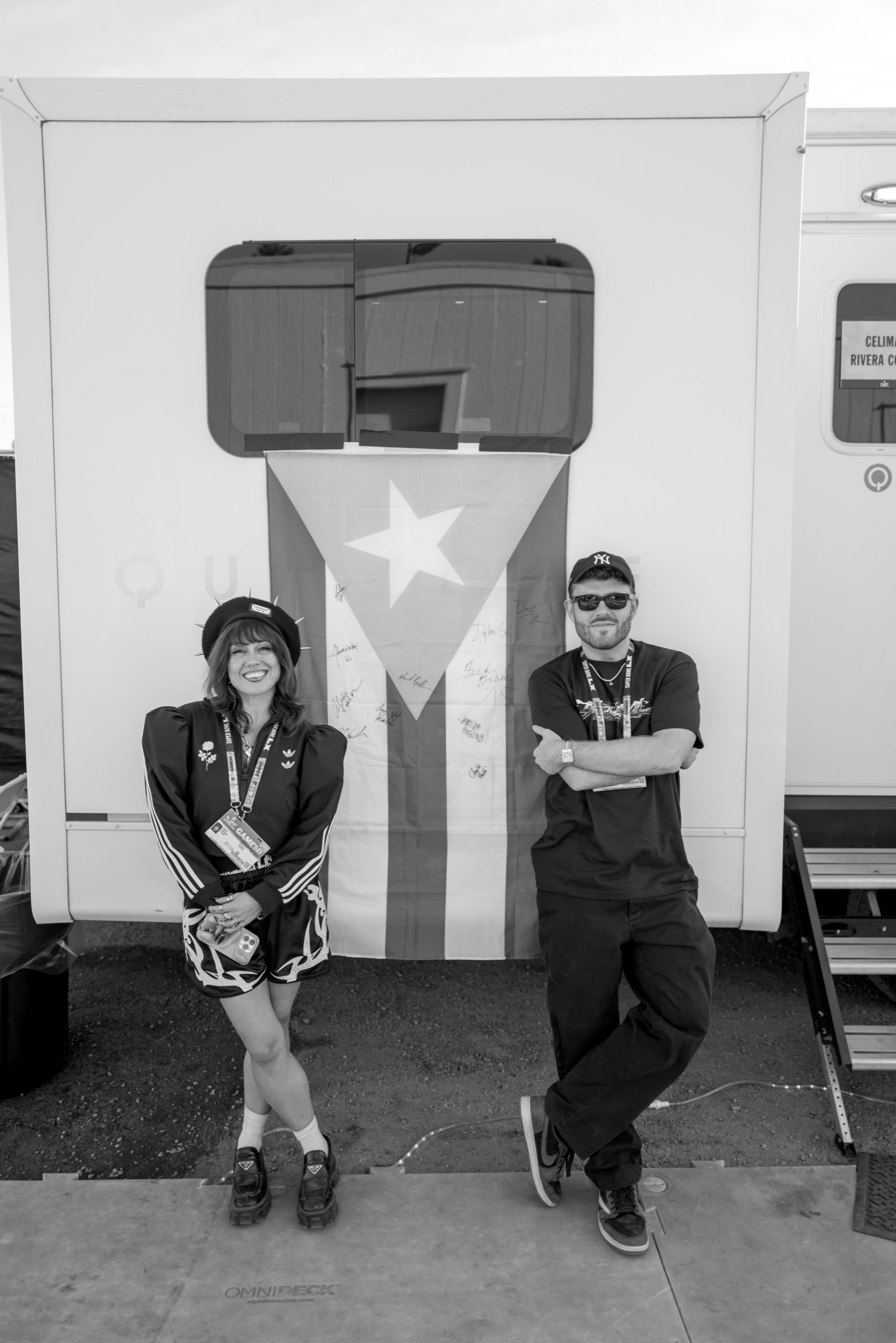
With more than 125 million live viewers, both in the stadium and in front of their TVs, and 106 million views on YouTube, Bad Bunny’s Super Bowl halftime show is one of the most-watched of all time. Featuring direct references to Puerto Rican culture and the contributions of the South American community to the United States, a striking set that transported us straight into the middle of a sugarcane field, and explosive choreography, the Puerto Rican rapper’s show left the world speechless. The result was achieved thanks to Bad Bunny’s collaboration with creative director Harriet Cuddeford, as well as the show design by Yellow Studio and art directors Leticia Leon and Monica Montserrat.
Every single detail of the show was important, from camera placement to the choreography of what are now ironically called the «grass-people,» who literally embodied the set. In just a few months, Cuddeford and her collaborators managed to bring to life in only 13 minutes not just an artistically groundbreaking concert, but one with a strong political message, at a moment when America is really divided in two. It wasn’t a fashion show, nonetheless it's a testament to how much dedication, focus, and collaboration show production requires. «In every single area, we pushed to innovate and create something unlike anything which had come before, which meant we were all learning and iterating all the time, within a time crunch,» Cuddeford told us. In the days following the performance, we had the chance to speak with her about this incredible work.
@nfl BALL SECURITY ON POINT #nfl #superbowl #badbunny #applemusichalftime @Bad Bunny original sound - NFL
What was it like collaborating with an artist like Bad Bunny?
Benito is very creative, he really knows himself, knows what he wants to say and deeply knows what feels right to him. He is also open, kind, respectful , generous and fun, so it was a very expansive and enjoyable process coming up with ideas and creating this. He was on his world tour the entire time, so some of the creative team and I would go and meet with him in person in different countries and discuss ideas, go away and build on them, meet again, until he came to rehearsals and we were in the room together until the show.
One of the most viral details of the show was the «grass-people» forming the stage. Who had that idea and why was it so important for that to happen?
This idea came from a lot of brainstorming between Benito’s team, the BB creative design team and the SB design team. Benito’s incredible production manager, Roly, was instrumental in this. Creatively, we wanted to create a large field of pastizal, as well as having lots of set pieces to house our narrative. With around 8 minutes to set up on the pitch, this was incredibly ambitious. We are hugely grateful to Monique from the SB wardrobe team and KP who managed the logistics and staging of all these people. We are overjoyed that it was a success. The plant people were troopers and did an amazing job.
@joe.devlin21 more grasspeople historys #grasspeople #Badbunny #halftime #superbowl #foryou sonido original - Joe Devlin
What’s the most important quality you need if you want to become a creative director or a show designer working for talents such as Bad Bunny, or events such as the Super Bowl?
There are so many qualities that you need, but I would say that the most important thing you can do is become the most authentic and creative version of yourself. The more I have worked on myself internally, the calmer I have become. The calmer I have become, the clearer a channel I have become for the universe to work through me and as that has happened, the better and bigger the projects and artists I have attracted towards myself.
What advice would you give to a young show and creative director?
The real advice I would give, that I don’t think is said enough, is trying to become very clear about why you want to do this. How do you want to feel? What do you want to create and put out into the world and why? Who do you want to collaborate with and why? How do you want the people who experience your work to feel? How do you want the people you work with to feel?
Fabio Cherstich, regista teatrale e art director
Fabio Cherstich approached the world of fashion out of curiosity. By applying his skills as a theater director to a variety of contexts, he has found creative ground at the intersection of theater, visual arts, design, and fashion. Since 2017, he has overseen art direction and performative activation for projects spanning both Fashion Week and the Salone del Mobile. Some of the brands and agencies that have entrusted Cherstich with direction include Memphis, Gufram, Formafantasma, as well as Jacob Cohën, Hermès, and Saint Laurent. Over the past two years, he has created some of the most experimental projects of his career at Art Basel Paris and two performances for Miu Miu, constructed «as true scenic devices in which clothing, performers, and space interacted.»
As is often the case in show production, an art director needs to surround themselves with visionary and creative collaborators - but above all, with people who are «very, very organized,» Cherstich explains, citing choreographer Riccardo Olivier, set designer Andrea Colombo, stage manager Sunhye Won, and studio manager Francesco Sileo as essential contributors. In this conversation, we explored with the art director how theater and fashion influence each other, and why in this industry there is no single path to success.
What do fashion and theater have in common?
Both create worlds. They work with bodies, space, light, sound, and rhythm. Production timelines and structures differ: theater has long processes and continuous rehearsals, while fashion often condenses everything into much shorter periods. But when the dialogue with the brand is deep, the method is surprisingly close to that of a stage creation. The performances for Miu Miu, for example, were developed with rehearsals, spatial dramaturgy, and work with performers, not very different from a theatrical production.
What qualities are needed to be an art director or set designer?
Vision and practicality. Spatial imagination, a sense of rhythm, teamwork, and the ability to turn an idea into something realizable. It’s a deeply collective job: having a team with whom you share language and taste is essential for tackling complex projects.
How do you reconcile the client’s perspective with your creativity?
Through dialogue and initial clarity. I always try to understand the client’s imagination and build common ground. When trust is established, creativity is not a compromise but a shared construction. The most successful collaborations grow over time, like the one with Arthur Arbesser, which started in 2017 and has continued across theater and fashion.
How do set design and choreography expand a collection’s storytelling?
In the project with Goshka Macuga for Miu Miu, the garments were archival and tied to almost cinematic characters and atmospheres, derived from the Tales and Tellers project, which expanded fashion into a narrative and artistic dimension. In the work with Helen Marten (2024), the costumes were born from direct dialogue between artist, brand, and direction, becoming active elements of the performance. In both cases, it was not about presenting a collection in the traditional sense, but about building an autonomous performative device.
What path would you recommend to someone who wants to do this work?
There is no single path. Studying set design, design, architecture, or visual arts is important, but practical experience is crucial: working in theater, assisting artists, being on sets. I also believe it’s important to understand what makes you unique. In theater and opera, what in fashion is called art direction is called direction. I often define myself as a director loaned to fashion and design: in the end, in any context, my work remains the same - telling stories by constructing spaces, images, and situations in which bodies can inhabit an imaginative world.