































Timothée Chalamet's words may have helped theaters It was an opportunity for publicity in a field that experiences highs and lows
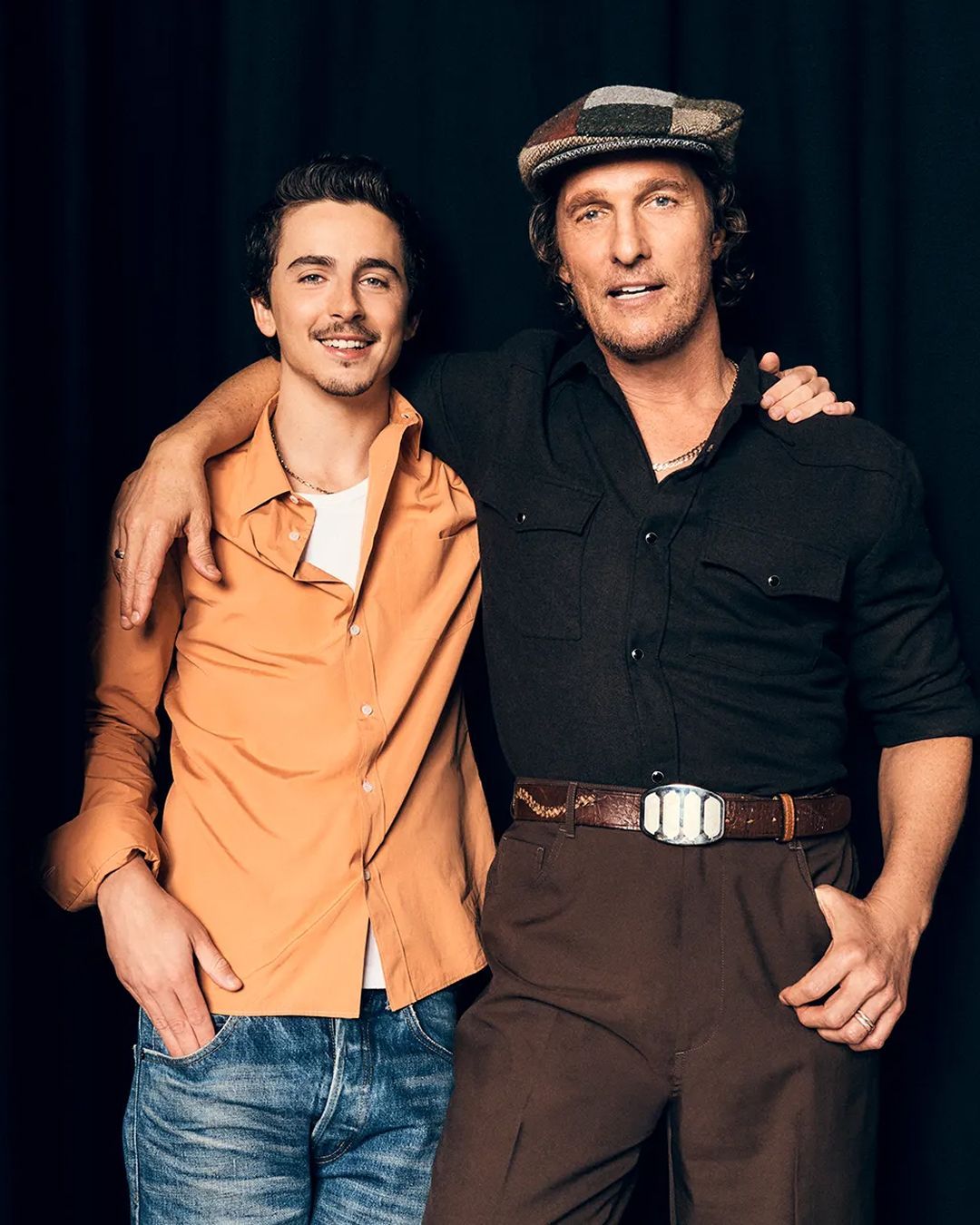
Recently, Timothée Chalamet spoke with actor Matthew McConaughey in front of an audience of students at the Moody College of Communication at the University of Texas at Austin, one of the top public universities in the United States, as part of the Variety & CNN Town Hall program, a live interview format organized by the two U.S. media outlets. On this occasion, Chalamet and McConaughey discussed artificial intelligence, their meeting in Interstellar by Christopher Nolan, the films Dune: Part 3, Dallas Buyers Club, and Marty Supreme, and the series True Detective. At one point, however, Chalamet made a rash remark, claiming that no one cares anymore about going to theater to watch opera and ballet: needless to say, the statement was immediately widely circulated and criticized.
Ok I did not hear this. This sucks pic.twitter.com/O2ZW26zHrb
— Seth Abramovitch (@SethAbramovitch) March 5, 2026
Specifically, the two actors were discussing the decline in audience attention span: Chalamet noted that, even among younger viewers, there are still those who appreciate films with a slower pace, citing Frankenstein by Guillermo del Toro as an example; he went on to explain that he feels part of a generation of actors trying to keep interest in cinema and niche films alive. At that point, however, he clarified that he could not work in ballet or opera, claiming that these are art forms that no longer capture the attention of the general public. Immediately afterward—aware of the controversial statement—he tried to make amends, eventually admitting that he had made a rather unfortunate remark—the same McConaughey was evidently embarrassed.
The consequences of Chalamet’s statements
Many industry professionals—including actors, dancers, and singers—criticized Chalamet’s comment, disputing the idea that theater, opera, or ballet are outdated art forms. The episode, however, also became an opportunity for several opera houses to join the discussion, leveraging the controversy and using it to draw attention to their work. For example, the Teatro alla Scala, one of the most prestigious opera institutions in the world, published a video on Instagram showing the audience applauding at the end of a performance: in the post, the theater emphasized that opera and ballet continue to attract audiences, adding that the best way to verify this is to attend a live performance—with an implicit invitation for Chalamet himself to do so.
Similarly, the Metropolitan Opera House, the opera theater in New York, Chalamet’s hometown, shared a video showcasing all the work behind its performances, tagging the actor directly. The Royal Ballet and Opera, the main institution in the sector in the United Kingdom, took the opportunity to remind that opera and ballet have always influenced cinema as well as theater and many other art forms.
How opera theaters are faring
@metopera This one’s for you, Timothée Chalamet… #opera #classicalmusic #theater #art #culture original sound - MetOpera
In the debate sparked by Chalamet’s statement, the artistic director of Sadler’s Wells, a London theater well-known for dance performances, intervened, claiming that the popularity of ballet is on the rise. More generally, opera remains an art form growing in various contexts: for instance, in some European capitals, attendance rates have increased with a significant presence of young people. In Italy, opera and ballet are a cultural phenomenon in expansion, with venues often nearly full and one-third of the audience under 35.
It remains the case that globally, and particularly in the United States, attendance at opera and ballet performances has not yet returned to pre-pandemic levels. In this sense, the perception of a sector “in difficulty” is not entirely unfounded in certain contexts, even though it remains an art form with a loyal audience—however, high production costs and challenges in expanding the base of regular spectators continue to pose a significant challenge for the sector.