
























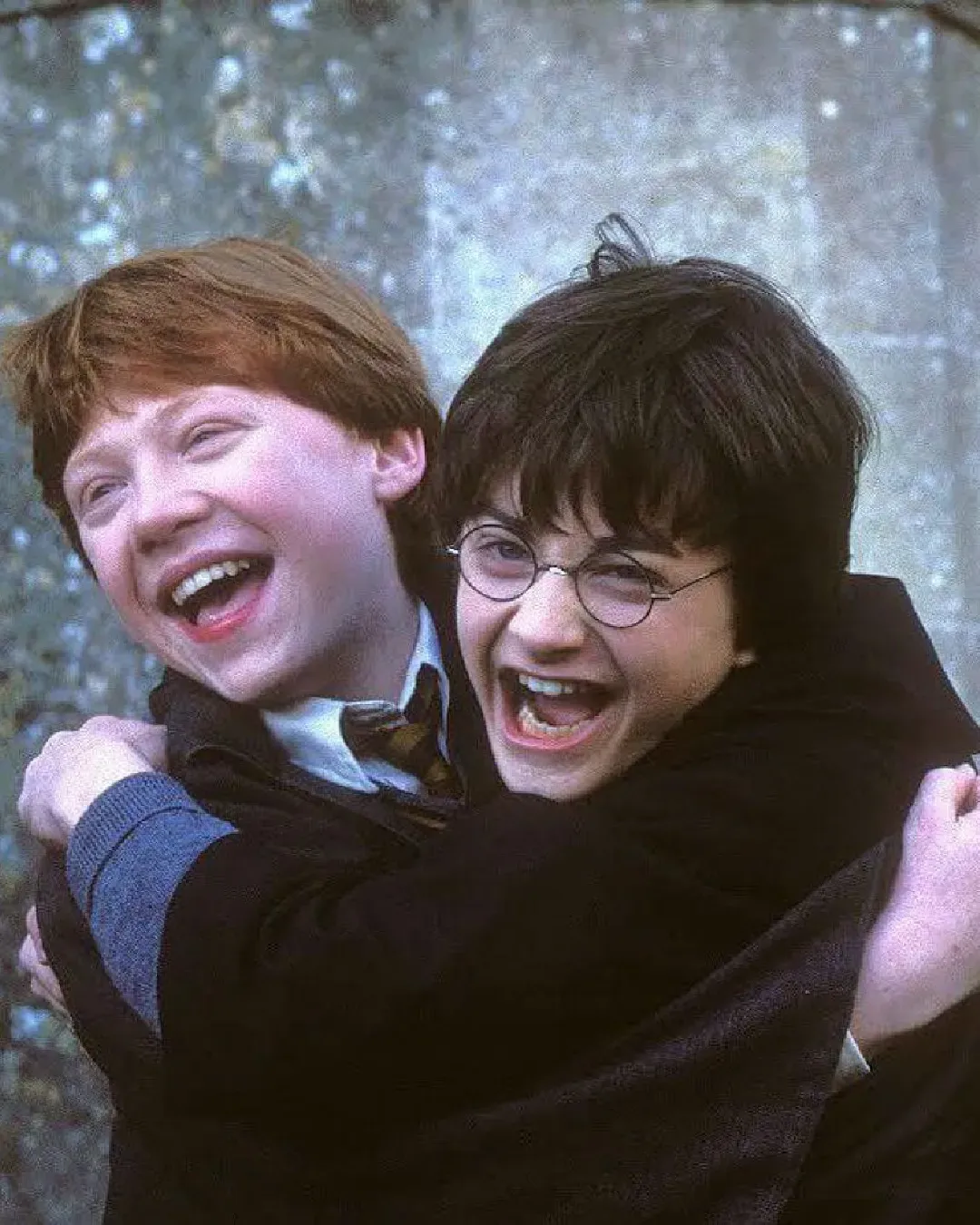
Is Harry Potter really that political? When a saga educates an entire generation
Few cultural works have left such indelible marks on the formation of a generation as Harry Potter did with the Millennials. J.K. Rowling’s work functioned as an educational tool for millions of people, with measurable effects on civic behavior and the political participation of an entire generation. It seems that young people who grew up with these books internalized a shared moral and political vocabulary, a way of thinking about good and evil, justice, oppression, institutions, and nonviolence.
According to a recent analysis by the New York Times, Millennials «interpret politics through the lens of the wizarding world, comparing those they disagree with to the main villain of the books, Lord Voldemort.» This is not just a cultural phenomenon: academic studies have documented direct correlations between reading J.K. Rowling’s books and specific political orientations typical of Millennials, generally liberal-progressive.
The studies that demonstrate Harry Potter’s political influence on Millennials
In 2013, Anthony Gierzynski, a professor of political science, conducted a survey of more than 1,100 U.S. college students. The results, published by Johns Hopkins University Press, showed «that Harry Potter fans tend to be more inclusive toward those who are different, more politically tolerant, more supportive of equality, less authoritarian, more opposed to the use of violence, less cynical, and display a higher level of political efficacy.» One example? 60% of Barack Obama’s voters in 2008 had read J.K. Rowling’s saga, while 83% of fans expressed a negative opinion of George W. Bush.
Another study, this time Italian, published in 2014 in the Journal of Applied Social Psychology and even cited by Hillary Clinton in a public speech on the importance of libraries, examined the saga’s impact on the reduction of prejudice. The team from the University of Modena and Reggio Emilia worked with three cohorts: fifth-grade students, high school students, and university students, having some groups analyze passages from The Chamber of Secrets that addressed themes of discrimination.
The results showed that children exposed to themes of prejudice developed significantly more positive attitudes toward immigrants; adolescents who identified with the protagonist showed greater openness toward LGBTQIA+ people; university students who rejected identification with Voldemort demonstrated greater empathy toward refugees. The psychological mechanism at work is that of extended contact: identification with characters who interact positively with discriminated groups promotes the transfer of empathetic dynamics to real life.
The magical world as a liberal manifesto
@destinationdiaries__ POV: A day in Hogwarts
In the magical world, according to the New York Times, «good people are easy to spot because they are devoted to liberal virtues such as tolerance, freedom of speech, and nonviolence.» Rowling, who continues to define herself as a left-wing liberal, built a universe in which ethnic minorities are absorbed into a largely colorblind society. The central moral conflict revolves around a large metaphor for racism: the obsession with the purity of magical blood versus those with Muggle origins.
Voldemort and the Death Eaters would thus represent an explicitly neo-fascist political project based on genetic supremacy. The protagonists, instead, adopt the rejection of lethal violence as a fundamental ethical principle. Harry Potter, Hermione, and Ron stun and disarm but never kill, and this stance reflects a liberal commitment to nonviolence. For those who read these texts between the ages of 11 and 18, a crucial period for the formation of political identity, these messages become structural components of their value system.
Why Gen Z no longer identifies with Harry Potter
@millennial.ca Idc I miss the 2010s #2010s #hipnesspurgatory #hipster #millennialcore Blood - The Middle East
Within this framework, however, a significant discontinuity emerges. The liberal values identified by Gierzynski—such as political tolerance, opposition to authoritarianism and violence, and trust in the democratic system—are losing more and more support precisely among younger generations, both on the right and the left.
Gen Z has in fact come of age in a radically different context from that of Millennials. It is a generation that reached adulthood after the 2008 global financial crisis and has since witnessed long periods of economic stagnation and the decline of state stability, not only in the United States but across much of the Western world. It is a generation that has barely experienced an optimistic period in politics and is more inclined than its predecessors to see life as controlled by external forces rather than by personal choices and will.
This would explain why the intrinsic optimism of the Potter universe, in which personal decisions play a decisive role, does not hold the same appeal for younger generations. Harry Potter represents a world in which individual choices matter, institutions can be reformed from within, and violence is never the answer—the opposite of what Gen Z tends to believe, as it perceives the liberalism of J.K. Rowling’s saga as naïve. This does not mean that today’s young people lack values; on the contrary, they appear to be one of the most socially active generations in recent times. A trait that may be due to sagas and series that came after Harry Potter, such as The Hunger Games or Stranger Things.