































Understanding the Amazon Fresh and Go's big flop The checkout-free supermarkets did not stand the test of time
Amazon has announced that it will close all Fresh and Go locations, the checkout-free grocery stores and related convenience shops launched in 2020 and 2018. The company explained that the two projects, despite having seen interesting developments, were not able to significantly differentiate themselves from traditional supermarkets. For this reason, according to Amazon, the conditions are not in place to continue experimenting with the model with the goal of expanding it on a large scale.
Amazon now intends to invest more heavily in home food delivery and in the network of Whole Foods Market stores, the chain of organic food supermarkets acquired for $13.7 billion in 2017, which today includes over 550 stores across the United States, Canada, and the United Kingdom. The plan also includes opening more than 100 new stores under the Whole Foods brand, partly through the conversion of some locations currently operating as Amazon Fresh or Amazon Go.
What did the Amazon Fresh and Go project consist of?
@uptin Amazon is opening hundreds of #AmazonFresh and #AmazonGo original sound - Uptin
The technology behind Amazon Fresh and Amazon Go stores, which made them popular and widely discussed (especially in the early stages), was based on an integrated system of cameras and sensors on the shelves: this solution allowed customers to shop, leave the store without going through a checkout (which in fact did not exist), and receive the charge later via app. However, as noted by the website The Information, the solution alone was not able to significantly reduce purchase checks on customers’ shopping: in about 70% of transactions, verification by Amazon staff was still required, with considerable costs.
This system, known as Just Walk Out, was supposed to be gradually replaced by Dash Cart, consisting of carts capable of automatically detecting purchased products. Compared to Just Walk Out, the latter offered the advantage of allowing customers to monitor the total cost of their shopping in real time, but this solution also proved insufficient to ensure the sustainability of the project behind Amazon Fresh or Amazon Go stores. According to several observers, Amazon Fresh and Amazon Go locations suffered from being projects that were too futuristic for the historical moment in which they were developed, similar to other technological solutions (such as Google Glass), thus encountering cultural, operational, and market resistance.
Amazon’s role in the food industry
Me walking to Amazon Fresh this morning for a croissant and finding out they are closed for good. pic.twitter.com/zfJz1lWrDJ
— TheBobbyClub III (@TheBobbyClub) January 27, 2026
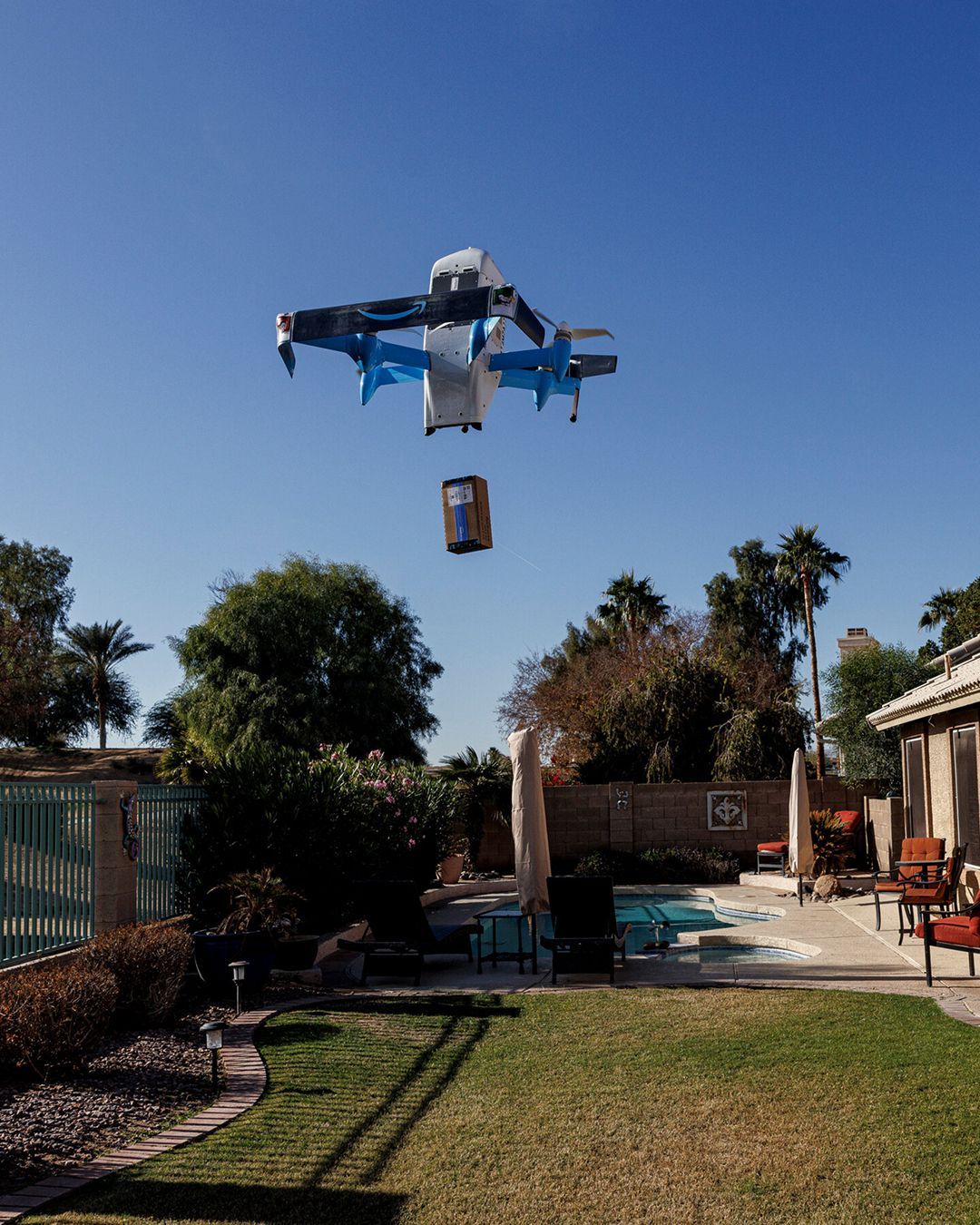
Not everyone knows that Amazon operates dozens of grocery stores in the United States, many of which are located in California. In addition, Amazon now delivers food and fresh groceries in over 5,000 U.S. urban centers, and to respond to the steady growth of online orders it has announced new investments to strengthen its delivery service within 24 hours, which is increasingly seen as central to its strategy.
According to internal sources cited by the U.S. press, a significant portion of these resources will be allocated to the expansion of urban warehouses, the automation of sorting centers, and the optimization of delivery routes, with the goal of reducing waiting times and operational costs. The priority at this stage therefore seems to be shifting from physical stores to so-called last-mile logistics, considered more profitable and strategic in the long term.